Thursday, 18 April 2013 : 3rd Week of Easter (Scripture Reflection)

Jesus again reiterated the message in today’s Gospel reading, that He is the bread of life, the source of salvation, which can only come through Christ, and through the ultimate sacrifice He had committed on that hill of Calvary on that fateful day, when He was raised high between the heavens and the earth. That moment marked the moment when the pure and unblemished Lamb of God was sacrificed that His blood, splashing down on us, washes us away from our sins.

The Lamb of God did not resist when He was about to be killed, He kept His mouth shut and silent against the false accusations of those who tried to kill Him and bring about His death. Through His submission to the will of the Father, He had been glorified after His death through resurrection, and through this submission, He brought about salvation and reunion of all mankind with God who loves them all.

He died for us that we might live. His blood purifying us from our faults and sins, making us pure once again and worthy to stand before the presence of our God in heaven. Heaven had been closed to all of us since the day when our ancestors defied the will of God, and obeyed the evil one instead, believing in the wisdom of Satan rather than God, and through their disobedience, mankind fall into sin and become the thrall of death.

That was because Adam and Eve, our first ancestors failed to resist the temptation of evil in order to gain more knowledge into themselves, and desiring to become equal as God. But they, who were pure since the day of their creation, now knew the meaning of evil and sin, and as a result, the white slate of paper became splotched with ink and became ruined. That was the state of our soul too before our salvation in Christ.

We suffered the same punishment that Adam and Eve had been made to suffer for their rebellion, that is to roam this earthly plane, to work and toil hard, and death would claim us, and to dust our bodies would return, and we were to be enslaved by Satan. But yet, God is loving just as He is just. He hates sin, but He did not leave us His beloved children without hope of salvation. That hope He brought into our world through Christ His Son, whom He sent to be the Messiah who would save all mankind, once and for all, from the dominion of the evil one.

Christ had become the new Adam, the new beginning, by virtue of being born as man, but unlike Adam, who was sinless and pure as Christ was, but sinned through disobedience, Christ as the Lamb of God obeyed the Lord fully unto His death. This perfect obedience became the perfect offering that entirely countered the rebellion of our ancestors and made all of us worthy once again of God.

Through His Precious Body and Blood, which He offered to all of us freely, He made us into one body in Himself, the Body that is our Church, that all who believes in Christ may be united as one people, and praising God as one people, and sharing the faith that we have in God with one another, and also share the love that He had given us, that love would reign as the motivation behind all our actions.

Therefore, dear brothers and sisters in Christ, let us always remember that Jesus Christ our Lord is the bread of life, and also the way, the truth, and the life, and in Him alone lies salvation. Let us treasure the Eucharist that we receive in the Mass, that we truly honour the Precious Body and Blood of our Lord, and worthily take Him into ourselves, that we may always be united with Him, and be united with our fellow brethren, who also believe in Him our Saviour. God bless us all. Amen.

Thursday, 18 April 2013 : 3rd Week of Easter (Gospel Reading)

John 6 : 44-51

No one can come to Me unless he is drawn by the Father who sent Me; and I will raise Him up on the last day. It has been written in the Prophets : ‘They shall all be taught by God.’ So whoever listens and learns from the Father comes to Me.

For no one has seen the Father except the One who comes from God; He has seen the Father. Truly, I say to you, whoever believes has eternal life. I am the bread of life. Though your ancestors ate the manna in the desert, they died. But here you have the bread which comes from heaven, so that you may eat of it, and not die.

I am the living bread which has come from heaven; whoever eats of this bread will live forever. The bread I shall give is My flesh, and I will give it for the life of the world.

Thursday, 18 April 2013 : 3rd Week of Easter (Psalm)

Psalm 65 : 8-9, 16-17, 20

Praise our God, o nations, let the sound of His praise be heard, for He has preserved us among the living and kept our feet from stumbling.

All you who fear God, come and listen, let me tell you what He has done. I cried aloud to Him, extolling Him with my tongue.

May God be blessed! He has not rejected my prayer; nor withheld His love from me.

Thursday, 18 April 2013 : 3rd Week of Easter (First Reading)

Acts 8 : 26-40

An angel of the Lord said to Philip, “Go south towards the road that goes down from Jerusalem to Gaza, the desert road.” So, he set out and it happened that an Ethiopian was passing along that way. He was an official in charge of the treasury of the queen of the Ethiopians; he had come on pilgrimage to Jerusalem, and was on his way home. He was sitting in his carriage and reading the prophet Isaiah.

The Spirit said to Philip, “Go and catch up with that carriage.” So Philip ran up and heard the man reading the prophet Isaiah; and he asked, “Do you really understand what you are reading?” The Ethiopian replied, “How can I, unless someone explains it to me?”

He then invited Philip to get in and sit beside him. This was the passage of the Scripture he was reading : “He was led like a sheep to be slaughtered; like a lamb that is dumb before the shearer, He did not open His mouth. He was humbled and deprived of His rights. Who can speak of His descendants? For He was uprooted from the earth.”

The official asked Philip, “Tell me, please, does the prophet speak of himself or of someone else?” Then Philip began to tell him the Good News of Jesus, using this text of Scripture as his starting point. As they travelled down the road they came to a place where there was some water. Then the Ethiopian official said, “Look, here is water; what is to keep me from being baptised?”

Then he ordered the carriage to stop; both Philip and the Ethiopian went down into the water and Philip baptised him. When they came out of the water, the Spirit of the Lord took Philip away. The Ethiopian saw him no more, but he continued on his way full of joy.

Philip found himself at Azotus, and he went about announcing the Good News in all the towns until he reached Caesarea.

Pope Emeritus Benedict XVI will return to the Vatican on Wednesday, 1 May 2013

http://vaticaninsider.lastampa.it/vaticano/dettaglio-articolo/articolo/papa-el-papa-pope-bergoglio-ratzinger-24332/

Image

According to the original Italian language article of the Vatican Insider/La Stampa above, Pope Emeritus Benedict XVI will return to the Vatican from his stay in Castel Gandolfo, the Papal summer residence on Wednesday, 1 May 2013.

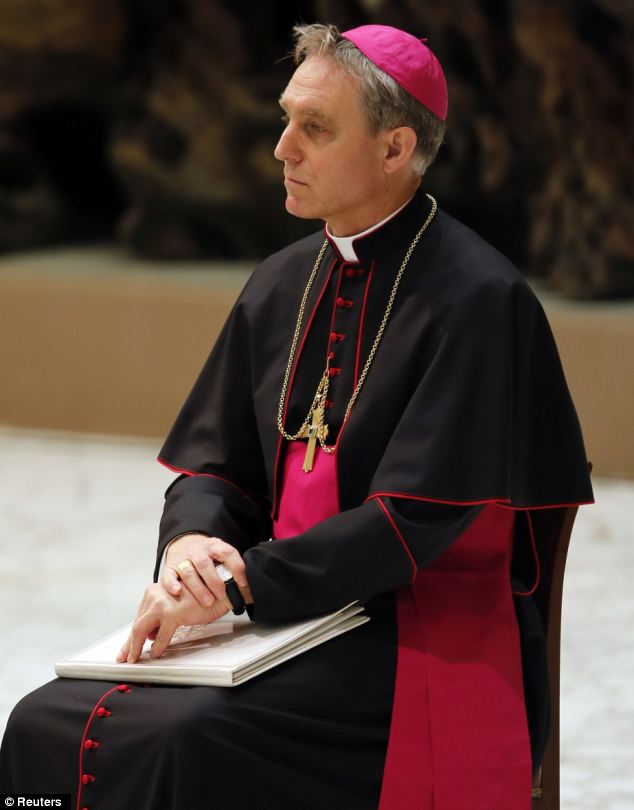
Pope Emeritus Benedict XVI had stayed at Castel Gandolfo since his retirement as reigning Pope of the Church on 28 February 2013, 2 months earlier. He will be staying in the former Mater Ecclesiae monastery which was originally a cloister for nuns, and now vacated to accomodate the Pope Emeritus and his assistants, which include the current Prefect of Papal Household, Archbishop Georg Ganswein, who is also Pope Emeritus Benedict XVI’s private secretary.

This will make the work better for Archbishop Ganswein as in his capacity as both the private secretary to the Pope Emeritus and the Prefect of Papal Household, he had to travel daily between the Vatican and Castel Gandolfo.

Image

(Above : Archbishop Georg Ganswein, current Prefect of the Papal Household and private secretary to Pope Emeritus Benedict XVI)

May God bless our dear Pope Emeritus, bless him with good health, that he will continue to pray for our Church, and that the reforms that he had begun in the liturgy, worship, and new evangelisation can continue to flourish and grow.

86th Anniversary of His Holiness, Pope Emeritus Benedict XVI (16 April 1927 – present)

Image

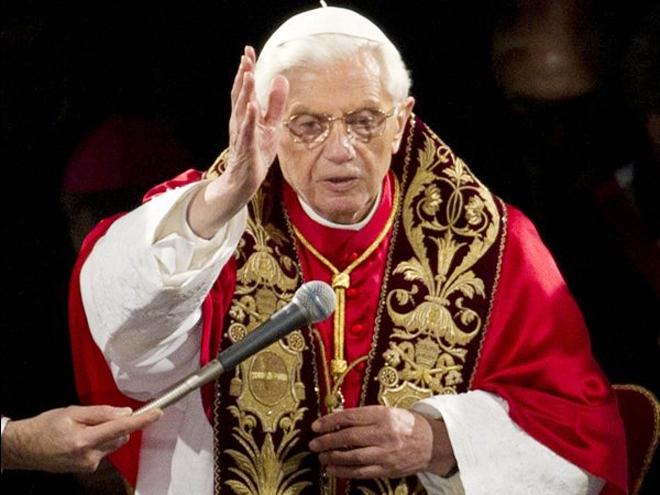
I would like to convey to our Pope Emeritus, a very happy and blessed 86th anniversary today, and may God bless him and protect him all the days of his life. Ad multos annos, Your Holiness!

Image

You will always be our great and beloved Pope, and we will always pray for you. Thank you for reawakening in all of us the love for God through your efforts to beautify the liturgy and the Mass, and to love all men through service.

Image

Cardinal Juan Sandoval Iniguez turns 80, ceases to be a Cardinal-elector

Image

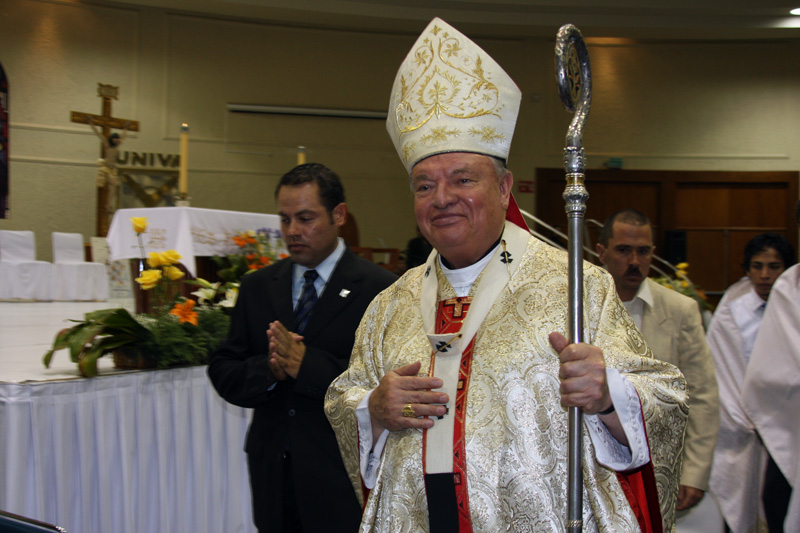
Today, Thursday, 28 March 2013, Cardinal Juan Sandoval Iniguez, Cardinal-Priest of Nostra Signora di Guadalupe e S. Filippo Martire, and Metropolitan Archbishop Emeritus of Guadalajara, Mexico, turns 80, and therefore, according to the rules written in the Apostolic Constitution Universi Dominici Gregis, he loses his right to vote in any future conclave.

http://www.gcatholic.org/hierarchy/data/cardJP2-6.htm#144

May God bless His Eminence Cardinal Sandoval Iniguez, with a blessed old age and health. May he remain strong in the faith and hopefully can perhaps still carry out the mission God had given him.

The College of Cardinals now stands at 206 members in total, with 113 Cardinal-electors and 93 Cardinal non-electors. There are now vacancy of 7 Cardinal-electors as compared to the maximum number of electors allowed in the Conclave of 120, although Popes John Paul II and Benedict XVI had sometimes surpassed this limit.

Next Cardinal-elector to age out (80) will be Cardinal Godfried Danneels on 4 June 2013.

Homily of Pope Francis at the Mass of the Palm Sunday of the Passion of our Lord at St. Peter’s Square, Sunday, 24 March 2013

http://www.vatican.va/holy_father/francesco/homilies/2013/documents/papa-francesco_20130324_palme_en.html

Jesus enters Jerusalem. The crowd of disciples accompanies him in festive mood, their garments are stretched out before him, there is talk of the miracles he has accomplished, and loud praises are heard: “Blessed is the King who comes in the name of the Lord. Peace in heaven and glory in the highest!” (Lk 19:38).

Crowds, celebrating, praise, blessing, peace: joy fills the air. Jesus has awakened great hopes, especially in the hearts of the simple, the humble, the poor, the forgotten, those who do not matter in the eyes of the world. He understands human sufferings, he has shown the face of God’s mercy, and he has bent down to heal body and soul.

This is Jesus. This is his heart which looks to all of us, to our sicknesses, to our sins. The love of Jesus is great. And thus he enters Jerusalem, with this love, and looks at us. It is a beautiful scene, full of light – the light of the love of Jesus, the love of his heart – of joy, of celebration.

At the beginning of Mass, we too repeated it. We waved our palms, our olive branches. We too welcomed Jesus; we too expressed our joy at accompanying him, at knowing him to be close, present in us and among us as a friend, a brother, and also as a King: that is, a shining beacon for our lives. Jesus is God, but he lowered himself to walk with us. He is our friend, our brother. He illumines our path here. And in this way we have welcomed him today. And here the first word that I wish to say to you: joy! Do not be men and women of sadness: a Christian can never be sad! Never give way to discouragement! Ours is not a joy born of having many possessions, but from having encountered a Person: Jesus, in our midst; it is born from knowing that with him we are never alone, even at difficult moments, even when our life’s journey comes up against problems and obstacles that seem insurmountable, and there are so many of them! And in this moment the enemy, the devil, comes, often disguised as an angel, and slyly speaks his word to us. Do not listen to him! Let us follow Jesus! We accompany, we follow Jesus, but above all we know that he accompanies us and carries us on his shoulders. This is our joy, this is the hope that we must bring to this world. Please do not let yourselves be robbed of hope! Do not let hope be stolen! The hope that Jesus gives us.

The second word. Why does Jesus enter Jerusalem? Or better: how does Jesus enter Jerusalem? The crowds acclaim him as King. And he does not deny it, he does not tell them to be silent (cf. Lk 19:39-40). But what kind of a King is Jesus? Let us take a look at him: he is riding on a donkey, he is not accompanied by a court, he is not surrounded by an army as a symbol of power. He is received by humble people, simple folk who have the sense to see something more in Jesus; they have that sense of the faith which says: here is the Saviour. Jesus does not enter the Holy City to receive the honours reserved to earthly kings, to the powerful, to rulers; he enters to be scourged, insulted and abused, as Isaiah foretold in the First Reading (cf. Is 50:6). He enters to receive a crown of thorns, a staff, a purple robe: his kingship becomes an object of derision. He enters to climb Calvary, carrying his burden of wood. And this brings us to the second word: Cross. Jesus enters Jerusalem in order to die on the Cross. And it is precisely here that his kingship shines forth in godly fashion: his royal throne is the wood of the Cross! It reminds me of what Benedict XVI said to the Cardinals: you are princes, but of a king crucified. That is the throne of Jesus. Jesus takes it upon himself… Why the Cross? Because Jesus takes upon himself the evil, the filth, the sin of the world, including the sin of all of us, and he cleanses it, he cleanses it with his blood, with the mercy and the love of God. Let us look around: how many wounds are inflicted upon humanity by evil! Wars, violence, economic conflicts that hit the weakest, greed for money that you can’t take with you and have to leave. When we were small, our grandmother used to say: a shroud has no pocket. Love of power, corruption, divisions, crimes against human life and against creation! And – as each one of us knows and is aware – our personal sins: our failures in love and respect towards God, towards our neighbour and towards the whole of creation. Jesus on the Cross feels the whole weight of the evil, and with the force of God’s love he conquers it, he defeats it with his resurrection. This is the good that Jesus does for us on the throne of the Cross. Christ’s Cross embraced with love never leads to sadness, but to joy, to the joy of having been saved and of doing a little of what he did on the day of his death.

Today in this Square, there are many young people: for twenty-eight years Palm Sunday has been World Youth Day! This is our third word: youth! Dear young people, I saw you in the procession as you were coming in; I think of you celebrating around Jesus, waving your olive branches. I think of you crying out his name and expressing your joy at being with him! You have an important part in the celebration of faith! You bring us the joy of faith and you tell us that we must live the faith with a young heart, always: a young heart, even at the age of seventy or eighty. Dear young people! With Christ, the heart never grows old! Yet all of us, all of you know very well that the King whom we follow and who accompanies us is very special: he is a King who loves even to the Cross and who teaches us to serve and to love. And you are not ashamed of his Cross! On the contrary, you embrace it, because you have understood that it is in giving ourselves, in giving ourselves, in emerging from ourselves that we have true joy and that, with his love, God conquered evil. You carry the pilgrim Cross through all the Continents, along the highways of the world! You carry it in response to Jesus’ call: “Go, make disciples of all nations” (Mt 28:19), which is the theme of World Youth Day this year. You carry it so as to tell everyone that on the Cross Jesus knocked down the wall of enmity that divides people and nations, and he brought reconciliation and peace. Dear friends, I too am setting out on a journey with you, starting today, in the footsteps of Blessed John Paul II and Benedict XVI. We are already close to the next stage of this great pilgrimage of the Cross. I look forward joyfully to next July in Rio de Janeiro! I will see you in that great city in Brazil! Prepare well – prepare spiritually above all – in your communities, so that our gathering in Rio may be a sign of faith for the whole world. Young people must say to the world: to follow Christ is good; to go with Christ is good; the message of Christ is good; emerging from ourselves, to the ends of the earth and of existence, to take Jesus there, is good! Three points, then: joy, Cross, young people.

Let us ask the intercession of the Virgin Mary. She teaches us the joy of meeting Christ, the love with which we must look to the foot of the Cross, the enthusiasm of the young heart with which we must follow him during this Holy Week and throughout our lives. May it be so.

Pope Francis’ schedule between the Papal Inauguration to Palm Sunday

Here is a summary of Pope Francis’ schedule between his Papal Inauguration on Tuesday, 19 March 2013, to the beginning of the Holy Week on Palm Sunday, 24 March 2013 :

1. Tuesday, 19 March 2013 at 9.30 am Rome time : Papal Inauguration Mass at St. Peter’s Square, estimated to be attended by more than 1 million people from all over the world, and many foreign dignitaries, heads of states, and leaders. Mark the full beginning of Pope Francis’ Pontificate with a solemn inauguration with the imposition of both the pallium and the Ring of the Fisherman. First to be attended by the Ecumenical Patriarch of Constantinople, currently Bartholomew I, since the Great Schism in 1054.

2. Wednesday, 20 March 2013 : Reception of the delegations from different Christian churches and representatives at Clementine Hall (Sala Clementina). No General Audience will be held on this day.

3. Friday, 22 March 2013 : Reception of accredited diplomatic representatives to the Holy See in the Regia Hall (Sala Regia).

4. Saturday, 23 March 2013 : Meeting with his predecessor, Pope Emeritus Benedict XVI, at Castel Gandolfo, where the Pope Emeritus is residing.

5. Sunday, 24 March 2013 at 9.30 am Rome time : Palm Sunday Mass at St. Peter’s Square, beginning the Holy Week celebrations.

Pope Francis to visit Castel Gandolfo to meet Pope Emeritus Benedict XVI on Saturday, 23 March 2013

Newly elected Pope Francis will visit his predecessor, Pope Emeritus Benedict XVI, who is currently still staying at the summer papal residence at Castel Gandolfo. Pope Emeritus Benedict XVI will continue to reside there until the former Mater Ecclesiae monastery at the Vatican completes its renovation.