Wednesday, 13 March 2013 : 60th Birthday Anniversary of the Apostolic Nuncio to Singapore, Archbishop Leopoldo Girelli

Yesterday, besides being the day when our new Pope, Pope Francis was elected the 266th Pope and the 265th Successor of St. Peter the Apostle, was another joyous day.

http://www.gcatholic.org/dioceses/nunciature/nunc152.htm#8848

This is because, Archbishop Leopoldo Girelli, Apostolic Nuncio to Singapore, who was born on 13 March 1953, celebrated his 60th anniversary yesterday.

Let us pray together for Archbishop Girelli, that God will continue to shower him with His love and strength, that he will continue to faithfully carry out the mission that has been entrusted to him as the representative of the Holy See to Singapore, Vietnam, and to ASEAN.

Ad multos annos, Your Excellency!

Official Video by the Vatican on the Election of Pope Francis, 266th Pope and Bishop of Rome

The official video released by the Vatican in YouTube, with full coverage of the election of the Metropolitan Archbishop of Buenos Aires, Argentina, Jorge Maria Cardinal Bergoglio as Pope Francis, 266th Pope and Bishop of Rome, and the 265th Successor of St. Peter the Apostle.

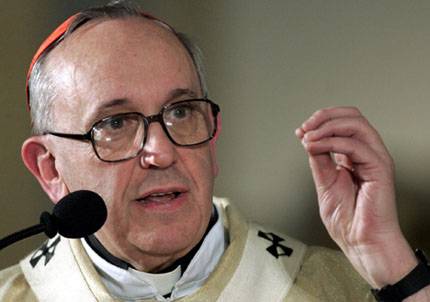
Habemus Papam! Our new Pope, Jorge Maria Cardinal Bergoglio as Pope Francis I

Habemus Papam! We have a Pope!

Bergoglio

Jorge Maria Cardinal Bergoglio, Metropolitan Archbishop of Buenos Aires, who is 76 years old, had been elected the 265th Successor of St. Peter the Apostle, the 266th Pope and Bishop of Rome, on March 2013.

He has taken the name of Francis, and shall henceforth reign as Pope Francis I. The first non-European and first South/Latin American Pope.

Cardinal Angelo Scola, Archbishop of Milan, the Papabile

http://www.eitb.com/en/news/world/detail/1282802/candidates-new-pope–profile-cardinal-angelo-scola/

From the article (My commentary at the end) :


Election of new pope

Profile of Cardinal Angelo Scola, Archbishop of Milan

APTN

03/11/2013

A conservative, and theologically close to both Pope Benedict and his predecessor John Paul II, Cardinal Scola is regarded as one of the leading European candidates to become Pope.

Cardinal Angelo Scola, the archbishop of Milan.

Cardinal Angelo Scola, the archbishop of Milan, shot to the top of a list of possible successors to Pope Benedict XVI almost immediately the resignation was announced.

A conservative, and theologically close to both Pope Benedict and his predecessor John Paul II, Cardinal Scola is regarded as one of the leading European candidates to become Pope.

Some observers tipped him to succeed after the death of John Paul II in 2005, but the conclave instead chose Cardinal Joseph Ratzinger who became Benedict XVI, the 265th pope.

But if there was rivalry between the candidates in 2005, it had little effect on their close relationship, and Scola remained a favourite of Pope Benedict’s, who appointed the Cardinal archbishop of the Milan Diocese in June 2011.

In the small town of Malgrate on Lake Como in northern Italy, many of the 5,000 residents are backing their hometown boy to become Pope. Scola was born in Malgrate on 7 November 1941 to a truck driver and a homemaker.

He entered the priesthood in 1970, became a Cardinal in 2003, serving first as Patriarch of Milan until he was elevated to his current post of archbishop.

Scola’s cousin, Angelo Colombo, remembers that during World War II he would spend time at his cousin’s home because Scola’s father was a truck driver and could get access to flour and bread.

Colombo said he would go to Scola’s family home, and his aunt and the future Cardinal would always share their food. When he asked if he thought his cousin would make a good Pope, Colombo laughed and responded: “he was a tough boy”.

Scola spent the early years of his life in a small home on Malgrate’s Salita Sant’Antonio. Alfredo Cagliandi was a classmate of Cardinal Scola and lived in the apartment below him.

“We would invite Angelo to come and play and he would repeatedly respond ‘I am sorry, but I don’t have time.’  He was too busy because was already involved in something religious,” said Cagliandi, who still lives in Malgrate.

Scola spent the first two decades after his 1970 ordination in the lecture halls and libraries of renowned Catholic universities and theological training grounds, notably in Fribourg, Switzerland, and the Lateran Pontifical University in Rome.

While pursuing theological studies, Scola was involved in Communion and Liberation, a conservative Italian Catholic group which blends political activism with faith-based fervour as it seeks to make its weight felt in the country’s decision-making.

Back in Scola’s home town, the local priest Father Andrea Lotterio proudly showed off the baptismal font where he says the town’s babies are still baptised today, noting that Scola was baptised there in 1941.

Father Lotterio said Scola has pleased the residents of Malgrate by never losing his strong ties to his hometown. “He has maintained his relationships with many local citizens, with his friends, with his relatives,” Lotterio said. “So much so that in this town he is called Don Angelo, instead of Cardinal or Patriarch of Venice.”

Pope Benedict resigned as leader of the Catholic Church on Thursday, becoming the first pope in 600 years to resign. For the time being, the governance of the Catholic Church shifts to Cardinal Tarcisio Bertone, the camerlengo, or chamberlain. Bertone, along with the College of Cardinals will guide the church and make plans for the conclave to elect the 266th leader within the next few weeks.


Commentary and additions:

Indeed, Cardinal Angelo Scola has many strengths and characteristics that we need as the new Pope to lead the Roman Catholic Church, the one and Universal Church. He does have his weaknesses, but his strengths more than made up for him. After all, it is human to have weaknesses and to make mistakes.

Cardinal Scola is media-savvy, able to reach out into the hearts of many, including youths and those in the world, who are longing for the Lord to come to them. Being media-savvy, and also internet-savvy, Cardinal Scola is not shy of using modern media tools, such as the internet, twitter, YouTube, his own site, and many other means to evangelise to the world, and to reach out, especially to youths.

Cardinal Scola also has a positive outlook and optimism in the Church, and indeed, instead of being pessimistic on the Church, and instead of looking at a Church in trouble, he dismissed all this, and all the lies that the media had brought about the Church, that the Church instead of being in chaos and trouble, is in fact growing, and filled with vibrant and strong faith and love in God, and Cardinal Scola has the capacity to tap into all these energies.

Cardinal Scola also came from a poorer family background, and he understood the plight of the poor and the less fortunate. His hometown people has often remembered him as someone who not only did not forget about where he came from, and where he was born, but also someone who constantly gives them his care and his love, in imitation of Christ and His care for the poor.

Cardinal Scola speaks Italian, English, French, and Spanish, and although his English is not that good, but he has quite a strong command of these languages, which are essential in the Pope’s ministry as the leader of the Universal Church.

Cardinal Scola’s initiatives to reach out to the Christians in the Holy Land and in other areas where Christians are minorities, and his involvement in interreligious dialogue and cooperation, and even with atheists, had been fruitful and crucial in strengthening Christians in the areas where they had been persecuted, and where persecutions are ongoing.

His experience in the Archdiocese of Milan, Patriarchate of Venice, and Diocese of Grosseto clearly showed that he is a pastoral leader with a humble and yet intellectual mind, that matches that of our beloved Pope Emeritus Benedict XVI. Yet, his experiences in the Roman Curia too were many, with works as leader of Pontifical Institute of Marriage and the Family, which he also took a strong stand with the Church in the sanctity of both marriage and the family.

His intellect, knowledge, and publications especially in topics like bioethics, in the midst of the attacks against Church’s stand on bioethics, cloning, and contraceptions will be essential for the future leader of the Church, and his ability to connect and reach out to people, more than Pope Emeritus Benedict XVI, will be valuable asset to have in the new Pope.

Nevertheless, now that the Conclave will begin soon, we continue to pray that God will pour His Holy Spirit on all the Cardinal-electors, that they can make a wise and inspired decision, to elect someone whom the Lord has chosen, as the best possible person to succeed His Apostle, Peter, and lead the whole Universal Church, that God Himself built in this world, to be the manifestation of His love, justice, and presence.

My Guide to the Papal Conclave : Part III (From the election of the new Pope to the Urbi et Orbi blessing by the new Pope)

Part II here : https://petercanisiusmichaeldavidkang.com/2013/03/09/my-guide-to-the-papal-conclave-part-ii-from-the-beginning-to-the-election-of-the-new-pope/


1. After the new Pope had accepted his election as Pope and leader of the Roman Catholic Church, there are several scenarios :


a. If he is already a bishop : The new Pope will immediately be the Bishop of Rome and leader of the Universal Church, the Successor of St. Peter the Apostle. Then he will immediately accept the homage of the Cardinal-electors gathered in the Conclave, after he changes his cardinal’s robes for the new, white papal robes in the Room of Tears.

b. If he is not yet a bishop : The new Pope will need to be immediately ordained a bishop following the proper order of the Ordination of bishops, and the senior Cardinal Bishop by seniority in the Conclave should be the principal consecrator. The new Pope can only receive homage of the Cardinals after his ordination to the episcopate (after he had been ordained a bishop).


2. The new Pope then leaves the Sistine Chapel main hall where the voting took place, into the special ‘Room of Tears’, where three sets of differently-sized white papal robes had been prepared for him to adjust to his size. The new Pope changes from his cardinal’s red robes into the white papal robes and then return to the main hall of the Sistine Chapel.


3. The new Pope, after dressed in the white papal robes (with the red mozzetta and the large state stole) will then receive the homage of all the Cardinals gathered in the Sistine Chapel.


4. New addition in 2013 Conclave : After the homage, the new Pope will proceed with all the Cardinal-electors from the Sistine Chapel to the Pauline Chapel. The new Pope will enter the Pauline Chapel alone, and pray before the Blessed Sacrament in the Chapel.


5. In the meanwhile, the most senior Cardinal in the order of deacons, that is the Cardinal Protodeacon (Cardinal Jean-Louis Tauran for the 2013 conclave) will then appear at the Loggia or the balcony of St. Peter’s Basilica to deliver the announcement of the election of a new Pope.


The formula :

The Cardinal Protodeacon will first greet the assembled people in St. Peter’s Square and throughout the world (done in 2005 conclave in different languages) :

1. Italian : Fratelli e sorelle carissimi

2. Spanish : Queridísimos hermanos y hermanas

3. French : Bien chers frères et sœurs

4. German : Liebe Brüder und Schwestern

5. English : Dear brothers and sisters


Then he continues :

Annuntio vobis gaudium magnum

I announce to you a great joy


Habemus Papam!

We have a Pope!


Eminentissimum ac Reverendissimum Dominum

The most eminent and reverend Lord


Dominum (New Pope’s first name/baptismal name) Sanctae Romanae Ecclesiae Cardinalem (New Pope’s surname)

Lord (New Pope’s first name/baptismal name) Cardinal (New Pope’s surname) of the Holy Roman Church


Qui sibi nomen imposuit (New Pope’s chosen regnal name and number)

Who takes for himself the name of (New Pope’s chosen regnal name and number)


5. After this, after a moment, the new Pope, led by a processional crucifix, made his appearance at the same balcony of St. Peter’s Basilica. He then may deliver his first address as Pope to the people gathered at the Square, and to the world.


6. After the address, then the new Pope will give his Urbi et Orbi special blessing (For the city of Rome (Urbi) and the world (Orbi)), with which is attached plenary indulgence, that is the forgiveness of all temporal sins, providing the people participates in full faith and repentance.


The text of the Urbi et Orbi blessing (Latin):

Sancti Apostoli Petrus et Paulus: de quorum potestate et auctoritate confidimus ipsi intercedant pro nobis ad Dominum.

(Amen)

Precibus et meritis beatæ Mariae semper Virginis, beati Michaelis Archangeli, beati Ioannis Baptistæ, et sanctorum Apostolorum Petri et Pauli et omnium Sanctorum misereatur vestri omnipotens Deus; et dimissis omnibus peccatis vestris, perducat vos Iesus Christus ad vitam æternam.

(Amen)

Indulgentiam, absolutionem et remissionem omnium peccatorum vestrorum, spatium verae et fructuosae poenitentiæ, cor semper penitens, et emendationem vitae, gratiam et consolationem Sancti Spiritus; et finalem perseverantiam in bonis operibus tribuat vobis omnipotens et misericors Dominus.

(Amen)

Et benedictio Dei omnipotentis, Patris et Filii et Spiritus Sancti descendat super vos et maneat semper.

(Amen)


Text of Urbi et Orbi blessing (English)

May the Holy Apostles Peter and Paul, in whose power and authority we have confidence, intercede on our behalf to the Lord.

(Amen)

Through the prayers and merits of the Blessed Mary ever Virgin, of Blessed Michael the Archangel, of Blessed John the Baptist, and of the Holy Apostles Peter and Paul, and of all the saints, may Almighty God have mercy on you, and with your sins forgiven, may Jesus Christ lead you into everlasting life.

(Amen)

May the Almighty and merciful Lord grant you indulgence, absolution, and remission of all your sins, time for a true and fruitful penance, an always repentant heart and amendment of life, the grace and consolation of the Holy Spirit, and final perseverance in good works.

(Amen)

And may the blessing of Almighty God, the Father, the Son, and the Holy Spirit, descend on you and remain with you always.

(Amen)


7. Then the new Pope takes his leave of the people, and return inside St. Peter’s Basilica. The long process of electing a new Pope is over, and the new Pope is now in charge in leading God’s Church in his given mission as the Successor of St. Peter the Apostle.


8. The Papal Inauguration Mass will take place several days after the election (does not have to be on a Sunday), to allow for the foreign dignitaries invited to the event to be able to arrive, to attend the Papal Inauguration Mass. The new Pope will receive his signs of office in this Inauguration, namely, the pallium and the Ring of the Fisherman. The Papal Inauguration most likely will take place at St. Peter’s Square.


9. The new Pope will take possession of his Cathedral, in an enthronement ceremony at the Cathedral of the Diocese of Rome (The Pope is the Bishop of Rome, and contrary to popular perceptions, St. Peter’s Basilica is not a Cathedral). The Cathedral of Rome is the Archbasilica of St. John Lateran

Complete name (Latin) : Archibasilica Sanctissimi Salvatoris et Sanctorum Ioannes Baptista et Evangelista in Laterano, Omnium urbis et orbis Ecclesiarum Mater et Caput

Complete name (English) : Archbasilica of the Most Holy Saviour, Saint John the Baptist, and Saint John the Evangelist in Lateran, Head and Mother Church of All the City and the Whole World