
New Cardinals have been elected to lead the Particular Congregations (elected every 3 days) in the Conclave. Cardinal Antonios Naguib for the Cardinal Bishops; Cardinal Marc Ouellet for the Cardinal Priests; Cardinal Francesco Monterisi for the Cardinal Deacons. New leaders will be elected if after three days in the Conclave, the Conclave has not yet ended with the election of a new Pope. Their task is to guide the Cardinal Camerlengo, who is Cardinal Tarcisio Bertone.
28 Cardinals had spoken in the Tenth General Congregation, and a total of 161 Cardinals had already spoken in all the past General Congregations. Not all Cardinals who wanted to speak has spoken, as the number of Cardinals that spoke had made the Cardinals to vote whether to continue or to stop the General Congregation at that point (likely because it has taken too much time).
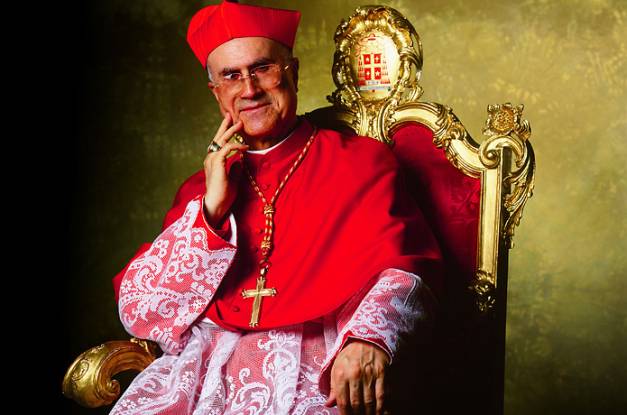
In the meanwhile, during the Sede Vacante, certain offices that represent the Holy See, particularly diplomatic representation, Nuncios, Delegates, and many other offices of the Holy See continue to function as per normal, even when the Apostolic See is vacant, and the Cardinals waiting to elect a new Pope. The Cardinal Camerlengo, Cardinal Tarcisio Bertone is the leader during the period of the Sede Vacante, having limited powers, with the College of Cardinals, in order to settle all matters, and all things pertaining to election of the new Pope.
This Monday evening at 5.30 pm Rome time / CET / UTC+1, all the personnels, about 90 of them, who are also ‘locked’ together with the Cardinal-electors in the Conclave, including doctors, nurses, bus drivers, and other staffs involved in maintenance of the Cardinals’ residence at Domus Sancta Marthae, will take their solemn oath of secrecy, in the presence of the Camerlengo of the College of Cardinals, Cardinal Tarcisio Bertone, and also in the presence of the Secretary of the College of Cardinals, Archbishop Lorenzo Baldisseri, Master of Pontifical Liturgical Celebrations, Monsignor Guido Marini and other officials.
The swearing of the oath of secrecy by the auxiliary personnel will not be live on Vatican Television (Therefore, may not be viewable in Vatican Player).
The Mass for the Election of the Roman Pontiff or Missa pro Eligendo Pontifice, which will begin the Conclave process, will be celebrated in St. Peter’s Basilica on Tuesday morning at 10 am Rome time / CET / UTC+1, and will be in Latin, but also with translations in Italian and English available in the Vatican official website.
Cardinal Dean of the College of Cardinals, Cardinal Angelo Sodano will be the celebrant of the solemn Mass, the concelebrants will be all the Cardinal-electors and the Cardinal non-electors currently present in Rome. The homily will also be available a short period of time just before the Holy Mass on Tuesday morning (Rome time), likely from the Vatican website.
The Cardinals will enter into the Conclave in the Sistine Chapel from the Pauline Chapel, from Cardinal Prosper Grech, who will deliver the second meditation to the Cardinal-electors, followed by the Cardinals in reverse order of precedence (first by order : bishop, priest, and deacon – reverse this), and then within these order, the Cardinals in order of creation (earlier created then later created, and also within the same consistory, those whose names are earlier in the order of creation have higher precedence – also reverse all this).
The last will be the Master of Pontifical Liturgical Celebrations, Monsignor Guido Marini, and Cardinal Giovanni Batista Re, the senior Cardinal Bishop who is an elector, who will be the leader of the Conclave in absence of Cardinal Sodano, the Dean, who is a non-elector (above 80). The Cardinals will proceed into the Sistine Chapel singing the Litany of the Saints, and the hymn Veni Creator Spiritus. After the oath-taking by the Cardinal-electors, Monsignor Marini will order the traditional “extra omnes”, or “all out!” order to all except the Cardinal-electors.
The entry into the Sistine Chapel will begin on Tuesday afternoon, at 4.30 pm Rome time / CET / UTC+1, and will be broadcasted live.
The first smoke signal from the chimney of the Sistine Chapel will be at sometime around 8 pm Rome time, and will not likely be a white smoke (It is unlikely that the new Pope will be elected in the first ballot, as there will only be one ballot session on Tuesday).
The Vatican camera (available in Vatican Player at http://www.vatican.va/video/) will be fixed on the chimney through this period and available live.
The senior Cardinal Bishop-elector, Cardinal Re, will be the one in place of the Cardinal Dean, who is a non-elector, asking the newly elected Pope whether he accepts the election and also ask him the regnal name that he will assume as the Pope.
A new addition for the 2013 Conclave is that, after the Pope receives the homage from all the Cardinal-electors in the Sistine Chapel, he will proceed with all the Cardinal-electors, to the Pauline Chapel, and the new Pope alone will enter the Chapel to pray before the Blessed Sacrament in the Chapel. In the meanwhile, the Cardinal Protodeacon, Cardinal Jean-Louis Tauran, will announce the traditional Habemus Papam announcement.
It took about one hour in 2005 Conclave from the white smoke appearance until the new Pope made his appearance on the balcony of St. Peter’s Basilica (also known as the Loggia). As the new addition of prayer in the Pauline Chapel is made for the 2013 Conclave, we can expect a time frame of slightly longer than 1 hour between the white smoke, and the appearance of the new Pope on the balcony.



 petercanisiusmichaeldavidkang