On Liturgical Music and Proper Worship (Video by Cardinal Francis Arinze)

A very nice argument by Cardinal Arinze, who was the head of the Congregation for Divine Worship and the Discipline of the Sacraments. This is how and why music, liturgy and all parts of the Mass must be proper (to refute those who says that these are irrelevant), because exactly they help us to be closer to God, to make the worship at the Mass truly a worship, and not instead becoming a glorification of the priest, self, or anyone else besides God.

The parish priests, anywhere in the world, Singapore, Asia, Africa, Europe, and others must make sure that rock music, loud music, clapping in the Mass, even within song is not relevant and therefore must not be used. A hymn, a proper Catholic hymn sung with reverence is much more appropriate and should be promoted.

The way to evangelise to our Catholic youths and youths in general is not to include contemporary music into our worship that makes it less than appropriate, just so that we can attract them. Those music and clapping actions, are more suitable for rally sessions or praise and worship, but NOT for the Mass.

The best way? Introduce our youths to the proper and solemn music, many of which are beautiful and no longer heard today, sunk by all the ugly contemporary music the likes of those by Lady Gaga, Psy, and so many others, which are contemptuous twisting of the true beauty of music, which purpose, like what the angels are doing in heaven, is to praise the Lord in His glory. Gregorian chants in Latin and other chants and hymns in the vernacular languages are the way to go.

We are the Church, and we worship the Lord in the Mass. We are not going to a marketplace or attending music concert when we attend the Mass, instead in the Mass we are with the Lord and through our tongues we praise Him with glorious and beautiful hymns appropriate to worship Him!
Appointment of Advisory Board for the Reform of the Roman Curia

Pope Francis had appointed an advisory board composed of eight Cardinals and some other prelates whose function is to help the Holy Father in his reform of the Roman Curia to increase its efficiency.

http://www.news.va/en/news/pope-appoints-council-of-eight-cardinals-to-advise


Here are the members of the Advisory Board, picked from members of the College of Cardinals across the globe (set to meet from 1-3 October 2013 for first discussion) :

1. Cardinal Giuseppe Bertello, President of the Governatorate of Vatican City State

Image

2. Cardinal Francisco Javier Errazuriz Ossa, Metropolitan Archbishop Emeritus of Santiago del Cile (Chile)

Image

3. Cardinal Oswald Gracias, Metropolitan Archbishop of Bombay (India)

Image

4. Cardinal Reinhard Marx, Metropolitan Archbishop of München und Freising (Germany)

Image

5. Cardinal Laurent Monswengo Pasinya, Metropolitan Archbishop of Kinshasa (Democratic Republic of Congo)

Image

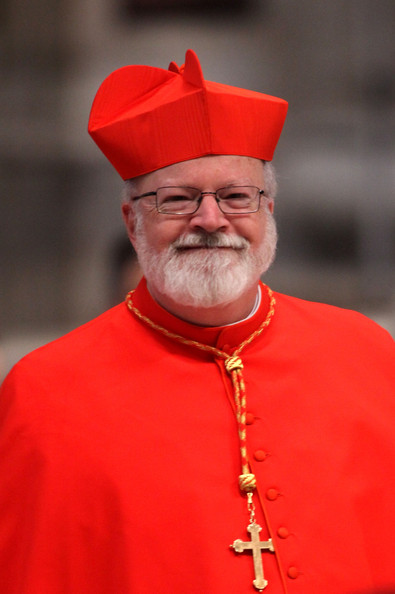
6. Cardinal Sean Patrick O’Malley. O.F.M. Cap., Metropolitan Archbishop of Boston (U.S.A.)

Image

7. Cardinal George Pell, Metropolitan Archbishop of Sydney (Australia)

Image

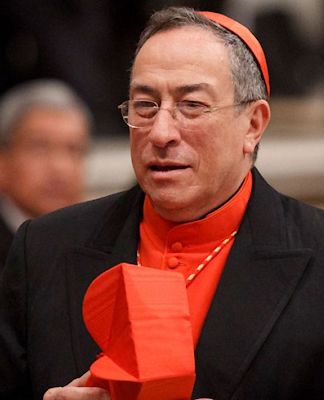
8. Cardinal Oscar Andrés Maradiaga Rodríguez S.D.B., Metropolitan Archbishop of Tegucigalpa (Honduras)

Image


As mentioned, the first meeting of the group would be from 1-3 October 2013, so I would not expect significant changes to the Roman Curia before the end of this year, or even early next year (2014).

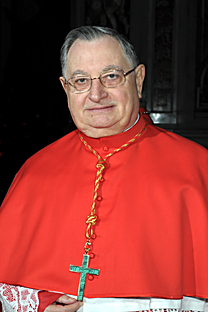
Passing of Cardinal Lorenzo Antonetti at the age of 90

Image

Cardinal Lorenzo Antonetti of Italy, the Cardinal-Priest of S. Agnese in Agone, and Pontifical Delegate Emeritus for the Basilica of St. Francis of Assisi, has passed away at the age of 90 on Wednesday, 10 April 2013.

http://www.gcatholic.org/hierarchy/data/cardJP2-7.htm#9

Cardinal Antonetti was created Cardinal in the Consistory of 21 February 1998, and his passing made changes to the composition of the College of Cardinals. The College of Cardinals now consists of 205 members, out of which 113 are Cardinal-electors and 92 are Cardinal non-electors (reduced by 1 due to Cardinal Antonetti’s passing).

Barring any future deaths, the next event involving the College of Cardinals would be the aging out of Cardinal Godfried Danneels of Belgium from the electorate on 4 June 2013, when he turns 80.

Minister General of the Franciscan Order, Jose Rodriguez Carballo of Spain appointed as the new Secretary of the Congregation for Institutes of Consecrated Life and Societies of Apostolic Life

The Minister General of the Order of Friars Minor, or better known as the Franciscans, Fr. Jose Rodriguez Carballo, had been appointed as the new Secretary of the Congregation for Institutes of Consecrated Life and Societies of Apostolic Life, filling up the vacancy left by his predecessor, Archbishop Joseph William Tobin, who was appointed the Archbishop of Indianapolis, USA last October (2012).

OLYMPUS DIGITAL CAMERA

Archbishop Jose Rodriguez Carballo is appointed Titular Archbishop of Bellicastrum, as part of his office as the Secretary of the Congregation, together with his new appointment. He is expected to be ordained bishop soon, either by the Pope or by a Cardinal delegated for the Episcopal Ordination.

Cardinal Audrys Juozas Backis of Vilnius, Lithuania retired and succeeded by Bishop Gintaras Linas Grusas

Image

Cardinal Audrys Juozas Backis, Metropolitan Archbishop of Vilnius in Lithuania, also the Cardinal-Priest of Nativita di Nostro Signore Gesu Cristo a Via Gallia, retired yesterday, Friday, 5 April 2013 from his position as the Archbishop of Vilnius, having exceeded the expected retirement age of 75, according to the Canon Law.

http://www.gcatholic.org/dioceses/diocese/viln0.htm#45455

Image

Bishop Gintaras Linas Grusas, who was the Military Ordinary of Lithuania, replaces Cardinal Backis, becoming the new Metropolitan Archbishop of Vilnius.

Cardinal Backis, who is currently 76 years old (born 1 February 1937) will still be a Cardinal-elector with right to vote in any future conclave until his 80th birthday on 1 February 2017.

Bishop Mario Aurelio Poli, Bishop of Santa Rosa, appointed new Metropolitan Archbishop of Buenos Aires

Image

In his first appointment of bishop, Pope Francis appointed his successor as the Metropolitan Archbishop of Buenos Aires, which was Pope Francis’ former seat, as Cardinal Jorge Maria Bergoglio.

http://www.gcatholic.org/dioceses/diocese/buen0.htm#5560

Bishop of Santa Rosa and former Auxiliary Bishop of Buenos Aires, Mario Aurelio Poli, was appointed today as the new Metropolitan Archbishop of Buenos Aires, Argentina.

Cardinal Juan Sandoval Iniguez turns 80, ceases to be a Cardinal-elector

Image

Today, Thursday, 28 March 2013, Cardinal Juan Sandoval Iniguez, Cardinal-Priest of Nostra Signora di Guadalupe e S. Filippo Martire, and Metropolitan Archbishop Emeritus of Guadalajara, Mexico, turns 80, and therefore, according to the rules written in the Apostolic Constitution Universi Dominici Gregis, he loses his right to vote in any future conclave.

http://www.gcatholic.org/hierarchy/data/cardJP2-6.htm#144

May God bless His Eminence Cardinal Sandoval Iniguez, with a blessed old age and health. May he remain strong in the faith and hopefully can perhaps still carry out the mission God had given him.

The College of Cardinals now stands at 206 members in total, with 113 Cardinal-electors and 93 Cardinal non-electors. There are now vacancy of 7 Cardinal-electors as compared to the maximum number of electors allowed in the Conclave of 120, although Popes John Paul II and Benedict XVI had sometimes surpassed this limit.

Next Cardinal-elector to age out (80) will be Cardinal Godfried Danneels on 4 June 2013.

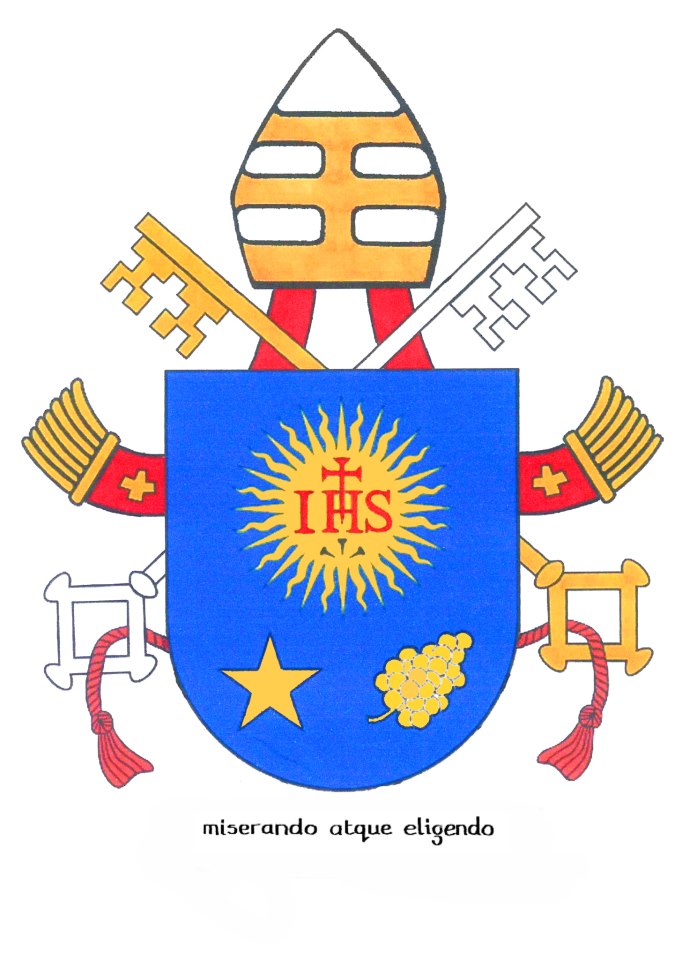
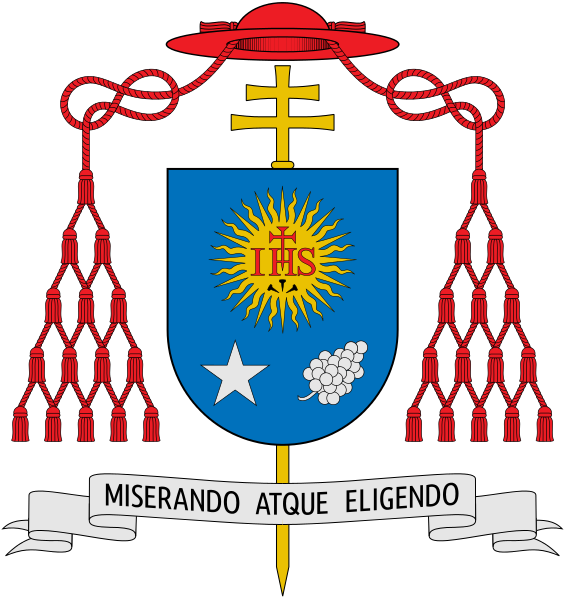
Official coat-of-arms of Pope Francis, the 266th Pope, Leader of the Universal Church

Image

The official coat-of-arms of Pope Francis, which followed closely the model established by Pope Benedict XVI, in placing the ‘three-tiered’ ‘papal mitre’ instead of the papal tiara, and following the same shield model as that of his Cardinalate and episcopal coat-of-arms, but with altered colours for the star and the grapes, from silver to gold.

Image

Pope Francis used his episcopal motto “Miserando atque Eligendo” which means “Lowly but chosen” in English, in line with his views and outlook on humility.

The Cardinal’s fifteen red tassels and the galero on top of it, is replaced by the papal arms standard including the three-tiered papal mitre and the crossed keys of the kingdom of heaven (silver and gold).

The symbols that appeared on the shield are first, the IHS symbol surrounded with a sun-like ray is the symbol of the Jesuit order (S.J.) of which Pope Francis is a member of, and the star on the bottom-left, in conjunction with the blue colouration of the shield represents the Virgin Mary, and the grape on the bottom right represents Jesus Christ, as the grower of the vineyard of the Lord.

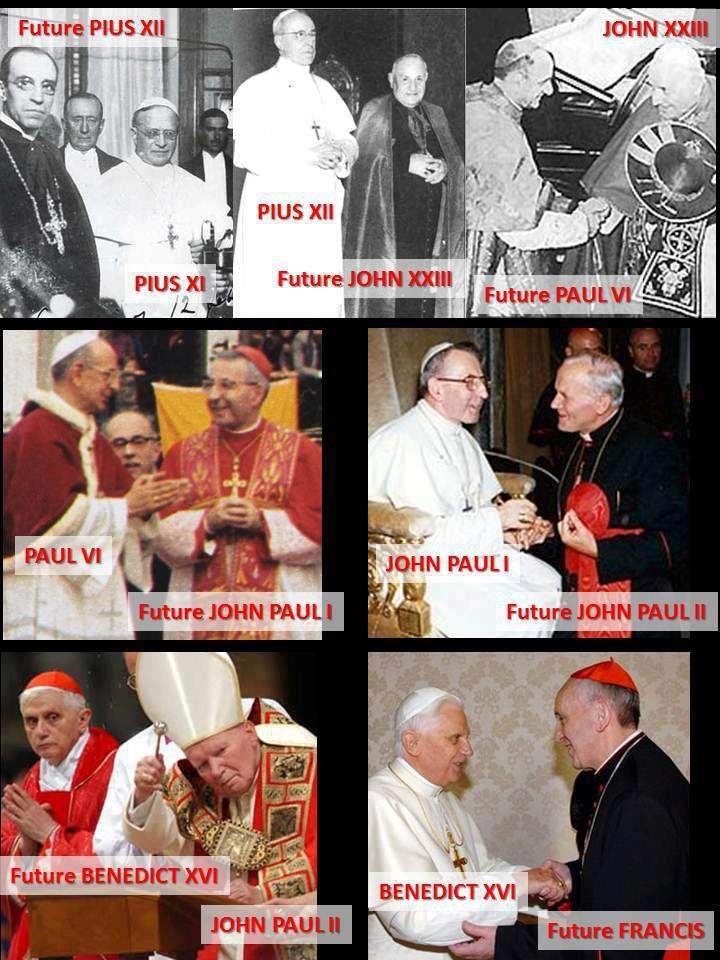
Pictures of Popes and their predecessors/successors

Image

(From UCatholic facebook page)

Depicted here are pictures of the Popes and their successors, or in the other way round, Popes and their predecessors. Most commonly between the reigning Pope and Cardinal who would be elected to succeed him.


List of Popes (and ‘future Popes’) in the depiction in chronological order :

1. Pius XI : 1922 – 1939

2. Pius XII : 1939 – 1958

3. John XXIII : 1958 – 1963

4. Paul VI : 1963 – 1978

5. John Paul I : 1978

6. John Paul II : 1978 – 2005

7. Benedict XVI : 2005 – 2013

8. Francis : 2013 – present (Will be known as Francis I if any of his future successors also pick the name Francis, who will then be Francis II)

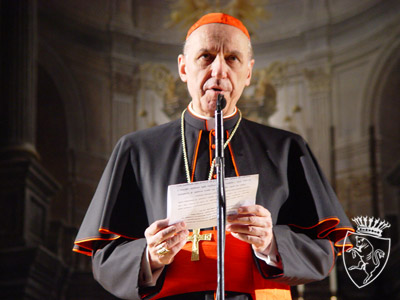
College of Cardinals : Cardinal Severino Poletto turns 80, ceases to be a Cardinal-elector

http://www.gcatholic.org/hierarchy/data/cardJP2-8.htm#125

Image

Cardinal Severino Poletto, Metropolitan Archbishop Emeritus of Torino in Italy, and Cardinal Priest of S. Giuseppe in Via Trionfale, who was elevated to the cardinalate on 21 February 2001 by Blessed Pope John Paul II, turns 80 today, Monday, 18 March 2013.

As such, Cardinal Poletto ceases to be a Cardinal-elector as of today, and lost in voting rights in any future Conclave, according to the Apostolic Constitution Universi Dominici Gregis.

The College of Cardinals now stands at 206 members, out of which there are 114 Cardinal-electors (minus one due to Cardinal Poletto) and 92 Cardinal non-electors.