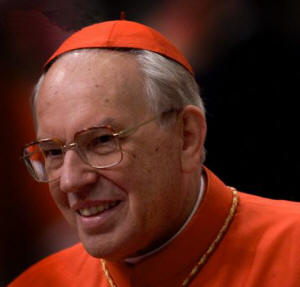
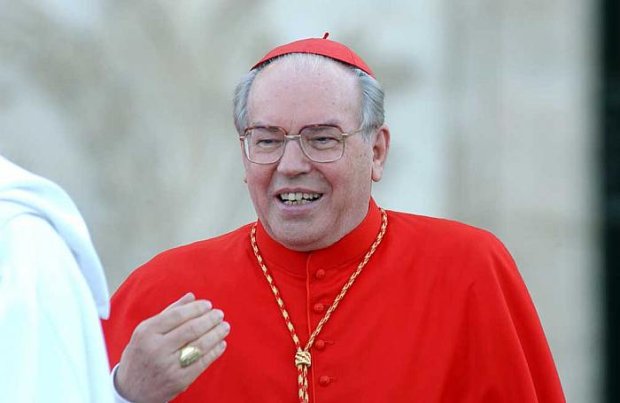
Cardinal Giovanni Batista Re (Italy), Prefect Emeritus of the Congregation for Bishops turns 80, ceases to be a Cardinal-elector

VATICAN POPE HOLY THURSDAY

Today, Thursday, 30 January 2014, Cardinal Giovanni Batista Re of Italy, Cardinal-Bishop of Sabina-Poggio Mirteto, the Prefect Emeritus of the Congregation for Bishops, turns 80, and therefore, according to the rules written in the Apostolic Constitution Universi Dominici Gregis, he loses his right to vote in any future conclave.

Cardinal Giovanni Batista Re was made Cardinal-Priest of Ss. XII Apostoli by Pope John Paul II in the 2001 Consistory of Cardinals on 21 February 2001, the eighth Consistory of his pontificate. Cardinal Re was made a Cardinal in honour of his long service to the Church as the Secretary of the Congregation for Bishops and the College of Cardinals from 1987 to 1989, and works in the Secretariat of State, until in 2000 when he was appointed the Prefect of the Congregation for Bishops. Cardinal Re was promoted as one of the six Cardinal Bishops in the Church in 2002, after the passing of Cardinal Bernardin Gantin of Benin.

RE Giovanni Battista

In his position as the senior Cardinal Bishop under 80 in 2013 Conclave, he is the Acting Dean of the College of Cardinals in the 2013 Papal Conclave which elected Pope Francis as the 266th Pope and Leader of the Universal Church.

http://www.gcatholic.org/hierarchy/data/cardJP2-8.htm#134

May God bless His Eminence Cardinal Re, with a blessed old age and health. May he remain strong in the faith and hopefully can perhaps still continue to work great graces and good works of love and peace in his old age and retirement, as he continued to minister to the people of God.

z2636005Q,Giovanni-Battista-Re--prefekt-Kongregacji-ds--Bisk

The College of Cardinals now stands at 199 members in total, with 106 Cardinal-electors and 93 Cardinal non-electors. There are now vacancy of 14 Cardinal-electors as compared to the maximum number of electors allowed in the Conclave of 120, although Popes John Paul II and Benedict XVI had sometimes surpassed this limit.

Next Cardinal-elector to age out (80) will be Cardinal Jean-Baptiste Pham Minh Man, the current Metropolitan Archbishop of Thanh-Pho Ho Chi Minh (Vietnam), on 5 March 2014.

Summary of the Tenth and the Last General Congregation of the College of Cardinals, and details on the Conclave

New Cardinals have been elected to lead the Particular Congregations (elected every 3 days) in the Conclave. Cardinal Antonios Naguib for the Cardinal Bishops; Cardinal Marc Ouellet for the Cardinal Priests; Cardinal Francesco Monterisi for the Cardinal Deacons. New leaders will be elected if after three days in the Conclave, the Conclave has not yet ended with the election of a new Pope. Their task is to guide the Cardinal Camerlengo, who is Cardinal Tarcisio Bertone.

28 Cardinals had spoken in the Tenth General Congregation, and a total of 161 Cardinals had already spoken in all the past General Congregations. Not all Cardinals who wanted to speak has spoken, as the number of Cardinals that spoke had made the Cardinals to vote whether to continue or to stop the General Congregation at that point (likely because it has taken too much time).

In the meanwhile, during the Sede Vacante, certain offices that represent the Holy See, particularly diplomatic representation, Nuncios, Delegates, and many other offices of the Holy See continue to function as per normal, even when the Apostolic See is vacant, and the Cardinals waiting to elect a new Pope. The Cardinal Camerlengo, Cardinal Tarcisio Bertone is the leader during the period of the Sede Vacante, having limited powers, with the College of Cardinals, in order to settle all matters, and all things pertaining to election of the new Pope.

This Monday evening at 5.30 pm Rome time / CET / UTC+1, all the personnels, about 90 of them, who are also ‘locked’ together with the Cardinal-electors in the Conclave, including doctors, nurses, bus drivers, and other staffs involved in maintenance of the Cardinals’ residence at Domus Sancta Marthae, will take their solemn oath of secrecy, in the presence of the Camerlengo of the College of Cardinals, Cardinal Tarcisio Bertone, and also in the presence of the Secretary of the College of Cardinals, Archbishop Lorenzo Baldisseri, Master of Pontifical Liturgical Celebrations, Monsignor Guido Marini and other officials.

The swearing of the oath of secrecy by the auxiliary personnel will not be live on Vatican Television (Therefore, may not be viewable in Vatican Player).

The Mass for the Election of the Roman Pontiff or Missa pro Eligendo Pontifice, which will begin the Conclave process, will be celebrated in St. Peter’s Basilica on Tuesday morning at 10 am Rome time / CET / UTC+1, and will be in Latin, but also with translations in Italian and English available in the Vatican official website.

Cardinal Dean of the College of Cardinals, Cardinal Angelo Sodano will be the celebrant of the solemn Mass, the concelebrants will be all the Cardinal-electors and the Cardinal non-electors currently present in Rome. The homily will also be available a short period of time just before the Holy Mass on Tuesday morning (Rome time), likely from the Vatican website.

The Cardinals will enter into the Conclave in the Sistine Chapel from the Pauline Chapel, from Cardinal Prosper Grech, who will deliver the second meditation to the Cardinal-electors, followed by the Cardinals in reverse order of precedence (first by order : bishop, priest, and deacon – reverse this), and then within these order, the Cardinals in order of creation (earlier created then later created, and also within the same consistory, those whose names are earlier in the order of creation have higher precedence – also reverse all this).

The last will be the Master of Pontifical Liturgical Celebrations, Monsignor Guido Marini, and Cardinal Giovanni Batista Re, the senior Cardinal Bishop who is an elector, who will be the leader of the Conclave in absence of Cardinal Sodano, the Dean, who is a non-elector (above 80). The Cardinals will proceed into the Sistine Chapel singing the Litany of the Saints, and the hymn Veni Creator Spiritus. After the oath-taking by the Cardinal-electors, Monsignor Marini will order the traditional “extra omnes”, or “all out!” order to all except the Cardinal-electors.

The entry into the Sistine Chapel will begin on Tuesday afternoon, at 4.30 pm Rome time / CET / UTC+1, and will be broadcasted live.

The first smoke signal from the chimney of the Sistine Chapel will be at sometime around 8 pm Rome time, and will not likely be a white smoke (It is unlikely that the new Pope will be elected in the first ballot, as there will only be one ballot session on Tuesday).

The Vatican camera (available in Vatican Player at http://www.vatican.va/video/) will be fixed on the chimney through this period and available live.

The senior Cardinal Bishop-elector, Cardinal Re, will be the one in place of the Cardinal Dean, who is a non-elector, asking the newly elected Pope whether he accepts the election and also ask him the regnal name that he will assume as the Pope.

A new addition for the 2013 Conclave is that, after the Pope receives the homage from all the Cardinal-electors in the Sistine Chapel, he will proceed with all the Cardinal-electors, to the Pauline Chapel, and the new Pope alone will enter the Chapel to pray before the Blessed Sacrament in the Chapel. In the meanwhile, the Cardinal Protodeacon, Cardinal Jean-Louis Tauran, will announce the traditional Habemus Papam announcement.

It took about one hour in 2005 Conclave from the white smoke appearance until the new Pope made his appearance on the balcony of St. Peter’s Basilica (also known as the Loggia). As the new addition of prayer in the Pauline Chapel is made for the 2013 Conclave, we can expect a time frame of slightly longer than 1 hour between the white smoke, and the appearance of the new Pope on the balcony.

Missa pro Eligendo Pontifice/Mass for the Election of the Roman Pontiff and the beginning of the Conclave

Both events are live from Rome, at Vatican Player, http://www.vatican.va/video/ and I believe are also covered live by several Catholic televisions in the USA, Canada, and other countries.


1. Missa pro Eligendo Pontifice / Mass for the Election of the Roman Pontiff

The Cardinals present in Rome, all the Cardinal-electors that will be entering the Conclave, will first gather for a Solemn Mass at St. Peter’s Basilica on Tuesday morning, 12 March 2013 at 10 am Rome time (CET or UTC+1). The Mass will be lead by the Cardinal Dean of the College of Cardinals, Cardinal Angelo Sodano, who is a non-elector.

Time in other parts of the world :

Tuesday, 12 March 2013 at 9 am UTC // 4 am EST // 1 am PST // 4 pm WIB or UTC+7 // 5 pm Singapore time or UTC+8


2. Beginning of the Conclave : Entry of the Cardinal-electors into the Sistine Chapel

The Cardinal-electors will assemble in Pauline Chapel on Tuesday afternoon, and the event will begin live at 4.30 pm Rome time (CET or UTC+1). The Cardinals will wear their full choir dress and then will proceed into the Sistine Chapel while singing the hymn Veni Creator Spiritus to invoke the Holy Spirit.

Then in the Sistine Chapel, the Cardinal-electors will take their oath, beginning with the senior Cardinal Bishop-elector, Cardinal Giovanni Batista Re, who leads the Conclave, and then the famous ‘extra omnes’ or ‘everybody else out’ order will be said by the Master of Papal Liturgical Celebrations, Monsignor Guido Marini.

Time in other parts of the world :

Tuesday, 12 March 2013 at 3.30 pm UTC // 10.30 am EST // 7.30 am PST // 11.30 pm WIB or UTC+7 //  Wednesday, 00.30 am Singapore time or UTC+8

My Guide to the Papal Conclave : Part II (From the beginning of the Conclave to the election of the new Pope)

Part I here : https://petercanisiusmichaeldavidkang.com/2013/03/09/my-guide-to-the-papal-conclave-part-i-from-before-to-the-conclave-to-its-beginning/


1. The Conclave begins after selected prayer done by each of the Cardinal-electors, after which then the Cardinal Dean or the senior Cardinal Bishop who is an elector (Cardinal Giovanni Batista Re) who will then ask if there is any need to confirm and re-explain the rules of the Conclave as written in the Apostolic Constitution Universi Dominici Gregis, and the modifications made by the two Motu Proprios released by Pope Benedict XVI, or whether the election can begin immediately without any issue.

If there is no questions raised or no request for reiteration of the rules, then the balloting to elect the new Pope can begin in earnest.


2. According to the Apostolic Constitution, Universi Dominici Gregis, the election of the new Pope can only be done by scrutiny, that is through secret ballot, in which each of the Cardinal-electors write the name of the Cardinal or the person the Cardinal-elector wishes to vote for as his candidate for the Papacy.


3. Pre-Scrutiny period : Three Cardinal-electors are selected as Scrutineers, another three as Infirmarii, and another three as the Revisers. All selections are done by drawing of lots among the Cardinal-electors. Their duties are :


a. Scrutineers : Add up all the votes that the Cardinal-electors have submitted, and if noone obtains two-thirds of the vote, no Pope has been elected, but otherwise, the new Pope had been elected, with a necessary minimum of more than two-thirds of the vote of all the Cardinal-electors (For 2013 conclave, this requires at least 77 votes).

b. Infirmarii : Carry the voting slips for the Cardinal-electors who are sick and therefore unable to attend the voting directly in the Sistine Chapel. Their task is to obtain the votes from the ill Cardinal-electors and then place them in a sealed container and bring the votes back to the Sistine Chapel to be tallied by the Scrutineers with the rest of the votes.

c. Revisers : Revisers act to check the calculation and tallies made by the Scrutineers to ensure that all the calculations are done meticulously, faithfully, and without any modifications or changes.


4. Scrutiny Proper : The Cardinal-electors receive two or three ballot slips each, with a blank line representing the place where they should place the name of the person they wish to vote for (only one name allowed, otherwise that ballot is invalid). They write the name, and then they bring it one by one to the receptacle on the Altar of the Sistine Chapel for the votes, in the presence of the Scrutineers, and before they place the ballot slip, they recite the words :

Testor Christum Dominum, qui me iudicaturus est, me eum eligere, quem secundum Deum iudico eligi debere.

I call as my witness Christ the Lord who will be my judge, that my vote is given to the one who before God I think should be elected.

Then they place the ballot slip into the receptacle, and then return to their respective places.


5. Once the ballot slips are all collected, the first Scrutineer shake the container to mix the votes, and then the last Scrutineer must count the number of votes inside the receptacle. The number of votes must tally with the number of Cardinal-electors (to avoid double-voting). If the number tallies correctly, the counting of the votes can begin. Otherwise, the votes are burned, and a second vote must immediately be taken.


6. For the vote counting, the first Scrutineer take one ballot paper, unfolding it, and taking note the name on the ballot, then pass the ballot to the second Scrutineer, who also takes note the name on the ballot, and then passing the ballot again to the third Scrutineer, who will then read the name on the ballot aloud to all the Cardinal-electors.

Only one ballot paper is allowed in each. If two ballot papers had been folded to make it look like one ballot, then if the name on both papers are the same, they count only as one vote. But if the names are different, they are invalid.


7. Once all the ballots are accounted for, and the names in them had been read out, the ballot papers are then secured together with a string to ensure that all the papers are in order, and the total votes are tallied together in order to get the number of votes that particular candidates receive in that voting session.

If no one receives more than two-thirds of the vote, then there is no new Pope elected.

If someone receives more than two-thirds of the vote, then a new Pope had been elected.


8. On the first day of the conclave, only one afternoon ballot may be held. Then if there is no Pope elected on that day, four ballots are held in the following days, with two ballot sessions in the morning, and two ballot sessions in the afternoon, until a new Pope is elected when someone receives more than two-thirds of the vote.


9. If after three days there had been no Pope elected, the voting session is suspended for maximum of one day to allow time for prayer and reflection among the Cardinal-electors, to allow them to discern carefully on their choices and pray for the inspiration of the Holy Spirit in electing a candidate as the new Pope.

Seven ballots occur afterwards, and if the Conclave has yet been able to elect a new Pope by then, another day is taken for the same break period for prayer, which is then followed by another seven ballots, and then break if the Conclave still yet fails to elect a new Pope, and so on and so forth until the new Pope had been elected.

If until 30 ballots had passed, and no one has been elected as the new Pope, the Cardinal Camerlengo will ask the Cardinal-electors on how to best proceed with the election of the new Pope. With the Motu Proprio released by Pope Benedict XVI in 2007, the provision allowing the Cardinals to go into absolute majority (50% + 1 vote) had been removed, and therefore election will definitely have to be settled with more than two-thirds majority.

After that discussion (after the 30th ballot), the two names with the greatest number of votes will be selected, and if the two names belong to the Cardinal-electors, these two Cardinal-electors lose their right to vote in the next ballot, in which this ballot will only include these two names. The new Pope however has to be still elected by two-thirds majority out of these two names. (This is to avoid a certain group of Cardinal-electors who fail to secure two-thirds majority for their candidate to stall the conclave so that they can elect their candidate by absolute majority as previously allowed by the Apostolic Constitution Universi Dominici Gregis, but such provision was removed by Pope Benedict XVI’s 2007 Motu Proprio).


10. After two ballots (in the morning, and in the afternoon), the votes from both ballot sessions in the morning or in the afternoon, immediately after the second ballot session (morning/afternoon) is burnt at the special stoves prepared for that purpose. Colouring chemicals are then used to make the smoke either black or white depending whether a new Pope had been elected or not.

The smoke will then come out from the chimney linked to the stoves, which is placed on the roof of the Sistine Chapel, and will be the first sign for the outside world whether a new Pope had been elected. The bells of St. Peter’s Basilica and churches around Rome will also be rung when a new Pope had been elected.

Black smoke (la fumata nera) : No new Pope had been elected, more ballots to go.

White smoke (la fumata bianca) : A new Pope had been elected, and the Conclave has ended.


11. When a new Pope had been elected, the Cardinal Dean, or his Vice Dean if the Dean is elected Pope (as the case in 2005 conclave when Cardinal Dean, Joseph Ratzinger was elected Pope), or the senior Cardinal Bishop present in the Conclave as an elector (Cardinal Giovanni Batista Re), will then approach the newly elected Pope, and ask him the formula of the acceptance :

Acceptasne electionem de te canonice factam in Summum Pontificem?

Do you accept your canonical election as Supreme Pontiff?


He will then answer “Accepto or I accept” if he accepts his election as Pope.


Then he will be asked :

Quo nomine vis vocari?

By what name do you wish to be called?


The new Pope will then answer the name he wish to be called (Benedict for Cardinal Joseph Ratzinger, who became Pope Benedict XVI, as there had been 15 other Popes named Benedict before him).


The names that the Popes had used in the past two centuries (from 1800) and what they will be like if the new Pope uses them in parenthesis :

1. John (John XXIV)

2. Benedict (Benedict XVII)

3. John Paul (John Paul III)

4. Paul (Paul VII)

5. Pius (Pius XIII)

6. Leo (Leo XIV)

7. Gregory (Gregory XVII)


12. After the newly elected Pope accepts his election, the Conclave ends, unless the new Pope says otherwise.


Continue to Part III here : https://petercanisiusmichaeldavidkang.com/2013/03/09/my-guide-to-the-papal-conclave-part-iii-from-the-election-of-the-new-pope-to-the-urbi-et-orbi-blessing-by-the-new-pope/

My Guide to the Papal Conclave : Part I (From before the Conclave to its beginning)

What will happen inside the Conclave, from before the Cardinal-electors enter the Sistine Chapel and be sealed from the outside world, until a new Pope had been elected? Follow the proceedings of the Conclave step-by-step as I explained them here in three parts (Part I, Part II, and Part III) :


1. Before the Conclave, the Cardinals gather in the General Congregations, or meetings where they will raise issues and discuss these matters pertaining to the Church, its governance, and many other matters they may want to bring up to attention to the whole College of Cardinals.

Of great importance is also the necessary and wanted qualities in the next Pope, which will therefore allow the Cardinals to make an informed decision on who to elect. Then finally, the General Congregation also decides the date of the Conclave, when they will actually enter the Sistine Chapel and begin the Conclave officially.

The Conclave can begin only after 15 days of the vacancy of the Apostolic See, but must not begin later than 20 days after the vacancy according to the rules governing the Conclave as written in the Apostolic Constitution Universi Dominici Gregis. However, the provision provided by the Motu Proprio Normas Nonnullas allow the Cardinals to begin the Conclave less than 15 days from the date when the Apostolic See became vacant, providing that all the Cardinal-electors that will take part in the Conclave had all arrived in Rome by then.

The Cardinal-electors will also be assigned their rooms in their residence throughout the Conclave period, the Domus Sancta Marthae by the means of random lots.


2. Particular Congregations also meet during this period before the Conclave, led by Cardinal leaders elected every 3 days, to discuss issues within specific groups within the College of Cardinals, and to complement the General Congregation meetings.

Unlike the General Congregation meeting which can be attended by Cardinal-electors and non-electors (those above the age of 80) alike, Particular Congregations are only attended by Cardinal-electors, and unlike General Congregation which meets before the Conclave, the Particular Congregations continue into the Conclave.


3. Before the Conclave begins, the Cardinals gather and celebrate together the Mass for the Election of the Roman Pontiff or the Missa pro Eligendo Pontifice in St. Peter’s Basilica, to pray for the successful election of the new Pope in the Conclave.


4. Then the Cardinals gather in the Pauline Chapel just before the start of the Conclave in complete choir dress (biretta and mozzetta), and then lead by the Cardinal Dean of the College of Cardinals (currently Cardinal Angelo Sodano, who is a non-elector, and therefore he will not join the Conclave after that) or the most senior Cardinal Bishop who is an elector (Cardinal Giovanni Batista Re), they proceed into the Sistine Chapel while singing together the Hymn Veni Creator Spirit, to invoke the Holy Spirit, and also the Litany of the Saints to ask the prayer from the holy Saints of God on the Cardinal-electors in the election of the new Pope.

The Cardinals will proceed in reverse order of precedence, beginning with the most junior Cardinal Deacon, to the most senior Cardinal Deacon, and then the most junior Cardinal Priest, and to the most senior Cardinal Priest, and then the most junior Cardinal Bishop to the most senior Cardinal Bishop. The last will be the Master of Pontifical Liturgical Celebrations (Monsignor Guido Marini) and the Cardinal Dean (In 2013 conclave, as the Cardinal Dean, Cardinal Angelo Sodano is over 80 and thus is not an elector, he was replaced with the most senior Cardinal Bishop who is an elector, in this case, Cardinal Giovanni Batista Re).


5. Once in the Sistine Chapel, the Cardinal-Dean or the senior Cardinal Bishop-elector will then read out aloud the oath that all the Cardinals have to take, according to the formula written in the Apostolic Constitution, Universi Dominici Gregis, and with the modifications made by the Motu Proprio Normas Nonnullas, all the other personnels involved in the Conclave, and sealed inside the Conclave also have to take the same oath. Then the Cardinal-electors by their order of precedence, march one by one to an open Book of the Gospels, to make the oath by touching their hands on the Gospels and solemnly vow to keep the oath.


The oath in Latin :

Ego N. N. promitto et iuro me inviolate servaturum esse secretum absolutum cum omnibus quotquot participes non sunt Collegii Cardinalium electorum, hoc quidem in perpetuum, nisi mihi datur expresse peculiaris facultas a novo Pontifice electo eiusve Successoribus, in omnibus quae directe vel indirecte respiciunt suffragia et scrutinia ad novum Pontificem eligendum.

Itemque promitto et iuro me nullo modo in Conclavi usurum esse instrumentis quibuslibet ad vocem transmittendam vel recipiendam aut ad imagines exprimendas quovis modo aptis de iis quae tempore electionis fiunt intra fines Civitatis Vaticanae, atque praecipue de iis quae quolibet modo directe vel indirecte attinent ad negotia coniuncta cum ipsa electione. Declaro me editurum esse ius iurandum utpote qui plane noverim quamlibet eius violationem adducturam esse excommunicationis mihi poenam latae sententiae Sedi Apostolicae reservatae.

Sic me Deus adiuvet et haec sancta Dei Evangelia, quae manu mea tango.

The oath in English :

I, N.N., promise and swear that, unless I should receive a special faculty given expressly by the newly-elected Pontiff or by his successors, I will observe absolute and perpetual secrecy with all who are not part of the College of Cardinal electors concerning all matters directly or indirectly related to the ballots cast and their scrutiny for the election of the Supreme Pontiff.

I likewise promise and swear to refrain from using any audio or video equipment capable of recording anything which takes place during the period of the election within Vatican City, and in particular anything which in any way, directly or indirectly, is related to the process of the election itself.

I declare that I take this oath fully aware that an infraction thereof will incur the penalty of automatic (‘latae sententiae’) excommunication reserved to the Apostolic See.

So help me God and these Holy Gospels which I touch with my hand.

6. After all the Cardinal-electors and the personnel locked inside the Conclave had taken their oath, the Master of Pontifical Liturgical Celebrations (Monsignor Guido Marini) will stand at the door of the Sistine Chapel, and all the people not sealed in the Conclave are asked to leave, with the traditional pronouncement, “extra omnes” that means “All/Everybody else, out!”


7. The Master of the Pontifical Liturgical Celebrations, Monsignor Marini will stay behind for a while, while the second meditation is delivered by the ecclesiastic chosen to do so (Cardinal Prosper Grech, Cardinal non-elector from Malta) to the Cardinal-electors.

After the second meditation is completed, both the Master of Pontifical Liturgical Celebrations and the ecclesiastic will leave the Sistine Chapel, and the Conclave will officially begin, and the Sistine Chapel closed off to all except the Cardinal-electors and those sealed with them during the duration of the Conclave.


Continue to Part II here : https://petercanisiusmichaeldavidkang.com/2013/03/09/my-guide-to-the-papal-conclave-part-ii-from-the-beginning-to-the-election-of-the-new-pope/