When will the papal conclave begin? Possibly between 9-11 March 2013, 10 days after Sede Vacante starts

http://www.ncregister.com/daily-news/conclave-expected-to-begin-between-march-9-11/

Conclave likely to begin between 9 March 2013 and 11 March 2013 according to a Vatican official. Based on the Motu Proprio Normas Nonnullas released by Pope Benedict XVI to clarify and modify the rules of the Conclave as stated in the Apostolic Constitution Universi Dominici Gregis, the Conclave can begin earlier than 15 days after sede vacante began.

However, the decision on the date of the beginning of the Conclave rests entirely on the College of Cardinals, who will decide in the General Congregation of Cardinals and other meetings that will begin today, Friday, 1 March 2013.

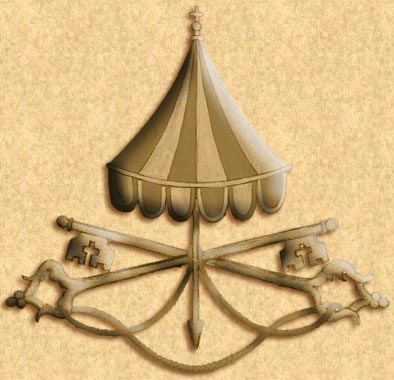
Sede Vacante has begun. The See of Rome is Vacant

Therefore, as of now, Thursday, 28 February 2013, at 8 pm CET (UTC+1), Pope Benedict XVI is no longer our Pope, and the See of Rome is vacant.

Image

Let us all pray, first for His Holiness Benedict XVI, Bishop Emeritus of Rome, that God will continue to guide him in his prayerful life as a simple pilgrim, to the end of his journey in this world. We will always remember him as our beloved Pope.

Then, of course, let us pray that God will soon appoint the new shepherd, successor of St. Peter the Apostle, through the Holy Spirit and guidance to the Cardinal-electors who will elect the new Pope in the conclave which will begin likely in about 10 days from now, according to the rules of Apostolic Constitution Universi Dominici Gregis and the corresponding modifications by the Motu Proprio Normas Nonnullas.

Explanation on the changes brought by Motu Proprio Normas Nonnullas on the Conclave

http://vaticaninsider.lastampa.it/en/the-vatican/detail/articolo/motu-proprio-benedetto-xvi-benedict-xvi-benedecto-xvi-conclave-22655/

Modifications to the Apostolic Constitution Universi Dominici Gregis that regulates the Papal Conclave, as explained in English by Vatican Insider, with three main changes highlighted :


1. Conclave can begin earlier than 15 days after the vacancy of the See of Rome, but the exact date depends entirely on the College of Cardinals.

2. Cardinal-electors can opt not to attend the Conclave based on health and other valid reasons, but otherwise, all electors should attend, and those with the rights should not be impeded attendance at the Conclave.

3. All people locked inside the Conclave, including even the laity must take the oath of secrecy, the same as that of the Cardinals. More specific latae sententiae excommunication is given immediately to those who broke the oath during and even after the Conclave, unless permission given by the new Pope.

Cardinal Lubomyr Husar reaches age 80 and therefore becomes ineligible to vote in the Papal Conclave

Today, Tuesday, 26 February 2013, Cardinal Lubomyr Husar, Major Archbishop Emeritus of Kyiv-Halic, and thus the former leader of the Ukrainian Catholic Church (Eastern Rite Catholic Church) in full communion with Rome, turns 80, and by the rules laid out in the Apostolic Constitution Universi Dominici Gregis, can no longer participate in the Conclave to elect the new Pope.

The College of Cardinals now stand at 208 members, with 117 electors (2 will not attend the Conclave in March 2013) and 91 non-electors.

We wish His Eminence a happy birthday and pray for him that God will always guide him and strengthen him, that even in his old age and retirement, he will still be able to do great things for the greater glory of God. May God bless Cardinal Husar and the Ukrainian Church. Amen!

Ad multos annos, Your Eminence!

English version of the Pope’s latest Motu Proprio : Normas Nonnullas

http://www.zenit.org/en/articles/motu-propio-apostolic-letter-regarding-the-election-of-the-roman-pontiff

Here is the English version of the Motu Proprio Normas Nonnullas on the election of the Supreme Pontiff (Pope) by Zenit. Happy reading and God bless!

Pope Benedict XVI’s latest and last Motu Proprio : Normas Nonnullas on the Papal Conclave (Updated)

http://www.vatican.va/holy_father/benedict_xvi/motu_proprio/documents/hf_ben-xvi_motu-proprio_20130222_normas-nonnullas_lt.html

Pope Benedict XVI has published his last Motu Proprio concerning the rules of the Conclave as laid out in the Apostolic Constitution Universi Dominici Gregis, by Blessed Pope John Paul II, to clarify and modify some portions of the rules to suit the developments in the current time, and to affirm the rules as written in the Universi Dominici Gregis.


1. Cardinal-electors that had been given the right to elect the new Pope and had been rightfully granted that right must not be deprived of his right to join the Conclave and elect the new Pope.


2. It grants the College of Cardinals more liberty in the date of the commencement of the Conclave, providing all the Cardinals rightfully given the voting rights and intending to attend the Conclave has been gathered in Rome, as opposed to the previous rule of compulsory 15 days between the vacancy of the See of Rome to the beginning of the Conclave. 15 days here should still be observed, but if the College deems it right for the Conclave to begin, they can do so. Thus, the Conclave can begin earlier than 15 March 2013 for this year’s Conclave.


3. The whole area of the Vatican City and the areas around the Sistine Chapel will be restricted during the period of the Conclave, to prevent any leakage of secrecy of the Conclave to the outside world. Especially the area from Domus Sancta Marthae where the Cardinals reside during the Conclave and the Sistine Chapel, where they gather and vote. Anyone breaching this rule, will be given latae sententiae (automatic) excommunication, which is more precisely mentioned than the previous rule, which only mentioned severe punishment. Latae sententiae excommunication is specified in the new ruling.


4. The oaths prescribed in the Universi Dominici Gregis, to be taken by every Cardinal-electors at the start of the Conclave. In addition, in the new rule, all those involved in the Conclave, also have to take the oath, not just the Cardinal-electors :

Latin : ‘Ego N. N. promitto et iuro me inviolate servaturum esse secretum absolutum cum omnibus quotquot participes non sunt Collegii Cardinalium electorum, hoc quidem in perpetuum, nisi mihi datur expresse peculiaris facultas a novo Pontifice electo eiusve Successoribus, in omnibus quae directe vel indirecte respiciunt suffragia et scrutinia ad novum Pontificem eligendum.

Itemque promitto et iuro me nullo modo in Conclavi usurum esse instrumentis quibuslibet ad vocem transmittendam vel recipiendam aut ad imagines exprimendas quovis modo aptis de iis quae tempore electionis fiunt intra fines Civitatis Vaticanae, atque praecipue de iis quae quolibet modo directe vel indirecte attinent ad negotia coniuncta cum ipsa electione. Declaro me editurum esse ius iurandum utpote qui plane noverim quamlibet eius violationem adducturam esse excommunicationis mihi poenam latae sententiae Sedi Apostolicae reservatae.’

English (rough translation) : ‘I, NN., promise and swear to keep inviolate the absolute secret from all those who are not participants in the (election of the Pope) by the College of Cardinals, even in perpetuity, unless expressly given me special permission from the newly elected Pope and his successors, in all things which are directly or indirectly concern the votes and ballots to the choosing a new Pope.

So again, I promise and I swear I am in no way, whatsoever, to the sound of instruments in the Conclave of sending or receiving, or would make use of to  represent the images in any way suitable at the time of the election are to be done within the confines of Vatican City on those matters which, in any way, and especially on those matters which pertain to the business of directly or indirectly linked to with the election. It is well explained and clear to me, who so obviously should know that any violation of his oath will lead to excommunication to me, under the penalty of latae sententiae excommunication, reserved to the Apostolic See.


5. That the new Pope can only be elected with secret ballot or scrutiny. No acclamation, no compromise, and no absolute majority (or more than 50% of votes) in the event of long conclave. This has been earlier abrogated by Pope Benedict XVI who reiterated the absolute requirement of at least two-thirds of all Cardinals’ votes for one to be elected a new Pope.


6. If the Conclave failed to reach conclusion after a period of time, a day of prayer and reflection, and contemplation should be included before voting begins again. Then in the next round of voting, only the two names with the highest number of votes in the previous ballot would be included.


7. The formula of the question by the Cardinal Dean to the newly elected Pope is affirmed :


Latin : Acceptasne electionem de te canonice factam in Summum Pontificem?

English : Do you accept the Canonical election as the Supreme Pontiff?


Latin : Accepto

English : I accept


Latin : Quo nomine vis vocari?

English : What do you wish to be called?


Latin : Vocabor X

English : I wish to be called X.

(X will be the regnal name, for example, Benedict for our Pope Benedict XVI)

Papabili for the 2013 Papal Conclave (List) : My summary and opinions

Cardinal Angelo Scola : My favourite to be the next Pope. The leading Italian candidate, Archbishop of Milan, and former Patriarch of Venice. He is also a spiritual and intellectual disciple of our beloved Pope Benedict XVI, with similar views on the liturgy. Best person to continue the work that has been started by Pope Benedict XVI on ‘reform of the reform’ and other issues of the faith and the Church.

View his videos, homilies, activities, and Masses at his site : http://angeloscola.it/ and the Youtube page of Archdiocese of Milan at : http://www.youtube.com/user/itleditore

Cardinal Marc Ouellet : Canadian, Prefect of the Congregation for Bishops, former Primate of Canada and Metropolitan Archbishop Emeritus of Quebec. My second favourite and alternative to Cardinal Scola to be the next Bishop of Rome, and also widely regarded as the top non-Italian and non-European candidate. He is also close to our Pope Benedict XVI in his views and intellectually as well, though may be not as close as Cardinal Scola is. He has done a great job at the Congregation, and has seen the appointment of bishops who are not just good administrators, but also good in intellect and faith as well.

Cardinal Gianfranco Ravasi : Italian, President of the Pontifical Council for Culture, well-known for his activity in engaging the media and the new media, particularly through the Internet, via Twitter and other social media in the approach for new evangelisation, and also has done great works among the youth, who are the Church’s future. May have chance if Cardinal Scola’s candidacy does not make it. Drawback is that he has less experience, being only less than 3 years as a Cardinal and about 6 years as a bishop, with little experience outside the Pontifical Council for Culture.

Cardinal Tarcisio Bertone : Italian, Cardinal Secretary of State. The prime Cardinal in the Roman Curia, the second hand of the Pope. He is seen as a strong leader, but many has seen that he is a rather dominating persona, which may be incompatible with the office of the Papacy, and he is also rather too old at 78 going 79 at the end of this year. As Pope Benedict XVI was elected just on his 78th birthday, just like Cardinal Arinze, who is already above 80, the chance of the College of Cardinals to elect someone too old is getting more remote, especially considering the reason for Pope Benedict XVI’s decision to retire and renounce the position as the Bishop of Rome.

Cardinal Timothy Dolan : American, Metropolitan Archbishop of New York. Jovial and lively, reminds me much of Blessed Pope John XXIII. Conservative in issues and outlook. However, being a Cardinal from the world’s only superpower and also the troubles in the American church makes his chances rather slim. However, his youth, his charisma, and his position as the President of the US Catholic Bishops’ Conference may boost his chances to be elected.

Cardinal Raymond Burke : American, Prefect of Supreme Tribunal of Apostolic Signatura (or the Supreme/Chief Justice of the Holy See). Relatively young and traditional, worn the traditional Cardinal dress (galero and cappa magna) and one of the more-traditionally minded Cardinal in the College. Often celebrated the Mass in the Extraordinary Form. May be a good choice for those looking for a more traditional candidate as the next Pope, to continue the ‘reform of the reform’ of Pope Benedict XVI.

Cardinal Christoph Schonborn : Austrian. Metropolitan Archbishop of Vienna. Long seen as the contender for the Papacy, even since the 2005 election. Still rather young at 68 (even younger during the 2005 conclave). However, he is a controversial figure, often recorded with the liturgical abuses (he himself may not mean so, as his funeral Mass for the late Archduke Otto of Austria was done very reverently and liturgically correct), such as the youth Mass with rock concert/party style-Mass and not-so-traditional types of worship, and then with a German currently as the Bishop of Rome, it is less likely that the Cardinals will elect another German as Pope, even though he came from neighbouring Austria.

Cardinal Francis Arinze : Nigerian, Former Prefect of the Congregation for the Divine Worship and the Discipline of the Sacraments. Often touted recently in the media with Cardinal Peter Turkson, another African (Ghana), due to the intense media bias on the possibility of having an African Pope in this Conclave. Not to be biased, but what the media often reported is not what is the actual happening on the ground. Main problem is, according to Universi Dominici Gregis, although it specifically state that he cannot vote as elector because he is already above 80 of age, he may still be elected, but considering that Pope Benedict XVI has resigned at the age of 85 going 86, the Cardinals will likely want to elect someone in their early 70s like Cardinal Scola or late 60s like Cardinal Ouellet.

Cardinal Peter Turkson : Ghana (Africa), President of Pontifical Council for Justice and Peace. Seen by many as a strong contender, but with main issues regarding his frequent gaffes and improper comments regarding Muslim-Christian relations, which is a very important and delicate matter in the Church indeed. He was also censured somewhat for his screening of a clip that showed the rise of Islam in Europe last year, which quite a few Cardinals saw as fearmongering. In addition, his name, Peter, may bring about intense speculation on Petrus Romanus (Peter the Roman) in the Prophecy of St. Malachy on the Popes. Petrus Romanus, being the last Pope, will come at the time near the end of time, heading the Church in the time of persecution (as perhaps told in the Book of Revelations). As this last prophecy is not numbered, it is most likely that St. Malachy purposely did so / the vision given by the Lord purposely did so such that we know what’s going to happen, but not the exact time when the Lord will come again, so that we will always be ready for His coming. So, no, most likely we won’t have a Peter or Pope Peter in this time round. (Addition : Cardinal Turkson has also openly announced that he is ready to be elected if he is. Normally this is frowned, as this is seen as ambition, and incompatible with the will of the Holy Spirit. Remember that the papal conclave is not the same as the US presidential elections or any other secular elections, it is far above that).

Cardinal Luis Antonio Gokim Tagle : Filipino (Asia), Metropolitan Archbishop of Manila. A young and new Cardinal appointed by the Pope at his last consistory last November. This may be seen by some as the Pope appointing his ‘successor’ but it is actually not so. I myself hope that he will be elected Pope, but not this time, maybe after the next one, and he can have the chance to be the 268th Pope instead (we are electing the 267th Bishop of Rome in this conclave). First is his very young age, and his relative lack of experience in both as a Cardinal and the Archbishop of Manila. I have very high opinions on Cardinal Tagle and was very glad when he was named a Cardinal last year, but to me, let Cardinal Tagle do great works first in Manila for many more years, and then, with all those experiences, then he can become an even better Pope next time.

This list is still incomplete, and I will post additions from time to time. In any case, it is not man to decide who’s the next leader of the Universal Church, the Vicar of Christ. It is Christ Himself, through the Holy Spirit, and thus through the Cardinal-electors inspired by the Spirit who decides. Pray for them, and for the entire Universal Church, and for the whole world. Amen.

Full text of the Apostolic Constitution, Universi Dominici Gregis, governing the Papal Conclave

http://www.vatican.va/holy_father/john_paul_ii/apost_constitutions/documents/hf_jp-ii_apc_22021996_universi-dominici-gregis_en.html

The Apostolic Constitution, Universi Dominici Gregis, released by Blessed Pope John Paul II on 22 February 1996, which regulates the Papal conclave, and as such, was in effect in the 2005 papal conclave, and should also govern the 2013 papal conclave, which will begin within a month or so from now.

Let us pray for the Cardinal-electors, for our Pope Benedict XVI, for his successor-to-be, and for the Universal Church and the world. Amen.

Papal Conclave will begin between 15 March 2013 to 20 March 2013

http://www.romereports.com/palio/vatican-conclave-will-begin-between-march-15-and-20-english-9048.html

It is confirmed that in accordance with the rules of the Papal Conclave, the Universi Dominici Gregis (UDG), that a conclave must begin within 15 to 20 days from the time the See of Rome is vacant, either by death or the renouncement by the previous Pope, the Conclave date has been set to be sometime in mid-March.

Let us all pray together that God will send His Holy Spirit to all the Cardinal-electors, that we will soon have a new shepherd, the Bishop of Rome, successor to our beloved Pope Benedict XVI, Blessed Pope John Paul II, and St. Peter the Apostle. God be with us all, His Church!

+Ut Omnes Unum Sint, ad Maiorem Dei Gloriam+
(That they all may be One, for the greater glory of God)