Imposition of the pallium on the new Metropolitan Archbishops by Pope Francis

On the great Feast day and Solemnity of Saints Peter and Paul, Apostles, the feast day of the Church of Rome, on Saturday, 29 June 2013, 34 new Metropolitan Archbishops will receive the pallium, the symbol of their metropolitan office from Pope Francis, in a Mass at St. Peter’s Basilica.
Pallium (Pallium)
1_0_674753 (Papal Pallium)
Pallium is a woolen band, worn around the shoulders, as a symbol of office, representation of the Good Shepherd, with Jesus carrying the lamb on His shoulder, which is reminiscent of the authority entrusted upon the Metropolitan Archbishops over their flocks. Pallium therefore is a symbol of authority. It is about three fingers wide, and has six black crosses, out of which three are pierced with a golden pin, representing the wounds of Christ pierced by the holy nails on the cross.
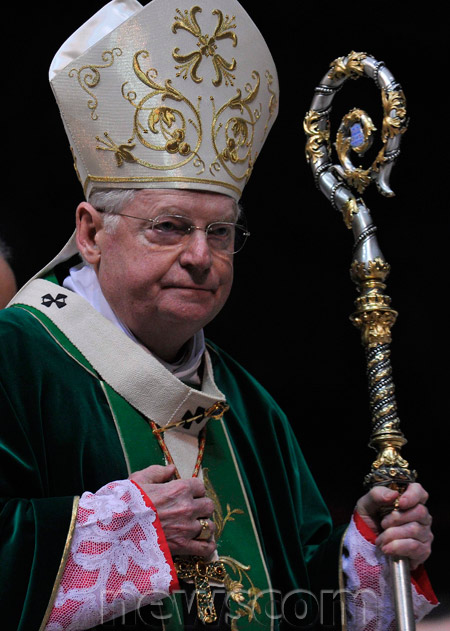
angelo-scola
(Above : image of Cardinal Angelo Scola, wearing the pallium, as the Metropolitan Archbishop of Milan, who received the pallium personally from Pope Benedict XVI in 2011)
Papal pallium from 2005 is different, in order to distinguish the nature of the Papal office, as the Pope is not just any bishop or Metropolitan Archbishop, but is Metropolitan over the entire world, the entire Church, as the Vicar of Christ.
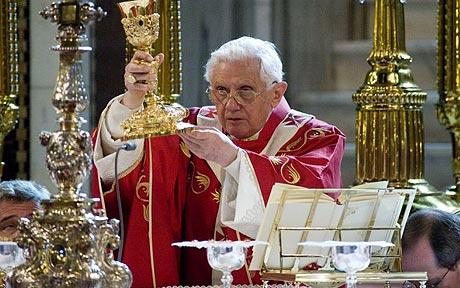
Pope-Benedict-XVI
(Above : Pope Benedict XVI with the Papal pallium in 2012)

The list of the new Metropolitan Archbishops who will receive the pallium below.

1. Patriarch Manuel Jose Macario do Nascimento Clemente, Patriarch of Lisbon (Portugal)
2. Archbishop Dieudonne Nzapalainga, C.S.Sp., Metropolitan Archbishop of Bangui (Central African Republic)
3. Archbishop Carlo Roberto Maria Redaelli, Metropolitan Archbishop of Gorizia (Italy)
4. Archbishop Claudio Dalla Zuanna, S.C.I., Metropolitan Archbishop of Beira (Mozambique)
5. Archbishop Prakash Mallavarapu, Metropolitan Archbishop of Visakhapatnam (India)
6. Archbishop Antonio Carlos Altieri, S.D.B., Metropolitan Archbishop of Passo Fundo (Brazil)
7. Archbishop Marek Jedraszewski, Metropolitan Archbishop of Lodz (Poland)
8. Archbishop Philip Tartaglia, Metropolitan Archbishop of Glasgow (Great Britain)
9. Archbishop Salvatore Joseph Cordileone, Metropolitan Archbishop of San Francisco (USA)
10. Archbishop Rolando Joven Tria Tirona, O.C.D., Metropolitan Archbishop of Caceres (Philippines)
11. Archbishop Rogelio Cabrera Lopez, Metropolitan Archbishop of Monterrey (Mexico)
12. Archbishop Joseph William Tobin, C.Ss.R., Metropolitan Archbishop of Indianapolis (USA)
13. Archbishop Carlos Maria Franzini, Metropolitan Archbishop of Mendoza (Argentina)
14. Archbishop Lorenzo Ghizzoni, Metropolitan Archbishop of Ravenna-Cervia (Italy)
15. Archbishop George Antonysamy, Metropolitan Archbishop of Madras and Mylapore (India)
16. Archbishop Anil Joseph Thomas Couto, Metropolitan Archbishop of Delhi (India)
17. Archbishop John Wong Soo Kau, Metropolitan Archbishop of Kota Kinabalu (Malaysia)
18. Archbishop Murray Chatlain, Metropolitan Archbishop of Keewatin-Le Pas (Canada)
19. Archbishop Sérgio Eduardo Castriani, C.S.Sp., Metropolitan Archbishop of Manaus (Brazil)
20. Archbishop Peter Loy Chong, Metropolitan Archbishop of Suva, (Fiji)
21. Archbishop Alfonso Cortes Contreras, Metropolitan Archbishop of Leon (Mexico)
22. Archbishop Alexander King Sample, Metropolitan Archbishop of Portland in Oregon (USA)
23. Archbishop Joseph Effiong Ekuwem, Metropolitan Archbishop of Calabar (Nigeria)
24. Archbishop Jesus Juarez Parraga, S.D.B., Metropolitan Archbishop of Sucre (Bolivia)
25. Archbishop Fabio Martinez Castilla, Metropolitan Archbishop of Tuxtla Gutierrez (Mexico)
26. Archbishop Ramon Alfredo Dus, Metropolitan Archbishop of Resistencia (Argentina)
27. Archbishop Mario Aurelio Poli, Metropolitan Archbishop of Buenos Aires (Argentina)
28. Archbishop Gintaras Linas Grusas, Metropolitan Archbishop of Vilnius (Lithuania)
29. Archbishop Michael Owen Jackels, Metropolitan Archbishop of Dubuque (USA)
30. Archbishop Duro Hranic, Metropolitan Archbishop of Dakovo-Osijek (Croatia)
31. Archbishop Moacir Silva, Metropolitan Archbishop of Ribeirao Preto (Brazil)
32. Archbishop Jozef Piotr Kupny, Metropolitan Archbishop of Wroclaw (Poland)
33. Archbishop Sergio Alfredo Gualberti Calandrina, Metropolitan Archbishop of Santa Cruz de la Sierra (Bolivia)
34. Archbishop Giuseppe Petrocchi, Metropolitan Archbishop of L’Aquila (Italy)
In addition, the Metropolitan Archbishop of Hue, Archbishop Francois Xavier Le Van Hong, will not receive the pallium directly from the Pope in Rome, but in his home diocese of Hue, through the papal representative. Therefore, in addition to the 34 Metropolitan Archbishops mentioned above, 35 Metropolitan Archbishops will receive the pallium in this year.
35. Archbishop Francois Xavier Le Van Hong, Metropolitan Archbishop of Hue (Vietnam)

Metropolitan Archbishop differs from normal Archbishops in that, they have jurisdiction over other dioceses that are placed under their supervision, in a group called Ecclesiastical Province of the Church. Archbishops of Archdioceses without Metropolitan character has no jurisdiction over any dioceses under them, and they are usually directly subject to the Holy See.
Tuesday, 11 June 2013 : 10th Week of Ordinary Time, Memorial of St. Barnabas, Apostle (Scripture Reflection)

Dear brothers and sisters in Christ, today, we celebrate a feast of a great Apostle and Church Father of the early Church of Christ, that is our One, Holy, Catholic, and Apostolic Church. St. Barnabas the Apostle was a constant travel companion of St. Paul during his apostolic trips and missions across the Eastern Mediterranean region.

St. Barnabas was a devout follower of Christ, and was chosen among many, with Paul, whom the Lord Himself converted to His cause, to be the spearhead in the spread of God’s Gospel and as the champions of the faith, allowing the spread of the Good News and the propagation of God’s message of salvation to many people who long for God’s love and care.

At the time of the Apostles, the Church was still in its early days, in its youth. Jesus Christ our Lord had just died, resurrected, and then risen up to heaven. It was an enormous task that Jesus had entrusted to all of them, to make disciples of all the nations, and baptise them in the Name of the Father, the Son, and the Holy Spirit.

There was bound to be opposition to their efforts, but certainly there were also warm receptions and acceptance of the teachings of Christ, and that of the faith, which eventually would become the roots for the growth of the Church in the centuries following the passing of St. Barnabas the Apostle and St. Paul his contemporary.

First, naturally, they went to their own people, to the people of Israel, to whom they preached the Good News and that the Lord Jesus is the Messiah and the Son of God. But, they faced an unusually strong rejection, particularly from the chief priests and the Pharisees, whom themselves had opposed Christ and harassed Him continuously throughout His ministry.

But there were also those among the Jews who accepted God’s word and teachings, and they became the basis of the Church, which was more readily accepted by the pagan people of the Greek origins, the Gentiles. Why the difference in the acceptance of God’s message by these peoples? That is because, to the pagans, they were in darkness, and they were blind. God’s word in the Good News brought to them by the Apostles, was like a warm light of revelation of the truth to them.

The rejection of God’s message by His own people was because of jealousy and human arrogance, particularly in the chief priests and the educated Pharisees, because the people of Israel themselves had known God earlier, ever since the days of Moses and Abraham, unlike the pagan nations. This made them arrogant in their own knowledge and understanding, and they thought that any prophets or teachings not in line with their own version of the faith, would be wrong, as what they certainly thought of Christ and His followers.

Indeed there were those who accepted the message and become God’s disciples, but the time had not been easy for them, for they were persecuted, and even St. Paul was once Saul the great persecutor of the faithful. Nevertheless, with the guidance of the Lord, the Church grew and became more and more anchored in this world, until it becomes what we know today, as the Church.

Missionary work is never easy brothers and sisters, for there will always be those who close their ears from the Good News and turn their hearts away from the Lord. Yes, brethren, even among our own family members, our relatives, and our friends. Even those in the Church are not entirely free from this problem. Missionary work today is not only needed outside the Church, but in fact also inside the Church, to rejuvenate the faith in the many faithful who had been led astray by the world and the evil one.

God chose those whom He was willing to call to be His apostles and disciples, to be His hands in working the good works of God. Through the Twelve Apostles and the disciples of the Lord we receive this faith we have in God through the Church, which is today led by their successors. He sent them during His lifetime to evangelise to the people and to do good works, and themselves having no possession left on them, so that they would not be distracted by material and earthly goods, but devote their time and energy for God alone.

But be careful, brothers and sisters, for it is easy for us to misunderstand the true intent of the Lord in the Gospel today. People easily attack the Church and its ministers for their seemingly ‘material’ and worldly wealth in all the gold and glitter that we see in the churches and in the Mass. The golden chalices, the golden ciboria, and the other gold vessels and vestments used in the Mass.

These are not for our own possession, nor for the Church, for the gold vessels and vestments used in the Mass and in our churches is not for human glory, for indeed, they are for God’s own glory alone. God is so great that in our own way to glorify Him, we have given the best from ourselves, to craft vessels that would be worthy of Him, made of the most precious metals and materials. Not for our own glory, but for the glory of God. That is why we need to have a better understanding of our faith.

Let us then reflect on the words of the Scripture today, and strive to be better disciples of the Lord, and to take up the mantle of the apostles and the disciples, to be messengers of God’s word through the Church, and make disciples of all the nations. May God be with our works and bless us all the time. Amen.

The True Beauty of the Liturgy of the Mass

Image

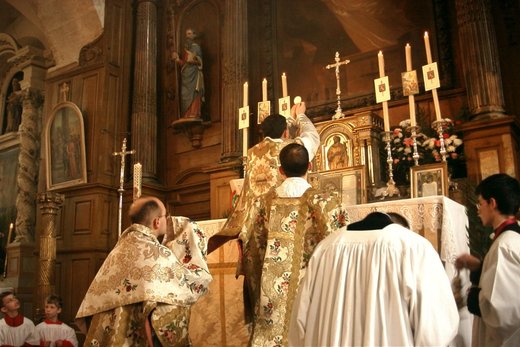
tridentine_mass_elevation_2

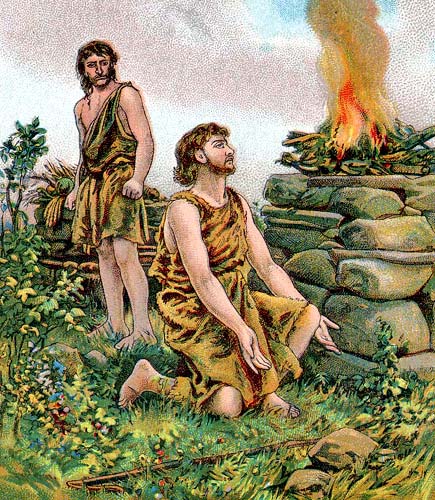
Would you rather give a half-hearted offering like that of Cain, offering what the Lord had not desired, or would you rather give it all to God like Abel, who offered the best to the Lord?

Image

Image

Would you rather be like Judas Iscariot, who scolded Mary for wasting money on perfume used to anoint the feet of Christ before His death? especially that was out of false concern of the poor given that he desired the money for himself? or would you be rather be Mary indeed, who anointed the feet of Christ for His burial, even with the expensive nard-flower perfume and therefore like Abel, gave her best offering to the Lord?

Image

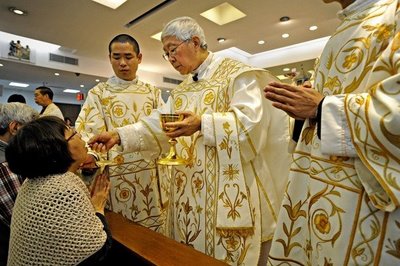
Such is therefore, what we should think of, when we think about the Mass and the liturgy that surrounds it. Many would be in danger of misunderstanding the entire purpose of having such liturgies and rites of worship, and dismissing them as backward, elitist, showy, and wasteful in nature – No, indeed, in fact, all these are for the glory of God alone, and we wouldn’t give half-hearted gifts and attempts to our Lord. Our worship in the Mass is to the Lord alone, and the glory that is in the Mass, is for the glory of God.

Image

Image

Image

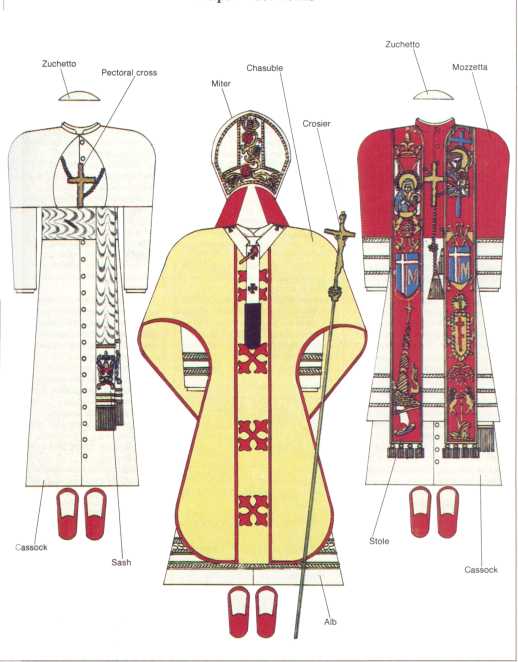
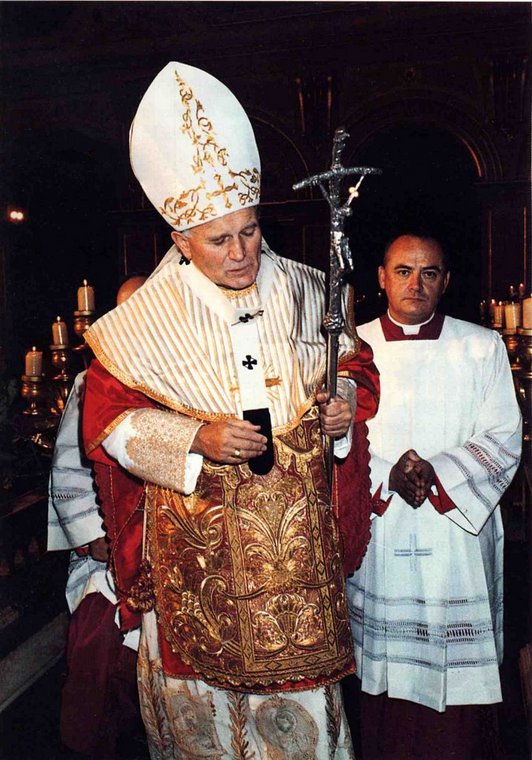
So why elaborate vestments, with colourful and vivid images, even with golden thread or velvet? Why elaborate and jewelled mitres? Why elaborate church buildings, the Altar decoration and everything else? That is because all these are for the glory of God, and for God alone, and not for the glory of men. And in this too, as I had often mentioned, many would be able to learn more about the faith, and at the same time, bring worship closer to what it should be, that is, to be a heaven on earth, especially with the angels and the saints, we worship God together.

1451110-High_Altar_Antwerp

Image

Men are visual creatures, and we base ourselves and our perceptions closely with our visions and what we see in our surroundings. One very strong argument why so many people had left the faith and became lost in the past decades was because the disappearance of beauty in our worship, not the beauty of excessive displays of course, but the true beauty of worship in that every part of the Mass and its liturgy has its own particular importance and meaning, even all the gestures made in the Mass.

MainAltar01

Being visual creatures, men no longer see God as the divine He is, because especially like Science, which place accountability, reproducibility, etc. at the most important, especially visual proofs, men no longer see God because our worship had become so diluted, so abused by decades of excessive trials and innovations which ended up diluting this image of ‘heaven on earth’ in the Mass. The Mass becomes less a desire for all to come to other than just a ‘chore’ for many to come, and Sunday obligation becomes what it is, an obligation, rather than true desire to come and worship the Lord.

jesus_holding_earth_world

Therefore, it is important that in the coming future, our Church, while projecting itself ever more, as it had always done, in helping the needy and the unloved around the world, expanding its charitable acts which is already the world’s largest by significant margins, ever more, but most importantly also, at the same time, strengthening the anchor of faith, through the energetic and constant explanation of the faith and the Sacred Tradition, particularly on the Mass and its liturgy, especially to the youths and the newly baptised, that they will truly grasp what being a Catholic is about.

That being a Catholic entail not just being good person, helpful person, and caring person, but also someone who truly knows entirely what they are doing at Mass, at their worship of the Lord every Sunday, and who truly come for the Mass because they desire to seek the Lord, and understanding the beauty of the liturgy of the Mass, they become ever closer to God, and through this, be ever more blessed and loving, that they can bring forth this love in their service of others. Ora et Labora, a balance indeed required between prayer and worship, and the service facet of our faith.

throne5

In this manner, we must always remember this verse, which is also a very nice Psalm passage I had discovered, that in all things, we glorify God alone, particularly in the Mass, through all its beauty :

Non nobis, Domine, sed Nomini tuo da gloriam!
Not to us, o Lord, but to Your Name we give glory!

+Peter Canisius Michael David C. Kang
Ut Omnes Unum Sint, ad Maiorem Dei Gloriam
21 April 2013, Good Shepherd Sunday

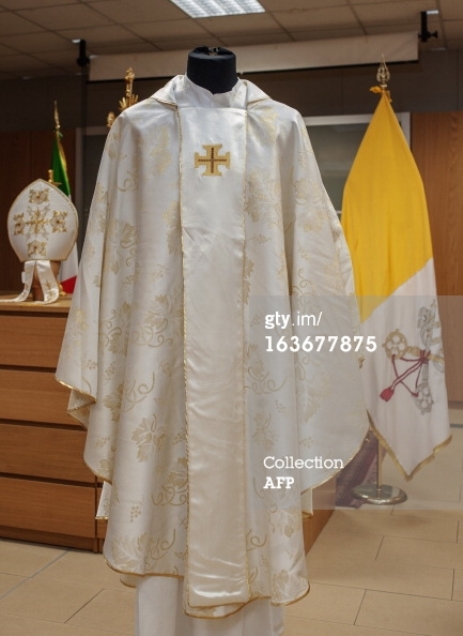
Papal vestment for the Papal Inauguration Mass of Pope Francis, Tuesday, 19 March 2013

Image

The vestments above is the vestment that Pope Francis will wear at the Papal Inauguration Mass in St. Peter’s Square, on the Feast of St. Joseph, Tuesday, 19 March 2013 at 9.30 am Rome time.

The vestments are decent and not over-simplistic, but neither overbearing, while maintaining the beauty of the vesture, which will make the liturgy of the Mass more beautiful and bring people closer to God.

(Update : It seems that Pope Francis chose to wear his personal mitre and the matching vestments that comes with his mitre (as bishop))

Regarding Chinese New Year Day Mass (Special Mass)

With regards to today, Sunday, 10 February 2013, which is the 5th Sunday of Ordinary Time, in some areas where Chinese New Year is celebrated by Chinese people around the world, special Mass might be adopted instead, namely the Chinese New Year Day Mass with a different set of readings from the 5th Sunday of Ordinary Time.

The vestments used are also red in colour, instead of the usual green (for Ordinary Time). Even though Sundays, like Sunday of the Ordinary Time should take precedence over other celebrations, even Feasts of Saints, it seems that although Chinese New Year is a cultural event and non-Christian in origin, but it is important enough for all the Chinese people, including Chinese Christians (Catholics) that in areas where Chinese New Year is celebrated, special dispensation for Chinese New Year Mass is allowed.

Note : Red is a very auspicious and preferred colour to the Chinese, and this is why, Chinese New Year, being the most important event in the Chinese calendar year, has red all over the place, and the red vestments used in the Mass represents this symbolism of Chinese New Year. It is also a colour of joy and love in the Catholic Church, also used mainly to represent martyrs, and God’s own Sacrifice out of His love for us on Good Friday. In addition, oranges are often given out after the Mass as a symbol of blessings for the new year, with the oranges being blessed by holy water prior to distribution. This custom is special, and only occurs in Chinese New Year Mass.