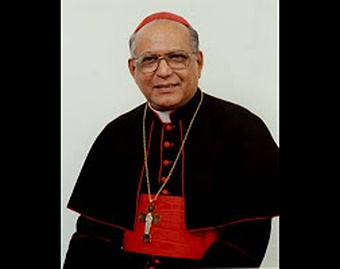
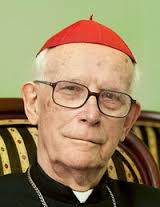
Cardinal Simon Ignatius Pimenta, Cardinal Priest of S. Maria ‘Regina Mundi’ a Torre Spaccata has passed away last Friday, 19 July 2013 at the age of 93.
Cardinal Pimenta was created Cardinal in 1988 by the late Blessed Pope John Paul II and he was the Metropolitan Archbishop of Bombay, India from 1978 to 1996 and was for quite a few years, the President of Conference of Catholic Bishops of India.
We pray for Cardinal Pimenta, that he will rest in peace, and God will reward him for all his hard work as the shepherd of the people of God in Bombay and his numerous other contributions to the Church and for the Lord’s sake. May the Lord welcome him into His embrace in heaven and give him eternal rest and happiness that he deserved.
With the passing of Cardinal Pimenta, the College of Cardinals now stands at 203 members, with 112 Cardinal-electors and 91 Cardinal non-electors.
There are now 8 vacancies in the College of Cardinals, 1o vacant Cardinal Titles (for Cardinal Priests) and 8 vacant Cardinal Deaconries (for Cardinal Deacons)
The two great Popes of the last century, both of whom had been recognised as Blessed, through the virtues of their life and miracles attributed to them, will be declared Saints, in a ceremony likely to be scheduled at the end of this year (2013).
Both Blessed Pope John XXIII and Blessed Pope John Paul II, who was made a Blessed just two years ago on 1 May 2011, had each left their incredible and remarkable footprint in the path of history, both in the history of the Church, and in the history of the world and mankind.
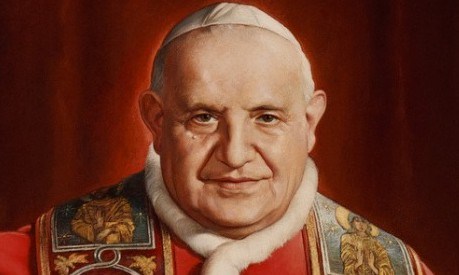
Blessed Pope John XXIII was known to be a great man of peace, and above all things seek to embrace peace and cooperation, between mankind, and also begun the process of Ecumenism in order to reunite the divided fragments of God’s Church back into the One, Holy, Catholic, and Apostolic Church that is our Church.
He was also known for his Encyclical Pacem in Terris (Peace on earth), which was released just months after the world was almost engulfed in an all-out nuclear war between the two superpowers, the United States of America (USA) and the Soviet Union (USSR) during the height of the Cold War in the Cuban Missile Crisis. Blessed Pope John XXIII worked hard ceaselessly to promote peace between the parties in conflict, for the good of all mankind, all of whom are the children of the same one God.
Blessed Pope John XXIII also convoked the Second Vatican Council, which brought the Church in line with the developments in the world, and also to make the Church more relevant in the increasingly rapid new developments in our world, and the rise of apathy towards religion in general. He would pass away before the Council was completed, but his legacy continued on until today.
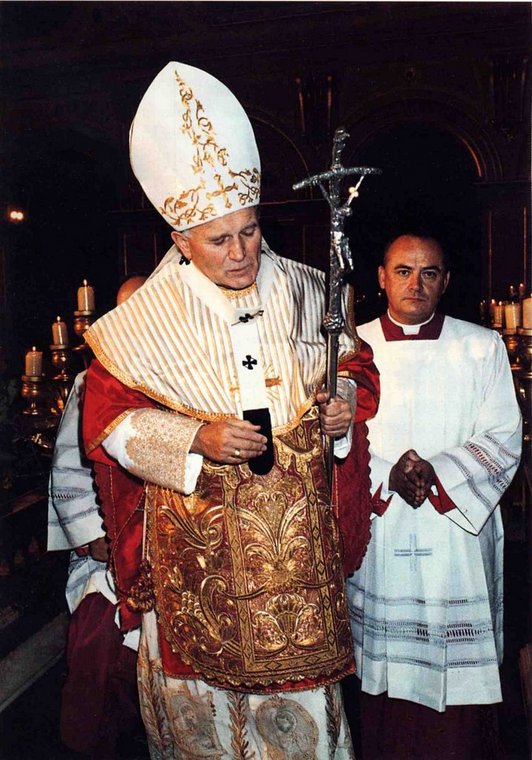
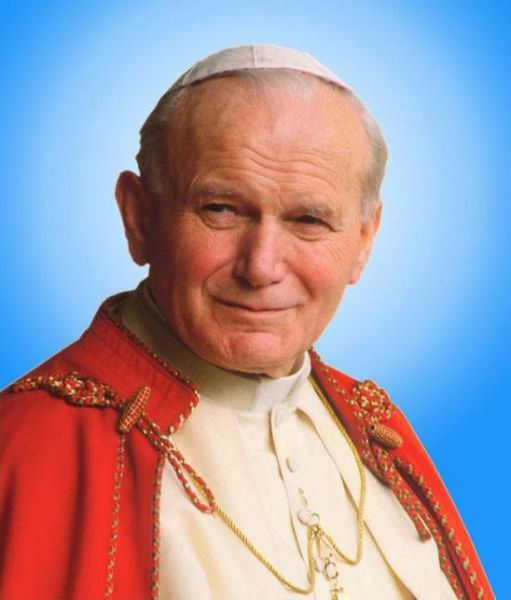
Blessed Pope John Paul II ‘the Great’ was a well-known Pope, a Pope of youths, and a hardworking Pope, who travelled around the world to visit all the flocks of the Lord that had been entrusted to him as the Successor of St. Peter the Apostle, as the Vicar of Christ. He was instrumental in the end of Communism in Eastern Europe, ending persecutions against the people of the faith, and also open boundaries and barriers that had been long in place since the beginning of the Cold War.
Blessed Pope John Paul II has also renewed the zeal for the faith amongst many around the world, and especially in youths, to whom he dedicated a special event, the World Youth Day, in order to commemorate the faith, particularly amongst the youths of the faith, around the globe. He inspired many through his works, his Encyclicals, and especially his perseverance despite being troubled with a worsening Parkinson’s disease condition, that made him to labour until his passing on 2 April 2005.
Both Popes had been very influential, hardworking, and very holy leaders of the One Church of the Lord Jesus Christ, and they had done much to strengthen the faith and the Church, and bring God closer to many, bringing them closer to salvation.
I hope to soon be able to ask for the intercessions of Pope St. John XXIII and Pope St. John Paul II the Great, and I pray that they will intercede for us sinners around the world, and pray for us, till we are greeted by them at the doors of heaven when it is time for us to be with the Lord again. Now we wait for the official announcement on the date of the Canonisation.
Cardinal Stanislaw Nagy, a Cardinal from Poland and a good friend of the late Blessed Pope John Paul II, and a renowned theologian and a great teacher, has passed away last Wednesday, on 5 June 2013 at the age of 91.
Cardinal Nagy was made a Cardinal-Deacon of S. Maria della Scala at the age of 82 in 2003, as a Cardinal non-elector, in recognition of his great service for the Church, both in the field of theology, and in the field of knowledge in general, after his numerous writings on the faith and the Pope himself, whom he was a dear friend of.
With the passing of Cardinal Nagy, the composition of the College of Cardinals has once again changed, just a day after Cardinal Godfried Danneels of Belgium aged out at 80 and became a Cardinal non-elector.
As of 5 June 2013, the College of Cardinals consist of 204 members in total, with 112 Cardinal-electors and 92 Cardinal non-electors (minus one due to the passing of Cardinal Nagy).
We pray for His Eminence’s soul that God will welcome him into His embrace in heaven, and grant him the heavenly reward that is promised him, and live with Him in glory forever and ever. Requiescat in Pace.
Today, Tuesday, 4 June 2013, Cardinal Godfried Danneels, Cardinal-Priest of S. Anastasia, and Metropolitan Archbishop Emeritus of Mechelen-Brussel, Belgium, turns 80, and therefore, according to the rules written in the Apostolic Constitution Universi Dominici Gregis, he loses his right to vote in any future conclave.
Cardinal Godfried Danneels was made Cardinal-Priest of S. Anastasia by Blessed Pope John Paul II in the 1983 Consistory of Cardinals on 2 February 1983, Feast of the Presentation of the Lord, the second of his pontificate.
May God bless His Eminence Cardinal Danneels, with a blessed old age and health. May he remain strong in the faith and hopefully can perhaps still carry out the mission God had given him.
The College of Cardinals now stands at 205 members in total, with 112 Cardinal-electors and 93 Cardinal non-electors. There are now vacancy of 8 Cardinal-electors as compared to the maximum number of electors allowed in the Conclave of 120, although Popes John Paul II and Benedict XVI had sometimes surpassed this limit.
Next Cardinal-elector to age out (80) will be Cardinal Francisco Javier Errazuriz Ossa, Metropolitan Archbishop Emeritus of Santiago (Chile) on 5 September 2013.
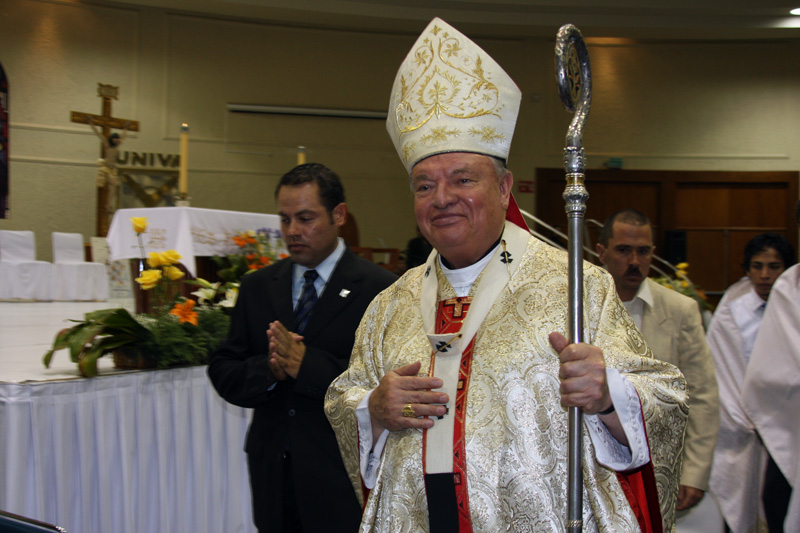
Today, Thursday, 28 March 2013, Cardinal Juan Sandoval Iniguez, Cardinal-Priest of Nostra Signora di Guadalupe e S. Filippo Martire, and Metropolitan Archbishop Emeritus of Guadalajara, Mexico, turns 80, and therefore, according to the rules written in the Apostolic Constitution Universi Dominici Gregis, he loses his right to vote in any future conclave.
May God bless His Eminence Cardinal Sandoval Iniguez, with a blessed old age and health. May he remain strong in the faith and hopefully can perhaps still carry out the mission God had given him.
The College of Cardinals now stands at 206 members in total, with 113 Cardinal-electors and 93 Cardinal non-electors. There are now vacancy of 7 Cardinal-electors as compared to the maximum number of electors allowed in the Conclave of 120, although Popes John Paul II and Benedict XVI had sometimes surpassed this limit.
Next Cardinal-elector to age out (80) will be Cardinal Godfried Danneels on 4 June 2013.
“I thank the Lord that I can celebrate this Holy Mass for the inauguration of my Petrine ministry on the solemnity of Saint Joseph, the spouse of the Virgin Mary and the patron of the universal Church. It is a significant coincidence, and it is also the name-day of my venerable predecessor: we are close to him with our prayers, full of affection and gratitude.
I offer a warm greeting to my brother cardinals and bishops, the priests, deacons, men and women religious, and all the lay faithful. I thank the representatives of the other Churches and ecclesial Communities, as well as the representatives of the Jewish community and the other religious communities, for their presence. My cordial greetings go to the Heads of State and Government, the members of the official Delegations from many countries throughout the world, and the Diplomatic Corps.
In the Gospel we heard that “Joseph did as the angel of the Lord commanded him and took Mary as his wife” (Mt 1:24). These words already point to the mission which God entrusts to Joseph: he is to be the custos, the protector. The protector of whom? Of Mary and Jesus; but this protection is then extended to the Church, as Blessed John Paul II pointed out: “Just as Saint Joseph took loving care of Mary and gladly dedicated himself to Jesus Christ’s upbringing, he likewise watches over and protects Christ’s Mystical Body, the Church, of which the Virgin Mary is the exemplar and model” (Redemptoris Custos, 1).
How does Joseph exercise his role as protector? Discreetly, humbly and silently, but with an unfailing presence and utter fidelity, even when he finds it hard to understand. From the time of his betrothal to Mary until the finding of the twelve-year-old Jesus in the Temple of Jerusalem, he is there at every moment with loving care. As the spouse of Mary, he is at her side in good times and bad, on the journey to Bethlehem for the census and in the anxious and joyful hours when she gave birth; amid the drama of the flight into Egypt and during the frantic search for their child in the Temple; and later in the day-to-day life of the home of Nazareth, in the workshop where he taught his trade to Jesus.
How does Joseph respond to his calling to be the protector of Mary, Jesus and the Church? By being constantly attentive to God, open to the signs of God’s presence and receptive to God’s plans, and not simply to his own. This is what God asked of David, as we heard in the first reading. God does not want a house built by men, but faithfulness to his word, to his plan. It is God himself who builds the house, but from living stones sealed by his Spirit. Joseph is a “protector” because he is able to hear God’s voice and be guided by his will; and for this reason he is all the more sensitive to the persons entrusted to his safekeeping. He can look at things realistically, he is in touch with his surroundings, he can make truly wise decisions. In him, dear friends, we learn how to respond to God’s call, readily and willingly, but we also see the core of the Christian vocation, which is Christ! Let us protect Christ in our lives, so that we can protect others, so that we can protect creation!
The vocation of being a “protector”, however, is not just something involving us Christians alone; it also has a prior dimension which is simply human, involving everyone. It means protecting all creation, the beauty of the created world, as the Book of Genesis tells us and as Saint Francis of Assisi showed us. It means respecting each of God’s creatures and respecting the environment in which we live. It means protecting people, showing loving concern for each and every person, especially children, the elderly, those in need, who are often the last we think about. It means caring for one another in our families: husbands and wives first protect one another, and then, as parents, they care for their children, and children themselves, in time, protect their parents. It means building sincere friendships in which we protect one another in trust, respect, and goodness. In the end, everything has been entrusted to our protection, and all of us are responsible for it. Be protectors of God’s gifts!
Whenever human beings fail to live up to this responsibility, whenever we fail to care for creation and for our brothers and sisters, the way is opened to destruction and hearts are hardened. Tragically, in every period of history there are “Herods” who plot death, wreak havoc, and mar the countenance of men and women.
Please, I would like to ask all those who have positions of responsibility in economic, political and social life, and all men and women of goodwill: let us be “protectors” of creation, protectors of God’s plan inscribed in nature, protectors of one another and of the environment. Let us not allow omens of destruction and death to accompany the advance of this world! But to be “protectors”, we also have to keep watch over ourselves! Let us not forget that hatred, envy and pride defile our lives! Being protectors, then, also means keeping watch over our emotions, over our hearts, because they are the seat of good and evil intentions: intentions that build up and tear down! We must not be afraid of goodness or even tenderness!
Here I would add one more thing: caring, protecting, demands goodness, it calls for a certain tenderness. In the Gospels, Saint Joseph appears as a strong and courageous man, a working man, yet in his heart we see great tenderness, which is not the virtue of the weak but rather a sign of strength of spirit and a capacity for concern, for compassion, for genuine openness to others, for love. We must not be afraid of goodness, of tenderness!
Today, together with the feast of Saint Joseph, we are celebrating the beginning of the ministry of the new Bishop of Rome, the Successor of Peter, which also involves a certain power. Certainly, Jesus Christ conferred power upon Peter, but what sort of power was it? Jesus’ three questions to Peter about love are followed by three commands: feed my lambs, feed my sheep. Let us never forget that authentic power is service, and that the Pope too, when exercising power, must enter ever more fully into that service which has its radiant culmination on the Cross. He must be inspired by the lowly, concrete and faithful service which marked Saint Joseph and, like him, he must open his arms to protect all of God’s people and embrace with tender affection the whole of humanity, especially the poorest, the weakest, the least important, those whom Matthew lists in the final judgment on love: the hungry, the thirsty, the stranger, the naked, the sick and those in prison (cf. Mt 25:31-46). Only those who serve with love are able to protect!
In the second reading, Saint Paul speaks of Abraham, who, “hoping against hope, believed” (Rom 4:18). Hoping against hope! Today too, amid so much darkness, we need to see the light of hope and to be men and women who bring hope to others. To protect creation, to protect every man and every woman, to look upon them with tenderness and love, is to open up a horizon of hope; it is to let a shaft of light break through the heavy clouds; it is to bring the warmth of hope! For believers, for us Christians, like Abraham, like Saint Joseph, the hope that we bring is set against the horizon of God, which has opened up before us in Christ. It is a hope built on the rock which is God.
To protect Jesus with Mary, to protect the whole of creation, to protect each person, especially the poorest, to protect ourselves: this is a service that the Bishop of Rome is called to carry out, yet one to which all of us are called, so that the star of hope will shine brightly. Let us protect with love all that God has given us!
I implore the intercession of the Virgin Mary, Saint Joseph, Saints Peter and Paul, and Saint Francis, that the Holy Spirit may accompany my ministry, and I ask all of you to pray for me! Amen.”
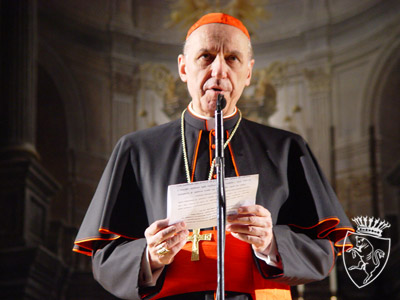
Cardinal Severino Poletto, Metropolitan Archbishop Emeritus of Torino in Italy, and Cardinal Priest of S. Giuseppe in Via Trionfale, who was elevated to the cardinalate on 21 February 2001 by Blessed Pope John Paul II, turns 80 today, Monday, 18 March 2013.
As such, Cardinal Poletto ceases to be a Cardinal-elector as of today, and lost in voting rights in any future Conclave, according to the Apostolic Constitution Universi Dominici Gregis.
The College of Cardinals now stands at 206 members, out of which there are 114 Cardinal-electors (minus one due to Cardinal Poletto) and 92 Cardinal non-electors.
During the Seventh General Congregation of the College of Cardinals this Friday morning, 8 March 2013, the College of Cardinals had accepted the letters of the two Cardinals who are unable to attend the Conclave due to health issue (Cardinal Darmaatmadja of Jakarta) and other reasons (Cardinal O’Brien of Scotland, UK), according to the provisions of the Apostolic Constitution Universi Dominici Gregis and the modifications in the Motu Proprio Normas Nonnullas.
The morning meeting had also discussed the modifications made on the Article 37 of the Apostolic Constitution Universi Dominici Gregis, which deals on the earliest starting date of the Conclave, which originally must be at least 15 days from the Vacancy of the Apostolic See, but then because the modifications made by the Motu Proprio Normas Nonnullas, which provided for a waiver of the 15 days waiting period, allow for an earlier start providing all the Cardinal-electors are already in Rome.
As all the Cardinal-electors are already in Rome, they can immediately decide on when to begin the Conclave, which is scheduled to be done and voted in the Eighth General Congregation on Friday afternoon. Fr. Federico Lombardi confirmed that the Conclave will not begin either tomorrow (Saturday) or Sunday. The Conclave is likely to begin either Monday, Tuesday, or Wednesday (11-13 March 2013)
There will be only one General Congregation session on Saturday morning, that is the Ninth General Congregation of the College of Cardinals. The Cardinals too may go and visit (may not be all of them) their titular Churches in Rome (I will publish the list of the titular Churches for each Cardinals, and if possible, the addresses of each in Rome, in case anyone looking to meet any of the Cardinals in Rome for the Sunday Mass) for Sunday Mass to pray for the election of the new Pope and for the Conclave. Each of the Cardinals are given a titular church in Rome upon his appointment as a Cardinal of the Holy Roman Church.
Cardinal Prosper Grech from Malta, who is a Cardinal non-elector, will be the one giving out the second of the two meditations as mandated by the Apostolic Constitution Universi Dominici Gregis, to be given out prior to the beginning of the Conclave.
18 Cardinals spoke in the morning meeting and several inteventions had also been made, on several issues from rules of the Conclave to other matters. Issues covered are bioethics, interreligious dialogue, collegiality, role of the Church in the world, in justice, and others.
A video is shown to the reporters during the press briefing by Fr. Federico Lombardi, head of the Holy See Press Office, on Friday afternoon, on the place where the Cardinal-electors will reside during the duration of the Conclave (currently the Cardinals are staying in different locations in Rome, but will move in to the place after the Conclave begins), which is called Domus Sancta Marthae, commissioned by the late Blessed Pope John Paul II, and was also used in the 2005 Conclave. Shown was the spartan but comfortable lodgings of the Cardinal-electors. The Cardinals will be assigned the rooms randomly.
Add : 220,000 people had ‘adopted’ a Cardinal through the Adopt a Cardinal website, and pray for them during this period.
Image on the details of the locations to be used in the upcoming Papal Conclave (Domus Sancta Marthae, Sistine Chapel). The image is the same one as the one used for after the death of Blessed Pope John Paul II and preparation of the conclave that elected our Pope Benedict XVI, now Pope Emeritus.
A concise image containing the summary of most you need to know about the conclave, the location, the procedure, and the rough summary of the Cardinals, which country has the most, and what happened when a new Pope is elected (and how to know if he is elected – fumata bianca/white smoke), and length of some past conclaves.
In my personal opinion, why our beloved Pope Benedict XVI, now Pope Emeritus Benedict XVI, had decided to step down from his position and relinquish the Papacy, is because of three main factors and events that potentially play major roles in shaping his decision. All of these factors are tied to the first factor, that is his health.
Here are the three factors and events that in my opinion made our Pope Emeritus did what he had done :
1. Health : The Pope’s failing health due to his old age is likely the main reason why he had decided to relinquish the Papacy. Although indeed, he is now at 85 being much more vigorous as compared to Blessed Pope John Paul II’s last years, but as the Pope has great tasks to be done, for the sake of the Lord, and His people, Pope Benedict chose humility and step aside for someone else to take over the good works he had started.
He realised that his increasing difficulty in walking, most likely due to osteoarthritis and the problems with his vision will eventually impair him and preventing him from exercising his ministry as the Bishop of Rome. It has also been reported that Pope Benedict too suffers from Parkinson’s, although likely a mild one or one that is still at an early stage. This disease is well known for the one that debilitated Blessed Pope John Paul II, and Pope Benedict, being very close to the previous Pope, would really want to avoid another of many years of debilitation, where the Pope instead of leading directly the Church, had to delegate most of his works due to his disabilities. It is a matter of choice of course. Blessed John Paul II chose to persevere to show us how suffering for the sake of the Lord is like, and our beloved Benedict XVI stepped down to show us what humility and virtue is like.
2. WYD (World Youth Day) 2013 : The World Youth Day has been scheduled to occur in July 2013. It would have been in 2014, but because it will be held in Brazil, which will host the World Cup event in 2014, it was decided to hold the World Youth Day a year earlier. As the Pope’s health has made doctors to advise him strongly against transatlantic and difficult journeys, which would have limited him from visiting any countries outside of Europe, or even Italy in the coming years.
In 2012, his visits had been limited to Mexico, Cuba, and Lebanon, with only two major visits as opposed to the usual four or five visits per year, a clear sign that the Pope’s health is increasingly frail to travel far beyond Rome. As the World Youth Day 2013 will be held in Rio de Janeiro, Brazil, it is also possible that our beloved Benedict XVI chose to step aside that a more capable and vigorous new Pope can go instead to the event, that the new Pope can fully lead the event without the disabilities that increasingly had debilitated our beloved Benedict XVI.
3. Asia, the Church in Asia : Although Pope Benedict XVI had been known as someone who is particularly very attentive to the problems that the Church is facing in Europe and the West in general, which resulted in his numerous visits to the countries mostly in Europe, but he has also made several visits to countries in Latin America and Africa. Many would have criticised him for leaving out Asia, as although Middle Eastern countries like Jordan, Lebanon, Turkey and Israel had been visited rather often in his short pontificate, but he had yet to visit South Asia, Southeast Asia, and East Asia, where the Church, just as in Africa, had been growing very, very rapidly.
The Pope in fact, loved the Church in Asia, particularly the Church in China, which he had tirelessly worked at, in order that the believers in Christ there can be fully reintegrated into the One Body of the Universal Church, free from any form of external and governmental interventions.
Azerbaijan in Central Asia, was the last country in Central Asia visited by a Pope in 2002. But to truly look into Asia, we should go deeper into South Asia, that is India, and further east. The last time a Pope visited India and South Asia was in 1999 or 14 years ago, and the last time a Pope visited Southeast Asia was in 1995 (World Youth Day 1995, Manila, Philippines) or 18 years ago; and for East Asia, the last Papal visit was to Korea in 1989 or 24 years ago.
Several countries in Asia such as Singapore, Indonesia, Korea, Philippines, and some other Asian countries had also been graced with Papal visits only once or twice in the entire history of the Church, also owing to the recent expansion of the Church to Asia and that only beginning with Pope Paul VI, that the Pope began to travel again outside Rome and Italy after quite some time. Therefore, due to Pope Benedict XVI’s love for the Church, both in the elder Europe and the younger Church in Asia, and already that his debilitation had made him difficult to make transatlantic visits, including the upcoming World Youth Day in Brazil, but a travel plan to Asia would have made it much more difficult.
A younger and healthier Pope therefore will be able to visit Asia (South, Southeast, East Asia) perhaps as early as this year or next year, 2014. This is however not to say that an Asian Pope will be elected, just yet. The time has not come yet in this election for an Asian Pope. Only in the next election, which hopefully will be held in about a decade from now or more, that the first Asian Pope may be possibly elected.
In the end, it is Pope Benedict XVI’s love for God, and God’s people in the Church that made him to decide to step aside for the good of the Church and the good of God’s mission in this world. However, this is not at all interpreted that it will be permanently so or that such a stepping down will be customary for the Popes. The Papacy is not an office, and not an institution, which for example like the Archbishop of Canterbury of the Anglicans, which is rotated after every number of years in manner akin to the secular and the worldly prime ministers and presidents. No, the Bishop of Rome’s position, as Christ’s only Vicar on this world is far beyond that. Only the Pope himself can decide when and if he will resign at all, and only in extreme cases should this be done.
Let us all pray therefore for our beloved Pope Emeritus, His Holiness Benedict XVI, that God will continue to look after him in his retirement, that through his new life dedicated in prayer, he can lead the Church with the new Pope, his successor, whom we also pray for, to fight against the evils of this world. We also pray for those who attack the Pope, the institution of our Church, and those who attack the faithful in Christ, that first we forgive them, and ask the Lord to enlighten their hearts, that they will learn the truth about His Church and its teachings, that they too will believe and be saved through the One, Holy, Catholic, and Apostolic Church.
May God bless all of us, bless His One and Universal Church, and bless the whole world. Amen!







 petercanisiusmichaeldavidkang