Video : Beginning of 2005 Papal Conclave

For those who are interested in knowing what to expect on Tuesday afternoon, 12 March 2013 when the Conclave officially begins, with the Cardinal-electors marching into the Sistine Chapel, here is a video recording from the 2005 Papal Conclave. Not a very good quality, so I hope they do make a better recording for 2013 Papal conclave.

You can clearly see the Dean of the College of Cardinals at the time in the video, Cardinal Joseph Ratzinger, who was elected Pope in that Conclave, and whom we knew better as our beloved Pope Benedict XVI, now Pope Emeritus.

Missa pro Eligendo Pontifice/Mass for the Election of the Roman Pontiff and the beginning of the Conclave

Both events are live from Rome, at Vatican Player, http://www.vatican.va/video/ and I believe are also covered live by several Catholic televisions in the USA, Canada, and other countries.


1. Missa pro Eligendo Pontifice / Mass for the Election of the Roman Pontiff

The Cardinals present in Rome, all the Cardinal-electors that will be entering the Conclave, will first gather for a Solemn Mass at St. Peter’s Basilica on Tuesday morning, 12 March 2013 at 10 am Rome time (CET or UTC+1). The Mass will be lead by the Cardinal Dean of the College of Cardinals, Cardinal Angelo Sodano, who is a non-elector.

Time in other parts of the world :

Tuesday, 12 March 2013 at 9 am UTC // 4 am EST // 1 am PST // 4 pm WIB or UTC+7 // 5 pm Singapore time or UTC+8


2. Beginning of the Conclave : Entry of the Cardinal-electors into the Sistine Chapel

The Cardinal-electors will assemble in Pauline Chapel on Tuesday afternoon, and the event will begin live at 4.30 pm Rome time (CET or UTC+1). The Cardinals will wear their full choir dress and then will proceed into the Sistine Chapel while singing the hymn Veni Creator Spiritus to invoke the Holy Spirit.

Then in the Sistine Chapel, the Cardinal-electors will take their oath, beginning with the senior Cardinal Bishop-elector, Cardinal Giovanni Batista Re, who leads the Conclave, and then the famous ‘extra omnes’ or ‘everybody else out’ order will be said by the Master of Papal Liturgical Celebrations, Monsignor Guido Marini.

Time in other parts of the world :

Tuesday, 12 March 2013 at 3.30 pm UTC // 10.30 am EST // 7.30 am PST // 11.30 pm WIB or UTC+7 //  Wednesday, 00.30 am Singapore time or UTC+8

Seventh General Congregation of the College of Cardinals : Friday, 8 March 2013 at 9.30 am Rome time / CET

The seventh General Congregation of the College of Cardinals will commence in a few hours time at 9.30 am today, Friday, 8 March 2013 in Rome, with all the 115 Cardinal-electors having been present in Rome. The date of the Conclave may be decided in this General Congregation, and if so, the usual scheduled press briefing by Fr. Federico Lombardi of the Holy See Press Office, will announce it (at 1 pm today).

There will be no Eighth General Congregation this afternoon. It is not known yet when the General Congregations will begin again, or when the Mass for the Election of the New Pontiff (Missa pro Eligendo Pontifice) will be held.

Continue praying for our Cardinals, that they will soon be able to come into a conclusion on their discussions and meetings, and filled with the Holy Spirit, will be able to go into the Conclave and with their inspiration, elect a great new Pope as our new shepherd!

Tuesday, 5 March 2013 : 3rd Week of Lent (Scripture Reflection)

Forgiveness is not an easy thing to be done. It is a difficult thing to do, but yet also a very noble virtue. Forgiveness allow us to transcend hatred and evil, and allow us to break free from that cycle of hatred and death, and instead enter into the realm of love and compassion. For love is not complete without forgiveness, and how can we truly love someone if we have something between us and that person, that we have yet to forgive?

God loves us and He will never leave us in trouble. Just like the king, if we humble ourselves, and throw ourselves at the feet of the Lord, God will surely have pity on us and be merciful. But there is of course limit to God’s mercy, and there is also something that we have to do, that is to truly transform ourselves, to prove to the Lord that we are truly regretful and repentant of all our sins and faults.

How to do that? Not to do public penance and awesome lamentations, and neither do we fast in public and show our regret, but what matters is, our heart. A contrite heart and a broken spirit, that seeks the Lord for healing and forgiveness. These are what the Lord truly wants from us, as these are the sign of our sincerity and our true love for Him, instead of love that is hidden beneath layers of pride and self-vanity.

Therefore, brothers and sisters in Christ, let us use this holy and fruitful season of Lent, to forgive one another of the faults we have made, either intentionally or unintentionally. Let us reach out to one another in forgiveness and in sincere love, that in doing so, we too show our great love for the Lord. Do not keep grudge for one another, and do not hate, no matter how great the temptations are, for to hate is to bring ourselves into sin, and into evil, and finally into death and separation from God.

Give thanks to the Lord for all the wonders He had given us, for all the guidance He had given us, especially through difficult times, and let us always strive to orient ourselves towards Him and place Him at the centre of our life. Through regular and constant attendance of the Holy Mass, devotions and prayers, and asking His glorious saints and blesseds to pray for us, our faith and our love for God, and for man alike will only ever grow stronger and stronger.

Pray for one another, and especially now that the Church is preparing for the Conclave, let us also pray for the Cardinals that they can elect a new Pope who is loving, faithful, and filled with the Holy Spirit in his leadership of God’s people on this world. Amen.

Pictures of all 115 Cardinal-electors of the Holy Roman Church heading into the Conclave

http://www.photovat.com/PHOTOVAT/CARDINALI%20ELETTORI/CARDINALI-ELETTORI.htm

On the Vatican photo website above you can find the pictures of each and every one of the Cardinal-electors, in fact all 117 of them, including Cardinal Julius Darmaatmadja of Indonesia who will not be attending the Conclave due to health problems and failing eyesight, and Cardinal Edwin Frederick O’ Brien of Scotland, UK, who will not be attending the Conclave due to serious allegations against him.

Nevertheless, we pray for both Cardinal O’ Brien and Cardinal Darmaatmadja that God will always be with them, and of course we pray for all the rest of the Cardinal-electors who will go into the Conclave to elect the new Pope! May the Holy Spirit be with them and guide them through until we hear “Habemus Papam! We have a Pope!”

First General Congregation of the College of Cardinals in ongoing : We pray for the Cardinals and wait for news

The First General Congregation of the College of Cardinals in now ongoing in Rome (since half an hour ago, 9.30 am Rome time today), with most Cardinals having arrived in Rome, to discuss the Conclave, and the qualities needed for the next Pope. Which is also a chance for the Cardinals to discuss among themselves who they think the best candidate is.

The date of the Conclave will also be decided shortly, if not in this meeting, then in the Second General Congregation which will begin at 5 pm Rome time today. We pray for the Cardinal-electors, that the Holy Spirit will guide all of them in this period, and later into the Conclave, that we will soon have a new Pope, a wonderful new Shepherd to lead God’s Church in this world.

We await the press briefing by Fr. Federico Lombardi, head of the Holy See Press Office, which will be at 1 pm Rome time today (CET/UTC+1).

Friday, 1 March 2013 : 2nd Week of Lent (Scripture Reflection)

We are urged today, not to have evil thoughts on our brothers and sisters today, as illustrated earlier in the story of Joseph in the first reading and the psalm, and how he was sold off in slavery to Egypt due to his brothers’ jealousy, which caused them to initially harbour evil thought of killing him. The same evil intent and plot also happened in the Gospel when the tenants disposed of the servants and the son of the landowner, in the intention of gaining the lands they have been lent with, and disobeying the owner’s wish.

We should not harbour such evil intent, but instead look upon our brothers and sisters with love. Especially, just as Christ has taught us, we should even also look upon our enemies and our persecutors with love! and pray for them too!

And then indeed, the story of the Gospel today, as many of you would know, is a parable on the life of Christ Himself, with the Pharisees and the chief priests being labeled as the evil tenants, as obviously stated in the Scripture. Jesus is the Son of the owner, who is God the Father, who sent Jesus to us, down to earth, just like the owner sent his son in the hope that he will be able to bring the tenants into line and pay up what they are supposed to pay.

But yet, the rejected ones, as we had seen, in both Jesus and Joseph, had become a great instrument of the Lord through their rejection by the people, represented by the brothers of Joseph and the tenants in the Gospel. For Joseph became the regent of Egypt through the gift of prophecy through dreams granted to him by God, which saved thousands if not many more souls from death, by the wise and ample preparation before famine ravaged Egypt for seven years. All these would not have happened without Joseph and his dreams.

Even greater is therefore the role of Christ, for in being rejected by the people, the ‘tenants’ particularly the chief priests, teachers of the Law, and the Pharisees, He has become the very instrument of salvation of all mankind. This rejection was represented by the arrest of Jesus, His trial by the Sanhedrin, leaders of the priests of Israel, and finally His condemnation to death, and His death on the cross. In this He, as the rejected stone by the builder, had become the cornerstone, the very vital part of God’s plan of salvation.

What is a cornerstone? While we do not often use the terms in daily life, architects and those dealing with infrastructure and buildings will know it very well. For cornerstone is named so, since, at the time of the Roman Empire, there is a passion for building commemorative and triumphal arches. Some of these arches can still be seen even today, and some remained in the city of Rome itself. Why are these arches so strong and so solid to be able to stand for centuries and even millenia? It is because of its structure, which is so wonderfully constructed even without modern technology to keep them intact, all just because of one single stone at the peak of the arch, which is called the cornerstone.

This cornerstone is the focal point and the most important point of the arch. For if the cornerstone is removed, the arch will immediately crumble. As long as the cornerstone remained in place, removing other stones from the arch would have minimum impact on the arch’s integrity. Similarly, cornerstone can also be found in other buildings, also known more as the foundation stone. This stone holds up the integrity of the whole building by just being there, and as long as the stone stands, the building will too.

Christ therefore, has become our cornerstone through His death and sacrifice on the cross, and later His glorious resurrection and triumph over death and evil. Why is He our cornerstone? That is because if we keep our anchor on Him, keeping faith in Him, and ensuring that our faith is anchored deeply and securely in Christ, no amount of worldly temptations, and no amount of attacks and persuasions by evil can sway us and make us to fall away from the grace of God.

Through Christ who is our cornerstone, we then can act out His love and compassion on all mankind, for only if we anchor ourselves in Christ, that we can act with love and kindness, out of our faith in God who also loves us dearly that He did not even hold back His Son to be given to us for sacrifice to liberate us from eternal damnation.

Then Christ too established His Church, our Church, as the living and concrete presence that represents Him and His mission in this world, and there was none other than Peter the Apostle, upon whom, as the Rock, Christ chose to build up His Church, making Peter the cornerstone of His Church, the Body of Christ, which is made up of all of us the faithful in Christ.

Now, that our Pope, Benedict XVI, who was the 264th successor of St. Peter, had stepped down from his position as our Pope effective today, our Church, God’s Church, has been left without that cornerstone of faith, which has been passed down since the day of Peter, the first cornerstone of the Universal Church. We still have Christ of course as our Cornerstone, on whom all hearts and minds must be directed to, but it is through the Apostle Peter and his successors, the Popes, that this is made manifest, by them being the cornerstone of God’s living presence in this world, that is the One, Holy, Catholic, and Apostolic Church.

Therefore, today, and through the sede vacante period, and beyond that, let us pray, brothers and sisters in Christ, that first, we all will remain ever faithful, and that our anchor of faith will ever be solidly planted in the cornerstone that is Christ our Lord, always remembering His rejection and sacrifice on the cross that made Him the cornerstone of our life, the cornerstone of salvation, that enabled mankind to return and be reunited with God.

And then, we also pray in particular for our Church, that God will guide the Cardinal-electors who will elect a new Pope to succeed our beloved Pope Benedict XVI, with the guidance of the Holy Spirit sent by God upon all of them. That the world will again have a tangible cornerstone that is the successor of St. Peter, who made the Cornerstone of Christ manifest and real in this world, as the cornerstone of God’s most Holy Church, and as the cornerstone and head of the Body of Christ, the Church, leading all the faithful in Christ in unity with Christ their Saviour.

In the end, the cornerstone, although important, still requires the presence of all of us, the stones surrounding the cornerstone, for the cornerstone by itself will not make a building. Therefore, brothers and sisters in Christ, let us support the new Pope, whoever he will be, as all the people who believe in Christ, that the new Pope, the future cornerstone of the Church, will together build up a solid and strong Church, that is able to project God’s love and work into this world, that more and more people will be saved.

May God bless all of us, bless His Church, bless our retired Pope Emeritus Benedict XVI, and his soon-to-be elected successor. Amen!

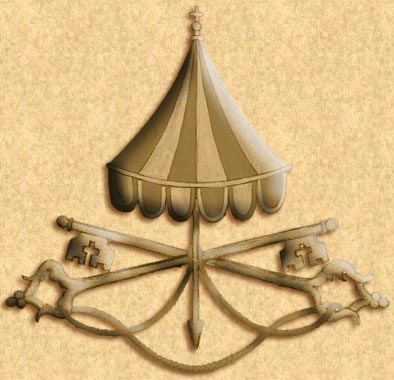
Sede Vacante has begun. The See of Rome is Vacant

Therefore, as of now, Thursday, 28 February 2013, at 8 pm CET (UTC+1), Pope Benedict XVI is no longer our Pope, and the See of Rome is vacant.

Image

Let us all pray, first for His Holiness Benedict XVI, Bishop Emeritus of Rome, that God will continue to guide him in his prayerful life as a simple pilgrim, to the end of his journey in this world. We will always remember him as our beloved Pope.

Then, of course, let us pray that God will soon appoint the new shepherd, successor of St. Peter the Apostle, through the Holy Spirit and guidance to the Cardinal-electors who will elect the new Pope in the conclave which will begin likely in about 10 days from now, according to the rules of Apostolic Constitution Universi Dominici Gregis and the corresponding modifications by the Motu Proprio Normas Nonnullas.

Cardinal Angelo Scola : An intellectual Cardinal with humble backgrounds

Cardinal Angelo Scola, the current Metropolitan Archbishop of Milan, was born in humble, poorer family, with a truck driver as a father, and his mother was a simple housewife. Yet behind that humble origins, lie a powerful intellect and mind, and which in addition to his close friendship with our Pope Benedict XVI made him not only a great pastor and shepherd, but also a great intellectual powerhouse of the Church. He published more than 120 books and works on theology and other matters of the faith, and one of the great writers of the Church like Pope Benedict XVI as Cardinal Joseph Ratzinger.

Cardinal Angelo Scola was made as Bishop of Grosseto in 1991, before appointed as Rector Magnificus of the Pontifical Lateran University in 1995. At the same time, he was also made the president of the Pontifical Institute of John Paul II for Studies on Marriage and Family. In 2002, he was appointed as the Patriarch of Venice, and was made a Cardinal-Priest of Ss. XII Apostoli (Twelve Apostles) in the Consistory of October 2003.

Cardinal Scola was then appointed as the new Metropolitan Archbishop of Milan, the largest archdiocese in Italy and in the world, in June 2011, and received his pallium (symbol of office of the Metropolitan Archbishop) personally from Pope Benedict XVI himself.

Let us pray for Cardinal Scola, that if he is elected as our new Pope, that God will continue to be with him and guide him as He has always done until now. Pray for our Cardinal-electors, that they will make their choice guided by the Holy Spirit to elect a new shepherd for God’s holy people.

Pope Benedict XVI’s latest and last Motu Proprio : Normas Nonnullas on the Papal Conclave (Updated)

http://www.vatican.va/holy_father/benedict_xvi/motu_proprio/documents/hf_ben-xvi_motu-proprio_20130222_normas-nonnullas_lt.html

Pope Benedict XVI has published his last Motu Proprio concerning the rules of the Conclave as laid out in the Apostolic Constitution Universi Dominici Gregis, by Blessed Pope John Paul II, to clarify and modify some portions of the rules to suit the developments in the current time, and to affirm the rules as written in the Universi Dominici Gregis.


1. Cardinal-electors that had been given the right to elect the new Pope and had been rightfully granted that right must not be deprived of his right to join the Conclave and elect the new Pope.


2. It grants the College of Cardinals more liberty in the date of the commencement of the Conclave, providing all the Cardinals rightfully given the voting rights and intending to attend the Conclave has been gathered in Rome, as opposed to the previous rule of compulsory 15 days between the vacancy of the See of Rome to the beginning of the Conclave. 15 days here should still be observed, but if the College deems it right for the Conclave to begin, they can do so. Thus, the Conclave can begin earlier than 15 March 2013 for this year’s Conclave.


3. The whole area of the Vatican City and the areas around the Sistine Chapel will be restricted during the period of the Conclave, to prevent any leakage of secrecy of the Conclave to the outside world. Especially the area from Domus Sancta Marthae where the Cardinals reside during the Conclave and the Sistine Chapel, where they gather and vote. Anyone breaching this rule, will be given latae sententiae (automatic) excommunication, which is more precisely mentioned than the previous rule, which only mentioned severe punishment. Latae sententiae excommunication is specified in the new ruling.


4. The oaths prescribed in the Universi Dominici Gregis, to be taken by every Cardinal-electors at the start of the Conclave. In addition, in the new rule, all those involved in the Conclave, also have to take the oath, not just the Cardinal-electors :

Latin : ‘Ego N. N. promitto et iuro me inviolate servaturum esse secretum absolutum cum omnibus quotquot participes non sunt Collegii Cardinalium electorum, hoc quidem in perpetuum, nisi mihi datur expresse peculiaris facultas a novo Pontifice electo eiusve Successoribus, in omnibus quae directe vel indirecte respiciunt suffragia et scrutinia ad novum Pontificem eligendum.

Itemque promitto et iuro me nullo modo in Conclavi usurum esse instrumentis quibuslibet ad vocem transmittendam vel recipiendam aut ad imagines exprimendas quovis modo aptis de iis quae tempore electionis fiunt intra fines Civitatis Vaticanae, atque praecipue de iis quae quolibet modo directe vel indirecte attinent ad negotia coniuncta cum ipsa electione. Declaro me editurum esse ius iurandum utpote qui plane noverim quamlibet eius violationem adducturam esse excommunicationis mihi poenam latae sententiae Sedi Apostolicae reservatae.’

English (rough translation) : ‘I, NN., promise and swear to keep inviolate the absolute secret from all those who are not participants in the (election of the Pope) by the College of Cardinals, even in perpetuity, unless expressly given me special permission from the newly elected Pope and his successors, in all things which are directly or indirectly concern the votes and ballots to the choosing a new Pope.

So again, I promise and I swear I am in no way, whatsoever, to the sound of instruments in the Conclave of sending or receiving, or would make use of to  represent the images in any way suitable at the time of the election are to be done within the confines of Vatican City on those matters which, in any way, and especially on those matters which pertain to the business of directly or indirectly linked to with the election. It is well explained and clear to me, who so obviously should know that any violation of his oath will lead to excommunication to me, under the penalty of latae sententiae excommunication, reserved to the Apostolic See.


5. That the new Pope can only be elected with secret ballot or scrutiny. No acclamation, no compromise, and no absolute majority (or more than 50% of votes) in the event of long conclave. This has been earlier abrogated by Pope Benedict XVI who reiterated the absolute requirement of at least two-thirds of all Cardinals’ votes for one to be elected a new Pope.


6. If the Conclave failed to reach conclusion after a period of time, a day of prayer and reflection, and contemplation should be included before voting begins again. Then in the next round of voting, only the two names with the highest number of votes in the previous ballot would be included.


7. The formula of the question by the Cardinal Dean to the newly elected Pope is affirmed :


Latin : Acceptasne electionem de te canonice factam in Summum Pontificem?

English : Do you accept the Canonical election as the Supreme Pontiff?


Latin : Accepto

English : I accept


Latin : Quo nomine vis vocari?

English : What do you wish to be called?


Latin : Vocabor X

English : I wish to be called X.

(X will be the regnal name, for example, Benedict for our Pope Benedict XVI)