
Seventh General Congregation of the College of Cardinals, and the Eighth (decision on the Conclave date)

During the Seventh General Congregation of the College of Cardinals this Friday morning, 8 March 2013, the College of Cardinals had accepted the letters of the two Cardinals who are unable to attend the Conclave due to health issue (Cardinal Darmaatmadja of Jakarta) and other reasons (Cardinal O’Brien of Scotland, UK), according to the provisions of the Apostolic Constitution Universi Dominici Gregis and the modifications in the Motu Proprio Normas Nonnullas.

The morning meeting had also discussed the modifications made on the Article 37 of the Apostolic Constitution Universi Dominici Gregis, which deals on the earliest starting date of the Conclave, which originally must be at least 15 days from the Vacancy of the Apostolic See, but then because the modifications made by the Motu Proprio Normas Nonnullas, which provided for a waiver of the 15 days waiting period, allow for an earlier start providing all the Cardinal-electors are already in Rome.

As all the Cardinal-electors are already in Rome, they can immediately decide on when to begin the Conclave, which is scheduled to be done and voted in the Eighth General Congregation on Friday afternoon. Fr. Federico Lombardi confirmed that the Conclave will not begin either tomorrow (Saturday) or Sunday. The Conclave is likely to begin either Monday, Tuesday, or Wednesday (11-13 March 2013)

There will be only one General Congregation session on Saturday morning, that is the Ninth General Congregation of the College of Cardinals. The Cardinals too may go and visit (may not be all of them) their titular Churches in Rome (I will publish the list of the titular Churches for each Cardinals, and if possible, the addresses of each in Rome, in case anyone looking to meet any of the Cardinals in Rome for the Sunday Mass) for Sunday Mass to pray for the election of the new Pope and for the Conclave. Each of the Cardinals are given a titular church in Rome upon his appointment as a Cardinal of the Holy Roman Church.

Cardinal Prosper Grech from Malta, who is a Cardinal non-elector, will be the one giving out the second of the two meditations as mandated by the Apostolic Constitution Universi Dominici Gregis, to be given out prior to the beginning of the Conclave.

18 Cardinals spoke in the morning meeting and several inteventions had also been made, on several issues from rules of the Conclave to other matters. Issues covered are bioethics, interreligious dialogue, collegiality, role of the Church in the world, in justice, and others.

A video is shown to the reporters during the press briefing by Fr. Federico Lombardi, head of the Holy See Press Office, on Friday afternoon, on the place where the Cardinal-electors will reside during the duration of the Conclave (currently the Cardinals are staying in different locations in Rome, but will move in to the place after the Conclave begins), which is called Domus Sancta Marthae, commissioned by the late Blessed Pope John Paul II, and was also used in the 2005 Conclave. Shown was the spartan but comfortable lodgings of the Cardinal-electors. The Cardinals will be assigned the rooms randomly.

Add : 220,000 people had ‘adopted’ a Cardinal through the Adopt a Cardinal website, and pray for them during this period.
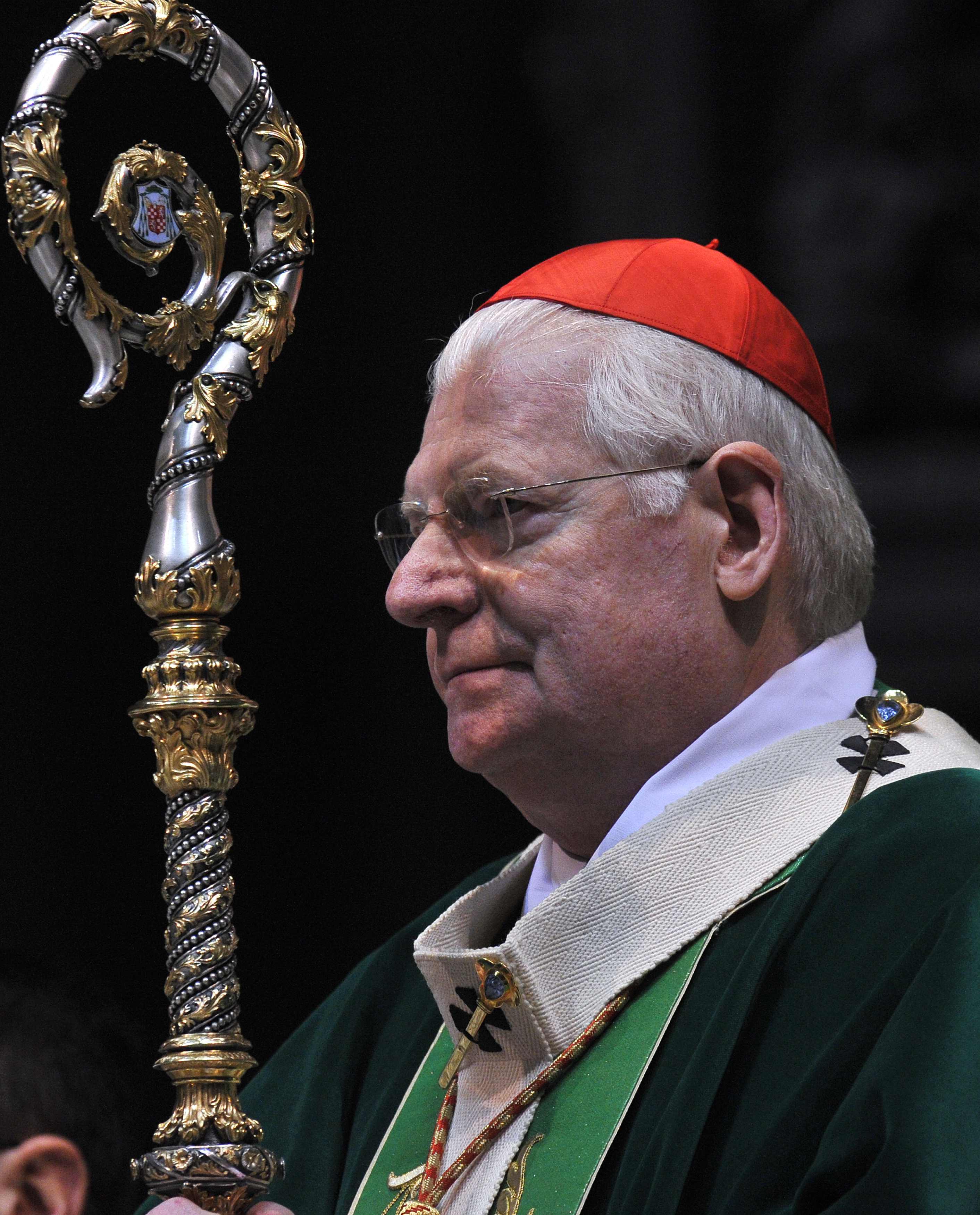
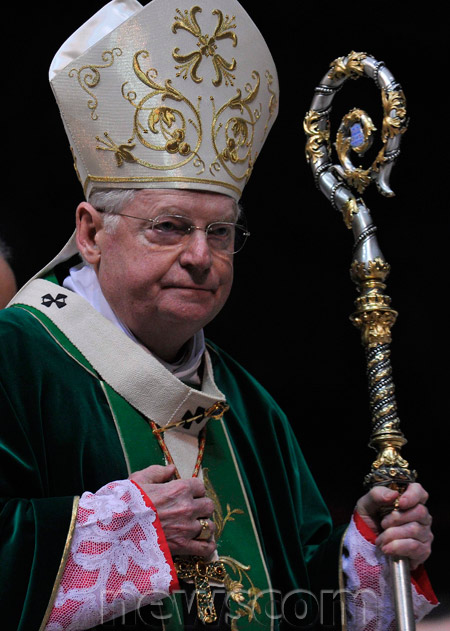
12 reasons why Cardinal Angelo Scola may be the next Pope : My chosen Papabile

Cardinal Angelo Scola attends a mass in Duomo Cathedral in Milan

Cardinal Angelo Scola (12 reasons why I think he is the best of all the other Candidates, a frontrunner, and should be elected Pope) :

1. Strong in faith and theology : Yes, an intellectual disciple of Pope Benedict XVI, and is as strong as our Pope Emeritus on theology and his deep knowledge of the faith and the Church

2. Close and capable to work with youths : Yes, will be Pope for the youths indeed, and have been working closely with youths in many occasions, especially in his pastoral ministry in Venice and now Milan.

3. Twitter : Already had, and had actively tweeted in the past! Will be no problem to continue to @Pontifex!

4. Italian and other languages : Yes, and Bishop of Rome definitely must speak fluent Italian! Also fluent in several other languages, including English.

5. Interreligious dialogue : Yes, and knowledgeable about Islam in particular, and have been active in reaching out to Christian minorities in the Middle East and the Muslim world.

6. Tradition : Strong in liturgy and tradition, a tradition-based Pope just like Pope Benedict XVI, we need a strong anchor of faith! A close and personal understanding of the liturgy through its beauty can only serve to strengthen the faith of the faithful and the Church.

angelo-scola
7. Charisma : Yes, strong charisma and outreach, and also has a global persona and able to connect with youths and other sections of the society.

8. Poverty and charity of the Church : Being born into low-middle income family, made him to have a close connection and personal connection to the poor and the less fortunate in the Church and the world.

9. Age : At 71, is at the prime age for Pope. Not too old (Pope Benedict XVI was elected at 78 and yet managed to lead an almost 8 year Pontificate), and therefore he will be expected to lead for 15-20 years, and relatively healthy, which is what the Cardinals seek. Not too young, and very experienced.

10. Experience (Curia) : Significant term as the Rector Magnificus of Pontifical University, and then as the President of the Pontifical Institute of John Paul II for Studies of Marriage and Family.

11. Experience (Pastoral) : Experience as Bishop of Grosetto, and long experience as the Patriarch of Venice, and also a great job as the Archbishop of Milan. Hence, being accorded the extremely rare honour of having headed to of Italy’s and the world’s most influential dioceses.

12. Bioethics and Family : Knowledgeable and had published books in bioethics (and also many other topics, totalling more than 120 volumes in total), and very supportive of marriage and family, and definitely strong in the matter, being the former President in the Pontifical Institute on the Family (see number 10). It is necessary to have a strong leader in the issue at the time when the institution of marriage and the family is under constant and increasingly serious attacks.

Summary of the Fifth General Congregation of the College of Cardinals : Thursday, 7 March 2013

The Fifth General Congregation of the College of Cardinals was held this morning, Thursday, 7 March 2013. All the Cardinal-electors, all 115 of them who will be voting to elect the new Pope in the upcoming Conclave, are already in Rome and had taken part in the meeting this morning.

No date has yet been fixed for the start of the Conclave, although the afternoon session, that is the Sixth General Congregation may decide just that, or the Seventh one, which will be held tomorrow, Friday, 8 March 2013 morning at 9.30 am. Fr. Federico Lombardi, the head of the Holy See Press Office mentioned that he is not certain whether the College of Cardinals will be deciding the date of the Conclave by the afternoon meeting or not.

If there is any immediate decision on the Conclave date in the afternoon meeting, Fr. Lombardi will announce it through message to journalists at 7 pm Rome time today (Thursday), or corresponding to 6 pm UTC / 1 pm EST / 10 am PST / Friday at 1 am for West Indonesia and UTC+7 areas / Friday at 2 am for Singapore, Malaysia, HK, China, and other UTC+8 areas.

The Fifth General Congregation saw more Cardinals using their chances to speak, with 51 Cardinals having spoken so far in the past five General Congregations. As today’s fifth meeting saw the release of economic reports of the Holy See from several organisations in the Roman Curia handling the Holy See’s economics, some of the Cardinal’s speeches address those economic reports, while others focus more on the role of the Church in charitable works in the world, and the work in ecumenism and dialogue with other religions.

16 interventions were made by the Cardinals today, with 3 interventions dealing with the economic reports as mentioned, and others discussing the matters of the conclave, most importantly the profile, the much needed profile and who the next Pope should be and the necessary qualities he should have, and what is his characteristics that the Cardinals should seek in electing the right person for the position.

A video was shown in the press briefing on the works in the Sistine Chapel and the installation of the chimney and the stoves for burning the ballots, as well as the erasure of Pope Benedict XVI’s coat-of-arms from the Vatican Garden’s large coat-of-arms made with plants and flowers, depicting the Pope’s coat-of-arms. The particular coat-of-arms of Pope Benedict XVI was removed, while the papal tiara and the golden and silver keys of the Papacy remained in place.

The fifth meeting also highlighted issue of the oath of secrecy, which are taken in the case of the Conclave, the General Congregation meeting, as well as when the College deem it necessary for media blackout to be imposed to avoid any unwanted leak of information.

It is not certain at this time whether there will be two meetings tomorrow, Friday, 8 March 2013 as it was today. The confirmed meeting is the morning session’s Seventh General Congregation, which may indeed be the one that decides the Conclave date. After all, Fr. Lombardi made it clear in the press briefing that the Conclave is strictly more a time for solemn prayers and decisions, and voting itself.

All forms of discussions, discernments, speeches, and raising up issues pertaining to the Church should indeed be done at this time, during the General Congregation, and not during the Conclave. Hence, the reason why the General Congregation meetings should not be rushed, but rather be meticulously done, so that when these meetings are over, possibly by this weekend, the Cardinal-electors will be ready to enter the Sistine Chapel for the Conclave, possibly this coming Monday, 11 March 2013.

In the meanwhile, let us continue to pray for the Church, for all our Cardinals, and the Cardinal-electors, and for the smooth proceedings of the remaining General Congregations, as well as the Conclave later.

Who to watch for in 2013 papal conclave? Scola, Ouellet, Ravasi, Scherer

Scola, Ouellet, Ravasi, Scherer, who you should watch for in the Conclave.


Scola (Cardinal Angelo Scola, Metropolitan Archbishop of Milan)

Italian, so that even though he’s not in Curia, he did have experience in Rome, and he is already close to Rome, both in distance and relations. Also close to Pope Emeritus Benedict XVI,
and he has also done great job in Venice and then Milan, in which
these two archdioceses alone produced 5 popes in the past century

Only Pope Benedict XV and Pope Pius XII were not from these (excluding Pope John Paul II and Benedict XVI)

Venice : Pius X, John XXIII, John Paul I
Milan : Pius XI, Paul VI

Also at the forefront of communication with Islam through the publications Oasis he created to reach out to Christians in the Muslim world, and involved in interreligious dialogues.

Scola is also more charismatic than Ouellet and also active in the media via youtube, twitter, his site.

Scola is also a well-known author in bioethics, and certainly is a trait needed for a Pope that will lead the Church in its constant battle against the improper use of Science. Yes to an ethical science, but no to unbridled and uncontrolled use of science!

If the conclave proceeds smoothly, he should be the one elected Pope, within 2 or 3 days from the start of the conclave.


Ouellet (Cardinal Marc Ouellet, Prefect of the Congregation for Bishops)

In the Roman Curia and in charge of the bishops, but with the problem is that his archdiocesan experience is not that good, and the story has come out that the very church and parish we was born into, was no longer there, which is shameful considering the rate of secularisation in the west. Formerly he was the Metropolitan Archbishop of Quebec in Canada.

But so far he has done quite a good job, and quite in line with Pope Benedict XVI, by appointing bishops who are not only known to be good administrators, but more importantly, bishops who are holy, and are steadfast in their faith, with individuals like Archbishop Chaput of Philadelphia and Cardinal Tagle of Manila as example.


Ravasi (Cardinal Gianfranco Ravasi, President of Pontifical Council for Culture)

Ravasi is the forefront in how the Church communicates with social issues and the media, and he has been quite active in twitter, more so than Scola, but his administrative skill has been found rather lacking, since he has only five or six years experience as a bishop and never had any experience in handling major archdioceses or dioceses.

At least Cardinal Ravasi will sure make good use of the social media to help evangelise the faith to many, especially youths. But at the moment, we will also need candidate who are more experienced in administration as well, especially considering the troubles that had befallen the Church in recent years due to some inefficiencies in administration.


Scherer (Cardinal Odilo Pedro Scherer, Metropolitan Archbishop of Sao Paulo)

Scherer is rather conservative and as a Latin American, this may boost his chances, but he is quite young and he is not familiar with the curia and with still a relatively short experience as a senior prelate, he needs more experience in managing important archdioceses and other administrative matters.

In addition, the status of Brazil as a country, although having the largest Catholic population in the world, but the rapidly declining number of Catholics in the country as a percentage of the population and the rapidly growing secularisation in the country (also affect the rest of Latin America) may also affect his chances.


In fact, this time round, just as it was with the election of Pope Benedict XVI, now our Pope Emeritus, we does have a clear leading papabili, and the number of papabili is in fact not as many as the media mentioned it.

It will not be like the election of Pope John XXIII when there is no clear preferred papabili present, which resulted in the election of Cardinal Angelo Roncalli, later Pope John XXIII as the compromise choice.