
Tuesday, 20 August 2013 : 20th Week of Ordinary Time, Memorial of St. Bernard, Abbot and Doctor of the Church (Scripture Reflection)

Liturgical Colour : White

Dear brothers and sisters in Christ, today we heard about the story of the calling of Gideon, whom God called to be His judge over Israel, and to be their liberator from their oppression by the Midian people, who lived south of the land of Israel. God showed His mercy and love for His people despite of their constant and regular transgressions, betrayal, and rebellion against His will.

The path to salvation is difficult, brothers and sisters in Christ, and many are tempted or swayed away from the path that they fell into damnation, because they were bought over by the power of Satan, the temptations and the pleasures of the world, which come in many forms, including sexual pleasures, material wealth, possessions, and many others, things that we easily desire within our hearts, the things that divert our attention from the Lord, or worse still, worship as the pagan idols within our own hearts.

These are what made it difficult for people with much possessions, wealth, and privileges, such as the rich class, to get to the kingdom of God, where salvation lies. But be very careful here, brethren, because Jesus did not condemn the rich nor wealth nor possession when He made His example of the rich man and the camel to His disciples. He did say that it is indeed more difficult for a rich man to enter the kingdom of heaven than a camel to enter the eye of a needle, but He did not in fact condemn the rich people as a class.

We have to first look into the context of what Jesus was speaking about, the time when He was walking in our world, more than two thousand years ago. Just as today, the society can roughly be divided along many lines, not least of which along monetary lines, between those who were more fortunate and those who were less fortunate. Wide gap existed between them, just as the gap is still present in our modern day world.

Yet again, Jesus did not condemn the rich, exactly because not all rich people were bad or evil, and not all of them hoarded their wealth and turned a blind eye to the plight of the poor. In fact, quite a few people with rich material wealth were well known for their philanthropy, and not few of them did so out of their genuine concern for the poor, for the love of their less fortunate brethren, exactly as what God commanded all of us to do.

To condemn the rich because they are rich is in fact self-defeating, because it condemns even the good among the rich. Even among the poor, they ought to share among them the bountiful gifts God had given them, that is love and mercy, even though they are poor in wealth, but they are rich in spirit. Yet, even among the poor, there are those who selfishly kept their love and the gift God had given them, and in some instances, even oppress those who are even less fortunate than them.

What God condemns is the fixation on wealth and possession, that we seek the futile treasure of this world that is temporary, and abandon the true wealth and treasure that we have in heaven, that is none other than the Lord our God Himself, and the eternal life He had promised all of us who believe in Him and accepted Him. When we are too fixated and bound to those things, we tend to exclude God and others from our heart. Remember that the Lord Himself had said, that where our treasure lies, there lies our heart too.

Today, we mark the commemoration of the feast of St. Bernard, also better known as St. Bernard of Clairvaux, a religious and holy man living in the Medieval Europe during the era of the Crusaders. St. Bernard lived at the time when Europe was in the High Middle Ages, where he joined the religious group, the Cistercians, and worked hard to spread the faith among many and strengthen its hold on the faithful across Europe.

St. Bernard of Clairvaux lived in a time of divisions in the Church, when heresies spread rampant across Europe, and many fell to such heresies and became detached from the salvation of the Lord in the Church. Even the Pope himself, as the leader of the Church faced rivals in his mission on earth, with even antipopes claiming authority over the Universal Church. St. Bernard had a tough task ahead of him, and yet he did not give up and preached in many places as well as brokering peaceful solutions in reuniting the factions of the faithful, that everyone returns to the one true faith in the One True God.

St. Bernard lived at a time when the rich oppressed the poor, and the rich lived lavishly while the poor languished in suffering and hunger. He approached the poor and showed them his dedication and love, just as much as he was dedicated and loving towards his God. He showed many others that all of us, the children of God, must truly follow God’s commandment and obey His will, by loving Him more than anything else, even the things and wealth of this world, and also love one another, especially those who are in need.

St. Bernard showed us how to dedicate ourselves to God and love Him with all our hearts, our beings, and all of our strength. He showed that no matter everything else in this world, it is our love and our actions based on love that truly matters, especially what we are doing for the sake of our less fortunate brethren. In this too, it is made clear to us that our purpose in life is to love, and to be caring for one another.

Yes, indeed, being rich is nothing wrong, and it is indeed wrong to condemn someone just because he is rich or that he does not want to relinquish all that wealth. It is only justified to condemned someone with riches if that person had not yet lifted up his fingers to help the poor, by using what he had been given, and what he had been blessed with. Like the people of Israel, who had been given much and a rich land to begin with, and yet misuse what they had been given, and worshipped the pagan gods instead of the Lord who had given them all the blessings they had. The Lord took all that away from them, and threw them to their enemies.

With the possessions and wealth we have, we have a great opportunity to show our love to one another. They can indeed be great tools for either good or evil. Let us not misuse what we have and what we have been blessed with, and let us also not remain in idleness or inactivity, when we can use our gifts and talents to make a difference in others, to give love and life to others through our words and actions.

May St. Bernard of Clairvaux pray for us before the Lord, that He will show us His mercy and love upon us, and that He may open our hearts and minds, that we will realise and understand the need for all of us to love, both our fellow men, and ultimately the Lord our God who loves us. Amen.

Friday, 16 August 2013 : 19th Week of Ordinary Time, Memorial of St. Stephen of Hungary (Scripture Reflection)

Liturgical Colour : Green or White

Dear brothers and sisters in Christ, today Christ told us about the importance and sanctity of marriage, as something not merely a legal thing, nor it is merely a thing of this world, because marriage is a bond between man and woman, united and sealed by God Himself, and no man can divide or break this bond. That is because this bond is holy, and indeed, is one of the Seven Sacraments in the Church, that is the Sacrament of Marriage.

God made man from dust, and that was Adam, the first man. From his own flesh, bone, and blood, God created woman, Eve, the first woman. Because of that, man naturally needs woman, and God gave man to woman and vice versa. When man and woman come together, they become perfect, because in the beginning they share one another’s flesh and blood. God who created this world and all of us, had joined man and woman, in the sacred bond that made them perfect in one another, and allow them to multiply with the gift of children, to fill the earth and be prosperous, as God had commanded man to do after He created him. They are supposed to live in perfect happiness and joy for eternity, with God, in the presence of God forever.

But when mankind disobeyed the Lord and sinned against Him, they were torn away from the Lord. They were torn away because of their disobedience. And because of our sins, we should have deserved death and destruction. We have been corrupted and made unworthy of the Lord. The Lord our God loves us, and He did not want us to suffer destruction because of our faults. That was why He chose to intervene from time to time in order to bring us back to Him.

Through sin and evil, the purity of our relationship with one another had been made impure. We had been infected with the sin of lust, greed, and discord. These had corrupted the original intent the Lord had for us. We lust for pleasure and turn ourselves from the path of righteousness. In our lust and greed, we forgot the holiness and sanctity in which the bond we have between us, specifically the bonds between husband and their wives had been forged, that no man or woman should divide or ever come in between the two whom the Lord had sealed in holy matrimony.

The Lord therefore sent His help to us, to His people, through the leaders and prophets He had sent them throughout the ages past. And finally, He sent His own Son, our Lord Jesus, the Son of God, to be with us and become the source of our salvation, and also our purification and sanctification. Yes, brethren, for the Lord had become one of us, in flesh and blood, that through His incarnation, we are bound to Him in the holy bond much like the holy bond of matrimony between husband and wife as I had mentioned earlier on.

Yes, we belong to Christ and Christ belong to us, and through that same bond He had forged with us, He channeled all of our faults, our sins, and our defilements towards Him, that He may bear all of them, with great faith and courage, during His Passion, His suffering and path to the completion of His mission of salvation. He died on the cross, so that we who are bound to Christ, may also die to ourselves, to our old and sinful selves, and be reborn into a new life, a life of new beginnings, and a life in which holiness can emerge, from the old self of sin.

Through Christ’s resurrection from the dead, we too are all promised and offered the new life in Christ, not just any life, but eternal life in happiness in the presence of God. He has offered us this, and if we accept it, we will be saved. Yes, brethren, our Lord truly loves us and cares for us, that He gave us His only Son, Jesus, not only as our Saviour, but also as our Teacher, the One who reminds all of us of the need to love God and follow His will and His words.

Yes, in the Gospel today, Christ reminds the people the importance and sanctity of marriage, of the holy union between man and woman, that He reiterates the divine and holy nature of such union, that no power in heaven or on earth may disturb or dissolve. However, it is sad indeed that throughout history, too many times the people of God had disobeyed this ordinance, and hence sinned against the Lord and faced condemnation for their adulterous behaviour.

If we ask then, why do so many people commit adultery, by dissolving that holy union and marrying again after divorce? That is because, we do not commit our hundred percent attention and effort into maintaining the health and viability of the holy union, and therefore, when temptation comes, our union, that lacks strong and true love maintaining it, easily dissolves, by the wickedness of our own minds and our hearts, poisoned by lust and our love for worldly pleasures, especially dangerous nowadays, because such temptations are essentially everywhere around us.

Today, brothers and sisters in Christ, we commemorate the feast of a saint, one who played a great role in the salvation of many. Yes, that is because this saint is none other than St. Stephen of Hungary, which history knew as King Stephen I Arpad, the first King of Hungary, who converted into the faith, and brought his entire people, his entire nation, into God’s holy Church. He is also well known as the Christian King, because of his dedication to the faith and the Church of God, in ensuring that the faith reached all the peoples within the four corners of his kingdom.

The people of Hungary were known once as the Magyars, the pagan and ferocious nomadic barbarians who raided much of central Europe in the ninth and tenth century, a century before the time of St. Stephen’s rule as King. St. Stephen united the people through his rule as king, and he brought his people before the Lord into their salvation. You see, brothers and sisters in Christ, just as the Lord is united to His people, and man in united with his wife, a king and a ruler is also bound to the land and to his people, in the same way as a shepherd is bound to his sheep. He brought Christ to his own nation and opened the door of salvation to his people.

St. Stephen did many works that become the foundation of both his nation of Hungary, and also the Church, whom he greatly strengthened during his reign by ceaseless attempts to bring God to those who still close their hearts against Him. His rule of Hungary as king was filled with justice and benevolence, and he ruled his people with the grace of God and with God’s wisdom. Truly, he is an example to all of us Christians, in his dedication to the faith, to God, and to the people he is bound to in a sacred bond of kingship.

And ultimately, we must not forget that indeed, Christ Himself mentioned about the role of a special group of people, that had been appointed and chosen by God as the shepherds of His people, a special role of complete and total dedication to God and His people. Yes, brethren, it is about the celibacy of our priests and those in the religious life. God had chosen them and taken them away from the world, and taken to be the brides of our Lord.

Yes, that is why our priests and our religious brothers and sisters do not marry, precisely because they are ‘married’ first to the Lord Himself, and secondly, to the people of God, all of us, whom they serve. And if anyone contest why our priests do not marry and seemingly contradict the Lord’s command that man and woman be united as one in sacred bond of matrimony, we can then say that, yes, they are married indeed, in a sacred bond with our God Himself, and with all of us, the sheep of the flock of God, and the priests as our shepherds, bonded to us in a sacred and inviolable bond of love, just as the Lord Himself belongs to us and we belong to the Lord.

They need our prayers, brothers and sisters in Christ, because their works and responsibilities are numerous and they have many room for errors. Remember that they are also humans like us. They need our prayer, our help, and our support. They have given up marriage with another in order to be in union with us and with God, serving a greater purpose. They have given up having families of their own, that they can now be with all of us in one big family of the Church.

Therefore, brothers and sisters, from today on, let us play our respective parts in the Church, to be good and responsible in all our dealings and actions, and to follow the Lord’s will and commandments at all times. Let those who are married, renew their commitments to one another, recalling the promise they made before the Lord, and maintain the holiness of their lives and their union at all times, building up love in their union, that their marriage will be truly blessed. And for our leaders who are ‘bonded’ with us their people, may they also realise the commitment they have to us, and the dedication that they need to put in into their service.

May the Lord bless all of us, all our priests as well today, that we all may remain committed in our own vocations in life, that we will always walk in the ways of the Lord and remain in His love. God be with all of us. Amen.

Friday, 16 August 2013 : 19th Week of Ordinary Time, Memorial of St. Stephen of Hungary (Gospel Reading)

Liturgical Colour : Green or White

Matthew 19 : 3-12

Some Pharisees approached Jesus. They wanted to test Him and asked, “Is a man allowed to divorce his wife for any reason he wants?”

Jesus replied, “Have you not read that in the beginning the Creator made them male and female, and He said : ‘Man has now to leave father and mother, and be joined to his wife, and the two shall become one body?’ So, they are no longer two, but one body. Let no one separate what God has joined.”

They asked Him, “Then why did Moses command us to write a bill of dismissal in order to divorce?” Jesus replied, “Moses knew the hardness of your hearts, so he allowed you to divorce your wives; but it was not so in the beginning. Therefore I say to you : whoever divorces his wife, unless it be for prostitution, and marries another, commits adultery.”

The disciples said, “If that is the condition of a married man, it is better not to marry.” Jesus said to them, “Not everybody can accept what you have just said, but only those who have received this gift. There are eunuchs born so from their mother’s womb. Some have been made that way by others. But there are some who have given up the possibility of marriage for the sake of the kingdom of heaven. Let the one who can accept it, accept it.”

Friday, 16 August 2013 : 19th Week of Ordinary Time, Memorial of St. Stephen of Hungary (Psalm)

Liturgical Colour : Green or White

Psalm 135 : 1-3, 16-18, 21-22 and 24

Alleluia! Give thanks to the Lord, for He is good, His kindness endures forever. Give thanks to the God of gods, His kindness endures forever. Give thanks to the Lord of lords, His kindness endures forever.

And led His people through the desert, His kindness endures forever. He struck down great kings, His kindness endures forever, and killed mighty kings, His kindness endures forever.

He gave their land as an inheritance, His kindness endures forever, a heritage to Israel His servant, His kindness endures forever.

And freed us from our oppressors, His kindness endures forever.

Friday, 16 August 2013 : 19th Week of Ordinary Time, Memorial of St. Stephen of Hungary (First Reading)

Liturgical Colour : Green or White

Joshua 24 : 1-13

Joshua summoned all the tribes of Israel in Shechem, and assembled the elders, leaders, judges, and secretaries. And together they presented themselves before God.

Addressing the people, Joshua said to them : “YHVH, the God of Israel, commands me to say to you : ‘Your ancestors lived beyond the Euphrates River – Terah the father of Abraham and Nahor – serving other gods. But I brought Abraham your father from beyond the Euphrates and led him through the whole land of Canaan. Then I gave him a son Isaac, that he might have numerous descendants. And to Isaac, I gave two sons : Esau and Jacob. Esau received the mountains of Seir as his inheritance, while Jacob and his sons went down to Egypt.

Then I sent Moses and Aaron to punish Egypt in the way that you know, that you might leave. Then I brought your ancestors out of Egypt and you came to the sea. The Egyptians pursued you with chariots and horses as far as the Red Sea. Then you cried to YHVH, and He put immense darkness between you and the Egyptians.

He made the sea go back on them and they were drowned. You have witnessed all the things He did in Egypt, and then you lived in the desert for a long time. Then I brought you to the land of the Amorites who were on the east of Jordan. You fought them but it was I who gave them into your hand; you destroyed them and you seized their lands.

Balak, the son of Zippor, king of Moab, declared war on Israel and commanded Balaam son of Beor to curse you. But I would not listen to him, so Balaam blessed you and I saved you from the hands of Balak. Then you crossed the Jordan and came to Jericho, and the landlords of Jericho fought against you : the Amorites, the Perizzites, Canaanites, Hittites, Girgashites, Hivites and Jebusites declared war on you, but I gave them to you.

The two Amorite kings fled from you because of the swarm of hornets that attacked them and not because of your sword and bow.

Peter’s Pence Collection, Solemnity of Saints Peter and Paul, Apostles

Peters Pence

In case any of you are wondering what is Peter’s Pence, which is collected every Sunday nearest to the Solemnity of Saints Peter and Paul, Apostles, which falls on 29 June every year (Therefore this year Peter’s Pence is collected on Sunday, 30 June 2013, 13th Sunday of Ordinary Time), Peter’s Pence is a special collection in which the collection will not go into the local church or parish fund, but gathered from all over the world and sent to Rome, to the Holy See. Thus, the collection made during the offertory this Sunday will go directly to Rome.

What is the purpose of the Peter’s Pence collection? Exactly to support the numerous charitable activities and organisations managed by the Holy See, by our Church, all over the world. There are thousands, tens of thousands of charity under the supervision of the Church, and to be able to continue with the action, funds are definitely necessary to provide a solid backing. That is why, Peter’s Pence is done once every year, on the Sunday nearest to the Solemnity of Saints Peter and Paul.

1045213_354782624625355_1349576998_n

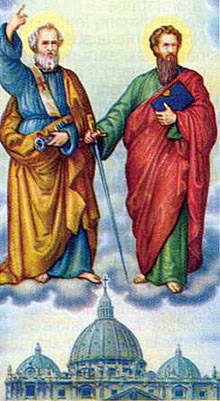
Why Solemnity of Saints Peter and Paul? That is because on that day lie the great celebration of the two great saints and apostles that defined our Church, because they met their martyrdom in Rome. St. Peter, the Prince and leader of all the Apostles, whom the Pope is the successor of today, met his martyrdom in what is now Vatican City, through crucifixion, and St. Paul, the Apostle to the Gentiles, and author of the Epistles in the New Testament, met his martyrdom in Rome, through beheading.

Peter’s Pence itself had its origins in the late dark ages and early medieval period, particularly from England, where it got the name Peter’s ‘Pence’. Pence is the unit of money still in use until today in the United Kingdom and the related monetary units. ‘Peter’ simply point to the fact that the collection or ‘pence’ is intended to be sent to Rome, to the Pope, in order to support various Church activities.