Saturday, 14 December 2013 : 2nd Week of Advent, Memorial of St. John of the Cross, Priest and Doctor of the Church (Scripture Reflections)

Liturgical Colour : Purple/Violet or White (Priests)

Brothers and sisters in Christ, today we heard how Elijah, the great prophet of old, came once again into this world, in the form of John the Baptist, the messenger of God and the one who prepared the way for the coming of God. Indeed according to the Scriptures, both of them are likely to be one and the same.

While John the Baptist was not mentioned much in the Holy Scripture, and the details about his life and works are relatively scarce, gathering from what we have in the Holy Gospels, the story about the prophet Elijah, one of the greatest of the prophets, are plentiful. We can read many of his works in the Book of Kings in the Old Testament.

There are many parallels that we can find, between the prophet Elijah and John the Baptist, the last of God’s messengers before the coming of the Messiah, Jesus Christ. Elijah was sent to the people of Israel, when the people of God went through times of struggle, of an identity crisis, the crisis of their soul. The people of God had not been faithful to the Lord of their fathers, and they had turned away from His ways.

The people of the northern kingdom of Israel, whom Elijah was sent to, was under a rule of wickedness, under the king Ahab, whom many of you would know as one of the most wicked and unfaithful king of Israel. The people who remained faithful to the Lord suffered and even had to lose their lives. One of them was Nabot, whom the king murdered through false testimonies, and he was killed so that the king could have his land, fertile and rich.

Elijah lived through difficult times, where those who believe in God were persecuted. It was therefore even more difficult for one like the prophet and messenger of the Lord’s will. Elijah was persecuted and had to go from one exile to another, fleeing at times from the persecutioners and the forces of the king. Elijah yet persevered and with the power and guidance of God, he continued to work, calling the people to repent from their sinful ways and returned to the worship of the One, True God.

Elijah challenged the four hundred and fifty priests of Baal on Mount Carmel, and won against them, showing the people of God who is the One and only True God. He did many other works of wonders across the land, and even went to the land of the pagans, and found truly great faith there. He brought back to life the son of the widow, and feed them with oil when the land was in famine.

Elijah ended his works in this world and found in Elisha, a successor to his works. It was unique that he among the others, did not die, but was taken up on flaming chariots into heaven. Such was a spectacular and dramatic end for this great prophet of God. But no, that was not the end. Elijah was taken up into heaven to be at God’s side so that the Lord can entrust him to do an even greater work.

Yes, that is to be the one to prepare the way for the Lord, who would come as the Saviour of all, the long promised Messiah. As John the Baptist, what he did, were truly not different from what he had done as Elijah. He proclaimed to the people the need for repentance, and to change their ways, so as to prepare the way for the coming of the Lord Himself.

And just as Elijah had to suffer rejection and persecution, John the Baptist too faced mockery and rejection from the Pharisees and the Sadducees, who were too self-righteous to listen to the calling of John to repent and change their sinful ways. John the Baptist led the way for Christ, the Messiah, who came in Jesus, the One who finally came to liberate the people of God from sin. And finally both great servants did not hesitate to rebuke even worldly authorities, when they were faced with wickedness. Elijah rebuked king Ahab for his actions in causing the death of Nabot

And those who persecuted Elijah and John the Baptist, as opposed as they were against the Lord and His ways, would also be against the Lord, as was evident, when they opposed the Lord Jesus and all of His works during His earthly ministry. And if they persecuted Elijah, seeking to end his life, and which they succeeded in John, when through Herodias’ daughter, they ended the life of the servant of God. The Lord too, was rejected, reviled, mocked, and finally condemned to death, a death most shameful on the cross.

Yet, did the Lord give up on us? Did He turn away from us even after we have rejected so many of His prophets, and even murdered them? Did He give up the cross so that He no longer needed to suffer for the sake of our rebellious and sinful selves? No, He did not! And that is most important, for the actions of the two great servants of God, Elijah and John the Baptist, were ultimately designed after the examples of God Himself, who in His great love for us, was willing to lower Himself and die as slaves did, so that we can be liberated from our own slavery to sin.

And today, we celebrate a saint whose life has been dedicated to the Lord in much the same way. St. John of the Cross was born in Spain in the sixteenth century and joined the Carmelite order, and went on to be a famous preacher and teacher of the faith to many across Spain. And St. John of the Cross was known for his many works together with St. Teresa of Jesus, also known as St. Teresa of Avila, and both of them were declared Doctors of the Church for their numerous contributions.

St. John of the Cross took part in what was known to be the Reform of Avila, commenced by St. Teresa of Jesus herself, aimed at restoring the purity within the Carmelite order, restoring the venerable and holy traditions designed to keep disciplined and holy, dedicated lifestyle in those who had dedicated themselves to the service of the Lord.

And this was just one of the many contributions that St. John of the Cross had given to the Church. He has written many writings and books that helped greatly in the rediscovery of the purity of the faith among many people during the Counter-Reformation period. And just as many other holy people before him, as were Elijah and John the Baptist, he faced opposition, and even persecution and imprisonment.

There were many who were disgruntled and vehemently against the reforms initiated by both St. Teresa of Avila and St. John of the Cross, and yet, regardless of all these, St. John of the Cross continued his hard work and did not give up despite the difficulties. He continued to labour for the Lord’s sake until his death.

Dear brothers and sisters in Christ, it is easy and often even inevitable for us to act like those who persecuted and condemned these holy people and messengers of God’s will, because simply they speak in a way that truly pierced us to the very depths of our souls.

We have grown decadent and complacent, and we have grown accustomed to the ways of this world. We find comfort in the ways of the world, no matter how wicked they actually are. We prefer to keep to our wicked ways rather than listening to the words of God that these holy people and messengers have brought with them.

That is why we persecuted these people appointed by God to be our help and our guide. Instead of persecuting them, should we not then begin to take this opportunity to reflect on what we had done? Should we not use this chance to begin our path towards salvation by taking even small steps but steps that are certain. We can no longer be ignorant of the faith we have in God. We have to embrace that faith and listen to what the saints and the holy people of God had done and preached, and suffered for in God’s Name.

May the Lord with the help of His saints, and through their intercession, help us to keep on track, on the path towards the Lord, that we will remain faithful, and will be blessed by the faith we have, that on the last day, the Lord will reward us together with His saints. Amen.
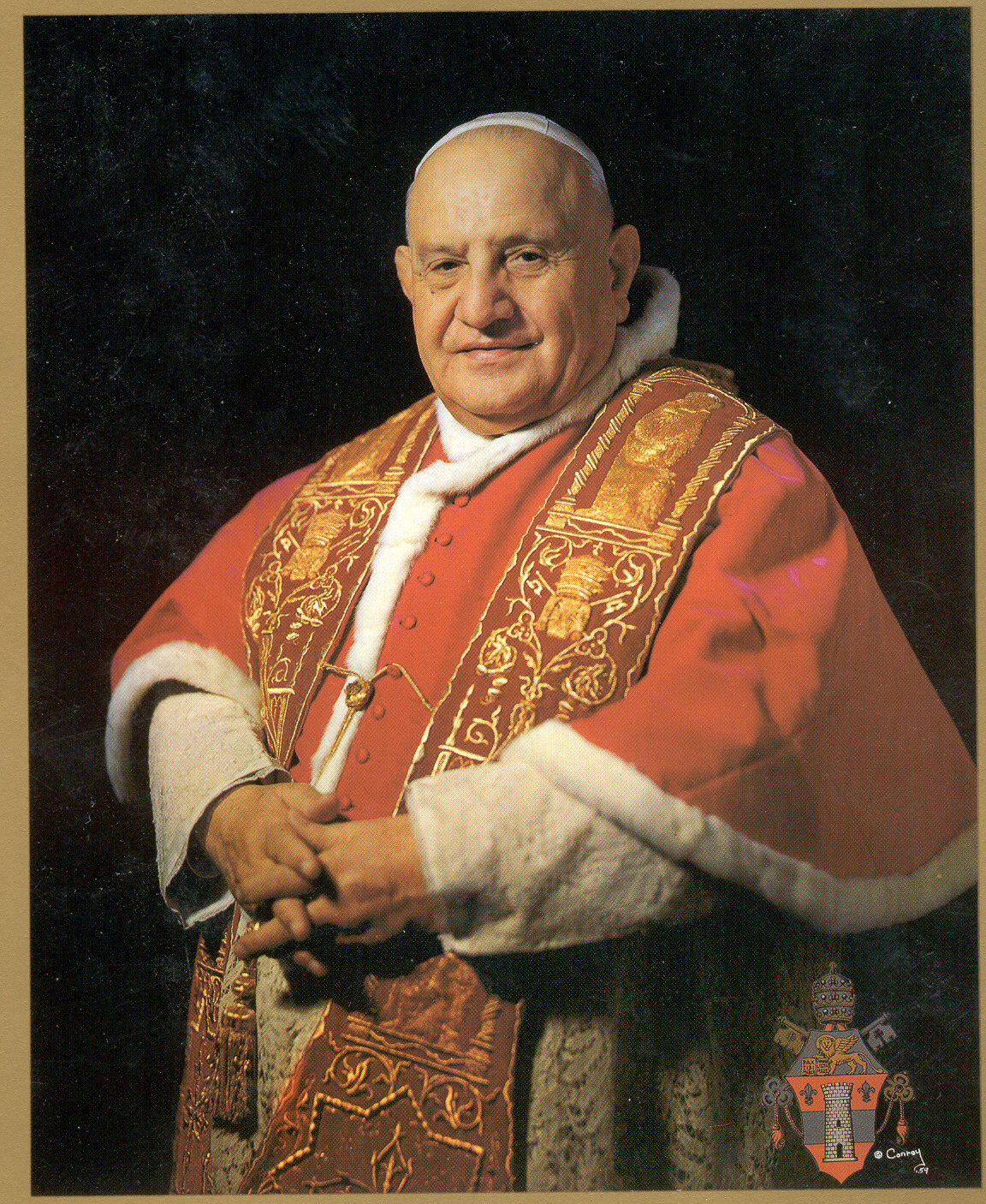
50th Anniversary of the passing of Blessed Pope John XXIII, the Good Pope (3 June 1963)

Image

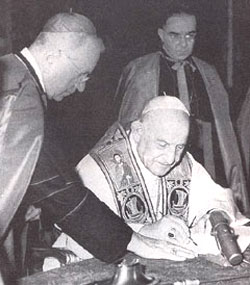
Today, 3 June 2013, marks 50 years since the passing of a great Pope, Blessed Pope John XXIII, who died from stomach cancer he had suffered for years, on 3 June 1963.

Blessed Pope John XXIII was Cardinal Angelo Roncalli, the former Patriarch of Venice, who was elected to the Pontificate in 1958 succeeding Pope Pius XII. He was a poor farmer’s son, who joined the Vatican diplomatic career and eventually was made the Patriarch of Venice, before succeeding as Pope in the 1958 Conclave.

Image

Blessed Pope John XXIII was most well-known for his role in convoking and planning for the Second Vatican Council, which ultimately would take place between 1962 and 1965, with the Council works continued by his successor Pope Paul VI in 1963 upon his passing.

Image

But Blessed Pope John XXIII was also well-known for another work, that is peace, which is one of the hallmark of his pontificate. He managed to help arrange peace talks between the USA and the USSR, the Cold War superpowers, which due to the Cuban Missile Crisis in October 1962 and preceding conflicts, almost went into an all-out nuclear war at the time.

Image

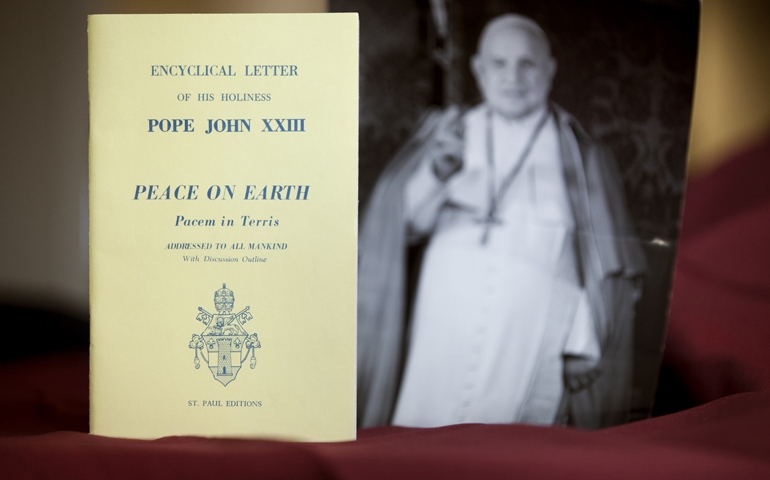
Blessed Pope John XXIII published the well-known encyclical on peace, Pacem in Terris (Peace on Earth) just months before his death, but his works on peace help ensure that the destruction of mankind and God’s creation did not happen.

Image

Pray for us, o Blessed Pope John XXIII, that all of God’s children can truly become peacemakers on their own, and truly practice the love that God has planted in them, that love and peace will reign in this world, triumphant over evil, hatred, and violence.

Sunday, 28 April 2013 : 5th Sunday of Easter (Scripture Reflection)

God is love, this is the fundamental and the most basic nature of our Lord and God, my dear brothers and sisters. For love is the centre of being of our God, for His love is infinite, and in His infinite and boundless love, He willingly sacrificed Himself that all of us, unworthy and sinful mankind, may be saved from the eternal separation from Himself.

It may not be easy to see God in our daily lives today, since God is no longer walking among us, just as He did at the time of the disciples, to whom He appeared often after His resurrection. But do we then abandon God in the search of something more tangible, for something more real? That is why many of the faithful in Christ had lapsed in their faith in God, simply because they had been allured by the evil one and his myriad tools that he used to lure mankind away from God.

There are many means that the devil had used in his attempts to corrupt mankind, by offering many seemingly better alternatives to God, whom he tried to portray to many as being boring and inexistent. Instead, men loves his creations, that of worldly goods, wealth, affluence, and other false idols, solely aimed at the separation of men from God, and the ruination of Christ’ salvific mission in this world.

But Satan will never succeed, for God will ultimately triumph, and despite all the plots and the devices that Satan had used in his attempts to deceive mankind, God’s love and faith in us will be a key weapon in the fight against the devil and his fallen angels, who ceaselessly tried to divert us from the true path towards the Lord.

There are indeed many false gods and idols that our world offer us all today, my brothers and sisters, most obvious of which is money and material possessions, which many of us desire to the point of worshipping them instead of God, to whom only all honour and glory should go. Many of us are so embroiled and involved in our pursuit for success and wealth, that we forgot that the Lord is always with us. We enjoy the company of money and material goods more than we do for the Lord.

How many of us find it a great chore to just go and attend the Sunday Mass to worship our Lord? and how many of us then spend so much time in our career and our work, and in the attempt to secure more pay and more money? And even worse are those who employ underhanded and illegal means to secure these wealth and possessions, that is through corruption and nepotism, which had marred many of our high ranking politicians, businessmen, and many other people, and do not be mistaken that this happens only on the top, since corruption and all these vices also exist in the bottom rung of the society, with many of us seduced by the allure of money, and became obsessed in attaining more of it, that we forget the Lord and His love.

The Lord Himself had said, that we should not worry about our lives and what we are to have in our daily lives, since God Himself will provide all that we need, just like how He provided for the animals and other beings that He had created. For mankind, especially, there had been a blurring of distinctions between what we want, and what we truly need for our lives. Too often we seek something that we do not actually need, but out of our insatiable desire for things that we want to have.

Dear brothers and sisters, let us take a step back from our mindless pursuits of wealth, affluence, fame, and material possessions. Seek not what can bring us glory in this world, but seek for the true glory in heaven instead. How to do so? By loving one another as the Lord has loved us, just as He had commanded the apostles to do so. Love is the core tenet of our faith, since our very salvation is anchored on the great and infinite love that God has for us, that He wanted to endure death for our sake, that we may live.

Therefore, brothers and sisters in Christ, let us strive to love one another ever greater, and put love manifested in all our words, our thoughts, and our actions, that whenever we do something, or say something, or think of something, love will always form the core of our speech, our decisions, and our actions. Remember that God is love, and by doing so, we have already obeyed God’s will and commandments, allowing even others to see our actions and believe in the Lord, saving more people for Christ who died for them.

Let us pray, that we can be ever more loving and more compassionate in our society, helping those who are weakest and the least there, and reaching out to all in need, both physically and spiritually, that God’s love will be made manifest in this world, through us, and through our actions. May God bless all of us. Amen.

Appointment of Advisory Board for the Reform of the Roman Curia

Pope Francis had appointed an advisory board composed of eight Cardinals and some other prelates whose function is to help the Holy Father in his reform of the Roman Curia to increase its efficiency.

http://www.news.va/en/news/pope-appoints-council-of-eight-cardinals-to-advise


Here are the members of the Advisory Board, picked from members of the College of Cardinals across the globe (set to meet from 1-3 October 2013 for first discussion) :

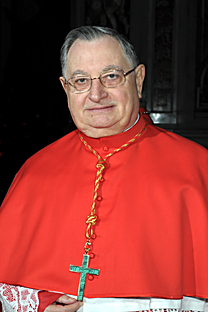
1. Cardinal Giuseppe Bertello, President of the Governatorate of Vatican City State

Image

2. Cardinal Francisco Javier Errazuriz Ossa, Metropolitan Archbishop Emeritus of Santiago del Cile (Chile)

Image

3. Cardinal Oswald Gracias, Metropolitan Archbishop of Bombay (India)

Image

4. Cardinal Reinhard Marx, Metropolitan Archbishop of München und Freising (Germany)

Image

5. Cardinal Laurent Monswengo Pasinya, Metropolitan Archbishop of Kinshasa (Democratic Republic of Congo)

Image

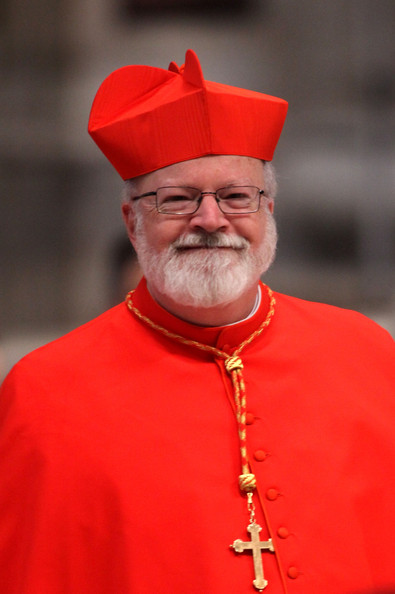
6. Cardinal Sean Patrick O’Malley. O.F.M. Cap., Metropolitan Archbishop of Boston (U.S.A.)

Image

7. Cardinal George Pell, Metropolitan Archbishop of Sydney (Australia)

Image

8. Cardinal Oscar Andrés Maradiaga Rodríguez S.D.B., Metropolitan Archbishop of Tegucigalpa (Honduras)

Image


As mentioned, the first meeting of the group would be from 1-3 October 2013, so I would not expect significant changes to the Roman Curia before the end of this year, or even early next year (2014).

Porta Fidei, the Door of Faith, Pope Benedict XVI’s Motu Proprio – Apostolic Letter released in conjunction with the Year of Faith

http://www.vatican.va/holy_father/benedict_xvi/motu_proprio/documents/hf_ben-xvi_motu-proprio_20111011_porta-fidei_en.html

For those who have yet to see this magnificent letter from the Pope with regards to the Year of Faith and what it is about, and what we should do to immerse ourselves in this rare chance to greatly deepen our faith, you may read the article in English in the link provided above.

This Year of Faith began last year on 11 October 2012, on the 50th Anniversary of the beginning of the Second Vatican Council, and will last until the Feast of Christ the King this year on 24 November 2013.

During this year, we will also celebrate the 50th Anniversary of the passing of Blessed Pope John XXIII (3 June 1963) and the 50th Anniversary of the election of the Venerable Pope Paul VI (21 June 1963). Under these two great popes, the crucial Second Vatican Council was begun and proceeded to reform the Church, of which reform still occur even until today, through the ‘reform of the reform’.

Let us take action to make this Year of Faith meaningful if we have not done so. The 2013 World Youth Day will also be held this July in Rio de Janeiro, Brazil(23-28 July 2013), and for those who are planning to go, this is a great chance to rediscover and renew your faith in God.

Let us take the concrete step to pass through the ‘Door of Faith/Porta Fidei’ and reach out to God, who loves us all.