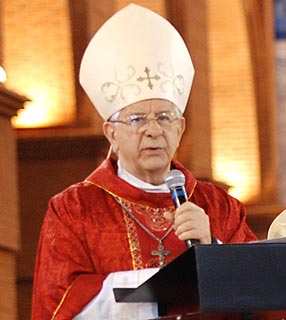
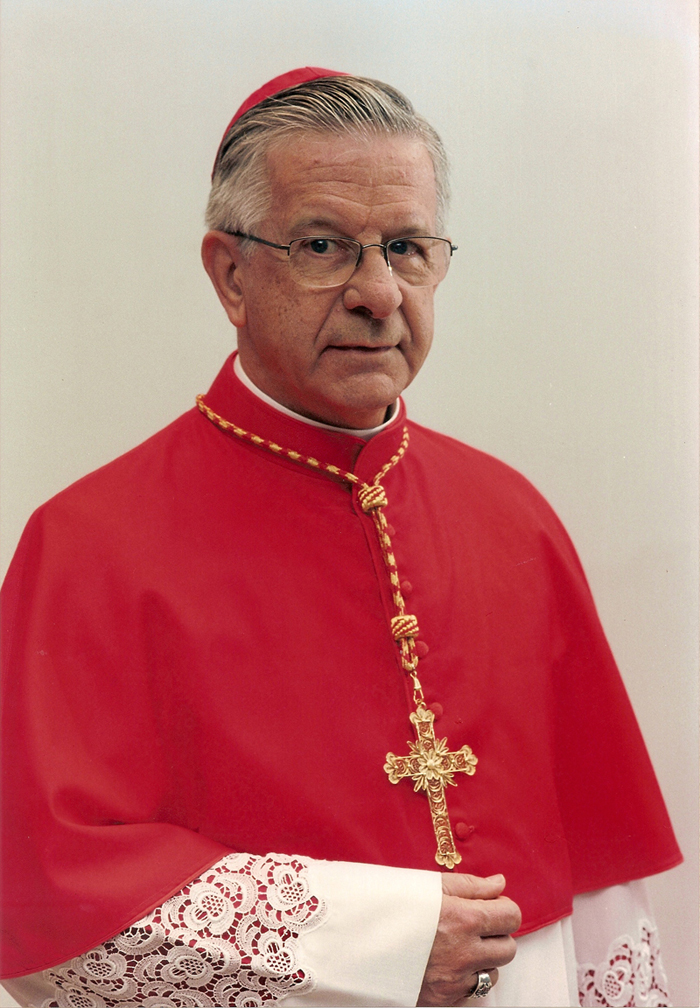
Cardinal Geraldo Majella Agnelo, Metropolitan Archbishop Emeritus of Sao Salvador da Bahia (Brazil) turns 80, ceases to be a Cardinal-elector

y3323912291618536_1

Today, Saturday, 19 October 2013, Cardinal Geraldo Majella Agnelo, Cardinal-Priest of S. Gregorio Magno alla Magliana Nuova, the Metropolitan Archbishop Emeritus of Sao Salvador da Bahia, of Brazil, turns 80, and therefore, according to the rules written in the Apostolic Constitution Universi Dominici Gregis, he loses his right to vote in any future conclave.

Cardinal Geraldo Majella Agnelo was made Cardinal-Priest of S. Gregorio Magno alla Magliana Nuova by Pope John Paul II in the 2001 Consistory of Cardinals on 21 February 2001, the eighth of his pontificate. He was also the once the Secretary of Congregation for Divine Worship and the Discipline of the Sacraments from 1991, prior to his appointment as Metropolitan Archbishop of Sao Salvador da Bahia in 1999. He retired in 2011.

dom-geraldo-maljella

http://www.gcatholic.org/hierarchy/data/cardJP2-8.htm#1

May God bless His Eminence Cardinal Agnelo, with a blessed old age and health. May he remain strong in the faith and hopefully can perhaps still carry out the mission God had given him in an active retirement and old age.

The College of Cardinals now stands at 201 members in total, with 109 Cardinal-electors and 92 Cardinal non-electors. There are now vacancy of 11 Cardinal-electors as compared to the maximum number of electors allowed in the Conclave of 120, although Popes John Paul II and Benedict XVI had sometimes surpassed this limit.

Next Cardinal-elector to age out (80) will be Cardinal Joachim Meisner, the current Metropolitan Archbishop of Koln (Germany),  on 25 December 2013.

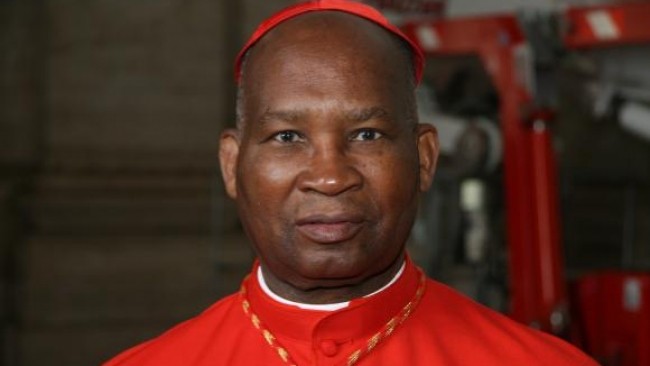
Passing of Cardinal Medardo Joseph Mazombwe of Zambia, at the age of 81

169-medardo-joseph-mazombwe-archeveque-emerite-lusaka-en-zambie

Cardinal Medardo Joseph Mazombwe, Cardinal Priest of S. Emerenziana a Tor Fiorenze has passed away on Thursday, 29 August 2013 at the age of 81. He was the Metropolitan Archbishop Emeritus of Lusaka in Zambia.

http://www.gcatholic.org/hierarchy/data/cardB16-3.htm#6723

medardo-joseph-mazombwe-2010-11-20-8-10-45

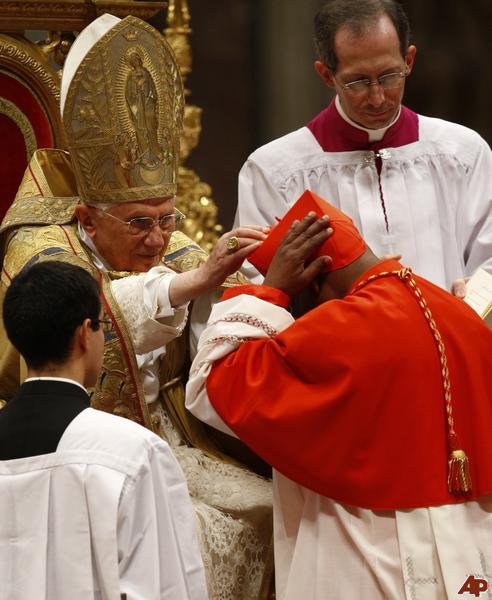
Cardinal Mazombwe was created Cardinal in 2010 by Pope Benedict XVI and he was a longtime bishop of Chipata since 1970 until he was made the Metropolitan Archbishop of Lusaka, Zambia in 1996. Cardinal Mazombwe retired in 2006, and was also for a few years the President of the Zambia Episcopal Conference.

We pray for Cardinal Mazombwe, that he will rest in peace, and God will reward him for all his hard work as the shepherd of the people of God in Lusaka and in Zambia as a whole and his numerous other contributions to the Universal Church and for the Lord’s sake. May the Lord welcome him into His embrace in heaven and give him eternal rest and happiness that he deserved.

With the passing of Cardinal Mazombwe, the College of Cardinals now stands at 201 members, with 112 Cardinal-electors and 89 Cardinal non-electors.

There are now 8 Cardinal-elector vacancies in the College of Cardinals, 12 vacant Cardinal Titles (for Cardinal Priests) and 8 vacant Cardinal Deaconries (for Cardinal Deacons)

(Special) Mass for the Election of the Roman Pontiff / Missa pro Eligendo Pontifice (Second Reading)

Ephesians 4 : 11-16

As for God’s gifts, to some He gave to be apostles, to others prophets, or even evangelists, or pastors and teachers. So He prepared those who belong to Him for the ministry, in order to build up the Body of Christ, until we are all united in the same faith and knowledge of the Son of God. Thus, we shall become the perfect Man, upon reaching maturity and sharing the fullness of Christ.

Then no longer shall we be like children tossed about by any wave or wind of doctrine, and deceived by the cunning of people who drag them along into error. Rather, speaking the truth in love, we shall grow in every way towards Him who is the Head, Christ. From Him, comes the growth of the whole body to which a network of joints gives order and cohesion, taking into account and making use of the function of each one.

So the Body builds itself in love.

(Special) Mass for the Election of the Roman Pontiff / Missa pro Eligendo Pontifice (Psalm)

Psalm 88 : 4-5, 21-22, 25 and 27

I have made a covenant with David, My chosen one; I have made a pledge to my servant. I establish his descendants forever; I build his throne for all generations.

I have found David My servant, and with My holy oil I have anointed him. My hand will be ever with him and My arm will sustain him.

My faithfulness and love will be with him, and by my help he will be strong. He will call on Me, “You are my Father, my God, my Rock, my Saviour.”

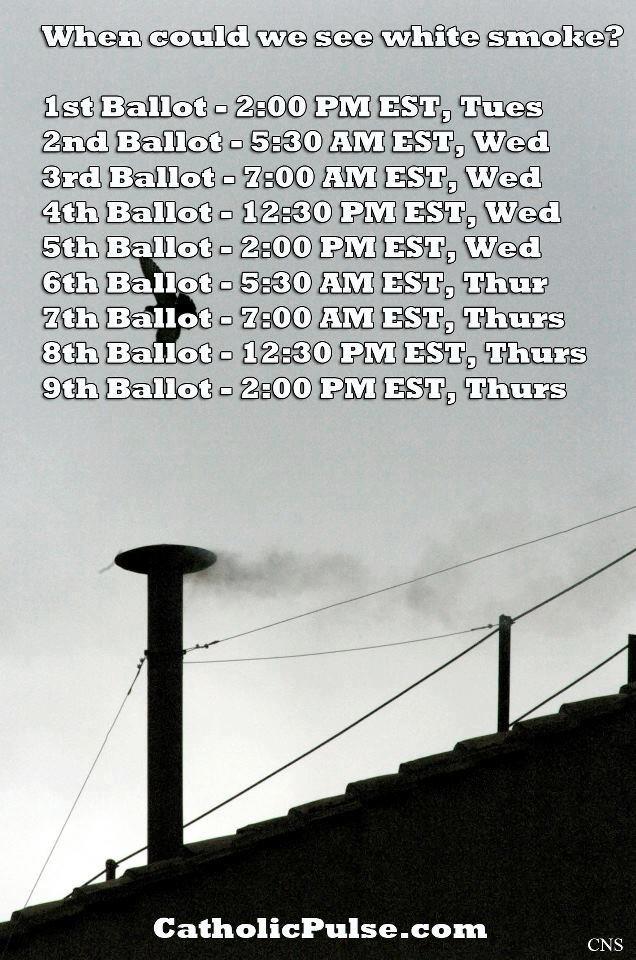
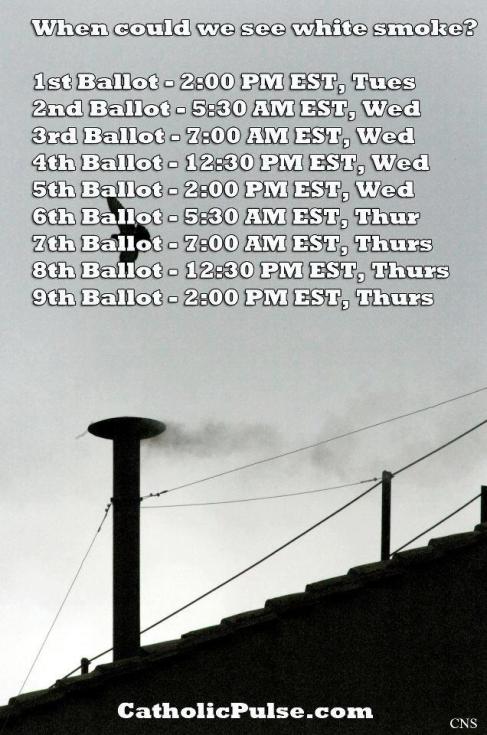
Times to watch for the smoke signal from the Sistine Chapel

Image

Here are the times when the smoke signals (black or white) will pour out of the chimney and be visible to the public, as the first sign whether the Cardinal-electors had succeeded or failed to elect a new Pope in the previous ballot session.


1. Smoke after 1st ballot (The only Tuesday ballot session, 1st day):

Tuesday, 12 March 2013 at 8 pm Rome time (CET/UTC+1)

Tuesday, 12 March 2013 at 7 pm UTC

Tuesday, 12 March 2013 at 2 pm EST (UTC-5)

Tuesday, 12 March 2013 at 11 am PST (UTC-8)

Wednesday, 13 March 2013 at 2 am WIB (Indonesia, Thailand, etc.) (UTC+7)

Wednesday, 13 March 2013 at 3 am Singapore time (UTC+8)


2. Smoke after 2nd ballot (1st Wednesday morning ballot, 2nd day) : A new Pope is likely to have been elected (if no pope elected after the 2nd ballot, the Cardinal-electors will continue directly to 3rd ballot, and the two ballots will be burned together after the 3rd ballot) :

Wednesday, 13 March 2013 at 11.30 am Rome time (CET/UTC+1)

Wednesday, 13 March 2013 at 10.30 am UTC

Wednesday, 13 March 2013 at 5.30 am EST (UTC-5)

Wednesday, 13 March 2013 at 2.30 am PST (UTC-8)

Wednesday, 13 March 2013 at 5.30 pm WIB (Indonesia, Thailand, etc.) (UTC+7)

Wednesday, 13 March 2013 at 6.30 pm Singapore time (UTC+8)


3. Smoke after 3rd ballot (2nd Wednesday morning ballot, 2nd day) :

Wednesday, 13 March 2013 at 1 pm Rome time (CET/UTC+1)

Wednesday, 13 March 2013 at 12 pm UTC

Wednesday, 13 March 2013 at 7 am EST (UTC-5)

Wednesday, 13 March 2013 at 4 am PST (UTC-8)

Wednesday, 13 March 2013 at 7 pm WIB (Indonesia, Thailand, etc.) (UTC+7)

Wednesday, 13 March 2013 at 8 pm Singapore time (UTC+8)


4. Smoke after 4th ballot (1st Wednesday afternoon ballot, 2nd day) : A new Pope is likely to have been elected

Wednesday, 13 March 2013 at 6.30 pm Rome time (CET/UTC+1)

Wednesday, 13 March 2013 at 5.30 pm UTC

Wednesday, 13 March 2013 at 12.30 pm EST (UTC-5)

Wednesday, 13 March 2013 at 9.30 am PST (UTC-8)

Thursday, 14 March 2013 at 00.30 am WIB (Indonesia, Thailand, etc.) (UTC+7)

Thursday, 14 March 2013 at 1.30 am Singapore time (UTC+8)


5. Smoke after 5th ballot (2nd Wednesday afternoon ballot, 2nd day) :

Wednesday, 13 March 2013 at 8 pm Rome time (CET/UTC+1)

Wednesday, 13 March 2013 at 7 pm UTC

Wednesday, 13 March 2013 at 2 pm EST (UTC-5)

Wednesday, 13 March 2013 at 11 am PST (UTC-8)

Thursday, 14 March 2013 at 2 am WIB (Indonesia, Thailand, etc.) (UTC+7)

Thursday, 14 March 2013 at 3 am Singapore time (UTC+8)


6. Smoke after 6th ballot (1st Thursday morning ballot, 3rd day) : A new Pope is likely to have been elected :

Thursday, 14 March 2013 at 11.30 am Rome time (CET/UTC+1)

Thursday, 14 March 2013 at 10.30 am UTC

Thursday, 14 March 2013 at 5.30 am EST (UTC-5)

Thursday, 14 March 2013 at 2.30 am PST (UTC-8)

Thursday, 14 March 2013 at 5.30 pm WIB (Indonesia, Thailand, etc.) (UTC+7)

Thursday, 14 March 2013 at 6.30 pm Singapore time (UTC+8)


7. Smoke after 7th ballot (2nd Thursday morning ballot, 3rd day) :

Thursday, 14 March 2013 at 1 pm Rome time (CET/UTC+1)

Thursday, 14 March 2013 at 12 pm UTC

Thursday, 14 March 2013 at 7 am EST (UTC-5)

Thursday, 14 March 2013 at 4 am PST (UTC-8)

Thursday, 14 March 2013 at 7 pm WIB (Indonesia, Thailand, etc.) (UTC+7)

Thursday, 14 March 2013 at 8 pm Singapore time (UTC+8)


8. Smoke after 8th ballot (1st Thursday afternoon ballot, 3rd day) : A new Pope is likely to have been elected

Thursday, 14 March 2013 at 6.30 pm Rome time (CET/UTC+1)

Thursday, 14 March 2013 at 5.30 pm UTC

Thursday, 14 March 2013 at 12.30 pm EST (UTC-5)

Thursday, 14 March 2013 at 9.30 am PST (UTC-8)

Friday, 15 March 2013 at 00.30 am WIB (Indonesia, Thailand, etc.) (UTC+7)

Friday, 15 March 2013 at 1.30 am Singapore time (UTC+8)


9. Smoke after 9th ballot (2nd Thursday afternoon ballot, 3rd day) :

Thursday, 14 March 2013 at 8 pm Rome time (CET/UTC+1)

Thursday, 14 March 2013 at 7 pm UTC

Thursday, 14 March 2013 at 2 pm EST (UTC-5)

Thursday, 14 March 2013 at 11 am PST (UTC-8)

Friday, 15 March 2013 at 2 am WIB (Indonesia, Thailand, etc.) (UTC+7)

Friday, 15 March 2013 at 3 am Singapore time (UTC+8)


If until at this point, no one has yet been elected the Pope, they will adjourn for a maximum of one full day for prayer, discernment and consideration. To think and really find out who should be the next Pope. The cycle continues again with the other 3 day ballots, and then break if the Cardinals fail to pick a suitable candidate, and these proceedings will continue until a new Pope had been elected.

If this conclave is fast, as it is expected to be, due to the incoming Holy Week and other mattters, we do not even need to refer to the timing I placed for the later ballots.

Nevertheless, regardless what happens, God is always with us, and He will certainly choose the best one available for the position.

How to view the chimney of the Sistine Chapel? Live from Vatican by Rome Reports!

http://www.romereports.com/palio/modules.php?name=Content3&pa=showpage&newlang=english&pid=47#.UT4XGVeJegH

Use this site to view the live recording by the camera from the Vatican Central Television (CTV). The camera will be placed to zoom onto the chimney of the Sistine Chapel so that viewers can keep track of the smoke without the need to be actually there.

White smoke (fumata bianca) = a new Pope had been elected

Black smoke (fumata nera) = no Pope had been elected


Pray for our Cardinal-electors! and happy smoke-watching!

Monday, 11 March 2013 : 4th Week of Lent (Scripture Reflection)

Jesus shows today that faith in God is important, for God shows pity and mercy on all of His children, and those who believe in Him, He will save and protect. Those who put their trust in the Lord will not be disappointed. Jesus rewards the man’s faith with the healing of his son from certain death.

However, we must indeed be careful, for the Lord also warned us against believing only by entrusting in miracles and what we see. For such a faith is not a true faith, as we believe because we see great things that unravel in front of our eyes, and then we believe that this supernatural works must have been done by a divine being, that is Christ. This kind of faith is weak and is no true faith, for, as shown when Jesus was arrested and brought before the people after He was arrested.

The people who were there mocked Him and also called for His death. Why? Even though these were likely the same people that have listened to His preaching, His parables, and also witnessed His miracles and healings? That is because their faith is shallow, shallow and have not grown well, just like in the case of the parable of the sower, where the seed had been sown on a rocky and barren ground. The seed of faith found it difficult to grow in them, as their faith came mainly because of awe in the miraculous powers of Jesus.

When Jesus seemed to ‘falter’, which is by being arrested and accused by the Pharisees and the Sanhedrin, the Jewish religious body at the time, as being a heretic and blasphemer, these people lost their faith, and Satan took away their seeds of faith, just like those seeds that were eaten by the birds on an open road, a clear and easy opportunity for the evil one to come and take the faith away from them.

This is why, brothers and sisters in Christ, I would like to highlight to all of you, the very importance of nurturing our faith, of maintaining our faith, that not only that it will remain strong and unbroken, but even also bear fruit manyfold, like the seeds that fell on the rich soil, and produced much fruit. How to do so? By acts of love, justice, and compassion, that is by doing what God has commanded us to do, the commandments of love Christ had given us.

The commandments of love says that we have to love God with all our hearts, minds, and souls, with all our beings, and therefore not just with our eyes and senses, which will then lead into a true faith in God. But this is not enough, as we also have to love our neighbours, our brethren as much as we love ourselves, and as much as we love God. These are the good works that the Church has encouraged us to do, to live and make our faith in God manifest, in our good works for the sake of the less fortunate, the suffering, and the poor around us.

Remember that the Lord said that all that we do for the sake of these around us, we also do it for the Lord. That is because, through our actions, He can see indeed all our living faith, that is not dead, not superficial, and not mere words, and not mere profession of faith. For faith and service are inseparable, and bound to each other tightly in our journey towards the Lord, as the two pillars of strength supporting us in salvation.

Therefore, brothers and sisters in Christ, let us strive, especially in the perfect chance in this Year of Faith, strive to learn more about our faith, about the teachings of the Church, and the traditions of the Apostles passed down through the Church to us. By understanding all these, we can strive to grow deeper in our faith, and even more so through a solemn and active participation in the liturgy of the Mass, as do not forget that the liturgy of the Mass, when done properly and solemnly, can only serve to strengthen our faith in God our Saviour, Jesus Christ.

As the Mass is the very representation of the Holy Sacrifice Christ had made on the cross in Calvary, and united with that Sacrifice, through which we receive the Body and Blood of Christ, transformed from the bread and wine that we offered, we receive Christ into ourselves, that He will live in us, and reside within us, to transform us from within, that our faith in Him will ever be stronger. This is why it is important for us to participate fully and actively in the Mass by seeking to understand more the liturgy and the Mass.

Then of course, after that, let us all strive to make concrete and visible our faith in God through our service to our fellow brethren around us. It will not be easy, but little by little, beginning within even our own homes, our own families, our own friends, we can slowly begin to propagate acts of love, and acts in accordance with God’s will, that will make us justified before God, that is through our living faith, proven by our good works, and not just empty and dead faith, shown only by words and not true dedication.

May God bless all of us today, and bless our Holy Church, and of course, bless the Cardinal-electors and send the Holy Spirit to them that our new Pope will soon be elected. Amen.

Missa pro Eligendo Pontifice/Mass for the Election of the Roman Pontiff and the beginning of the Conclave

Both events are live from Rome, at Vatican Player, http://www.vatican.va/video/ and I believe are also covered live by several Catholic televisions in the USA, Canada, and other countries.


1. Missa pro Eligendo Pontifice / Mass for the Election of the Roman Pontiff

The Cardinals present in Rome, all the Cardinal-electors that will be entering the Conclave, will first gather for a Solemn Mass at St. Peter’s Basilica on Tuesday morning, 12 March 2013 at 10 am Rome time (CET or UTC+1). The Mass will be lead by the Cardinal Dean of the College of Cardinals, Cardinal Angelo Sodano, who is a non-elector.

Time in other parts of the world :

Tuesday, 12 March 2013 at 9 am UTC // 4 am EST // 1 am PST // 4 pm WIB or UTC+7 // 5 pm Singapore time or UTC+8


2. Beginning of the Conclave : Entry of the Cardinal-electors into the Sistine Chapel

The Cardinal-electors will assemble in Pauline Chapel on Tuesday afternoon, and the event will begin live at 4.30 pm Rome time (CET or UTC+1). The Cardinals will wear their full choir dress and then will proceed into the Sistine Chapel while singing the hymn Veni Creator Spiritus to invoke the Holy Spirit.

Then in the Sistine Chapel, the Cardinal-electors will take their oath, beginning with the senior Cardinal Bishop-elector, Cardinal Giovanni Batista Re, who leads the Conclave, and then the famous ‘extra omnes’ or ‘everybody else out’ order will be said by the Master of Papal Liturgical Celebrations, Monsignor Guido Marini.

Time in other parts of the world :

Tuesday, 12 March 2013 at 3.30 pm UTC // 10.30 am EST // 7.30 am PST // 11.30 pm WIB or UTC+7 //  Wednesday, 00.30 am Singapore time or UTC+8

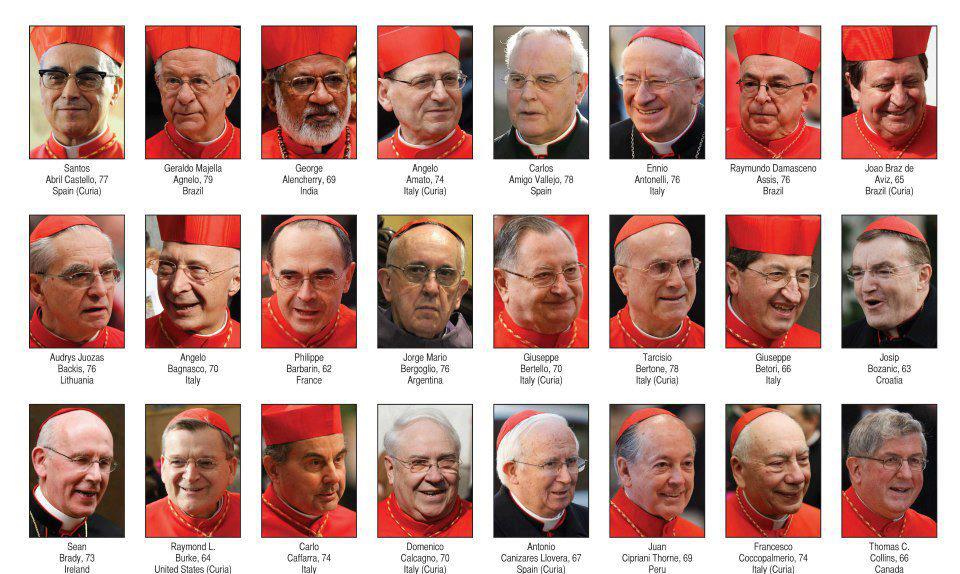
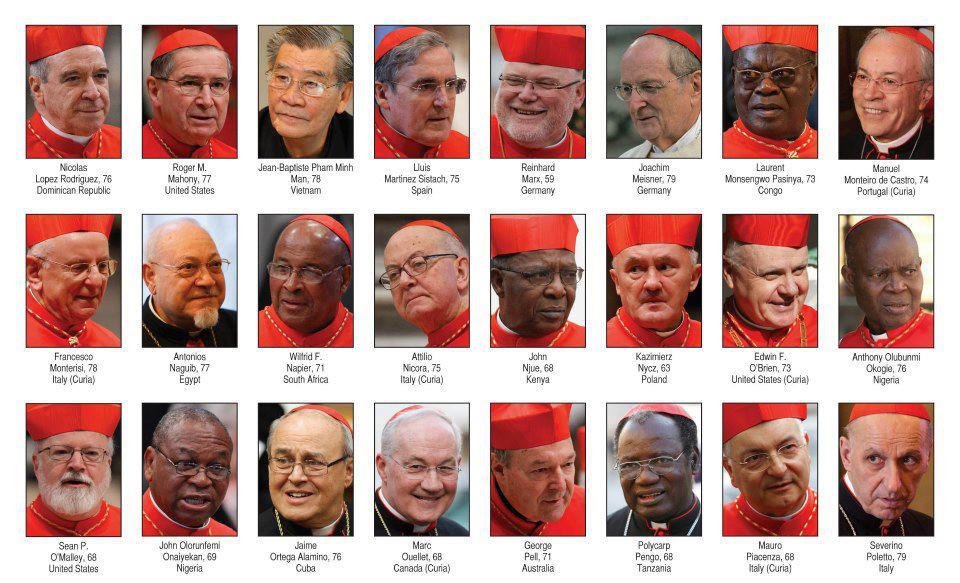
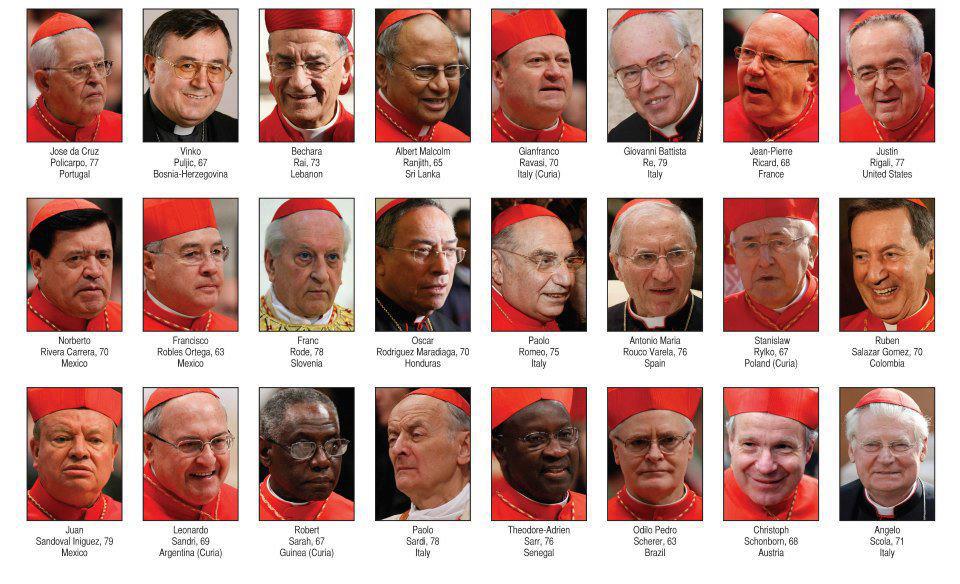
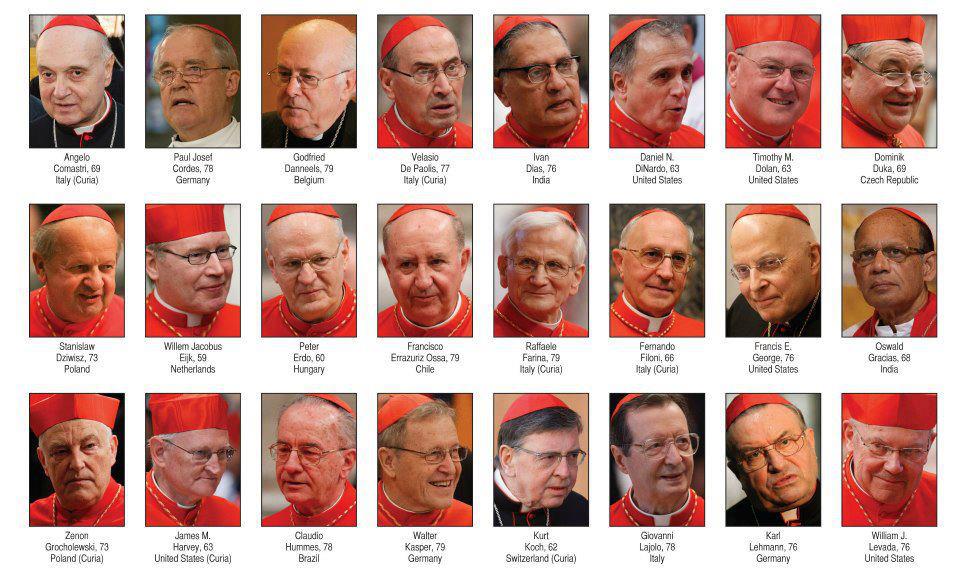
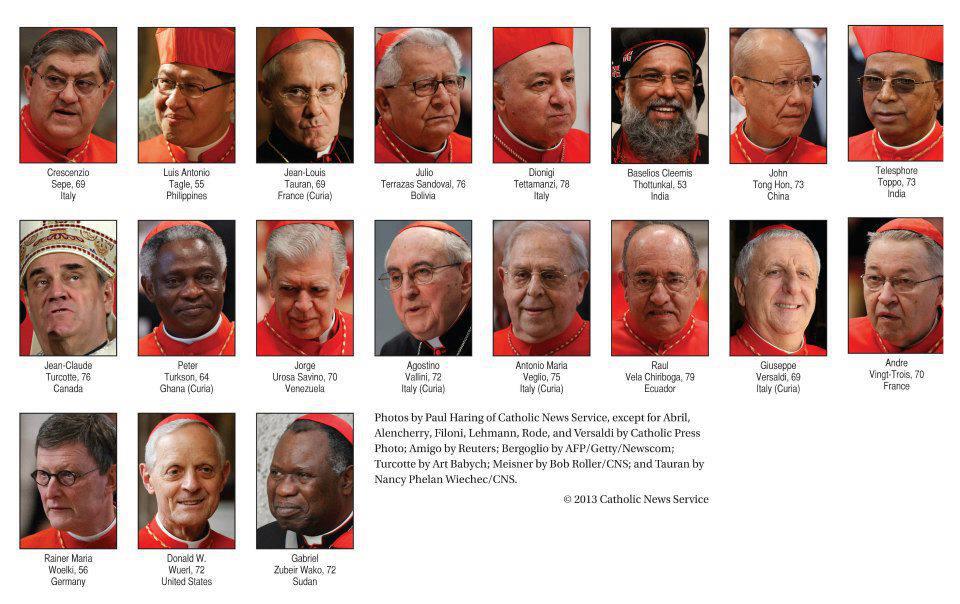
Pictures of all the 115 Cardinal-electors of the 2013 Papal Conclave (Easy to view)

Image

Image

Image

Image

Image

All the 115 Cardinal Electors of the 2013 Papal Conclave which will begin on Tuesday afternoon, 12 March 2013. All photos and arrangements were by Catholic News Service.

My Guide to the Papal Conclave : Part III (From the election of the new Pope to the Urbi et Orbi blessing by the new Pope)

Part II here : https://petercanisiusmichaeldavidkang.com/2013/03/09/my-guide-to-the-papal-conclave-part-ii-from-the-beginning-to-the-election-of-the-new-pope/


1. After the new Pope had accepted his election as Pope and leader of the Roman Catholic Church, there are several scenarios :


a. If he is already a bishop : The new Pope will immediately be the Bishop of Rome and leader of the Universal Church, the Successor of St. Peter the Apostle. Then he will immediately accept the homage of the Cardinal-electors gathered in the Conclave, after he changes his cardinal’s robes for the new, white papal robes in the Room of Tears.

b. If he is not yet a bishop : The new Pope will need to be immediately ordained a bishop following the proper order of the Ordination of bishops, and the senior Cardinal Bishop by seniority in the Conclave should be the principal consecrator. The new Pope can only receive homage of the Cardinals after his ordination to the episcopate (after he had been ordained a bishop).


2. The new Pope then leaves the Sistine Chapel main hall where the voting took place, into the special ‘Room of Tears’, where three sets of differently-sized white papal robes had been prepared for him to adjust to his size. The new Pope changes from his cardinal’s red robes into the white papal robes and then return to the main hall of the Sistine Chapel.


3. The new Pope, after dressed in the white papal robes (with the red mozzetta and the large state stole) will then receive the homage of all the Cardinals gathered in the Sistine Chapel.


4. New addition in 2013 Conclave : After the homage, the new Pope will proceed with all the Cardinal-electors from the Sistine Chapel to the Pauline Chapel. The new Pope will enter the Pauline Chapel alone, and pray before the Blessed Sacrament in the Chapel.


5. In the meanwhile, the most senior Cardinal in the order of deacons, that is the Cardinal Protodeacon (Cardinal Jean-Louis Tauran for the 2013 conclave) will then appear at the Loggia or the balcony of St. Peter’s Basilica to deliver the announcement of the election of a new Pope.


The formula :

The Cardinal Protodeacon will first greet the assembled people in St. Peter’s Square and throughout the world (done in 2005 conclave in different languages) :

1. Italian : Fratelli e sorelle carissimi

2. Spanish : Queridísimos hermanos y hermanas

3. French : Bien chers frères et sœurs

4. German : Liebe Brüder und Schwestern

5. English : Dear brothers and sisters


Then he continues :

Annuntio vobis gaudium magnum

I announce to you a great joy


Habemus Papam!

We have a Pope!


Eminentissimum ac Reverendissimum Dominum

The most eminent and reverend Lord


Dominum (New Pope’s first name/baptismal name) Sanctae Romanae Ecclesiae Cardinalem (New Pope’s surname)

Lord (New Pope’s first name/baptismal name) Cardinal (New Pope’s surname) of the Holy Roman Church


Qui sibi nomen imposuit (New Pope’s chosen regnal name and number)

Who takes for himself the name of (New Pope’s chosen regnal name and number)


5. After this, after a moment, the new Pope, led by a processional crucifix, made his appearance at the same balcony of St. Peter’s Basilica. He then may deliver his first address as Pope to the people gathered at the Square, and to the world.


6. After the address, then the new Pope will give his Urbi et Orbi special blessing (For the city of Rome (Urbi) and the world (Orbi)), with which is attached plenary indulgence, that is the forgiveness of all temporal sins, providing the people participates in full faith and repentance.


The text of the Urbi et Orbi blessing (Latin):

Sancti Apostoli Petrus et Paulus: de quorum potestate et auctoritate confidimus ipsi intercedant pro nobis ad Dominum.

(Amen)

Precibus et meritis beatæ Mariae semper Virginis, beati Michaelis Archangeli, beati Ioannis Baptistæ, et sanctorum Apostolorum Petri et Pauli et omnium Sanctorum misereatur vestri omnipotens Deus; et dimissis omnibus peccatis vestris, perducat vos Iesus Christus ad vitam æternam.

(Amen)

Indulgentiam, absolutionem et remissionem omnium peccatorum vestrorum, spatium verae et fructuosae poenitentiæ, cor semper penitens, et emendationem vitae, gratiam et consolationem Sancti Spiritus; et finalem perseverantiam in bonis operibus tribuat vobis omnipotens et misericors Dominus.

(Amen)

Et benedictio Dei omnipotentis, Patris et Filii et Spiritus Sancti descendat super vos et maneat semper.

(Amen)


Text of Urbi et Orbi blessing (English)

May the Holy Apostles Peter and Paul, in whose power and authority we have confidence, intercede on our behalf to the Lord.

(Amen)

Through the prayers and merits of the Blessed Mary ever Virgin, of Blessed Michael the Archangel, of Blessed John the Baptist, and of the Holy Apostles Peter and Paul, and of all the saints, may Almighty God have mercy on you, and with your sins forgiven, may Jesus Christ lead you into everlasting life.

(Amen)

May the Almighty and merciful Lord grant you indulgence, absolution, and remission of all your sins, time for a true and fruitful penance, an always repentant heart and amendment of life, the grace and consolation of the Holy Spirit, and final perseverance in good works.

(Amen)

And may the blessing of Almighty God, the Father, the Son, and the Holy Spirit, descend on you and remain with you always.

(Amen)


7. Then the new Pope takes his leave of the people, and return inside St. Peter’s Basilica. The long process of electing a new Pope is over, and the new Pope is now in charge in leading God’s Church in his given mission as the Successor of St. Peter the Apostle.


8. The Papal Inauguration Mass will take place several days after the election (does not have to be on a Sunday), to allow for the foreign dignitaries invited to the event to be able to arrive, to attend the Papal Inauguration Mass. The new Pope will receive his signs of office in this Inauguration, namely, the pallium and the Ring of the Fisherman. The Papal Inauguration most likely will take place at St. Peter’s Square.


9. The new Pope will take possession of his Cathedral, in an enthronement ceremony at the Cathedral of the Diocese of Rome (The Pope is the Bishop of Rome, and contrary to popular perceptions, St. Peter’s Basilica is not a Cathedral). The Cathedral of Rome is the Archbasilica of St. John Lateran

Complete name (Latin) : Archibasilica Sanctissimi Salvatoris et Sanctorum Ioannes Baptista et Evangelista in Laterano, Omnium urbis et orbis Ecclesiarum Mater et Caput

Complete name (English) : Archbasilica of the Most Holy Saviour, Saint John the Baptist, and Saint John the Evangelist in Lateran, Head and Mother Church of All the City and the Whole World