Thursday, 27 June 2013 : 12th Week of Ordinary Time, Memorial of St. Cyril of Alexandria, Bishop (Psalm)

Psalm 105 : 1-2, 3-4a, 4b-5

Alleluia! Give thanks to the Lord, for He is good, for His love endures forever. Who can count the Lord’s mighty deeds, or declare all His praises?

Blessed are they who always do just and right. Remember me, o Lord, when You show Your favour on Your people.

Rescue me when You deliver them; let me see the triumph of Your faithful, let me share the joy of Your nation, and join Your people in praising You.

Thursday, 27 June 2013 : 12th Week of Ordinary Time, Memorial of St. Cyril of Alexandria, Bishop (First Reading)

Genesis 16 : 1-12, 15-16

Sarai, Abram’s wife had not borne him a child, but she had an Egyptian servant named Hagar, and she said to Abram, “Now, since YHVH has kept me from having children, go to my servant; perhaps I shall have a child by her.” Abram agreed to what Sarai said.

Abram had been in the land of Canaan ten years when Sarai, his wife, took Hagar, her Egyptian maid, and gave her to Abram her husband as wife. He went in to Hagar and she became pregnant. When she was aware of this, she began to despise her mistress. Sarai said to Abram, “May this injury done to me be yours. I put my servant in your arms and now that she knows she is pregnant, I count for nothing in her eyes. Let YHVH judge between me and you.”

Abram said to Sarai, “Your servant is in your power; do with her as you please.” Then Sarai treated her so badly that she ran away. The angel of YHVH found her near a spring in the wilderness and said to her, “Hagar, servant of Sarai, where have you come from and where are you going?” She said, “I am running away from Sarai, my mistress.”

The angel of YHVH said to her, “I will so increase your descendants, that they will be too numerous to be counted.” Then the angel of YHVH said to her, “Now you are with child and you will have a son, and you shall name him Ishmael, for YHVH has heard your distress. He shall be a wild ass of a man, his hand against everyone and everyone’s hand against him, defiant towards all his brothers.”

Hagar gave birth to a son and Abram called the child Hagar bore him, Ishmael. Abram was eighty-six years old when Hagar gave birth to Ishmael.


Alternative Reading (shorter version)

Genesis 16 : 6b-12, 15-16

Then Sarai treated her so badly that she ran away. The angel of YHVH found her near a spring in the wilderness and said to her, “Hagar, servant of Sarai, where have you come from and where are you going?” She said, “I am running away from Sarai, my mistress.”

The angel of YHVH said to her, “I will so increase your descendants, that they will be too numerous to be counted.” Then the angel of YHVH said to her, “Now you are with child and you will have a son, and you shall name him Ishmael, for YHVH has heard your distress. He shall be a wild ass of a man, his hand against everyone and everyone’s hand against him, defiant towards all his brothers.”

Hagar gave birth to a son and Abram called the child Hagar bore him, Ishmael. Abram was eighty-six years old when Hagar gave birth to Ishmael.

Monday, 24 June 2013 : Solemnity of the Nativity of St. John the Baptist (Scripture Reflection)

Dear brothers and sisters in Christ, our God loves us, and He loves all of us so much that He is willing to save all of us from the damnation of hell. He sent us His only Son, Jesus Christ, to be our Saviour, the One who redeemed us from the sins of our forefathers, from their rebellion against the love of God. Through Him we are saved, if we accept Him as our Lord, and His free offer of salvation to all of us.

To prepare for the Messiah, the Lord sent His messenger, in the person of John the Baptist, the precursor and the preparer of the way for Christ. His dedication to the mission for which he had been chosen for, and his tireless work had indeed straightened the way for Christ and paved the way for salvation.

Today we celebrate the feast of this great messenger of God and saint, John the Baptist, whose baptisms called the people back towards the Lord through repentance. Repentance allowed the people to set their hearts and minds right, so that they would be in the correct state of heart and mind to be receptive of the Lord and His message that is brought by none other than Christ, His Son and our Saviour.

St. John the Baptist had dedicated his whole life to the Lord, as someone set aside for the works of God, through whose hands God had worked His wonders to the people of Israel, the last of the prophets before the coming of the Messiah, who would eventually liberate God’s people from the tyranny of evil, sin, and therefore death.

God is faithful, and He remembered His covenant that He made with Abraham years ago, with the promise He had made that the descendants of Abraham, all of us, will be fruitful, and will be blessed. Even when the descendants of Abraham, as shown through Israel did not stay faithful entirely to the Lord, but fell into rebellion, in the similar way as their forefathers, God did not give up on us, just as He did not give up on mankind after the disobedience of Adam and Eve, our first ancestors.

We are all precious to God, so precious that despite the covenant broken by our rebellion and our stubbornness against God’s love and compassion, He was willing to forge a new covenant with all of us, and this covenant will never be broken, because this covenant is not made just by God’s words alone, but sealed with none other than the Most Precious Blood of the Lamb of God, the Son of God, Jesus Christ, who shed His blood from up there on the cross, flowing from His holy wounds, pierced by our sins and our rebellion.

St. John the Baptist had a great part to play in this plan of salvation, not only as the one who helped to bring God’s mission to perfection, and helped to convert many to the cause of the Lord through repentance, but also through his direct role in the initiation of Jesus’ ministry on this world. Through his baptism of Christ on the Jordan, he initiated Christ on His ministry, which began after that baptism, when the Lord proclaimed to the world, that Jesus is indeed His Son, and that His favour is on Him.

His humility that he showed when he declared the identity of Christ to his own disciples, so that He would increase while John himself would decrease in importance is an example for all of us, that whenever we do things, let us remember that we should do it for the greater glory of God, and not to our own personal human glory, and seek the praise of the Lord, and not the praise of man.

We can follow the many examples of Saint John the Baptist, my dear brothers and sisters, that we should emulate him in our lives. To love and serve the Lord with all our hearts, with all our minds, and with all our being, that we truly become the children of God, and people beloved by the Lord our God. May the Lord guide us at all times in our lives, that we will not be led astray in our path towards Him. God bless us all. Amen.

Monday, 24 June 2013 : Solemnity of the Nativity of St. John the Baptist (Gospel Reading)

Luke 1 : 57-66, 80

When the time came for Elizabeth, she gave birth to a son. Her neighbours and relatives heard that the merciful Lord had done a wonderful thing or her, and they rejoiced with her.

When, on the eighth day, they came to attend the circumcision of the child, they wanted to name him Zechariah after his father. But his mother said, “Not so; he shall be called John.” They said to her, “But no one in your family has that name!” and they asked the father, by means of signs, for the name he wanted to give him.

Zechariah asked for a writing tablet, and wrote on it, “His name is John,” and they were very surprised. Immediately Zechariah could speak again, and his first words were in praise of God. A holy fear came on all in the neighbourhood, and throughout the hill country of Judea the people talked about these events.

All who heard of it pondered in their minds, and wondered. “What will this child be?” For they understood that the hand of the Lord was with him.

Monday, 24 June 2013 : Solemnity of the Nativity of St. John the Baptist (Second Reading)

Acts 13 : 22-26

After that time, God removed Saul and raised up David as king, to whom He bore witness saying : ‘I have found David, the son of Jesse, a man after My own heart, who will do all I want him to do.’ It is from the descendants of David that God has now raised up the promised Saviour of Israel, Jesus.

Before He appeared, John proclaimed a baptism of repentance for all the people of Israel. As John was ending his life’s work, he said : ‘I am not what you think I am, for after me another One is coming whose sandal I am not worthy to untie.’

Brothers, children and descendants of Abraham, and you also who fear God, it is to you that this message of salvation has been sent.

Monday, 24 June 2013 : Solemnity of the Nativity of St. John the Baptist (Psalm)

Psalm 138 : 1-3, 13-14ab, 14c-15

O Lord, You know me : You have scrutinised me. You know when I sit and when I rise; beforehand You discern my thoughts. You observe my activities and times of rest; You are familiar with all my ways.

It was You who formed my inmost part and knit me together in my mother’s womb. I thank You for these wonders You have done.

My heart praises You for Your marvellous deeds. Even my bones were known to You when I was being formed in secret, fashioned in the depths of the earth.

Monday, 24 June 2013 : Solemnity of the Nativity of St. John the Baptist (First Reading)

Isaiah 49 : 1-6

Listen to me, o islands, pay attention, peoples from distant lands. YHVH called me from my mother’s womb; He pronounced my name before I was born. He made my mouth like a sharpened sword. He hid me in the shadow of His hand. He made me into a polished arrow set apart in His quiver. He said to me, “You are Israel, My servant, through you I will be known.”

“I have laboured in vain,” I thought and spent my strength for nothing.” Yet what is due me was in the hand of YHVH, and my reward was with my God. I am important in the sight of YHVH, and my God is my strength. And now YHVH has spoken, He who formed me in the womb to be His servant, to bring Jacob back to Him.

He said : “It is not enough that you be my servant, to restore the tribes of Jacob, to bring back the remnant of Israel, I will make you the light of the nations, that My salvation will reach to the ends of the earth.”

(Special) Sunday, 23 June 2013 : Vigil Mass of the Solemnity of the Nativity of St. John the Baptist (Scripture Reflection)

Dear brothers and sisters in Christ, today we are celebrating the feast of the birth of St. John the Baptist, the relative of our Lord Jesus Christ by virtue of his mother, Elizabeth, being the cousin of Mary, the mother of our Lord. St. John the Baptist is known for his role in preparing the way for Christ, straightening the path for His arrival into this world, preceding the Lord Himself by a few months. He baptised peoples and asked them to repent from their sins, so that they would not fall into damnation, and be open for Christ when He came.

St. John the Baptist is a great saint, brothers and sisters, and he is considered by many to be one of the prophets reborn once again, particularly that of Elijah, sent by the Lord for the sake of Christ, as His messenger, and as His herald, proclaiming His arrival into the world. The events surrounding his birth is not ordinary either, because he was born out of an aging parent, an aging mother who could no longer conceive, but because of the power of the Lord and the Holy Spirit, conceived, and brought John into this world.

Like the passage in the first reading from the book of the prophet Jeremiah, the words themselves spoke about St. John the Baptist and his life, in that he had been chosen by the Lord since his conception, and before he was even born, as the angel told Zechariah, John’s father in the Temple of Jerusalem. He had been chosen from among many, to be the messenger of the Lord’s message and words, and to prepare the way for the Word Himself, Christ, our Saviour, who is also the Word of God.

Being chosen by the Lord, St. John the Baptist did not shy away in fear, but instead fully embraced the tasks that had been entrusted on him, and passionately went into his ministry, preaching to the people of God and repeatedly asking them to repent and return to the Lord who loves them. He worked tirelessly throughout his ministry in this world, and he did not show any fear even to the corrupt authority, the way he chastised King Herod for his improper relationship with the brother of his wife, Herodias.

He did not fear death while doing so, and faced death willingly when he was beheaded by the order of King Herod. In his humility he told his own disciples to follow Christ, and proclaimed to them the Messiah, with his words, “Behold the Lamb of God!”, and many who followed John then followed Christ in turn. He did not seek human glory and praise, and in his humility, told his disciples that while Christ increase, he must decrease.

He recognised his own human weakness and accepted the will of God without hesitation. He followed the Lord and obeyed His will. St. John the Baptist is indeed an example for all of us, how to be the true disciples of the Lord. When we are called by the Lord to be His servants, we must not give in to fear and doubt, but place all of our trust in the Lord, just the way that St. John had done, that we can truly give our all in the work for the sake of the Lord, and for the sake of God’s people, that is all mankind.

We should not give in to doubt as Zechariah, John’s father had done. It may be understandable because it may seem impossible for humans that an elderly woman should be able to bear a child. But to God, nothing is impossible. Therefore, brothers and sisters, we who have received the Good News of Christ, let us be renewed by the Holy Spirit of the Lord, and let us be courageous and passionate in spreading the Good News and salvation of the Lord, inspired by the example of St. John the Baptist.

Remember that God chose us and not we chose Him. He called us from the many, to be His disciples, and those of us who had accepted Him as their Lord and Saviour, gained salvation and life eternal. May God remain with us, bless us, and strengthen us in our task, that is to bring the Word of God to many in this world. St. John the Baptist, pray for us too. Amen.

Imposition of the pallium on the new Metropolitan Archbishops by Pope Francis

On the great Feast day and Solemnity of Saints Peter and Paul, Apostles, the feast day of the Church of Rome, on Saturday, 29 June 2013, 34 new Metropolitan Archbishops will receive the pallium, the symbol of their metropolitan office from Pope Francis, in a Mass at St. Peter’s Basilica.
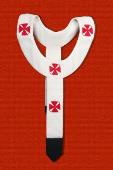
Pallium (Pallium)
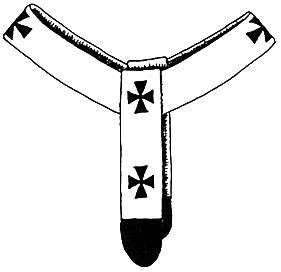
1_0_674753 (Papal Pallium)
Pallium is a woolen band, worn around the shoulders, as a symbol of office, representation of the Good Shepherd, with Jesus carrying the lamb on His shoulder, which is reminiscent of the authority entrusted upon the Metropolitan Archbishops over their flocks. Pallium therefore is a symbol of authority. It is about three fingers wide, and has six black crosses, out of which three are pierced with a golden pin, representing the wounds of Christ pierced by the holy nails on the cross.
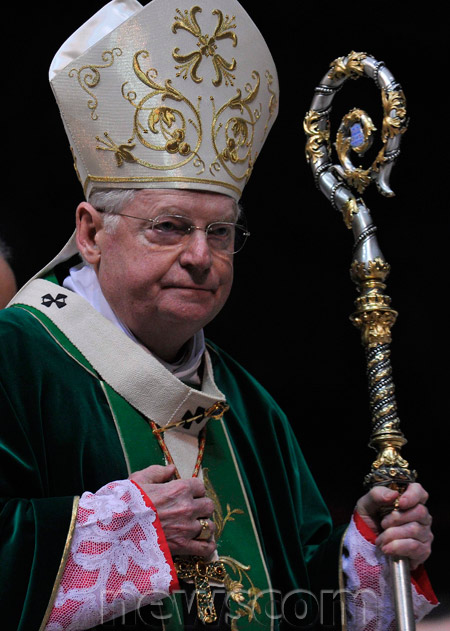
angelo-scola
(Above : image of Cardinal Angelo Scola, wearing the pallium, as the Metropolitan Archbishop of Milan, who received the pallium personally from Pope Benedict XVI in 2011)
Papal pallium from 2005 is different, in order to distinguish the nature of the Papal office, as the Pope is not just any bishop or Metropolitan Archbishop, but is Metropolitan over the entire world, the entire Church, as the Vicar of Christ.
Pope-Benedict-XVI
(Above : Pope Benedict XVI with the Papal pallium in 2012)

The list of the new Metropolitan Archbishops who will receive the pallium below.

1. Patriarch Manuel Jose Macario do Nascimento Clemente, Patriarch of Lisbon (Portugal)
2. Archbishop Dieudonne Nzapalainga, C.S.Sp., Metropolitan Archbishop of Bangui (Central African Republic)
3. Archbishop Carlo Roberto Maria Redaelli, Metropolitan Archbishop of Gorizia (Italy)
4. Archbishop Claudio Dalla Zuanna, S.C.I., Metropolitan Archbishop of Beira (Mozambique)
5. Archbishop Prakash Mallavarapu, Metropolitan Archbishop of Visakhapatnam (India)
6. Archbishop Antonio Carlos Altieri, S.D.B., Metropolitan Archbishop of Passo Fundo (Brazil)
7. Archbishop Marek Jedraszewski, Metropolitan Archbishop of Lodz (Poland)
8. Archbishop Philip Tartaglia, Metropolitan Archbishop of Glasgow (Great Britain)
9. Archbishop Salvatore Joseph Cordileone, Metropolitan Archbishop of San Francisco (USA)
10. Archbishop Rolando Joven Tria Tirona, O.C.D., Metropolitan Archbishop of Caceres (Philippines)
11. Archbishop Rogelio Cabrera Lopez, Metropolitan Archbishop of Monterrey (Mexico)
12. Archbishop Joseph William Tobin, C.Ss.R., Metropolitan Archbishop of Indianapolis (USA)
13. Archbishop Carlos Maria Franzini, Metropolitan Archbishop of Mendoza (Argentina)
14. Archbishop Lorenzo Ghizzoni, Metropolitan Archbishop of Ravenna-Cervia (Italy)
15. Archbishop George Antonysamy, Metropolitan Archbishop of Madras and Mylapore (India)
16. Archbishop Anil Joseph Thomas Couto, Metropolitan Archbishop of Delhi (India)
17. Archbishop John Wong Soo Kau, Metropolitan Archbishop of Kota Kinabalu (Malaysia)
18. Archbishop Murray Chatlain, Metropolitan Archbishop of Keewatin-Le Pas (Canada)
19. Archbishop Sérgio Eduardo Castriani, C.S.Sp., Metropolitan Archbishop of Manaus (Brazil)
20. Archbishop Peter Loy Chong, Metropolitan Archbishop of Suva, (Fiji)
21. Archbishop Alfonso Cortes Contreras, Metropolitan Archbishop of Leon (Mexico)
22. Archbishop Alexander King Sample, Metropolitan Archbishop of Portland in Oregon (USA)
23. Archbishop Joseph Effiong Ekuwem, Metropolitan Archbishop of Calabar (Nigeria)
24. Archbishop Jesus Juarez Parraga, S.D.B., Metropolitan Archbishop of Sucre (Bolivia)
25. Archbishop Fabio Martinez Castilla, Metropolitan Archbishop of Tuxtla Gutierrez (Mexico)
26. Archbishop Ramon Alfredo Dus, Metropolitan Archbishop of Resistencia (Argentina)
27. Archbishop Mario Aurelio Poli, Metropolitan Archbishop of Buenos Aires (Argentina)
28. Archbishop Gintaras Linas Grusas, Metropolitan Archbishop of Vilnius (Lithuania)
29. Archbishop Michael Owen Jackels, Metropolitan Archbishop of Dubuque (USA)
30. Archbishop Duro Hranic, Metropolitan Archbishop of Dakovo-Osijek (Croatia)
31. Archbishop Moacir Silva, Metropolitan Archbishop of Ribeirao Preto (Brazil)
32. Archbishop Jozef Piotr Kupny, Metropolitan Archbishop of Wroclaw (Poland)
33. Archbishop Sergio Alfredo Gualberti Calandrina, Metropolitan Archbishop of Santa Cruz de la Sierra (Bolivia)
34. Archbishop Giuseppe Petrocchi, Metropolitan Archbishop of L’Aquila (Italy)
In addition, the Metropolitan Archbishop of Hue, Archbishop Francois Xavier Le Van Hong, will not receive the pallium directly from the Pope in Rome, but in his home diocese of Hue, through the papal representative. Therefore, in addition to the 34 Metropolitan Archbishops mentioned above, 35 Metropolitan Archbishops will receive the pallium in this year.
35. Archbishop Francois Xavier Le Van Hong, Metropolitan Archbishop of Hue (Vietnam)

Metropolitan Archbishop differs from normal Archbishops in that, they have jurisdiction over other dioceses that are placed under their supervision, in a group called Ecclesiastical Province of the Church. Archbishops of Archdioceses without Metropolitan character has no jurisdiction over any dioceses under them, and they are usually directly subject to the Holy See.

(Special) Sunday, 23 June 2013 : Vigil Mass of the Solemnity of the Nativity of St. John the Baptist (Gospel Reading)

Luke 1 : 5-17

In the days of Herod, king of Judea, there lived a priest named Zechariah, belonging to the priestly clan of Abiah. Elizabeth, Zechariah’s wife, also belonged to a priestly family. Both of them were upright in the eyes of God, and lived blamelessly in accordance with all the laws and commands of the Lord, but they had no child. Elizabeth could not have any and now they were both very old.

Now, while Zechariah and those with him were fulfilling their office, it fell to him by lot, according to the custom of the priests, to enter the sanctuary of the Lord and burn incense. At the time of offering incense, all the people were praying outside; it was then an angel of the Lord appeared to him, standing on the right side of the altar of incense.

On seeing the angel, Zechariah was deeply troubled and fear took hold of him. But the angel said to him, “Do not be afraid, Zechariah, be assured that your prayer has been heard. Your wife Elizabeth will bear you a son and you shall name him John. He will bring joy and gladness to you, and many will rejoice at his birth.

“This son of yours will be great in the eyes of the Lord. Listen : he shall never drink wine or strong drink, but he will be filled with Holy Spirit even from his mother’s womb. Through him, many of the people of Israel will turn to the Lord their God. He himself will open the way to the Lord with the spirit and power of the prophet Elijah; he will reconcile fathers and children, and lead the disobedient to wisdom and righteousness, in order to make ready a people prepared for the Lord.”