One, Holy, Roman, Catholic, and Apostolic Church : Extra Ecclesiam Nulla Salus

Image

One (Indivisible by men and worldly ambitions)
Holy (Sanctity and Divine, belonging to Christ and is His alone)
Roman (Church built on St. Peter the Apostle by Christ)
Catholic (Universal, no Church but in the true Church of God, the One Body of Christ)
Apostolic (Missionary Church, spreading the Word of God to all mankind)

Church (The One Body of Christ, the united body of all the believers in Christ)

That is our Church, the Church Christ had entrusted and established on Peter, His Apostle, to whom He entrusted His flock and the keys to the Kingdom of Heaven.

Image

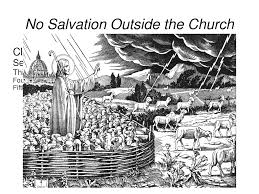
Extra Ecclesiam nulla salus, salvation only in the Church, and there is no salvation beyond that.

Ut Omnes Unum Sint, ad Maiorem Dei Gloriam
(That they all may be One, for the greater glory of God)
+Peter Canisius Michael David C. Kang
Taipei, Taiwan
Saturday, 11 May 2013

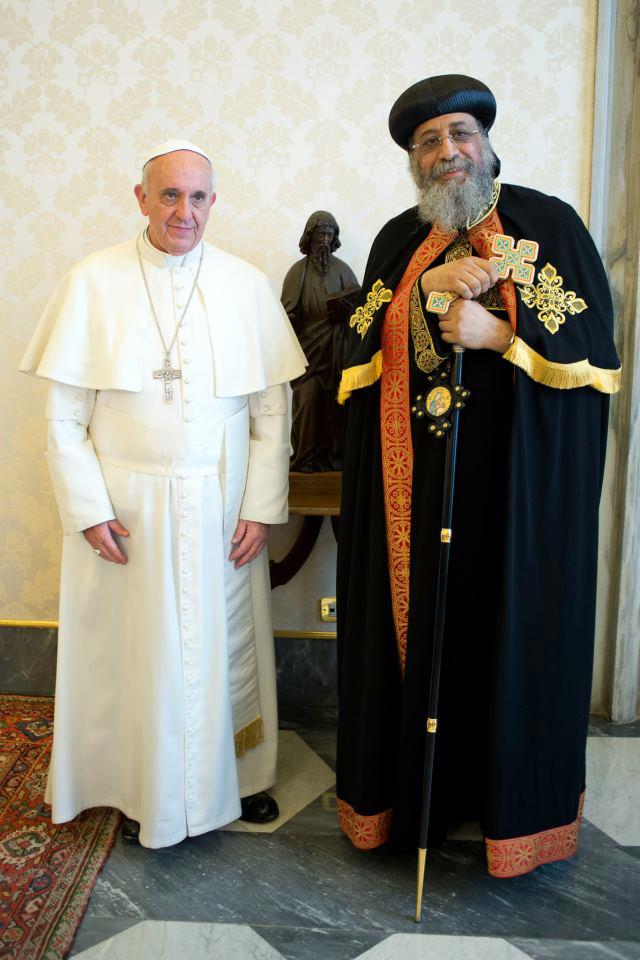
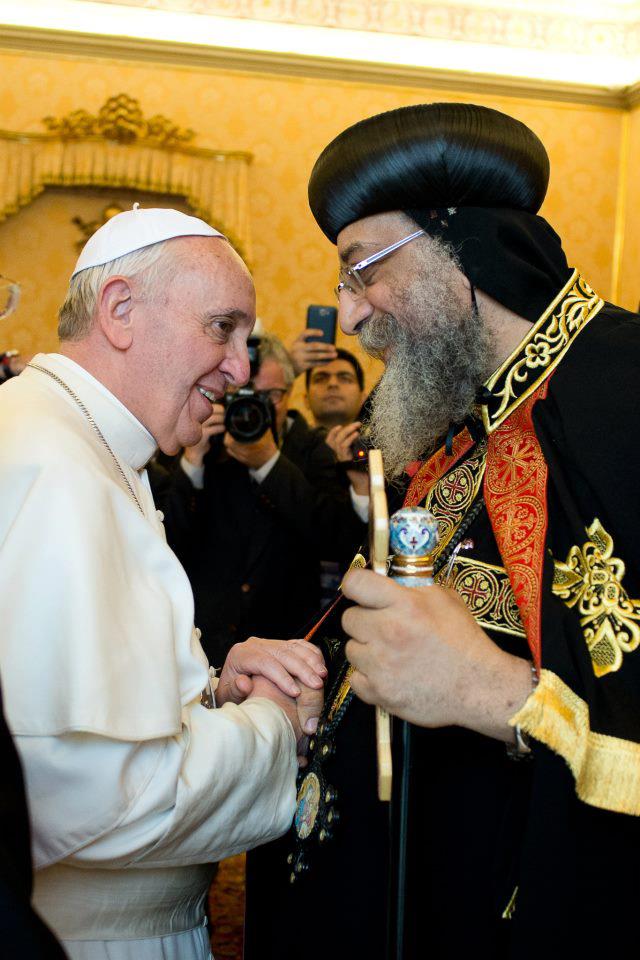
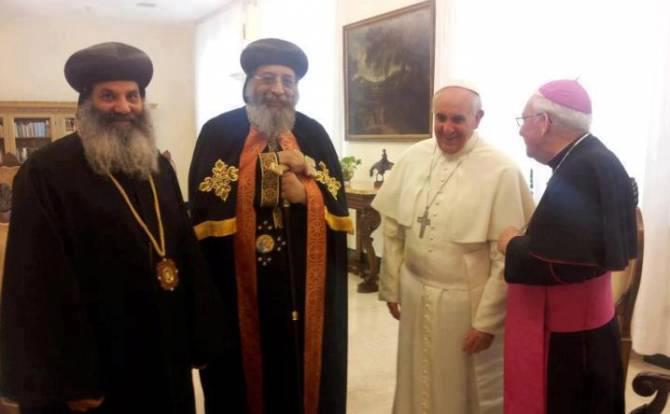
Historic visit by Pope and Patriarch of Alexandria, Pope Tawadros II to the Pope of the Church, Pope Francis

Image

Pope Tawadros II (Theodore II) of Alexandria, the head of the Coptic Church, Successor of St. Mark the Evangelist, first Bishop of Alexandria, is visiting Rome to pay a visit to the Pope and Supreme leader of the Universal Church and Successor of St. Peter the Prince of the Apostles, Pope Francis.

Image

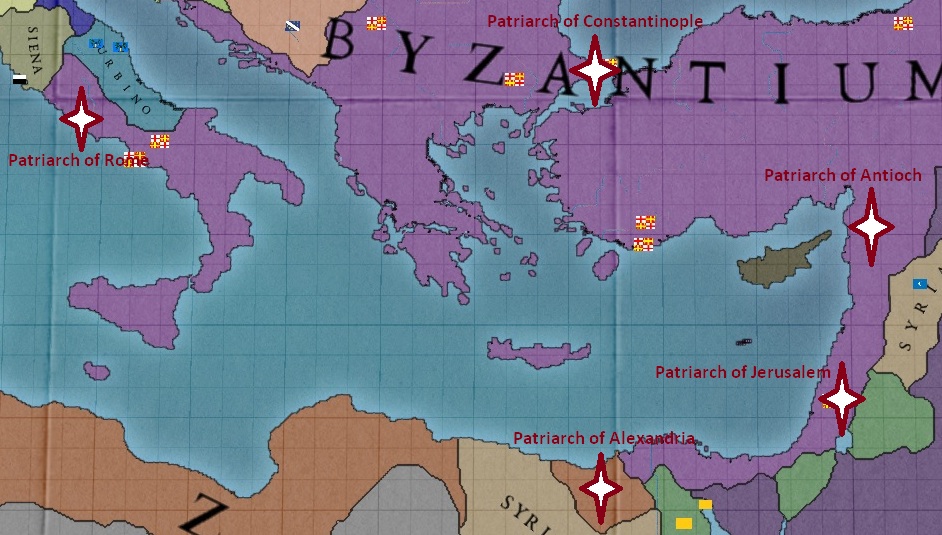
The Coptic Church is the direct descendant of the Patriarchate of Alexandria of the early Christian Pentarchy (Rome, Constantinople, Alexandria, Antioch, and Jerusalem), which broke apart from Rome and the Universal Church due to the disagreement in the Council of Chalcedon of 451, on the true nature of Christ.

Image

This disagreement is more due to misunderstanding in the nature of God, whether Christ’s human and divine persona is distinct or mixed. The initial term for non-Chalcedonians is monophysites, which is a heresy stating that both persona are mixed and indistinguishable. In fact, the Coptics and the other non-Chalcedonians in fact adopt miaphysitism, which while distinguishing the human and divine nature of Christ, but also acknowledge the mystery of the relationship between the two persona.

Image

Pope Tawadros II visits Rome in conjunction with the historic first meeting between the two Popes of Rome and Alexandria in 1973 by Pope Shenouda III, Pope Tawadros II’s predecessor, and Pope Paul VI. During that meeting a historic joint declaration of faith and friendship was announced and declared between the two Churches of God.

Image

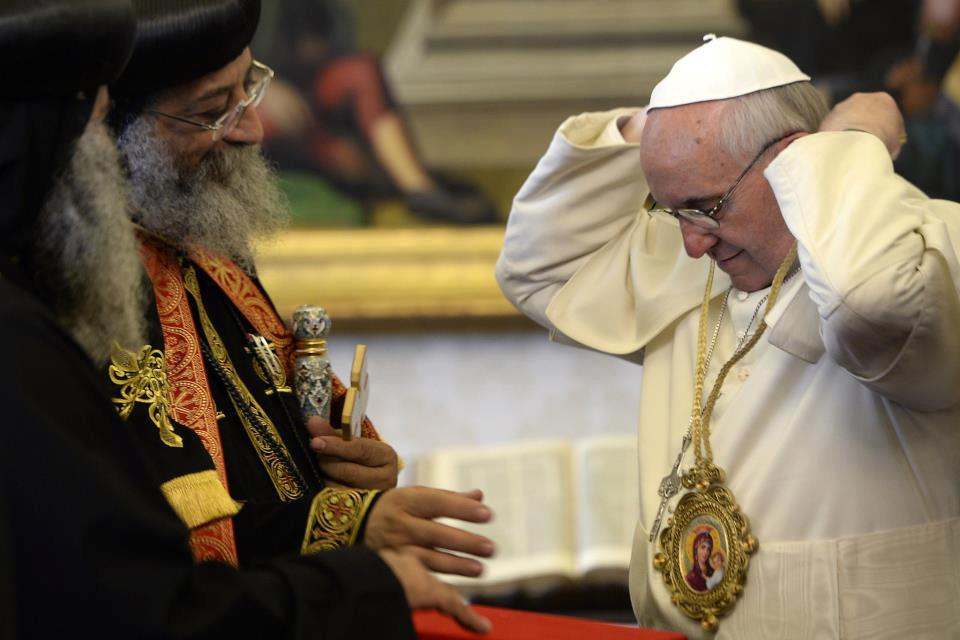
Pope Francis received a gift of an engolpion, which is a form of imagery in medallion, which is worn in the same way as pectoral cross, which are worn by the bishops of the Eastern Rite.

Image

We hope that all Christians, with the Copts and the Orthodox Churches can be reunited once again with the true and only Church, that is the Church of God, as one Body, indivisible by men and worldly ambitions, in the One, Holy, Roman, Catholic, and Apostolic Church.


Pray always for Christian Unity. That we are One, just as Christ our Lord and the Father in heaven are One.


Ut Omnes Unum Sint, ad Maiorem Dei Gloriam

(That they all may be One, for the greater glory of God)

Monday, 29 April 2013 : 5th Week of Easter, Memorial of St. Catherine of Siena, Virgin and Doctor (Scripture Reflection)

Dear brothers and sisters, let us not dwell in the false gods and idols, and remain true in our faith in God our Lord. Let us not be like the pagans at the time who failed to see the truth in God, and instead dwell in their imaginaries deities and gods, made out of earthly materials of stone, wood, silver, or gold. For these are merely empty vessels, vessels of deception by the devil to lure the faithful away from the true faith in God.

For today, dear brothers and sisters in Christ, even though we no longer see and worship idols made out of gold and silver, in the form of pagan and heathen false gods, the likes of Zeus, Hercules, and countless other gods, today in our world, a new kind of idols are rising, and not in the form of merely false gods in craven false imageries, but in the form of money and wealth itself.

For wealth and material possessions had been alluring to mankind for long ages past, and today, with God becoming ever more distant in the hearts of many, because of the rising secularisation and detachment of God from the world, due to the evil forces of relativism and scientific development, which marginalised God from the once central role He had in our daily lives, had become the new gods, which attempt to replace the One, True God in our hearts.

But they will not succeed, for God our Lord is mighty, and His love is everlasting, and despite all the attempts by the evil one to turn mankind away from God, God always stays ahead of Satan’s attempts, and send the helper and the advocate through the Holy Spirit, that inflames the hearts of many of the faithful to love God ever more, and strengthen our faith in Him.

Many of us had become myopic in our obsession with the material and the temporal possessions in this world, and so obsessed that we failed to look beyond our desires and obsession, in order to find the truth that is in the Lord and in His love, which He made manifest through Christ and His sacrifice on Calvary. Let us not limit ourselves to only viewing our desires and our needs, but let us always take a step back, and take some time to reflect, that our vision will not be then limited just to our desires, but our eyes will then be opened to see the plight of our fellow men, who are still suffering.

Today, we commemorate the feast day of a great saint and Doctor of the Church, that is St. Catherine of Siena. St. Catherine of Siena is a great saint and teacher of the faith through her numerous laters and literary works, which became inspiration for many Christians of her era and even today. She zealously defended the faith in God and zealously love Him in her actions and her life. She was also important in the bringing back of the Papacy from its self-imposed ‘exile’ from Avignon in France to return to Rome, where the centre of the Church is. Therefore, she played a great role in the reestablishment and rejuvenation of the Church as we know it today.

Therefore, dear brothers and sisters in Christ, let us today renew our commitment to serve and love our Lord, and to grow ever stronger in our faith in Him, that we will be transformed by His love, into beings of light and love, that in our every actions, words, and thoughts, we reflect the nature of God, and everyone can see that God is in us, and He is working through us. Let us pray for ourselves, for our brethren, and for our world, that it will be filled with God’s love and presence forever more. St. Catherine of Siena, pray for us. Amen.

Monday, 29 April 2013 : 5th Week of Easter, Memorial of St. Catherine of Siena, Virgin and Doctor (First Reading)

Acts 14 : 5-18

A move was made by pagans and Jews, together with their leaders, to harm the apostles and to stone them. But Paul and Barnabas learnt of this and fled to the Lycaonian towns of Lystra and Derbe and to the surrounding countryside, where they continued preaching the Good News.

Paul and Barnabas spent a fairly long time at Lystra. There was a crippled man in Lystra who had never been able to stand or walk. One day, as he was listening to the preaching, Paul looked intently at him and saw that he had the faith to be saved.

So, he spoke to him in a loud voice, “In the Name of the Lord Jesus Christ, I command you to stand up on your feet!” And the man stood up and began to walk around.

When the people saw what Paul had done, they cried out in the language of Lycaonia, “The gods have come to us in human likeness!” They named Barnabas Zeus, and Paul they called Hermes, since he was the chief speaker.

Even the priest of the Temple of Zeus, which stood outside the town, brought oxen and garlands to the gate; together with the people, He wanted to offer sacrifice to them.

When Barnabas and Paul heard this, they tore their garments to show their indignation and rushed into the crowd, shouting, “Friends, why are you doing this? We are human beings with the same weaknesses you have and we are now telling you to turn away from these useless things to the living God who made the heavens, the earth, the sea and all that is in them.”

“In past generations He allowed each nation to go its own way, though He never stopped making Himself known; for He is continually doing good, giving your rain from heaven and fruitful seasons, providing you with food and filling your hearts with gladness.”

Even these words could hardly keep the crowd from offering sacrifice to them.

Sunday, 28 April 2013 : 5th Sunday of Easter (First Reading)

Acts 14 : 21b-27

The apostles returned to Lystra and Iconium, and on to Antioch. They were strengthening the disciples and encouraging them to remain firm in the faith, for they said, “We must go through many trials to enter the Kingdom of God.”

In each church they appointed elders and, after praying and fasting, they commended them to the Lord in whom they had placed their faith. Then they travelled through Pisidia, and came to Pamphylia. They preached the Word in Perga and went down to Attalia. From there, they sailed back to Antioch, where they had first been commended to God’s grace for the task they had now completed.

On their arrival they gathered the Church together and told them all that God had done through them and how he had opened the door of faith to the non-Jews.

Thursday, 25 April 2013 : 4th Week of Easter, Feast of St. Mark the Evangelist (First Reading)

1 Peter 5 : 5b-14

All of you must clothe yourself with humility in your dealings with one another, because God opposes the proud but gives His grace to the humble. Bow down, then, before the power of God so that He will raise you up at the appointed time. Place all your worries on Him since He takes care of you.

Be sober and alert because your enemy the devil prowls about like a roaring lion seeking someone to devour. Stand your ground, firm in your faith, knowing that our brothers and sisters, scattered throughout the world, are confronting similar sufferings. God, the giver of all grace, has called you to share in Christ’s eternal Glory and after you have suffered a little, He will bring you to perfection : He will confirm, strengthen, and establish you forever. Glory be to Him forever and ever. Amen.

I have had these few lines of encouragement written to you by Silvanus, our brother, whom I know to be trustworthy. For I wanted to remind you of the kindness of God really present in all this. Hold on to it.

Greetings from the community in Babylon, gathered by God, and from my son, Mark. Greet one another with a friendly embrace. Peace to you all who are in Christ.

Wednesday, 24 April 2013 : 4th Week of Easter, Memorial of St. Fidelis of Sigmaringen, Priest and Martyr (Scripture Reflection)

Dear brothers and sisters in Christ, we are reminded today that Christ had come into our world as our salvation, to save us from our condemnation to death by our rebellion against the love of God. He came into our world as light that shed off the darkness that is in our world, and most importantly, the darkness that is within our hearts.

He had been sent into this world that it, together with all of us who lives in it, can be saved rather than cast off together with Satan and his angels into the sea of fire and eternal damnation and separation from God. God’s love desires that all mankind be reunited into Himself, and Christ, whose birth was announced by the prophets, did exactly just that, by serving as the bridge that spans heaven and earth, and linked mankind back to God their Father, providing the only path to salvation and eternal life.

Today, we also commemorate the feast day of St. Fidelis of Sigmaringen, who was a priest, and also a martyr, and while St. Adalbert whom we commemorated yesterday preached the Good News to the pagans, St. Fidelis who lived during the height of the Protestant Reformation and rebellion had to contend against the heretical Protestants, particularly the Calvinists in the region now known as Switzerland.

St. Fidelis fearlessly waged into the Calvinist strongholds and preached the true faith of the Church, against the erroneous beliefs of the Protestants of the era. Despite the harassment and hatred of those to whom he had ministered, and under the threat of death, St. Fidelis pressed on, and was finally martyred when he rejected outright the persuasion of Calvinist soldiers who pressed him to renounce his Catholic faith, and prayed for them, for the salvation of their souls.

In St. Fidelis, and in St. Adalbert, we saw the truth that is in God, which was revealed through Christ and made manifest in this world. Truth is hard, and it is difficult to be taken in by many, who preferred the lies of Satan to the truth of God. Yet, these saints strived to open the eyes of many who had been fooled by Satan and his earthly minions set to destroy God’s people by false prophets and ideas, and even braved martyrdom in the process.

In our modern day world, we may not see such similar scenario and condition as what the two saints had witnessed in their own times, but in fact, in our present day world, the need for the light of Christ to illuminate the hearts of many had never been greater. Many had abandoned God for the relative comfort of this world’s allures and temptations. The evil one has many ways to seduce mankind into his fold, and to abandon the path of God.

We can do our own part in evangelisation, and we do not even need to brave death as what the two martyrs had done, but most importantly, we begin from our own surroundings, that we show the truth of the Lord through our words and actions, to show the light of Christ through our own beings, and through what we are doing in our lives.

May God guide us always in our lives, and make us into lights for all mankind, that in us, those who have yet to believe in Christ or those who had abandoned Him will once again see the true Light that is Christ, our Lord and Saviour. Amen.

Wednesday, 24 April 2013 : 4th Week of Easter, Memorial of St. Fidelis of Sigmaringen, Priest and Martyr (First Reading)

Acts 12 : 24 – Acts 13 : 5a

Meanwhile the word of God was increasing and spreading. Barnabas and Saul carried out their mission and then came back to Jerusalem, taking with them John, also called Mark.

There were at Antioch – in the Church which was there – prophets and teachers : Barnabas, Symeon known as Niger, Lucius of Cyrene, Manaen who had been brought up with Herod, and Saul. On one occasion while they were celebrating the Lord and fasting, the Holy Spirit said to them, “Set apart for Me, Barnabas and Saul to do the work for which I have called them.”

So, after fasting and praying, they laid their hands on them and sent them off. These then, sent by the Holy Spirit, went down to the port of Seleucia and from there sailed to Cyprus. Upon their arrival in Salamis they proclaimed the word of God in the Jewish synagogue.

Sunday, 21 April 2013 : 4th Sunday of Easter, Good Shepherd Sunday, World Day of Prayer for Vocations (50th Anniversary) (Scripture Reflection)

It is always sad when we hear about those who reject the Lord, and who refused to believe in God and His message through Christ our Lord, who had died on the cross and risen, and had shown Himself to many of the faithful, that many would have hope of eternal life in God. That was exactly what happened during the mission of St. Paul to the faithful in the pagan lands of Antioch and beyond, when the Jews, blinded in their hatred and jealousy, spread falsehood and lies in rejection of the Lord.

God is our Lord, and He is our shepherd, the Good Shepherd, who laid down His life for His sheep. He died on the cross, as our shepherd, that we, who are His sheep, may gain life through Him, and that the wolves, led by Satan, would not be able to attack us and snatch us from His hands. He as our shepherd gave Himself in sacrifice to the hands of the agents of Satan, so that we would be safe and would live.

As Christ had said to the disciples and to the people in His teaching, that His sheep would know Him, just like the sheep knows the true shepherd, and not those paid to be shepherds or the thief, He said that to show that all of us who truly believe in Him and those who belong to Him would recognise Him as their shepherd, their Lord, and God.

Dear brothers and sisters in Christ, in our world today, there are many false shepherds who would want to deceive the faithful and lead the sheep of the Lord away from the true path and pasture of the Lord. There are many temptations and evil in this world, that shake even faithful shepherds that the Lord had chosen for His sheep, His people. Therefore, brothers and sisters in Christ, be careful, that we will not fall into the trap of Satan that he sprang through his false agents and prophets, proclaiming falsehood instead of truth.

Today, we mark the World Day of Prayer for Vocations, and it is indeed appropriate, for the Fourth Sunday of Easter is also Good Shepherd Sunday, and priests, who we pray for today, and those aspiring to the priesthood and service of the Lord had been chosen by the Lord as shepherds for His people. Today happened to be the fiftieth anniversary of this prayer day, which was promulgated in 1963, during the Second Vatican Council.

Sadly, in recent decades, we saw the vocations to the priesthood in rapid decline, and the number of priests often no longer sufficient to serve all the needs of the faithful as it was in the past. Imagine a large flock of sheep with a single, poor shepherd to herd all of them and guide them! It is not an impossible task for them to do, but certainly many of our priests are burdened with ever greater task, both to administer to the growing number of the faithful in Christ, and on the other side, to combat the rising secularism and evils in our world today.

We need more good, holy, faithful, and dedicated priests to harvest the good harvest of the Lord, which had been bountiful in the wake of the evangelisation attempts of the past decades, especially in Asia and Africa, where our Church is rapidly growing, and with more and more people turning towards the Lord. The harvest is indeed plentiful, but the labourers are few. But the laity too can play a part in providing support to our shepherd priests in various ways and means available to us.

Parents should cultivate good faith and morale in their children, that they will grow up to be good and devoted children of God. Then in the future, these children will become good husbands and wives, caring for one another in love, and for their children. And if God wills it, some of those would be called to serve Him and the people of God either through the sacred priesthood or religious life.

We who are parents should be happy if one of our children are chosen by God to be His shepherds to guide His flock. The community too should provide care and support, ensuring that the children would grow up in a fertile soil for their faith, that would allow them later to be dedicated, faithful, and obedient shepherd of the flock of the Lord. Do not be judgmental and prevent your children from choosing the path of vocation, as if it is the Lord’s will that this happens, you will be against God yourself.

Many of us are too fixated with achievements in life, and therefore, placed too much emphasis on results and material possessions. This is one very major reason, especially in Asia, why many parents oppose, either openly or discreetly, on their children’s decisions to dedicate themselves to God. We are too fixated on the idea of our children’s success, which we often attribute to wealth and possessions, and affluence, to the point that we often dismiss priesthood as a ‘career’ that has no prospect, and therefore is not for our children to take.

There was a story of a young man who was rejected from entering the seminary, just because the decision to enter the seminary was not his own, but his own parents’, who decided that because he was rather ‘useless’ in life and unable to achieve anything of good, he should be entering the seminary and become a priest instead. While this may not be true anymore today, but I am sure, many of us whose children are aspirants to the priesthood and religious life are reluctant to ‘let them go’ because of reasons similar to the one mentioned.

Our priests and those who serve the Lord must be of good quality, well prepared and trained, and also having a good intellect and knowledge, both of the faith and the vocation which he is about to embark into, but most importantly, they must be dedicated, loving, and faithful, to God, and to His children to whom they are about to give themselves entirely to, as the bride of the Church of God.

Therefore, dear brothers and sisters in Christ, today, as we commemorate this Good Shepherd Sunday, and the fiftieth anniversary of the World Day of Prayer for Vocations, let us take a step back and reflect, that many of us are called to serve the Lord, in various ways, some of us as laity, and others as priests and servants of the Lord, through the Church.

Let us not say no to the Lord, and let us not close our hearts and our minds to His calling. Let us open ourselves fully to God’s love, and allow Him to lead us in our path, that we will be able to maximise the life that we had been granted, that in this life, we would be able to improve the life of others, through prayer and service, and through dedication into works of love, for the sake of our most beloved brethren.

Pray for one another, and pray for more vocations in the Church, pray for more good and holy priests to serve the Lord and His people, and never cease to continue our own roles and works in helping one another, physically and spiritually. When we see a growing vocation, let us support instead of chastising or badmouthing the person to the point that such a potential be wasted. Trust in the Lord, and do not worry, for God will take care of everything. He is our shepherd, and He cares for us. He will not leave us hungry nor thirsty, because by His death and resurrection, He gave us an eternal spring and bread of life. Amen.

Saturday, 20 April 2013 : 3rd Week of Easter (First Reading)

Acts 9 : 31-42

Meanwhile, the Church had peace. It was building up throughout all Judea and Galilee and Samaria with eyes turned to the Lord and filled with comfort from the Holy Spirit.

As Peter travelled around, he went to visit the saints who lived in Lydda. There he found a man named Aeneas who was paralysed, and had been bedridden for eight years. Peter said to him, “Aeneas, Jesus Christ heals you; get up and make your bed!” And the man got up at once. All the people living in Lydda and Sharon saw him and turned to the Lord.

There was a disciple in Joppa named Tabitha, which means Dorcas or Gazelle. She was always doing good works and helping the poor. At that time she fell sick and died. After having washed her body, they laid her in the upstairs room.

As Lydda is near Joppa, the disciples, on hearing that Peter was there, sent two men to him with the request, “Please come to us without delay.” So Peter went with them. On his arrival they took him upstairs to the room. All the widows crowded around him in tears, showing him the clothes that Dorcas had made while she was with them.

Peter made them all leave the room and then he knelt down and prayed. Turning to the dead body he said, “Tabitha, stand up.” She opened he eyes, looked at Peter and sat up. Peter gave her his hand and helped her up. Then he called in the saints and widows and presented her to them alive.

This became known throughout all of Joppa and many people believed in the Lord because of it.