Friday, 28 June 2013 : Vigil Mass of the Solemnity of Saints Peter and Paul, Apostles, Great Feast Day of the Church of Rome (Second Reading)

Galatians 1 : 11-20

Let me remind you, brothers and sisters, that the Gospel we preached to you is not a human message, nor did I receive it from anyone, I was not taught of it but it came to me as a revelation from Christ Jesus. You have heard of my previous activity in the Jewish community; I furiously persecuted the Church of God and tried to destroy it.

For I was more devoted to the Jewish religion than many fellow Jews of my age, and I defended the traditions of my ancestors more fanatically. But one day God called me out of His great love, He who had chosen me from my mother’s womb; and He was pleased to reveal in me His Son, that I might make Him known among the pagan nations.

Then I did not seek human advice nor did I go up to Jerusalem to those who were apostles before me. I immediately went to Arabia, and from there I returned again to Damascus. Later, after three years, I went up to Jerusalem to meet Cephas, and I stayed with him for fifteen days. But I did not see any other apostle except James, the Lord’s brother.

On writing this to you, I affirm before God that I am not lying.

Friday, 28 June 2013 : Vigil Mass of the Solemnity of Saints Peter and Paul, Apostles, Great Feast Day of the Church of Rome (Psalm)

Psalm 18 : 2-3, 4-5

The heavens declare the glory of God; the firmament proclaims the work of His hands. Day talks it over with day; night hands on the knowledge to night.

No speech, no words, no voice is heard – but the call goes on throughout the universe, the message is felt to the ends of the earth.

Friday, 28 June 2013 : Vigil Mass of the Solemnity of Saints Peter and Paul, Apostles, Great Feast Day of the Church of Rome (First Reading)

Acts 3 : 1-10

Once when Peter and John were going up to the Temple at three in the afternoon, the hour for prayer, a man crippled from birth was being carried in. Every day they would bring him and put him at the temple gate called “Beautiful”; there he begged from those who entered the Temple.

When he saw Peter and John on their way into the Temple, he asked for alms. Then Peter with John at his side looked straight at him and said, “Look at us.” So he looked at them, expecting to receive something from them. But Peter said, “I have neither silver nor gold, but what I have I give you : In the Name of Jesus of Nazareth, the Messiah, walk!”

Then he took the beggar by his right hand and helped him up. At once his feet and ankles became firm, and jumping up he stood on his feet and began to walk. And he went with them into the Temple walking and leaping and praising God.

All the people saw him walking and praising God; they recognised him as the one who used to sit begging at the Beautiful Gate of the Temple, and they were all astonished and amazed at what had happened to him.

Peter’s Pence Collection, Solemnity of Saints Peter and Paul, Apostles

Peters Pence

In case any of you are wondering what is Peter’s Pence, which is collected every Sunday nearest to the Solemnity of Saints Peter and Paul, Apostles, which falls on 29 June every year (Therefore this year Peter’s Pence is collected on Sunday, 30 June 2013, 13th Sunday of Ordinary Time), Peter’s Pence is a special collection in which the collection will not go into the local church or parish fund, but gathered from all over the world and sent to Rome, to the Holy See. Thus, the collection made during the offertory this Sunday will go directly to Rome.

What is the purpose of the Peter’s Pence collection? Exactly to support the numerous charitable activities and organisations managed by the Holy See, by our Church, all over the world. There are thousands, tens of thousands of charity under the supervision of the Church, and to be able to continue with the action, funds are definitely necessary to provide a solid backing. That is why, Peter’s Pence is done once every year, on the Sunday nearest to the Solemnity of Saints Peter and Paul.

1045213_354782624625355_1349576998_n

Why Solemnity of Saints Peter and Paul? That is because on that day lie the great celebration of the two great saints and apostles that defined our Church, because they met their martyrdom in Rome. St. Peter, the Prince and leader of all the Apostles, whom the Pope is the successor of today, met his martyrdom in what is now Vatican City, through crucifixion, and St. Paul, the Apostle to the Gentiles, and author of the Epistles in the New Testament, met his martyrdom in Rome, through beheading.

Peter’s Pence itself had its origins in the late dark ages and early medieval period, particularly from England, where it got the name Peter’s ‘Pence’. Pence is the unit of money still in use until today in the United Kingdom and the related monetary units. ‘Peter’ simply point to the fact that the collection or ‘pence’ is intended to be sent to Rome, to the Pope, in order to support various Church activities.

Sunday, 23 June 2013 : 12th Sunday of Ordinary Time (Gospel Reading)

Luke 9 : 18-24

One day, when Jesus was praying alone, not far from His disciples, He asked them, “What do people say about Me?” And they answered, “Some say that You are John the Baptist; others say that You are Elijah, and still others that You are one of the prophets of old, risen from the dead.”

Again Jesus asked them, “But who do you say that I am?” Peter answered, “The Messiah of God.” Then Jesus spoke to them, giving them strict orders not to tell this to anyone. And He added, “The Son of Man must suffer many things. He will be rejected by the elders and chief priests and teachers of the Law, and be put to death. Then after three days He will be raised to life.”

Jesus also said to all the people, “If you wish to be a follower of Mine, deny yourself and take up your cross each day, and follow Me! For if you choose to save your life, you will lose it; but if you lose your life for My sake, you will save it.”

Friday, 17 May 2013 : 7th Week of Easter (Scripture Reflection)

Brothers, and sisters, in our Lord Jesus Christ, to follow Christ means that we have to be ready to be persecuted, and to be opposed by the world. Because the world does not belong to Christ, and it belongs to the evil one, who relentlessly sends his fallen angels to corrupt mankind through the world, and when there are those who keep steadfast their faith in God, they will face tough times and suffering, but if we all remain faithful, we will receive rich rewards in heaven.

Peter and Paul suffered greatly for their faith in the Lord, and their evangelising mission across the pagan world at the time. They went through rejections, persecutions, trials, and ultimately martyrdom, which both of them received in Rome, at the capital of the Empire, under the reign of Nero, the Roman Emperor at the time, who blamed Christians for the great fire in Rome which Nero himself had likely caused.

But they welcomed their death with open hands, as they died in the way to glorify God, that through their death, new seeds of faith would emerge and bring the Church ever greater and stronger than before. Remember the saying that the blood of martyrs is the seed of Christians. Indeed, the sacrifice of the many martyrs of the faith did not go to waste, because the blood that was outpoured from the martyrs becomes the source of inspiration to all of us, and that is why we glorify them as saints through the Church.

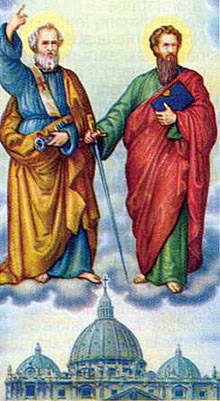
Peter, the leader of the Apostle, was made such because of his faith, and Christ entrusted to him the flock of sheep that has become His own. Christ entrusted His Church, that is the body of all the believers, in this world, and built it on Peter, the rock of faith. Why did Christ then do this, even though Peter had in fact rejected Christ three times, when in fear he denied the Lord during His time of suffering?

That was because Peter, despite his fear and his self-preserving move of denying Jesus, was ultimately a faithful apostle, and a person of love, who truly put Christ over all the others, especially when after that veil of fear had been lifted. And Peter, when Christ asked him thrice over whether he loved Him, he gave his sincere admission of an undying love, and also obedience.

That was why Christ gave him the command to feed and care for His sheep, as the first leader of the Church, the position which our Pope has today, and as the sole representative of Christ in this world, to lead the flock of Christ, as one, towards God. Peter, and Paul, another great apostle, Apostle to the Gentiles, died in Rome, and laid the foundations for the Church there, and after a long period of time, till today, we are where we are now, with the Bishop of Rome, our Pope, as our spiritual leader, the leader of the Church.

The Pope, our bishops, priests, and many other ministers of God’s Gospels, face daily persecution, opposition, and ridicule, especially from our world, and those outside the Church, but sadly, they even face opposition from those within the Church, who had been drifting away from the love of God, and corrupted by the world and relativism.

Therefore, dear brothers and sisters in Christ, let us today follow in the footsteps of the apostles, especially that of Peter and Paul, who had defended their faith and place themselves in risk for the sake of the Lord. Not that we should risk our own lives, but rather, that we should help the ministers of the Gospel, our humble and hardworking priests and leaders of the Church in the evangelisation, through our own actions, that spread love throughout the world.

May God guide us and protect our Church leaders and all the missionaries, and may He show the world His truth, that all would believe. God bless all of us! Amen.

Friday, 17 May 2013 : 7th Week of Easter (Gospel Reading)

John 21 : 15-19

After they had finished breakfast, Jesus said to Simon Peter, “Simon, son of John, do you love Me more than these?” He answered, “Yes, Lord, You know that I love You.” And Jesus said, “Feed My lambs.”

A second time Jesus said to him, “Simon, son of John, do you love Me?” And Peter answered, “Yes, Lord, You know that I love You.” Jesus said to him, “Look after My sheep.” And a third time He said to him, “Simon, son of John, do you love Me?”

Peter was saddened because Jesus asked him a third time, “Do you love Me?” and he said, “Lord, You know everything; You know that I love You.” Jesus then said, “Feed My sheep! Truly I say to you, when you were young, you put on your belt and walked where you liked. But when you grow old, you will stretch out your hands, and another will put a belt around you, and lead you where you do not wish to go.”

Jesus said this to make known the kind of death by which Peter was to glorify God. And He added, “Follow Me.”

Tuesday, 14 May 2013 : 7th Week of Easter, Feast of St. Matthias, Apostle (First Reading)

Acts 1 : 15-17, 20-26

It was during this time that Peter stood up in the midst of the community – about one hundred and twenty in all – and he said, “Brothers, it was necessary that the Scriptures referring to Judas be fulfilled. The Holy Spirit had spoken through David about the one who would lead the crowd coming to arrest Jesus. He was one of our number and had been called to share our common ministry.

In the book of Psalms it is written : ‘Let his house become deserted and may no one live in it.’ But it is also written: ‘May another take his office.’ Therefore, we must choose someone from among those who were with us during all the time that the Lord Jesus moved about with us, beginning with John’s baptism until the day when Jesus was taken away from us. One of these has to become, with us, a witness to His resurrection.

Then they proposed two : Joseph, called Barsabbas, also known as Justus, and Matthias. They prayed : “You know, Lord, what is in the hearts of all. Show us, therefore, which of the two You have chosen to replace Judas in this apostolic ministry which he deserted to go to the place he deserved.”

Then they drew lots between the two and the choice fell on Matthias who was added to the eleven apostles.

One, Holy, Roman, Catholic, and Apostolic Church : Extra Ecclesiam Nulla Salus

Image

One (Indivisible by men and worldly ambitions)
Holy (Sanctity and Divine, belonging to Christ and is His alone)
Roman (Church built on St. Peter the Apostle by Christ)
Catholic (Universal, no Church but in the true Church of God, the One Body of Christ)
Apostolic (Missionary Church, spreading the Word of God to all mankind)

Church (The One Body of Christ, the united body of all the believers in Christ)

That is our Church, the Church Christ had entrusted and established on Peter, His Apostle, to whom He entrusted His flock and the keys to the Kingdom of Heaven.

Image

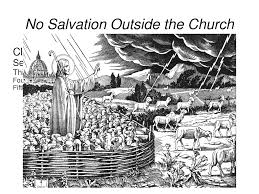
Extra Ecclesiam nulla salus, salvation only in the Church, and there is no salvation beyond that.

Ut Omnes Unum Sint, ad Maiorem Dei Gloriam
(That they all may be One, for the greater glory of God)
+Peter Canisius Michael David C. Kang
Taipei, Taiwan
Saturday, 11 May 2013

Historic visit by Pope and Patriarch of Alexandria, Pope Tawadros II to the Pope of the Church, Pope Francis

Image

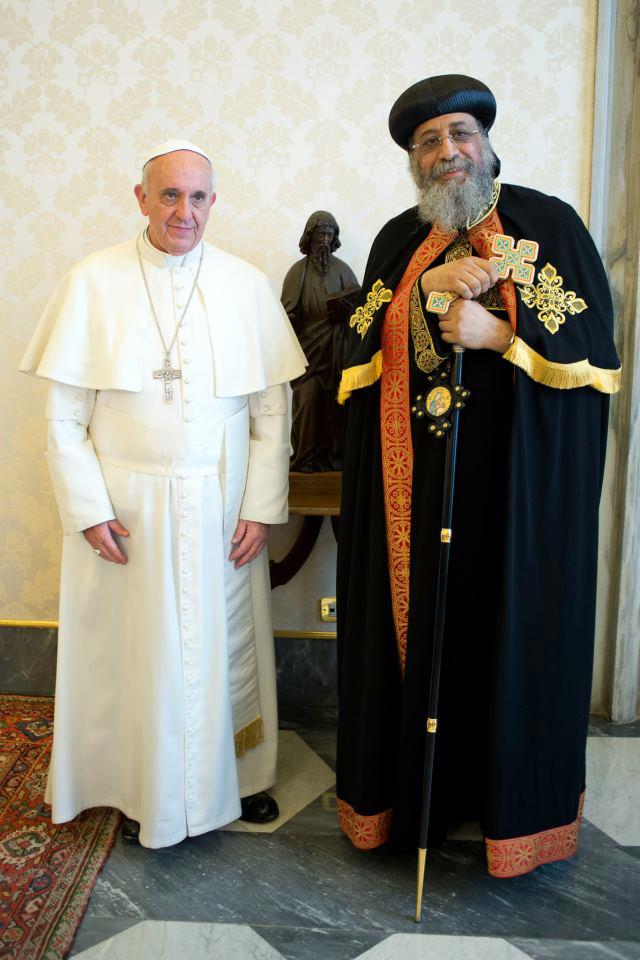
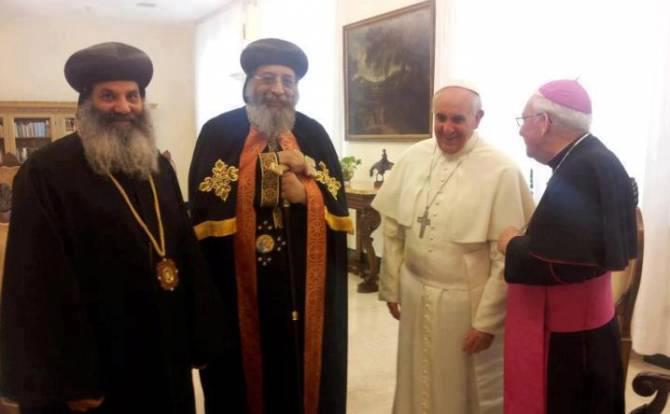
Pope Tawadros II (Theodore II) of Alexandria, the head of the Coptic Church, Successor of St. Mark the Evangelist, first Bishop of Alexandria, is visiting Rome to pay a visit to the Pope and Supreme leader of the Universal Church and Successor of St. Peter the Prince of the Apostles, Pope Francis.

Image

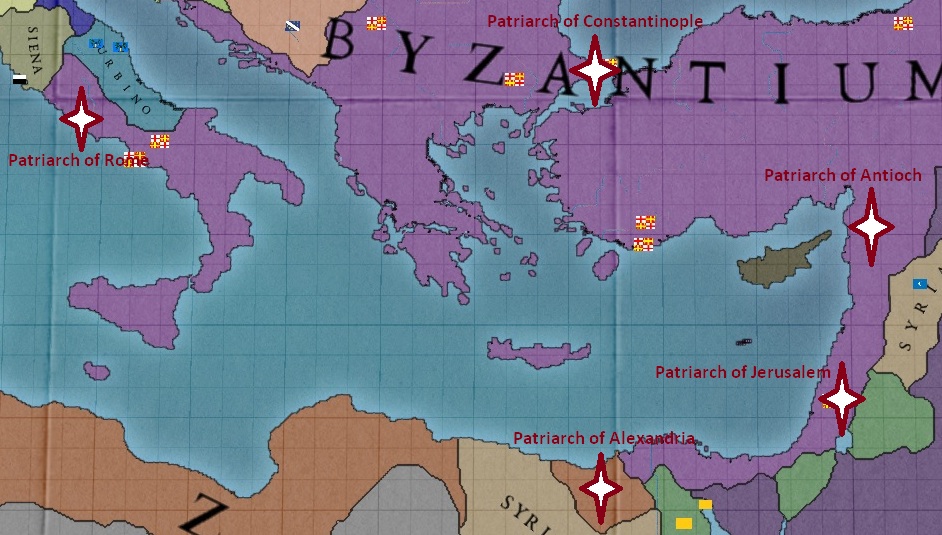
The Coptic Church is the direct descendant of the Patriarchate of Alexandria of the early Christian Pentarchy (Rome, Constantinople, Alexandria, Antioch, and Jerusalem), which broke apart from Rome and the Universal Church due to the disagreement in the Council of Chalcedon of 451, on the true nature of Christ.

Image

This disagreement is more due to misunderstanding in the nature of God, whether Christ’s human and divine persona is distinct or mixed. The initial term for non-Chalcedonians is monophysites, which is a heresy stating that both persona are mixed and indistinguishable. In fact, the Coptics and the other non-Chalcedonians in fact adopt miaphysitism, which while distinguishing the human and divine nature of Christ, but also acknowledge the mystery of the relationship between the two persona.

Image

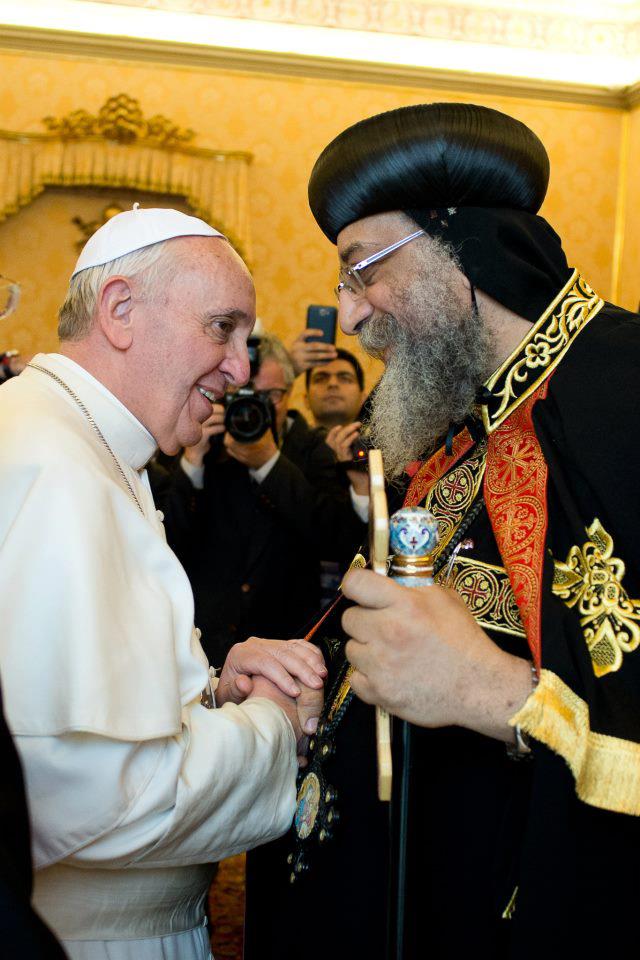
Pope Tawadros II visits Rome in conjunction with the historic first meeting between the two Popes of Rome and Alexandria in 1973 by Pope Shenouda III, Pope Tawadros II’s predecessor, and Pope Paul VI. During that meeting a historic joint declaration of faith and friendship was announced and declared between the two Churches of God.

Image

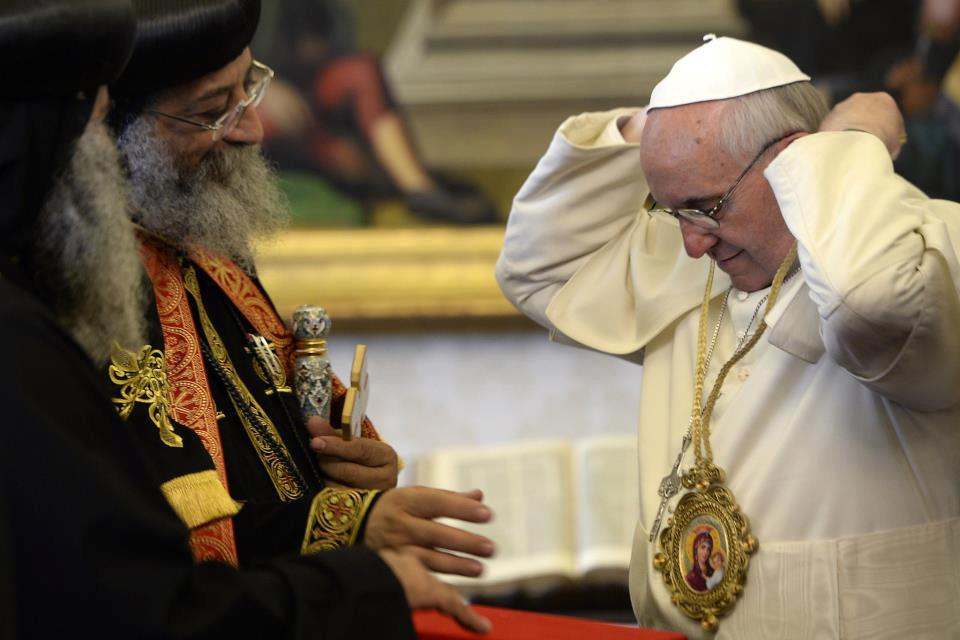
Pope Francis received a gift of an engolpion, which is a form of imagery in medallion, which is worn in the same way as pectoral cross, which are worn by the bishops of the Eastern Rite.

Image

We hope that all Christians, with the Copts and the Orthodox Churches can be reunited once again with the true and only Church, that is the Church of God, as one Body, indivisible by men and worldly ambitions, in the One, Holy, Roman, Catholic, and Apostolic Church.


Pray always for Christian Unity. That we are One, just as Christ our Lord and the Father in heaven are One.


Ut Omnes Unum Sint, ad Maiorem Dei Gloriam

(That they all may be One, for the greater glory of God)