1st Anniversary of my Blog! (16-17 January 2013 – present) Thank you for your support! Deo Gratias!

As of tonight, the time between 16 and 17 January 2014, my blog reaches its 1 year mark. It was begun with an inspiration exactly a year ago, just a month after I created my twitter account, inspired by the example of our dear Pope Benedict XVI who made the @Pontifex papal twitter account in early December 2012.

I thank all of those who had chanced upon my blog, and for my regular readers. I apologise for any mistakes I have made or any delay in my postings. The Lord had been kind to me throughout this past year, and He continues to encourage me to write despite some difficulties and challenges I have met along the way.

May this coming new year for my blog bring it to even greater heights, as I will soon write more about the Faith, the Church, and many catechesis of the Faith, from various official sources such as the Catechism of the Catholic Church, the Canon Law, and many others. Thank you once again for your support, and may God bless you all!

May our faith continue to strengthen and grow in God!


Yours in Christ,


+Peter Canisius Michael David Kang

Ut Omnes Unum Sint, ad Maiorem Dei Gloriam

(That they all may be One, for the greater glory of God)

My personal thoughts on the election of Pope Francis I and the current state of the Church

I can only hope that Msgr. Guido Marini, the Master of Pontifical Liturgical Celebrations (Papal MC) can indeed stay where he is, as many uttered their concern whether he will still stay as papal MC given the apparent change in this new Pope.

As this is just the first day, I do not know much yet about the direction that our new Pope, Francis I, will bring us all, but I hope that he will not overemphasize inculturation and liberation for the sake of evangelisation, as what was once done under Archbishop Marini, the previous papal MC, but rather focus and renew the spirit of the liturgy as was done by Pope Emeritus Benedict XVI when he was Pope, with the help of Monsignor Marini as the chief liturgical reformer.

There is a need to balance between tradition and innovation, and not to tilt too far to the other side. Already these past few years we had seen a great rebound in the number of seminarians joining the seminary, and also the growing accustomisation among many people all over the world of the use of Latin in the Mass, despite of course emphasis remaining on the vernacular language.

Already, many apparently made comments (as I do) on his choice of not wearing the mozzetta and the stole upon making his first appearance, despite the proper winter papal mozzetta had been prepared for the new Pope. These are little things, but I hope this won’t be a precedent, which if not carefully handled, may undo many of the great things and reforms of the reform of Vatican II that had been painstakingly done in the past few years, and have begun to bear fruit in the Church today.

Balance is important. Already we have seen in many cases after Vatican II, churches and groups going too far towards innovation and liberal thoughts that ended up losing their very Catholic identity. What we need is to preserve our tradition, and yet remain open for innovations that can help new evangelisation, and evangelisation must also be carried in the spirit of the preservation of Apostolic teachings and traditions, and not conform to what the world think, that is relativism.

Social media like twitter, Facebook, blogs, and many others are these great innovations that can help spread the teachings of the Church, and yet let us not be like many Catholics, particularly in the USA, which had been commented as being ‘market Catholics’ where they pick and choose what they want to believe in, as long as it suits them, and reject those that they feel don’t fit with them. No, to be a Catholic means accepting the whole teaching as a whole, and not taking just those parts that you like, and discard the rest.

I need to add that going into extremes into the other direction is also abhorred, as what was made obvious by the SSPX Society, which continued to linger in their ultra-conservatism, and refused to take in several important modifications made by Vatican II.

Just some examples : We no longer blame Jews for the death of Christ, and instead they are our elder brothers in faith, having been chosen and called by God first among all nations.

Then, although indeed I firmly believe in salvation only through the One Church of Christ, but I also believe in the Universal Call to Holiness (by Blessed Pope John Paul II), and there are righteous people outside the Church, who do God’s will, but lacking only the necessary faith in Christ, but that doesn’t mean that they are immediately condemned to hell for that. It is our task to bring the Good News and salvation to them, which can be done through new evangelisation, rooted firmly in tradition and prayer.

However, one wish that I want to make is that, I hope Pope Francis I can thoroughly reform the Roman Curia, to purge from it all ties to corruptions and evil, and to purify our Holy Church that it will once again be immaculate and pure as it should always be, as the One, and only Church God had established in this world, through Peter the Apostle.

And I am touched by his selection of name, Francis, which honoured both St. Francis of Assisi, whom I held in high regard, and St. Francis Xavier, the great missionary and co-founder of the Jesuits (with St. Ignatius Loyola) whom Pope Francis I is a member of. St. Francis Xavier is close to my heart as he is also the patron saint of my early education, and which helped me to learn about the faith, and eventually welcomed into the Church.

I am also deeply touched by his humility, especially when he asked that the people pray for him, and even bowed down to show his humility, which does remind me to another Pope, John Paul I, whose motto is Humilitas, but as history went, he did not have the time to accomplish much. Therefore I hope, the legacy of Pope John Paul I can be continued in Pope Francis I, who had the same quality and personality as Pope John Paul I.

However, humility and simplicity must not lead to the simplification of our faith, but rather let these be tools to further deepen our ties to our faith, and understand more about it.

I noted that Pope Francis I is deeply devoted to the Virgin Mary, whose name is part of his personal name, Jorge Maria Bergoglio. He will be another Marian Pope in the likelihood of Blessed Pope John Paul II. It is important for us to have a strong devotion to the Virgin Mary, as she is the best helper that we can have, in guiding our way towards the Lord, and ensuring that we do not go astray from our path.

May God bless our new Pope Francis I, and at this important juncture at the beginning of the new Pontificate, I hope that the Holy Spirit that has elected him to carry this task, will also guide him, that he will make correct choices that will continue the good works that began with Blessed Pope John Paul II, and was accelerated by Pope Benedict XVI, now Pope Emeritus.

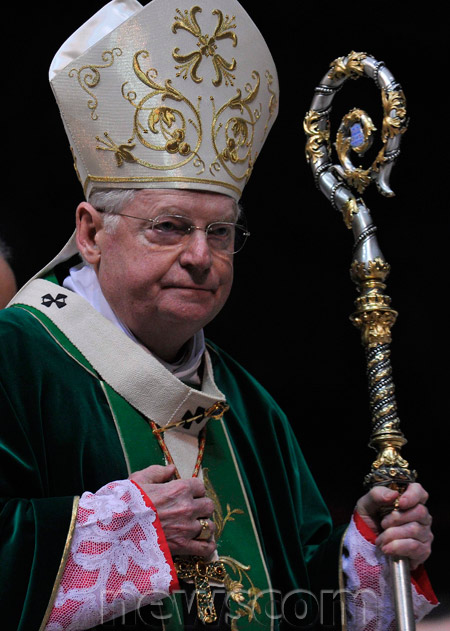
Cardinal Angelo Scola, Archbishop of Milan, the Papabile

http://www.eitb.com/en/news/world/detail/1282802/candidates-new-pope–profile-cardinal-angelo-scola/

From the article (My commentary at the end) :


Election of new pope

Profile of Cardinal Angelo Scola, Archbishop of Milan

APTN

03/11/2013

A conservative, and theologically close to both Pope Benedict and his predecessor John Paul II, Cardinal Scola is regarded as one of the leading European candidates to become Pope.

Cardinal Angelo Scola, the archbishop of Milan.

Cardinal Angelo Scola, the archbishop of Milan, shot to the top of a list of possible successors to Pope Benedict XVI almost immediately the resignation was announced.

A conservative, and theologically close to both Pope Benedict and his predecessor John Paul II, Cardinal Scola is regarded as one of the leading European candidates to become Pope.

Some observers tipped him to succeed after the death of John Paul II in 2005, but the conclave instead chose Cardinal Joseph Ratzinger who became Benedict XVI, the 265th pope.

But if there was rivalry between the candidates in 2005, it had little effect on their close relationship, and Scola remained a favourite of Pope Benedict’s, who appointed the Cardinal archbishop of the Milan Diocese in June 2011.

In the small town of Malgrate on Lake Como in northern Italy, many of the 5,000 residents are backing their hometown boy to become Pope. Scola was born in Malgrate on 7 November 1941 to a truck driver and a homemaker.

He entered the priesthood in 1970, became a Cardinal in 2003, serving first as Patriarch of Milan until he was elevated to his current post of archbishop.

Scola’s cousin, Angelo Colombo, remembers that during World War II he would spend time at his cousin’s home because Scola’s father was a truck driver and could get access to flour and bread.

Colombo said he would go to Scola’s family home, and his aunt and the future Cardinal would always share their food. When he asked if he thought his cousin would make a good Pope, Colombo laughed and responded: “he was a tough boy”.

Scola spent the early years of his life in a small home on Malgrate’s Salita Sant’Antonio. Alfredo Cagliandi was a classmate of Cardinal Scola and lived in the apartment below him.

“We would invite Angelo to come and play and he would repeatedly respond ‘I am sorry, but I don’t have time.’  He was too busy because was already involved in something religious,” said Cagliandi, who still lives in Malgrate.

Scola spent the first two decades after his 1970 ordination in the lecture halls and libraries of renowned Catholic universities and theological training grounds, notably in Fribourg, Switzerland, and the Lateran Pontifical University in Rome.

While pursuing theological studies, Scola was involved in Communion and Liberation, a conservative Italian Catholic group which blends political activism with faith-based fervour as it seeks to make its weight felt in the country’s decision-making.

Back in Scola’s home town, the local priest Father Andrea Lotterio proudly showed off the baptismal font where he says the town’s babies are still baptised today, noting that Scola was baptised there in 1941.

Father Lotterio said Scola has pleased the residents of Malgrate by never losing his strong ties to his hometown. “He has maintained his relationships with many local citizens, with his friends, with his relatives,” Lotterio said. “So much so that in this town he is called Don Angelo, instead of Cardinal or Patriarch of Venice.”

Pope Benedict resigned as leader of the Catholic Church on Thursday, becoming the first pope in 600 years to resign. For the time being, the governance of the Catholic Church shifts to Cardinal Tarcisio Bertone, the camerlengo, or chamberlain. Bertone, along with the College of Cardinals will guide the church and make plans for the conclave to elect the 266th leader within the next few weeks.


Commentary and additions:

Indeed, Cardinal Angelo Scola has many strengths and characteristics that we need as the new Pope to lead the Roman Catholic Church, the one and Universal Church. He does have his weaknesses, but his strengths more than made up for him. After all, it is human to have weaknesses and to make mistakes.

Cardinal Scola is media-savvy, able to reach out into the hearts of many, including youths and those in the world, who are longing for the Lord to come to them. Being media-savvy, and also internet-savvy, Cardinal Scola is not shy of using modern media tools, such as the internet, twitter, YouTube, his own site, and many other means to evangelise to the world, and to reach out, especially to youths.

Cardinal Scola also has a positive outlook and optimism in the Church, and indeed, instead of being pessimistic on the Church, and instead of looking at a Church in trouble, he dismissed all this, and all the lies that the media had brought about the Church, that the Church instead of being in chaos and trouble, is in fact growing, and filled with vibrant and strong faith and love in God, and Cardinal Scola has the capacity to tap into all these energies.

Cardinal Scola also came from a poorer family background, and he understood the plight of the poor and the less fortunate. His hometown people has often remembered him as someone who not only did not forget about where he came from, and where he was born, but also someone who constantly gives them his care and his love, in imitation of Christ and His care for the poor.

Cardinal Scola speaks Italian, English, French, and Spanish, and although his English is not that good, but he has quite a strong command of these languages, which are essential in the Pope’s ministry as the leader of the Universal Church.

Cardinal Scola’s initiatives to reach out to the Christians in the Holy Land and in other areas where Christians are minorities, and his involvement in interreligious dialogue and cooperation, and even with atheists, had been fruitful and crucial in strengthening Christians in the areas where they had been persecuted, and where persecutions are ongoing.

His experience in the Archdiocese of Milan, Patriarchate of Venice, and Diocese of Grosseto clearly showed that he is a pastoral leader with a humble and yet intellectual mind, that matches that of our beloved Pope Emeritus Benedict XVI. Yet, his experiences in the Roman Curia too were many, with works as leader of Pontifical Institute of Marriage and the Family, which he also took a strong stand with the Church in the sanctity of both marriage and the family.

His intellect, knowledge, and publications especially in topics like bioethics, in the midst of the attacks against Church’s stand on bioethics, cloning, and contraceptions will be essential for the future leader of the Church, and his ability to connect and reach out to people, more than Pope Emeritus Benedict XVI, will be valuable asset to have in the new Pope.

Nevertheless, now that the Conclave will begin soon, we continue to pray that God will pour His Holy Spirit on all the Cardinal-electors, that they can make a wise and inspired decision, to elect someone whom the Lord has chosen, as the best possible person to succeed His Apostle, Peter, and lead the whole Universal Church, that God Himself built in this world, to be the manifestation of His love, justice, and presence.

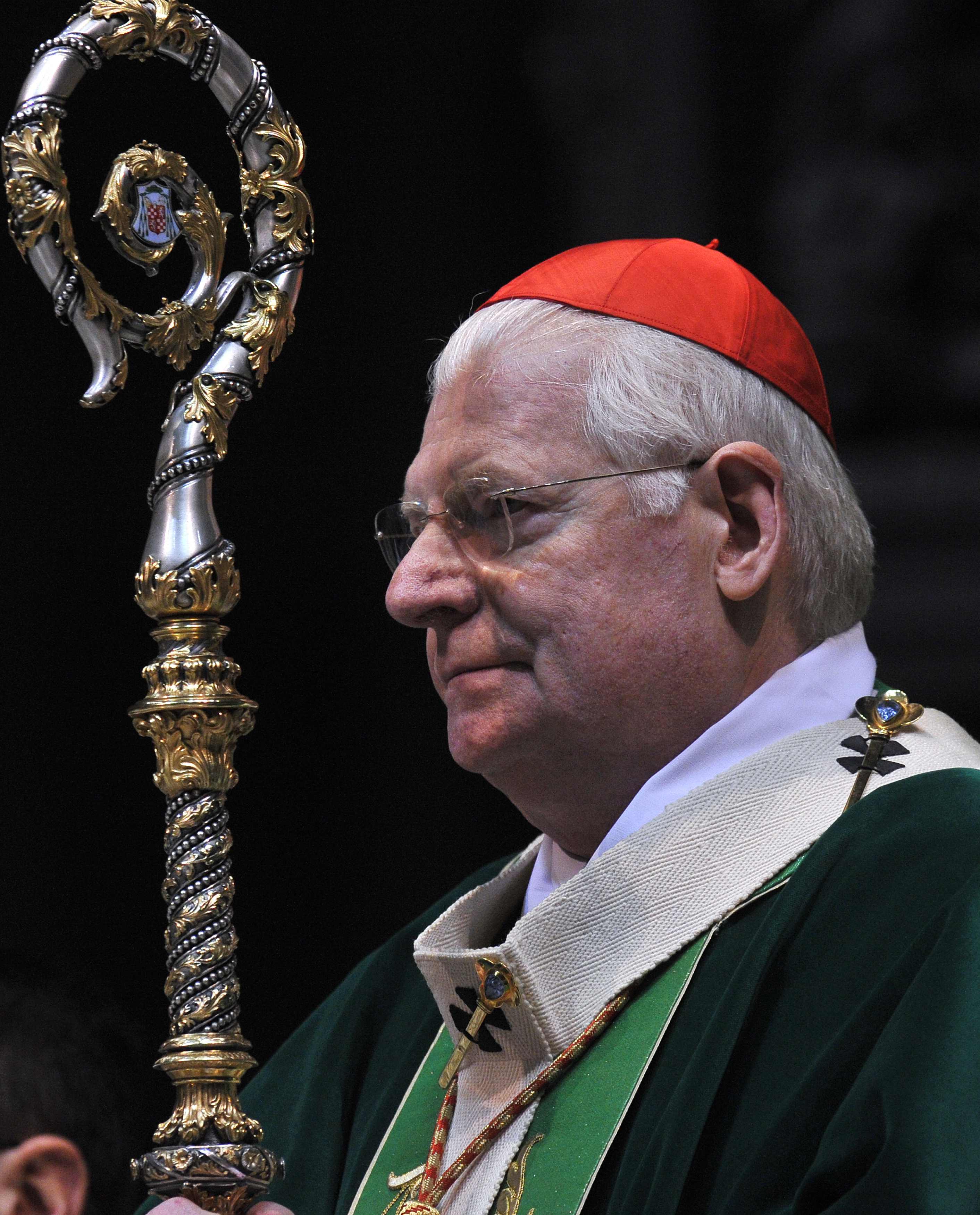
12 reasons why Cardinal Angelo Scola may be the next Pope : My chosen Papabile

Cardinal Angelo Scola attends a mass in Duomo Cathedral in Milan

Cardinal Angelo Scola (12 reasons why I think he is the best of all the other Candidates, a frontrunner, and should be elected Pope) :

1. Strong in faith and theology : Yes, an intellectual disciple of Pope Benedict XVI, and is as strong as our Pope Emeritus on theology and his deep knowledge of the faith and the Church

2. Close and capable to work with youths : Yes, will be Pope for the youths indeed, and have been working closely with youths in many occasions, especially in his pastoral ministry in Venice and now Milan.

3. Twitter : Already had, and had actively tweeted in the past! Will be no problem to continue to @Pontifex!

4. Italian and other languages : Yes, and Bishop of Rome definitely must speak fluent Italian! Also fluent in several other languages, including English.

5. Interreligious dialogue : Yes, and knowledgeable about Islam in particular, and have been active in reaching out to Christian minorities in the Middle East and the Muslim world.

6. Tradition : Strong in liturgy and tradition, a tradition-based Pope just like Pope Benedict XVI, we need a strong anchor of faith! A close and personal understanding of the liturgy through its beauty can only serve to strengthen the faith of the faithful and the Church.

angelo-scola
7. Charisma : Yes, strong charisma and outreach, and also has a global persona and able to connect with youths and other sections of the society.

8. Poverty and charity of the Church : Being born into low-middle income family, made him to have a close connection and personal connection to the poor and the less fortunate in the Church and the world.

9. Age : At 71, is at the prime age for Pope. Not too old (Pope Benedict XVI was elected at 78 and yet managed to lead an almost 8 year Pontificate), and therefore he will be expected to lead for 15-20 years, and relatively healthy, which is what the Cardinals seek. Not too young, and very experienced.

10. Experience (Curia) : Significant term as the Rector Magnificus of Pontifical University, and then as the President of the Pontifical Institute of John Paul II for Studies of Marriage and Family.

11. Experience (Pastoral) : Experience as Bishop of Grosetto, and long experience as the Patriarch of Venice, and also a great job as the Archbishop of Milan. Hence, being accorded the extremely rare honour of having headed to of Italy’s and the world’s most influential dioceses.

12. Bioethics and Family : Knowledgeable and had published books in bioethics (and also many other topics, totalling more than 120 volumes in total), and very supportive of marriage and family, and definitely strong in the matter, being the former President in the Pontifical Institute on the Family (see number 10). It is necessary to have a strong leader in the issue at the time when the institution of marriage and the family is under constant and increasingly serious attacks.

The Church and our Faith, with the Social Media, for New Evangelisation

http://www.ucanews.com/news/young-catholic-turns-the-internet-into-a-campaigning-tool/67249

(“We Catholics, no matter how rich or poor we are, are equal in God’s eyes,” he said. “God works through Facebook. He changes something virtual into something real. This is God’s call to me.”)

Yes, the social media can be a great tool for evangelisation, and also for the spreading of the good works of the Lord, which through our hands and our effort, we can make God’s power manifest in our world.

Let us strengthen our faith by sharing it with one another through the social media, and use it as a proper platform to gain attention to those who are especially in need of help.

Youths are the future of the Church, and we have to make sure that all Catholic and indeed all Christian youths, to be protected from the evil influences on the social media, simply by ensuring that they are also exposed to good influences of the Church through the same social media.

https://www.facebook.com/gerejakatolik

Follow my Twitter account!

I have a twitter account too! Follow me at https://twitter.com/PCMDavidCKang

Pope Benedict XVI now tweets in Latin too! https://twitter.com/Pontifex_ln

Pope Benedict XVI tweets in Latin at https://twitter.com/Pontifex_ln

His main twitter account in English is at https://twitter.com/Pontifex


In total Pope Benedict XVI tweets simultaneously in nine languages :

French : https://twitter.com/Pontifex_fr

Arabic : https://twitter.com/Pontifex_ar

Italian : https://twitter.com/Pontifex_it

Polish : https://twitter.com/Pontifex_pl

Portuguese : https://twitter.com/Pontifex_pt

Spanish : https://twitter.com/Pontifex_es


I hope Pope Benedict XVI will soon tweet in Chinese and Tagalog as well! God bless our Pope and the Universal Church!