Wednesday, 13 March 2013 : 4th Week of Lent (Gospel Reading)

John 5 : 17-30

Jesus replied, “My Father goes on working and so do I.” And the Jews tried all the harder to kill Him, for Jesus not only broke the Sabbath observance, but also made Himself equal with God, calling God, His own Father.

Jesus said to them, “Truly, I assure you, the Son cannot do anything by Himself, but only what He sees the Father do. And whatever He does, the Son also does. The Father loves the Son and shows Him everything He does; and He will show Him even greater things than these, so that you will be amazed.”

“As the Father raises the dead and gives them life, so the Son gives life to whom He wills. In the same way the Father judges no one, for He has entrusted all judgment to the Son, and He wants all to honour the Son as they honour the Father. Whoever ignores the Son, ignores as well the Father who sent Him.”

“Truly, I say to you, anyone who hears My word and believes Him who sent me, has eternal life; and there is no judgment for him, because he has passed from death to life. Truly, the hour is coming and has indeed come, when the dead will hear the voice of the Son of God and, on hearing it, will live.”

“For the Father has life in Himself, and He has given to the Son also to have life in Himself. And He has empowered Him as well as to carry out Judgment, for He is Son of Man. Do not be surprised at this; the hour is coming when all those lying in tombs will hear My voice and come out; those who have done good shall rise to live, and those who have done evil will rise to be condemned.”

“I can do nothing of Myself, and I need to hear Another One to judge; and My judgment is just, because I seek not My own will, but the will of Him who sent Me.”

Wednesday, 13 March 2013 : 4th Week of Lent (Psalm)

Psalm 144 : 8-9, 13cd-14, 17-18

Compassionate and gracious is the Lord, slow to anger and abounding in love. The Lord is good to everyone; His mercy embraces all His creations.

The Lord is true to His promises and lets His mercy show in all He does. The Lord lifts up those who are falling and raises those who are beaten down.

Righteous is the Lord in all His ways, His mercy shows in all His deeds. He is near those who call on Him, who call trustfully upon His Name.

Wednesday, 13 March 2013 : 4th Week of Lent (First Reading)

Isaiah 49 : 8-15

This is what YHVH says : “At a favorable time I have answered you, on the day of salvation I have been your help; I have formed you and made you to be My covenant with the people. You will restore the land, and allot its abandoned farms. You will say to the captives : Come out, and to those in darkness : Show yourselves.”

“They will feed along the road; they will find pasture on barren hills. The will neither hunger nor thirst, nor will the scorching wind or the sun beat upon them; for He who has mercy on them will guide them and lead them to springs of water.”

“I will turn all My mountains into roads and raise up My highways. See, they come from afar, some from north and west, others from the land of Sinim.”

Sing, o heavens, and rejoice, o earth; break forth into song, o mountains : For YHVH has comforted His people and taken pity on those who are afflicted. But Zion said : “YHVH has forsaken me, my Lord has forgotten me.”

Can a woman forget the baby at her breast and have no compassion on the child of her womb? Yet though she forget, I will never forget you.

Names to watch out for at Habemus Papam announcement : Angelum, Petrum, Odilonem, Marcum, Aloisium, Christophorum

Whose names to watch out for when Cardinal Protodeacon Jean-Louis Tauran reads out the Habemus Papam (We have a Pope) announcement?

http://wdtprs.com/blog/2013/03/latin-names-of-cardinals-well-hear-one-of-these-from-the-loggia-of-st-peters/ (Thanks to Fr. Z’s blog for the latin names he provided for all the Cardinal-electors – I focused into some of them considered papabili/frontrunner)


Here is the announcement text :


Annuntio vobis Gaudium magnum. Habemus Papam! Eminentissimum ac Reverendissimum Dominum.

Dominum (First Name) Sanctae Romanae Ecclesiae Cardinalem (Surname).

Qui sibi nomen imposuit (regnal name) (number)


At the point when we listen the ‘First Name’ in fact we may already know who is the new Pope.


1. Angelum (Angelo) :

Cardinal Angelo Scola, Metropolitan Archbishop of Milan

Cardinal Angelo Bagnasco, Metropolitan Archbishop of Genoa

Cardinal Angelo Amato, Prefect for the Congregation of the Causes of Saints

Cardinal Angelo Comastri, Vicar General of the Diocese of Rome

As there are several Angelo considered as Papabili, for Angelum, there is a need to wait for the surname before confirmation. Similarly with Petrum.


2. Petrum (Peter) :

Cardinal Peter Erdo, Archbishop of Esztergom-Budapest

Cardinal Peter Turkson, President of the Pontifical Council for Justice and Peace


But other names are straightforward :


3. Odilonem (Odilo) :

Cardinal Odilo Pedro Scherer, Metropolitan Archbishop of Sao Paulo


4. Marcum (Marc) :

Cardinal Marc Ouellet : Prefect of the Congregation for Bishops


5. Aloisium (Alois/Luis) :

Cardinal Luis Antonio Gokim Tagle : Metropolitan Archbishop of Manila


6. Christophorum (Christoph) :

Cardinal Christoph Schonborn : Metropolitan Archbishop of Vienna


7. Ioannem Franciscum (Gianfranco) :

Cardinal Gianfranco Ravasi : President of the Pontifical Council for Culture


8. Timotheum (Timothy) :

Cardinal Timothy Michael Dolan : Metropolitan Archbishop of New York

Tuesday, 12 March 2013 : 4th Week of Lent (Scripture Reflection)

Today, we see Christ, who bring upon us the living water, the water that satisfies all thirsts, in His miraculous healing of the sick man, on whom He had mercy and through His mercy, the sick man was healed and cured of his afflictions.

Yet again, we hear about the Jews and their laws on the Sabbath day, that is the day when the Lord completed His creation and rested. However, we must understand, the reason, and indeed the true reason behind having such a rule of the Sabbath, for the people of Israel, God’s chosen people.

The people of Israel was indeed a rebellious people, especially during the time when they escaped from Egypt on God’s providence, and crossed the Red Sea. Already they exhibited much doubts in the very God who saved them from the slavery of Egypt since then, and even forced Aaron, Moses’ brother to make for them a ‘replacement’ god in the shape of the golden calf.

They too had rebelled against the Lord often, and like at Massah and Meribah, again doubted God and His promise of delivering them into the Promised Land of milk and honey. They even complained that their lives in Egypt, though in slavery, had been much better than the present life, their lives in the desert. They refused the Lord’s offer in fearing the Canaanites, and was punished for forty years to wander in the desert, until all those who had defied the Lord had perished, and a new generation had come forth.

It is against this background of constant rebellion, pride, and arrogance of the Israelites at the time, that the laws of the Lord, and that of the Sabbath was made, when God delivered these laws to Moses on the Mount Horeb. Over time, these laws were enshrined by the people as the basic tenets and obligations (also prohibitions) that the people had to follow, otherwise they would be expelled or exiled from the society.

Sadly however, the Law eventually becomes a huge list, supposedly numbering 613 in total, of rules and regulations, that govern many aspects of the society’s life, even to trivial manners such as washing of the hands before meals, which had to be done to the precise and minute details exactly as it was said how it must be done.

This is how the law concerning the Sabbath was also made, that as the Lord has said that no one should work or labour on that day in honour of the Lord, and to make holy that day before God, just as we now make holy our first day of the week that is Sunday, and celebrate the Mass together as one Church on Sundays, to bring ourselves and offer ourselves as the offerings of prayer to God.

Nevertheless, this law and the other rules and regulations in the Law, were not created to constrain or restrict mankind, and definitely to enslave men to these laws, as what the situation at the time of Jesus was. It was well noted that Judas Maccabee, the leader of the Maccabean revolt against the Seleucids, who tried to erase the worship of God in Israel and replaced it with pagan Greek gods, had decided with the leaders of the people that they be allowed to defend themselves on Sabbath, as the enemies had taken advantage of the Sabbath law to massacre many Israelites on the day of the Sabbath.

And King David too ate the bread for the sacrifice that is reserved only for the priests, when he and his companions were hungry. Clearly it shows that God did not create this Law to punish or enslave His beloved people, but rather to shape them and to ensure that they remain faithful to Him, by keeping His laws and keeping themselves in good order. It is not to restrain them, and as Jesus said, that the Law is made for man and not man for the Law.

Therefore, brothers and sisters in Christ, let us not be like the Israelites and be embroiled too much on societal rules, but instead, through the Church, strive to do more loving acts and good works for the benefit of others, because, in doing so, we glorify the Lord far more than mere profession of faith by words, or by fulfilling laws, rules, and regulations.

It is by making our faith alive through action, that we are justified, not enough by just how pious we are in fulfilling and adhering ‘strictly’ to laws of the Lord and men who made these laws of God into tangible laws that we see today. Nevertheless, we do still have to obey the laws and fulfill them. Jesus did not give us an excuse to do away with the laws, since did He not come to perfect the Law? and not destroy it? So that the Law that had once lost its true meaning, was given full meaning in love by Christ.

We are also taught the value of humility and accepting God’s divine providence and mercy today. Christ asked the sick man, “Do you want to be healed?” This shows that God gives His love and blessings freely, only if we ask Him, and forgiveness will be given to us if we are sincere and if we truly humble ourselves before God, we are sure to receive His welcoming embrace and healing, as what had happened to the sick man.

Brothers and sisters in Christ, let us then pray for humility, that despite all our human achievements and greatness, and worldly strengths, we will remain humble, and will use our best resources for the purpose of helping those others around us who need them, and those who are in great disadvantaged, those who are hated, and those who are prejudiced against. Pray too for those who had persecuted the righteous, like what happened when the Jews persecuted Jesus and His followers. That they too will learn about the true wonder of God, and repent from their sinful ways. Amen.

Time to watch for smoke from the Sistine Chapel chimney

Image

These are the times to watch the smoke from the Sistine Chapel’s famous chimney.

As mentioned :

1. First and third ballot of the day will only have smoke if the Pope has been elected. This smoke will always be white.


2. Second and fourth ballot of the day will always have smoke, and can either be black or white.

a. Black smoke : no Pope has been elected

b. White smoke : a new Pope has been elected


3. 45 minutes will pass between the white smoke, and the appearance of the Cardinal Protodeacon, who will announce the Habemus Papam, which will reveal the name of the newly elected Pope, then another 15 minutes will likely pass before the new Pope made his appearance.

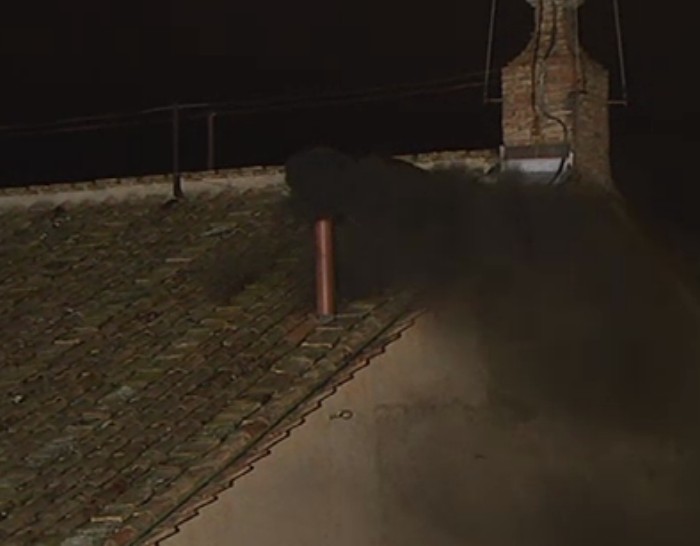
Third Ballot : Black smoke from the chimney of Sistine Chapel. No Pope had been elected yet.

6de75351b30a02082c0f6a706700aa80

At around 11.45 am in the morning on Wednesday, 13 March 2013 in Rome, black smoke poured out of the chimney of the Sistine Chapel, slightly earlier than predicted. Therefore, as of the third ballot we do not have a new Pope elected yet.

Be prepared for the fourth ballot, since it is just possible that in that ballot a new Pope will be elected, since if there is a clear candidate that is worthy of election, the Cardinal-electors may converge on him, and the election may occur at the fourth ballot, if not then the fifth ballot.

Keep praying for our Cardinal-electors!

Second Ballot : No smoke. No Pope had been elected yet

As there was no ‘early’ smoke on Wednesday morning, 13 March 2013 in Rome, it is safe to assume that no Pope had been elected in the second ballot. This is because, instead of the usual 2 ballots per session then burn the ballots of both together at the end (session = morning/afternoon), if a Pope is elected on the first of these two ballots, the second ballot will obviously not take place, and thus, the smoke will be early, and will definitely also be white.

This was also the early sign that a Pope had been elected in 2005, when the afternoon smoke went early (this was after the fourth ballot, first of two afternoon ballots) at near 6 pm Rome time, when the smoke, which should have been later if no Pope was elected.

It may be more likely that the white smoke will appear after the third ballot, or the fourth ballot.

Watch live at : http://www.romereports.com/palio/modules.php?name=Content3&pa=showpage&newlang=english&pid=47#.UUA0qBzLoj7

List of possible regnal names for the new Pope, from Benedict to Peter

These are the list of all the possible regnal names (may not be entirely complete, since I may miss some in the way), that the new Pope can and may take as his own regnal name. In parentheses are how the name will look like if the Pope takes the name.

The ones listed below are the names that Popes had been taking since 1775 till today (2013) :

1. Benedict (Benedict XVII) last Benedict still living as Pope Emeritus

2. John Paul (John Paul III) last John Paul died in 2005

3. Paul (Paul VII) last Paul died in 1978

4. John (John XXIV) last John died in 1963, no John before that since 1334

5. Pius (Pius XIII) last Pius died in 1958

6. Leo (Leo XIV) last Leo died in 1903

7. Gregory (Gregory XVII) last Gregory died in 1846


Below are the names that the Popes had taken before 1775, but this does not rule them out from being picked by the new Pope, but chances are remote, with the above 7 names in use for the past 238 years.

8. Clement (Clement XV) last Clement died in1775

9. Innocent (Innocent XIV) last Innocent died in 1724

10. Alexander (Alexander IX) last Alexander died in 1691

11. Urban (Urban IX) last Urban died in 1644

12. Sixtus (Sixtus VI) last Sixtus died in 1590

13. Marcellus (Marcellus III) last Marcellus died in 1555

14. Julius (Julius IV) last Julius died in 1555

15. Adrian (Adrian VII) last Adrian died in 1523, last non-Italian Pope before 1978

16. Callixtus (Callixtus IV) last Callixtus died in 1458

17. Nicholas (Nicholas VI) last Nicholas died in 1455

18. Eugene (Eugene V) last Eugene died in 1447

19. Martin (Martin VI) last Martin died in 1431

20. Boniface (Boniface X) last Boniface died in 1404

21. Celestine (Celestine VI) last Celestine died in 1294, also a Saint, the famous Pope who resigned

22. Honorius (Honorius V) last Honorius died in 1287

23. Lucius (Lucius IV) last Lucius died in 1185

24. Anastasius (Anastasius V) last Anastasius died in 1154

25. Eugene (Eugene IV) last Eugene died in 1153

26. Gelasius (Gelasius III) last Gelasius died in 1119

27. Paschal (Paschal III) last Paschal died in 1118

28. Victor (Victor IV) last Victor died in 1087

29. Stephen (Stephen X) last Stephen died in 1058

30. Damasus (Damasus III) last Damasus died in 1048

31. Sylvester (Sylvester IV) last Sylvester died in 1045

32. Sergius (Sergius V) last Sergius died in 1012

33. Agapetus (Agapetus III) last Agapetus died in 955

34. Marinus (Marinus III) last Marinus died in 946

35. Lando/Landus (Landus II) only used once, died in 914, last Pope whose name is only used once

36. Theodore (Theodore III) last Theodore died in 897

37. Romanus (Romanus II) only used once, died in 897

38. Formosus (Formosus II) only used once, died in 896

39. Valentine (Valentine II) only used once, died in 827

40. Zachary (Zachary II) only used once, died in 752

41. Constantine (Constantine II) only used once, died in 715

42. Sisinnius (Sisinnius II) only used once, died in 708

43. Conon (Conon II) only used once, died in 687

44. Agatho (Agatho II) only used once, last one is Saint, died in 681

45. Donus (Donus II) only used once, last one died in 678

46. Adeodatus (Adeodatus III) last Adeodatus died in 676

47. Vitalian (Vitalian II) only used once, died in 672

48. Severinus (Severinus II) only used once, died in 640

49. Sabinian (Sabinian II) only used once, died in 606

50. Pelagius (Pelagius III) last Pelagius died in 590

51. Vigilius (Vigilius II) only used once, died in 555

52. Silverius (Silverius II) only used once, last one is Saint, died in 537

53. Felix (Felix V) last Felix died in 530


All the names below have been used only once, ever. Most of them are the early Church Fathers and Saints, and therefore, it is rather extremely unlikely any of these names would be picked.

54. Hormisdas (Hormisdas II) only used once, died in 523

55. Symmachus (Symmachus II) only used once, last one is Saint, died in 514

56. Simplicius (Simplicius II) only used once, last one is Saint, died in 483

57. Hilarius (Hilarius II) only used once, last one is Saint, died in 468

58. Zosimus (Zosimus II) only used once, last one is Saint, died in 418

59. Siricius (Siricius II) only used once, last one is Saint, died in 399

60. Liberius (Liberius II) only used once, died in 366

61. Mark (Mark II) only used once, last one is Saint, died in 336

62. Miltiades (Miltiades II) only used once, last one is Saint, died in 314, First Pope after Edict of Milan

63. Eusebius (Eusebius II) only used once, last one is Saint, died in 310

64. Marcellinus (Marcellinus II) only used once, last one is Saint, died in 304

65. Caius (Caius II) only used once, last one is Saint, died in 296

66. Eutychian (Eutychian II) only used once, last one is Saint, died in 283

67. Dionysius (Dionysius II) only used once, last one is Saint, died in 268

68. Cornelius (Cornelius II) only used once, last one is Saint, died in 253

69. Fabian (Fabian II) only used once, last one is Saint, died in 250

70. Anterus (Anterus II) only used once, last one is Saint, died in 236

71. Pontian (Pontian II) only used once, last one is Saint, died in 235

72. Zephyrinus (Zephyrinus II) only used once, last one is Saint, died in 217

73. Eleuterus (Eleuterus II) only used once, last one is Saint, died in 189

74. Soter (Soter II) only used once, last one is Saint, died in 174 or 175

75. Anicetus (Anicetus II) only used once, last one is Saint, died in 166

76. Hyginus (Hyginus II) only used once, last one is Saint, died in 140 or 142

77. Telesphorus (Telesphorus II) only used once, last one is Saint, died in 136 or 138

78. Evaristus (Evaristus II) only used once, last one is Saint, died in 105 or 107

79. Anacletus (Anacletus II) only used once, last one is Saint, died in 88 or 92

80. Linus (Linus II) only used once, last one is Saint, died in 76 or 79

81. Peter (Peter II) only used once, and he is the founder of the Church, Apostle of Jesus Christ, and it is extremely unlikely any future Pope, or any Pope will ever adopt the name of the Prince of the Apostles.

First Ballot : Black Smoke, no Pope had been elected yet

http://www.romereports.com/palio/pope-not-yet-elected-black-smoke-comes-out-of-sistine-chapel-english-9378.html

Image

Black smoke from the chimney of the Sistine Chapel for the first ballot, and the only ballot on the first day of Conclave, Tuesday, 12 March 2013.

The next voting rounds will be on Wednesday, 13 March 2013, composed of morning session (2nd and 3rd ballots), and the afternoon session (4th and 5th ballots).