Saturday, 14 June 2014 : 10th Week of Ordinary Time (Scripture Reflections)

Liturgical Colour : Green or White (Saturday Mass of our Lady)

Brothers and sisters in Christ, again I have to emphasize today, of the importance placed on the understanding of the laws of God and His true intention, rather than blindly following rules without understanding, and take things literally without proper discernment and thinking. This is the essence of serving the Lord and His people, just as Elisha, son of Shaphat had been called long ago to serve God’s people.

Some Christians like to take things in the Scriptures literally, as it had been written, even going as far as proclaiming the Holy Scriptures as the sole truth and the sole authority of the faith in the process of salvation. This is what is called the sola scriptura approach, popular among Protestants who in their heretical and misguided thinking, they thought that their understanding of the Scriptures is sufficient to guide them in faith and in life.

However, as we know, this is very wrong, and by depending on their interpretations, human interpretation that is flawed and imperfect, they have erroneously practiced their faith, thinking that we faithful cannot make oaths or anything similar, out of fear of sinning and going against the Lord’s will. But this is not in fact what Jesus meant when He said what He said in the Gospel today. This is the danger of literally interpreting whatever Jesus said and hold onto them as if they are inviolable laws.

Jesus liked to preach to the people of God in parables, through the use of stories and links to real-life contexts, which has two purposes. First, this facilitates understanding by the people, in consideration that most of them at the time were illiterate, and therefore unlikely to have strong background knowledge of what they have in the Scripture, and whatever they believe in, is mostly the oral traditions passed down through the generations and through the teachings of the priests.

But these, as we know it, were imperfect knowledge, since mankind had limited and feeble intelligence that is incapable of comprehending the fullness of the truth in the word of God, except if it is revealed to them through the Holy Spirit, or through the teaching of the Prophets. Those who trust only in the Holy Scriptures and in their flawed understanding on them, is being foolish.

This links to the second purpose of Jesus’ preaching using parables and stories to the people. If the first purpose is to make the teachings more understandable to the faithful, who were mostly farmers, fishermen and shepherds, and that was why so many of Jesus’ parables involve the terms that these people were familiar with, the second purpose is in fact to hide the true meaning of the word of God before it is time for them to be fully understood by the people.

Jesus Himself highlighted this, and He showed how the meaning of the words He had spoken had to remain hidden for a while until the appointed time when the Lord was to reveal Himself in His entirety to the world. But Jesus Himself did explain the meaning of His parables to the disciples, especially when they asked Him what He meant as He taught the people with those parables.

Yet, even after that, the disciples still did not understand perfectly, and as we know, there were many moments when they failed to understand what was to happen with Christ, especially when He suffered trial and death, when He was crucified on Calvary, and finally when He was risen from the dead, and the tomb of Jesus became empty.

It was through the Holy Spirit, the Advocate and Helper, that the Lord chose to reveal His truth to the people of God in its fullness. The Apostles and disciples received the Holy Spirit, and it was from them that the teachings of Jesus, the word of God, and the true intentions of the Lord were made clear to the people. The Scriptures, that is the New Testament section including the Holy Gospels themselves were written by the disciples inspired and filled with the Holy Spirit, to provide the people with understanding of their faith.

So what did Jesus mean then, by what He had said today? He did not mean to completely ban vowing and oath-making from us, and not to condemn us if we do so. What Jesus had meant was in fact that, whenever we do something and commit ourselves to something, especially when we say it verbally, we must truly mean everything that we spoke of, and we also have to take them seriously in mind and heart.

If we do not desire to do something, then we should not lie and make a false oath or vow. That is evil. And if we desire to do something, then it is more important and meaningful for us to go and act on it rather than just making empty promises and be slothful about it. That is the true essence of the Lord’s message to us. Rather than blaspheming against God by lying in His Name or on anything that He had created, it is best for us as Christians, to go forth and do all things that is right, immediately and with full consciousness.

Brothers and sisters in Christ, we have to keep alive the teachings and the knowledge which had been passed down to us through the Church, that is the deposit of faith. The Church alone is the custodian of this deposit of faith, which keeps us all anchored firmly to the Lord and His truth, and we have to keep it and follow it through. Let us not fall to the attempts of the devil to discredit the faith or the Church through his lies.

May God continue to guard us, keep us in His grace and love, and empower us to remain always in His truth and receive much blessing. May God be with us all, always. Amen.
Saturday, 14 June 2014 : 10th Week of Ordinary Time (Gospel Reading)

Liturgical Colour : Green or White (Saturday Mass of our Lady)

Matthew 5 : 33-37

You have also heard that people were told in the past : Do not break your oath; an oath sworn to the Lord must be kept. But I tell you this : do not take oaths. Do not swear by the heavens, for they are God’s throne, nor by the earth, because it is His footstool, nor by Jerusalem, because it is the city of the great King.

Do not even swear by your head, because you cannot make a single hair white and black. Say yes when you mean yes, and say no when you mean no. Anything else you say comes from the devil.

Saturday, 14 June 2014 : 10th Week of Ordinary Time (Psalm)

Liturgical Colour : Green or White (Saturday Mass of our Lady)

Psalm 15 : 1-2a and 5, 7-8, 9-10

Keep me safe, o God, for in You I take refuge. I say to the Lord, “O Lord, my inheritance and my cup, my chosen portion – hold secure my lot.”

I bless the Lord who counsels me; even at night my inmost self instructs me. I keep the Lord always before me; for with Him at my right hand, I will never be shaken.

My heart, therefore, exults, my soul rejoices; my body too will rest assured. For You will not abandon my soul to the grave, nor will You suffer Your Holy One to see decay in the land of the dead.

Saturday, 14 June 2014 : 10th Week of Ordinary Time (First Reading)

Liturgical Colour : Green or White (Saturday Mass of our Lady)

1 Kings 19 : 19-21

So Elijah left. He found Elisha, son of Shaphat, who was plowing a field of twelve acres and was at the end of the twelfth acre. Elijah passed by him and cast his cloak over him.

Elisha left the oxen, ran after Elijah and said, “Let me say goodbye to my father and mother; then I will follow you.” Elijah said to him, “Return if you want, do not worry about what I did.”

However, Elisha turned back, took the yoke of oxen and slew them. He roasted their meat on the pieces of the yoke and gave it to his people who ate of it. After this, he followed Elijah and began ministering to him.

Friday, 13 June 2014 : 10th Week of Ordinary Time, Memorial of St. Anthony of Padua, Priest and Doctor of the Church (Scripture Reflections)

Liturgical Colour : White

Brothers and sisters in Christ, today is a direct continuation of the discourse and catechesis of yesterday’s Scripture readings, and we continue on the matter of understanding the Law and the true intention of the Lord as He revealed to mankind. We need to know that the Law of the Lord should not be taken at plain literal meaning, nor should we be proud of ourselves and assume that we know it all about God and His desire, and therefore be judgmental on others.

We need to understand the greater purpose of the Law and the rules of our faith. We cannot be blindly oblige to the rules without first understanding them, and yet we can neither fail to oblige with the excuse that we do not understand them or worse if we decide to ignore them. We must therefore make the conscious effort to understand the Lord and His Law. How do we do so, brothers and sisters?

By obeying the teachings and tenets of the Church, and the regulations established by the Church, and maintaining a good and healthy relationship with our shepherds, that is our priests and bishops. It is because these people are the ones who had been entrusted with our care by the Lord, and they have also been granted teaching authority by Christ Himself, empowered by the Holy Spirit, that they teach the faith and the Law of God in its purest form and in its true meaning.

Today we celebrate the feast day of one of the greatest teachers of the faith, that is St. Anthony of Padua, a very renowned Franciscan friar who was legendary and amazing in his homilies and discourses, so much so that even the Pope at that time employed him as the one to deliver the homilies at his court. St. Anthony of Padua also preached in many places across Europe, and from his teachings, he brought many people closer to God by awakening in them the proper understanding of His laws and purpose.

St. Anthony of Padua was well educated since his youth, and at the same time he was also very dedicated to the Lord, having been educated in the seminary since his youth, and eventually decided to join a sacred religious life. He learnt much about the faith and how to teach it well to the people of God, and through his vast experiences in many situations and stints in various religious orders, he gained great knowledge and ability to teach the faith to the faithful.

St. Anthony of Padua was a great orator and preacher of the faith, and yet he remained truly humble despite his renown and his abilities. In fact, the very first time when St. Anthony of Padua’s preaching abilities was identified, he was reluctant and afraid when he was pointed out to be the one to give a sermon to a group of gathered religious congregations. Yet, despite his reluctance and initial refusal, he made such an eloquent and impressive sermon, that the people who heard him were completely astonished.

St. Anthony of Padua continued to preach from then on, and demands for his sermons are always high, and the Pope even kept a record of his sermons, which was truly valuable for us, for there is truly much wisdom that we can learn from St. Anthony of Padua and his discourses. Through him the word of God and the intentions of the Lord were made clear to many people, who then grew on deeper in their faith because of that.

Therefore, brothers and sisters in Christ, we have to keep faithful and true to the deposit of faith that is in the Church. Yes, we have to keep the complete entirety of the deposit of faith, which is the accumulated wisdom, teachings, and revelations that we have received through the holy men and women, who dedicated themselves like St. Anthony of Padua had done. Through them, we gain this precious knowledge and understanding, and therefore, in our lives, we have to continue safeguarding this deposit of the faith and teach it to others.

It is not difficult to do so, and we do not have to be like St. Anthony of Padua, or be as wise and eloquent as him in order to do so. What we need to do is in fact, to practice what we believe in our own lives, that in all our words, deeds and actions we will always reflect who we are, the children and followers of our Lord and God. If we practice genuinely what we believe in, then those who see us and who are still unbelievers, will certainly be touched by the light of Christ and believe in God, and come to believe and be saved.

May the Lord bring about His good works and graces through us, that He may make manifest His truth and love to the world, just as He had once made Himself known through St. Anthony of Padua. God bless us always and strengthen us at all times. Amen.

Friday, 13 June 2014 : 10th Week of Ordinary Time, Memorial of St. Anthony of Padua, Priest and Doctor of the Church (Gospel Reading)

Liturgical Colour : White

Matthew 5 : 27-32

You have heard that it was said : Do not commit adultery. But I tell you this : anyone who looks at a woman too lustfully has in fact already committed adultery with her in his heart.

So, if your right eye causes you to sin, pull it out and throw it away! It is much better for you to lose a part of your body than to have your whole body thrown into hell. If your right hand causes you to sin, cut it off and throw it away! It is better for you to lose a part of your body than to have your whole body thrown into hell.

It was also said : Anyone who divorces his wife, must give her a written notice of divorce. But what I tell you is this : If a man divorces his wife, except in the case of unlawful union, he causes her to commit adultery. And the man who marries a divorced woman commits adultery.

Friday, 13 June 2014 : 10th Week of Ordinary Time, Memorial of St. Anthony of Padua, Priest and Doctor of the Church (Psalm)

Liturgical Colour : White

Psalm 26 : 7-8a, 8b-9abc, 13-14

Hear my voice when I call, o Lord, have mercy on me and answer. My heart says to You.

I seek Your face, o Lord. Do not hide Your face from me nor turn away Your servant in anger. You are my protector, do not reject me.

I hope, I am sure, that I will see the goodness of the Lord in the land of the living. Trust in the Lord, be strong and courageous. Yes, put your hope in the Lord!

Friday, 13 June 2014 : 10th Week of Ordinary Time, Memorial of St. Anthony of Padua, Priest and Doctor of the Church (First Reading)

Liturgical Colour : White

1 Kings 19 : 9a, 11-16

On reaching the place, Elijah came to the cave and stayed in it. Then YHVH said, “Go up and stand on the mount, waiting for YHVH.” And YHVH passed by.

There was first a windstorm, wild wind which rent the mountains and broke the rocks into pieces before it, but YHVH was not in the wind. After the storm, an earthquake, but YHVH was not in the earthquake.

After the earthquake, a fire, but YHVH was not in the fire. After the fire, the murmur of a gentle breeze. When Elijah perceived it, he covered his face with his cloak, went out and stood at the entrance of the cave.

Then he heard a voice addressing him again, “What are you doing here, Elijah?” He answered, “I am burning with jealous love for YHVH, the God of hosts, because the Israelites have forsaken Your covenant, thrown down Your altars and slain Your prophets with the sword. No one is left but myself, yet they still seek my life to take it away.”

YHVH said to him, “Take the road back through the desert and go to Damascus for you must anoint Hazael as king of Syria; you shall also anoint Jehu, son of Nimshi, as king over Israel; and Elisha, son of Shaphat, from Abel Meholah, you shall anoint as prophet in your place.

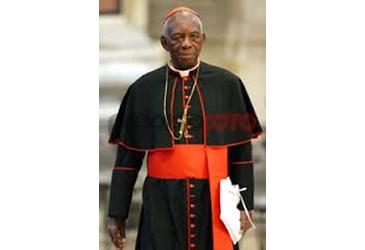
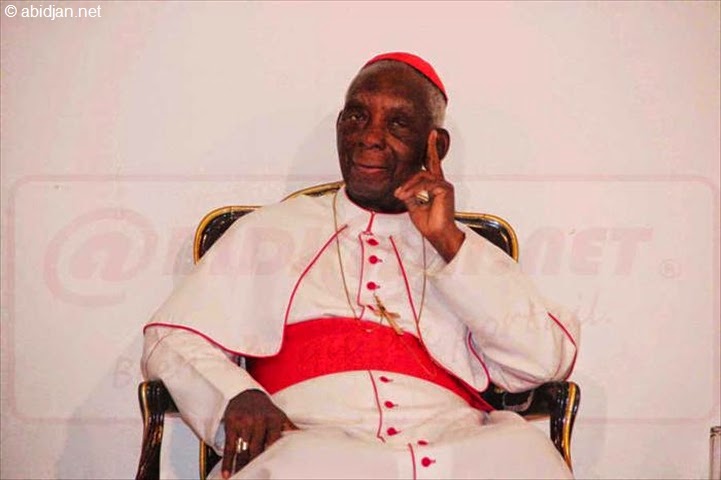
Passing of Cardinal Bernard Agre, Metropolitan Archbishop Emeritus of Abidjan (Cote d’Ivoire/Ivory Coast) at the age of 88

Cardinal Agre

Cardinal Bernard Agre, Cardinal-Priest of S. Giovanni Crisostomo a Monte Sacro Alto has passed away on Monday, 9 June 2014 at the age of 88. He was the Metropolitan Archbishop of Abidjan, the principal diocese of Ivory Coast or Cote d’Ivoire, from 1994 and 2006. Prior to this he was the long time Bishop of Man from 1968 to 1992 and as Bishop of Yamoussoukro from 1992 to 1994, in Cote d’Ivoire.

http://www.gcatholic.org/hierarchy/data/cardJP2-8.htm#2

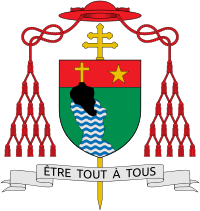
200px-Coat_of_arms_of_Bernard_Agré.svg

Cardinal Agre was created Cardinal in 2001 by Pope St. John Paul II in his eighth Cardinal creation consistory on 21 February 2001. His motto was Etre Tout a Tous, which means “Be all things to all”. This means an emphasis on service and Christian servant leadership, to give one’s best to all others who are in need.

1524462_LancioGrande

We pray for Cardinal Agre, that he will rest in peace, and God will reward him for all his hard and great work as the long time servant of God as the shepherd of the faithful in Abidjan and Cote d’Ivoire, as well as for all the ministries and good works he had done for the sake of God and His people in the entire Universal Church. May the Lord welcome him into His embrace in heaven and give him eternal rest and happiness that he deserved.

With the passing of Cardinal Agre, the College of Cardinals now stands at 213 members, with 118 Cardinal-electors and 95 Cardinal non-electors. The number of Cardinal-electors now is 2 below the specified maximum limit of 120.

There are now 2 Cardinal-elector vacancy in the College of Cardinals, 0 vacant Cardinal Suburbicarian Sees (for Cardinal Bishops), 3 vacant Cardinal Title (for Cardinal Priests) and 7 vacant Cardinal Deaconries (for Cardinal Deacons).