This Day last year… The conclave began

This day, a year ago, 12 March 2013. On that day, the conclave to elect the 266th Pope and 265th Successor of St. Peter the Apostle as the Leader of the Universal Church began.

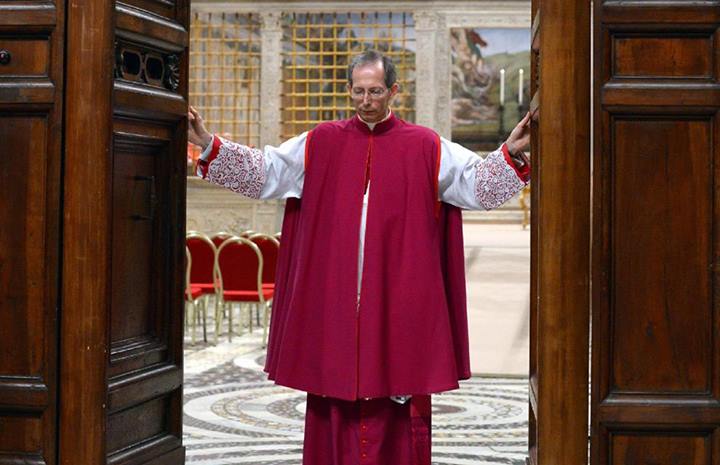
Below is the picture of Monsignor Guido Marini, the Papal Master of Ceremonies, who closed off the Sistine Chapel to the non-participating people, with the famous utterance “Extra Omnes!” (lit. everybody out!)


1939969_10203451732320290_1793097549_o


Tuesday, 12 March 2013 : 4th Week of Lent (Scripture Reflection)

Today, we see Christ, who bring upon us the living water, the water that satisfies all thirsts, in His miraculous healing of the sick man, on whom He had mercy and through His mercy, the sick man was healed and cured of his afflictions.

Yet again, we hear about the Jews and their laws on the Sabbath day, that is the day when the Lord completed His creation and rested. However, we must understand, the reason, and indeed the true reason behind having such a rule of the Sabbath, for the people of Israel, God’s chosen people.

The people of Israel was indeed a rebellious people, especially during the time when they escaped from Egypt on God’s providence, and crossed the Red Sea. Already they exhibited much doubts in the very God who saved them from the slavery of Egypt since then, and even forced Aaron, Moses’ brother to make for them a ‘replacement’ god in the shape of the golden calf.

They too had rebelled against the Lord often, and like at Massah and Meribah, again doubted God and His promise of delivering them into the Promised Land of milk and honey. They even complained that their lives in Egypt, though in slavery, had been much better than the present life, their lives in the desert. They refused the Lord’s offer in fearing the Canaanites, and was punished for forty years to wander in the desert, until all those who had defied the Lord had perished, and a new generation had come forth.

It is against this background of constant rebellion, pride, and arrogance of the Israelites at the time, that the laws of the Lord, and that of the Sabbath was made, when God delivered these laws to Moses on the Mount Horeb. Over time, these laws were enshrined by the people as the basic tenets and obligations (also prohibitions) that the people had to follow, otherwise they would be expelled or exiled from the society.

Sadly however, the Law eventually becomes a huge list, supposedly numbering 613 in total, of rules and regulations, that govern many aspects of the society’s life, even to trivial manners such as washing of the hands before meals, which had to be done to the precise and minute details exactly as it was said how it must be done.

This is how the law concerning the Sabbath was also made, that as the Lord has said that no one should work or labour on that day in honour of the Lord, and to make holy that day before God, just as we now make holy our first day of the week that is Sunday, and celebrate the Mass together as one Church on Sundays, to bring ourselves and offer ourselves as the offerings of prayer to God.

Nevertheless, this law and the other rules and regulations in the Law, were not created to constrain or restrict mankind, and definitely to enslave men to these laws, as what the situation at the time of Jesus was. It was well noted that Judas Maccabee, the leader of the Maccabean revolt against the Seleucids, who tried to erase the worship of God in Israel and replaced it with pagan Greek gods, had decided with the leaders of the people that they be allowed to defend themselves on Sabbath, as the enemies had taken advantage of the Sabbath law to massacre many Israelites on the day of the Sabbath.

And King David too ate the bread for the sacrifice that is reserved only for the priests, when he and his companions were hungry. Clearly it shows that God did not create this Law to punish or enslave His beloved people, but rather to shape them and to ensure that they remain faithful to Him, by keeping His laws and keeping themselves in good order. It is not to restrain them, and as Jesus said, that the Law is made for man and not man for the Law.

Therefore, brothers and sisters in Christ, let us not be like the Israelites and be embroiled too much on societal rules, but instead, through the Church, strive to do more loving acts and good works for the benefit of others, because, in doing so, we glorify the Lord far more than mere profession of faith by words, or by fulfilling laws, rules, and regulations.

It is by making our faith alive through action, that we are justified, not enough by just how pious we are in fulfilling and adhering ‘strictly’ to laws of the Lord and men who made these laws of God into tangible laws that we see today. Nevertheless, we do still have to obey the laws and fulfill them. Jesus did not give us an excuse to do away with the laws, since did He not come to perfect the Law? and not destroy it? So that the Law that had once lost its true meaning, was given full meaning in love by Christ.

We are also taught the value of humility and accepting God’s divine providence and mercy today. Christ asked the sick man, “Do you want to be healed?” This shows that God gives His love and blessings freely, only if we ask Him, and forgiveness will be given to us if we are sincere and if we truly humble ourselves before God, we are sure to receive His welcoming embrace and healing, as what had happened to the sick man.

Brothers and sisters in Christ, let us then pray for humility, that despite all our human achievements and greatness, and worldly strengths, we will remain humble, and will use our best resources for the purpose of helping those others around us who need them, and those who are in great disadvantaged, those who are hated, and those who are prejudiced against. Pray too for those who had persecuted the righteous, like what happened when the Jews persecuted Jesus and His followers. That they too will learn about the true wonder of God, and repent from their sinful ways. Amen.

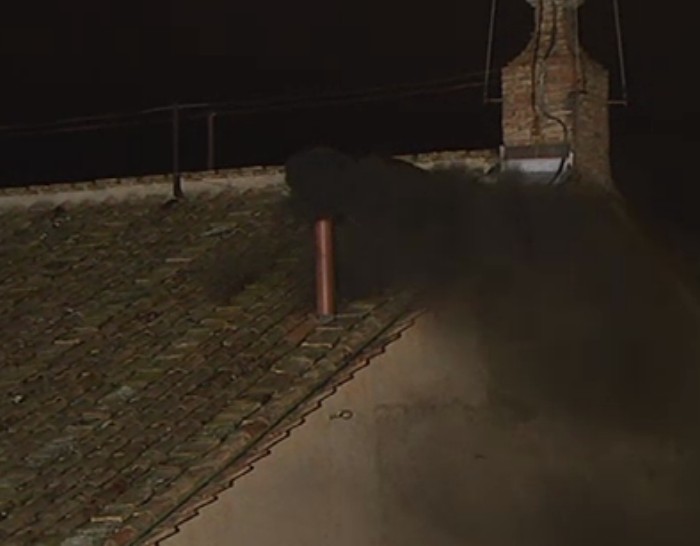
First Ballot : Black Smoke, no Pope had been elected yet

http://www.romereports.com/palio/pope-not-yet-elected-black-smoke-comes-out-of-sistine-chapel-english-9378.html

Image

Black smoke from the chimney of the Sistine Chapel for the first ballot, and the only ballot on the first day of Conclave, Tuesday, 12 March 2013.

The next voting rounds will be on Wednesday, 13 March 2013, composed of morning session (2nd and 3rd ballots), and the afternoon session (4th and 5th ballots).

Homily of the Dean of the College of Cardinals, Cardinal Angelo Sodano, at the Mass for the Election of the Roman Pontiff / Missa pro Eligendo Pontifice

http://www.zenit.org/en/articles/cardinal-angelo-sodano-s-homily-at-the-missa-pro-eligendo-pontifice


Homily of Cardinal Angelo Sodano
Dean of the College of Cardinals
Vatican Basilica – March 12, 2013

Dear Concelebrants, Distinct Authorities, Brothers and Sisters in Christ,

“Forever I will sing the mercies of the Lord” is the hymn that resounds once again near the tomb of the Apostle Peter in this important hour of the history of the Holy Church of Christ.

These are the words of Psalm 88 that have flowed from our lips to adore, give thanks and beg the Father who is in heaven. “Misericordias Domini in aeternum cantabo”: is the beautiful Latin text that has introduced us into contemplation of the One who always watches over his Church with love, sustaining her on her journey down through the ages, and giving her life through his Holy Spirit.

Such an interior attitude is ours today as we wish to offer ourselves with Christ to the Father who is in heaven, to thank him for the loving assistance that he always reserves for the Holy Church, and in particular for the brilliant Pontificate that he granted to us through the life and work of the 265th Successor of Peter, the beloved and venerable Pontiff Benedict XVI, to whom we renew in this moment all of our gratitude.

At the same time today, we implore the Lord, that through the pastoral sollicitude of the Cardinal Fathers, He may soon grant another Good Shepherd to his Holy Church. In this hour, faith in the promise of Christ sustains us in the indefectible character of the church. Indeed Jesus said to Peter: “You are Peter and on this rock I will build my Church, and the gates of hell shall not prevail against her.” (Mt. 16:18).

My brothers, the readings of the World of God that we have just heard can help us better understand the mission that Christ has entrusted to Peter and to his successors.

1. The Message of Love

The first reading has offered us once again a well-known oracle from the second part of the book of Isaiah that is known as “the book of consolation” (Isaiah 40-66). It is a prophecy addressed to the people of Israel who are in exile in Babylon. Through this prophecy, God announces that he will send a Messiah full of mercy, a Messiah who would say: “The spirit of the Lord God is upon me… he has sent me to bring good news to the poor, to bind up the wounds of broken hearts, to proclaim liberty to captives, freedom to prisoners, and to announce a year of mercy of the Lord” (Isaiah 61:1-3).

The fulfillment of such a prophecy is fully realized in Jesus, who came into the world to make present the love of the Father for all people. It is a love which is especially felt in contact with suffering, injustice, poverty and all human frailty, both physical and moral. It is especially found in the well known encyclical of Pope John Paul II, “Dives in Misericordia” where we read: “It is precisely the mode and sphere in which love manifests itself that in biblical language is called “mercy” (n. 3).

This mission of mercy has been entrusted by Christ to the pastors of his Church. It is a mission that is entrustedd by every priest and bishop, but is especially entrusted to the Bishop of Rome, Shepherd of the universal Church. It is infact to Peter that Jesus said: “Simon son of John, do you love me more than these?… Feed my lambs (John 21:15). In his commentary on these words, St. Augustine wrote: “May it be therefore the task of love to feed the flock of the Lord” (In Iohannis Evangelium, 123, 5; PL 35, 1967).

It is indeed this love that urges the Pastors of the Church to undertake their mission of service of the people of every age, from immediate charitable work even to the highest form of service, that of offering to every person the light of the Gospel and the strength of grace. This is what Benedict XVI wrote in his Lenten Message for this year (n.3). “Sometimes we tend, in fact, to reduce the term “charity” to solidarity or simply humanitarian aid. It is important, however, to remember that the greatest work of charity is evangelization, which is the “ministry of the word”. There is no action more beneficial – and therefore more charitable – towards one’s neighbor than to break the bread of the word of God, to share with him the Good News of the Gospel, to introduce him to a relationship with God: evangelization thus becomes the highest and the most integral promotion of the human person. As the Servant of God Pope Paul VI wrote in the Encyclical Populorum Progressio, the proclamation of Christ is the first and principal contributor to development (cf. n. 16).”

2. The message of unity

The second reading is taken from the letter to the Ephesians., written by the Apostle Paul in this very city of Rome during his first imprisonment (62-63 A.D.)

It is a sublime letter in which Paul presents the mystery of Christ and his Church. While the first part is doctrinal (ch.1-3), the second part, from which today’s reading is taken, has a much more pastoral tone (ch. 4-6). In this part Paul teaches the practical consequences of the doctrine that was previously presented and begins with a strong appeal for church unity: “As a prisoner for the Lord, then, I urge you to live a life worthy of the calling you have received. Be completely humble and gentle; be patient, bearing with one another in love. Make every effort to keep the unity of the Spirit through the bond of peace.(Eph 4,1-3).

St. Paul then explains that in the unity of the Church, there is a diversity of gifts, according to the manifold grace of Christ, but this diversity is in function of the building up of the one body of Christ. “So Christ himself gave the apostles, the prophets, the evangelists, the pastors and teachers, to equip his people for works of service, so that the body of Christ may be built up (Eph 4:11-12).

It is for the very unity of His mystical body that Christ then has sent His Holy Spirit and, at the same time, He has established His apostles and among them Peter, who takes the lead, as the visible foundation of the unity of the Church.

In our text, St. Paul teaches that each of us must work to build up the unity of the Church, so that “From him the whole body, joined and held together by every supporting ligament, grows and builds itself up in love, as each part does its work (Eph 4:16). Each of us is therefore called to cooperate with the Successor of Peter, the visible foundation of such an ecclesial unity.

3. The Mission of the Pope

Brothers and sisters in Christ today’s Gospel takes us back to the Last Supper, when the Lord said to his Apostles: “This is my commandment: that you love one another as I have loved you” (John 15:12). The text is linked to the first reading from the Messiah’s actions in the first reading from the prophet Isaiah, reminding us that the fundamental attitude of the Pastors of the Church is love. It is this love that urges us to offer our own lives for our brothers and sisters. Jesus himself tells us: “There is no greater love than to lay down one’s life for one’s friends” (John 15:12).

The basic attitude of every good Shepherd is therefore to lay down one’s life for his sheep (John 10:15). This also applies to the Successor of Peter, Pastor of the Universal Church. As high and universal the pastoral office, so much greater must be the charity of the Shepherd. In the heart of every Successor of Peter, the words spoken one day by the Divine Master to the humble fisherman of Galilee have resounded: “Diligis me plus his? Pasce agnos meos… pasce oves meas”; “Do you love me more than these? Feed my lambs… feed my sheep!” (John 21:15-17)

In the wake of this service of love toward the Church and towards all of humanity, the last popes have been builders of so many good initiatives for people and for the international community, tirelessly promoting justice and peace. Let us pray that the future Pope may continue this unceasing work on the world level.

Moreover, this service of charity is part of the intimate nature of the Church. Pope Benedict XVI reminded us of this fact when he said: “The service of charity is also a constitutive element of the Church’s mission and an indispensable expression of her very being; (Apostolic Letter in the form of a Motu Proprio Intima Ecclesiae natura, November 11, 2012, introduction; cf. Deus caritas est, n. 25).

It is this mission of charity that is proper to the Church, and in a particular way is proper to the Church of Rome, that in the beautiful expression of St. Ignatius of Antioch, is the Church that “presides in charity” “praesidet caritati” (cf. Ad Romanos (preface).; Lumen Gentium, n. 13).

My brothers, let us pray that the Lord will grant us a Pontiff who will embrace this noble mission with a generous heart. We ask this of the Lord, through the intercession of Mary most holy, Queen of the Apostles and of all the Martyrs and Saints, who through the course of history, made this Church of Rome glorious through the ages. Amen.

Tuesday, 12 March 2013 : 4th Week of Lent (Psalm)

Psalm 45 : 2-3, 5-6, 8-9

God is our strength and protection, an ever-present help in affliction. We will not fear, therefore, though the earth be shaken and the mountains plunge into the seas.

There is a river whose streams bring joy to the city of God, the holy place where the Most High dwells. God is within, the city cannot quake, for God’s help is upon it at the break of day.

For with us is the Lord of hosts, the God of Jacob, our refuge. Come, see the works of the Lord – the marvelous things He has done in the world.

Tuesday, 12 March 2013 : 4th Week of Lent (First Reading)

Ezekiel 47 : 1-9, 12

The man brought me back to the entrance of the Temple and I saw water coming out from the threshold of the Temple and flowing eastwards. The Temple faced the east and the water flowed from the south side of the Temple, from the south side of the altar. He then brought me out through the north gate and led me around the outside to the outer gate facing the east and there I saw the stream coming from the south side.

The man had a measuring cord in his hand. As he went towards the east, he measured off a thousand cubits and led me across the water which was up to my ankles. He measured off another thousand cubits and made me cross the water which came to my knees. He measured off another thousand cubits and we crossed the water which was up to my waist. When he had again measured a thousand cubits, I could not cross the torrent for it had swollen to a depth which was impossible to cross without swimming.

The man then said to me, “Son of man, did you see?” He led me on further and then brought me back to the bank of the river. There I saw a number of trees on both sides of the river. He said to me, “This water goes to the east, down to the Arabah, and when it flows into the sea of foul-smelling water, the water will become wholesome. Wherever the river flows, swarms of creatures will live in it; fish will be plentiful and the sea water will become fresh. Wherever it flows, life will abound.”

“Near the river on both banks, there will be all kinds of fruit trees with foliage that will not wither and fruit that will never fail; each month they will bear a fresh crop because the water comes from the Temple. The fruit will be good to eat and the leaves will be used for healing.”

A Timetable of the First Day of Conclave

What will happen today in the first day of the Conclave (Tuesday, 12 March 2013)? All the time noted below are in Rome time (CET, Central European Time, 1 hour ahead of UTC (UTC+1)).

Some event are live from Vatican Player at http://www.vatican.va/video/ and the live recording from Rome Reports : http://www.romereports.com/palio/modules.php?name=Content3&pa=showpage&newlang=english&pid=47#.UT4XGVeJegH


1. (Live) Mass for the Election of the Roman Pontiff / Missa pro Eligendo Pontifice : 10 am. This Mass will officially begin the Conclave and will be offered for prayers for the election of the Pope.

2. Cardinal-electors leave the Domus Sancta Marthae where they stay for the Pauline Chapel : 3.45 pm

3. (Live) Cardinal-electors begin the procession into Sistine Chapel from Pauline Chapel, while singing Veni Creator Spiritus and the Litany of the Saints : 4.30 pm

4. (Live) Oath of secrecy by the Cardinal-electors and the extra omnes order by Monsignor Guido Marini : 4.45 pm, then meditation by Cardinal Prosper Grech of Malta (2nd meditation)

5. Conclave and first ballot : about 5 pm – 7 pm, smoke should appear between 7-8 pm Rome time. If white, means a new Pope has been elected, but this is unlikely to happen. (Smoke and the chimney can be seen live through either Vatican Player or Rome Reports page I mentioned above)

6. Vespers celebrated by the Cardinal-electors : 7.15 pm

7. Cardinal-electors return to Domus Sancta Marthae, their residence during the period of the Conclave : 7.30 pm


These are just rough timing, and as this is the first ballot, the Cardinal-electors may still need time, especially the first-timers, in getting used to the rules and proceedings of the Conclave and thus might be delayed slightly.

Summary of the Tenth and the Last General Congregation of the College of Cardinals, and details on the Conclave

New Cardinals have been elected to lead the Particular Congregations (elected every 3 days) in the Conclave. Cardinal Antonios Naguib for the Cardinal Bishops; Cardinal Marc Ouellet for the Cardinal Priests; Cardinal Francesco Monterisi for the Cardinal Deacons. New leaders will be elected if after three days in the Conclave, the Conclave has not yet ended with the election of a new Pope. Their task is to guide the Cardinal Camerlengo, who is Cardinal Tarcisio Bertone.

28 Cardinals had spoken in the Tenth General Congregation, and a total of 161 Cardinals had already spoken in all the past General Congregations. Not all Cardinals who wanted to speak has spoken, as the number of Cardinals that spoke had made the Cardinals to vote whether to continue or to stop the General Congregation at that point (likely because it has taken too much time).

In the meanwhile, during the Sede Vacante, certain offices that represent the Holy See, particularly diplomatic representation, Nuncios, Delegates, and many other offices of the Holy See continue to function as per normal, even when the Apostolic See is vacant, and the Cardinals waiting to elect a new Pope. The Cardinal Camerlengo, Cardinal Tarcisio Bertone is the leader during the period of the Sede Vacante, having limited powers, with the College of Cardinals, in order to settle all matters, and all things pertaining to election of the new Pope.

This Monday evening at 5.30 pm Rome time / CET / UTC+1, all the personnels, about 90 of them, who are also ‘locked’ together with the Cardinal-electors in the Conclave, including doctors, nurses, bus drivers, and other staffs involved in maintenance of the Cardinals’ residence at Domus Sancta Marthae, will take their solemn oath of secrecy, in the presence of the Camerlengo of the College of Cardinals, Cardinal Tarcisio Bertone, and also in the presence of the Secretary of the College of Cardinals, Archbishop Lorenzo Baldisseri, Master of Pontifical Liturgical Celebrations, Monsignor Guido Marini and other officials.

The swearing of the oath of secrecy by the auxiliary personnel will not be live on Vatican Television (Therefore, may not be viewable in Vatican Player).

The Mass for the Election of the Roman Pontiff or Missa pro Eligendo Pontifice, which will begin the Conclave process, will be celebrated in St. Peter’s Basilica on Tuesday morning at 10 am Rome time / CET / UTC+1, and will be in Latin, but also with translations in Italian and English available in the Vatican official website.

Cardinal Dean of the College of Cardinals, Cardinal Angelo Sodano will be the celebrant of the solemn Mass, the concelebrants will be all the Cardinal-electors and the Cardinal non-electors currently present in Rome. The homily will also be available a short period of time just before the Holy Mass on Tuesday morning (Rome time), likely from the Vatican website.

The Cardinals will enter into the Conclave in the Sistine Chapel from the Pauline Chapel, from Cardinal Prosper Grech, who will deliver the second meditation to the Cardinal-electors, followed by the Cardinals in reverse order of precedence (first by order : bishop, priest, and deacon – reverse this), and then within these order, the Cardinals in order of creation (earlier created then later created, and also within the same consistory, those whose names are earlier in the order of creation have higher precedence – also reverse all this).

The last will be the Master of Pontifical Liturgical Celebrations, Monsignor Guido Marini, and Cardinal Giovanni Batista Re, the senior Cardinal Bishop who is an elector, who will be the leader of the Conclave in absence of Cardinal Sodano, the Dean, who is a non-elector (above 80). The Cardinals will proceed into the Sistine Chapel singing the Litany of the Saints, and the hymn Veni Creator Spiritus. After the oath-taking by the Cardinal-electors, Monsignor Marini will order the traditional “extra omnes”, or “all out!” order to all except the Cardinal-electors.

The entry into the Sistine Chapel will begin on Tuesday afternoon, at 4.30 pm Rome time / CET / UTC+1, and will be broadcasted live.

The first smoke signal from the chimney of the Sistine Chapel will be at sometime around 8 pm Rome time, and will not likely be a white smoke (It is unlikely that the new Pope will be elected in the first ballot, as there will only be one ballot session on Tuesday).

The Vatican camera (available in Vatican Player at http://www.vatican.va/video/) will be fixed on the chimney through this period and available live.

The senior Cardinal Bishop-elector, Cardinal Re, will be the one in place of the Cardinal Dean, who is a non-elector, asking the newly elected Pope whether he accepts the election and also ask him the regnal name that he will assume as the Pope.

A new addition for the 2013 Conclave is that, after the Pope receives the homage from all the Cardinal-electors in the Sistine Chapel, he will proceed with all the Cardinal-electors, to the Pauline Chapel, and the new Pope alone will enter the Chapel to pray before the Blessed Sacrament in the Chapel. In the meanwhile, the Cardinal Protodeacon, Cardinal Jean-Louis Tauran, will announce the traditional Habemus Papam announcement.

It took about one hour in 2005 Conclave from the white smoke appearance until the new Pope made his appearance on the balcony of St. Peter’s Basilica (also known as the Loggia). As the new addition of prayer in the Pauline Chapel is made for the 2013 Conclave, we can expect a time frame of slightly longer than 1 hour between the white smoke, and the appearance of the new Pope on the balcony.

Video : Beginning of 2005 Papal Conclave

For those who are interested in knowing what to expect on Tuesday afternoon, 12 March 2013 when the Conclave officially begins, with the Cardinal-electors marching into the Sistine Chapel, here is a video recording from the 2005 Papal Conclave. Not a very good quality, so I hope they do make a better recording for 2013 Papal conclave.

You can clearly see the Dean of the College of Cardinals at the time in the video, Cardinal Joseph Ratzinger, who was elected Pope in that Conclave, and whom we knew better as our beloved Pope Benedict XVI, now Pope Emeritus.

Tenth General Congregation of the College of Cardinals and the Oath taking of the personnels involved in the Conclave

The tenth and most likely last of the General Congregation meetings of the College of Cardinals will take place on Monday, 11 March 2013 in the usual Hall of the Synod of Bishops in the Vatican City.

As the Cardinal-electors had all been assigned their rooms in the Domus Sancta Marthae, their residence during the Conclave, the Tenth General Congregation is likely therefore as the last opportunity for the Cardinals, both electors and non-electors to raise any remaining issues or clarify the need for certain qualities in the new Pope to be elected, as well as completing any outstanding issues before the Conclave commence on Tuesday, 12 March 2013.

Fr. Federico Lombardi, head of the Holy See Press Office, will conduct his usual press briefing at 1 pm, Rome time, on Monday, most likely to divulge the outcome of the Tenth General Congregation and likely to answer any remaining questions the journalists have on the Conclave.

In the evening, at 5.30 pm Rome time (CET/UTC+1) on Monday, 11 March 2013, live from Rome at Vatican Player (www.vatican.va/video/) can be viewed the oath-taking of all the personnels involved in the Conclave and locked together with the Cardinal-electors.

They will take the same oath as the Cardinal-electors (who will only take the oath when they enter the Conclave the next day, Tuesday), as prescribed by the Motu Proprio Normas Nonnullas released by Pope Benedict XVI to modify the rules of the Conclave as written in the Apostolic Constitution Universi Dominici Gregis.