Sunday, 22 September 2013 : 25th Sunday of Ordinary Time (Gospel Reading)

Liturgical Colour : Green

Luke 16 : 1-13

At another time Jesus told His disciples, “There was a rich man, whose steward was reported to him for fraudulent service. He summoned the steward  and asked him, ‘What is this I hear about you? I want you to render an account of your service, for it is about to be terminated.'”

“The steward thought to himself, ‘What am I to do now? My master will surely dismiss me. I am not strong enough to do hard work, and I am ashamed to beg. I know what I will do : I must make sure that when I am dismissed, there will be people who will welcome me into their homes.'”

“So he called his master’s debtors, one by one. He asked the first debtor, ‘How much do you owe my master?’ The reply was, ‘A hundred jars of oil.’ The steward said, ‘Here is your bill. Sit down quickly and write fifty.’ To the second debtor he put the same question, ‘How much do you owe?’ The answer was, ‘A hundred measures of wheat.’ Then the steward said, ‘Take your bill and write eighty.'”

“The master commended the dishonest steward for his astuteness : for the people of this world are more astute, in dealing with their own kind, than are the people of light. And so I tell you : use filthy money to make friends for yourselves, so that, when it fails, these people may welcome you into the eternal homes.”

“Whoever can be trusted in little things can also be trusted in great ones; whoever is dishonest in slight matters will also be dishonest in greater ones. So if you have been dishonest in handling filthy money, who would entrust you with true wealth? And if you have been dishonest with things that are not really yours, who will give you that wealth which is truly your own?”

“No servant can serve two masters. Either he does not like the one and is fond of the other, or he regards one highly and the other with contempt. You cannot give yourself both to God and to money.”


Alternative Reading (shorter version)

Luke 16 : 10-13

“Whoever can be trusted in little things can also be trusted in great ones; whoever is dishonest in slight matters will also be dishonest in greater ones. So if you have been dishonest in handling filthy money, who would entrust you with true wealth? And if you have been dishonest with things that are not really yours, who will give you that wealth which is truly your own?”

“No servant can serve two masters. Either he does not like the one and is fond of the other, or he regards one highly and the other with contempt. You cannot give yourself both to God and to money.”

Thursday, 1 August 2013 : 17th Week of Ordinary Time, Memorial of St. Alphonsus Liguori, Bishop and Doctor of the Church (Gospel Reading)

Matthew 13 : 47-53

“Again, the kingdom of heaven is like a big fishing net let down into the sea, in which every kind of fish has been caught. When the net is full, it is dragged ashore. Then they sit down and gather the good fish in buckets, but throw the worthless ones away. That is how it will be at the end of time; the angels will go out to separate the wicked from the just, and to throw the wicked into the blazing furnace, where they will weep and gnash their teeth.”

Jesus asked, “Have you understood all these things?” “Yes,” they answered. So He said to them, “You will see that every teacher of the Law, who becomes a disciple of the kingdom of heaven is like a householder, who can produce from his store things both new and old.”

When Jesus had finished these parables, He left that place.

Friday, 5 July 2013 : 13th Week of Ordinary Time, Memorial of St. Anthony Zaccaria, Priest (Scripture Reflection)

Brothers and sisters in Christ, today we reflect on the calling of Matthew, who was a tax collector, and according to the Pharisees, a sinner. He was called from his custom-house and followed Christ, eventually to become one of the Twelve Apostles and one of the Four Evangelists, who wrote the Gospel of Matthew, which passage we are reading today.

Why did the Pharisees consider the tax collectors as sinners? We should understand the history and condition of the region at the time, of the region called Palestine today, and Judea at that time. At the time of Jesus, Judea was still a semi-independent kingdom, led by a king, Herod Antipas at that time, the son of Herod the Great, who tried to kill Jesus as a baby. But despite the semblance of independence generated by the presence of a ‘king of the Jews’ in Herod, the Romans, which had become an Empire by that time, had the overall command and control as the master of the people of Judea.

The Romans established an efficient taxation system throughout their Empire, and that made up the main source of their annual income, and Judea is no exception to the rule. The people of Judea, including the Jews, had to pay their taxes to the Roman authorities, and this was greatly despised by the Jews, particularly the Pharisees and the teachers of the Law. Not just because it showed a subordination to the greater Roman authority, but it seemed that it also contradicted the fact that one should obey and give honour to the Lord alone.

The Roman coins used in the tax payment itself could be considered blasphemous by the Jews at the time, because every single coins were engraved with the facial image of the Emperor, and therefore could be considered as tantamount to idolatry, worship of the Emperor, as what was indeed happening in Rome at that time, as Emperors increasingly became more autocratic, they also attributed more divinity towards themselves, and would in time be established as the cult of the Emperors, where the Roman Emperors were worshipped as divine, living in the flesh.

All these sparked the notion that paying taxes to the Romans was a detestable idea at best, and the people did not like it for certain, for other than the religious reasons, taxes also burdened them financially, and that was why, out of all people, the tax collectors were always considered to be at the bottom of the society and were considered, particularly by the ‘pious’ Pharisees, to be morally corrupt and unworthy as well as incapable of redemption.

The tax collectors were treated and condemned as sinners, even though they might actually be good people. Remember that tax collectors often had no choice to be one, because they themselves had to earn a living, and it was indeed not an easy job to be done, as I had mentioned, being tax collectors meant that one had to endure the hatred and displeasure of the general population, the priesthood, and many other people, and endure the label of evil placed unfairly onto them.

The Jewish people themselves were very nationalistic in nature, and were very proud of their descent from Abraham, their forefather both in blood and faith. They kept mostly to themselves and married one another, in order to prevent themselves from being tainted by the pagans around them. This had happened since the time of Abraham himself, as you would have noted in our first reading today, who asked Eliezer his servant to find a wife for his son, Isaac, from among his own people, his own family, and not among the women of Canaan.

This had further made the contempt given to the tax collectors and other Roman collaborators even greater. They were barely tolerated in the society, cursed and rejected by many. They may be able to survive financially, but in terms of their lives, it was truly miserable. This was the condition that formed the backdrop of the situation as it was when Jesus called Matthew to be His disciple, and when He ate with him and his fellow tax-collectors in his house with the Pharisees.

Jesus then highlighted His mission in this world to His disciples, the Pharisees, and the tax collectors, that is to heal the world and those afflicted in this world, those who are condemned to damnation in hell, those who are suffering, those who are immersed deeply in the darkness of sin. That is because these are the ones who really need help and assistance in order to ensure that they will not fall into hell. God loves all, everyone, especially the greatest of sinners, who are in greatest need for God’s mercy and love.

That is because those of us who had been saved, and had been following the commandments of the Lord will remain safe, as long as we keep the Lord’s commandments and stay in His grace. As long as we remain faithful to the Lord, no harm can come our way. That is why it is those who are ‘sick’ from sin and evil would need much more assistance and help than we do. But we should not let Christ do that alone, but we ourselves, as the children of God, can also play our part in ensuring the salvation of all, especially those whose sins are the greatest.

The Pharisees themselves, who considered themselves most pious and blessed of all the children of God because of their strict adherence to the Law of Moses, were in fact in great need of salvation themselves. They had indeed observed ‘sacrifices’ so much that they had forgotten ‘mercy’, and forgotten love. God desires not sacrifices from man, but their love, both towards Him and towards His other children, our brothers and sisters.

The Pharisees did not love and do the true will of God, and instead became too focused on their own strict laws made by men, and even condemned those so-called sinners such as prostitutes and tax collectors as morally bankrupt and evil, while in fact, it is they themselves who were deep in the darkness, and worse still, blind to their own inadequacies and iniquities.

Today, brothers and sisters, we also commemorate the feast day of St. Anthony Zaccaria, a priest who lived in the late Renaissance era Italy. He was a priest who placed a great emphasis on the love of God and the teachings of the Church as espoused by St. Paul and the Apostles. He put the emphasis on acts of love and mercy, in addition to devotions and prayers, that made the faithful become even more devout and strong in their faith.

St. Anthony Zaccaria showed to the people of his time that to love God, is to both worship Him in prayer and supplication, in the offering of the ‘sacrifice’ of our hearts, the true sacrifice that our Lord wants from us, and also to make our love evident through our own deeds and actions, so that the love that is in us will not be an empty love, but a vibrant love in both word and action.

Therefore, following the zeal and example of St. Anthony Zaccaria, let us be loving person, loving children of God our Father, who is Love. May all of us truly show our love for Him through our complete dedication to Him, and also our loving service to our neighbours, particularly those in greatest need of help.

May the Lord be with us and remain with us, blessing us with His love and mercy at all times. St. Anthony Zaccaria, pray for us. Amen.

Wednesday, 22 May 2013 : 7th Week of Ordinary Time, Memorial of St. Rita of Cascia, Religious (Scripture Reflection)

Dear brothers and sisters in Christ, today we heard in the Gospel reading that we should not hamper the works of those, while not belonging to our group, but they work in the Holy Name of the Lord. Jesus Himself said that it is impossible for those who do not belong to Him and use His authority to be able to perform such miracles as what they had performed.

And in addition to that, I am sure that we had heard some people thinking that this means that, we do not need to belong to the Church to do the work of God, is it not? We can then just be ourselves, so long as we believe in God or some kind of greater being up there, and doing what is good in our lives, then we all can be saved, is it not? Why then bother to join the Church and be troubled by the numerous rules and regulations as laid down by the teachings of the Church?

That is because, while mankind indeed has the capacity to do good, because mankind indeed was created by God who is good, but this kind of goodness that is in them is imperfect. Without the presence of God, goodness remains just superficial, and although they may seem to be real goodness, but they lack the necessary ingredient to make them perfect, and this crucial component is none other than God.

There are those who also quote someone who said that Jesus redemption is for everyone, even for atheists. Who are atheists, my brothers and sisters? Atheists are different from agnostics in that while agnostics believe in the presence of certain superior, ‘supernatural’ being, but atheists reject the notion of this supreme being and God in its entirety.

There had been many atheistic movements rising in our societies in the past decades and centuries, like humanism, and scientific atheism. Many too are their champions, with the most prominent ones being Christopher Hitchens and Richard Dawkins, who adopted a very aggressive approach in relation to religion. Particularly Dawkins who had been very confrontational in the matter of religion and he even launched a suit to bring the Pope to trial!

Of course, atheists, agnostics, and all the people who do not yet belong to the Church are all belonging to mankind too, brethren, and they are our brothers and sisters too. Even among our own family members, our friends, our relatives and acquaintances, I am sure we will meet many of them, each with beliefs of their own.

And indeed, Jesus may indeed die on the cross in Calvary, for the sake of all mankind, including even those who had persecuted Him and His disciples, and even the chief priests and the Jewish people who had condemned Him to death and cried out for His blood. He forgave them on the cross, especially asking the Father to forgiveness because in their ignorance, the people did not know what they had done, that is killing the Messiah of the Most High God, and the Son of God Himself.

Christ forgave them, and therefore also offered His redemptive death on the cross to all of them, to those who love Him, and also to those who hated Him. Christ certainly did not choose or prefer one over the other, and offered His salvation to everyone. Remember, brethren, that all of us, His children, are equal before Him, and our ranks, our degrees matter no more before Him. But there must be a clear distinction made between redemption and salvation, and this is indeed ought to be misinterpreted by many of the people, especially those not in the Church, but even by many in the Church, especially indeed because the Pope himself had made the utterance.

Misunderstanding the teachings of the Church can be fatal, brethren, because, the Church had been the continuous font of light of Christ, since it was established by Jesus Christ Himself upon Peter, His apostle, and which grew amidst tribulations and happy times, to become the Church as we know it today. The teachings of the Church are not there just to be trifled with, and neither are the teachings to be ignored, since it has been passed down to us, by the Apostles and the early Fathers of the Church themselves, to guide us in the path of salvation.

What then, is the difference between redemption and salvation? Both of them may mean the same thing in the English language, and terms are indeed very confusing at times, but in order to make it clear, let me elaborate that, while Christ offers salvation to all mankind through His death on the cross, by the outpouring of His Most Precious Blood, the blood of the Paschal Lamb of God, but few would eventually receive Him and accept Him and the salvation that He has offered in its fullness. Fewer still, even among those who had accepted Him, would truly do His will and do what is good in His eyes. Of course not to forget, as I mentioned earlier, those who do good in their life, but do not receive Christ and did not take up the offer of salvation that Christ had freely offered to everyone.

When Christ died on the cross, His death and His blood redeems all mankind from their sins, their original sins. This is what redemption is about. Original sins are the sins that remain with us and become a taint in our soul, ever since our ancestors, the first mankind, Adam and Eve, disobeyed the Lord’s commands by falling into the devil’s temptation, and ate the fruit of the tree of knowledge of good and evil.

Therefore, when Christ died, He who came as the new Adam, to make a new covenant between God and mankind, which first had been made at creation, but broken by the rebellion of the first mankind, a new covenant was made, and Christ became the source of redemption to all mankind, all who are descended from Adam and his wife, Eve, erasing from them the taint of sin, and releasing them from the slavery of Satan.

But this is where it is important to distinguish between salvation and redemption, my brothers and sisters in Christ. Why do I keep referring to all of you as my brothers and sisters, my brethren, in Christ? In Christ because, through our baptism we have become the children of God, and we have therefore become one body, united by Christ, and this one body is our Church. Brethren, salvation is different from just redemption because, salvation requires that necessary step, that is baptism, and entry into the Church of God, which can only be done through baptism.

Why is baptism so important? Because, at baptism, we place ourselves humbly before God, and ask Him for forgiveness, and at the same time, mark ourselves with the eternal mark of baptism, which sealed us in the Name of the Father, the Son, and the Holy Spirit, essentially sealing us as a children of God in the Holy Trinity.

Therefore, brethren in Christ, if anyone who does not belong to the Church and the faith asks you, if we can just be good people and do good in this world, in the absence of God, why then do we even need to bother with joining the Church at all? Why then do we need to be Catholics and follow the teachings of the Church if we can just be good person, be a good man, and doing good to our brethren?

No, brothers and sisters in Christ, that is the first word you should tell them, and that while goodness is indeed possible for those not within the Church, as indeed Adam and Eve had eaten from the tree of knowledge of good and evil is it not? Therefore, they would have been able to identify what is evil from what is good, and capable therefore of doing good, just as they were able of doing what is evil. The same therefore also applies to us living in this world today.

Thus, goodness and doing good alone is not enough. That is why, while our salvation comes not from faith alone, as some would have it, but neither is our salvation from good works and service alone. Anyone can be good and does good service to the poor, to all mankind, if they wish to, but that does not give them salvation, because, although Christ redeemed them through His death on the cross, they did not accept the salvation He offered, by having faith in Him.

Neither can then, that we just have faith in Christ without doing anything good at all. Many Christians in fact are ‘do-nothing’ Christians, Sunday Christians, and passive Christians, because they do not make use of the gifts of the Holy Spirit that had been granted them. Our faith must be made alive through action, and through service that is grounded in love. Without love, we are dead, and if we do not make use of the love that is in us, and keep it to ourselves, we will also perish.

Thus, brothers and sisters in Christ, we need to step up evangelisation, to ensure that the many good people in the world out there, who does good things and service for the sake of their fellow mankind, can gain true salvation by accepting Christ as their Lord, their God, and their Saviour, through baptism, when they, like all of us once, will be sealed with the Lord’s seal of the Holy Trinity’s Name.

And of course not to forget those Christians who had grown complacent and cool in their faith, that through our action, we can reawaken the flames of the Holy Spirit once again in them, and allowing them to truly make use of the gifts they have in them, and do good things for the sake of God, and for their fellow men.

Finally, today, brothers and sisters in Christ, we also commemorate the feast of St. Rita of Cascia, a religious sister who was made a saint out of her great piety and endurance for the faith, despite being abused and hurt by her former husband before she joined the religious profession. Her life was truly exemplary to all of us, through her loving actions in ensuring that her family remained in the love of God, and her teaching of the value of forgiveness and kindness to her son. Through her actions, she made great peace between the feuding families of her hometown, which had resulted in her husband’s assassination.

St. Rita of Cascia is therefore, brethren, a perfect example of what we need to learn today, that we need both faith and good works in order to gain greatness, glory of God, and salvation. St. Rita of Cascia’s strong and inviolable faith in the Lord enabled her to endure her suffering and anchored her against the hatred and corruption of the world, and as a result, transformed those around her, and this, coupled with her numerous good works, are great examples of faith lived through action, of faith made alive and vibrant through good deeds, and not mere words and devotions.

Dear brothers and sisters in Christ, therefore, today, let us reflect on ourselves, whether we have already done what the Lord wants us to do, that is to fully accept Him as our Lord and God, and to accept His teachings that are reflected in the teachings of the Church, that is our faith, and whether we have already implemented this faith in the reality of the world, through service and good deeds to others. And not to forget also, that we need to accomplish the mission God has placed on us, that is to make disciples of all nations, and seal them with baptism in the Name of the Most Holy Trinity.

Remember, redemption through the sacrifice of Christ on the cross is not enough for salvation, for in that redemption, Christ freely offered Himself to us, and if we do not accept Him, we can have no part in Him, and we will be condemned, even if we have done good things in our life, because we often do it not for God, but for ourselves, for our own pride and glory. And be careful not to misinterpret the Scripture, and hence, learn the Scripture through credible and authoritative source, that is the Church. That man who performed miracles in the Name of Christ, did those miracles because he has faith in Christ, and therefore belonging to Christ, in the same way as baptism marks us as children of God, and the saved ones, so long as we also do good in the practice of our faith.

Hence, brothers and sisters in Christ, pray, and pray hard that more and more people will come and see the light of Christ, especially through our own actions, that reflect Christ, that more people who are good, and who do good things, but have yet to believe and accept Christ, can truly be saved, through the waters of baptism. God bless us all. Amen.

The True Beauty of the Liturgy of the Mass

Image

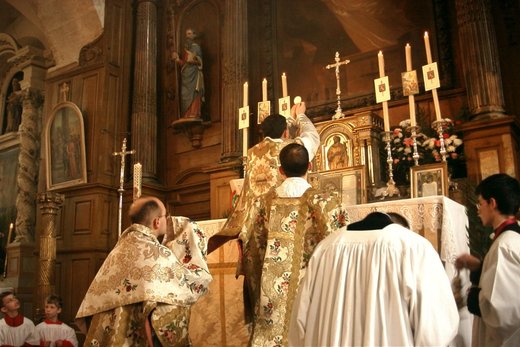
tridentine_mass_elevation_2

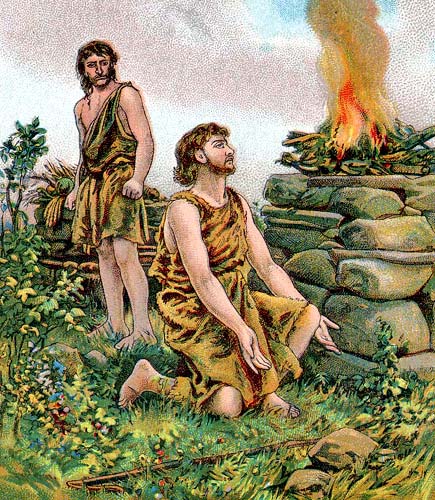
Would you rather give a half-hearted offering like that of Cain, offering what the Lord had not desired, or would you rather give it all to God like Abel, who offered the best to the Lord?

Image

Image

Would you rather be like Judas Iscariot, who scolded Mary for wasting money on perfume used to anoint the feet of Christ before His death? especially that was out of false concern of the poor given that he desired the money for himself? or would you be rather be Mary indeed, who anointed the feet of Christ for His burial, even with the expensive nard-flower perfume and therefore like Abel, gave her best offering to the Lord?

Image

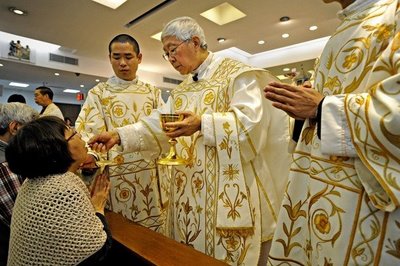
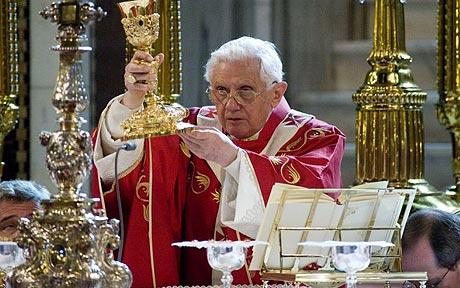
Such is therefore, what we should think of, when we think about the Mass and the liturgy that surrounds it. Many would be in danger of misunderstanding the entire purpose of having such liturgies and rites of worship, and dismissing them as backward, elitist, showy, and wasteful in nature – No, indeed, in fact, all these are for the glory of God alone, and we wouldn’t give half-hearted gifts and attempts to our Lord. Our worship in the Mass is to the Lord alone, and the glory that is in the Mass, is for the glory of God.

Image

Image

Image

So why elaborate vestments, with colourful and vivid images, even with golden thread or velvet? Why elaborate and jewelled mitres? Why elaborate church buildings, the Altar decoration and everything else? That is because all these are for the glory of God, and for God alone, and not for the glory of men. And in this too, as I had often mentioned, many would be able to learn more about the faith, and at the same time, bring worship closer to what it should be, that is, to be a heaven on earth, especially with the angels and the saints, we worship God together.

1451110-High_Altar_Antwerp

Image

Men are visual creatures, and we base ourselves and our perceptions closely with our visions and what we see in our surroundings. One very strong argument why so many people had left the faith and became lost in the past decades was because the disappearance of beauty in our worship, not the beauty of excessive displays of course, but the true beauty of worship in that every part of the Mass and its liturgy has its own particular importance and meaning, even all the gestures made in the Mass.

MainAltar01

Being visual creatures, men no longer see God as the divine He is, because especially like Science, which place accountability, reproducibility, etc. at the most important, especially visual proofs, men no longer see God because our worship had become so diluted, so abused by decades of excessive trials and innovations which ended up diluting this image of ‘heaven on earth’ in the Mass. The Mass becomes less a desire for all to come to other than just a ‘chore’ for many to come, and Sunday obligation becomes what it is, an obligation, rather than true desire to come and worship the Lord.

jesus_holding_earth_world

Therefore, it is important that in the coming future, our Church, while projecting itself ever more, as it had always done, in helping the needy and the unloved around the world, expanding its charitable acts which is already the world’s largest by significant margins, ever more, but most importantly also, at the same time, strengthening the anchor of faith, through the energetic and constant explanation of the faith and the Sacred Tradition, particularly on the Mass and its liturgy, especially to the youths and the newly baptised, that they will truly grasp what being a Catholic is about.

That being a Catholic entail not just being good person, helpful person, and caring person, but also someone who truly knows entirely what they are doing at Mass, at their worship of the Lord every Sunday, and who truly come for the Mass because they desire to seek the Lord, and understanding the beauty of the liturgy of the Mass, they become ever closer to God, and through this, be ever more blessed and loving, that they can bring forth this love in their service of others. Ora et Labora, a balance indeed required between prayer and worship, and the service facet of our faith.

throne5

In this manner, we must always remember this verse, which is also a very nice Psalm passage I had discovered, that in all things, we glorify God alone, particularly in the Mass, through all its beauty :

Non nobis, Domine, sed Nomini tuo da gloriam!
Not to us, o Lord, but to Your Name we give glory!

+Peter Canisius Michael David C. Kang
Ut Omnes Unum Sint, ad Maiorem Dei Gloriam
21 April 2013, Good Shepherd Sunday

My personal thoughts on the election of Pope Francis I and the current state of the Church

I can only hope that Msgr. Guido Marini, the Master of Pontifical Liturgical Celebrations (Papal MC) can indeed stay where he is, as many uttered their concern whether he will still stay as papal MC given the apparent change in this new Pope.

As this is just the first day, I do not know much yet about the direction that our new Pope, Francis I, will bring us all, but I hope that he will not overemphasize inculturation and liberation for the sake of evangelisation, as what was once done under Archbishop Marini, the previous papal MC, but rather focus and renew the spirit of the liturgy as was done by Pope Emeritus Benedict XVI when he was Pope, with the help of Monsignor Marini as the chief liturgical reformer.

There is a need to balance between tradition and innovation, and not to tilt too far to the other side. Already these past few years we had seen a great rebound in the number of seminarians joining the seminary, and also the growing accustomisation among many people all over the world of the use of Latin in the Mass, despite of course emphasis remaining on the vernacular language.

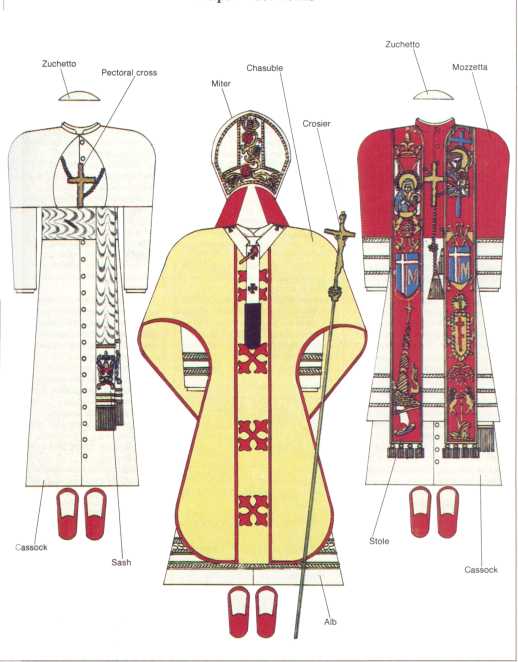
Already, many apparently made comments (as I do) on his choice of not wearing the mozzetta and the stole upon making his first appearance, despite the proper winter papal mozzetta had been prepared for the new Pope. These are little things, but I hope this won’t be a precedent, which if not carefully handled, may undo many of the great things and reforms of the reform of Vatican II that had been painstakingly done in the past few years, and have begun to bear fruit in the Church today.

Balance is important. Already we have seen in many cases after Vatican II, churches and groups going too far towards innovation and liberal thoughts that ended up losing their very Catholic identity. What we need is to preserve our tradition, and yet remain open for innovations that can help new evangelisation, and evangelisation must also be carried in the spirit of the preservation of Apostolic teachings and traditions, and not conform to what the world think, that is relativism.

Social media like twitter, Facebook, blogs, and many others are these great innovations that can help spread the teachings of the Church, and yet let us not be like many Catholics, particularly in the USA, which had been commented as being ‘market Catholics’ where they pick and choose what they want to believe in, as long as it suits them, and reject those that they feel don’t fit with them. No, to be a Catholic means accepting the whole teaching as a whole, and not taking just those parts that you like, and discard the rest.

I need to add that going into extremes into the other direction is also abhorred, as what was made obvious by the SSPX Society, which continued to linger in their ultra-conservatism, and refused to take in several important modifications made by Vatican II.

Just some examples : We no longer blame Jews for the death of Christ, and instead they are our elder brothers in faith, having been chosen and called by God first among all nations.

Then, although indeed I firmly believe in salvation only through the One Church of Christ, but I also believe in the Universal Call to Holiness (by Blessed Pope John Paul II), and there are righteous people outside the Church, who do God’s will, but lacking only the necessary faith in Christ, but that doesn’t mean that they are immediately condemned to hell for that. It is our task to bring the Good News and salvation to them, which can be done through new evangelisation, rooted firmly in tradition and prayer.

However, one wish that I want to make is that, I hope Pope Francis I can thoroughly reform the Roman Curia, to purge from it all ties to corruptions and evil, and to purify our Holy Church that it will once again be immaculate and pure as it should always be, as the One, and only Church God had established in this world, through Peter the Apostle.

And I am touched by his selection of name, Francis, which honoured both St. Francis of Assisi, whom I held in high regard, and St. Francis Xavier, the great missionary and co-founder of the Jesuits (with St. Ignatius Loyola) whom Pope Francis I is a member of. St. Francis Xavier is close to my heart as he is also the patron saint of my early education, and which helped me to learn about the faith, and eventually welcomed into the Church.

I am also deeply touched by his humility, especially when he asked that the people pray for him, and even bowed down to show his humility, which does remind me to another Pope, John Paul I, whose motto is Humilitas, but as history went, he did not have the time to accomplish much. Therefore I hope, the legacy of Pope John Paul I can be continued in Pope Francis I, who had the same quality and personality as Pope John Paul I.

However, humility and simplicity must not lead to the simplification of our faith, but rather let these be tools to further deepen our ties to our faith, and understand more about it.

I noted that Pope Francis I is deeply devoted to the Virgin Mary, whose name is part of his personal name, Jorge Maria Bergoglio. He will be another Marian Pope in the likelihood of Blessed Pope John Paul II. It is important for us to have a strong devotion to the Virgin Mary, as she is the best helper that we can have, in guiding our way towards the Lord, and ensuring that we do not go astray from our path.

May God bless our new Pope Francis I, and at this important juncture at the beginning of the new Pontificate, I hope that the Holy Spirit that has elected him to carry this task, will also guide him, that he will make correct choices that will continue the good works that began with Blessed Pope John Paul II, and was accelerated by Pope Benedict XVI, now Pope Emeritus.