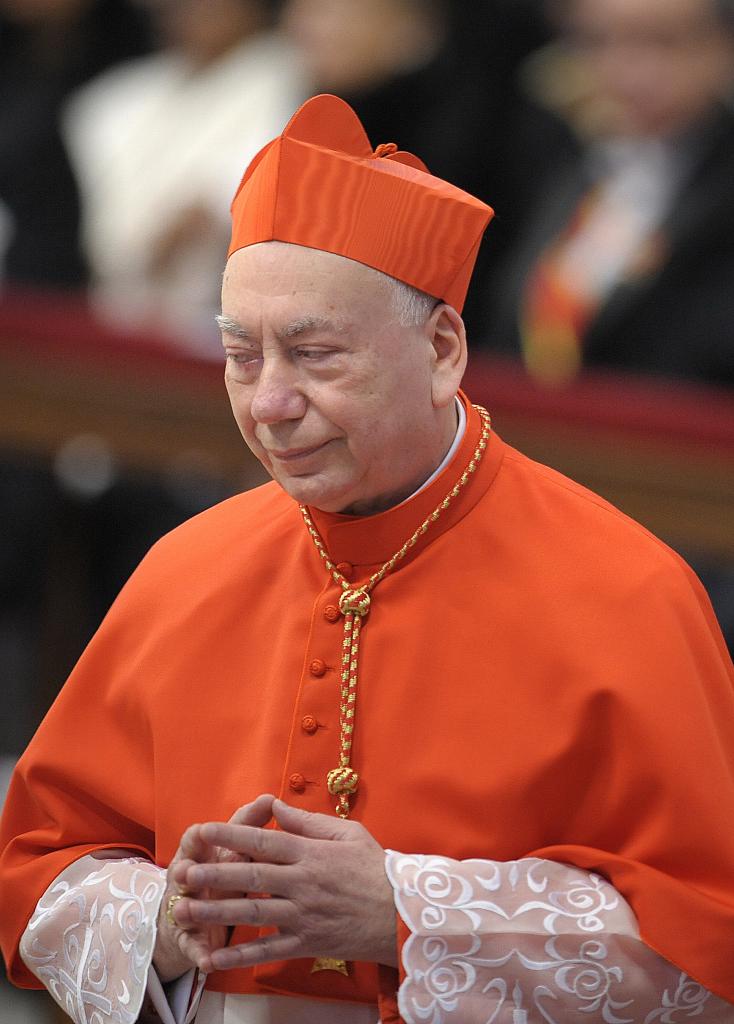
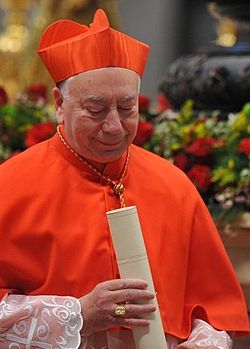
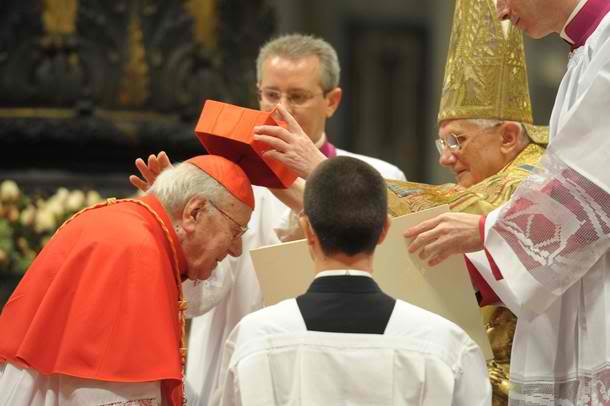
(College of Cardinals Update) Cardinal Francesco Coccopalmerio (Italy), President of the Pontifical Council for Legislative Texts turned 80 and becomes ineligible to participate in a future Papal Conclave

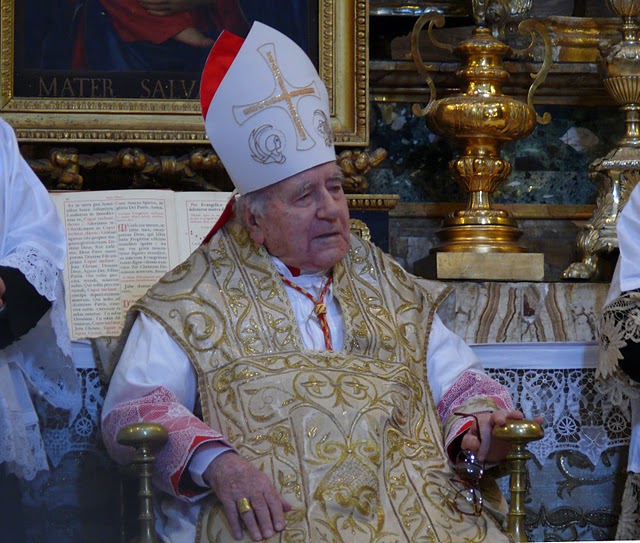
Cardinal Francesco Coccopalmerio, Cardinal Deacon of San Giuseppe dei Falegnami, President of the Pontifical Council for Legislative Texts has turned 80 on Tuesday, 6 March 2018. Therefore, in accordance to the Apostolic Constitution Universi Dominici Gregis, he can no longer vote in a future Papal Conclave.

Cardinal Francesco Coccopalmerio was the Auxiliary Bishop of Milan from 1993 to 2007. In 2007, he was appointed as the President of the Pontifical Council for Legislative Texts, a position he held until the present day.

He was made a Prince of the Church, as the Cardinal Deacon of San Giuseppe dei Falegnami at the Consistory of 18 February 2012 by Pope Benedict XVI, the Vicar of Christ.

We pray for Cardinal Francesco Coccopalmerio, that even in his retirement years, he may continue to inspire the faithful and the Church, and keep strongly the teachings of the Church. May he have a good health and be blessed all the days of his life. Ad multos annos!

Currently, there are 117 Cardinal-electors in the College of Cardinals, which means that there are 3 vacancies for Cardinal-electors available at the moment. The next Cardinal to age out will be Cardinal Manuel Monteiro de Castro, Major Penitentiary Emeritus of the Apostolic Penitentiary (Italy) on 29 March 2018.

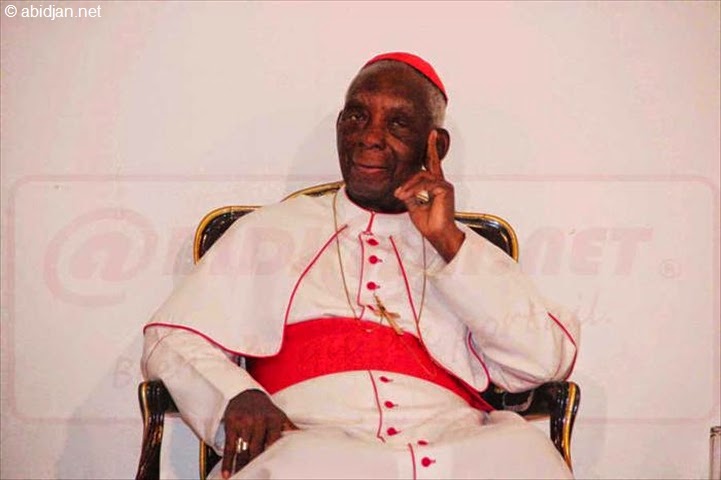
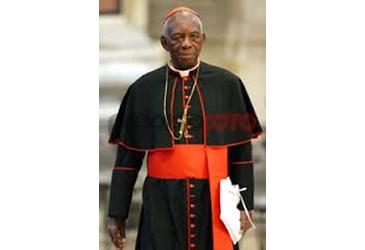
Passing of Cardinal Bernard Agre, Metropolitan Archbishop Emeritus of Abidjan (Cote d’Ivoire/Ivory Coast) at the age of 88

Cardinal Agre

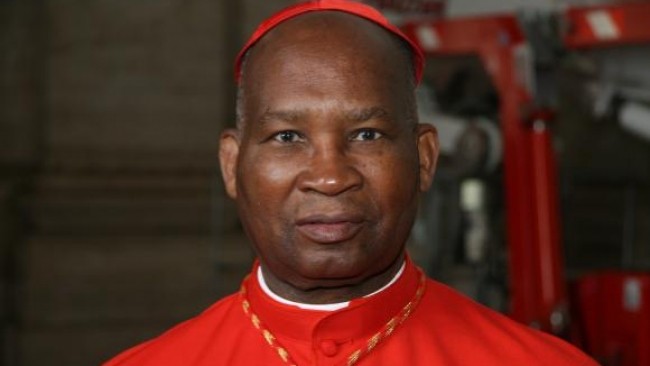
Cardinal Bernard Agre, Cardinal-Priest of S. Giovanni Crisostomo a Monte Sacro Alto has passed away on Monday, 9 June 2014 at the age of 88. He was the Metropolitan Archbishop of Abidjan, the principal diocese of Ivory Coast or Cote d’Ivoire, from 1994 and 2006. Prior to this he was the long time Bishop of Man from 1968 to 1992 and as Bishop of Yamoussoukro from 1992 to 1994, in Cote d’Ivoire.

http://www.gcatholic.org/hierarchy/data/cardJP2-8.htm#2

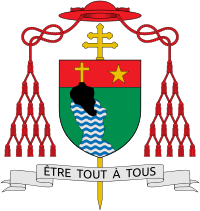
200px-Coat_of_arms_of_Bernard_Agré.svg

Cardinal Agre was created Cardinal in 2001 by Pope St. John Paul II in his eighth Cardinal creation consistory on 21 February 2001. His motto was Etre Tout a Tous, which means “Be all things to all”. This means an emphasis on service and Christian servant leadership, to give one’s best to all others who are in need.

1524462_LancioGrande

We pray for Cardinal Agre, that he will rest in peace, and God will reward him for all his hard and great work as the long time servant of God as the shepherd of the faithful in Abidjan and Cote d’Ivoire, as well as for all the ministries and good works he had done for the sake of God and His people in the entire Universal Church. May the Lord welcome him into His embrace in heaven and give him eternal rest and happiness that he deserved.

With the passing of Cardinal Agre, the College of Cardinals now stands at 213 members, with 118 Cardinal-electors and 95 Cardinal non-electors. The number of Cardinal-electors now is 2 below the specified maximum limit of 120.

There are now 2 Cardinal-elector vacancy in the College of Cardinals, 0 vacant Cardinal Suburbicarian Sees (for Cardinal Bishops), 3 vacant Cardinal Title (for Cardinal Priests) and 7 vacant Cardinal Deaconries (for Cardinal Deacons).

Passing of Cardinal Duraisamy Simon Lourdusamy, Metropolitan Archbishop Emeritus of Bangalore (India) and Protodeacon Emeritus of the College of Cardinals at the age of 90

Caridnal_Lourdusamy

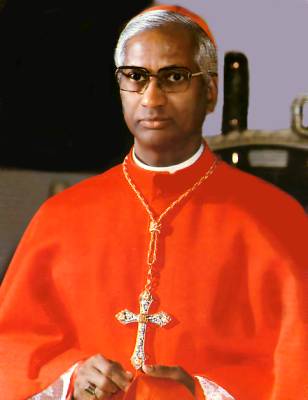
Cardinal Duraisamy Simon Lourdusamy, Cardinal-Priest of S. Maria delle Grazie alle Fornaci fuori Porta Cavalleggeri has passed away on last Monday, 2 June 2014 at the age of 90. He was the Metropolitan Archbishop of Bangalore, one of the large Archdioceses in India, from 1968 to 1971, and then was for a very long time, the member of the Roman Curia, as the Secretary of the Congregation for the Propagation of the Faith from 1973 to 1985, and then as Prefect for the Congregation for Oriental Churches from 1985 to 1991, and eventually as the Protodeacon of the College of Cardinals from 1993 to 1996.

http://www.gcatholic.org/hierarchy/data/cardJP2-3.htm#88%5B/embed%5D

coa_duraisamy_simon_lourdusamy-svg

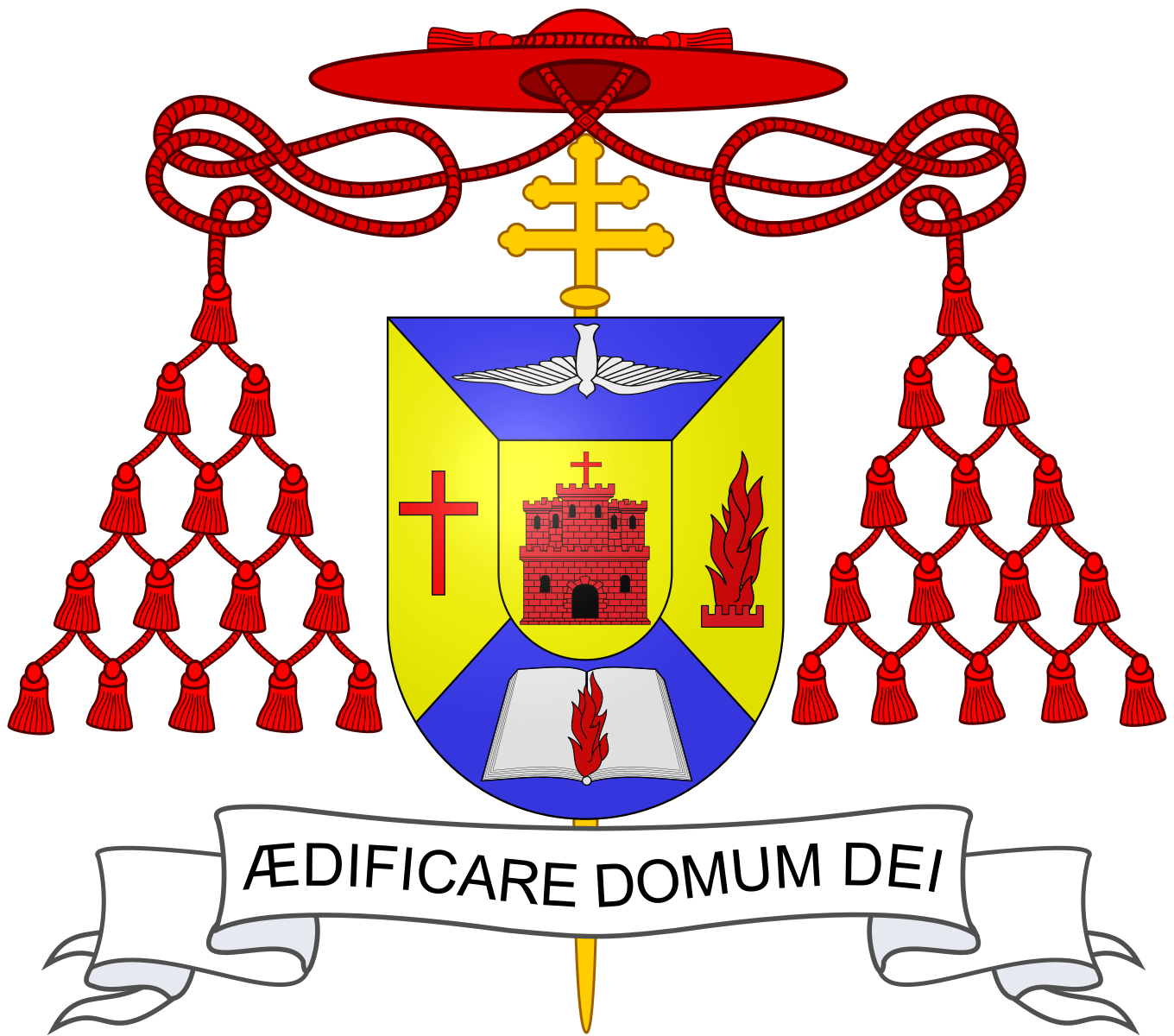
Cardinal Lourdusamy was created Cardinal in 1985 by Pope St. John Paul II in his third Cardinal creation consistory on 25 May 1985. His motto was Aedificare Domum Dei, which means “To build the house of God”. This means an emphasis on the evangelisation to the people of God, to establish His Church, which is growing rapidly in India, as millions grow to know about the Lord and wanting to join the faith in Jesus.

images

We pray for Cardinal Lourdusamy, that he will rest in peace, and God will reward him for all his hard and great work as the long time servant of God as the shepherd of the faithful in Bangalore, as well as for all the ministries and good works he had done in Rome for the sake of God and His people in the entire Universal Church. May the Lord welcome him into His embrace in heaven and give him eternal rest and happiness that he deserved.

With the passing of Cardinal Lourdusamy, the College of Cardinals now stands at 214 members, with 118 Cardinal-electors and 96 Cardinal non-electors. The number of Cardinal-electors now is two below the specified maximum limit.

There are now 2 Cardinal-elector vacancy in the College of Cardinals, 0 vacant Cardinal Suburbicarian Sees (for Cardinal Bishops), 2 vacant Cardinal Title (for Cardinal Priests) and 7 vacant Cardinal Deaconries (for Cardinal Deacons).

Passing of Cardinal Domenico Bartolucci of Italy, at the age of 96

Bartolucci

Cardinal Domenico Bartolucci, Cardinal Deacon of SS. Nomi di Gesu e Maria in Via Lata has passed away on Monday, 11 November 2013 at the age of 96. He was the Director of the Sistine Chapel Choir (1956-1997), better known as his title of the Director Master of the Pontifical Musical Chorus of the Sistine Chapel.

http://www.gcatholic.org/hierarchy/data/cardB16-3.htm#45954

Jan2011Nov2010BartolucciReuters

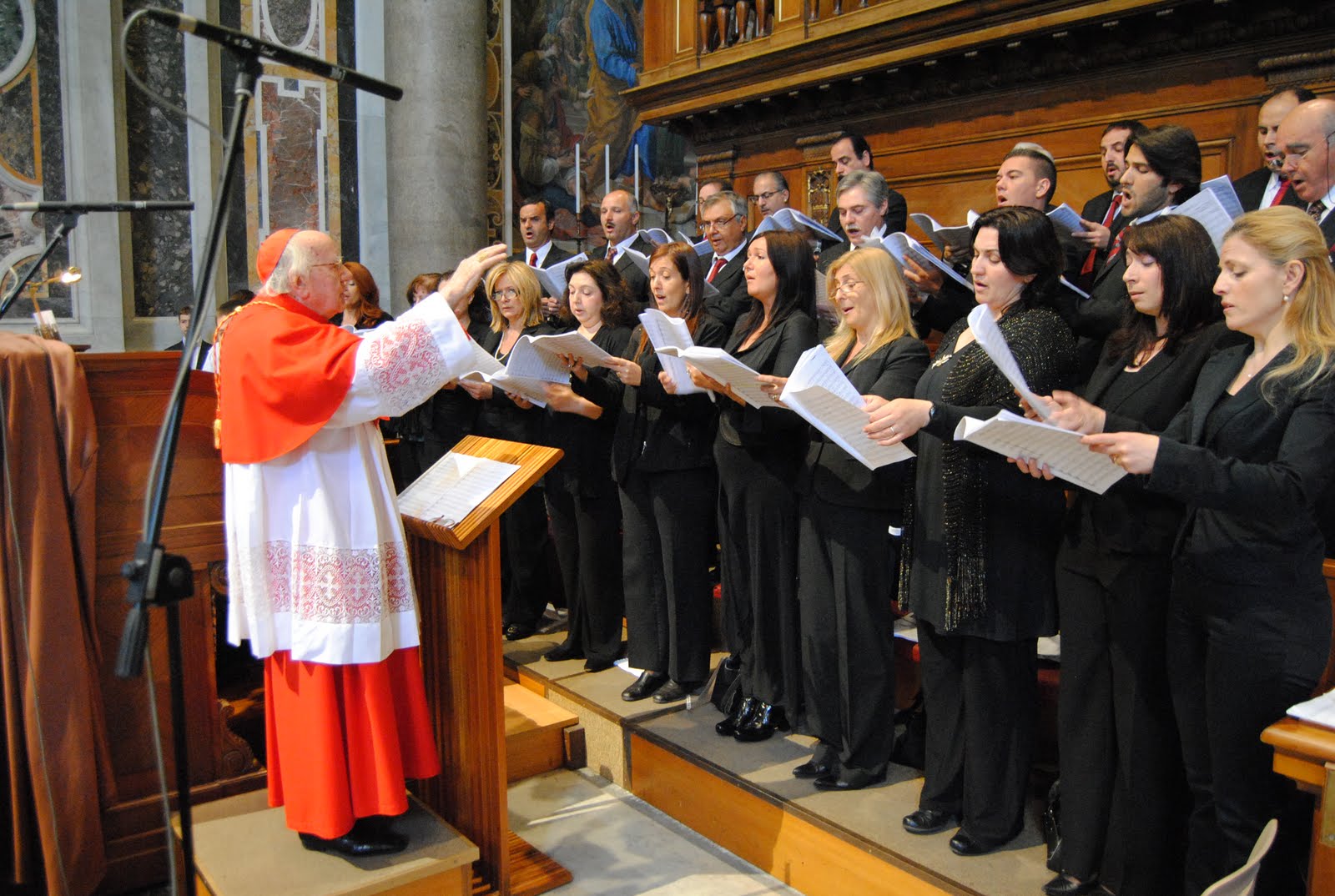
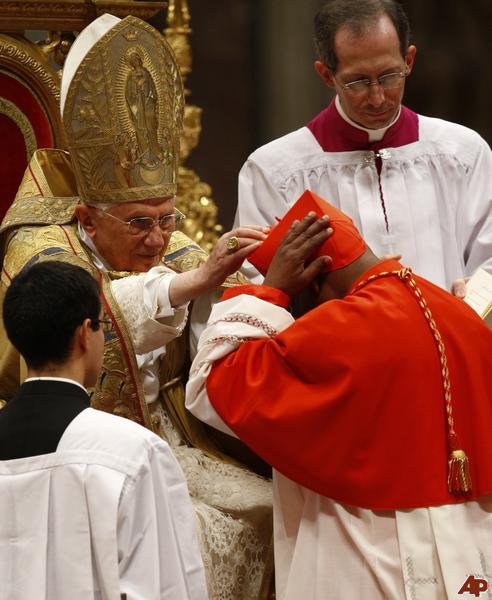
Cardinal Bartolucci was created Cardinal in 2010 by Pope Benedict XVI in his third Cardinal creation consistory and he was a longtime Director of the Sistine Chapel choir, a great conductor and composer of sacred and liturgical music, for over 41 years from 1956 to 1997. Cardinal Bartolucci retired in 1997, but even then, he still conducted his beloved choir and created more beautiful music for worship after he retired. He was honoured by Pope Benedict XVI for his longtime service to the Church by the bestowal of the red hat of a Cardinal in 2010, when he was 93.

brandmuller xvi

We pray for Cardinal Bartolucci, that he will rest in peace, and God will reward him for all his hard and great work as the long time servant of God through music as the conductor, director, and composer of the Papal liturgical music and sacred music through the Sistine Chapel choir  and his numerous other contributions to the Universal Church and for the Lord’s sake. May the Lord welcome him into His embrace in heaven and give him eternal rest and happiness that he deserved.

With the passing of Cardinal Bartolucci, the College of Cardinals now stands at 200 members, with 109 Cardinal-electors and 91 Cardinal non-electors.

There are now 11 Cardinal-elector vacancies in the College of Cardinals, 12 vacant Cardinal Titles (for Cardinal Priests) and 9 vacant Cardinal Deaconries (for Cardinal Deacons)

Passing of Cardinal Medardo Joseph Mazombwe of Zambia, at the age of 81

169-medardo-joseph-mazombwe-archeveque-emerite-lusaka-en-zambie

Cardinal Medardo Joseph Mazombwe, Cardinal Priest of S. Emerenziana a Tor Fiorenze has passed away on Thursday, 29 August 2013 at the age of 81. He was the Metropolitan Archbishop Emeritus of Lusaka in Zambia.

http://www.gcatholic.org/hierarchy/data/cardB16-3.htm#6723

medardo-joseph-mazombwe-2010-11-20-8-10-45

Cardinal Mazombwe was created Cardinal in 2010 by Pope Benedict XVI and he was a longtime bishop of Chipata since 1970 until he was made the Metropolitan Archbishop of Lusaka, Zambia in 1996. Cardinal Mazombwe retired in 2006, and was also for a few years the President of the Zambia Episcopal Conference.

We pray for Cardinal Mazombwe, that he will rest in peace, and God will reward him for all his hard work as the shepherd of the people of God in Lusaka and in Zambia as a whole and his numerous other contributions to the Universal Church and for the Lord’s sake. May the Lord welcome him into His embrace in heaven and give him eternal rest and happiness that he deserved.

With the passing of Cardinal Mazombwe, the College of Cardinals now stands at 201 members, with 112 Cardinal-electors and 89 Cardinal non-electors.

There are now 8 Cardinal-elector vacancies in the College of Cardinals, 12 vacant Cardinal Titles (for Cardinal Priests) and 8 vacant Cardinal Deaconries (for Cardinal Deacons)

Monday, 15 July 2013 : 15th Week of Ordinary Time, Memorial of St. Bonaventure, Bishop and Doctor of the Church (Scripture Reflection)

Dear brothers and sisters in Christ, today we reflect on the readings, which began from the opening of the Book of Exodus from the Old Testament, which told us the story of the people of Israel, the descendants of Abraham, Isaac, and Jacob, the chosen people, in Egypt, during their time of stay there. The people of Israel had been blessed by the Lord and grew exponentially in wealth and in their number, such that the Egyptians truly might have feared that the Israelites might overwhelm them in their own country.

Thus began the persecution of Israel, led by the Pharaoh, king and ruler of Egypt, who felt the threat created by the people of Israel in his lands. He oppressed them and tried to bring them under control, and therefore begun the slavery of Israel, the years of suffering in Egypt, when the people of Israel laboured under the yoke of the Pharaohs and many died. Yet, the Lord remained with His people, and He continued to bless them, and thence, they multiplied still even more.

But the Lord did not leave His people to suffer, because He cared for them and wished for their safety, and that was why He sent them a liberator, through Moses, the son of Israel lifted from the water of the River Nile by the daughter of the then reigning Pharaoh. Through Moses, the prayers of Israel were heard, and the Lord brought His people out of Egypt on eagle’s wings, with the ten plagues He sent to Egypt to punish them for mistreating the people of Israel and keeping them enslaved in suffering.

The Lord saved Israel from the slavery in Egypt, and He brought them through the Red Sea to the land of flowing milk and honey, the Promised Land of Canaan. The Lord God brought the people through the desert to Canaan, so that they can enjoy the promise that the Lord had made to Abraham, their forefather, that they, as his descendants, will enjoy the fruits of God’s blessings which had been given to Abraham and his descendants for eternity.

But the journey was not easy, and was full of trial and suffering, just as the people of Israel had endured suffering during their time in Egypt. That is because to become the disciples of the Lord is not easy, and is not straightforward. Much sacrifices had to be made, and indeed, as Christ had told His disciples, we have to take up our crosses and follow Him, otherwise we would not be worthy of Him.

That is because there is much evil in the world, ever since the beginning of time, when the evil one came and corrupted mankind and creation, with the evils that did not belong to God. Terrible things such as hatred, jealousy, greed, lust, and many other evils that had marred the perfection of God’s creations and all of His works.

But Christ would not let us suffer alone in this darkness, and that was why He came, to be the Light that rescues all from the grip of darkness. Instead, He bear all our sufferings, caused by our disobedience, so that He would blamed instead of us, punched and received blows instead of us, and died instead of us, a death on the cross.

The cross was, at the time of Jesus, the Romans’ favourite way to deal with criminals, particularly those seen as great threat to the Romans and to the society itself. Death of the cross for Jesus was to be a sure condemnation of His memory and a completely humiliating death for the so called ‘Messiah’, according to the chief priests.

Yet, the Lord prevailed, through His death, and then, most importantly, His Resurrection, the first to be Risen from the dead by His own power. The Risen Lord turned the humiliating cross, a symbol of shame, into a glorious sign of victory and triumph. The cross reminds us always that we have been victorious against the devil, and have also been triumphant in the struggle against sin and evil, because through that cross on Calvary, we had been made whole once again, and be made worthy in the presence of God.

That is why, brothers and sisters in Christ, we must be proud to show that we are the people who belongs to God, a people of the Lord, marked by none other than by the sign of the victorious cross. Through even simple gestures like making the sign of the cross before meals would signify our pride and faith in the triumphant cross, the Lord who had brought us up from the mire of sin, and like the Israelites of old, brought with the power of God’s hands out of Egypt, thus we have been brought out of our slavery of sin, into a new, free life in Christ.

Do not be afraid to show that we are Christians, and we also should not attempt to hide it whenever we make the sign of the cross, before meals, before prayers, and in many other occasions. Behold the symbol of our salvation, our pride and faith in God, the cross, to remember our Lord who had died for us, endured suffering that should have befallen us, just so that all of us may live, and not just a life that is temporary, but eternal life in heaven.

Today we also commemorate the memorial of St. Bonaventure, who was a religious and a well-known theologian, preacher, and scholar who lived in the early part of the last millenium, living just after the time of St. Francis of Assisi. He and his works advanced the theology and teachings of the Franciscans, which he was a member of, and his great contribution made the Pope elevated him to the Cardinalate.

St. Bonaventure in his hard works, ensured that the Franciscans would be known for its depth in understanding God’s teachings and also excellent oratory skills. He had laboured hard for Christ and God’s people, and He upheld the cross that was his, and he did not shirk from the duty to carry that cross. Instead he embraced it, and carried his cross alongside Christ.

Therefore, brothers and sisters in Christ, inspired by the zeal and devotion of St. Bonaventure and other great saints, holy men and women of God, let us renew our commitment and faith to the Lord, the One who saved us from certain death, death that awaits us sinners and evildoers, but which had been voided by the power of Christ, through the outpouring of His Blood on the cross.

Let us bear our own crosses, and help one another to bear one another’s cross, and walk our way through the path to salvation, to Christ. It will not be an easy journey, as often there will be temptations and oppositions, especially by the world, but if we remain strong, and carry our crosses faithfully, we will reach the end, and we will reach Christ, our Lord who loves us. It is up to us, brothers and sisters in Christ, whether we end up in hell or in heaven. Let us be proactive in living out our faith, that our faith will not die, but blossom with love.

God bless us all, and let us ask St. Bonaventure for his intercession for us sinners. Pray for us St. Bonaventure. Amen.

A vision that I have for the future College of Cardinals : For Greater Representation and Universality of the Church

This is still updating in the view of more data and research

Curial Cardinals

1. Cardinal Secretary of State

2. Prefect of the Congregation for the Doctrine of the Faith

3. Prefect of the Congregation for the Oriental Churches

4. Prefect of the Congregation for Divine Worship and the Discipline of the Sacraments

5. Prefect of the Congregation for Causes of Saints

6. Prefect of the Congregation for Bishops

7. Prefect of the Congregation for the Evangelisation of Peoples

8. Prefect of the Congregation for Clergy

9. Prefect of the Congregation for Institutes of Consecrated Life and for Societies of Apostolic Life

10. Prefect of the Congregation for Catholic Education (for Seminaries and Educational Institutions)

11. Major Penitentiary of the Apostolic Penitentiary

12. President of the Supreme Tribunal of the Apostolic Signatura

13. President of the Pontifical Council for the Laity

14. President of the Pontifical Council for Promoting Christian Unity

15. President of the Pontifical Council for the Family

16. President of the Pontifical Council for Justice and Peace

17. President of the Pontifical Council ‘Cor Unum’

18. President of the Pontifical Council for Pastoral Care of Migrants and Itinerant People

19. President of the Pontifical Council for Pastoral Assistance to Health Care Workers

20. President of the Pontifical Council for Legislative Texts

21. President of the Pontifical Council for Interreligious Dialogue

22. President of the Pontifical Council for Culture

23. President of the Pontifical Council for Social Communications

24. President of the Pontifical Council for the Promotion of the New Evangelisation

25. President of the Administration of the Patrimony of the Holy See

26. President of the Prefecture of the Economic Affairs of the Holy See

27. President of the Governatorate of the Vatican City State

28. Archpriest of the Basilica of St. John Lateran

29. Archpriest of the Basilica of St. Peter in Vatican

30. Archpriest of the Basilica of St. Mary Major

31. Archpriest of the Basilica of St. Paul Outside-the-Walls

32. President of the Financial Information Authority of the Holy See


Non-curial cardinals (Residential)

Europe (Sees tied to the Cardinalate)

33. Metropolitan Archbishop of Vienna (Austria)

34. Metropolitan Archbishop of Mechelen-Brussel (Belgium)

35. Metropolitan Archbishop of Zagreb (Croatia)

36. Metropolitan Archbishop of Praha/Prague (Czech Republic)

37. Metropolitan Archbishop of Paris (France)

38. Metropolitan Archbishop of Bordeaux (France)

39. Metropolitan Archbishop of Lyon (France)

40. Metropolitan Archbishop of Rheims (France)

41. Metropolitan Archbishop of Tours (France)

42. Metropolitan Archbishop of Berlin (Germany)

43. Metropolitan Archbishop of Munchen und Freising (Germany)

44. Metropolitan Archbishop of Koln (Germany)

45. Metropolitan Archbishop of Paderborn (Germany)

46. Metropolitan Archbishop of Esztergom-Budapest (Hungary)

47. Metropolitan Archbishop of Armagh (Ireland)

48. Metropolitan Archbishop of Dublin (Ireland)

49. Metropolitan Archbishop of Firenze (Italy)

50. Metropolitan Archbishop of Palermo (Italy)

51. Metropolitan Archbishop of Genova (Italy)

52. Metropolitan Archbishop of Bologna (Italy)

53. Metropolitan Archbishop of Milano (Italy)

54. Metropolitan Archbishop of Torino (Italy)

55. Metropolitan Archbishop of Napoli (Italy)

56. Latin Patriarch of Venice (Italy)

57. Metropolitan Archbishop of Vilnius (Lithuania)

58. Metropolitan Archbishop of Utrecht (Netherlands)

59. Metropolitan Archbishop of Warszawa (Poland)

60. Metropolitan Archbishop of Krakow (Poland)

61. Metropolitan Archbishop of Wroclaw (Poland)

62. Metropolitan Archbishop of Gniezno (Poland)

63. Latin Patriarch of Lisboa/Lisbon (Portugal)

64. Metropolitan Archbishop of Bratislava (Slovakia)

65. Metropolitan Archbishop of Ljubljana (Slovenia)

66. Metropolitan Archbishop of Barcelona (Spain)

67. Metropolitan Archbishop of Sevilla (Spain)

68. Metropolitan Archbishop of Toledo (Spain)

69. Metropolitan Archbishop of Madrid (Spain)

70. Metropolitan Archbishop of Valencia (Spain)

71. Metropolitan Archbishop of Westminster (UK)

72. Metropolitan Archbishop of Saint Andrews and Edinburgh (UK)

Asia  (Sees tied to the Cardinalate)

73. Bishop of Hong Kong (China)

74. Metropolitan Archbishop of Bombay (India)

75. Metropolitan Archbishop of Calcutta (India)

76. Metropolitan Archbishop of Delhi (India)

77. Latin Patriarch of the East Indies, Metropolitan Archbishop of Goa and Daman (India)

78. Metropolitan Archbishop of Ranchi (India)

79. Metropolitan Archbishop of Jakarta (Indonesia)

80. Metropolitan Archbishop of Semarang (Indonesia)

81. Metropolitan Archbishop of Ende (Indonesia)

82. Metropolitan Archbishop of Tokyo / Metropolitan Archbishop of Nagasaki (Japan)

83. Metropolitan Archbishop of Yangon / Metropolitan Archbishop of Mandalay (Myanmar)

84. Metropolitan Archbishop of Lahore (Pakistan)

85. Metropolitan Archbishop of Manila (Philippines)

86. Metropolitan Archbishop of Cebu (Philippines)

87. Metropolitan Archbishop of Davao (Philippines)

88. Metropolitan Archbishop of Lipa (Philippines)

89. Metropolitan Archbishop of Jaro (Philippines)

90. Metropolitan Archbishop of Lingayen-Dagupan (Philippines)

91. Metropolitan Archbishop of Kuala Lumpur /Archbishop of Singapore / Metropolitan Archbishop of Kuching / Metropolitan Archbishop of Kota Kinabalu (Singapore and Malaysia)

92. Metropolitan Archbishop of Seoul (South Korea)

93. Metropolitan Archbishop of Daegu (South Korea)

94. Metropolitan Archbishop of Colombo (Sri Lanka)

95. Metropolitan Archbishop of Taipei (Taiwan/ROC)

96. Metropolitan Archbishop of Bangkok (Thailand)

97. Bishop of Dili (Timor-Leste)

98. Metropolitan Archbishop of Ha Noi (Vietnam)

99. Metropolitan Archbishop of Thanh-Pho Ho Chi Minh (Vietnam)

100. Metropolitan Archbishop of Hue (Vietnam)

North America (Sees tied to Cardinalate)

101. Metropolitan Archbishop of Toronto (Canada)

102. Metropolitan Archbishop of Montreal (Canada)

103. Metropolitan Archbishop of Quebec (Canada)

104. Metropolitan Archbishop of Guadalajara (Mexico)

105. Metropolitan Archbishop of Mexico (Mexico)

106. Metropolitan Archbishop of Monterrey (Mexico)

107. Metropolitan Archbishop of Leon (Mexico)

108. Metropolitan Archbishop of Acapulco (Mexico)

109. Metropolitan Archbishop of Tijuana (Mexico)

110. Metropolitan Archbishop of New York (USA)

111. Metropolitan Archbishop of Baltimore (USA)

112. Metropolitan Archbishop of St. Louis (USA)

113. Metropolitan Archbishop of Washington (USA)

114. Metropolitan Archbishop of Boston (USA)

115. Metropolitan Archbishop of Los Angeles (USA)

116. Metropolitan Archbishop of San Francisco (USA)

117. Metropolitan Archbishop of Philadelphia (USA)

118. Metropolitan Archbishop of Chicago (USA)

119. Metropolitan Archbishop of Denver (USA)

120. Metropolitan Archbishop of Detroit (USA)

Central America (Sees tied to Cardinalate)

121. Metropolitan Archbishop of La Habana / Havana (Cuba)

122. Metropolitan Archbishop of Santo Domingo (Dominican Republic)

123. Metropolitan Archbishop of San Salvador (El Salvador)

124. Metropolitan Archbishop of Guatemala (Guatemala)

125. Metropolitan Archbishop of Tegucigalpa (Honduras)

126. Metropolitan Archbishop of Managua (Nicaragua)

127. Metropolitan Archbishop of San Juan de Puerto Rico (USA/Puerto Rico)

South America (Sees tied to the Cardinalate)

128. Metropolitan Archbishop of Buenos Aires (Argentina)

129. Metropolitan Archbishop of Parana (Argentina)

130. Metropolitan Archbishop of Cordoba (Argentina)

131. Metropolitan Archbishop of La Plata (Argentina)

132. Metropolitan Archbishop of Santa Cruz  de la Sierra (Bolivia)

133. Metropolitan Archbishop of Sucre (Bolivia)

134. Metropolitan Archbishop of Aparecida (Brazil)

135. Metropolitan Archbishop of Sao Paulo (Brazil)

136. Metropolitan Archbishop of Sao Sebastiao do Rio de Janeiro (Brazil)

137. Metropolitan Archbishop of Sao Salvador da Bahia (Brazil)

138. Metropolitan Archbishop of Brasilia (Brazil)

139. Metropolitan Archbishop of Porto Alegre (Brazil)

140. Metropolitan Archbishop of Belo Horizonte (Brazil)

141. Metropolitan Archbishop of Florianopolis (Brazil)

142. Metropolitan Archbishop of Manaus (Brazil)

143. Metropolitan Archbishop of Cuiaba (Brazil)

144. Metropolitan Archbishop of Santiago (Chile)

145. Metropolitan Archbishop of Concepcion (Chile)

146. Metropolitan Archbishop of Bogota (Colombia)

147. Metropolitan Archbishop of Bucaramanga (Colombia)

148. Metropolitan Archbishop of Quito (Ecuador)

149. Metropolitan Archbishop of Asuncion (Paraguay)

150. Metropolitan Archbishop of Lima (Peru)

151. Metropolitan Archbishop of Trujillo (Peru)

152. Metropolitan Archbishop of Montevideo (Uruguay)

153. Metropolitan Archbishop of Caracas (Venezuela)

154. Metropolitan Archbishop of Barquisimeto / Metropolitan Archbishop of Maracaibo / Metropolitan Archbishop of Merida / Metropolitan Archbishop of Valencia (Venezuela)

Africa (Sees tied to Cardinalate)

155. Metropolitan Archbishop of Luanda (Angola)

156. Metropolitan Archbishop of Cotonou (Benin)

157. Metropolitan Archbishop of Ougadougou (Burkina Faso)

158. Metropolitan Archbishop of Douala (Cameroon)

159. Metropolitan Archbishop of Bangui (Central African Republic)

160. Metropolitan Archbishop of Brazzaville (Congo)

161. Metropolitan Archbishop of Kinshasa (Zaire)

162. Metropolitan Archbishop of Abidjan (Cote d’Ivoire)

163. Metropolitan Archbishop of Addis Abeba (Ethiopia) (Ethiopic Rite)

164. Metropolitan Archbishop of Cape Coast (Ghana)

165. Metropolitan Archbishop of Tamale (Ghana)

166. Metropolitan Archbishop of Conakry (Guinea)

167. Metropolitan Archbishop of Nairobi (Kenya)

168. Metropolitan Archbishop of Antananarivo (Madagascar)

169. Bishop of Port-Louis (Mauritius)

170. Metropolitan Archbishop of Maputo (Mozambique)

171. Metropolitan Archbishop of Abuja (Nigeria)

172. Metropolitan Archbishop of Lagos (Nigeria)

173. Metropolitan Archbishop of Onitsha (Nigeria)

174. Metropolitan Archbishop of Kaduna (Nigeria)

175. Metropolitan Archbishop of Kigali (Rwanda)

176. Metropolitan Archbishop of Dakar (Senegal)

177. Metropolitan Archbishop of Cape Town (South Africa)

178. Metropolitan Archbishop of Durban (South Africa)

179. Metropolitan Archbishop of Juba (South Sudan)

180. Metropolitan Archbishop of Khartoum (Sudan)

181. Metropolitan Archbishop of Dar-es-Salaam (Tanzania)

182. Metropolitan Archbishop of Kampala (Uganda)

183. Metropolitan Archbishop of Lusaka (Zambia)

184. Metropolitan Archbishop of Harare (Zimbabwe)

Oceania (Sees tied to Cardinalate)

185. Metropolitan Archbishop of Samoa-Apia (Samoa)

186. Metropolitan Archbishop of Sydney (Australia)

187. Metropolitan Archbishop of Melbourne / Metropolitan Archbishop of Perth / Metropolitan Archbishop of Brisbane (Australia)

188. Metropolitan Archbishop of Wellington (New Zealand)

189. Metropolitan Archbishop of Port Moresby (Papua New Guinea)

Eastern Rite Patriarchs and Major Archbishops

190. Patriarch of Alexandria of the Copts (Egypt)

191. Patriarch of Antioch of the Maronites (Lebanon)

192. Patriarch of Antioch of the Syrians (Syria)

193. Patriarch of the Greek-Melkites

194. Catholicos of Cilicia of the Armenians

195. Patriarch of Babylon of the Chaldeans (Iraq)

196. Major Archbishop of Fagaras si Alba Iulia of the Romanians (Romania)

197. Major Archbishop of Ernakulam-Angamaly of the Syro-Malabars (India)

198. Major Archbishop of Trivandrum of the Syro-Malankars (India)

199. Major Archbishop of Kyiv-Halyc of the Ukrainians (Ukraine)

Total Sees tied to Cardinalate + Curial Cardinals = 199

Sees tied to Cardinalate (require resolution of problems regarding the Church in the area)

1. Metropolitan Archbishop of Beijing (China)

2. Metropolitan Archbishop of Nanjing (China)

3. Metropolitan Archbishop of Guangzhou (China)

4. Metropolitan Archbishop of Xi’an (China)

5. Metropolitan Archbishop of Changsha (China)

6. Metropolitan Archbishop of Pyongyang (North Korea)

Grand Total = 205 Cardinal electors minimal (Not counting irregular appointed non-bishop Cardinals, namely Cardinals appointed from priests, theologians, and distinguished members of the Church’s ordained presbyters)

Division by continents (minimum, as more Cardinals from dioceses/archdioceses not listed above can be created)

Europe = 42

Asia = 41

North America = 20

Central America = 7                        America total = 54

South America = 27

Africa = 31

Oceania = 5

Curial = 32 (can be from any continents, although majority will be Italians and Europeans)

(Total College size will be larger <= 350 if counting the Emeritus Archbishops of these Metropolitan Archdioceses and the Roman Curial posts’ Emeritus Cardinals above the age of 80 or non-electors).