Wednesday, 22 October 2014 : 29th Week of Ordinary Time, Memorial of Pope St. John Paul II, Pope (Homily and Scripture Reflections)

Liturgical Colour : Green or White (Popes)

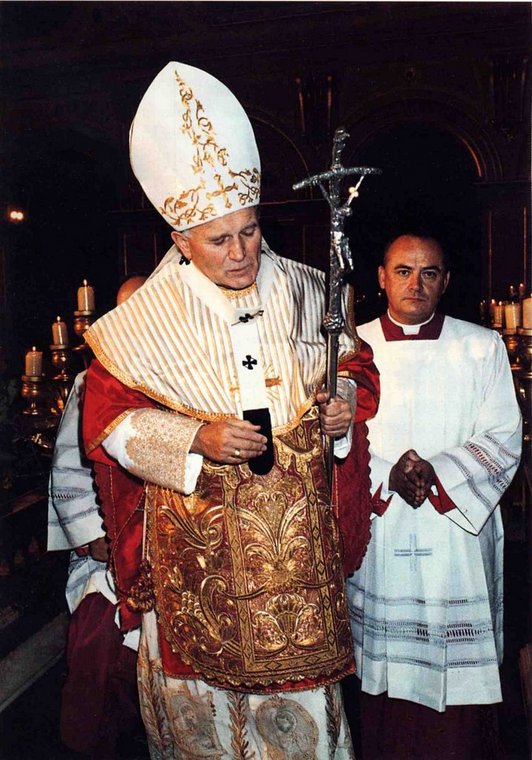
Dear brothers and sisters in Christ, today we celebrate together for the very first time, the feast of a great saint, and one whose memory is certainly still very clear in the minds of most of us, except for the very youngest ones among us. If we are at an age of adulthood or above, that is eighteen or beyond, we would have remembered how we once know of Pope John Paul II as our Pope, and thus as the Vicar of Christ and the Successor of St. Peter the Apostle.

And just earlier this year in April, that together with another great Pope of the last century, Pope John XXIII, the Pope who initiated the Second Vatican Council that they were together raised to the glory of the Altar of God as the holy saints of the Church, worthy of heaven, of praise and also worthy of being asked for intercessions from, to pray for us sinners still in this world.

To many of us, Pope St. John Paul II was our Pope, the Pope who had filled so much of our faith life. His very long reign, the second longest among the verified reigns of Popes, third if St. Peter himself is included, the reign of twenty-seven years certainly is of a very significant to the whole Universal Church. Many of us did not even know any other Pope than this saint, until he passed away just less than a decade ago.

However, even though many of us knew him, and even though many of us think that he was a great man and a great Pope, how many of us actually knew who he was and what he had done for the Church and for the faithful people of God? It is likely that many of us do not have the full image and idea of who he really was and what he has done. And many of us might have wrong impressions about him through misinformations and miscommunications of the world and the media.

That is why, let me share a bit first on who Pope St. John Paul II was. He was a Pole, the first ever Pope to originate from Poland, an Eastern European country, which at that time had the unfortunate fate of being overrun by the two great powers that were its neighbours. Pope St. John Paul II was born Karol Jozef Wojtyla in Krakow, Poland, just two years after Poland regained its independence from the Russian Empire after a period of more than a century.

But as the life of Pope St. John Paul II would testify, Poland was to be subjected to a series of unfortunate and very grim events, subjugation first by the forces of the NAZI Germany and then later under the dominance and hegemony of the Communist Soviet Union. Nevertheless, the one fact most if not all of us knew well was that the central role which Pope St. John Paul II would play in bringing down the dreaded Communism, not just in Poland, but also in almost the whole world.

Pope St. John Paul II himself did not have an easy life, as his mother died young when the then Karol Wojtyla was still very young, and he quickly lost his siblings to various reasons, including his elder brother whom he respected a lot, to a disease. His father passed away just at the start of the great miseries to befell Poland, and Pope St. John Paul II, Karol Wojtyla was left all alone in the world, without a family, but yet with God and His Blessed Mother at his side.

If we are wondering why Pope St. John Paul II chose the motto which would be famously accredited and associated to him, then we do not need to look further from the fact how he had persevered through many sufferings and difficulties, left all alone in the world, but he made it through the help and the intercession of the Blessed Virgin Mary, Mother of God.

His motto was Totus Tuus, the abbreviation of the full motto of Totus Tuus suum Maria, or ‘Blessed Virgin Mary, I am all yours’. This motto showed the great devotion which Karol Wojtyla, later Pope St. John Paul II had for Mary, and he was indeed known as one of the great Marian Popes who highly promoted the veneration and devotions to the Blessed Virgin.

This is the same kind of attitude which we should also have in our faith life and in our lives in general. We have to devote ourselves to the Lord and also to His Blessed Mother Mary, fully and completely if we are to allow God to come and work His wonders in us, and through us He can indeed do many things for the benefit of the world and for His people, as He had shown through how He worked through the person of Pope St. John Paul II, who should indeed be the role model for all of us in living our faith.

He endured difficulties after difficulties, persecutions after persecutions, and he frequently brushed closely with death. Yet, God had indeed had a plan for him, and every time, the Lord and His Blessed Mother guided him and delivered him from harm’s path. He suffered indeed, but he knew that he suffered for the sake of the Lord, who would indeed be bound to listen to the pleas of His people and take action.

He stood up for the faithful, when he, as the Metropolitan Archbishop of Krakow, one of the most influential and outspoken Archbishops and prelates in Poland and in Communist-dominated Eastern Europe, defended the right of his sheep, the flock of God for a place to worship God, a church to be built in the vicinity of the city of Krakow, at a locale known as Nowa Huta, the new city, supposedly the hallmark in the Communist government’s project to establish a utopian Communist city without a church building.

The then Archbishop Karol Wojtyla led the faithful people of Nowa Huta in a defiant rally and celebration of the Holy Mass, commemorating the establishment of a church building in that city championed by the Communists as the model of a utopian society without the faith. He gave the people the foundation stone of the church building, originating from the catacombs of St. Peter the Apostle, the rock upon whom the Lord had established His Church, and blessed by Pope Paul VI, now known as Blessed Pope Paul VI, beatified just last Sunday by our current Pope, Pope Francis.

Even after he was elected to the Papacy, to succeed as the Vicar of Christ and the Successor of St. Peter the Apostle, Karol Wojtyla, then on known as Pope John Paul II, continued his works for the good of the Church as he had always done, defending the orthodox and true teachings of the faith, and also to help the people of God suffering persecution in the Communist regimes of Eastern Europe.

We knew how Pope St. John Paul II had survived an assassination attempt, although he was grievously injured by it, on the day of our Lady of Fatima’s apparition in 1981. He attributed his survival to the ever caring and loving Mother of God, to whom he had devoted himself fully to, and to His Son, that he was again brought from the brink of death to continue to serve the people of God. We also knew how he forgave the one who tried to assassinate him.

And even to the end of his life, suffering from Parkinson’s disease which increasingly debilitated him and made it very difficult for him to continue to work as the leader of the Universal Church, he persevered on, and in his suffering, through which he share the suffering of Christ, he became a source of priceless inspiration for countless numbers of the faithful.

Brothers and sisters in Christ, after that summary of the life and the actions and contributions of Pope St. John Paul II, how are they relevant to the readings we had heard today, and how ultimately does do they relate to our own lives? It is in fact quite obvious that while every one, every single children of God will encounter different things on their respective journeys to God, but the actions of Pope St. John Paul II, Karol Wojtyla can indeed be a model and inspiration for all of us.

In the First Reading, St. Paul in his letter to the Church and the faithful in Ephesus revealed what had been entrusted to him in the graces and wisdom of God, that he might enlighten and show that wisdom to the people of God, so that all those who heard his words may be moved within their hearts and souls, and decide to seek the Lord their God with all of their hearts’ devotion.

In the same way therefore, Pope St. John Paul II, his predecessors and successors, the bishops and priests who had given themselves completely to the service of God, also received the same graces and wisdom to teach the Lord’s words and laws to His people, so that through them, many would be saved. But this does not mean that they alone are the ones who can do this.

Yes, brothers and sisters in Christ, each one of us at our own baptism, when we were welcomed into the Church of God, and now as a member of that one and only Church, we all have our own parts to play in the salvation of souls and in the good works of evangelisation done by the Church. We have been given the same graces, wisdom and blessing, and indeed it is part of our responsibility to bring the people of God, especially those who still live in darkness, into the light of Christ.

This is also what Christ had done, by bringing together the separated people of God, and grant them His peace. Ever since mankind had disobeyed God and followed their own desires, they had walked their own paths and in contrary to each other, each following their own hearts’ desires and inevitably leading to conflicts, violence and many other evils. Ever since the day of the Tower of Babel, mankind had been divided against one another and peace as well as harmony were lost.

It was therefore the peace of Christ, which He made by His works and His sacrifice on the cross, which offered mankind a new hope, that they may abandon their old lives of sin and darkness, of disobedience and injustice, of hatred, fear and violence, so that they may receive the love and peace of the Lord, by following Jesus and walking in the path He had prepared for them.

And in the Gospel, this responsibility which we have as members of the Church is reiterated yet once again by the parable of Jesus our Lord, on the master and the steward. This parable tells us clearly that we are indeed stewards appointed by God, and with a certain purpose, that is to love one another, and to spread the Good News which had been given to us by God, to those who still have yet to hear it.

That is what the faithful servants will do, unlike the unfaithful servants, which examples are the Pharisees and the teachers of the Law, when they failed not only to lead the people in faith by example, but they have cast obstacles in the path of the people of God, and in their selfishness, they abused their power and authority, like the unfaithful and bad servants. And when the Master comes back, that is the Lord, He will rebuke them without mercy and cast them out of His presence, precisely what He did with those Pharisees and hypocrites.

Therefore, this is a stern and clear reminder for us to avoid following the path of those Pharisees and avoid succumbing to our human desires, greed, pride, arrogance, hatred, lack of love, unfaithfulness, sloth and many others. Instead, we should open wide the doors of our heart to Christ our Lord, inspired by the words of Pope St. John Paul II, ‘Aprite le porte a Christo!’ which means, ‘Open wide the doors to Christ!’.

When we open wide the doors of our hearts to Christ, in essence we allow Him to enter into our hearts and transform us from within, allowing His love to fill us up, and therefore, it will affect our actions and deeds, which will then be based no longer on our own selfish desires, but instead upon the love of God. We must not be afraid to seek the Lord for help, and indeed we should entrust everything we have to God and to His Blessed Mother Mary just as Pope St. John Paul II had done.

Do not tarry and do not delay, for as much as God is merciful and loving, and as much as He desires to embrace us with His love and forgive us our sins, nothing good will come until we take the initiative and embrace His mercy first. Therefore, it is imperative that we realise that God hates sin and all wickedness, and if we delay and wait, and wait and wait, eventually time will catch up to us, and at the time that we do not know, the Lord will decide that our time is up, then no amount of regret or even repentance will help.

Therefore, brothers and sisters in Christ, let us help one another, working with one another to take care of ourselves, that we do not open ourselves to sin and evil, and so that we may allow the Lord to come into us, and to transform us with His love and grace. May Almighty God bless us, empower us and strengthen us, and through the intercession of Pope St. John Paul II, may all souls come eventually to salvation in God, with the help of His Blessed Mother Mary, the Mediatrix of all graces. Amen.

On the Future Canonisation of Blessed Pope John XXIII and Blessed Pope John Paul II

Image

The two great Popes of the last century, both of whom had been recognised as Blessed, through the virtues of their life and miracles attributed to them, will be declared Saints, in a ceremony likely to be scheduled at the end of this year (2013).

Both Blessed Pope John XXIII and Blessed Pope John Paul II, who was made a Blessed just two years ago on 1 May 2011, had each left their incredible and remarkable footprint in the path of history, both in the history of the Church, and in the history of the world and mankind.

Image

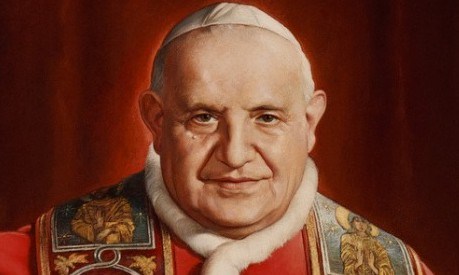
Blessed Pope John XXIII was known to be a great man of peace, and above all things seek to embrace peace and cooperation, between mankind, and also begun the process of Ecumenism in order to reunite the divided fragments of God’s Church back into the One, Holy, Catholic, and Apostolic Church that is our Church.

He was also known for his Encyclical Pacem in Terris (Peace on earth), which was released just months after the world was almost engulfed in an all-out nuclear war between the two superpowers, the United States of America (USA) and the Soviet Union (USSR) during the height of the Cold War in the Cuban Missile Crisis. Blessed Pope John XXIII worked hard ceaselessly to promote peace between the parties in conflict, for the good of all mankind, all of whom are the children of the same one God.

Blessed Pope John XXIII also convoked the Second Vatican Council, which brought the Church in line with the developments in the world, and also to make the Church more relevant in the increasingly rapid new developments in our world, and the rise of apathy towards religion in general. He would pass away before the Council was completed, but his legacy continued on until today.

Image

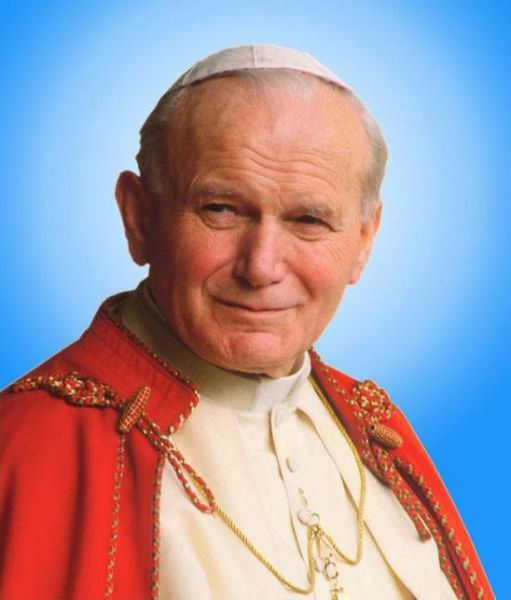
Blessed Pope John Paul II ‘the Great’ was a well-known Pope, a Pope of youths, and a hardworking Pope, who travelled around the world to visit all the flocks of the Lord that had been entrusted to him as the Successor of St. Peter the Apostle, as the Vicar of Christ. He was instrumental in the end of Communism in Eastern Europe, ending persecutions against the people of the faith, and also open boundaries and barriers that had been long in place since the beginning of the Cold War.

Blessed Pope John Paul II has also renewed the zeal for the faith amongst many around the world, and especially in youths, to whom he dedicated a special event, the World Youth Day, in order to commemorate the faith, particularly amongst the youths of the faith, around the globe. He inspired many through his works, his Encyclicals, and especially his perseverance despite being troubled with a worsening Parkinson’s disease condition, that made him to labour until his passing on 2 April 2005.

Both Popes had been very influential, hardworking, and very holy leaders of the One Church of the Lord Jesus Christ, and they had done much to strengthen the faith and the Church, and bring God closer to many, bringing them closer to salvation.

I hope to soon be able to ask for the intercessions of Pope St. John XXIII and Pope St. John Paul II the Great, and I pray that they will intercede for us sinners around the world, and pray for us, till we are greeted by them at the doors of heaven when it is time for us to be with the Lord again. Now we wait for the official announcement on the date of the Canonisation.

Image

Blessed Pope John XXIII, pray for us!

Image

Blessed Pope John Paul II, pray for us!

Tuesday, 9 July 2013 : 14th Week of Ordinary Time, Memorial of Saints Augustine Zhao Rong, Priest and Companions, Martyrs (Scripture Reflection)

Brothers and sisters in Christ, the Lord is driven to compassion for the sake of all of us, because of our poverty, the poverty of our souls, of our sinfulness, and our lack of leadership. That is because we are all like sheep without a shepherd, going in all directions and getting lost. Christ came into this world, and painstakingly taking all of us into His fold, as the Good Shepherd, seeking the lost ones one by one, until all of us are found once again and reunited.

The Lord our God does not wish us to be lost or forever separated from Him. He came down Himself and suffered for our sake, that eventually we can be reunited with Him for eternity. For there is no other option besides salvation, other than eternal damnation. That is why Christ came to us to offer us the other option that is salvation and eternal life. He became our shepherd, the Good Shepherd, so that we will no longer be lost. He became our guide, our leader, the light of our path, and our God.

Today we celebrate the memorial and feast of St. Augustine Zhao Rong and his companions, who are the Catholic martyrs from China, and many of them were martyred during the Boxer Rebellion at the turn of the twentieth century, when a severe persecution against Christians in China occurred. Many Christians, including St. Augustine Zhao Rong and his companions were murdered brutally for their faith, because they refused to renounce their faith and kept holding steadfastly to their faith.

St. Augustine Zhao Rong himself was a Chinese diocesan priest who served in several areas in China before he was arrested, tortured until his death in the defense of his Christian faith. He did not give up on the Lord and remained faithful. The same case had happened for many other martyrs of China, many of whom were repeatedly asked and offered to reject the Lord and reembrace pagan practices, but they refused and were received into heaven with a martyr’s glory.

These martyrs, the local Chinese and the Western missionaries, were joined in death for the sake of their faith in Christ, and they embody to us, the virtues of a faithful life dedicated to the Lord. A life lived with zeal and love for the Lord and His people, and with purpose. Opposition and persecution will naturally come, but they will be able to subvert the faith of the just ones.

Indeed, brothers and sisters in Christ, even today, the Church throughout the world, particularly in China, where St. Augustine Zhao Rong and companions met their martyrdom, where religious freedom, superficial as it is, is very limited and bordering on being non-existent. The Church was forced to serve the atheistic government, who views the Church as a hostile entity, and therefore they tried to destroy it. When the attempts to destroy the Church had not been successful, they resolve to weaken the Church by seizing it out of the Universal Church.

Many people there still suffer today, and Christians in the Church suffer an even greater suffering, being seen as ‘hostile’ by the government, and as a ‘threat’ that needs to be eliminated. Yet, as the saying goes, that the blood of martyrs is the seed of Christians, persecution and opposition brings fervour and zeal to the people of God, that they may not just persevere through the tough times, but indeed prosper and grow.

But seeds cannot grow without proper care and provision, as we need labourers to constantly care and give all their time into the effort. That is why the Lord said that though the harvest is plentiful, but the labourers are few. We need more labourers to harvest the field of the Lord, and these harvests are simply the people who come to know the Lord, and to be saved. The labourers are none other than our priests, supported by all of us, the laity.

All around the world, including in China, there are increasing shortage of priests to serve the people of God. The number of the people in the Church has grown significantly while the number of priests had been stagnating for quite a long time. This makes it increasingly difficult, especially in the areas where the Church is growing, to project itself through love and service, and also to conduct worship in the Mass, in which priests are badly needed.

It is more and more difficult to gain new priests nowadays, brethren, because the world increasingly shut the Lord out of the minds of the young people, many of whom are called by the Lord. Yes, many are called, but few responded, and among those who responded, even fewer followed his calling through to the end in service of the people of the Lord. It is important that we bring the zeal and devotion, and the love for God back to all of us, especially those whom the Lord had called and entrusted with His flock.

Even priests and religious brothers and sisters must also be growing in faith and love. All of us cannot be complacent otherwise we would be caught unprepared by the devil, whose works are many, and whose deceit and trickery threatened to corrupt many people and turn them away from the Lord their God.

Therefore, brothers and sisters, inspired by the devotion and zeal of St. Augustine Zhao Rong, his companions, the martyrs of China, let us persevere against the opposition and the persecution of the faith in any form that is there in this world, in our society, and even in our families. Let us foster a prayerful and loving atmosphere in our homes, in our communities, in our parishes, that we can allow the faith to grow strong in all of us, especially our youths, some of whom may be future priests and servants of God and His people.

Pray, brethren, and pray hard, for the sake of our Church, for God’s people, and especially a special intention for the Church in China, for our brethren in faith unjustly treated and persecuted for their faith and obedience to the Lord rather than to the secular and Godless authority. May the Lord strengthen them in faith, give them courage, and remain with them through their ordeal, and may He also be with us, at all times. Amen.

Tuesday, 9 April 2013 : 2nd Week of Easter (Scripture Reflection)

Dear brothers and sisters in Christ, as Christ had mentioned to Nicodemus, that all of us have to first believe in the teachings and testimonies of Christ, which we can read and see in the Bible and the Gospels, before we can indeed believe in the mysteries surrounding Christ and the tale of salvation. How can we believe that Christ is divine, and is our Lord, the Son of God, if we do not first believe in the teachings He had given to us through the Apostles, and through them, the Scriptures we are reading today?

Yes, indeed, we have to be born again in Christ, as He also mentioned to Nicodemus even earlier. But be careful, dear brothers and sisters in Christ, that we do not fall into the falsehoods of some who assumed that they are better than the Apostles and the holy fathers of our faith, that is the early fathers of the Church, who established the sacred Doctrine and Traditions of the Church, through which the teachings of our Lord and His words are made easier for us to understand through explanations made by these fathers of our faith, and of course with the help of the Apostles and the evangelists who wrote the Gospels and those who witnessed the Lord and His actions firsthand.

For there are those who call themselves ‘Born-again’ ‘Christians’ who allege that all Christians must be ‘born again’ in order to be saved. They allege that there is a need for a kind of baptism, to be ‘immersed’ that people can then be ‘born again’ and therefore be saved. This kind of teaching ran contrary to the teachings of the Church and the holy Apostles, being aberration born out of ignorance and literal self-interpretation of the Holy Gospels and the Bible. For indeed, while it is important to read the Scripture and discern its meaning, we must never do so without any guidance from competent authorities, otherwise we are risking making the wrong interpretations and having the wrong ideas and approach to our faith.

In the first reading, we read how every early Christians share their possessions and their belongings for the good of one another, and in this way, indeed we can see that our faith is not merely personal faith, another facet of faith that the aberrant ‘Christians’ like to stress, that is to be ‘reborn again in Christ and have PERSONAL relationship with Christ that they can be saved’. Yes, indeed, it is important to have such a personal relationship with Christ, that is the closeness we have between ourselves and Christ our Lord, but we have to always remember that our faith that is personal is not enough, for our faith is as much communal as it is personal, and it is the communal faith that we have as a community of believers in the Church that makes our faith in the Lord perfect and complete.

In this sharing too, the early Christians also showed to us the true value of love and communality, that they share with one another their goods and their possessions, and that rid of the endless desires of man to haul in more possessions for themselves, and rid of greed, they truly practice the teachings of Christ to love one another. This is in fact the meaning of true communism, removed from the taints of Karl Marx and his twisted form of communism, and the ideologies espoused by those who followed after him. We must not be confused between this twisted communism and the true communism as practised by the early Christians.

Love one another, take care of your fellow neighbours, and follow our Lord, through His commandments and His teachings. May our lives truly reflect the love that is of God, and let us all share this love that is given to us by the Lord, that all people, especially the unloved ones, can truly experience the love of God, and share with one another the faith we have in Christ, as a community, caring and loving for one another, just as all of us love God even more.

May God grant us a heart of gold, to share what we have to those who do not have, and to those who hunger, both for food, and also more importantly for love, for those starved of love, that all of us, as we work in the love of God, can make this world a better place for everyone. Amen.

Tuesday, 9 April 2013 : 2nd Week of Easter (First Reading)

Acts 4 : 32-37

The whole community of believers was one in heart and mind. No one claimed private ownership of any possessions, but rather they shared all things in common. With great power the apostles bore witness to the resurrection of the Lord Jesus, for all of them were living in an exceptional time of grace.

There was no needy person among them, for those who owned land or houses, sold them and brought the proceeds of the sale. And they laid it at the feet of the apostles who distributed it according to each one’s need. This is what a certain Joseph did. He was a Levite from Cyprus, whom the apostles called Barnabas, meaning : “The encouraging one.” He sold a field which he owned and handed the money to the apostles.

For the Victims at Boston and Victims of Hatred, Violence, and Injustice throughout the world

My prayers and love go to those who were hurt in Boston, and not only them, but also to all those around the world, suffering from daily persecution and daily injustice. May God protect them, and bless them with strength, and heal them.

We pray also for all those who had caused pain and suffering upon others, including those who caused the Boston explosion, and those who persecuted others. We forgive them for their faults, and welcome them with open hands, with the love of God, that they will come and see the truth and the light, that they will persecute others no more, that they will cause no more pain upon others, but walk in the light of God.

Spend some time to pray for the North Koreans as well, who had been suffering for the past six decades and more from repudiation of their basic rights in the name of ideology and hatred.

Monsignor Francis Hong Yong-Ho, pray for your people, and pray for us too.