Monday, 23 September 2013 : 25th Week of Ordinary Time, Memorial of St. Pius of Pietrelcina, Priest (Scripture Reflections)

Liturgical Colour : White

Dear brothers and sisters, we are children of the light! Therefore, we too should be bright with the light that is within each one of us, and show it boldly to the world. We once lived in darkness and belong to the darkness, but the Lord who is loving and who is ever merciful had ransomed us from the dark through His own sacrifice on the cross, that we are made the possessions of the Light, that is Jesus our Lord and God.

Yes, brethren, in today’s first reading from the Book of Ezra the priest, the people of Israel, who had lived long in darkness, in the great depths of sin, and who had been sent into exile in Babylon for their sins, had been remembered and forgiven. God had brought them back out of darkness into the light, that they once again become His people, under the leadership of Ezra the servant of God and through Cyrus, the first Persian Emperor.

Although they had sinned greatly, that of their ancestors and their transgressions, the Lord who loved all was willing to regain them into His embrace, gathering them from all over back to the land He had promised them. The same He had done for them when they were oppressed in the land of Egypt. And so, He could not let Himself to abandon us who lived in darkness, and resolved to send the great deliverance, the Light of the world in Jesus.

Through Jesus, the world had received a new light, the light of God, that we may no longer live in darkness, but in the light. In each and every one of us who had been accepted into the Church through baptism, a light has been given, that is the light of Christ, which we witnessed through the presentation of baptismal candle at the time we were baptised. In baptism, we are made to be the belongings of Christ, and therefore become children of the light.

We are also given talents and skills within us, that each one of us possess these unique set of skills and abilities, that we are often ignorant about or fail to utilise effectively, and often even try to hide within ourselves for various reasons, some of which are fear, lack of confidence, ignorance, and many others that made us fail to shine.

Yes, in fact Christ is challenging us, whether we can truly get rid of these human fears and be courageous instead to be the witnesses of the Gospel of truth, the Good News He had proclaimed to the nations. In this way, this is how we truly shine brightly as the children of the light, on a lampstand, clearly visible and not hidden in darkness.

Fear and plain reluctance often comes in the way, with many of us lacking the confidence to make our light truly be seen, be it because of fear of our society, the fear of rejection by others, or pure laziness and sloth. In each of us, we had been given many gifts and graces, brethren, and therefore, much is also expected from us. We cannot be idle and hide the light in ourselves, excluding others from it.

This light within us, is manifested most easily in love. Yes, the love for God and for His children, our brothers and sisters. We show forth our light if we open ourselves and our hearts for others and for God, that from it, the purity of our love, care, and compassion may shine forth, dispelling the darkness the devil had created around us.

Today, we celebrate the feast of a great and well-known saint, that is Padre Pio of Italy, also known as St. Pius of Pietrelcina, one of the greatest saint of the last century, being widely known for his piety, his dedication, in his tireless ministry and service for others, in his healings and miracles, and through his life examples. He was known as a truly holy, pious, and saintly man, and this would not have happened, had he not revealed his faith like that of a lamp on a lampstand.

Padre Pio lived humbly and piously as a religious, as a Franciscan monk, who was well known for his stigmata miracle, in which the crucifixion wounds of Christ appeared on his hands and feet. He was harassed by the devil at many times in his life and he suffered, both from the pain of the miraculous stigmata, as well as rejection by the people of God at times. Yet, Padre Pio, now St. Pio/Pius persevered and endured in his hard work, for the good of the people and resolved to bring them to salvation in Jesus.

St. Pius championed the good works of divine grace, ministering healing and miracles even when he was still alive, and the stigmata showed to many, the nature of God’s love for us, that is the crucifixion of His Son, Jesus, through which we are saved. St. Pio became a great role model for many, through his humility, through his passionate service and love for all God’s children, and through his holiness, evident from his daily actions and prayers. He also put a great emphasis on the Most Holy Eucharist, in which lies the Lord Himself in the form of His Body and His Blood.

Therefore, brothers and sisters, with the example of this great saint, known to many of us as Padre Pio, the great servant of God and the worker of miracles, let us be inspired to follow him in his examples, in his prayerful devotion to God and in his loving commitment to one another, that is to our brethren around us, especially those in most need of our love and help. May St. Pius intercede for us always, that the Lord will constantly keep us in His love and grace and protect us always from the power of Satan, and bring us back into His divine embrace. God bless us all. Amen.

Friday, 20 September 2013 : 24th Week of Ordinary Time, Memorial of St. Andrew Kim Tae-gon, Priest and Martyr, St. Paul Chong Ha-Sang, and Companions, Martyrs (Scripture Reflection)

Liturgical Colour : Red

Dear brothers and sisters in Christ, today we listened to the need of loving God with all our hearts, that we place Him foremost before all other things, loving Him with all our might. For He had come into the world to ransom us from evil. He had given of Himself to all of us, as an example we all also ought to follow. That we have to love Him just as He had loved us, and love our brethren, without exception, in the same way.

For Christ had called us to be good, and to do good for everyone’s sake. He had taught us how to love, the same love He had shown us when He hung on that cross on Calvary. To Him had been granted authority and power, and He healed all from their afflictions, physically and spiritually. These people were among those who were mentioned in the Gospel today, particularly Mary Magdalene, whom He had liberated from the possession of Satan. Many of His disciples and Apostles also were once great sinners, even murderers and tax collectors.

He had called them from the darkness, that they would have a new life in Him, and through Him, just as He calls all of us to follow Him. This means to leave our old sinful and conceited selves behind, and do what the Lord had asked us to do. We ought to leave things that corrupt ourselves behind, and put on a new clothes of purity, as it had been on the day we were baptised, when we took up a new life, a clean and pure slate of life.

In the first reading today, St. Paul mentioned an important element of sin, that is possessions, meaning material possessions, in the form of visible and invisible wealth, in money and all its manifestation. It is first important to note, brethren, that money and possessions themselves are not innately evil. It is how they are gained and how they are utilised that can potentially bring about great evil.

Money can be used for good and noble purposes, as well as for evil and wicked purposes. It can be something that bring about blessings and life, and in the same way, also something that bring about destruction and suffering. That is why we must be careful on how we approach and utilise our money and our possessions. Remember always, that money and wealth are themselves not intrinsically evil, that it is we who can make that difference between good and evil from what we have.

For example, with the same money or wealth, we can choose, whether we spend it lavishly on the latest fashion items and gadgets that we do not really need. It is a really bad habit for some of us, considering the recent developments of the smartphone technology, that every time a new smartphone model comes out, we are always first to queue and get our hands on it. Remember again, smartphones can be very useful for good purposes, but it is how we use them and think of them, that differentiate between good and evil.

As in the earlier mentioned case, the money can be better used for other purposes, not only for charity, but even for ourselves, for our education, welfare, and improvement, basically, for many different things that we could not do, if we had spent all the money on these unnecessary excessiveness. Judge wisely therefore, brethren, what we are to do with our possessions, for they are God’s blessing to us. Let us not misuse these gifts that had been granted to us.

Today, we celebrate the feast of martyrs of Korea, St. Andrew Kim Tae-gon, St. Paul Chong Ha-sang and their companions. They were among the first Christians of Korea, convert from their native religions into the faith of the Lord. Korea at that time was tightly closed against any form of external influences, especially Christianity, and the practice of the faith was strictly forbidden by the state.

Christians were harshly persecuted and forced to renounce their ‘alien’ faith and abandon the practices seen by the Korean government to be barbaric in nature. Many Christians were imprisoned and tortured and not few lost their lives for the faith. They are the ones we are commemorating today, the martyr saints of Korea, especially St. Andrew Kim Tae-gon, the first martyr saint of Korea, and St. Paul Chong Ha-sang.

They stayed faithful to the Lord despite immense pressure by the authorities forcing them to abandon their faith, and preferred suffering for the Lord even until they met their death, staying true to the Lord to the end. They gave their life, so that more and more people would be inspired by their example, and stay faithful to the Lord and did not apostasize, despite the pressure or the temptations offered to them to abandon the Lord for worldly incentives.

Dear brothers and sisters in Christ, today, after listening to the word of God, and the advice on how we need to make sure that we use the blessings granted to us for the right cause, and especially after witnessing the life story of St. Andrew Kim Tae-gon, St. Paul Chong Ha-sang, and the other martyr saints of Korea, let us be motivated, brethren, to do what is good in the eyes of the Lord.

May the Lord protect us and continue to bless us to be strong, to be the true witnesses of the Gospel, as the martyr saints of Korea had done. God be with us always. Amen.

Friday, 20 September 2013 : 24th Week of Ordinary Time, Memorial of St. Andrew Kim Tae-gon, Priest and Martyr, St. Paul Chong Ha-Sang, and Companions, Martyrs (Gospel Reading)

Liturgical Colour : Red

Luke 8 : 1-3

Jesus walked through towns and countryside, preaching and giving the Good News of the kingdom of God. The Twelve followed Him, and also some women, who had been healed of evil spirits and diseases : Mary called Magdalene, who had been freed of seven demons; Joanna, wife of Chuza, Herod’s steward; Suzanna, and others who provided for them out of their own funds.

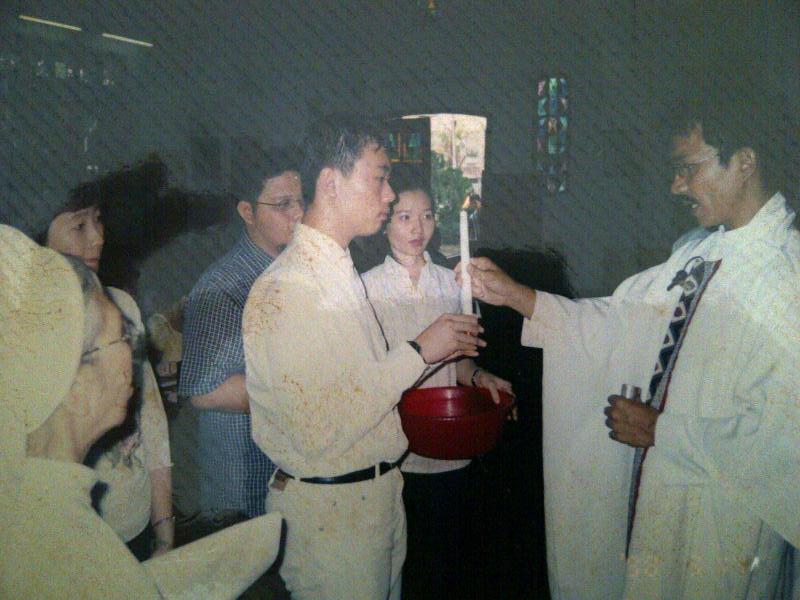
9th Anniversary of my baptism and entry into the Church of God (19 September 2004 – present)

9 years ago, on the Feast of St. Januarius, 19 September 2004, I was received into the Church through the Sacrament of Baptism.

As St. Paul before me, I have been called from the darkness into the light. Once a sinner, God had called me to be one of His children, unworthy as I am.

May my patron saints, St. Peter Canisius and St. Peter my namesake, and St. Michael the Archangel who strengthens me, continue to pray for me, and pray for all the other children of God in this world! That they will especially pray for those who are still on the journey to seek the Lord and in the process to enter the Church of God!

Image

(I baptise you in the Name of the Father, and the Son, and the Holy Spirit)

Image

(As Christ was anointed Priest, Prophet, and King, so may you live always as a member of His Body, sharing everlasting life)

Image

(Receive the light of Christ!)


Pray for me always, brethren! And pray for our brethren in need of our love too!

Thursday, 19 September 2013 : 24th Week of Ordinary Time, Memorial of St. Januarius, Bishop and Martyr (Scripture Reflection)

Liturgical Colour : Green or Red

Dear brothers and sisters in Christ, today we hear a very powerful story, one which certainly resonates with all of us. Firstly, it is that we ought not to let our  apparent inferiority and weakness be an obstacle to us, and allow others to belittle us because of our apparent shortcomings. That is because, brethren, even the least one among mankind, and the worst of all sinners have hope in them, that is hope in Jesus the Lord.

It is often that people are ostracised, bullied, and treated badly, simply because they appeared weak to their surrounding people, simply because they are perceived to be inferior, and therefore, to the people around them, they are not worthy of anything good. We are indeed ourselves also guilty of the same thing, as we often let our prejudices and pre-formed generalisations and mindsets to interfere in our approach to these less fortunate ones.

And that is how we belittle others around us and ostracise them, often even without we ourselves knowing that we had done such evil acts on our fellow brethren, simply because we are often not aware of the impacts of the actions we had done. Indeed, in fact, we have to make the habit of continuously reflecting on our own actions, especially our own shortcomings, that we become aware that as mankind, each of us have our own shortcomings, our unworthiness before God, and therefore we should not judge others, less so belittling them or treating them badly.

That was exactly what the Pharisee in the story of Jesus in the Gospel today had not done. The Pharisees and the teachers of the Law are the supposed experts and examples for the entire people of God, because of their piety and strict observation of the entire Jewish laws. Yet, as Christ had repeatedly pointed out in many different occasions, they did not truly have God in their hearts, as what they truly yearned was the glory and praise of men instead of the love of God.

They give in to their pride and arrogance, especially being placed in high esteem by the people, that they often judge others whom they deemed to be not as ‘holy’ as they were. They condemned prostitutes, tax collectors, and those they had considered as sinners in general. They failed to notice that they too were sinners, and in condemning these people, they have in fact judge others, while they themselves ought to be judged for their own wickedness.

They acted mighty and proud, proud with their great ‘piety’ and ‘obedience’ to the Law, but in fact, all these were empty, because they did not have God in their hearts. It is such that they have always been in the way during the Lord’s ministry in this world, planting obstacles wherever they could, and sowed dissent and trouble for Jesus and His disciples.

They failed to see the great repentance in the woman, the great humility in her as she approached the Lord and Saviour. She showed her regret for her sins through her tears, and through her complete humility. She did not show her faith, love, and dedication for the Lord through loud and long prayers as the Pharisees had done, but through her concrete actions. And to the Lord our God, her faith and love for Him was truly far greater than all of them combined.

Prayers are important, brethren, as it is our way to communicate with the Lord our God, in a two-way communication between Him and us. That is why, it is even more important to make sure that the prayers that we make truly are prayers worthy of our God, that is not like the prayers of the Pharisees.

We must humble ourselves before the Lord as the prostitute had done, seeking for God’s most merciful heart, throwing far away our pride and arrogance. The Pharisees liked to praise themselves and their ‘piety’ in prayers, and did not humble themselves for their sins. This is what we must not do.

Today, brethren, we celebrate the feast day of St. Januarius, who was once the Bishop of Naples in the early Church in Italy. St. Januarius lived and ministered through the times of difficulty for the Church and the faithful. He worked hard for the faithful, and ministered piously, even despite the harsh persecutions of the faithful, by the Emperor Diocletian, who led the last great persecution of the Church.

St. Januarius died protecting his faith and in his loving service to the people of God. As a result, he provided much ground for the Church to continue to grow and he also defended the faith against threats both external and internal. Therefore, brothers and sisters in Christ, let us follow in the footsteps of St. Januarius, to serve the Lord with passion and commitment. Let us also be humble before the Lord our God. May the Lord who is merciful and loving, continue to watch over us and protect us sinners, that we may return to Him and praise Him forevermore.

Monday, 16 September 2013 : 24th Week of Ordinary Time, Memorial of St. Cornelius, Pope and Martyr, and St. Cyprian, Bishop and Martyr (Scripture Reflection)

Liturgical Colour : Red

Dear brothers and sisters in Christ, today we listen to the revelation of the great faith in the captain, who was likely a Roman soldier, and therefore not of the people of Israel. And we tie this revelation to the saying of St. Paul in his letter in our first reading today, that there exists only one way to salvation, that is through the great Mediator, Jesus Christ, Messiah of the world.

True faith in God lies not in the prayers after prayers that one utters. Yes, prayer is indeed important, brethren, but what is even more important is one’s own humility and awareness of themselves, and the complete surrender of oneself to the love of God, and in all these, the individual will then have a true, unshakeable faith in God.

It is that many people in Israel put themselves before God, and put their worldly desires before the Lord. That was also why the faith of the people in God, as was evident in how they looked at Jesus and His ministry, was truly shallow and weak faith, unlike that faith the captain of the army possessed for Christ and therefore for the Lord. That was also why, even though the people first proclaimed Jesus as a great Saviour, they were equally quick in condemning Him to death when He was convicted by false testimonies.

They loved not God and have faith not in Him, but on the wondrous things that He had done, and once those things were gone, or when challenges rose up to meet them, they quickly forgot about Him and rose up in rebellion. This was truly evident, when Israel walked through the desert into the Promised Land, that they rebelled and made complaints after complaints to the Lord for not caring for them enough in their journey, and even regretted having been brought out of Egypt.

The same also happened to Jesus, that people applauded Him for the miracles and powers He had shown, in healing the sick, opening the eyes of the blind, and loosening the tongues of the mute, and in raising the dead back into life. They followed Him and listened to His teachings, and yet, these did not take good roots in them, that they were easily shaken by fear and doubt.

On the other hand, the captain of the guards showed great faith in God, that He sent for Jesus to heal his sick servant and save him from death. Then, despite his relatively lofty and high position in the armed forces, and therefore in the society, he did not boast at all. He instead lowered himself before the Lord, as a sinner, who would not be worthy at all to receive the Lord who is good and perfect in his own residence.

One may interpret the way he said things to Jesus through his servant as being rude. After all, how can he say such things to Jesus who had spent so much of His time to come down to his place and heal his servant? Is he not being condescending and demanding of Christ the Lord?

No, brethren, in fact, in that sentence, and which was completely revealed in his last sentence, which we also utter during every Mass before the Lord’s Presence in the Holy Eucharist, showed perfectly the depth of his faith in the Lord and his humility, realising that he was truly nothing, despite his position of power, before the Lord Jesus our Saviour and God.

“Lord, I am not worthy that You should enter under my roof, but only say the word, and my soul shall be healed.” That is the precise words that we utter after the Agnus Dei, when the celebrant of the Mass show to us the Body of Christ crucified, through which He is willing to come upon us, in order to heal us from all our sins, iniquities, and unworthiness. We are unworthy of Him because of our sins, and yet He is willing to come to us, into us, so that He will be with us and stay with us, and we will also remain in Him, in His love.

It is precisely his understanding of his unworthiness before the Saviour of the world, before the Almighty God Himself, that he, the captain, though mighty in the eyes of men, but he is nothing compared to God and he is unworthy to stand before His presence, much less to invite Him to his humble and sinful abode. That is why, using his own experience as the captain of an army unit, he asked in his humility, for the Lord to give the orders, and he has complete faith that whatever the Lord commands, it will be fulfilled.

We too, brothers and sisters, should follow his example, and in saying the words that he had once uttered, every time in the Mass, let us say it with complete understanding and dedication to God, not because we are trained to say it without feelings, and not just because we memorised the phrase, and then utter them out of nothingness. Let us put ourselves into the shoes of the captain, understanding the love that God has for us, when He approaches us and offers Himself to us in His Body and Blood.

Today, brethren, we also celebrate the feast of two great saints of the early Church, namely that of Pope St. Cornelius and St. Cyprian, the great leaders of the Church and the staunch defenders of the faith. They lived at a difficult time for the Church, at the time when the pagan Roman Emperors, particularly Decius and Valerian persecuted Christians and slaughtered them mercilessly.

Pope St. Cornelius and St. Cyprian, his greatest supporter, as the Bishop of Carthage in Africa, also faced a great tribulation of the faith, with a heretical teaching by the priest Novatian, who also contested the Papacy as antipope to Pope St. Cornelius, causing a severe division of the faithful at the time when the enemies of the Church were persecuting strongly against her.

Pope St. Cornelius protected the important tenet of the faith, that is the Lord who is merciful, readily forgives those who had lapsed from the faith, as was often during his time as Pope. St. Cyprian was his strong supporter, against the heretic Novatian, who staunchly opposed to the forgiveness and redemption of those who had lapsed from the faith.

There were many Christians who lapsed from the faith due to various reasons, but many of which were linked with the temptations of the world and sin, especially because of the severe persecutions against the faithful at the time. According to Novatian heresy, these people were doomed, but Pope St. Cornelius and St. Cyprian begged to differ. As Christ had taught His disciples, that even the greatest of sinners can repent and many saints were also once great sinners.

They defended the true faith and maintained the integrity of the Church and the faithful. Through their hard work, many were prevented from falling into the heretical teachings. They died as defenders of the faith under persecution by the Roman authorities, and in their martyrdom, they provided the rich soil upon which the Church could grow further and carry out their work of salvation.

May the Lord opens our eyes and the doors of our hearts, and inspired by the examples and works of Pope St. Cornelius and St. Cyprian that we will be able to learn the unworthy state that we are in, because of our sins, that we, in deepest humility, following the footsteps of the captain, will humble ourselves before Christ, who is the great Mediator, the bridge between us and the Father, through whom, the only path to salvation and eternal life in glory is possible. Let us praise God and thank Him for having mercy and pity on us, coming to us to heal us, despite of our faults and unworthy behaviours. God be with us always and may He show His mercy and love upon us. Amen.

Sunday, 15 September 2013 : 24th Sunday of Ordinary Time (Second Reading)

Liturgical Colour : Green

1 Timothy 1 : 12-17

I give thanks to Christ Jesus, our Lord, who is my strength, who has considered me trustworthy and appointed me to His service, although I had been a blasphemer, a persecutor and a rabid enemy. However He took mercy on me because I did not know what I was doing when I opposed the faith; and the grace of our Lord was more than abundant, together with faith and love that are in Christ Jesus.

This saying is true and worthy of belief : Christ Jesus came into the world to save sinners, of whom I am the first. Because of that I was forgiven; Christ Jesus wanted to display His utmost patience so that I might be an example for all who are to believe and obtain eternal life.

To the King of ages, the only God who lives beyond every perishable and visible creation – to Him be honour and glory forever. Amen!

Tuesday, 10 September 2013 : 23rd Week of Ordinary Time (Scripture Reflection)

Liturgical Colour : Green

Brothers and sisters in Christ, today we realise that the Lord our God loves us and He is willing to call us from the depth of our sins and the depth of our iniquities, to be with Him and to rejoice with Him in salvation. He did this through Christ His Son, who had descended into the world to be among us and to be the source of our salvation.

He cares for us and wants us to leave behind our world of sin that leads to death and damnation. That was why He offered all of us His enduring love, love that He carried through all the way to the cross on Calvary. He willed us to live, and that was why He did not hesitate even to give His own life for us that we may live.

He called the Apostles, the chosen twelve among His disciples, to be the primary helpers of His good works during His ministry in this world and even after He had departed it. They helped Him to administer the people and become the listening ear to His many teachings, through which He revealed much about Himself and God’s plan of salvation for mankind.

He offered them and all, a new hope in Himself, that all those who believe in Him and place their trust in Him will not suffer death and punishment for their sins and iniquities. Instead, it was indeed Christ who had undergone much suffering, pain, and eventually death in our place. The Body and Blood He offered us, through His pierced Body and the Blood outpouring from His wounds on the cross, become the gate into this new life.

Yes, brethren, and those who walk through this gate, will receive eternal life in God. The Body of Christ we receive in the Communion bread and the Blood in the wine bring Christ into ourselves, and thereafter, He dwells within us, becoming a light within our hearts. However, not everyone can just receive the Lord without due consideration.

We must first be welcomed into the Church of God, that is the entire community of the faithful ones in God, and become one body with all the faithful, as part of the one living Church, that is through the waters of baptism. Baptism marks that clear break between us and our past, the sinful lives and idol worshipping lives we had once led, and be purified in the Lord, to be made worthy to receive the salvation offered freely by the Lord.

That was why those who had not yet been received into the Church, may not receive the Lord because they are unworthy and had not yet placed their hearts and their beliefs fully in God. For those of us who had been received into the Church and receive the Lord into ourselves, we have accepted the Lord as our Lord and Saviour, just as the Apostles had done before.

However, it is not that we must be stagnant and be idle after we have been received into the Church. Otherwise we would be condemned by the Lord, just as He had done to the Pharisees, who had not done what was asked of them, and instead slandering the prophets and the Lord Himself. Constant vigilance and cultivation of that opportunity God has given us is therefore necessary and indeed, expected of us.

The Apostles themselves did not remain idle, even though after their baptism of fire, they can be certain of salvation. Yes, the Apostles received their baptism of fire by the Holy Spirit, on the day of the Pentecost, that truly marked the beginning of their ministry after the departure of Jesus from this world. The Apostles. They faced much opposition and rejection, just as they were received by many. Yet they did not fear, for God is with them, and they even gave their lives in the end, for the sake of the Gospel of Christ.

Dear brothers and sisters, today we are also called, to be the apostles of our modern day world. Let us therefore strive to follow in the footsteps of the Apostles, we who had been called and received into the Church. We must never be idle but we must be proactive and take the initiative to be the active disciples of Christ, spreading the Good News to all the people.

May the Lord guide us and protect us as we embark on this journey of evangelisation, that we may be fruitful and great, in our works for the sake of the Lord. God bless us all. Amen.

Thursday, 5 September 2013 : 22nd Week of Ordinary Time (Scripture Reflection)

Liturgical Colour : Green

Dear brothers and sisters in Christ, today we listened to the story of the calling of Simon Peter and his companions, the sons of Zebedee, fishermen of Galilee, to become the fishers of mankind. They have been called from their boats, from the Sea of Galilee, to be a part of the grand plan of salvation.

As fishermen at sea, Simon and the other fishermen merely did their daily routine of catching fishes, but then as the fishers of mankind, they broke out of their previous life, and went through trials and tribulations, going to different parts of the world, fishing ‘mankind’ and bring them to God. The world is now their fishing ground, and not just the Lake of Galilee anymore, where they used to work as fishermen.

They had been given greater and nobler purpose in their lives, that is to bring souls they had caught to God. How did they catch them then? No, not by fishing net as they had done to the fishes of Lake Galilee. They did that by being witnesses of Christ, of His death and His glorious resurrection. They preached the Good News to people who had not yet witnessed or heard about Christ before.

In that way they had spread the nets, yes, the nets of the kingdom of God, that all those who are not yet worthy of the kingdom of God, can be brought together in love, and put on the right track towards salvation in God. The Apostles went through much hardships and difficulties as they tried to bring the Lord to mankind, suffering rejection, persecution, and mockery in the process.

Yet the Apostles are not superhuman, brethren, as they are also humans like us. They suffered from doubt, fear, anxiety, and uncertainty especially when Jesus was still among them, and they were indeed scattered when jesus was taken from them by betrayal of Judas, scattered like sheep without a shepherd to guide them.

What is important is that the Apostles did not abandon their calling, the same calling God had called them for when He called Simon Peter and the sons of Zebedee from the Lake, and also for the other disciples. They kept their faith and believed in the Lord when He returned to them after the resurrection. They were empowered with the Holy Spirit, the Advocate on the day of the Pentecost.

They faced oppositions from the Pharisees and the chief priests, as well as the Roman authorities, when they went on to spread the Good News of the Lord. It is indeed as if the Apostles, the fishers of mankind, faced terrible waves and storms in their journey to ‘catch’ mankind to salvation in God. They persevered despite the heavy stormy conditions and saved many in the process.

Dear brothers and sisters in Christ, how is this then relevant to us who live in this world today, two thousand years after Jesus called His disciples? It is precisely because the work of the Apostles as the fishers of men dis not just stop with them or with their death. The Apostles had appointed their successors to lead the Church of God, and they are truly our priests and bishops of today.

Yes, brethren, they are the successors of the original fishers of men, and their duty is no less heavy as compared to that of the Apostle’s. They also have to work hard to ‘catch’ mankind and bring them into the kingdom of God, just as the Apostles had once done. However, brethren, in fact, we should, in our own small ways, be fishers of men too. Yes, fishers of men, that is to bring the people to God.

How do we do that? It is by showing God to mankind, the living God through our words, deeds, and actions, that the Lord and His everlasting love will be made manifest in this world, through us. The same is also done by our priests and bishops, as the Apostles too had done themselves once. In doing that, we cast out wide the nets of the kingdom, and fish out many men.

Do not be disheartened brothers and sisters, if we think that we cannot do much. Indeed, even one man can make much a difference in our world, and save many. If we start with small things, even eventually this can have large impact, just as we can see in wave ripples, where even small wave can have huge impact on the water, as the waves built upon each other in strength.

The Lord had asked Simon Peter to go and put his net into the deep, and there he found many fish, so many that the ship almost sank. This is also known in Latin as Duc in Altum, ‘to put into the deep’. Again, through this, the Lord challenges all of us, to not just remain in our comfort zone, that is ‘near the shore’, and instead set out to the deep. As fishermen all know, the further out they go into the sea, the more fish they will be able to catch. Thus, we too ought to follow the lead and cast our ‘net’ into the deep, that means giving out of ourselves in ever greater ways, in full and complete dedication and love for our fellow brethren.

Therefore, let us also take the opportunity given to all of us, to be like the Apostles of Christ, to reach out to our fellow brethren who have yet to know Christ, that we can play each of our own parts in the Church of God, with our Pope, the successor of St. Peter the Apostle, chief of the apostles, and the bishops as leaders, together working as the fishers of mankind, for the sake of the salvation of all in Christ. God bless us all. Amen.

Wednesday, 28 August 2013 : 21st Week of Ordinary Time, Memorial of St. Augustine, Bishop and Doctor of the Church (Scripture Reflection)

Liturgical Colour : White

Brothers and sisters in Christ, today we have the continuation of the litany of woes attributed by Christ to the Pharisees, the chief priests, and the teachers of the Law, whom Jesus referred as the crooks leading the people of God, not into salvation, but into eternal damnation in hell. They practised not what they had preached, and neither did they keep themselves holy for the Lord, and their prayers were empty litanies of praise for themselves instead of humble supplications for the mercy and forgiveness by the Lord for their sins.

They liked to show off their piety in public prayers, praying openly to God with hands lifted up high even in public places like market places. People would then praise them, honour them, follow them, and even emulate them, for their ‘exemplary’ actions and their ‘piety’. In this sense, they gained worldly glory and worldly power, from the people, and as a result, they left the Lord without glory, and without due honour. They had made themselves even greater than the Lord.

This was what the Lord criticised from them, and rebuked them with the woes given to them. They have also made the Lord as nothing more than a lawgiver or the fearsome God who must be obeyed or else the people would receive punishment for their failure to follow the Law. The Pharisee and the teachers of the Law thought themselves as holy, and looked down on those whom they considered as hopeless ones, the sinners, the prostitutes and the lowest ends of the society.

Yet, it was precisely these people whom the Pharisees had condemned for their sins that in fact had the great humility to reach out with contrite hearts, seeking the forgiveness of the Lord, as many of the sick, the bleeding widow, the prostitutes, had done, while the Pharisees and the teachers of the Law had not done so. They kept their heads upheld high, and hardened their hearts against the Lord and against His people, the very sheep entrusted to them as shepherds to lead towards the Lord, as the chief shepherd.

The Lord who will judge everyone on the last day, will judge them and cast them out of His presence, as they had not ony failed in their given mission to lead the people of God with responsibility and upright ways, but they even brought the people closer to damnation instead of salvation. They had even mocked and opposed those whom the Lord had sent to them to wake them up and remind them of their true task and their true purpose, the purpose of their positions in the society.

Just as their ancestors had opposed, mocked, and slaughtered the prophets and messengers of God, so they had opposed, mocked, questioned, tested, and eventually condemned Christ, the very One sent to this world to redeem it. This was because both them and their ancestors had hardened their hearts and kept the love of God out of their hearts. They turned a deaf ear against the advice of the prophets and their pleading that they change their ways.

Just as their ancestors during their sojourn in the desert, they not only turned away from the Lord their God, but also openly opposed Him and put Him constantly to the test, in the same way as how the Pharisees had tested Jesus many times, desiring and longing for Him to make a mistake that they can capitalise on. Smart? Oh certainly, by human standards, yes indeed, the work of Satan made manifest!

Brothers and sisters in Christ, that does not mean however, that wicked men and women has no hope absolutely in salvation in God. They indeed have much opportunity and chance to return to the Lord their God and return towards the path leading to salvation, providing that they really have a total change in their hearts, from one that was hardened against God, into those that are open for the wonders and warmth of His love. And today, as we commemorate the occasion, there is no better example than St. Augustine of Hippo, the great saint and Doctor of the Church.

St. Augustine of Hippo was truly a great man of the faith, whose works and dedications for the Church were invaluable. He was indeed once a great sinner, ever since he was young. Although he was raised as a Christian by his mother, whom we know as St. Monica, whom feast day we just celebrated yesterday, St. Augustine lapsed and left the Church to follow the heretical Manichaean syncretic religion that was widespread during that time at the late Roman Empire.

St. Augustine early in his life lived a life of pleasure and debauchery, and walked away, far away from the path of righteousness in God. He sought meaning in life, and yet he was not able to find it in all the pleasures of the world that he had experienced. His mother, St. Monica prayed hard for him, that he would return to God, and repent all of his wayward life. She never gave up on him, even though he did all things evil imaginable, seeking the pleasures of the world, and tried to find comfort in reason and rhetorics.

Eventually St. Augustine returned to God and made a full conversion back to the cause of Christ, not least because of the role his mother had played, and even more so, the very conviction by St. Augustine himself as he journeyed through his life, through tumult and times of confusion. In the end, he became a great defender of the faith, the bishop of Hippo, and through his writings, many people, even today, still benefit from his enlightenment on us on our faith, and on the tradition of the faith of the Apostles.

He is truly worthy of his title of the four greatest Doctors of the Church, and indeed a pillar of the Church and the faith. However, do note that he was once too a great sinner. Precisely, brethren, even sinners are not out of range for salvation. Indeed, great saints were often once great sinners too. In fact, as what Archbishop Fulton Sheen, the renowned Archbishop once had said, that the greater the sin one has in them, the closer one is to the throne of God, that is the throne of mercy. With greater sin and greater understanding of one’s sin does bring one to closer realisation of one’s mortality and weakeness, and can spur us into seeking God’s mercy, as St. Augustine had once done.

Therefore, brothers and sisters in Christ, we who are sinners should follow the example of St. Augustine, who sought God after he had done great sins before God, and who was turned from the path of sin into the path of salvation in God. He felt empty when He lacked God in his heart, and went all the way to find the fulfillment, which eventually he found in God, who gave him true and complete satisfaction and providence. The same too should happen to us, and let us not be like the Pharisees and the teachers of the Law, whose mouth is full of pious words and prayers, and yet their hearts are empty, lacking God in them.

May St. Augustine of Hippo be our source of inspiration, as does his mother, St. Monica, that we who are in this world, great sinners before God, may acknowledge our unworthiness and our sins, and seek to ask forgiveness from our merciful and loving God, He who is the Divine Mercy, and He who cares and loves for all of His children. St. Augustine, pray for us, intercede for us before God, that just as once He had forgiven you and turned you into a great pillar of the faith, may the same also happen to us. God bless us all with His love. Amen.