10,000th View : Thanks be to God, and pray for me as always!

Tonight, as of midnight and the beginning of the Fourth Sunday of Lent, Laetare Sunday, 10 March 2013, my blog has been viewed 10,000 times. I thank all the visitors who had visited my humble blog, with all its imperfections and mistakes, and thank you for all your encouragement and prayers.

Do continue to pray for me, and pray too for the Cardinal-electors, who will soon go into the Sistine Chapel for the Conclave, and we hope that by next week, we will already have a new Pope, a new shepherd for our Church, that is God’s Church He built on Peter, the Rock, and the leader of the Apostles.


Statistics (as of the end of Sunday, 10 March 2013)

Total View : 10,526

Total Visitors : 6,895

Days since beginning : 53


Statistics by Country (Total tabulated : 10,341)

1. United States of America (USA) : 3,817

2. Singapore : 2,851

3. Philippines : 632

4. United Kingdom (UK) : 470

5. Canada : 411

6. Italy : 196

7. Australia : 195

8. Malaysia : 163

9. France : 114

10. Ireland : 103

11. Indonesia : 86

12. Germany : 84

13. India : 82

14. Poland : 77

15. Netherlands : 57

16. Brazil : 55

17. Belgium : 44

18. Hong Kong : 40

19. Sweden : 38

20. Mexico : 36

21. Botswana : 35

22. Switzerland : 32

23. Hungary : 32

24. Nigeria : 30

25. Portugal : 30

26. Finland : 29

27. Croatia : 28

28. New Zealand : 27

29. Austria : 24

30. Spain : 22

31. Taiwan : 22

32. Malta : 19

33. Slovakia : 18

34. South Africa : 17

35. United Arab Emirates : 17

36. Slovenia : 16

37. Vietnam : 16

38. Thailand : 15

39. South Korea : 15

40. Egypt : 14

41. Greece : 14

42. Czech Republic : 14

43. Sri Lanka : 14

44. Colombia : 13

45. Japan : 13

46. Trinidad and Tobago : 13

47. Argentina : 13

48. Saudi Arabia : 11

49. Kenya : 11

50. Norway : 10

51. Jordan : 8

52. Cambodia : 8

53. Puerto Rico (USA) : 8

54. Tanzania : 8

55. Romania : 7

56. Russia : 7

57. Bolivia : 6

58. Brunei Darussalam : 6

59. Uganda : 6

60. Lebanon : 6

61. Cameroon : 6

62. Ukraine : 6

63. Israel : 6

64. Vatican City : 6

65. Belarus : 6

66. Bulgaria : 5

67. Ghana : 5

68. Pakistan : 5

69. Cyprus : 5

70. Nepal : 5

71. Serbia : 5

72. Bahamas : 5

73. Namibia : 5

74. Guam (USA) : 4

75. Panama : 4

76. Chile : 4

77. Jamaica : 4

78. Macau : 3

79. Nicaragua : 3

80. Lesotho : 3

81. El Salvador : 3

82. Zimbabwe : 3

83. Venezuela : 3

84. Rwanda : 3

85. Laos : 3

86. Luxembourg : 3

87. Denmark : 3

88. Latvia : 2

89. Kuwait : 2

90. Qatar : 2

91. Bermuda (UK) : 2

92. Grenada : 2

93. Turkey : 2

94. Haiti : 2

95. Guatemala : 2

96. Lithuania : 2

97. Monaco : 2

98. Peru : 2

99. Albania : 2

100. Mozambique : 2

101. Ecuador : 1

102. Papua New Guinea : 1

103. Libya : 1

104. Bangladesh : 1

105. Gibraltar (UK) : 1

106. Bosnia-Herzegovina : 1

107. Timor-Leste : 1

108. Swaziland : 1

109. Togo : 1

110. Uruguay : 1

111. Costa Rica : 1

112. Estonia : 1

113. Honduras : 1

114. Oman : 1


The Church is truly universal, isn’t it?

+Ut Omnes Unum Sint, ad Maiorem Dei gloriam
(That they all may be One, for the greater glory of God)

Sunday, 10 March 2013 : 4th Sunday of Lent, Laetare Sunday, 2nd Scrutiny for Baptism (Gospel Reading)

Luke 15 : 1-3, 11-32

Meanwhile tax collectors and sinners were seeking the company of Jesus, all of the eager to hear what He had to say. But the Pharisees and the scribes frowned at this, muttering, “This Man welcomes sinners and eats with them.” So Jesus told them this parable.

Jesus continued, “There was a man with two sons. The younger said to his father, ‘Give me my share of the estate.’ So the father divided his property between them. Some days later, the younger son gathered all his belongings, and started off for a distant land, where he squandered his wealth in loose living.”

“Having spent everything, he was hard pressed when a severe famine broke out in that land. So he hired himself out to a well-to-do citizen of that place, and was sent to work on a pig farm. So famished was he, that he longed to fill his stomach even with the food given to the pigs, but no one offered him anything.”

“Finally coming to his senses, he said, ‘How many of my father’s hired workers have food to spare, and here I am starving to death! I will get up and go back to my father, and say to him, Father, I have sinned against God, and before you. I no longer deserve to be called your son. Treat me then as one of your hired servants.’ With that thought in mind, he set off for his father’s house.”

“He was still a long way off, when his father caught sight of him. His father was so deeply moved with compassion that he ran out to meet him, threw his arms around his neck and kissed him. The son said, ‘Father, I have sinned against Heaven and before you. I no longer deserve to be called your son.'”

“But the father turned to his servants : ‘Quick!’ he said, ‘Bring out the finest robe and put it on him! Put a ring on his finger and sandals on his feet! Take the fattened calf and kill it! We shall celebrate and have a feast, for this son of min was dead, and has come back to life; he was lost and is found!’ And the celebration began.”

“Meanwhile, the elder son had been working in the fields. As he returned and approached the house, he heard the sound of music and dancing. He called one of the servants and asked what it was all about. The servant answered, ‘Your brother has come home safe and sound, and your father is so happy about it that he has ordered this celebration, and killed the fattened calf.'”

The elder son became angry and refused to go in. His father came out and pleaded with him. The son, very indignant, said, ‘Look, I have slaved for you all these years. Never have I disobeyed your orders. Yet you have never given me even a young goat to celebrate with my friends. Then when this son of yours returns, after squandering your property with loose women, you kill the fattened calf for him.'”

“The father said, ‘My son, you are always with me, and everything I have is yours. But this brother of yours was dead, and has come back to life; he was lost, and is found. And for that we had to rejoice and be glad.'”


Alternative reading (from Year A)

John 9 : 1-41

As Jesus walked along, He saw a man who had been blind from birth. His disciples asked Him, “Master, was he born blind because of a sin of his, or of his parents?” Jesus answered, “Neither was it for his own sin nor for his parents’ sin. He was born blind so that God’s power might be shown in him. While it is day we must do the work of the One who sent Me; for the night will come when no one can work. As long as I am in the world, I am the light of the world.”

As Jesus said this, He made paste with spittle and clay, and rubbed it on the eyes of the blind man. Then He said, “Go and wash in the Pool of Siloam.” (Siloam means sent.) So the blind man went and washed and came back able to see. His neighbours, and all the people who used to see him begging, wondered. They said, “Isn’t this the beggar who used to sit here?” Some said, “He’s the one.” Others said, “No, but he looks like him.” But the man himself said, “I am he.”

Then they asked him, “How is it that your eyes were opened?” And he answered, “The Man called Jesus made a mud paste, put it on my eyes abd said to me, ‘Go to Siloam and wash.’ So I went, and washed, and I could see.” They asked, “Where is He?” and the man answered, “I don’t know.”

The people brought the man who had been blind to the Pharisees. Now it was a sabbath day when Jesus made mud paste and opened his eyes. The Pharisees asked him again, “How did you recover your sight?” And he said, “He put paste on my eyes, and I washed, and now I see.” Some of the Pharisees said, “That Man is not from God, for He works on the sabbath”; but others wondered, “How can a sinner perform such miraculous signs?” They were divided, and they questioned the blind man again, “What do you think of this Man who opened your eyes?” And he answered, “He is a prophet!”

After all this, the Jews refused to believe that the man had been blind and had recovered his sight; so they called his parents and asked them, “Is this your son? You say that he was born blind, how is it that he now sees?” The parents answered, “He really is our son and he was born blind; but how it is that he now sees, we don’t know, neither do we know who opened his eyes. Ask him, he is old enough. Let him speak for himself.”

The parents said this because they feared the Jews, who had already agreed that whoever confessed Jesus to be the Christ was to be expelled from the synagogue. Because of that his parents said, “He is old enough, ask him.”

So a second time the Pharisees called the man who had been blind, and they said to him, “Tell us the truth; we know that this Man is a sinner.” He replied, “I don’t know whether He is a sinner or not; I only know that I was blind and now I see.” They said to him, “What did He do to you? How did He open your eyes?” He replied, “I have told you already and you would not listen. Why do you want to hear it again? Do you also want to become His disciples?”

Then they started to insult him. “Become His disciple yourself! We are disciples of Moses. We know that God spoke to Moses; but as for this Man, we don’t know where He comes from.” The man replied, “It is amazing that you don’t know where the Man comes from, and yet He opened my eyes! We know God doesn’t listen to sinners, but if anyone honours God and does His will, God listens to him. Never, since the world began, has it been heard that anyone opened the eyes of a person who was born blind. If this Man were not from God, He could do nothing.”

They answered him, “You were born a sinner and now you teach us!” And they expelled him. Jesus heard that they had expelled him. He found him and said, “Do you believe in the Son of Man?” He answered, “Who is He, that I may believe in Him?” Jesus said, “You have seen Him and He is speaking to you.” He said, “Lord, I believe”; and he worshiped Him. Jesus said, “I came into this world to carry out a judgment : Those who do not see shall see, and those who see shall become blind.”

Some Pharisees stood by and asked Him, “So we are blind?” And Jesus answered, “If you were blind, you would not be guilty. But you say, ‘We see’; this is the proof of your sin.”


Shorter version (John 9 : 1, 6-9, 13-17, 34-38)

As Jesus walked along, He saw a man who had been blind from birth.

As Jesus said this, He made paste with spittle and clay, and rubbed it on the eyes of the blind man. Then He said, “Go and wash in the Pool of Siloam.” (Siloam means sent.) So the blind man went and washed and came back able to see. His neighbours, and all the people who used to see him begging, wondered. They said, “Isn’t this the beggar who used to sit here?” Some said, “He’s the one.” Others said, “No, but he looks like him.” But the man himself said, “I am he.”

The people brought the man who had been blind to the Pharisees. Now it was a sabbath day when Jesus made mud paste and opened his eyes. The Pharisees asked him again, “How did you recover your sight?” And he said, “He put paste on my eyes, and I washed, and now I see.” Some of the Pharisees said, “That Man is not from God, for He works on the sabbath”; but others wondered, “How can a sinner perform such miraculous signs?” They were divided, and they questioned the blind man again, “What do you think of this Man who opened your eyes?” And he answered, “He is a prophet!”

They answered him, “You were born a sinner and now you teach us!” And they expelled him. Jesus heard that they had expelled him. He found him and said, “Do you believe in the Son of Man?” He answered, “Who is He, that I may believe in Him?” Jesus said, “You have seen Him and He is speaking to you.” He said, “Lord, I believe”; and he worshiped Him.

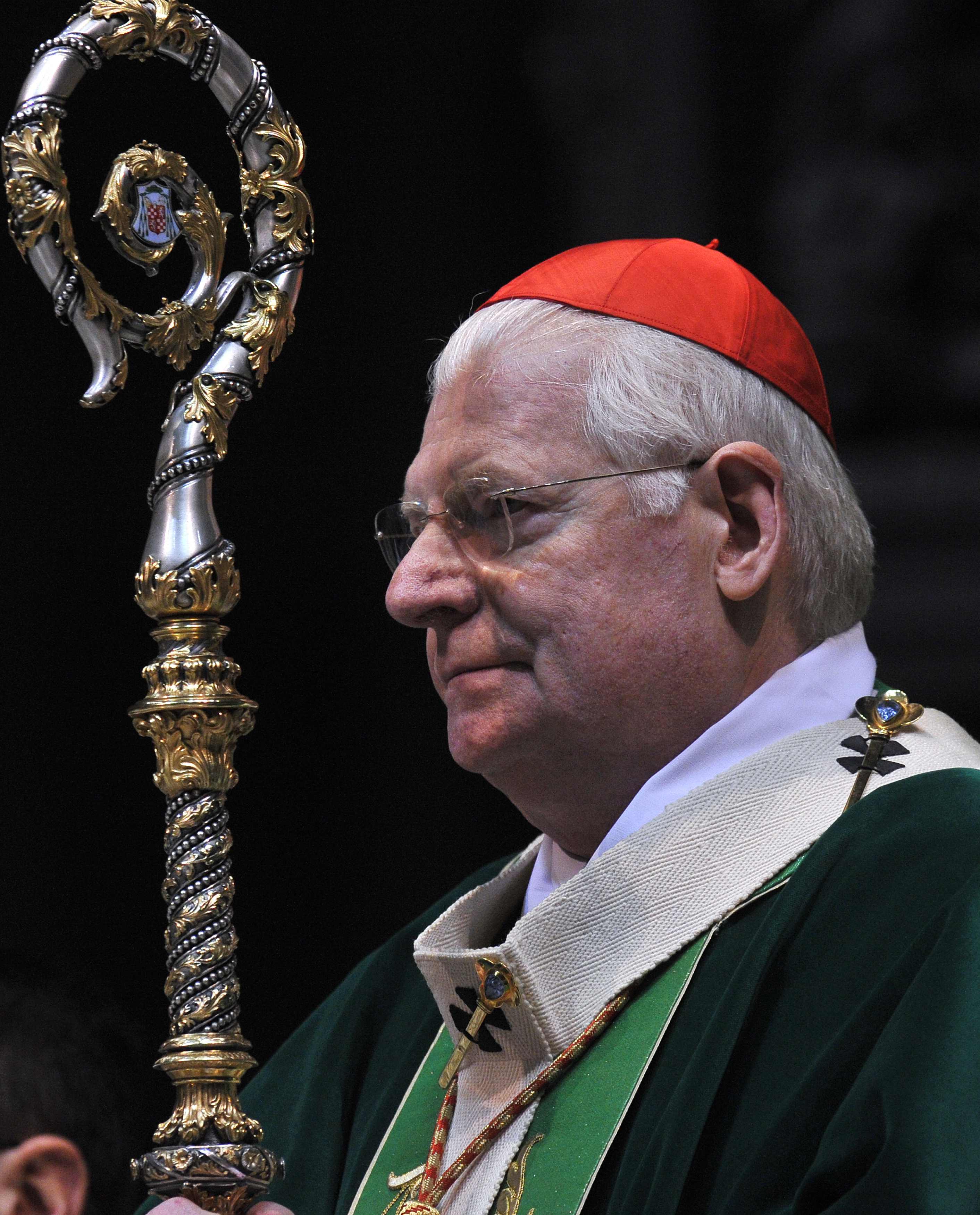
12 reasons why Cardinal Angelo Scola may be the next Pope : My chosen Papabile

Cardinal Angelo Scola attends a mass in Duomo Cathedral in Milan

Cardinal Angelo Scola (12 reasons why I think he is the best of all the other Candidates, a frontrunner, and should be elected Pope) :

1. Strong in faith and theology : Yes, an intellectual disciple of Pope Benedict XVI, and is as strong as our Pope Emeritus on theology and his deep knowledge of the faith and the Church

2. Close and capable to work with youths : Yes, will be Pope for the youths indeed, and have been working closely with youths in many occasions, especially in his pastoral ministry in Venice and now Milan.

3. Twitter : Already had, and had actively tweeted in the past! Will be no problem to continue to @Pontifex!

4. Italian and other languages : Yes, and Bishop of Rome definitely must speak fluent Italian! Also fluent in several other languages, including English.

5. Interreligious dialogue : Yes, and knowledgeable about Islam in particular, and have been active in reaching out to Christian minorities in the Middle East and the Muslim world.

6. Tradition : Strong in liturgy and tradition, a tradition-based Pope just like Pope Benedict XVI, we need a strong anchor of faith! A close and personal understanding of the liturgy through its beauty can only serve to strengthen the faith of the faithful and the Church.

angelo-scola
7. Charisma : Yes, strong charisma and outreach, and also has a global persona and able to connect with youths and other sections of the society.

8. Poverty and charity of the Church : Being born into low-middle income family, made him to have a close connection and personal connection to the poor and the less fortunate in the Church and the world.

9. Age : At 71, is at the prime age for Pope. Not too old (Pope Benedict XVI was elected at 78 and yet managed to lead an almost 8 year Pontificate), and therefore he will be expected to lead for 15-20 years, and relatively healthy, which is what the Cardinals seek. Not too young, and very experienced.

10. Experience (Curia) : Significant term as the Rector Magnificus of Pontifical University, and then as the President of the Pontifical Institute of John Paul II for Studies of Marriage and Family.

11. Experience (Pastoral) : Experience as Bishop of Grosetto, and long experience as the Patriarch of Venice, and also a great job as the Archbishop of Milan. Hence, being accorded the extremely rare honour of having headed to of Italy’s and the world’s most influential dioceses.

12. Bioethics and Family : Knowledgeable and had published books in bioethics (and also many other topics, totalling more than 120 volumes in total), and very supportive of marriage and family, and definitely strong in the matter, being the former President in the Pontifical Institute on the Family (see number 10). It is necessary to have a strong leader in the issue at the time when the institution of marriage and the family is under constant and increasingly serious attacks.

Thursday, 7 March 2013 : 3rd Week of Lent, Memorial of Saints Perpetua and Felicity, Martyrs (Scripture Reflection)

Brothers and sisters in Christ, today let us stand with God and declare our faith and love in Him, that we would not be like the stiff-necked people in Israel in the past, and those who spurned God’s love and even accused Him of doing evil in His divine ministry in this world. For they were blind, blinded by their human weaknesses, blinded by sin and evil that they have committed.

For they have no true love for the Lord in their hearts. They love not the Lord but the praise of men and worldly honour. For these people failed to see the works of the Holy Spirit in Jesus, in healing the disabled, and casting out demons from the possessed. They instead submitted to their human jealousy and hatred of the good deeds of the Lord. There were also those, as mentioned in the Gospel today, put the Lord to the test, to see if He is really sent by God, to test His powers by sending a sign for them to see.

In fact, the act that Jesus did in casting out demons from the possessed had been the very sign that they have sought, in order for them to believe in Him. But they still failed to see, for their eyes were veiled with a thick layer of worldly sin and filth, that prevented them from seeing the works of God that is good. Jealousy is another thing, that it was indeed possible that in the hearts of some of the people gathered there, there brewed jealousy for the powers that God had, in Christ. It was the same case in the Acts of the Apostles, where Simon the sorceror attempted to bribe the Apostles to have the same authority and power given to them. But the authority of God is not purchaseable, and God gives it only to those whom He deems worthy.

Indeed, brothers and sisters, today God wants to show us that we have to believe in God, and not to be distracted by the evil one, that we begin to accuse God’s works as evil, out of our blindness to see the truth, which eventually will cause divisions between us, and in the end, as Christ had said, we will not be able to stand united, and shall fall down.

Truly, we are One, One in Christ, one as a member of the One Body of Christ, that is the One, Holy, Catholic, and Apostolic Church, that is our Catholic Church. We must all always remember the warning that Christ had given us today, that no house divided against itself will be able to stand and survive. The devil will not survive if he is divided against his servants and his collaborators, and therefore, so does our Church.

Throughout the millenia since the birth of the Church, there had been many dissents and divisions that led to the painful separation and destruction of unity in the Church of Christ, in parallel to the civil war of the nation as mentioned by Christ. We managed to stay together as the Catholic Church, and even managed to welcome some of our separated brethren back into unity with the One and only Church of our Lord. But even within our Church today, there are divisions, that will threaten to destroy the unity and harmony between all the faithful ones in God.

There are those who are blinded to the reason for unity, and chose to separate themselves from the Universal Church to pursue their own goals and ideas, rejecting all other ideas and anything that our Church had come through in the past 50 years since the reforms of the Second Vatican Council. On the other hand, there are many who had succumbed to the world, and buoyed by the evils of the world, begin to demand for worldly changes and innovations to enter the Church.

We must learn to be courageous and say no to all these things that brought disunity and discord into the holy Church of God. We must stand firm despite all the pulls that the world and evil that tried to break up the unity of the Church. How are we to bring back our separated brethren in Christ, those who had been lost in their long journeys in the faith, into the One Church of God, if we ourselves are divided in a civil war against ourselves?

Therefore. brothers and sisters, once again let us pray for unity, both among ourselves, the faithful in Christ already united in His Church, and ourselves and our separated brethren in the myriads of ‘churches’ throughout the world, with our brethren in the Eastern Orthodox and Syriac Orthodox Churches, and that very soon, Christ’s prayer and wish that all of us may be one (That they all may be One) just as He and the Father is one and indivisible, will be fulfilled, and all faithful in God, will be One.

Today, we also commemorate the memorial of Saints Perpetua and Felicity, who were martyrs in the early days of the Church. Saint Perpetua and Saint Felicity were a noble mother and her slave respectively, who were martyred in the height days of the Roman Empire, due to their steadfastness to stand by their faith and their God, and refused all forms of persuasion for them to leave their faith and convert back into paganism. Their faith in God and solid stand had earned them martyrdom and thus eternal life and place in heaven with God who loves them and all of us.

Therefore, brothers and sisters, let us not be divided among ourselves and instead strive for unity, beginning from those near to us, and gradually let us work for unity of all, reach out to our brother Christians who is not yet in full communion with the Holy Church of God. Pray that all will soon return and be united in Christ in the Church He had established on Peter, the Rock.

Pray for us, Saints Perpetua and Felicity, that we also can follow in your footsteps and imitate the strong and unshakeable faith both of you had in the Lord, even to giving up your life for God’s sake, out of love for Him and His children, all of us. Amen.

Sunday, 3 March 2013 : 3rd Sunday of Lent (Scripture Reflection) (First Scrutiny of Baptism)

Dear brothers and sisters in Christ, today is the story of salvation. First that of the people of Israel, and then all of us, who are saved, both by God, through His agents. The people of Israel suffered under great slavery in Egypt under the Pharaoh, who forced them to work day and night, to build the buildings and monuments for the Egyptians. God sent Moses, as His messenger to the Pharaoh to liberate His people from the chains of Egyptian slavery.

When Pharaoh refused, God sent the ten plagues to punish the Egyptians, who eventually let them go, but before they had even reached the Red Sea, the Pharaoh had yet changed his mind again and intent on re-enslaving the Israelites again. God split the Red Sea and brought His people across that sea and crushed the Egyptians under the waves as a sign of His faith and love to His people. And that He is not hesitant to punish those who had been ignorant and whose heart had been hardened against His love.

But yet, the Israelites rebelled, and had put the Lord to the test. They doubted His power and majesty, and even doubted His love. They complained against Him because of their thirst and hunger, despite God having constantly showing His kindness through the manna, the birds, and many other provisions along the way. They even mentioned going back to Egypt where they claimed that life under slavery would have been much better than to suffer and die in the desert. It is better to them they thought to live in slavery and hard work, but at least well fed by their slavemasters, than to be free and walking in the desert of death.

Then, it is the same, as the Lord Himself sent His only Son, Jesus Christ to be our Messiah, our Saviour, that all of us can be saved from certain death, under the slavery of sin and Satan, who is like Pharaoh, who is our slavemaster. We were servants of sin and were the thralls of Satan prior to our liberation through the waters of baptism, for through that living water of baptism, our thirst, the real thirst that we have, is quenched by the living water of Christ. Christ dwelled in us and became the living spring of water of eternal life.

For this living water of Christ quenches our real thirst and our real hunger and longing, that is not the physical thirst of water or hunger for food, but truly our thirst for the redeeming Word of God, and most importantly, the infinite love that God has for us. For separated from God, under the slavery of sin and evil, we are cut off from the love of God, and therefore, we suffer because of such separation.

We also constantly rebel against the Lord through our sins and our sinful ways, but the Lord is ever ready to forgive us, but only if we had not hardened our hearts against Him, and instead humbly asking Him for forgiveness. Let us not be like the Israelites who always complained that they did not have enough even though the Lord had provided them greatly, for who else in the world had ever received heavenly bread of manna as food every morning? And flocks of bird for them to eat? and crystal-clear water that satisfies thirst?

Let us therefore, brothers and sisters in Christ, strive to be faithful to God, and most importantly, to know how to feel enough, and sufficient, and not to succumb to temptations and our greed, to have more, when we already have some that we need, and what is enough for us. This is what had driven the Israelites to rebel in the desert, because they felt that they did not have enough. Let us also open our hearts to God and His love, and let us be filled and satisfied by His love, through His dwelling in all of us and our hearts.

Pray brothers and sisters, that we will not fall back into the slavery of sin and evil. For evil will continue to try to put us back into slavery under him and sin, as all of us who are faithful in Christ and had been baptised, had been liberated by the living water of Christ, who died for us on the cross that our chains are broken, and we are freed, just like the lamb sacrificed on the Passover, the blood that marked the doors of the people of Israel that God would pass from them, so did Christ gave us His Precious Blood to mark us, that God knows that we belong to Him, and will not pass judgment of death upon us, but stay in Him and have eternal life.

May God keep us in His love, and keep us in His loving embrace, and protect us from the assaults of the evil one. That the chains that had been broken will not come back to chain us once again. For we are free and we now obey and love God and Him alone. Amen.

Who to watch for in 2013 papal conclave? Scola, Ouellet, Ravasi, Scherer

Scola, Ouellet, Ravasi, Scherer, who you should watch for in the Conclave.


Scola (Cardinal Angelo Scola, Metropolitan Archbishop of Milan)

Italian, so that even though he’s not in Curia, he did have experience in Rome, and he is already close to Rome, both in distance and relations. Also close to Pope Emeritus Benedict XVI,
and he has also done great job in Venice and then Milan, in which
these two archdioceses alone produced 5 popes in the past century

Only Pope Benedict XV and Pope Pius XII were not from these (excluding Pope John Paul II and Benedict XVI)

Venice : Pius X, John XXIII, John Paul I
Milan : Pius XI, Paul VI

Also at the forefront of communication with Islam through the publications Oasis he created to reach out to Christians in the Muslim world, and involved in interreligious dialogues.

Scola is also more charismatic than Ouellet and also active in the media via youtube, twitter, his site.

Scola is also a well-known author in bioethics, and certainly is a trait needed for a Pope that will lead the Church in its constant battle against the improper use of Science. Yes to an ethical science, but no to unbridled and uncontrolled use of science!

If the conclave proceeds smoothly, he should be the one elected Pope, within 2 or 3 days from the start of the conclave.


Ouellet (Cardinal Marc Ouellet, Prefect of the Congregation for Bishops)

In the Roman Curia and in charge of the bishops, but with the problem is that his archdiocesan experience is not that good, and the story has come out that the very church and parish we was born into, was no longer there, which is shameful considering the rate of secularisation in the west. Formerly he was the Metropolitan Archbishop of Quebec in Canada.

But so far he has done quite a good job, and quite in line with Pope Benedict XVI, by appointing bishops who are not only known to be good administrators, but more importantly, bishops who are holy, and are steadfast in their faith, with individuals like Archbishop Chaput of Philadelphia and Cardinal Tagle of Manila as example.


Ravasi (Cardinal Gianfranco Ravasi, President of Pontifical Council for Culture)

Ravasi is the forefront in how the Church communicates with social issues and the media, and he has been quite active in twitter, more so than Scola, but his administrative skill has been found rather lacking, since he has only five or six years experience as a bishop and never had any experience in handling major archdioceses or dioceses.

At least Cardinal Ravasi will sure make good use of the social media to help evangelise the faith to many, especially youths. But at the moment, we will also need candidate who are more experienced in administration as well, especially considering the troubles that had befallen the Church in recent years due to some inefficiencies in administration.


Scherer (Cardinal Odilo Pedro Scherer, Metropolitan Archbishop of Sao Paulo)

Scherer is rather conservative and as a Latin American, this may boost his chances, but he is quite young and he is not familiar with the curia and with still a relatively short experience as a senior prelate, he needs more experience in managing important archdioceses and other administrative matters.

In addition, the status of Brazil as a country, although having the largest Catholic population in the world, but the rapidly declining number of Catholics in the country as a percentage of the population and the rapidly growing secularisation in the country (also affect the rest of Latin America) may also affect his chances.


In fact, this time round, just as it was with the election of Pope Benedict XVI, now our Pope Emeritus, we does have a clear leading papabili, and the number of papabili is in fact not as many as the media mentioned it.

It will not be like the election of Pope John XXIII when there is no clear preferred papabili present, which resulted in the election of Cardinal Angelo Roncalli, later Pope John XXIII as the compromise choice.

Pope Benedict XVI’s retirement and what the world thinks of it : Why we should not fear and worry

http://www.catholicherald.co.uk/commentandblogs/2013/03/01/every-snarky-comment-about-the-pope-is-an-insult-to-me/

Indeed, as we all should know, the world does not like us, it does not like the Pope who leads the Church, just as it does not like Christ, as He Himself had said that this world hated Me, and it will also hate and persecute those who believes in Me and follow My teachings and My ways.

But we should not fear, and we should neither worry, but we must be courageous and steadfast as God will guide us and He will surely protect us from harm. Let us all, rather than hating the world and hating these people and institutions which had made so many attacks on the Pope and the Church, let us forgive them, and pray for them. That they all too will learn the truth of Christ, and be enlightened. Let us show them what is the Church and our faith all about, not by attacking back viciously or having any siege mentality, but let us offer ourselves in love, to embrace those who hates us, that they too will believe in God and His love.

God bless us all, and God bless His Holy Church, our Pope Emeritus Benedict XVI, his successor-to-be, and bless the world with all its people. Amen.


Content of the article from site above :


Every snarky comment about the Pope is an insult to me

People outside the faith will never understand how much the Holy Father means to us

By on Friday, 1 March 2013

The See of Peter is vacant, and as a result, like so many others all over the world, I feel a little bereft as I write this. Yesterday, as in so many other parishes, we did our best to mark the end of Benedict XVI’s reign and ministry as Supreme Pastor. The children in our primary school, many of whom were not born when he was elected, had a celebration; and there was, in the evening, Vespers, Benediction and Te Deum, followed by food and drink. It was nice to be able to say goodbye to a Pope while he was still alive – a novel event – rather than to mark his death and burial; but all the time I was aware of those pictures on the television, of the helicopter flying past the dome of St Peter’s taking the Pope away from us all. It felt like a bereavement, and it felt that way because it was a bereavement.

I was born in the early months of Pope Paul VI’s reign, and so I have seen four Popes, and await my fifth. I have had a deep personal attachment to all four, even though I never met any of them in the flesh, and I only ever saw John Paul II from an immense distance. But, the Pope is our father, and we love him; he belongs to us, we are part of the same family of faith. These four pontiffs have had a great formative influence on me, and I do not think that someone who is not a Catholic can really understand this. Andrew Brown,  who writes for the Guardian, always writes well, and he has great insight into religious matters, but he stands outside the family of faith, and as a result, he does not get why this Pope, indeed any Pope, matters to us so intensely. The Church is not an organisation like the United Nations or the European Union or the Liberal Democrat Party. It is the Mystical Body of Christ. To be Catholic is to experience the joy, peace and love that belonging to the Mystical Body brings; it is to be in communion with the Pope, which is the visible sign of that Mystical unity. And that in the end is why I cannot really express to anyone just how intensely I loved Benedict XVI, John Paul II, John Paul I, and Paul VI, or how intensely I will love the Pope who is to be elected shortly.

This is the mystery of the Mystical Body. Those outside the Church need to deal with it. It is the way we are. And it is the reason why when people make snarky comments on Twitter about the Pope, any Pope, they do not really insult the Successor of the Apostles, they insult me.

How happy I am that, wherever I have been in the world, I have been with people who profess the Catholic Faith, people who follow Christ and follow Peter. Ubi Petrus, ibi Ecclesia, ibi vita eterna. For those who need a translation: Where Peter is, there is the Church, there is eternal life!

Friday, 1 March 2013 : 2nd Week of Lent (Scripture Reflection)

We are urged today, not to have evil thoughts on our brothers and sisters today, as illustrated earlier in the story of Joseph in the first reading and the psalm, and how he was sold off in slavery to Egypt due to his brothers’ jealousy, which caused them to initially harbour evil thought of killing him. The same evil intent and plot also happened in the Gospel when the tenants disposed of the servants and the son of the landowner, in the intention of gaining the lands they have been lent with, and disobeying the owner’s wish.

We should not harbour such evil intent, but instead look upon our brothers and sisters with love. Especially, just as Christ has taught us, we should even also look upon our enemies and our persecutors with love! and pray for them too!

And then indeed, the story of the Gospel today, as many of you would know, is a parable on the life of Christ Himself, with the Pharisees and the chief priests being labeled as the evil tenants, as obviously stated in the Scripture. Jesus is the Son of the owner, who is God the Father, who sent Jesus to us, down to earth, just like the owner sent his son in the hope that he will be able to bring the tenants into line and pay up what they are supposed to pay.

But yet, the rejected ones, as we had seen, in both Jesus and Joseph, had become a great instrument of the Lord through their rejection by the people, represented by the brothers of Joseph and the tenants in the Gospel. For Joseph became the regent of Egypt through the gift of prophecy through dreams granted to him by God, which saved thousands if not many more souls from death, by the wise and ample preparation before famine ravaged Egypt for seven years. All these would not have happened without Joseph and his dreams.

Even greater is therefore the role of Christ, for in being rejected by the people, the ‘tenants’ particularly the chief priests, teachers of the Law, and the Pharisees, He has become the very instrument of salvation of all mankind. This rejection was represented by the arrest of Jesus, His trial by the Sanhedrin, leaders of the priests of Israel, and finally His condemnation to death, and His death on the cross. In this He, as the rejected stone by the builder, had become the cornerstone, the very vital part of God’s plan of salvation.

What is a cornerstone? While we do not often use the terms in daily life, architects and those dealing with infrastructure and buildings will know it very well. For cornerstone is named so, since, at the time of the Roman Empire, there is a passion for building commemorative and triumphal arches. Some of these arches can still be seen even today, and some remained in the city of Rome itself. Why are these arches so strong and so solid to be able to stand for centuries and even millenia? It is because of its structure, which is so wonderfully constructed even without modern technology to keep them intact, all just because of one single stone at the peak of the arch, which is called the cornerstone.

This cornerstone is the focal point and the most important point of the arch. For if the cornerstone is removed, the arch will immediately crumble. As long as the cornerstone remained in place, removing other stones from the arch would have minimum impact on the arch’s integrity. Similarly, cornerstone can also be found in other buildings, also known more as the foundation stone. This stone holds up the integrity of the whole building by just being there, and as long as the stone stands, the building will too.

Christ therefore, has become our cornerstone through His death and sacrifice on the cross, and later His glorious resurrection and triumph over death and evil. Why is He our cornerstone? That is because if we keep our anchor on Him, keeping faith in Him, and ensuring that our faith is anchored deeply and securely in Christ, no amount of worldly temptations, and no amount of attacks and persuasions by evil can sway us and make us to fall away from the grace of God.

Through Christ who is our cornerstone, we then can act out His love and compassion on all mankind, for only if we anchor ourselves in Christ, that we can act with love and kindness, out of our faith in God who also loves us dearly that He did not even hold back His Son to be given to us for sacrifice to liberate us from eternal damnation.

Then Christ too established His Church, our Church, as the living and concrete presence that represents Him and His mission in this world, and there was none other than Peter the Apostle, upon whom, as the Rock, Christ chose to build up His Church, making Peter the cornerstone of His Church, the Body of Christ, which is made up of all of us the faithful in Christ.

Now, that our Pope, Benedict XVI, who was the 264th successor of St. Peter, had stepped down from his position as our Pope effective today, our Church, God’s Church, has been left without that cornerstone of faith, which has been passed down since the day of Peter, the first cornerstone of the Universal Church. We still have Christ of course as our Cornerstone, on whom all hearts and minds must be directed to, but it is through the Apostle Peter and his successors, the Popes, that this is made manifest, by them being the cornerstone of God’s living presence in this world, that is the One, Holy, Catholic, and Apostolic Church.

Therefore, today, and through the sede vacante period, and beyond that, let us pray, brothers and sisters in Christ, that first, we all will remain ever faithful, and that our anchor of faith will ever be solidly planted in the cornerstone that is Christ our Lord, always remembering His rejection and sacrifice on the cross that made Him the cornerstone of our life, the cornerstone of salvation, that enabled mankind to return and be reunited with God.

And then, we also pray in particular for our Church, that God will guide the Cardinal-electors who will elect a new Pope to succeed our beloved Pope Benedict XVI, with the guidance of the Holy Spirit sent by God upon all of them. That the world will again have a tangible cornerstone that is the successor of St. Peter, who made the Cornerstone of Christ manifest and real in this world, as the cornerstone of God’s most Holy Church, and as the cornerstone and head of the Body of Christ, the Church, leading all the faithful in Christ in unity with Christ their Saviour.

In the end, the cornerstone, although important, still requires the presence of all of us, the stones surrounding the cornerstone, for the cornerstone by itself will not make a building. Therefore, brothers and sisters in Christ, let us support the new Pope, whoever he will be, as all the people who believe in Christ, that the new Pope, the future cornerstone of the Church, will together build up a solid and strong Church, that is able to project God’s love and work into this world, that more and more people will be saved.

May God bless all of us, bless His Church, bless our retired Pope Emeritus Benedict XVI, and his soon-to-be elected successor. Amen!

Thursday, 28 February 2013 : 2nd Week of Lent (Scripture Reflection)

We heard today, the well-known story of Lazarus the poor and the rich man. One who suffered in this life and received his reward in the afterlife, while the rich man who enjoyed in this world, suffers  grievously in hell. Do not be confused though. God does not hate the rich, and neither that He hates those who have more. It does not mean that if you are poor then you are guaranteed entry into the kingdom of heaven.

No, indeed, what matters is the state of the soul, and how are we aligned with God in our hearts. Wealth and property can be a hindrance in our path to God, but they can also be an asset that helps us in our path. What matters is how we use them, and to whom we depend on. We have a choice, either to place our trust in the eternal and undying Lord our God, and in His love, or to place our trust in mortal man and temporal wealth.

Wealth though useful, as indeed, we cannot live in this world today without money at all. Money makes the world spinning, and it allows many things to be done. But, as we have seen in many people today, many are ensnared and trapped in the futile thirst for wealth, possessions, affluence, and wanting for more of each of them, that they plough forward thinking only on the best way to get these, and immerse themselves so fully in their career and work, so that they can earn all these. Such is the kind of damage to our soul and our being, that materialism and commercialism in our world has brought us.

Just as in the first reading, in what the Lord said to the prophet Jeremiah, that these men who placed their trust in mortal and temporary things will be cursed and rejected just like the rich man. You can party all you want all day, and have a very enjoyable life in this world, but in too many cases, because of such pleasure, enjoyment, and fulfillment, we became blind to those around us, we became blind to the condition of the world outside our comfort zone, and we ignore the cry of the poor and the less fortunate for help.

We do not need to give all our wealth and possessions to the poor. We do not need to sell our homes and live like a poor ourselves, denying ourselves any property. For what is important is that, to listen. Just as Abraham said to the rich man in hell, that there is a need to listen, to listen to the teachings of God through the Law and the prophets, and listen to the word of God, which today we read and listened to in the readings. But to listen is also to sharpen our minds and our senses, to open our eyes and ears to see and hear the plight of the less fortunate around us.

That beyond all those ceaseless partying, happy life, and all, there is a way to achieve true happiness. Because, happiness that is built on these materials, possessions, and all mortal things will eventually be swept away, and although it is real happiness, but it is not true happiness. What is true happiness is to follow what God has constantly taught us through Christ, to follow His commandments of love.

To love our neighbour as we love ourselves, and to love God Himself with all our strength, and with all our being. In doing so, we will gain true satisfaction, and with the knowledge that God loves what we are doing, if we do so, we can be rest assured that we will not suffer the same way the rich man did. For the rich man had many opportunities in life to help Lazarus in life, who always present at his gate, and therefore must be well known to the rich man. Yet, instead of giving him help, the rich man lifted no finger to help and abandoned him to his death.

Indeed, again we heard about the sin of omission, that is, failing to do what we are supposed to do, and failing to do what is good, when we are able to. To sin is not by just doing what is bad and evil in the eyes of God, but we also have committed sin, if we are fully capable of doing good, and have the power and capacity to lessen the sufferings of others by sharing what good we have, but have chosen to ignore, and do not use what we have, the opportunity that we have. Such is the sin of omission, that the rich man had done, in addition to whatever bad things he might have done in his life, that made him deserve hell.

For in hell, the sufferings that the rich man suffered is in fact not physical fires and torment, as what many would have thought and portrayed as the burning hells. Instead, what is hell? Hell is the ultimate separation between God and man, where man has no hope of eternal life, but eternal death and separation from God who is everything. For God encompass everything and loves all of His creation, that it is incomprehensible to be left out of His love and presence.

Hell is when we have totally rejected God, and have turned our back entirely from Him, and shunned His divine and infinite love. The suffering of the rich man is the suffering of the soul, the internal fire, a fire that is the absence of the love and presence of God, that burns the person so greatly that they suffer. Imagine a world where you cannot reach out to God, and where you have no hope of escaping, and imagine the place where it is too late for you to ask the Lord for forgiveness, because we ourselves have rejected Him. That is the true hell.

We have the privilege today to listen to the Word of God through the Scripture, just as the rich man had the opportunity to listen to the Moses through the Law, and the prophets. Therefore, brothers and sisters in Christ, it is now up to us to choose, whether we want to listen to the Word of God, and begin to change our ways and our life, that we may live in charity and love, or to reject the Word and continue to revel in our own pleasurable life, that is not true happiness.

Let us pray for one another that all of us will grow ever more in faith, hope, and love. That all of us can do in our own ways, charitable acts and acts of love, to help those less fortunate around us, and not limited to just that, but also to comfort the sorrowful and to accompany the lonely, and many others things that we indeed can do, and we have the potential to do. Let us pray for our Church, that it can continue to do its numerous act of charity, which all of us can also participate in, for the good of our brethren throughout the world, suffering from hunger, injustice, prejudice, and even persecution. May God bless us all, always. Amen.

Wednesday, 27 February 2013 : 2nd Week of Lent (Scripture Reflection)

Today we again hear about the virtues of humility, and that humility is indeed not the symbol of humiliation, but rather, the symbol of internal strength and justification before God. We also listen today that as the ones who are faithful to the Lord and to His message, life will not be easy for many of us, as the world who hates Christ and His truth, the evil one who hates Him, will definitely also hate all of us, who believe in Him.

Then, through humility, we learn the value of service, to serve one another, following the example of Christ who led by example, the very example of His own life, that ended with His sacrifice on the cross, His ultimate service to all of us. He taught us that to be a leader, we have to render service to others, and ultimately to be responsible for the people entrusted to us. Such is Christ as the Good Shepherd showed His example to us, as a good shepherd lay down his life for his sheep. So too a leader must lay down his ego, and strive to work for the good of the people that he is the leader of.

It is always difficult to do good, to do charitable and loving acts in this world, as there will be many who will not be pleased at such acts, and there will be many who are against the Lord and His ways. But we have to persevere to do so, for the good of the people around us, and for the world itself, even if it hates us so.

Today, in his speech at his last General Audience with the public, our beloved Pope Benedict XVI has mentioned that although he will no longer be Pope, he will never abandon the Church, but rather he will continue in prayer and therefore, as we all should know, lead us in the spiritual battle against the evil one and his mischievous ways, through prayer. For indeed, a praying retired Pope is more powerful than even when he was still active as Pope and leader of our Church. Our Pope too, imitating Christ, in his great humility, has decided to step down, and therefore allow others who are more capable to continue the good works he had started for the good of everyone, especially that of the faithful in Christ.

Our Pope mentioned that although he stepped down from the cross that he has undertaken as our leader, he remains at the foot of the cross in prayer, to support the new Pope who will bear the cross of Christ, together with all the faithful. It is a symbol indeed of great humility, which we too can follow. Remember too, Christ who is divine, but yet lowered Himself such that He was willing to die on the shameful cross, only for the symbol of that shame to be transformed into the victorious cross. We, who are to bear our own crosses with the Lord, should therefore follow in our Lord’s footsteps, to carry our crosses in humility, in order for the burdens of our crosses to be transformed too, into the victorious cross.

But, we are not in this alone, for God walks with us, He who suffered through mockery, humiliation, and death for us. And remember too that all of us, brothers and sisters in Christ, walk together this path of faith, towards the Lord. The path will not be easy, and many challenges would await us, but if we stay faithful in Christ, and believe in one another, and most importantly help one another in our journey, and keep love at the centre of our being, we will prevail. The Lord too would not have prevailed, had He not, out of His infinite love for all of us, willing to continue, bearing the weight of all of our sins, through falling and rising, and through curses and lashes, towards Calvary, and from there towards salvation of all mankind.

Therefore, brothers and sisters in Christ, today, let us pray for ourselves, pray for one another, and also pray for our Pope, that together, despite all the sufferings and the obstacles laid in our path towards God, that we can stay together, help one another, and shoulder our crosses, that when the time comes, our burden and our shame will be transformed to that of the victorious cross of Christ, the symbol of salvation. Let us pray too that all of us will be able to embark on missions to reach out to others around us, to alleviate suffering from all, and to show love to all those whom we meet, even to those who hates us and wish for our destruction.

God bless us all, God bless His Holy Church, and God bless our Pope, Benedict XVI. Amen!