
Sunday, 12 January 2014 : Feast of the Baptism of the Lord (Scripture Reflections)

Liturgical Colour : White

Dear brothers and sisters in Christ, today we celebrate a great feast of the Church, commemorating the baptism of our Lord Jesus Christ at the Jordan river by St. John the Baptist. This baptism marked the beginning of the ministry of our Lord Jesus, after thirty years of His life in this world since He was born.

A detail on the early life of Jesus besides His birth, presentation at the Temple and the time when He was left behind in the Temple at twelve was scarce and absent, but it was likely that He lived normally as any man would, under the care of His loving family, Mary His mother and Joseph, His foster-father. He would have lived normally as any sons of a carpenter would live, learning and understanding the world from Joseph, His foster-father.

Jesus came to the Jordan to be baptised by John because it had been prophesied as such by the prophets, and it therefore the very first instance when Christ the Saviour was revealed to the world, the very first instance when many could see and hear the witness of God’s sign of salvation. The truth about God and His saving plan was made clear at that moment when Jesus was baptised.

God made His Son, Jesus Christ to be the Christ or the Messiah, or the Saviour of the world. That was because it was only in Christ that the world could be freed from the chains of sin and evil that had enslaves it since the time when sin first entered the world. And all those who believe in Him would receive the great reward of salvation.

In that event too, God made obvious His nature for the world to see. First, that He is the one and only true God as opposed to all other false gods. He is the one and only supreme Lord and King of all, as the One who created this universe and everything in it, including all of us. But in this Oneness and unity, He has three Divine persons, all coexisting with each other in perfect unity, Three distinct persona, but One in nature and in perfect and indivisible unity.

Yes, what was shown in the event of the baptism of Jesus was what we know as the doctrine of the Most Holy Trinity. God that is One and yet has Three distinct persona of Father, Son, and the Holy Spirit. All of them are God, and One. The Father is the aspect of God as the Creator and the Omnipotent ruler and Lord of all things, while the Son, who was the Word of God made flesh, is the One who made things come to be, including the creation as well as the plan of salvation. The Holy Spirit is the force and power behind all things and all creation, as well as the life that God has given us.

The Father is not seen or visible to us, as He was portrayed in the Old Testament as a burning bush to Moses, or as a gentle wind to Elijah. It was often His voice that was heard, speaking His will to the prophets or directly to the people of God. Meanwhile, the Son who was the Word of God since the beginning of time and before that, was made known to us, in the person of Jesus Christ, incarnate as a Man, to become the Saviour of the world.

The Holy Spirit was also not directly seen like the Father, but is often portrayed as the flames of fire symbolising the flames of the Spirit of God, just as what happened in Pentecost, as well as a dove, which is the form that the Spirit took when Jesus was baptised at the Jordan. Thus, the Holy Trinity of Father, Son, and Holy Spirit, recalling the baptism of Jesus at the Jordan.

How is this important to us? That is because when we were baptised, we were immersed with the water of baptism much like Jesus as He was immersed in the waters of the River Jordan. And not only that, to show that our baptism is not symbolic, but instead a Sacrament, we were all sealed in the Most Holy Name of the Holy Trinity, to be the possessions of the Lord, and marked for His saving grace, which He had revealed to the world through Jesus.

Jesus Christ was unique among every beings that had ever been in creation and in this universe. That is because He is one Being with two distinct natures, one that is fully divine and the other that is fully human, the two natures of which are united much in the same way the Holy Trinity is united to each other, perfectly united in love and indivisible from one another.

The divine nature of Christ is the One who had existed before all ages with God and was God, the Logos or the Word of God, who came down into the world, and with the will of the Father and the power of the Holy Spirit, was conceived into the world in the womb of the Blessed Virgin Mary, His mother, and that was the time, when His human nature, that is Jesus Christ, becomes extant.

The two natures had always existed together in Jesus, but as He grew as a baby and then as a young child, the complete truth about His appointed mission in this world was not revealed to Jesus. Nevertheless, He grew to be great with wisdom and knowledge as He aged, and whatever had been taught to Him by His family in this world. It was however at His baptism in the Jordan, when the Trinity once again come together, in the Father, Son, and Holy Spirit, that the fullness of the divine mission of the Messiah, Jesus Christ, was made completely clear.

Hence, it can be said that this is the moment of new beginning in the earthly life of Christ. He began His ministry and teaching the Good News for the next three years or so, gathering His disciples and performing miracles and healing for the glory of God. It marked the beginning of the period of great graces of God, just as it does for all of us.

When we were baptised, we were marked to be the possessions of the Lord, that the mark of the Lord will remain for us for the rest of our lives. We were made completely clean once again, without any taints of sin with the water of baptism, and most important of all, we are all made children of God upon our baptism. But then we cannot just be idle or engage again in sinfulness, as we were indeed made clean upon baptism, but there also began our journey of faith towards the ultimate salvation in God, just as Jesus embarked upon His ministry.

May the Lord our God remind us of our holy baptism, of the time when we were made His children and welcomed into the Church, today, when we celebrate the baptism of His Son at the Jordan. May we remember always the water of baptism that made us whole again and worthy of the Lord, that we will resolve from now on to continue living in faith and devotion to God, without turning to the left or right.

Stay faithful, brethren, and as we rejoice in the baptism of our Lord Jesus Christ, let us also remember our own day of baptism! Yes, when we were made glorified as the children of God! God bless us all. Amen.

Friday, 14 June 2013 : 10th Week of Ordinary Time (Gospel Reading)

Matthew 5 : 27-32

You have heard that it was said : ‘Do not commit adultery’. But I tell you this : anyone who looks at a woman too lustfully has in fact already committed adultery with her in his heart.

So, if your right eye causes you to sin, pull it out and throw it away! It is much better for you to lose a part of your body than to have your whole body thrown into hell. If your right hand causes you to sin, cut it off and throw it away! It is better for you to lose a part of your body than to have your whole body thrown into hell.

It was also said : ‘Anyone who divorces his wife, must give her a written notice of divorce.’ But what I tell you is this : If a man divorces his wife, except in the case of unlawful union, he causes her to commit adultery. And the man who marries a divorced woman commits adultery.

Thursday, 2 May 2013 : 5th Week of Easter, Memorial of St. Athanasius, Bishop and Doctor (Scripture Reflection)

Today, we hear the words of Christ, that we all should love, just as Christ and His Father, our Lord have loved us, so then we should also love them back with all our hearts, our minds, and our souls. For love lies at the very centre of our faith in God, and it is in love that we truly can have faith in Christ. If we have no love in us, we can never be truly faithful to Christ and to God, for without love, we cannot possibly understand what they are doing and what they have done, for our sake, and for our own good.

Love one another as God has loved us. Indeed, it may seem to be easy for many to say that they can love, but in fact, love should not be taken for granted, for the ability to love is not as easily obtained as one would think, but true love require great dedication and effort, in order for love to be present, to be maintained, and to be able to flourish. Our world lacks love, and it is in this lack of love, that the many problems of our world can trace their roots from.

Have we followed Christ’s commandments, the commandments of love, to love one another as unconditionally as Christ had loved us? He died for all of us, by suffering on the way to Calvary and finally hung between the heaven and the earth, so that all of us may be saved from death that is our fate, and by His resurrection we can share in His life, that all of us will have eternal life in Him. This He offered to everyone, even to those who hated Him, and even to those who persecuted Him, and His people.

To be able to love is a great blessing to all of us. If we are able to learn more about love, and how to love, we will be able to transform ourselves, but indeed not just ourselves, but also those around us, and many other things surrounding us. Love is indeed the key to life, life eternal in God, both for ourselves and to those to whom we show and reflect God’s love.

Today, we celebrate the memorial and feast of a great saint, Saint Athanasius of Alexandria, who was one of the great early Church Fathers that helped to establish the Church of God, and strengthened the faith of the people of God, in the onslaught of heresies and heretical thoughts espoused by those who the devil had entrusted to destroy God’s Church. The devil hates love, and therefore, it is only natural that he will want to destroy the very place where love can still be found in this world, that is in the Church of God.

St. Athanasius defended the Church against the heretical teachings of Arius, the popular presbyter and preacher, who espoused the idea that Christ is not fully man and fully divine, and rather just as a man, a mere human, without divine qualities, as we believe in our Creed. St. Athanasius had to suffer exile and persecution due to his steadfast defense of the Lord and the true faith in God, against these heresies. Yet he prevailed, and due to his ceaseless efforts to bring many back to the true faith in God, he managed to prevail in the end, and bring back countless ones back into God’s Church and therefore into God’s love.

For we have to remember always that Christ is no mere human, for He is the Son of God, both fully human and fully divine at the same time. He is God, and with God since the beginning of time. And it was because of the great and infinite love that God has for all of us, that He sent His only Son, Jesus Christ, to be man like us, and in this great love, we are saved and are given chance for eternal life, if we would receive His divine love and that He is our Lord and God.

For if we believe that Christ is just mere human, then there would be no hope for all of us, all of us beloved by God and who place our trust in Christ. For a human’s blood has no power to free us from the chains of slavery of sin, which Satan has imposed on us, since the rebellion of our forefathers, Adam and Eve, our ancestors. But because Christ is God, and with God, one with He who created us, we have hope since the Lamb of God Himself shed His Precious Blood, that we can be saved, out of His great and infinite love for all His people.

Now that we know how much God has loved us, and how much He wants us to remain within His love and care, should we now then vow to our Lord and God, that we will love Him ever greater and ever more? Let us put our full trust in Him and follow in His ways, in the footsteps of St. Athanasius, the great defender of the true faith in Christ. St. Athanasius of Alexandria, pray for us. Amen.

One, Holy, Roman, Catholic, and Apostolic Church : Extra Ecclesiam Nulla Salus

Image

One (Indivisible by men and worldly ambitions)
Holy (Sanctity and Divine, belonging to Christ and is His alone)
Roman (Church built on St. Peter the Apostle by Christ)
Catholic (Universal, no Church but in the true Church of God, the One Body of Christ)
Apostolic (Missionary Church, spreading the Word of God to all mankind)

Church (The One Body of Christ, the united body of all the believers in Christ)

That is our Church, the Church Christ had entrusted and established on Peter, His Apostle, to whom He entrusted His flock and the keys to the Kingdom of Heaven.

Image

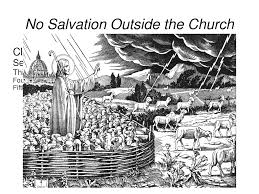
Extra Ecclesiam nulla salus, salvation only in the Church, and there is no salvation beyond that.

Ut Omnes Unum Sint, ad Maiorem Dei Gloriam
(That they all may be One, for the greater glory of God)
+Peter Canisius Michael David C. Kang
Taipei, Taiwan
Saturday, 11 May 2013

Friday, 8 February 2013 : 4th Week of Ordinary Time, Memorial of St. Jerome Emiliani, and St. Josephine Bakhita, Virgin (Scripture Reflection)

We heard today of the tale of how St. John the Baptist was killed by Herod, out of Herod’s adulterous behaviour with his brother’s wife, and that wife’s hatred on John. St. John the Baptist, who had come before Christ to make straight the way for the Lord, met his death at the hands of the corrupt and immoral person who called himself the king of Judea at that time.

Who is John the Baptist? He is the cousin of Jesus, son of Elizabeth, miraculously conceived when Elizabeth was already old and barren, because the Lord desires that through her, a great prophet preceding Christ be born. St. John the Baptist indeed become the last prophet just before the coming of the Messiah, declaring to the world to repent and to be baptised at the River Jordan, in order to prepare themselves for the Messiah, who in fact at that time, had already walked on this world, in the form of Jesus, son of Mary, and Son of the Most High God.

John the Baptist’s call was heeded by many, who came to be baptised by John, and to truly repent from their sins. Nevertheless, the Pharisees and the scribes, just as they will later reject Jesus, they were also skeptical of John’s prophetic mission, and did not repent as many others do. But John managed to lay out the foundation for the later works of Christ and His disciples, just like a farmer plowing the soil preparing for it for the sower, who is Christ, who spreads the seeds on the plowed soil, fertile and ready, and thus are able to produce fruits hundredfold and thousandfold.

After Jesus was baptised by John, He arises in importance, which John in great humility said to his own disciples that just as the Lord for whom he has come to prepare the path for, is rising, he himself has to become lesser. His task in preparing the path for the Lord is complete, and in the last part of his life, which was told in the Gospel today, he was imprisoned for chastising Herod the king and his adultery with Herodias, his brother’s wife.

In ancient Jewish custom, this is actually not unacceptable for a brother to take care of a deceased brother’s wife, and take her as his own wife. Remember another story from the Bible, where the Saducees, who did not believe in the resurrection, asked the Lord about whose wife is the woman who was married to seven brothers, who died one after the other. Clearly, this custom is identified as the norm at that time, as the widow is perceived to be financially incapable of supporting herself, and therefore, it is justified for the brother to come in and take care of his sister-in-law by marrying her himself.

However, in this case, this is different because, just as Jesus later will stress, that marriage is a sacrosanct act, in which a man and woman is joined by God, and through God, this union, when made is eternal and cannot be dissolved by either man or even angels. For what God has made one, no man shall divide. This is the new commandment of the new covenant that Christ brought with His coming, and John, as the messenger of the Lord, did his last service to God by putting forward this teaching, against none other than Herod himself.

It is sad that today, many disregard the sanctity of marriage, and think that marriage is a trivial matter, and that divorce can be so easily contemplated and done. Divorce is something which should be avoided at all costs, as it directly violates what God has told us, that what He had brought together in marriage, which is a Sacrament on its own, no one, not even the husband and the wife themselves should divide back into two. It is sad that in our modern world, many take divorces lightly, and even marry again after the divorce. Many who did this, did so because they claim that they no longer love the wife, or worse that they have been tempted with lust and desire for another woman or man.

In order to maintain the sanctity of marriage, it is paramount that in the family, the faith in the Lord be kept strong, and that all actions should be carried out in love, and in accordance with God’s will. This is why it is important for couples and families, to come together and have meals together as best as they can everyday, so that they will stay close, despite challenges and temptations, and pray together, that the Lord will continue to bless them and strengthen their union, so that the evil one cannot come in between them and made them to decide to split.

Many couples are able to last for decades and many last beyond 50 years, and indeed, until death brought them apart, but not forever, since we know that we eventually will be reunited with the loved ones when we ourselves ascend to heaven at the end of our own lives. Indeed, their secret is no other than ensuring that couples constantly speak to one another from heart to heart, and coming together at all times, with their children, to pray regularly, to share the meal at the table. Remember that when more than two and three gathered in God’s name, He will be there, and will remain there with them, always.

Another story which I will bring to your attention, besides the already told story of John the Baptist, Herod, and Herodias, is the story of the divorces of King Henry VIII, the founder of the Anglican ‘church’ in his vain search for a male heir. King Henry VIII divorced his first wife, Catherine of Aragon, because she was not able to produce a male heir for him, although she did produce a daughter. His appeal to divorce her to the Pope was rejected, and King Henry VIII, displeased at the Papal disapproval went his own way and rebel from the Church, creating his own Anglican ‘church’.

St. Thomas More, King Henry VIII’s chancellor, refused to follow his king into rebellion from Rome, and chastised the king for his immoral behaviour in seeking to marry Anne Boleyn, who was to become the king’s second wife. He was asked to choose between loyalty to his king, and be given great wealth and influence as he always had before that, and thus even greater afterwards, or death if he remains faithful to the true Church. St. Thomas More abandoned all of his worldly wealth and fame, and chose to remain faithful to the Lord, and was therefore martyred.

Ultimately, King Henry VIII would kill Anne Boleyn after she herself failed to produce a male heir, and eventually married no less than four more times, with a total of having six wives and at least two mistresses, and all ultimately in vain, since even when there was a male heir, he died young, and the dynasty died out.

All that futile attempts was most damaging especially if we see how today, 80 million Christians who are in the Anglican Communion, are the direct product of this adulterous behaviour of King Henry VIII. This is an example on how if marriage is not kept as sacrosanct and indivisible in nature, not only it can affect just the two, but especially in King Henry’s case, it caused the destruction of the unity in the Body of Christ, that is the Church. Until today, we still pray and hope that all of them will eventually return soon to the true Faith and Church.

Today we also celebrate the feast of St. Jerome Emiliani, an Italian charitable man who cared deeply for the poor and orphans in early 16th century northern Italy, and died after in his pious work of service to the sick and the poor, he contracted a disease that killed him, and St. Josephine Bakhita, a Canossian nun, who was once a slave from Sudan, who after being freed from slavery, converted to Christianity and committed herself to the Lord by joining the Canossians as a nun. She was noted for her great faith in the Lord, and her dedication to Mary, His mother. She was also very much noted for her great heart and forgiving nature, seeking not revenge against her enemies, and even her former slavemasters, but rather seeking to forgive them and bless them instead.

Therefore, in the footsteps of these great saints, let us all strive, especially for those amongst us who are married, to keep our lives holy and meaningful, by doing what is good for the sake of others, just like St. Jerome Emiliani in service of the poor and the sick, by giving and sharing what we have more to those who need them more, and by our gentle and forgiving nature, following the example of St. Josephine Bakhita, who strive to keep herself pure and holy in the presence of God.

Let us pray also for the unity of all Christians, that especially for the Anglicans today, that their detachment from the Body of Christ that is the Church can soon be reversed, through our constant prayers to God, and through God’s actions, may the unity of the Church be restored. What damages King Henry VIII had done in his adulterous ways parallel to what Herod had done, in direct opposition to the Lord’s will on the sanctity of marriage, may we begin to heal through concrete attempts to reunite back the branches of the Body of Christ back onto its trunk, the Church.

Pray for us, St. Thomas More. And St. Jerome Emiliani, and St. Josephine Bakhita, pray for us all too. Pray for God’s holy Church that it will be one again, and indivisible, just like marriage, as the Lord has made His Church one, just like He and the Father is one and indivisible in the Holy Trinity. Amen.

+Ut Omnes Unum Sint+

(That they all may be One)