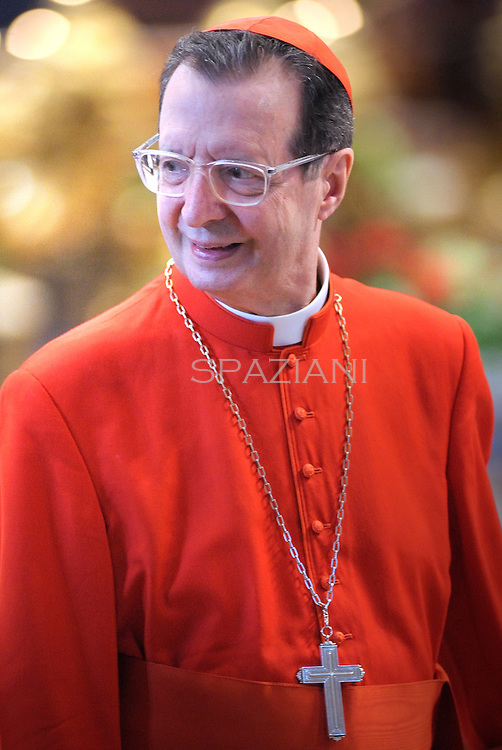
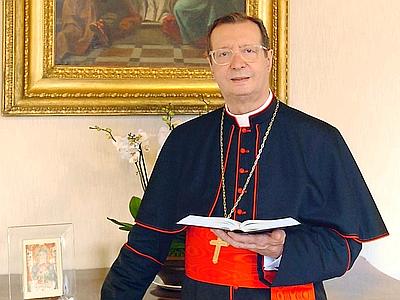
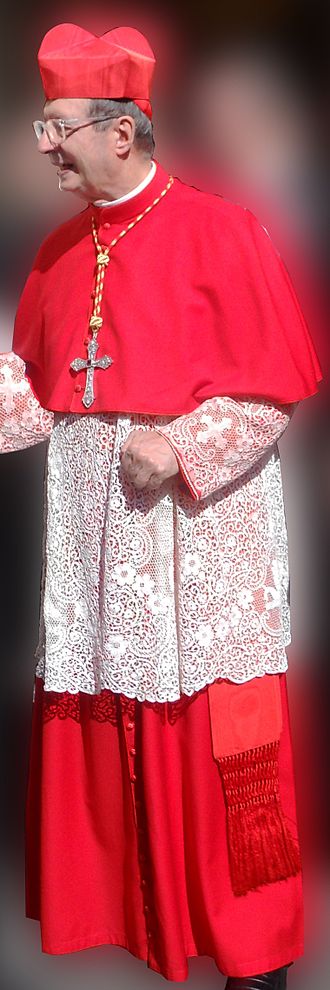
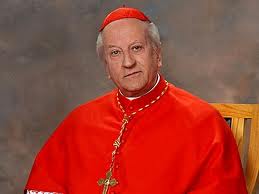
Cardinals Update : Cardinal Giovanni Lajolo, President Emeritus of the Governatorate of the Vatican City State and the President Emeritus of the Pontifical Commission for the Vatican City State (Italy), turned 80, ceases to be a Cardinal-elector

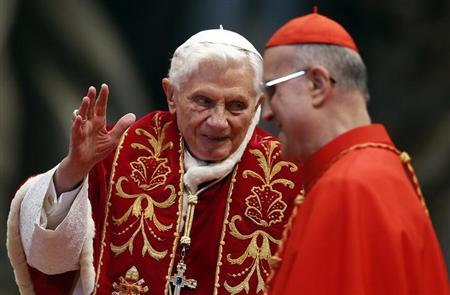
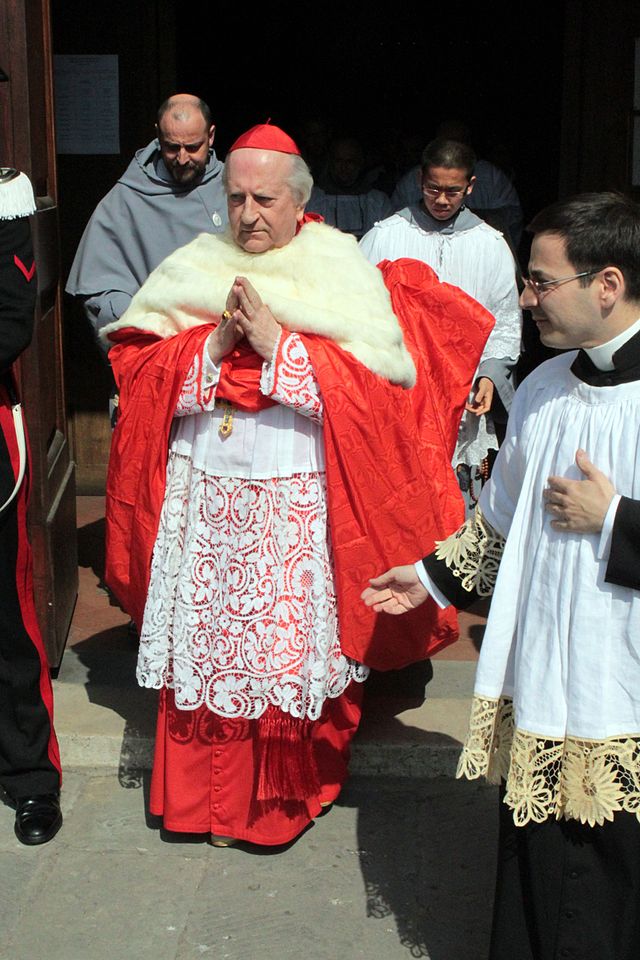
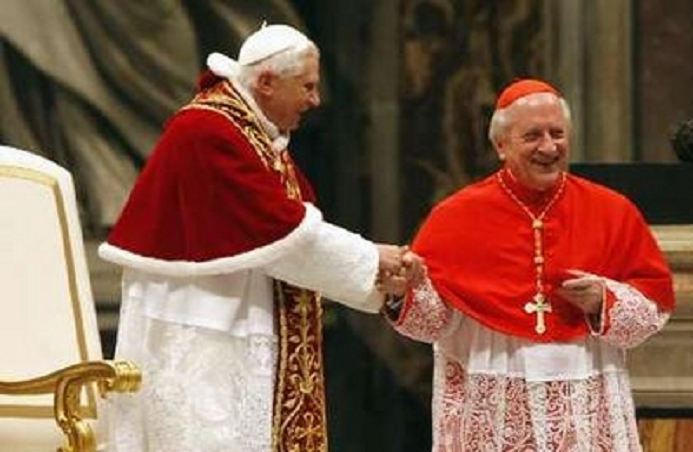
Cardinal Giovanni Lajolo,Pope Benedict XVI leads a solemn mass at St Peter's basilica to celebrate the feast of Saint Peter and Saint Paul

(Image of Cardinal Lajolo is courtesy of Spaziani)

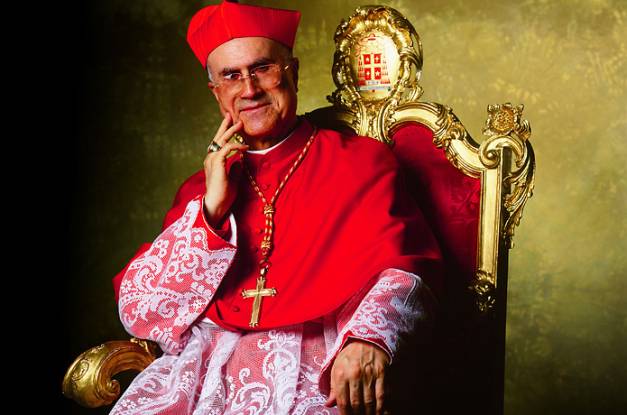
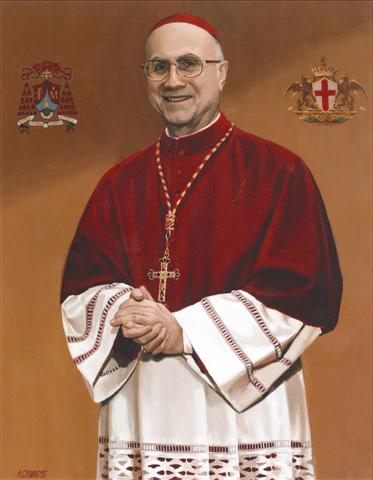
On Saturday, 3 January 2015, Cardinal Giovanni Lajolo, Cardinal-Deacon of S. Maria Liberatrice a Monte Testaccio, President Emeritus of the Governatorate of the Vatican City State and the President Emeritus of the Pontifical Commission for the Vatican City State (Italy), turned 80, and therefore, according to the rules written in the Apostolic Constitution Universi Dominici Gregis, he lost his right to vote in any future conclave. Cardinal Darmaatmadja was born at Novara in Italy on 3 January 1935.

Cardinal Lajolo was made Cardinal-Deacon of S. Maria Liberatrice a Monte Testaccio by Pope Benedict XVI in the 2007 Consistory of Cardinals on 24 November 2007, the second Consistory of his pontificate. Cardinal Lajolo was made a Cardinal in honour of his position as the President of both the Governatorate of the Vatican City State and the Pontifical Commission for the Vatican City State. He was for a long time involved in the works of the Roman Curia and in the relations between the Church and the states.

lajolocardinale

http://www.gcatholic.org/hierarchy/data/cardB16-2.htm#664

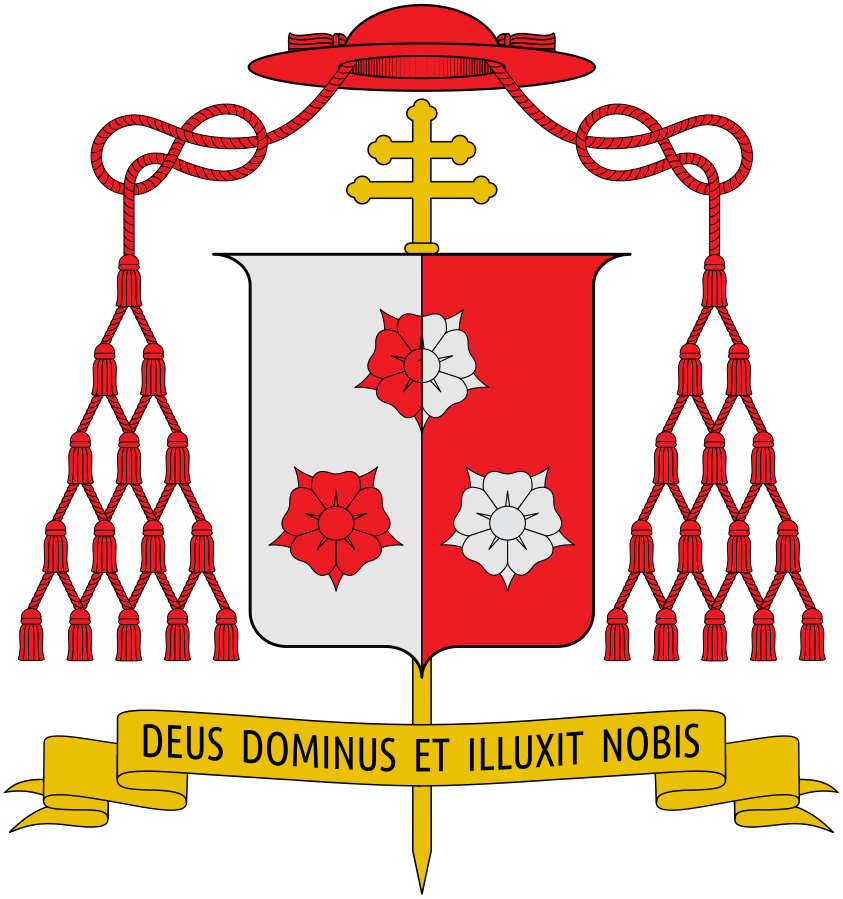
Coat_of_arms_of_Giovanni_Lajolo.svg


(Coat of arms of His Eminence Cardinal Giovanni Lajolo)

May God bless His Eminence Cardinal Lajolo with a blessed old age and health. May he remain strong in the faith and hopefully can perhaps still continue to work great graces and good works of love and peace just as he had once done in his long service to the Church, through his many contributions to the Church via the Roman Curia, helping to manage the extensive governance of the Church of God.

Giovanni_Cardinal_Lajolo

The College of Cardinals now stands at 208 members in total, with 110 Cardinal-electors and 98 Cardinal non-electors. There are now a vacancy of 10 Cardinal-electors as compared to the maximum number of electors allowed in the Conclave of 120.

Next Cardinal-elector to age out (80) will be Cardinal-Patriarch Antonios Naguib (Egypt), the Patriarch Emeritus of Alexandria of the Copts on 18 March 2015.

Cardinals Update : Cardinal Julius Riyadi Darmaatmadja, Metropolitan Archbishop Emeritus of Jakarta (Indonesia), turned 80, ceases to be a Cardinal-elector

71b352a8ce

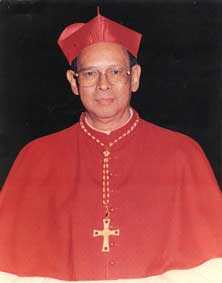
On Saturday, 20 December 2014, Cardinal Julius Riyadi Darmaatmadja, S.J., Cardinal-Priest of S. Cuore di Maria, Cardinal Metropolitan Archbishop Emeritus of Jakarta (Indonesia), turned 80, and therefore, according to the rules written in the Apostolic Constitution Universi Dominici Gregis, he lost his right to vote in any future conclave. Cardinal Darmaatmadja was born at Muntilan in the Central Java Province of Indonesia, then was the Dutch colony of the Dutch East Indies on 20 December 1934.

Cardinal Darmaatmadja was made Cardinal-Priest of S. Cuore di Maria by Pope St. John Paul II in the 1994 Consistory of Cardinals on 26 November 1994, the sixth Consistory of his pontificate. Cardinal Darmaatmadja was made a Cardinal in honour of his position as the Metropolitan Archbishop of Semarang, a position which he held from 1983 to 1996, and being one of the heart of Christianity in Indonesia at the island of Java. After that Cardinal Darmaatmadja became the Metropolitan Archbishop of Jakarta from 1996 to his retirement in 2010.

url

http://www.gcatholic.org/hierarchy/data/cardJP2-6.htm#41

Cardinal Darmaatmadja did not attend the 2013 Papal Conclave which elected Pope Francis due to his ill health and deteriorating eyesight, even though he was still a Cardinal-elector then.

May God bless His Eminence Cardinal Darmaatmadja with a blessed old age and health. May he remain strong in the faith and hopefully can perhaps still continue to work great graces and good works of love and peace just as he had once done in his long service to the Church, particularly his contributions as the shepherd of the many faithful in Indonesia, in the two Archdioceses of Semarang and Jakarta.

Kardinal-Julius-Darmaatmadj

(Above is Cardinal Julius Riyadi Darmaatmadja just after the 1994 Consistory)

The College of Cardinals now stands at 208 members in total, with 111 Cardinal-electors and 97 Cardinal non-electors. There are now a vacancy of 9 Cardinal-electors as compared to the maximum number of electors allowed in the Conclave of 120.

Next Cardinal-elector to age out (80) will be Cardinal Giovanni Lajolo (Italy), the President Emeritus of the Governorate of the Vatican City State on 3 January 2015.

Cardinals Update : Cardinal Tarcisio Bertone, S.D.B., Cardinal Secretary of State Emeritus and Chamberlain of the Holy Roman Church of the Apostolic Camera (Italy), turned 80, ceases to be a Cardinal-elector

Image

On Tuesday, 2 December 2014, Cardinal Tarcisio Pietro Evasio Bertone, S.D.B., Cardinal-Bishop of Frascati, Cardinal Secretary State Emeritus of the Secretariat of State and the Chamberlain of the Holy Roman Church of Apostolic Camera or the Cardinal Camerlengo (Italy), turned 80, and therefore, according to the rules written in the Apostolic Constitution Universi Dominici Gregis, he lost his right to vote in any future conclave. Cardinal Tarcisio Bertone was born in Romano Canavese, Italy on 2 December 1934.

Image

(Above is the coat of arms of Cardinal Tarcisio Bertone during the sede vacante of 2013)

Cardinal Bertone was made Cardinal-Priest of S. Maria Ausiliatrice in Via Tuscolana pro hac vice Title by Pope St. John Paul II in the 2003 Consistory of Cardinals on 21 October 2003, the ninth and last Consistory of his pontificate. Cardinal Bertone was made a Cardinal in honour of his position as the Metropolitan Archbishop of Genoa, a position which he held from 2002 to 2006. Before that, Cardinal Bertone was the Metropolitan Archbishop of Vercelli and also the Secretary of the Congregation for the Doctrine of the Faith, working closely with its Prefect, the then Cardinal Joseph Alois Ratzinger (later Pope Benedict XVI).

s1.reutersmedia.net

http://www.gcatholic.org/hierarchy/data/cardJP2-9.htm#20

Pope Benedict XVI appointed Cardinal Bertone as the Cardinal Secretary of State in 2006, and by virtue of that position as the Cardinal-Bishop of Frascati and also as the Cardinal Chamberlain or Camerlengo of the Church, the one to govern the Church during period of sede vacante, the latest of which was in 2013.

May God bless His Eminence Cardinal Bertone with a blessed old age and health. May he remain strong in the faith and hopefully can perhaps still continue to work great graces and good works of love and peace just as he had once done in his long service to the Church, particularly his contributions as a member of the Roman Curia as the Cardinal Secretary of State in helping the actions of the Holy See and the Pope.

bertone-Small

The College of Cardinals now stands at 209 members in total, with 112 Cardinal-electors and 97 Cardinal non-electors. There are now a vacancy of 8 Cardinal-electors as compared to the maximum number of electors allowed in the Conclave of 120.

Next Cardinal-elector to age out (80) will be Cardinal Julius Riyadi Darmaatmadja (Indonesia), the Metropolitan Archbishop Emeritus of Jakarta on 20 December 2014.

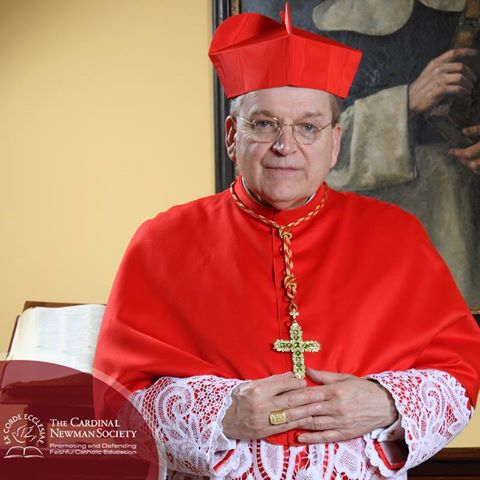
Pray for His Eminence, Raymond Leo Cardinal Burke and sign this petition!

10806429_10152779535488886_4828076339322054205_n

(Image above is courtesy of the Cardinal Newman Society)

All of you must have heard of the recent news that the faithful Cardinal Burke has been transferred from the position of the Prefect of the Supreme Tribunal of the Apostolic Signatura to the largely honorary position of the Cardinal Patron of the Sovereign Military Order of Malta.

First, while the position of Cardinal Patron is largely honorary, but the Sovereign Military Order of Malta is one of the largest charity arm of the Church, and a multinational organisation with tens of thousands of members vigorously and faithfully serving the people of God around the globe. And secondly, the position of Cardinal Patron will definitely free up more of Cardinal Burke’s time to continue defending the true Faith, just as he had done so at the Extraordinary Synod on the Family which recently ended.

Cardinal Burke is still young at 66, and many bishops and Cardinals all around the world, having known who are the ones that stood up for the Faith and for the Lord, will remember what he had done, and I am certain, that he will soon be elected the Successor of St. Peter the Apostle, and be the Defender of the Faith as the future Vicar of Christ. Pray for this, and pray for the Church of God!

https://www.lifesitenews.com/petitions/thank-you-cardinal-burke-for-your-vatican-service

Please sign the above petition as well, to show our gratitude to Cardinal Burke’s often thankless and yet courageous service to God, His Church and His beloved people.

Monday, 10 November 2014 : 32nd Week of Ordinary Time, Memorial of Pope St. Leo the Great, Pope and Doctor of the Church (Homily and Scripture Reflections)

Liturgical Colour : White

Dear brothers and sisters in Christ, today it is mentioned to us in the readings from the Holy Scriptures, of a very important role and position in the hierarchy of the Church, which all of us indeed have to be aware of, and have to adhere to. St. Paul in his letter to Titus, his friend and fellow servant of God, while he was in captivity in Rome, mentioned of the criteria which should be strictly observed when the overseers of God’s faithful ones are chosen.

And in the Gospel reading, Jesus warned His disciples against creating scandals in the faith, and as such, they should avoid creating scandal among the faithful and in the Church. Such scandals are harmful when it causes damage both physical and spiritual to the faithful and to the Church as a whole, and Jesus condemned those who have brought others into damnation because of their actions that brought about scandal and therefore not in accordance to what Jesus had taught His disciples.

How are the readings today link to each other? The bishops are very important building blocks of the Church, as the key figures that link the laity and the priests, to the Vicar of Christ, the Pope, who leads all the faithful, in union with the love of God, the true Head of the Church. The bishops, from the Latin term of their title, episcopus which means literally overseers, are truly the overseers of the faithful in their faith.

It is important that the candidates of bishops are first scrutinised thoroughly before one of them, who is found worthy and good, is selected as the bishop of a diocese. That is because the growth of the spiritual life and the well-being of the faithful ones of the Lord, depend on the state of the spiritual life of the shepherd of the flock, that is the bishop, who is the shepherd entrusted with the care of the people of God, the flock of Christ, in his diocese to be under his protection and care.

Jesus often mentioned in His teachings that we should not be hypocrites who merely show an external aspect of our faith and devotion to God, for others to see us, or even worse, for them to praise us because of what we have done. If our faith is like this, and if we pretend to be faithful for such purposes, then we may be held accountable for these actions.

It is precisely like the actions of the Pharisees, as well as the teachers of the Law, who proudly present the way they lived their faith to the people, and basked in their praise. In turn, they also misled the people by not practicing the Law with the whole of their hearts, and instead they served their own glory and purposes rather than serving the greater purpose of God.

They were bad shepherds, whose actions in opposing the Lord Jesus at every turn and opportunity were truly scandal in the faith. Their way of living and their way of seeing the world around them were also scandals of the faith, such that they were truly worthy of being rebuked endlessly by the Lord, who revealed the truth about their wickedness to the people of God, so that they may be wary of them and therefore also do their best to avoid doing the same as those wicked elders had done.

It was in particular mentioned that those who misled the little children of God are in particular to be blamed for their wickedness and evil. And indeed, those children are truly born pure and blameless, a blank and clean slate upon which, true and genuine teaching of the faith would have brought much goodness. A proper upbringing in faith for these, through proper catechism and role modelling in the faith.

If someone is to corrupt the faith by not doing what he is supposed to do, and worse still, if this person is the appointed shepherd of the people, as bishop and overseer, then it will bring much damnation to those sheep that had been entrusted to the aforementioned bishop. And in the end, the entire Church and the body of the faithful suffer, because of the wickedness and corruption this improperly elected bishop had done for his flock.

Therefore, this is why in our present time today, as it had been for quite a long time, bishops are carefully selected from among the priests, through a careful and extensive process of selection, from a shortlist produced by the diocese, to list down at first, the most worthy, holy, devoted and dedicated among the priests, to be made the bishop.

The final decision is to be done by the Vicar of Christ, the Pope, who through his representatives to the dioceses, the Apostolic nuncios and the delegates, keep in close contact with the various dioceses. Thus, it is why the responsibility and the role of the Pope is so important, as he is the Head of the entire Universal Church, and the ultimate and greatest guardian of the true and orthodox Faith.

That means, the Pope is charged with the final decision on who is truly worthy and who is truly best for the position and role of bishop for the dioceses. It is so that the Church may avoid scandal or any risk of problems that may likely arise if an unworthy individual became who they should not have become. If this happens, then the risk to the faithful sheep of the Lord is truly very, very great.

Thus, in consideration of the roles of the bishops and the Pope, even the position of the Pope, who is also the Bishop of Rome, is very, very carefully chosen, through the conclave, where the Cardinals, carefully selected members of the Church who then elect the most worthy amongst them to be the Supreme Pontiff and leader of the Universal Church.

And today, we celebrate the memory of a great Pope, whose feast we celebrate today, the very first Pope to be accorded with the title of ‘the Great’, in recognition of his great role and fundamental role in the development of the Faith and the Church. He is Pope St. Leo the Great, who lived and reigned during the waning years of the Roman Empire in the West.

Pope St. Leo the Great led the Church at the time when the civil authority and order of the Roman Empire is crumbling, especially in its western regions, including the city of Rome, and the society as it was known then, was under great threat from barbarian attacks. It was for this that Pope St. Leo the Great was mostly known for, that is in his role in stopping the great conqueror, Attila the Hun, from ransacking the Eternal City, or Rome, the Holy City of the Apostles.

When the great conqueror came, and when everyone else, including the Roman Emperor and the civil authorities all hid in fear, this holy servant of God, and the shepherd of the flocks of Christ went forth without fear and with zeal, to meet with the Hunnic king, and by the grace of God, persuaded him to retreat. Such was the courage and faith of this great Pope, that he managed to protect and prevent his flock from suffering.

However, what was less well known is the role which Pope St. Leo the Great played in the Church, and in the combatting of heresies and wickedness among the members of the Church at the time. Ever since the beginnings of the Church, there had been some among the faithful who did not remain true to the teachings of the true Faith, as they syncretised their faith, and they followed their own fancy and heretical ways of the Faith.

Therefore, many Ecumenical Councils were held in the early Church to standardise the true and orthodox teachings of the faith, and to condemn and anathemise all heresies and falsehoods in the teachings of the faith, including the errant and unfaithful bishops who misled many of their faithful, the precise scandal of the Faith mentioned earlier.

Pope St. Leo the Great was instrumental in his role in guiding the Church to keep the orthodox faith against those forces of men, who tried to subvert the teachings of the Faith to suit their own desires, their own purposes and their own wickedness. The teachings of Pope St. Leo the Great, his writings and works remain until even today, a very defining standard of the faith, which even this generation today look up to, in order to maintain the orthodox and true faith.

Therefore, on this special and sacred occasion, let us all come together and pray, pray for our bishops, our priests, and also our Pope, so that all of them will keep strongly the faith entrusted to them. So that they will keep without reservation the sound doctrine of the faith, without bending to the demands and temptations of the flesh and the world.

May Almighty God bless our Church, that day by day, our faith may grow stronger and stronger. That our Church may grow ever more faithful in the Lord. May the bishops, the shepherds of faith remain strong in their faith so that they will lead the faithful, following the examples of Pope St. Leo the Great, and abandoning all forms of fornications and evils, so that no scandal may arise, and the faithful may all benefit greatly from their care and love. God bless us all. Amen.


First Reading :

https://petercanisiusmichaeldavidkang.com/2014/11/09/monday-10-november-2014-32nd-week-of-ordinary-time-memorial-of-pope-st-leo-the-great-pope-and-doctor-of-the-church-first-reading/

Psalm :

https://petercanisiusmichaeldavidkang.com/2014/11/09/monday-10-november-2014-32nd-week-of-ordinary-time-memorial-of-pope-st-leo-the-great-pope-and-doctor-of-the-church-psalm/

Gospel Reading :

https://petercanisiusmichaeldavidkang.com/2014/11/09/monday-10-november-2014-32nd-week-of-ordinary-time-memorial-of-pope-st-leo-the-great-pope-and-doctor-of-the-church-gospel-reading/

Saturday, 11 October 2014 : 27th Week of Ordinary Time, Memorial of Pope St. John XXIII, Pope (Homily and Scripture Reflections)

Liturgical Colour : Green or White (Saturday Mass of our Lady and Popes)

Brothers and sisters in Christ, today we are presented with the message of the Lord, through the Holy Scriptures and the Gospels, on the nature of our faith and salvation, and how we can attain that salvation through what we are doing in this life, not just based on any race or other passive benefits or factors, but through the commitment of actions that make our faith truly alive in God.

In the first reading today, St. Paul in his letter to the faithful and the Church in Galatia showed how while in the past, God revealed His Law to His people to guide them and prevent them from going astray from the path towards salvation, but the coming of Christ, the Messiah and Saviour of all, gave mankind a new focus of their faith and devotion. For God Himself had come down upon us, in our humble form, to save us from our fate that was death and oblivion.

There was also to be no more division and prejudice, or any difference in treatment between those in the society, based on either race or birth, based no longer on either status or wealth or possessions. What matters is truly whether one believes in the Lord Jesus Christ, and if one believes, and lives according to that faith which they have, then they are guaranteed salvation in Jesus Christ our Lord.

That was because, the Jews, who were descendants of Abraham, the faithful servant of God, with whom He had made His covenant with, were proud and prejudiced against their neighbours, thinking that as the heirs and sons of Abraham, they alone deserved salvation, and the others, the Gentiles, namely the Greeks, the Samaritans, Romans, Arabs, Canaanites, and others whom they considered as pagans and barbarians deserved eternal damnation.

Yet, Jesus made it clear in the Gospel, that blessing is upon those who follow the will of God, who walk in His ways, and who practice their faith in the real life, showing that their faith is truly real, concrete and dynamic. Yes, not the dead and stagnant faith shown by lack of action, by mere lip service of faith, and not by prejudicing against others or condemning others or glorifying oneself thinking that one is worthy of salvation, while others do not.

Therefore, today we are all called to reflect on our own lives, whether in all things we do, we have been truly faithful to the Lord, not just by mere faith or words, but also through actions founded in faith, filled with hope, and blessed and graced by love. This is what is necessary for us to attain our salvation, and blessed we are indeed if we listen to Jesus and what He had said, instead of following our own desires and wants.

Today, we celebrate together with the whole Universal Church, the feast of Pope St. John XXIII, the successor of St. Peter the Apostle, and one of the great and holy Popes of the twentieth century after the birth of Christ. Pope St. John XXIII, who was also called the ‘Good Pope’, was chiefly remembered for his role in convoking and gathering the latest Ecumenical Council of the Holy Roman Church, that is the Second Vatican Council, which lasted from 1962 to 1965, but in fact, his holiness stemmed not just from that act, but also from the actions which he had taken for the entire course of his life.

The life and examples of Pope St. John XXIII, the Good Pope, il Papa Buono, can be an inspiration for us all, as ever since he was born of a poor peasant family in the village and commune of Sotto il Monte, in the province of Bergamo in northern Italy as Angelo Giuseppe Roncalli, he had led a very faithful and devoted life to God. He was poor, just as his family was poor, but together they as a family lovingly devoted themselves to God.

At a certain moment in his youth, the young Angelo encountered experience in faith, by those whom he met, including his uncle, which encouraged him to consider giving himself to the service of God. As his family was poor, and peasant youths were considered important assets to help out in work, his parents were reluctant to let him to go and join the seminary.

Nevertheless, in the end, God had His way, and Angelo managed to join the seminary, studying intently and eventually was ordained a priest of the Diocese of Bergamo. He eventually became the secretary of the local ordinary, Bishop Radini-Tedeschi, who was a relatively obscure individual compared to his later famous protege, but the one who had great influence on Angelo and his later great works.

Bishop Radini-Tedeschi encountered a great workers and union strike in accordance to the poor living conditions and treatment of workers by the government of that era, in the early twentieth century, and Bishop Radini-Tedeschi faithfully and tenderly exercised his works as the shepherd of his flock, calling for restraint and restoration of order while calling for reforms and great improvement in the treatment of workers. He even donated his own personal wealth to help the poor workers made their ends meet.

All these inspired the young Angelo Roncalli, the later Pope St. John XXIII, as he later was made Archbishop and appointed as the Apostolic Delegate to Bulgaria, and later to Greece and Turkey. During his diplomatic missions in the service of the Church, Archbishop Roncalli did many great works, establishing links and friendship with the separated brethren of faith in the Eastern Orthodox Church, and during his mission in Greece and Turkey, even saved many Jews from the actions of the German NAZI who was bent on annihilating them as a race in the holocaust.

In his later mission as the Apostolic Nuncio to France, Archbishop Roncalli continued to do many good works, establishing links and relationship with the French government, including dealing with the difficult leader of France, Charles de Gaulle, who wanted to reduce the influence of the Church of Rome in the affairs of the Church in France.

And eventually, as the Patriarch of Venice and a Cardinal of the Holy Roman Church, Cardinal Angelo Roncalli continued to exercise the good works which he had done earlier in his earlier posts and ministries, and which eventually he continued when he was elected Pope in 1958 to succeed the great Pope Pius XII, the Pastor Angelicus, or the Angelic Pope.

Pope St. John XXIII continued to lead the Church faithfully, and he was particularly concerned with the restoration of relations with the Eastern Church, as he had experienced earlier during his time in Bulgaria, Greece and Turkey, in the relationships he had made with the prelates and faithful of the Eastern Church at the time. And then he was also concerned about the state of the Church, and the need for a continuation of the unfinished works of the First Vatican Council, which was prematurely ended due to the events at that time.

Thus, Pope St. John XXIII convoked the gathering of the Second Vatican Council, which commenced in 1962, and which sessions was started and opened by the Pope himself, which meeting was to continue until 1965, and concluded by Pope Paul VI, his successor as Pope St. John XXIII passed away in 1963, before the conclusion of the Ecumenical Council which he had initiated.

Pope St. John XXIII also was renowned for his role in helping to reduce tension between the superpowers, namely the United States of America and the Soviet Union, which almost ended up in a major war, during the Cuban Missile Crisis in 1962. One of the last major acts of Pope St. John XXIII was the peace which he helped broker between the two sides, and which was the major reason behind the Papal encyclical he released in 1963, the famous Pacem in Terris, or ‘Peace on earth’.

Brothers and sisters in Christ, as I have mentioned, that the actions of Pope St. John XXIII are examples to all of us, and through them, we should also be inspired to follow in his footsteps, that our faith may grow stronger and that in our devotion, we may be found justified in our faith by the Lord our God. Remember, brethren, that we have to have a living faith in us, so that our faith will not be just empty, but be real and concrete.

May Almighty God, who sees the faith and commitment which Pope St. John XXIII, also see the faith that is in us, and therefore may grant us the inheritance and reward which He promised us through Jesus Christ His Son. May we all come ever closer to His loving embrace, seeking His mercy and be made righteous once again. God bless us all. Amen.

Saturday, 11 October 2014 : 27th Week of Ordinary Time, Memorial of Pope St. John XXIII, Pope (Gospel Reading)

Liturgical Colour : Green or White (Saturday Mass of our Lady and Popes)

Luke 11 : 27-28

At that time, as Jesus was speaking, a woman spoke from the crowd and said to Him, “Blessed is the one who gave You birth and nursed You!”

Jesus replied, “Truly blessed are those who hear the word of God, and keep it as well.”

Saturday, 11 October 2014 : 27th Week of Ordinary Time, Memorial of Pope St. John XXIII, Pope (Psalm)

Liturgical Colour : Green or White (Saturday Mass of our Lady and Popes)

Psalm 104 : 2-3, 4-5, 6-7

Sing to the Lord, sing His praise, proclaim all His wondrous deeds. Glory in His Holy Name; let those who seek the Lord rejoice.

Look to the Lord and be strong; seek His face always. Remember His wonderful works, His miracles and His judgments.

You descendants of His servant Abraham, you sons of Jacob, His chosen ones! He is the Lord our God; His judgments reach the whole world.

Saturday, 11 October 2014 : 27th Week of Ordinary Time, Memorial of Pope St. John XXIII, Pope (First Reading)

Liturgical Colour : Green or White (Saturday Mass of our Lady and Popes)

Galatians 3 : 22-29

But the Scriptures have declared that we are all prisoners of sin, so the only way to receive God’s promise is to believe in Jesus Christ.

Before the time of faith had come, the Law confined us and kept us in custody until the time in which faith would show up. The Law then was serving as a slave to look after us until Christ came, so that we might be justified by faith. With the coming of faith, we are no longer submitted to this guidance.

Now, in Christ Jesus, all of you are sons and daughters of God through faith. All of you who were given to Christ through baptism, have put on Christ. Here there is no longer any difference between Jew or Greek, or between slave or freed, or between man and woman : but all of you are one in Christ Jesus.

And because you belong to Christ, you are of Abraham’s race and you are to inherit God’s promise.

Cardinals Update : Cardinal Franc Rode, C.M., Prefect Emeritus of the Congregation for Institutes of Consecrated Life and for Societies of Apostolic Life (Slovenia), turned 80, ceases to be a Cardinal-elector

640px-Cardeal_franc_rodé

On Tuesday, 23 September 2014, Cardinal Franc Rode, C.M., Cardinal-Deacon of S. Francesco Saverio alla Garbatella, Prefect Emeritus of the Congregation for Institutes of Consecrated Life and for Societies of Apostolic Life (Slovenia), turned 80, and therefore, according to the rules written in the Apostolic Constitution Universi Dominici Gregis, he lost his right to vote in any future conclave. Cardinal Franc Rode was born in Ljubljana, Slovenia on 5 September 1934.

rode_franc_ap

Cardinal Rode was made Cardinal-Deacon of S. Francesco Saverio alla Garbatella by Pope Benedict XVI in the 2006 Consistory of Cardinals on 24 March 2006, the first Consistory of his pontificate. Cardinal Rode was made a Cardinal in honour of his position as the Prefect Emeritus of the Congregation for Institutes of Consecrated Life and for Societies of Apostolic Life, the branch of the Roman Curia in charge of all religious orders and all matters pertaining to religious life and profession, a position he held from 2004 to 2011. Before that, Cardinal Rode was the Metropolitan Archbishop of Ljubljana (Slovenia), the greatest and largest see in the country of Slovenia, from 1997 to 2004.

0202relig1pi7

http://www.gcatholic.org/hierarchy/data/cardB16-1.htm#695

May God bless His Eminence Cardinal Rode with a blessed old age and health. May he remain strong in the faith and hopefully can perhaps still continue to work great graces and good works of love and peace just as he had once done in his long service to the Church, particularly his contributions as a member of the Roman Curia in helping the actions of the Holy See and the Pope.

images

The College of Cardinals now stands at 210 members in total, with 113 Cardinal-electors and 97 Cardinal non-electors. There are now a vacancy of 7 Cardinal-elector as compared to the maximum number of electors allowed in the Conclave of 120.

Next Cardinal-elector to age out (80) will be Cardinal Tarcisio Bertone, S.D.B. (Italy), the Cardinal Secretary of State Emeritus of the Secretariat of State and the current Chamberlain of the Holy Roman Church of the Apostolic Camera on 2 December 2014.