
Sunday, 2 August 2015 : Eighteenth Sunday of Ordinary Time, Memorial of St. Eusebius of Vercelli, Bishop and St. Peter Julian Eymard, Priest (Homily and Scripture Reflections)

Liturgical Colour : Green

Dear brothers and sisters in Christ, on this day, we heard about the readings from the Scriptures, both from the Old and New Testament, on how God fed His people and made them satisfied. We heard first how the people of Israel during their Exodus from Egypt was fed with manna, or the bread from heaven, so that even in the middle of the desert they would not go hungry.

Every morning, the Lord would bring manna to them in the morning mist together with the dew, and all had enough manna for themselves to eat. And every evening, the Lord sent huge flocks of birds for the people to catch and eat. And through Moses, God gave His people crystal clear and sweet water to drink, and all these He had done, so that His people may know of His love, and may be filled with good things to satisfaction.

Yet in the Gospel today, Jesus rebuked the people who followed Him, because He knew that He had fed them and they saw that He could feed them and therefore they followed Him. Why is this so, brethren? That is because what Jesus wanted the people to know, and by extension for all of us to know is that, true faith is not about believing just because we saw what had happened and be amazed at it, and neither can we have faith that is just as much as our stomach is, that is our desires.

A good lesson for us can be gained by observing exactly what happened to the people of Israel in the desert. They were fed with manna, with large birds and other food otherwise not to be found in a desert, and were supplied with rich water and ample provisions, but see what had happened to them. They did not remain faithful to the Lord who loved them and cared for them so much.

Firstly they were mesmerised by gold, by the wealth of this world, which the Egyptians had provided them amply with as they left Egypt, when the Egyptians wanted to have nothing nothing else to do with them and gave them whatever they wanted. All these gold got into their hearts, blinding them against God’s love and made them very, very proud of themselves and greed grew in their hearts.

And we know what happened next, when at the mountain of God at Horeb, as Moses went up the mountain to establish covenant between the people of God and their Lord, they whored themselves and sold themselves to the pagan gods, making a golden calf as their idol and their god, claiming that it was that golden calf that led them out of Egypt, even though they had seen the glory and might of God.

Then, throughout their journey across the desert itself, did the people of God remain faithful and did they thank the Lord for the food which God had given them? The very bread that the angels eat and share in the bliss of heaven, of which among men, they were the only ones to have a taste of? No, they were not thankful, and instead, they bickered among themselves and made complaints after complaints, and even complaining that their lives in bondage in Egypt was better than whatever God had given them.

These people had followed the call of their stomach rather than the call of their heart. They followed and submitted to their earthly and worldly desires rather than trying to find the true joy and happiness which only God can give. They placed their trust in earthly things and seek worldly approval and trying to sustain and satisfy their wants and wishes.

And this, coupled with whatever they have done in wickedness have made them to be judged as unworthy and as people rejected by God. They ate the bread from heaven and they died, because they had no life in them, and they did not try to find what true life is about, for life lies with God alone, and they did not find what they need in God, for their worldly concerns and occupations prevented them to find the Lord.

Brothers and sisters in Christ, in the Gospel we heard the truth, that Jesus Christ our Lord, who came down from heaven, God Himself, His Word who had taken up the flesh of man, had made Himself an offering worthy of our redemption and brought about our salvation, by giving us freely, the true bread of heaven, the true Bread of Life, that is He Himself. He is the Bread of Life, for whoever partake in His Body and drink His Blood, shall have life in them, and death shall no longer reign over them.

This does not mean that those who share in the Body and Blood of our Lord shall not die, but this instead mean that death has no longer any dominion over them. While previously we ought to fear death for it is a consequence and punishment for our sins, we now know that because of Christ, our Lord, we have a new opportunity, a new chance given to us, and a new path to our complete victory and triumph against sin and death is before us.

And all these is again because of God’s love and care which He had shown us freely. Just as He had fed His beloved people with manna, the bread from heaven, with large birds and with sweet and crystal-clear water from rocks itself, therefore now, He feeds us with the true Bread and Wine of Life, that is His own Flesh and Blood. Which God cares for us so much that He would give us this to eat? And especially who would love us so much so as to suffer and bear the burden of all our sins?

It is God who loves us so much, that He would provide for us, feed us and satisfy us with care, and most important of all, to have all of us to have a share in Him, by giving His own Body and Blood through the bread and wine, which our priests transformed completely into the very substance and matter of our Lord Himself. We who partake in the Eucharist worthily therefore, share with one another the true life and salvation which comes from God alone.

Therefore, brothers and sisters in Christ, shall we all look deep into ourselves and reflect, and use this opportunity to think about whether we have found the Lord who is really present in the Eucharist, and whether we have understood and realised the love which He had for all of us, whom He had cared for since the beginning of time, and whether we have sincerely sought for Him and desired to find Him in our lives.

May we all grow to love the Lord all the more, and may we strive to make ourselves worthy of Him as we live our lives in this world. Let us shun all forms of worldliness and wickedness in our behaviours, so that by our virtues and good works, we may detach ourselves from the desires and wants we have in our hearts, be no longer oppressed and controlled by them, and in all things may we grow ever more grateful for all the things and blessings God had given us. Lord Jesus Christ, Bread of Life, be with us all always. Amen.
Sunday, 2 August 2015 : Eighteenth Sunday of Ordinary Time, Memorial of St. Eusebius of Vercelli, Bishop and St. Peter Julian Eymard, Priest (Gospel Reading)

Liturgical Colour : Green

John 6 : 24-35

At that time, when the people saw that neither Jesus nor His disciples were there, they got into the boats and went to Capernaum looking for Jesus. When they found Him on the other side of the lake, they asked Him, “Master, when did You come here?”

Jesus answered, “Truly, I say to you, you look for Me, not because of the signs which you have seen, but because you ate bread and were satisfied. Work then, not for perishable food, but for the lasting food which gives eternal life. The Son of Man will give it to you, for He is the One on whom the Father has put His mark.”

Then the Jews asked Him, “What shall we do? What are the works that God wants us to do?” And Jesus answered them, “The work God wants is this : that you believe in the One whom God has sent.” Then they said, “Show us miraculous signs, that we may see and believe You. What sign do You perform? Our ancestors ate manna in the desert; as Scripture says : They were given bread from heaven to eat.”

Jesus then said to them, “Truly, I say to you, it was not Moses who gave you the bread from heaven. My Father gives you true bread from heaven. The bread God gives is the One who comes from heaven and gives life to the world.” And they said to Him, “Give us this bread always.”

Jesus said to them, “I am the Bread of Life; whoever comes to Me shall never be hungry, and whoever believes in Me shall never be thirsty.”

Sunday, 2 August 2015 : Eighteenth Sunday of Ordinary Time, Memorial of St. Eusebius of Vercelli, Bishop and St. Peter Julian Eymard, Priest (Second Reading)

Liturgical Colour : Green

Ephesians 4 : 17, 20-24

I say to you, then, and with insistence I advise you in the Lord : do not imitate the pagans who live an aimless kind of life. But it is not for this that you have followed Christ. For I suppose that you heard of Him and received His teaching which is seen in Jesus Himself.

You must give up your former way of living, the old self, whose deceitful desires bring self-destruction. Renew yourselves spiritually, from inside, and put on the new self, or self according to God, that is created in true righteousness and holiness.

Sunday, 2 August 2015 : Eighteenth Sunday of Ordinary Time, Memorial of St. Eusebius of Vercelli, Bishop and St. Peter Julian Eymard, Priest (Psalm)

Liturgical Colour : Green

Psalm 77 : 3 and 4bc, 23-24, 25 and 54

Old mysteries which we have heard and known, which our ancestors have told us. We will announce them to the coming generation : the glorious deeds of the Lord, His might and the wonders He has done.

Yet the Lord commanded the skies above and opened the doors of heaven; He rained down manna upon His people and fed them with the heavenly grain.

They ate and had more than their fill of the bread of angels. He brought them to His holy land, to the mountain His right hand had won.

Sunday, 2 August 2015 : Eighteenth Sunday of Ordinary Time, Memorial of St. Eusebius of Vercelli, Bishop and St. Peter Julian Eymard, Priest (First Reading)

Liturgical Colour : Green

Exodus 16 : 2-4, 12-15

In the desert the whole community of Israel grumbled against Moses and Aaron and said to them, “If only we had died by the hand of YHVH in Egypt when we sat down to caldrons of meat and ate all the bread we wanted, whereas you have brought us to this desert to let the whole assembly die of starvation!”

YHVH then said to Moses, “Now I am going to rain down bread from heaven for you. Each day the people are to gather what is needed for that day. In this way I will test them to see if they will follow My Teaching or not. I have heard the complaints of Israel. Speak to them and say : Between the two evenings you will eat meat, and in the morning you will have bread to your heart’s content; then you shall know that I am YHVH, your God!”

In the evening quails came up and covered the camp. And in the morning, dew had fallen around the camp. When the dew lifted, there was on the surface of the desert a thin crust like hoarfrost. The people of Israel upon seeing it said to one another, “What is it?” for they did not know what it was. Moses told them, “It is the bread that YHVH has given you to eat.”

Plenary Indulgence for the Souls in Purgatory

Brothers and sisters in Christ, do take note, that in accordance with the celebrations of the Solemnity of All Saints and the Feast of All Souls, the time has come once again for the chance for us to obtain plenary indulgence for the souls in Purgatory.

The conditions for the indulgence are listed below, and hence do pray for the souls in Purgatory, for the souls of our loved ones, that they may be brought out of Purgatory into the glory of heaven through this indulgence.


Plenary indulgence for the souls in Purgatory :

1. If any of the faithful on one of the days from 1 to 8 November visit devoutly a cemetery or who simply pray mentally for the dead.

2. If any of the faithful on All Souls’ Day (or on Sunday that precedes or follows the All Souls’ Day, with permission of the local Bishop) visit a church or chapel with devotion and there recite the Our Father and the Creed.


Partial indulgence for the souls in Purgatory :

1. If any of the faithful visit devoutly a cemetery or who simply pray mentally for the dead (can be at any time).

2. If any of the faithful recite devoutly Lauds or Vespers of the Office of the Dead, or the invocation of ‘Requiem aeternam dona eis Domine, et lux perpetua luceat eis – Eternal rest grant unto them, o Lord, and let perpetual light shine unto them’.

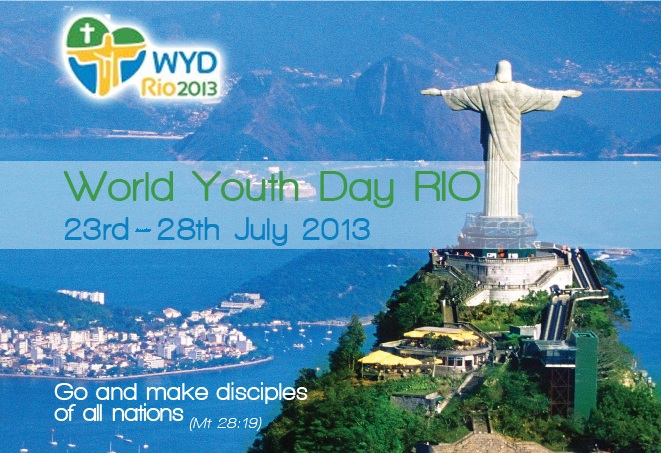
World Youth Day 2013 Rio de Janeiro in numbers (Official)

Official figures for World Youth Day 2013 in Rio de Janeiro, Brazil (WYD 2013)

3.7 million people attended the Closing Mass at Copacabana Beach
3.5 million people attended the Vigil with the Pope at Copacabana Beach
600, 000 people attended the opening Mass of the World Youth Day 2013 at Copacabana Beach
The total contribution by tourists and pilgrims during the event reached US$ 1.8 billion
1.2 million people attended the Welcoming Ceremony for the Pope at Copacabana Beach
2 million people attended the Via Crucis at Copacabana Beach (the Way of the Cross)
427,000 registered pilgrims
175 countries represented by the pilgrims from all over the world
356,400 pilgrims registered with accommodations
356 400 vacancies available for hosting family homes and institutions (vacant unregistered spaces)
72.7% of the visitors and pilgrims visited Brazil for the very first time
70,000 downloads on the official website of WYD Rio2013 (http://www.rio2013.com/en)
Over 200,000 hits on the site’s official WYD Rio2013 (http://www.rio2013.com/en)
More than 1.1 million Facebook likes on WYD Rio2013 site (http://www.rio2013.com/en)
10,000 downloads in the official WYD Rio2013 Flickr site
644 bishops registered (including 28 cardinals) for WYD 2013
7,814 priests registered for WYD 2013
632 deacons registered for WYD 2013
6400 journalists accredited to cover the WYD to 57 countries
264 places of catechesis, in 25 languages​​
60,000 volunteers helped out in WYD 2013 Rio de Janeiro
More than 800 participating artists from Central Acts
100 confessionals were exhibited at the Fair Vocational and Largo da Carioca
4 million Communion host produced for the whole WYD 2013 event – 800,000 for the Closing Mass alone (insufficient for the actual 3.7 million people attending)
345 tons of organic waste and 45 tons of recyclables during WYD Rio2013 (10% less than that recorded in the New Year celebration of Rio de Janeiro)
55% of the public enrolled at WYD are female
60% of the public enrolled at WYD are between 19 and 34 years (young adults and late teenagers)

(Reminder) Official Schedule of Pope Francis in World Youth Day 2013 (23-28 July 2013) in Rio de Janeiro, Brazil

wyd-rio-2013


http://www.romereports.com/palio/popes-brazil-schedule-released-as-rio-gets-ready-for-world-youth-day-english-9964.html#.UYjtL8rTc78

http://attualita.vatican.va/sala-stampa/bollettino/2013/05/07/news/30948.html

Pope Francis’ complete schedule for the World Youth Day 2013 celebrations in Rio de Janeiro, Brazil had been released by the Vatican. As the schedule above is in Italian, I will translate it as best as I can into English here.

The Schedule (The times depicted are local time, Rome time = UTC+2 and Rio de Janeiro time = UTC-3) :


Monday, 22 July 2013

08.45 am (Rome Time) : Departure from Rome’s Ciampino Airport to Rio de Janeiro

04.00 pm (Rio Time) : Arrival at the Galeao International Airport in Rio de Janeiro

05.00 pm : Welcome ceremony for Pope Francis at the Guanabara Palace in Rio de Janeiro

05.40 pm : Visit by Pope Francis to the President of Brazil at the same Guanabara Palace


Pope Francis will then stay at a private residence in the Sumare region of Rio de Janeiro. No event scheduled for Tuesday, 23 July 2013


Wednesday, 24 July 2013 

08.15 am (Rio Time) : Pope Francis will depart his residence at Sumare by helicopter to visit the famous Basilica of the National Shrine of Our Lady of Aparecida

09.30 am : Pope Francis arrives at the Basilica of the National Shrine of Our Lady of Aparecida
10.00 am : Pope Francis will venerate an image of the Virgin Mary at the Basilica located in the Hall of the Sanctuary of the Twelve Apostles

10.30 am : Holy Mass led by Pope Francis at the Basilica of the National Shrine of Our Lady of Aparecida

01.00 pm : Pope Francis will have lunch with the Bishops of the Ecclesiastical Province of Aparecida and the seminarians of the Seminary of Aparecida

04.10 pm : Pope Francis will return to Rio de Janeiro from Aparecida by helicopter

05.25 pm : Pope Francis is scheduled to return to Rio de Janeiro by helicopter

06.30 pm : Pope Francis will visit the St. Francis Assisi Hospital in Rio de Janeiro


Thursday, 25 July 2013
07.30 am : Private Mass led by Pope Francis in his official WYD 2013 residence in Sumare, Rio de Janeiro

09.45 am : Pope Francis will receive the keys of the city of Rio de Janeiro and he will also bless the Olympic Flags of Rio de Janeiro (will be host for 2016 Olympics) at the city square of Rio de Janeiro

11.00 am : Pope Francis will visit the slum community of Varginha (Manguinhos)

06.00 pm : Pope Francis will receive youths attending the WYD 2013 at the Copacabana waterfront area, Rio de Janeiro


Friday, 26 July 2013

07.30 am : Private Mass led by Pope Francis in his official WYD 2013 residence in Sumare, Rio de Janeiro

10.00 am : Pope Francis will conduct confession sessions with youths attending WYD 2013 in the Quinta da Boa Vista Park of Rio de Janeiro

11.30 am : Pope Francis will meet some young prisoners at the Archbishop’s Palace at Rio de Janeiro

12.00 pm : Pope Francis will lead Angelus prayer from the balcony of the Archbishop’s Palace

12.15 pm : Pope Francis will greet the organising committee and benefactors of WYD 2013 in the Archbishop’s Palace, Rio de Janeiro

01.00 pm : Pope Francis will have lunch with youths at the Archbishop’s Palace

06.00 pm : Way of the Cross led by Pope Francis at the Copacabana waterfront, Rio de Janeiro


Saturday, 27 July 2013

09.00 am : Holy Mass with the bishops, priests, seminarians, and religious at the Cathedral of the Archdiocese of San Sebastian Rio de Janeiro (Cathedral of Rio de Janeiro)

11.30 am : Pope Francis will meet with the leaders of Brazil in the Municipal Theatre of Rio de Janeiro

01.00 pm : Pope Francis will have lunch with the Cardinals of Brazil, the President of the Episcopal Conference of Brazil, bishops of the Rio de Janeiro region, and the Papal entourage of WYD 2013 in the Sumare residence, Rio de Janeiro

07.30 pm : Pope Francis will lead the prayer vigil with the youths at Guaratiba, Rio de Janeiro


Sunday, 28 July 2013

10.00 am : Holy Mass of the Closing of WYD 2013 at Guaratiba, Rio de Janeiro.

12.00 am : Pope Francis will lead the recitation of the Angelus prayer at Guaratiba

02.00 pm : Pope Francis will have lunch with the Papal entourage of WYD 2013 in the Sumare residence, Rio de Janeiro

04.00 pm : Pope Francis will meet with the leaders of CELAM, the Latin American Episcopal Conference at Sumare, Rio de Janeiro

04.40 pm : Pope Francis leaves the Sumare residence

05.30 pm : Pope Francis will meet with the volunteers of the WYD 2013 at Hall 5 of Rio Centre, Rio de Janeiro

06.30 pm : Farewell ceremony at the Galeao International Airport of Rio de Janeiro

07.00 pm : Departure from the Galeao International Airport to return to Rome


Monday, 29 July 2013

11.30 am (Rome Time) : Arrival at the Ciampino Airport of Rome

My Guide to the Papal Conclave : Part III (From the election of the new Pope to the Urbi et Orbi blessing by the new Pope)

Part II here : https://petercanisiusmichaeldavidkang.com/2013/03/09/my-guide-to-the-papal-conclave-part-ii-from-the-beginning-to-the-election-of-the-new-pope/


1. After the new Pope had accepted his election as Pope and leader of the Roman Catholic Church, there are several scenarios :


a. If he is already a bishop : The new Pope will immediately be the Bishop of Rome and leader of the Universal Church, the Successor of St. Peter the Apostle. Then he will immediately accept the homage of the Cardinal-electors gathered in the Conclave, after he changes his cardinal’s robes for the new, white papal robes in the Room of Tears.

b. If he is not yet a bishop : The new Pope will need to be immediately ordained a bishop following the proper order of the Ordination of bishops, and the senior Cardinal Bishop by seniority in the Conclave should be the principal consecrator. The new Pope can only receive homage of the Cardinals after his ordination to the episcopate (after he had been ordained a bishop).


2. The new Pope then leaves the Sistine Chapel main hall where the voting took place, into the special ‘Room of Tears’, where three sets of differently-sized white papal robes had been prepared for him to adjust to his size. The new Pope changes from his cardinal’s red robes into the white papal robes and then return to the main hall of the Sistine Chapel.


3. The new Pope, after dressed in the white papal robes (with the red mozzetta and the large state stole) will then receive the homage of all the Cardinals gathered in the Sistine Chapel.


4. New addition in 2013 Conclave : After the homage, the new Pope will proceed with all the Cardinal-electors from the Sistine Chapel to the Pauline Chapel. The new Pope will enter the Pauline Chapel alone, and pray before the Blessed Sacrament in the Chapel.


5. In the meanwhile, the most senior Cardinal in the order of deacons, that is the Cardinal Protodeacon (Cardinal Jean-Louis Tauran for the 2013 conclave) will then appear at the Loggia or the balcony of St. Peter’s Basilica to deliver the announcement of the election of a new Pope.


The formula :

The Cardinal Protodeacon will first greet the assembled people in St. Peter’s Square and throughout the world (done in 2005 conclave in different languages) :

1. Italian : Fratelli e sorelle carissimi

2. Spanish : Queridísimos hermanos y hermanas

3. French : Bien chers frères et sœurs

4. German : Liebe Brüder und Schwestern

5. English : Dear brothers and sisters


Then he continues :

Annuntio vobis gaudium magnum

I announce to you a great joy


Habemus Papam!

We have a Pope!


Eminentissimum ac Reverendissimum Dominum

The most eminent and reverend Lord


Dominum (New Pope’s first name/baptismal name) Sanctae Romanae Ecclesiae Cardinalem (New Pope’s surname)

Lord (New Pope’s first name/baptismal name) Cardinal (New Pope’s surname) of the Holy Roman Church


Qui sibi nomen imposuit (New Pope’s chosen regnal name and number)

Who takes for himself the name of (New Pope’s chosen regnal name and number)


5. After this, after a moment, the new Pope, led by a processional crucifix, made his appearance at the same balcony of St. Peter’s Basilica. He then may deliver his first address as Pope to the people gathered at the Square, and to the world.


6. After the address, then the new Pope will give his Urbi et Orbi special blessing (For the city of Rome (Urbi) and the world (Orbi)), with which is attached plenary indulgence, that is the forgiveness of all temporal sins, providing the people participates in full faith and repentance.


The text of the Urbi et Orbi blessing (Latin):

Sancti Apostoli Petrus et Paulus: de quorum potestate et auctoritate confidimus ipsi intercedant pro nobis ad Dominum.

(Amen)

Precibus et meritis beatæ Mariae semper Virginis, beati Michaelis Archangeli, beati Ioannis Baptistæ, et sanctorum Apostolorum Petri et Pauli et omnium Sanctorum misereatur vestri omnipotens Deus; et dimissis omnibus peccatis vestris, perducat vos Iesus Christus ad vitam æternam.

(Amen)

Indulgentiam, absolutionem et remissionem omnium peccatorum vestrorum, spatium verae et fructuosae poenitentiæ, cor semper penitens, et emendationem vitae, gratiam et consolationem Sancti Spiritus; et finalem perseverantiam in bonis operibus tribuat vobis omnipotens et misericors Dominus.

(Amen)

Et benedictio Dei omnipotentis, Patris et Filii et Spiritus Sancti descendat super vos et maneat semper.

(Amen)


Text of Urbi et Orbi blessing (English)

May the Holy Apostles Peter and Paul, in whose power and authority we have confidence, intercede on our behalf to the Lord.

(Amen)

Through the prayers and merits of the Blessed Mary ever Virgin, of Blessed Michael the Archangel, of Blessed John the Baptist, and of the Holy Apostles Peter and Paul, and of all the saints, may Almighty God have mercy on you, and with your sins forgiven, may Jesus Christ lead you into everlasting life.

(Amen)

May the Almighty and merciful Lord grant you indulgence, absolution, and remission of all your sins, time for a true and fruitful penance, an always repentant heart and amendment of life, the grace and consolation of the Holy Spirit, and final perseverance in good works.

(Amen)

And may the blessing of Almighty God, the Father, the Son, and the Holy Spirit, descend on you and remain with you always.

(Amen)


7. Then the new Pope takes his leave of the people, and return inside St. Peter’s Basilica. The long process of electing a new Pope is over, and the new Pope is now in charge in leading God’s Church in his given mission as the Successor of St. Peter the Apostle.


8. The Papal Inauguration Mass will take place several days after the election (does not have to be on a Sunday), to allow for the foreign dignitaries invited to the event to be able to arrive, to attend the Papal Inauguration Mass. The new Pope will receive his signs of office in this Inauguration, namely, the pallium and the Ring of the Fisherman. The Papal Inauguration most likely will take place at St. Peter’s Square.


9. The new Pope will take possession of his Cathedral, in an enthronement ceremony at the Cathedral of the Diocese of Rome (The Pope is the Bishop of Rome, and contrary to popular perceptions, St. Peter’s Basilica is not a Cathedral). The Cathedral of Rome is the Archbasilica of St. John Lateran

Complete name (Latin) : Archibasilica Sanctissimi Salvatoris et Sanctorum Ioannes Baptista et Evangelista in Laterano, Omnium urbis et orbis Ecclesiarum Mater et Caput

Complete name (English) : Archbasilica of the Most Holy Saviour, Saint John the Baptist, and Saint John the Evangelist in Lateran, Head and Mother Church of All the City and the Whole World