Tuesday, 16 July 2013 : 15th Week of Ordinary Time, Memorial of Our Lady of Mount Carmel (First Reading)

Exodus 2 : 1-15a

Now a man belonging to the clan of Levi married a woman of his own tribe. She gave birth to a boy and, seeing that he was a beautiful child, she kept him hidden for three months. As she could not conceal him any longer, she made a basket out of papyrus leaves and coated it with tar and pitch. She then laid the child in the basket and placed it among the reeds near the bank of the Nile; but the sister of the child kept at a distance to see what would happen to him.

Now the daughter of Pharaoh came down to bathe in the Nile; her attendants meanwhile walked along the bank. When she saw the basket among the reeds, she sent her maidservant to fetch it. She opened the basket and saw the child – a boy, and he was crying! She felt sorry for him, for she thought : “This is one of the Hebrew children.”

Then the sister of the child said to Pharaoh’s daughter, “Shall I go and get one of the Hebrew women to nurse the baby for you?” Pharaoh’s daughter agreed, and the girl went to call the mother of the child. Pharaoh’s daughter said to her, “Take the child and nurse him for me and I will pay you.” So the woman took the child and nursed him and, when the child had grown, she brought him to Pharaoh’s daughter who adopted him as her son. And she named him Moses to recall that she had drawn him out of the water.

After a fairly long time, Moses, by now a grown man, wanted to meet his fellow Hebrews. He noticed how heavily they were burdened and he saw an Egyptian striking a Hebrew, one of his own people. He looked around and seeing no one, he killed the Egyptian and hid him in the sand.

When he went out the next day he saw two Hebrews quarrelling. Moses said to the man in the wrong, “Why are you striking a fellow countryman?” But he answered, “Who has set you prince and judge over us? Do you intend to kill me as you killed the Egyptian?” Moses was afraid and thought, “What I did must be known.”

When Pharaoh heard about it, he tried to kill Moses, but Moses fled from Pharaoh and went to live in the land of Midian.

Alternative Reading (from the Mass of the Blessed Virgin Mary)

Zechariah 2 : 14-17

“Sing and rejoice, o daughter of Zion, for I am about to come, I shall dwell among you,” says YHVH. “On that day, many nations will join YHVH and be My people, but My dwelling is among you.”

The people of Judah will be for YHVH as His portion in His holy land. He will choose Jerusalem again. Keep still in YHVH’s presence, for He comes, having risen from His holy dwelling.

Sunday, 14 July 2013 : 15th Sunday of Ordinary Time (First Reading)

Deuteronomy 30 : 10-14

For you shall turn to YHVH, your God, with all your heart and with all your soul, and observe His commandments and norms, in a word, everything written in this book of the Law. These commendations that I give you today are neither too high nor too far for you. They are not in heaven that you should say : “Who will go up to heaven to get these commandments that we may hear them and put them into practice.”

Neither are they at the other side of the sea for you to say : “Who will cross to the other side and bring them to us, that we may hear them and put them into practice.” On the contrary, my word is very near you; it is already in your mouth and in your heart, so that you can put it into practice.

Saturday, 13 July 2013 : 14th Week of Ordinary Time, Memorial of St. Henry (Scripture Reflection)

Brothers and sisters in Christ, we should indeed not fear evil nor sin, and neither should we be afraid of Satan and his forces of deception in this world, for all of us are the children of God, the children of the true Light. The Lord Jesus Christ, our Lord and Saviour is always on our side, if we remain in His love and remain faithful to Him. Satan has no hold over us, because our soul that is the Spirit of the Lord is eternal. He can only touch our bodies, through the corruptions that he tried to impose on us through the world, but in no way that he can harm our soul.

Our Lord and God is the only One who can harm our soul, because He is the Great Judge of all things, that on the day of the Last Judgment, He would judge all beings living and dead, and separating the upright and righteous ones from those who are wicked. To those whom He shows His favour and love, He will reward with heaps of glory and happiness, to be in eternity in perfect union with Him, our Lord, our Creator, never to be separated again, in perfect love, unity, and harmony.

But to those whom He shows His wrath because of their wickedness and apathy towards love, He would condemn for eternity in hell. No, not hell of fire, but an eternal separation from God, and therefore, the soul is condemned for eternity, a dead soul, since the Spirit will no longer remain with them. That is why only the Lord can harm us bodily and also our souls, because He has all the authority in the universe to praise the righteous and condemn the evil and wicked ones. The same fate awaits the devil too, in the manner of the wicked.

The Lord who is loving had shown us His care, protection, provision, and compassion throughout time, ever since creation. He showed His love for Israel, who is Jacob, blessing him with twelve sons and other children, just as He had shown His love for Abraham, His servant, and made an everlasting covenant with him. He showed His love for Joseph, whom He brought away from slavery and made the Governor of Egypt, in charge of all the preparations for the years of famine.

Yet He is also forgiving for those who had wronged Him, for us sinners who had repeatedly disobeyed Him and betrayed Him to the devil, the way that Judas Iscariot had done. Just as Joseph forgave his brothers for having sold him to slavery and their hatred and jealousy for him, so the Lord also forgave those who had wronged Him through sin and evil, ever since the time of Adam and Eve, the first ones that He created amongst mankind.

He showed His mercy to the people of Israel repeated times, when they continuously rebelled against His will, and even abandoned Him to the pagan gods of the people of Canaan. He led them to the land of ever-flowing milk and honey, and continued to watch over them, even as they rebelled against Him. And when the people of Israel came under great suffering under the tyranny of the Babylonians, He sent them deliverance through Cyrus, the first Persian Emperor, who liberated them and allowed them to return to their own lands.

But none of this can be compared to the Lord’s greatest act of love and mercy, that is, in His great love, sending His own Son, the very part of Himself, the Holy Trinity, into the world, that the Word of God became flesh and walked on this world, that the world that has been tainted with evil and sin, may have hope of new life through Jesus Christ, the world’s Saviour.

The Lord sent Jesus to be our Redeemer, to save us from our fate that is death, and to reconcile us to Himself. Christ had become the great bridge, that crosses the infinite chasm of sin separating us from God, ever since Adam and Eve first disobeyed the Lord. Only in Christ lie our salvation, and only in Him that we have hope of new and eternal life. The Lord had shown His love and mercy for us in no lesser way, none other than by suffering insults and rejection, lashes and blows, and ultimately the death on the cross for us.

Today, we celebrate the feast of St. Henry, also known as Henry II, Holy Roman Emperor, the great divine ordained of the successor of Rome in the West, as the secular Vicar of Christ, under the jurisdiction of the Pope, as the Bishop of Rome and the true Vicar of Christ. St. Henry made great efforts to strengthen the Church and pried power away from the hands of the secular nobles into the Emperor’s hand and the jurisdiction of the Church.

In doing so, St. Henry had laid a stable foundation for the growth of the faith, and the cultivation of the faith amongst many throughout the world. He greatly strengthened the cause of the Lord, and built the work of salvation over the power of the power-hungry and wealth-hungry secular nobles, who constantly warred amongst themselves for wealth, reputation, and land.

St. Henry acted as the champion of the faith, as the champion of the Church, and indeed, as the champion of the Lord, who brought the Lord closer to many ordinary people, and his works enabled more to be in contact with the Lord who loves us and who wants to save us through Christ, His Son. St. Henry never gave up the struggle despite opposition from the nobles, and his efforts rewarded him with the glory of heaven, as the only Holy Roman Emperor and German monarch ever named saint.

We too, brothers and sisters in Christ, can follow in the footsteps of St. Henry, and also many other inspiring saints, to bring the Word of God closer to many who have yet to receive it, and to bring the Lord’s salvation and love ever closer to those who seek it. Let us also defend our faith, our faith in the Lord who loves us, and who redeemed us through His death and bring us new life through His Resurrection from the dead. Let us be zealous and devoted to our faith in God, through the Church, and obey the teachings of the Church, that is none other than the teachings of the Apostles, and therefore, the teachings of the Lord Himself.

May the Lord, accompanied by His faithful servant, St. Henry, and multitudes of holy men and women of the Lord and the angels, bless all of us with love, hope, and faith, and give us the Spirit to love, the Spirit to be compassionate, the Spirit of forgiveness and mercy, that all of us will be worthy of our Lord, who is Love and mercy. God bless us all. Amen.

Saturday, 13 July 2013 : 14th Week of Ordinary Time, Memorial of St. Henry (Gospel Reading)

Matthew 10 : 24-33

A student is not above his teacher, nor a slave above his master. A student should be glad to become  like his teacher, and the slave like his master. If the head of the family has been called Beelzebul, how much more the members of the family! So, do not be afraid of them.

There is nothing covered that will not be uncovered, and nothing hidden that will not be made known. What I am telling you in the dark, you must speak in the light. What you hear in private, proclaim from the housetops.

Do not be afraid of those who kill the body, but have no power to kill the soul. Rather be afraid of Him who can destroy both body and soul in hell. For only a few cents you can buy two sparrows, yet not one sparrow falls to the ground without your Father knowing. As for you, every hair of your head has been counted. Do not be afraid : you are no less worthy than many sparrows!

Whoever acknowledges Me before others I will acknowledge before My Father in heaven. Whoever rejects Me before others I will reject before My Father in heaven.

Saturday, 13 July 2013 : 14th Week of Ordinary Time, Memorial of St. Henry (Psalm)

Psalm 104 : 1-2, 3-4, 6-7

Give thanks to the Lord, call on His Name; make known His works among the nations. Sing to Him, sing His praise, proclaim all His wondrous deeds.

Glory in His Holy Name; let those who seek the Lord rejoice. Look to the Lord and be strong; seek His face always.

You descendants of His servant Abraham, you sons of Jacob, His chosen ones! He is the Lord our God; His judgments reach the whole world.

Saturday, 13 July 2013 : 14th Week of Ordinary Time, Memorial of St. Henry (First Reading)

Genesis 49 : 29-32 and Genesis 50 : 15-26a

Jacob then gave his sons these instructions : “I am soon to be gathered to my people; bury me near my fathers, in the cave in the field of Ephron, the Hittite; in the cave in the field of Machpelah, to the east of Mamre in Canaan, the field that Abraham bought from Ephron the Hittite as a burial place. It was there that Abraham and his wife Sarah were buried. There they buried Leah.

When Joseph’s brothers realised that their father was dead they said, “What if Joseph turns against us in hate because of the evil we did him?” So they sent word to Joseph saying, “Before he died your father told us to say this to you : Please forgive the crime and the sin of your brothers in doing evil to you. Forgive the crime of the servants of your father’s God.”

When he was given the message, Joseph wept. His brothers went and threw themselves down before him. “We are your slaves,” they said. But Joseph reassured them, “Do not be afraid! Am I in the place of God? You intended to do me harm, but God intended to turn it to good in order to bring about what is happening today – the survival of many people. So have no fear! I will provide for you and your little ones.” In this way he touched their hearts and consoled them.

Joseph remained in Egypt together with all his father’s family. He lived for a hundred and ten years, long enough to see Ephraim’s great-grandchildren, and also to have the children of Machir, the son of Manasseh, placed on his knees after their birth.

Then Joseph said to his brothers, “I am going to die, but God will surely remember you and take you from this country to the land He promised to Abraham, Isaac, and Jacob.”Joseph then made the sons of Israel swear, saying, “When God comes to bring you out from here, carry my bones with you.” Joseph died at the age of one hundred and ten.

On the Future Canonisation of Blessed Pope John XXIII and Blessed Pope John Paul II

Image

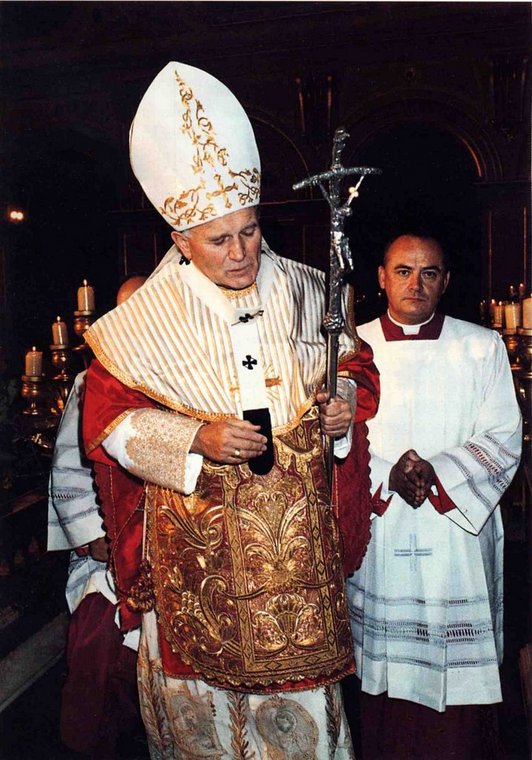
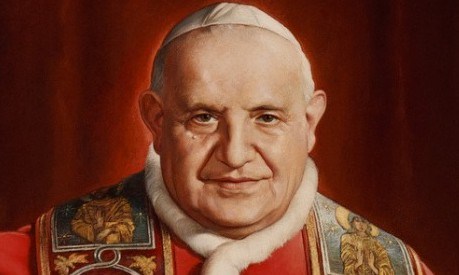
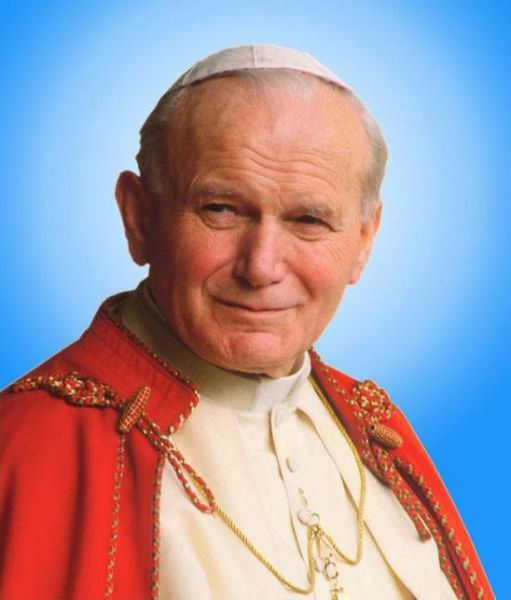
The two great Popes of the last century, both of whom had been recognised as Blessed, through the virtues of their life and miracles attributed to them, will be declared Saints, in a ceremony likely to be scheduled at the end of this year (2013).

Both Blessed Pope John XXIII and Blessed Pope John Paul II, who was made a Blessed just two years ago on 1 May 2011, had each left their incredible and remarkable footprint in the path of history, both in the history of the Church, and in the history of the world and mankind.

Image

Blessed Pope John XXIII was known to be a great man of peace, and above all things seek to embrace peace and cooperation, between mankind, and also begun the process of Ecumenism in order to reunite the divided fragments of God’s Church back into the One, Holy, Catholic, and Apostolic Church that is our Church.

He was also known for his Encyclical Pacem in Terris (Peace on earth), which was released just months after the world was almost engulfed in an all-out nuclear war between the two superpowers, the United States of America (USA) and the Soviet Union (USSR) during the height of the Cold War in the Cuban Missile Crisis. Blessed Pope John XXIII worked hard ceaselessly to promote peace between the parties in conflict, for the good of all mankind, all of whom are the children of the same one God.

Blessed Pope John XXIII also convoked the Second Vatican Council, which brought the Church in line with the developments in the world, and also to make the Church more relevant in the increasingly rapid new developments in our world, and the rise of apathy towards religion in general. He would pass away before the Council was completed, but his legacy continued on until today.

Image

Blessed Pope John Paul II ‘the Great’ was a well-known Pope, a Pope of youths, and a hardworking Pope, who travelled around the world to visit all the flocks of the Lord that had been entrusted to him as the Successor of St. Peter the Apostle, as the Vicar of Christ. He was instrumental in the end of Communism in Eastern Europe, ending persecutions against the people of the faith, and also open boundaries and barriers that had been long in place since the beginning of the Cold War.

Blessed Pope John Paul II has also renewed the zeal for the faith amongst many around the world, and especially in youths, to whom he dedicated a special event, the World Youth Day, in order to commemorate the faith, particularly amongst the youths of the faith, around the globe. He inspired many through his works, his Encyclicals, and especially his perseverance despite being troubled with a worsening Parkinson’s disease condition, that made him to labour until his passing on 2 April 2005.

Both Popes had been very influential, hardworking, and very holy leaders of the One Church of the Lord Jesus Christ, and they had done much to strengthen the faith and the Church, and bring God closer to many, bringing them closer to salvation.

I hope to soon be able to ask for the intercessions of Pope St. John XXIII and Pope St. John Paul II the Great, and I pray that they will intercede for us sinners around the world, and pray for us, till we are greeted by them at the doors of heaven when it is time for us to be with the Lord again. Now we wait for the official announcement on the date of the Canonisation.

Image

Blessed Pope John XXIII, pray for us!

Image

Blessed Pope John Paul II, pray for us!

Friday, 5 July 2013 : 13th Week of Ordinary Time, Memorial of St. Anthony Zaccaria, Priest (Scripture Reflection)

Brothers and sisters in Christ, today we reflect on the calling of Matthew, who was a tax collector, and according to the Pharisees, a sinner. He was called from his custom-house and followed Christ, eventually to become one of the Twelve Apostles and one of the Four Evangelists, who wrote the Gospel of Matthew, which passage we are reading today.

Why did the Pharisees consider the tax collectors as sinners? We should understand the history and condition of the region at the time, of the region called Palestine today, and Judea at that time. At the time of Jesus, Judea was still a semi-independent kingdom, led by a king, Herod Antipas at that time, the son of Herod the Great, who tried to kill Jesus as a baby. But despite the semblance of independence generated by the presence of a ‘king of the Jews’ in Herod, the Romans, which had become an Empire by that time, had the overall command and control as the master of the people of Judea.

The Romans established an efficient taxation system throughout their Empire, and that made up the main source of their annual income, and Judea is no exception to the rule. The people of Judea, including the Jews, had to pay their taxes to the Roman authorities, and this was greatly despised by the Jews, particularly the Pharisees and the teachers of the Law. Not just because it showed a subordination to the greater Roman authority, but it seemed that it also contradicted the fact that one should obey and give honour to the Lord alone.

The Roman coins used in the tax payment itself could be considered blasphemous by the Jews at the time, because every single coins were engraved with the facial image of the Emperor, and therefore could be considered as tantamount to idolatry, worship of the Emperor, as what was indeed happening in Rome at that time, as Emperors increasingly became more autocratic, they also attributed more divinity towards themselves, and would in time be established as the cult of the Emperors, where the Roman Emperors were worshipped as divine, living in the flesh.

All these sparked the notion that paying taxes to the Romans was a detestable idea at best, and the people did not like it for certain, for other than the religious reasons, taxes also burdened them financially, and that was why, out of all people, the tax collectors were always considered to be at the bottom of the society and were considered, particularly by the ‘pious’ Pharisees, to be morally corrupt and unworthy as well as incapable of redemption.

The tax collectors were treated and condemned as sinners, even though they might actually be good people. Remember that tax collectors often had no choice to be one, because they themselves had to earn a living, and it was indeed not an easy job to be done, as I had mentioned, being tax collectors meant that one had to endure the hatred and displeasure of the general population, the priesthood, and many other people, and endure the label of evil placed unfairly onto them.

The Jewish people themselves were very nationalistic in nature, and were very proud of their descent from Abraham, their forefather both in blood and faith. They kept mostly to themselves and married one another, in order to prevent themselves from being tainted by the pagans around them. This had happened since the time of Abraham himself, as you would have noted in our first reading today, who asked Eliezer his servant to find a wife for his son, Isaac, from among his own people, his own family, and not among the women of Canaan.

This had further made the contempt given to the tax collectors and other Roman collaborators even greater. They were barely tolerated in the society, cursed and rejected by many. They may be able to survive financially, but in terms of their lives, it was truly miserable. This was the condition that formed the backdrop of the situation as it was when Jesus called Matthew to be His disciple, and when He ate with him and his fellow tax-collectors in his house with the Pharisees.

Jesus then highlighted His mission in this world to His disciples, the Pharisees, and the tax collectors, that is to heal the world and those afflicted in this world, those who are condemned to damnation in hell, those who are suffering, those who are immersed deeply in the darkness of sin. That is because these are the ones who really need help and assistance in order to ensure that they will not fall into hell. God loves all, everyone, especially the greatest of sinners, who are in greatest need for God’s mercy and love.

That is because those of us who had been saved, and had been following the commandments of the Lord will remain safe, as long as we keep the Lord’s commandments and stay in His grace. As long as we remain faithful to the Lord, no harm can come our way. That is why it is those who are ‘sick’ from sin and evil would need much more assistance and help than we do. But we should not let Christ do that alone, but we ourselves, as the children of God, can also play our part in ensuring the salvation of all, especially those whose sins are the greatest.

The Pharisees themselves, who considered themselves most pious and blessed of all the children of God because of their strict adherence to the Law of Moses, were in fact in great need of salvation themselves. They had indeed observed ‘sacrifices’ so much that they had forgotten ‘mercy’, and forgotten love. God desires not sacrifices from man, but their love, both towards Him and towards His other children, our brothers and sisters.

The Pharisees did not love and do the true will of God, and instead became too focused on their own strict laws made by men, and even condemned those so-called sinners such as prostitutes and tax collectors as morally bankrupt and evil, while in fact, it is they themselves who were deep in the darkness, and worse still, blind to their own inadequacies and iniquities.

Today, brothers and sisters, we also commemorate the feast day of St. Anthony Zaccaria, a priest who lived in the late Renaissance era Italy. He was a priest who placed a great emphasis on the love of God and the teachings of the Church as espoused by St. Paul and the Apostles. He put the emphasis on acts of love and mercy, in addition to devotions and prayers, that made the faithful become even more devout and strong in their faith.

St. Anthony Zaccaria showed to the people of his time that to love God, is to both worship Him in prayer and supplication, in the offering of the ‘sacrifice’ of our hearts, the true sacrifice that our Lord wants from us, and also to make our love evident through our own deeds and actions, so that the love that is in us will not be an empty love, but a vibrant love in both word and action.

Therefore, following the zeal and example of St. Anthony Zaccaria, let us be loving person, loving children of God our Father, who is Love. May all of us truly show our love for Him through our complete dedication to Him, and also our loving service to our neighbours, particularly those in greatest need of help.

May the Lord be with us and remain with us, blessing us with His love and mercy at all times. St. Anthony Zaccaria, pray for us. Amen.

Friday, 5 July 2013 : 13th Week of Ordinary Time, Memorial of St. Anthony Zaccaria, Priest (Gospel Reading)

Matthew 9 : 9-13

As Jesus moved on from there, He saw a man named Matthew at his seat in the custom-house, and He said to him, “Follow Me!” And Matthew got up and followed Him.

Now it happened, while Jesus was at table in Matthew’s house, many tax collectors and sinners joined Jesus and His disciples. When the Pharisees saw this, they said to His disciples, “Why is it that your Master eats with sinners and tax collectors?”

When Jesus heard this, He said, “Healthy people do not need a doctor, but sick people do. Go and find out what this means : What I want is mercy, not sacrifice. I did not come to call the righteous, but sinners.”

Friday, 5 July 2013 : 13th Week of Ordinary Time, Memorial of St. Anthony Zaccaria, Priest (Psalm)

Psalm 105 : 1-2, 3-4a, 4b-5

Alleluia! Give thanks to the Lord, for He is good, for His love endures forever. Who can count the Lord’s mighty deeds, or declare all His praises?

Blessed are they who always do just and right. Remember me, o Lord, when You show favour to Your people.

Rescue me when You deliver them, let me see the triumph of Your faithful, let me share the joy of Your nation, and join Your people in praising You.