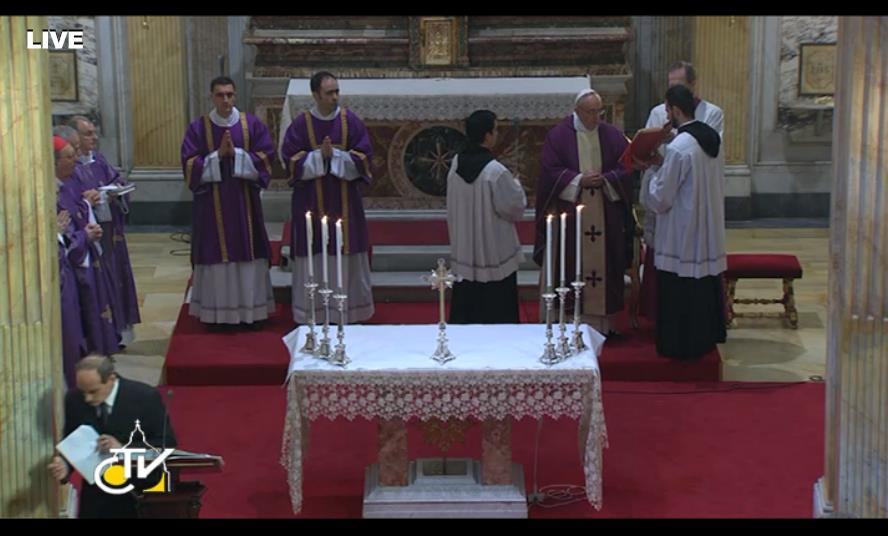
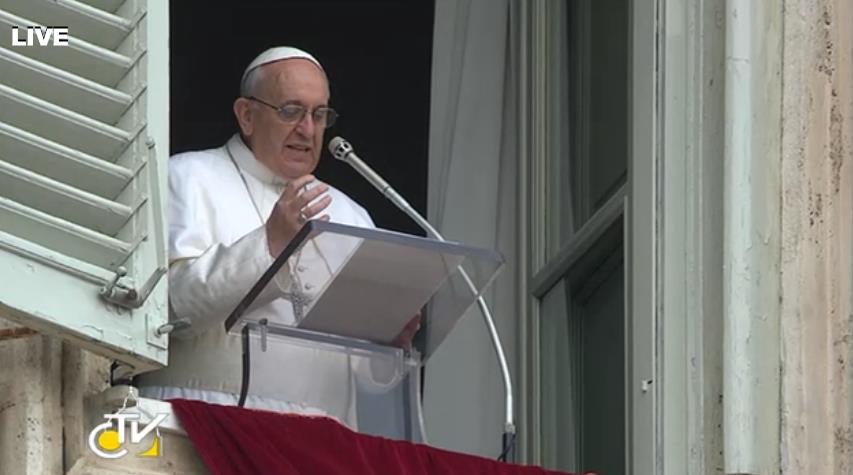
Eighth Anniversary of the death of Blessed Pope John Paul II the Great

Blessed Pope John Paul II, also called the Great, passed away in Rome at the Apostolic Palace, on 2 April 2005 at 9.37 pm Rome time (21.37) or 9.37 pm UTC+1.

It has been 8 years since his passing, and therefore let us join in the moment of prayer, in our own homes and at the time of his passing wherever we are. Pray for his Canonisation as a Saint, and most importantly, pray for our Catholic Church and all of God’s beloved people.

Homily of Pope Francis at the Mass of the Palm Sunday of the Passion of our Lord at St. Peter’s Square, Sunday, 24 March 2013

http://www.vatican.va/holy_father/francesco/homilies/2013/documents/papa-francesco_20130324_palme_en.html

Jesus enters Jerusalem. The crowd of disciples accompanies him in festive mood, their garments are stretched out before him, there is talk of the miracles he has accomplished, and loud praises are heard: “Blessed is the King who comes in the name of the Lord. Peace in heaven and glory in the highest!” (Lk 19:38).

Crowds, celebrating, praise, blessing, peace: joy fills the air. Jesus has awakened great hopes, especially in the hearts of the simple, the humble, the poor, the forgotten, those who do not matter in the eyes of the world. He understands human sufferings, he has shown the face of God’s mercy, and he has bent down to heal body and soul.

This is Jesus. This is his heart which looks to all of us, to our sicknesses, to our sins. The love of Jesus is great. And thus he enters Jerusalem, with this love, and looks at us. It is a beautiful scene, full of light – the light of the love of Jesus, the love of his heart – of joy, of celebration.

At the beginning of Mass, we too repeated it. We waved our palms, our olive branches. We too welcomed Jesus; we too expressed our joy at accompanying him, at knowing him to be close, present in us and among us as a friend, a brother, and also as a King: that is, a shining beacon for our lives. Jesus is God, but he lowered himself to walk with us. He is our friend, our brother. He illumines our path here. And in this way we have welcomed him today. And here the first word that I wish to say to you: joy! Do not be men and women of sadness: a Christian can never be sad! Never give way to discouragement! Ours is not a joy born of having many possessions, but from having encountered a Person: Jesus, in our midst; it is born from knowing that with him we are never alone, even at difficult moments, even when our life’s journey comes up against problems and obstacles that seem insurmountable, and there are so many of them! And in this moment the enemy, the devil, comes, often disguised as an angel, and slyly speaks his word to us. Do not listen to him! Let us follow Jesus! We accompany, we follow Jesus, but above all we know that he accompanies us and carries us on his shoulders. This is our joy, this is the hope that we must bring to this world. Please do not let yourselves be robbed of hope! Do not let hope be stolen! The hope that Jesus gives us.

The second word. Why does Jesus enter Jerusalem? Or better: how does Jesus enter Jerusalem? The crowds acclaim him as King. And he does not deny it, he does not tell them to be silent (cf. Lk 19:39-40). But what kind of a King is Jesus? Let us take a look at him: he is riding on a donkey, he is not accompanied by a court, he is not surrounded by an army as a symbol of power. He is received by humble people, simple folk who have the sense to see something more in Jesus; they have that sense of the faith which says: here is the Saviour. Jesus does not enter the Holy City to receive the honours reserved to earthly kings, to the powerful, to rulers; he enters to be scourged, insulted and abused, as Isaiah foretold in the First Reading (cf. Is 50:6). He enters to receive a crown of thorns, a staff, a purple robe: his kingship becomes an object of derision. He enters to climb Calvary, carrying his burden of wood. And this brings us to the second word: Cross. Jesus enters Jerusalem in order to die on the Cross. And it is precisely here that his kingship shines forth in godly fashion: his royal throne is the wood of the Cross! It reminds me of what Benedict XVI said to the Cardinals: you are princes, but of a king crucified. That is the throne of Jesus. Jesus takes it upon himself… Why the Cross? Because Jesus takes upon himself the evil, the filth, the sin of the world, including the sin of all of us, and he cleanses it, he cleanses it with his blood, with the mercy and the love of God. Let us look around: how many wounds are inflicted upon humanity by evil! Wars, violence, economic conflicts that hit the weakest, greed for money that you can’t take with you and have to leave. When we were small, our grandmother used to say: a shroud has no pocket. Love of power, corruption, divisions, crimes against human life and against creation! And – as each one of us knows and is aware – our personal sins: our failures in love and respect towards God, towards our neighbour and towards the whole of creation. Jesus on the Cross feels the whole weight of the evil, and with the force of God’s love he conquers it, he defeats it with his resurrection. This is the good that Jesus does for us on the throne of the Cross. Christ’s Cross embraced with love never leads to sadness, but to joy, to the joy of having been saved and of doing a little of what he did on the day of his death.

Today in this Square, there are many young people: for twenty-eight years Palm Sunday has been World Youth Day! This is our third word: youth! Dear young people, I saw you in the procession as you were coming in; I think of you celebrating around Jesus, waving your olive branches. I think of you crying out his name and expressing your joy at being with him! You have an important part in the celebration of faith! You bring us the joy of faith and you tell us that we must live the faith with a young heart, always: a young heart, even at the age of seventy or eighty. Dear young people! With Christ, the heart never grows old! Yet all of us, all of you know very well that the King whom we follow and who accompanies us is very special: he is a King who loves even to the Cross and who teaches us to serve and to love. And you are not ashamed of his Cross! On the contrary, you embrace it, because you have understood that it is in giving ourselves, in giving ourselves, in emerging from ourselves that we have true joy and that, with his love, God conquered evil. You carry the pilgrim Cross through all the Continents, along the highways of the world! You carry it in response to Jesus’ call: “Go, make disciples of all nations” (Mt 28:19), which is the theme of World Youth Day this year. You carry it so as to tell everyone that on the Cross Jesus knocked down the wall of enmity that divides people and nations, and he brought reconciliation and peace. Dear friends, I too am setting out on a journey with you, starting today, in the footsteps of Blessed John Paul II and Benedict XVI. We are already close to the next stage of this great pilgrimage of the Cross. I look forward joyfully to next July in Rio de Janeiro! I will see you in that great city in Brazil! Prepare well – prepare spiritually above all – in your communities, so that our gathering in Rio may be a sign of faith for the whole world. Young people must say to the world: to follow Christ is good; to go with Christ is good; the message of Christ is good; emerging from ourselves, to the ends of the earth and of existence, to take Jesus there, is good! Three points, then: joy, Cross, young people.

Let us ask the intercession of the Virgin Mary. She teaches us the joy of meeting Christ, the love with which we must look to the foot of the Cross, the enthusiasm of the young heart with which we must follow him during this Holy Week and throughout our lives. May it be so.
Details on the Papal Inauguration Mass and ceremony of Pope Francis, 266th Pope and Bishop of Rome

Mass appeal: some details of tomorrow’s papal inauguration—UPDATED

Today, Tuesday, 19 March 2013, our new Pope will be solemnly inaugurated to begin his Pontificate. He is already our Pope, ever since he accepted the rightful election in the Conclave, but the Inauguration ceremony affirms and completes that process, with the imposition of the symbols of the authority of the Pope, as the leader of the entire Universal Church.

There will be some changes to the liturgy this year, as the imposition of the Pallium and the Ring of the Fisherman will take place just before the Mass starts, instead of being within the Mass itself, as the impositions are seen as more of an extra-liturgical event.

The Pope will pray with the leaders of the Eastern Catholic Churches, the Patriarchs and Major Archbishops at the Tomb of St. Peter underneath the main altar of St. Peter’s Basilica, where the pallium and the ring had been placed since the night before.

The Pope will then proceed with all the other concelebrating Cardinals and prelates outside to the Altar at St. Peter’s Square, which in the meanwhile the Laudes Regia hymn or ‘Laud to the King (Christ)’, that is a glorious rendition of the Litany of the Saints, with the new innovation of the inclusion of part asking the past Popes who had been canonised as saints for the new Pope, their successor, beginning from Pope St. Linus to Pope St. Pius X.

Following after this is the imposition of the papal pallium, which is different from the pallium worn by the Metropolitan Archbishops. Pope Francis’ pallium will be the same in appearance with that of Pope Benedict XVI’s pallium, with red crosses instead of black ones, representing the wounds of Christ, with three gold pins on three of the crosses, representing the nails that bound both hands and the legs of Christ onto the cross. The pallium symbolises the authority the Pope has over the entire Universal Church. The pallium will be imposed by the senior Cardinal of the order of Priest in the Cardinal-electorate, Cardinal Godfried Danneels.

The Ring of the Fisherman will be given after this, which signifies the bond between the Pope and God’s Church, and as the image on the ring depicts, that of St. Peter holding the keys on a boat, while fishing, as a fisher of man, it symbolises the Pope’s role as the successor of St. Peter the Apostle, and also as the current holders of the keys of the kingdom of Heaven, entrusted by Christ to Peter. The ring will be presented to the Pope by the senior Cardinal Deacon, Cardinal Jean-Louis Tauran.

Six Cardinals representing the rest of the Cardinals will pay homage to the Pope, and will give their obedience to him, following the imposition of the pallium and the Ring of the Fisherman.

The Mass follows as usual, and the readings will be done in different languages, English, Spanish, and most notably the Gospel in Greek, to highlight the universal nature of the Church, encasing both the Western and Eastern tradition of Christendom. The whole liturgy of the Mass itself will be conducted in solemn Latin and beautiful Gregorian chants.

The booklet for the Mass is available at the link below, in English, Italian, and Latin :

Click to access 20130319_inizio-ministero-petrino.pdf

Pope Francis to visit Castel Gandolfo to meet Pope Emeritus Benedict XVI on Saturday, 23 March 2013

Newly elected Pope Francis will visit his predecessor, Pope Emeritus Benedict XVI, who is currently still staying at the summer papal residence at Castel Gandolfo. Pope Emeritus Benedict XVI will continue to reside there until the former Mater Ecclesiae monastery at the Vatican completes its renovation.

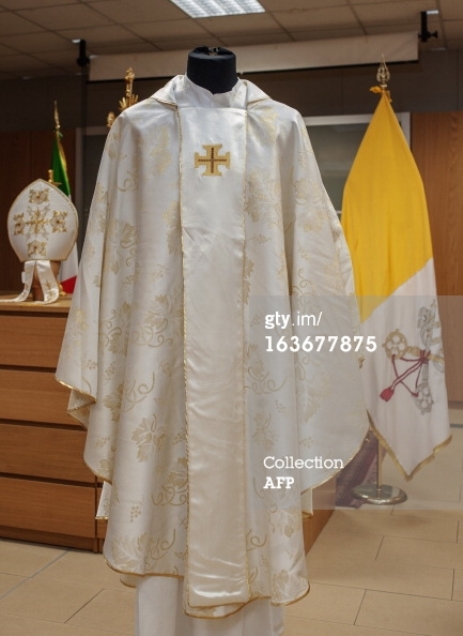
Papal vestment for the Papal Inauguration Mass of Pope Francis, Tuesday, 19 March 2013

Image

The vestments above is the vestment that Pope Francis will wear at the Papal Inauguration Mass in St. Peter’s Square, on the Feast of St. Joseph, Tuesday, 19 March 2013 at 9.30 am Rome time.

The vestments are decent and not over-simplistic, but neither overbearing, while maintaining the beauty of the vesture, which will make the liturgy of the Mass more beautiful and bring people closer to God.

(Update : It seems that Pope Francis chose to wear his personal mitre and the matching vestments that comes with his mitre (as bishop))

Papal Visit to Parish of St. Anne, Rome, and Pope Francis’ First Angelus

Image

Pope Francis visited his first parish in the Diocese of Rome today, Sunday morning, 17 March 2013 and celebrated Mass there (there are more than 300 parishes in the Diocese of Rome).

Image

At noon, he returned to the Papal Apartments at the Vatican to deliver his very first Sunday Angelus to thousands gathered in St. Peter’s Square.

Second Ballot : No smoke. No Pope had been elected yet

As there was no ‘early’ smoke on Wednesday morning, 13 March 2013 in Rome, it is safe to assume that no Pope had been elected in the second ballot. This is because, instead of the usual 2 ballots per session then burn the ballots of both together at the end (session = morning/afternoon), if a Pope is elected on the first of these two ballots, the second ballot will obviously not take place, and thus, the smoke will be early, and will definitely also be white.

This was also the early sign that a Pope had been elected in 2005, when the afternoon smoke went early (this was after the fourth ballot, first of two afternoon ballots) at near 6 pm Rome time, when the smoke, which should have been later if no Pope was elected.

It may be more likely that the white smoke will appear after the third ballot, or the fourth ballot.

Watch live at : http://www.romereports.com/palio/modules.php?name=Content3&pa=showpage&newlang=english&pid=47#.UUA0qBzLoj7

How to view the chimney of the Sistine Chapel? Live from Vatican by Rome Reports!

http://www.romereports.com/palio/modules.php?name=Content3&pa=showpage&newlang=english&pid=47#.UT4XGVeJegH

Use this site to view the live recording by the camera from the Vatican Central Television (CTV). The camera will be placed to zoom onto the chimney of the Sistine Chapel so that viewers can keep track of the smoke without the need to be actually there.

White smoke (fumata bianca) = a new Pope had been elected

Black smoke (fumata nera) = no Pope had been elected


Pray for our Cardinal-electors! and happy smoke-watching!

Tenth General Congregation of the College of Cardinals and the Oath taking of the personnels involved in the Conclave

The tenth and most likely last of the General Congregation meetings of the College of Cardinals will take place on Monday, 11 March 2013 in the usual Hall of the Synod of Bishops in the Vatican City.

As the Cardinal-electors had all been assigned their rooms in the Domus Sancta Marthae, their residence during the Conclave, the Tenth General Congregation is likely therefore as the last opportunity for the Cardinals, both electors and non-electors to raise any remaining issues or clarify the need for certain qualities in the new Pope to be elected, as well as completing any outstanding issues before the Conclave commence on Tuesday, 12 March 2013.

Fr. Federico Lombardi, head of the Holy See Press Office, will conduct his usual press briefing at 1 pm, Rome time, on Monday, most likely to divulge the outcome of the Tenth General Congregation and likely to answer any remaining questions the journalists have on the Conclave.

In the evening, at 5.30 pm Rome time (CET/UTC+1) on Monday, 11 March 2013, live from Rome at Vatican Player (www.vatican.va/video/) can be viewed the oath-taking of all the personnels involved in the Conclave and locked together with the Cardinal-electors.

They will take the same oath as the Cardinal-electors (who will only take the oath when they enter the Conclave the next day, Tuesday), as prescribed by the Motu Proprio Normas Nonnullas released by Pope Benedict XVI to modify the rules of the Conclave as written in the Apostolic Constitution Universi Dominici Gregis.

Fourth General Congregation of the College of Cardinals : Some news and summary

http://www.news.va/en/news/general-congregations-profile-of-future-pope-emerg

After the end of the Fourth General Congregation of the College of Cardinals this morning, Wednesday, 6 March 2013, the dates of the Conclave had yet to be finalised. It is most likely that the decision on the date of the Conclave awaits the remaining Cardinal-electors who has yet arrived in Rome.

113 of the 115 Cardinal-electors slated to vote in the Conclave have arrived and taken part in the Fourth General Congregation this morning, and therefore, there are only two remaining Cardinal-electors still on their way to Rome.

Some Cardinals expresses the wish to have more time for discernment and the need to have more time to wait until the Conclave begins for careful considerations, but many others also express the wish to have the Conclave completed with the election of a new Pope before the Holy Week commences on Sunday, 24 March 2013. The College of Cardinals had signalled that they will give a few days notice prior to the beginning of the Conclave on the date.

51 Cardinals have so far used their right to give speech in front of the College of Cardinals, and through the meetings so far, qualities necessary for the next Pope has been emerging. The need for an intellectual and deeply rooted Pope like Pope Benedict XVI, but with a broader reach and willingness to approach others for discussions such as in the matter of interreligious dialogue.

Also the need for a more pastoral pope with experience as pastor and not just as theologian or curialist, that is to have significant work experience as bishop/archbishop of diocese/archdiocese (My personal opinion here shows that, just as many others have pointed out that these qualities can be found in the person of Cardinal Scola of Milan, but let God decide on that).

Fr. Federico Lombardi, head of the Holy See Press Office, in the following press conference has also confirmed that Cardinal Angelo Comastri as the Archpriest of the Basilica of St. Peter, will be the presider of the prayer for the Universal Church service at 5 pm Rome time (CET) today (Wednesday, 5 March 2013), live from Vatican Player at http://www.vatican.va/video/ at St. Peter’s Basilica.