Tuesday, 17 September 2013 : 24th Week of Ordinary Time, Memorial of St. Robert Bellarmine, Bishop and Doctor of the Church (Scripture Reflections)

Liturgical Colour : Green or White

Dear brothers and sisters in Christ, today we hear the long preaching by St. Paul in the first reading, on the criteria required of one to be the overseer of the people of God, that is in the more contemporary language, means to be bishops and leaders of the Universal Church, including the Pope himself, our leader and the Vicar of Christ.

Just as not anybody can become the ordained ministers of the Lord, that is priests and deacons, therefore, the higher ordained orders demand even greater requirements and even stricter criteria. That is important because, just as the Pharisees and the chief priests had led their people into ruin, the leaders of the Church and their capabilities are essential to lead the people of God into the right way, that is towards the Lord.

If the bishops are improperly chosen, and if the early Church had not carefully decided on whom should be the overseers, there would certainly be chaos and divisions within the Church, damaging the unity and structure of the Church of God. Bishops should be upright men, who placed the Lord first before all other things, and avoid any form of fornication or impurities that may cause them to deviate from the path of truth.

Bishops, the overseers of God’s work, did not have it easy brethren, as they certainly had much oppositions, and also heavy demands and expectations on their shoulders. That was why, St. Paul was very strict in his criteria of who should be chosen as overseers, as bishops of the Church, especially the Pope, the bishop of Rome, whom all believers look up to, as their moral authority in this world, representing Christ Himself.

The people look up to them as teachers and leaders, and uprightness and righteousness are important priorities for the selection criteria, those with commitment to the Lord and dedication to doing good for the sake of others, and for the sake of God, and those with the heart and dedication for service of the Lord and for His people in the Church. Certainly not someone who desires the position because they desire power, money, and privileges attached such positions.

Yes, brethren, we need someone who is truly dedicated and devoted to his position as leaders and shepherds of the faithful. We need good shepherds, modelled after Jesus Christ the Good Shepherd, who gave His all to His sheep, that is all of us, fully dedicated to us, and most importantly filled with love for us, those who had been entrusted to Him. The same too, therefore, ought to be expected of those who had been entrusted with positions of authority in the Church.

Yes, loving in the same way that Jesus had loved His people, the people of God, especially those who are suffering, those who are unloved, and those who are rejected by the society. Today, He showed His love to the widow of Naim, who had just lost her son to death. He showed His love to her and to everyone, by exercising His authority over life and death, bringing the son of the widow back to life.

He was so moved with compassion over the sorrow of the widow, who had lost the only one she had possessed in this world, her beloved. The Lord truly understood that feeling. Imagine, brethren! How would the Lord feel, with each one of us lost day by day, to sin and damnation, that is to be separated for eternity from He who loves all of us, without exception. If we suffer from such separation, imagine the wounds that cause to the loving heart of our God.

Therefore, we truly need good and dedicated and loving leaders in this Church of God, to be the ones leading us in our approach towards the Lord. We need someone who follow the Lord and His love for those entrusted to Him, and not someone who will immediately run away at the first sign of trouble, or someone who do not love the sheep and do not put all of his heart and effort to his ministry. For those are the false and bad shepherds, the hired men who care not for those given to them.

However, brethren, this should not just be limited to just our bishops, our priests and those in the position of leadership. It is also important for us, to also follow in their footsteps, emulating the examples of the Lord, and become role models and leaders for one another. It is important for us that we help one another and support one another, that we help each other in our journey towards salvation, guided by our chosen leaders, the priests, and particularly the bishops.

Today, we commemorate the feast of St. Robert Bellarmine, a great religious and leader of the Universal Church, as both a Jesuit and a Cardinal. He lived at the era of upheaval in the Church, where heresies and rebellion against the faith were commonplace. St. Robert Bellarmine was appointed to positions of influence and entrusted with much responsibilities. Yet, he did not remain idle, and instead plunged himself into the work, totally committed to his vocation in life, that is to serve the people of God and uphold the truth of the faith.

St. Robert Bellarmine wrote extensively on the matters of the faith, contributing greatly to the advancement and enrichment of the faith in the Church. Through his works and contributions, many people returned to the faith, and his valuable writings remain widely studied even until today. St. Robert Bellarmine supported the Church’s attempt to counter Protestantism through the Countet-Reformation, working hard to protect the Holy Mother Church.

May the Lord continue to shower us with His love, and especially to our leaders, that we all will continue to reflect Christ and His love, love for all of us,  and the love He had once shown to the widow of Naim. Let us be loving and compassionate to our fellow men, showing them the care Christ had shown to us.

Inspired also by the examples of St. Robert Bellarmine, who committed himself fully to his appointed mission, and through his passionate defender of the faith, let us not be ignorant of the suffering of others, but let us empathise and open our hearts to those who need our love. And do not forget to always pray for our priests! Amen.
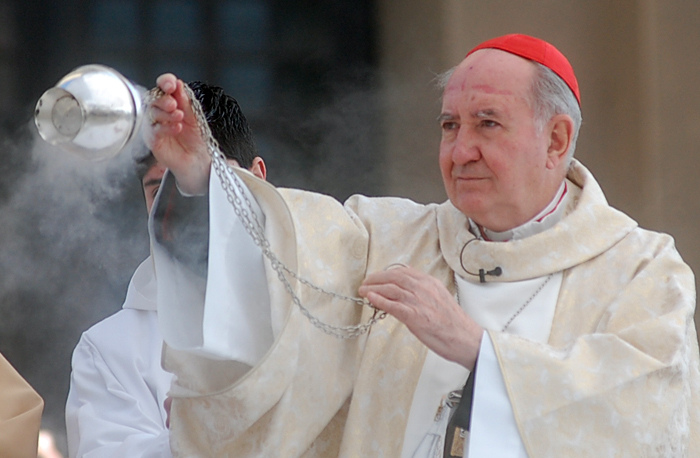
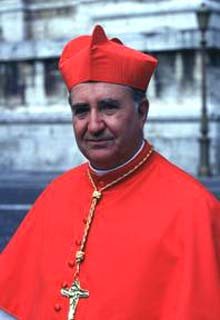
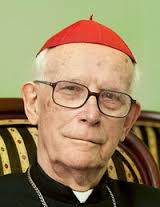
Cardinal Francisco Javier Errazuriz Ossa, Metropolitan Archbishop Emeritus of Santiago (Chile), turns 80, ceases to be a Cardinal-elector

Francisco_Javier_Errázuriz_Ossa(3)

Today, Thursday, 5 September 2013, Cardinal Francisco Javier Errazuriz Ossa, Cardinal-Priest of S. Maria della Pace, and Metropolitan Archbishop Emeritus of Santiago, Chile, turns 80, and therefore, according to the rules written in the Apostolic Constitution Universi Dominici Gregis, he loses his right to vote in any future conclave.

Cardinal Francisco Javier Errazuriz Ossa was made Cardinal-Priest of S. Maria della Pace by Blessed Pope John Paul II in the 2001 Consistory of Cardinals on 21 February 2001, the eighth of his pontificate. He was also the Metropolitan Archbishop of Santiago in Chile from April 1998 to December 2010.

81812-01

http://www.gcatholic.org/hierarchy/data/cardJP2-8.htm#49

May God bless His Eminence Cardinal Errazuriz Ossa, with a blessed old age and health. May he remain strong in the faith and hopefully can perhaps still carry out the mission God had given him.

The College of Cardinals now stands at 201 members in total, with 111 Cardinal-electors and 90 Cardinal non-electors. There are now vacancy of 9 Cardinal-electors as compared to the maximum number of electors allowed in the Conclave of 120, although Popes John Paul II and Benedict XVI had sometimes surpassed this limit.

Next Cardinal-elector to age out (80) will be Cardinal Raffaele Farina, the former Archivist of the Vatican Secret Archives and the current President of the Pontifical Commission for Reference on the Institute for Works of Religion,  on 24 September 2013.

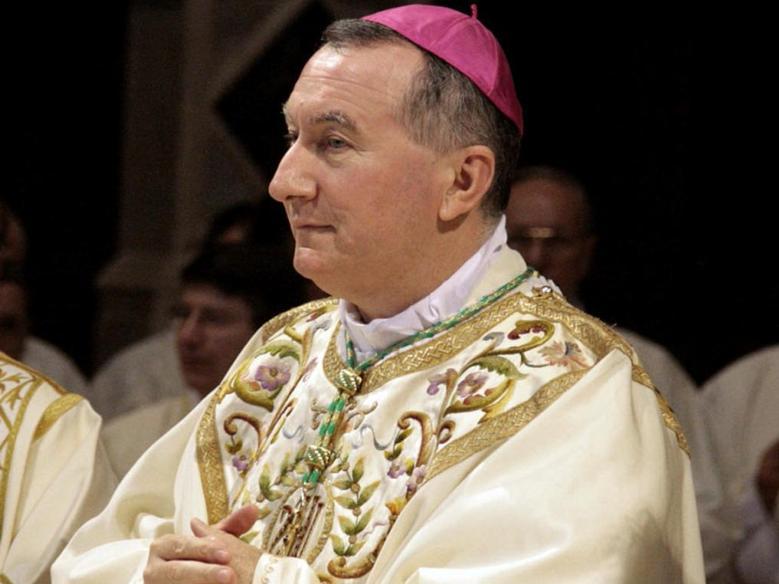
New Secretary of State of the Holy See, Archbishop Pietro Parolin

Image

Archbishop Pietro Parolin, the longtime veteran of the Secretariat of State of the Holy See, and a skilled and veteran diplomat in his current role as the Apostolic Nuncio to Venezuela, as the trusted aide to Pope Benedict XVI (now Pope Emeritus), had been appointed on Saturday, 31 August 2013 as the new Secretary of State, the top position of the Roman Curia, the governing body of the Church.

In addition, as positions tied to the post of Secretary of State, Archbishop Parolin also automatically become the new President of Interdicasterial Commission on Particular Churches (which task is managing the Eastern Catholic Churches), President of Interdicasterial Commission for the Church in Eastern Europe, and the Protector of Pontifical Ecclesiastical Academy.

Image

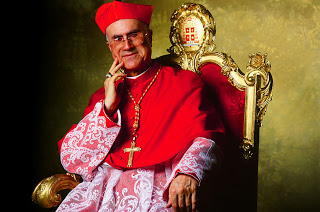
Archbishop Pietro Parolin will replace the outgoing Cardinal Secretary of State, Cardinal Tarcisio Bertone, S.D.B., who is also the Chamberlain (Camerlengo) of the Church, effective on 15 October 2013 as per the decree of Pope Francis released today.

Image

Cardinal Tarcisio Bertone is then the Secretary of State Emeritus effective on the state mentioned in the paragraph above (15 October), when Archbishop Pietro Parolin officially takes over as the new Secretary of State. The position of the Secretary of State is the top in the Roman Curia, below only the Pope in the hierarchy of the Church. Cardinal Bertone will however remain as the Camerlengo of the Church.

We thank Cardinal Bertone for all his hard work and contributions to the Church, many of which were unknown to many, and all the labours he had done in great humility and dedication in his position as the servant of the Holy Church.

As the Secretary of State position is the top official post of the entire Church and the Roman Curia save for the Pope himself, it is expected that the 58 years old Archbishop Pietro Parolin will be made a Cardinal in the next Consistory of Cardinals (possibly early 2014 or late 2014).

Passing of Cardinal Simon Ignatius Pimenta of India, at the age of 93

Cardinal_Simon_Pimenta_US_Catholic_News_Credit_The_Examiner___Archdiocese_of_Bombay_CNA_7_22_13

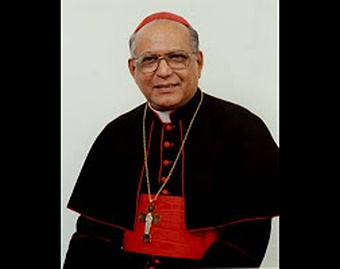
Cardinal Simon Ignatius Pimenta, Cardinal Priest of S. Maria ‘Regina Mundi’ a Torre Spaccata has passed away last Friday, 19 July 2013 at the age of 93.

http://www.gcatholic.org/hierarchy/data/cardJP2-4.htm#122

Cardinal Pimenta was created Cardinal in 1988 by the late Blessed Pope John Paul II and he was the Metropolitan Archbishop of Bombay, India from 1978 to 1996 and was for quite a few years, the President of Conference of Catholic Bishops of India.

We pray for Cardinal Pimenta, that he will rest in peace, and God will reward him for all his hard work as the shepherd of the people of God in Bombay and his numerous other contributions to the Church and for the Lord’s sake. May the Lord welcome him into His embrace in heaven and give him eternal rest and happiness that he deserved.

With the passing of Cardinal Pimenta, the College of Cardinals now stands at 203 members, with 112 Cardinal-electors and 91 Cardinal non-electors.

There are now 8 vacancies in the College of Cardinals, 1o vacant Cardinal Titles (for Cardinal Priests) and 8 vacant Cardinal Deaconries (for Cardinal Deacons)

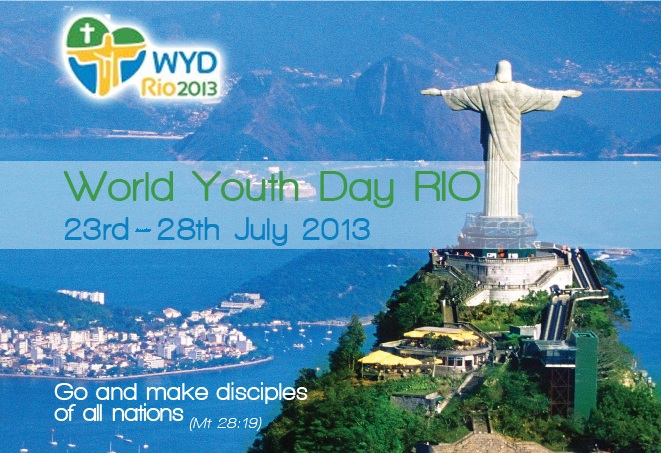
(Reminder) Official Schedule of Pope Francis in World Youth Day 2013 (23-28 July 2013) in Rio de Janeiro, Brazil

wyd-rio-2013


http://www.romereports.com/palio/popes-brazil-schedule-released-as-rio-gets-ready-for-world-youth-day-english-9964.html#.UYjtL8rTc78

http://attualita.vatican.va/sala-stampa/bollettino/2013/05/07/news/30948.html

Pope Francis’ complete schedule for the World Youth Day 2013 celebrations in Rio de Janeiro, Brazil had been released by the Vatican. As the schedule above is in Italian, I will translate it as best as I can into English here.

The Schedule (The times depicted are local time, Rome time = UTC+2 and Rio de Janeiro time = UTC-3) :


Monday, 22 July 2013

08.45 am (Rome Time) : Departure from Rome’s Ciampino Airport to Rio de Janeiro

04.00 pm (Rio Time) : Arrival at the Galeao International Airport in Rio de Janeiro

05.00 pm : Welcome ceremony for Pope Francis at the Guanabara Palace in Rio de Janeiro

05.40 pm : Visit by Pope Francis to the President of Brazil at the same Guanabara Palace


Pope Francis will then stay at a private residence in the Sumare region of Rio de Janeiro. No event scheduled for Tuesday, 23 July 2013


Wednesday, 24 July 2013 

08.15 am (Rio Time) : Pope Francis will depart his residence at Sumare by helicopter to visit the famous Basilica of the National Shrine of Our Lady of Aparecida

09.30 am : Pope Francis arrives at the Basilica of the National Shrine of Our Lady of Aparecida
10.00 am : Pope Francis will venerate an image of the Virgin Mary at the Basilica located in the Hall of the Sanctuary of the Twelve Apostles

10.30 am : Holy Mass led by Pope Francis at the Basilica of the National Shrine of Our Lady of Aparecida

01.00 pm : Pope Francis will have lunch with the Bishops of the Ecclesiastical Province of Aparecida and the seminarians of the Seminary of Aparecida

04.10 pm : Pope Francis will return to Rio de Janeiro from Aparecida by helicopter

05.25 pm : Pope Francis is scheduled to return to Rio de Janeiro by helicopter

06.30 pm : Pope Francis will visit the St. Francis Assisi Hospital in Rio de Janeiro


Thursday, 25 July 2013
07.30 am : Private Mass led by Pope Francis in his official WYD 2013 residence in Sumare, Rio de Janeiro

09.45 am : Pope Francis will receive the keys of the city of Rio de Janeiro and he will also bless the Olympic Flags of Rio de Janeiro (will be host for 2016 Olympics) at the city square of Rio de Janeiro

11.00 am : Pope Francis will visit the slum community of Varginha (Manguinhos)

06.00 pm : Pope Francis will receive youths attending the WYD 2013 at the Copacabana waterfront area, Rio de Janeiro


Friday, 26 July 2013

07.30 am : Private Mass led by Pope Francis in his official WYD 2013 residence in Sumare, Rio de Janeiro

10.00 am : Pope Francis will conduct confession sessions with youths attending WYD 2013 in the Quinta da Boa Vista Park of Rio de Janeiro

11.30 am : Pope Francis will meet some young prisoners at the Archbishop’s Palace at Rio de Janeiro

12.00 pm : Pope Francis will lead Angelus prayer from the balcony of the Archbishop’s Palace

12.15 pm : Pope Francis will greet the organising committee and benefactors of WYD 2013 in the Archbishop’s Palace, Rio de Janeiro

01.00 pm : Pope Francis will have lunch with youths at the Archbishop’s Palace

06.00 pm : Way of the Cross led by Pope Francis at the Copacabana waterfront, Rio de Janeiro


Saturday, 27 July 2013

09.00 am : Holy Mass with the bishops, priests, seminarians, and religious at the Cathedral of the Archdiocese of San Sebastian Rio de Janeiro (Cathedral of Rio de Janeiro)

11.30 am : Pope Francis will meet with the leaders of Brazil in the Municipal Theatre of Rio de Janeiro

01.00 pm : Pope Francis will have lunch with the Cardinals of Brazil, the President of the Episcopal Conference of Brazil, bishops of the Rio de Janeiro region, and the Papal entourage of WYD 2013 in the Sumare residence, Rio de Janeiro

07.30 pm : Pope Francis will lead the prayer vigil with the youths at Guaratiba, Rio de Janeiro


Sunday, 28 July 2013

10.00 am : Holy Mass of the Closing of WYD 2013 at Guaratiba, Rio de Janeiro.

12.00 am : Pope Francis will lead the recitation of the Angelus prayer at Guaratiba

02.00 pm : Pope Francis will have lunch with the Papal entourage of WYD 2013 in the Sumare residence, Rio de Janeiro

04.00 pm : Pope Francis will meet with the leaders of CELAM, the Latin American Episcopal Conference at Sumare, Rio de Janeiro

04.40 pm : Pope Francis leaves the Sumare residence

05.30 pm : Pope Francis will meet with the volunteers of the WYD 2013 at Hall 5 of Rio Centre, Rio de Janeiro

06.30 pm : Farewell ceremony at the Galeao International Airport of Rio de Janeiro

07.00 pm : Departure from the Galeao International Airport to return to Rome


Monday, 29 July 2013

11.30 am (Rome Time) : Arrival at the Ciampino Airport of Rome

Monday, 15 July 2013 : 15th Week of Ordinary Time, Memorial of St. Bonaventure, Bishop and Doctor of the Church (Scripture Reflection)

Dear brothers and sisters in Christ, today we reflect on the readings, which began from the opening of the Book of Exodus from the Old Testament, which told us the story of the people of Israel, the descendants of Abraham, Isaac, and Jacob, the chosen people, in Egypt, during their time of stay there. The people of Israel had been blessed by the Lord and grew exponentially in wealth and in their number, such that the Egyptians truly might have feared that the Israelites might overwhelm them in their own country.

Thus began the persecution of Israel, led by the Pharaoh, king and ruler of Egypt, who felt the threat created by the people of Israel in his lands. He oppressed them and tried to bring them under control, and therefore begun the slavery of Israel, the years of suffering in Egypt, when the people of Israel laboured under the yoke of the Pharaohs and many died. Yet, the Lord remained with His people, and He continued to bless them, and thence, they multiplied still even more.

But the Lord did not leave His people to suffer, because He cared for them and wished for their safety, and that was why He sent them a liberator, through Moses, the son of Israel lifted from the water of the River Nile by the daughter of the then reigning Pharaoh. Through Moses, the prayers of Israel were heard, and the Lord brought His people out of Egypt on eagle’s wings, with the ten plagues He sent to Egypt to punish them for mistreating the people of Israel and keeping them enslaved in suffering.

The Lord saved Israel from the slavery in Egypt, and He brought them through the Red Sea to the land of flowing milk and honey, the Promised Land of Canaan. The Lord God brought the people through the desert to Canaan, so that they can enjoy the promise that the Lord had made to Abraham, their forefather, that they, as his descendants, will enjoy the fruits of God’s blessings which had been given to Abraham and his descendants for eternity.

But the journey was not easy, and was full of trial and suffering, just as the people of Israel had endured suffering during their time in Egypt. That is because to become the disciples of the Lord is not easy, and is not straightforward. Much sacrifices had to be made, and indeed, as Christ had told His disciples, we have to take up our crosses and follow Him, otherwise we would not be worthy of Him.

That is because there is much evil in the world, ever since the beginning of time, when the evil one came and corrupted mankind and creation, with the evils that did not belong to God. Terrible things such as hatred, jealousy, greed, lust, and many other evils that had marred the perfection of God’s creations and all of His works.

But Christ would not let us suffer alone in this darkness, and that was why He came, to be the Light that rescues all from the grip of darkness. Instead, He bear all our sufferings, caused by our disobedience, so that He would blamed instead of us, punched and received blows instead of us, and died instead of us, a death on the cross.

The cross was, at the time of Jesus, the Romans’ favourite way to deal with criminals, particularly those seen as great threat to the Romans and to the society itself. Death of the cross for Jesus was to be a sure condemnation of His memory and a completely humiliating death for the so called ‘Messiah’, according to the chief priests.

Yet, the Lord prevailed, through His death, and then, most importantly, His Resurrection, the first to be Risen from the dead by His own power. The Risen Lord turned the humiliating cross, a symbol of shame, into a glorious sign of victory and triumph. The cross reminds us always that we have been victorious against the devil, and have also been triumphant in the struggle against sin and evil, because through that cross on Calvary, we had been made whole once again, and be made worthy in the presence of God.

That is why, brothers and sisters in Christ, we must be proud to show that we are the people who belongs to God, a people of the Lord, marked by none other than by the sign of the victorious cross. Through even simple gestures like making the sign of the cross before meals would signify our pride and faith in the triumphant cross, the Lord who had brought us up from the mire of sin, and like the Israelites of old, brought with the power of God’s hands out of Egypt, thus we have been brought out of our slavery of sin, into a new, free life in Christ.

Do not be afraid to show that we are Christians, and we also should not attempt to hide it whenever we make the sign of the cross, before meals, before prayers, and in many other occasions. Behold the symbol of our salvation, our pride and faith in God, the cross, to remember our Lord who had died for us, endured suffering that should have befallen us, just so that all of us may live, and not just a life that is temporary, but eternal life in heaven.

Today we also commemorate the memorial of St. Bonaventure, who was a religious and a well-known theologian, preacher, and scholar who lived in the early part of the last millenium, living just after the time of St. Francis of Assisi. He and his works advanced the theology and teachings of the Franciscans, which he was a member of, and his great contribution made the Pope elevated him to the Cardinalate.

St. Bonaventure in his hard works, ensured that the Franciscans would be known for its depth in understanding God’s teachings and also excellent oratory skills. He had laboured hard for Christ and God’s people, and He upheld the cross that was his, and he did not shirk from the duty to carry that cross. Instead he embraced it, and carried his cross alongside Christ.

Therefore, brothers and sisters in Christ, inspired by the zeal and devotion of St. Bonaventure and other great saints, holy men and women of God, let us renew our commitment and faith to the Lord, the One who saved us from certain death, death that awaits us sinners and evildoers, but which had been voided by the power of Christ, through the outpouring of His Blood on the cross.

Let us bear our own crosses, and help one another to bear one another’s cross, and walk our way through the path to salvation, to Christ. It will not be an easy journey, as often there will be temptations and oppositions, especially by the world, but if we remain strong, and carry our crosses faithfully, we will reach the end, and we will reach Christ, our Lord who loves us. It is up to us, brothers and sisters in Christ, whether we end up in hell or in heaven. Let us be proactive in living out our faith, that our faith will not die, but blossom with love.

God bless us all, and let us ask St. Bonaventure for his intercession for us sinners. Pray for us St. Bonaventure. Amen.

Passing of Cardinal Stanislaw Nagy at the age of 91 (Wednesday, 5 June 2013)

1_0_699082

Cardinal Stanislaw Nagy, a Cardinal from Poland and a good friend of the late Blessed Pope John Paul II, and a renowned theologian and a great teacher, has passed away last Wednesday, on 5 June 2013 at the age of 91.

nagy

Cardinal Nagy was made a Cardinal-Deacon of S. Maria della Scala at the age of 82 in 2003, as a Cardinal non-elector, in recognition of his great service for the Church, both in the field of theology, and in the field of knowledge in general, after his numerous writings on the faith and the Pope himself, whom he was a dear friend of.

With the passing of Cardinal Nagy, the composition of the College of Cardinals has once again changed, just a day after Cardinal Godfried Danneels of Belgium aged out at 80 and became a Cardinal non-elector.

As of 5 June 2013, the College of Cardinals consist of 204 members in total, with 112 Cardinal-electors and 92 Cardinal non-electors (minus one due to the passing of Cardinal Nagy).

We pray for His Eminence’s soul that God will welcome him into His embrace in heaven, and grant him the heavenly reward that is promised him, and live with Him in glory forever and ever. Requiescat in Pace.

Cardinal Godfried Danneels, Archbishop Emeritus of Mechelen-Brussel (Belgium), turns 80, ceases to be a Cardinal-elector

Image

Today, Tuesday, 4 June 2013, Cardinal Godfried Danneels, Cardinal-Priest of S. Anastasia, and Metropolitan Archbishop Emeritus of Mechelen-Brussel, Belgium, turns 80, and therefore, according to the rules written in the Apostolic Constitution Universi Dominici Gregis, he loses his right to vote in any future conclave.

Cardinal Godfried Danneels was made Cardinal-Priest of S. Anastasia by Blessed Pope John Paul II in the 1983 Consistory of Cardinals on 2 February 1983, Feast of the Presentation of the Lord, the second of his pontificate.

http://www.gcatholic.org/hierarchy/data/cardJP2-2.htm#39

May God bless His Eminence Cardinal Danneels, with a blessed old age and health. May he remain strong in the faith and hopefully can perhaps still carry out the mission God had given him.

The College of Cardinals now stands at 205 members in total, with 112 Cardinal-electors and 93 Cardinal non-electors. There are now vacancy of 8 Cardinal-electors as compared to the maximum number of electors allowed in the Conclave of 120, although Popes John Paul II and Benedict XVI had sometimes surpassed this limit.

Next Cardinal-elector to age out (80) will be Cardinal Francisco Javier Errazuriz Ossa, Metropolitan Archbishop Emeritus of Santiago (Chile) on 5 September 2013.

50th Anniversary of the passing of Blessed Pope John XXIII, the Good Pope (3 June 1963)

Image

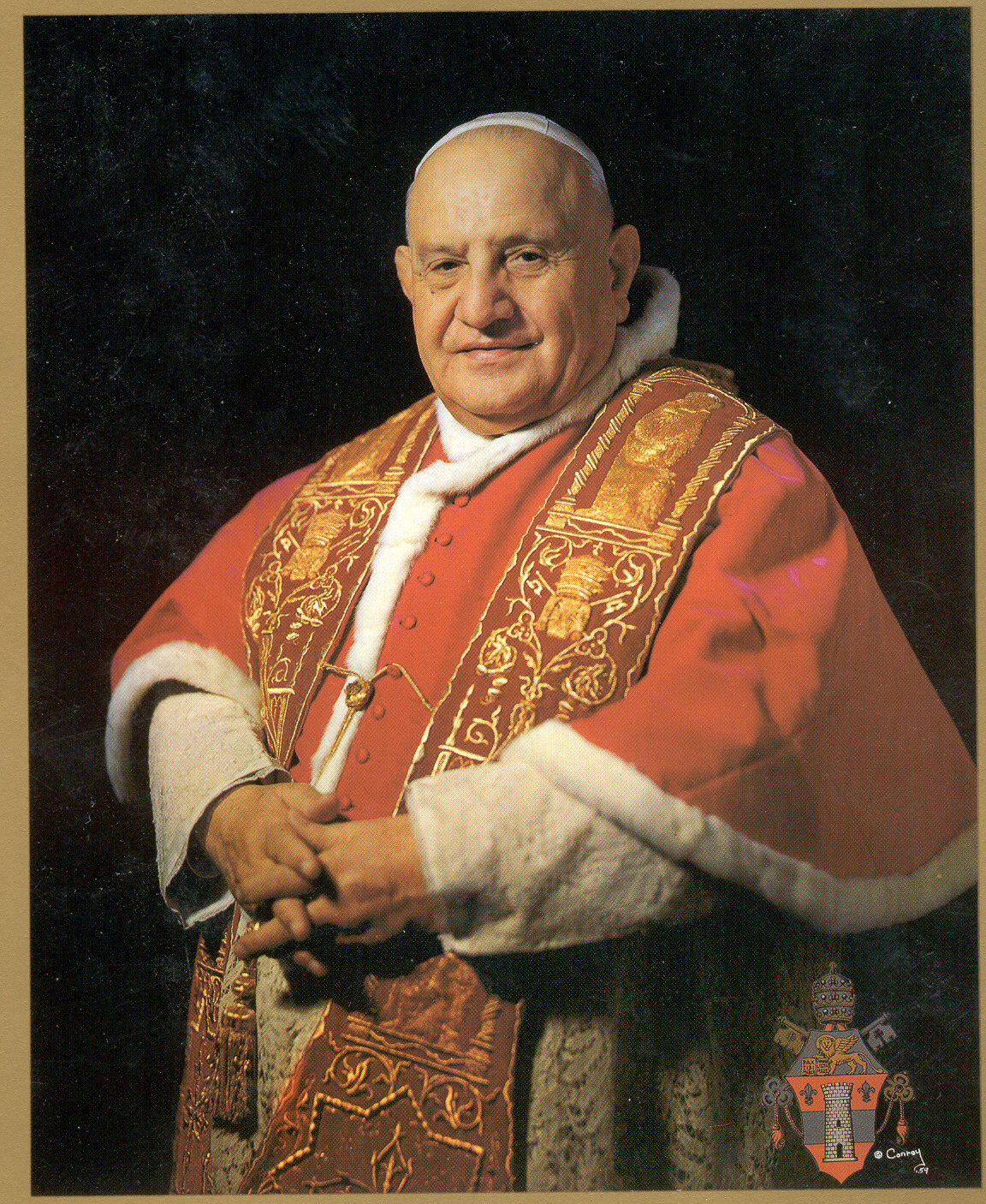
Today, 3 June 2013, marks 50 years since the passing of a great Pope, Blessed Pope John XXIII, who died from stomach cancer he had suffered for years, on 3 June 1963.

Blessed Pope John XXIII was Cardinal Angelo Roncalli, the former Patriarch of Venice, who was elected to the Pontificate in 1958 succeeding Pope Pius XII. He was a poor farmer’s son, who joined the Vatican diplomatic career and eventually was made the Patriarch of Venice, before succeeding as Pope in the 1958 Conclave.

Image

Blessed Pope John XXIII was most well-known for his role in convoking and planning for the Second Vatican Council, which ultimately would take place between 1962 and 1965, with the Council works continued by his successor Pope Paul VI in 1963 upon his passing.

Image

But Blessed Pope John XXIII was also well-known for another work, that is peace, which is one of the hallmark of his pontificate. He managed to help arrange peace talks between the USA and the USSR, the Cold War superpowers, which due to the Cuban Missile Crisis in October 1962 and preceding conflicts, almost went into an all-out nuclear war at the time.

Image

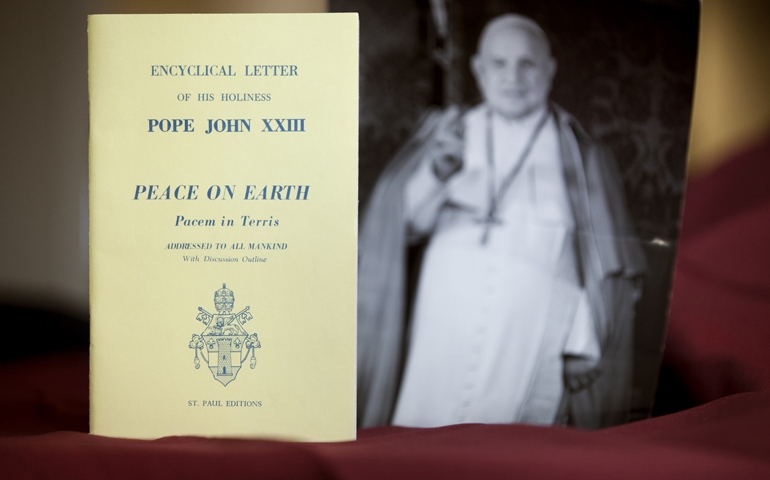
Blessed Pope John XXIII published the well-known encyclical on peace, Pacem in Terris (Peace on Earth) just months before his death, but his works on peace help ensure that the destruction of mankind and God’s creation did not happen.

Image

Pray for us, o Blessed Pope John XXIII, that all of God’s children can truly become peacemakers on their own, and truly practice the love that God has planted in them, that love and peace will reign in this world, triumphant over evil, hatred, and violence.

Eighth Anniversary of the Election of Pope Benedict XVI to the Pontificate (19 April 2005)

Happy 8th Anniversary of the election of our beloved Pope Benedict XVI!

Image

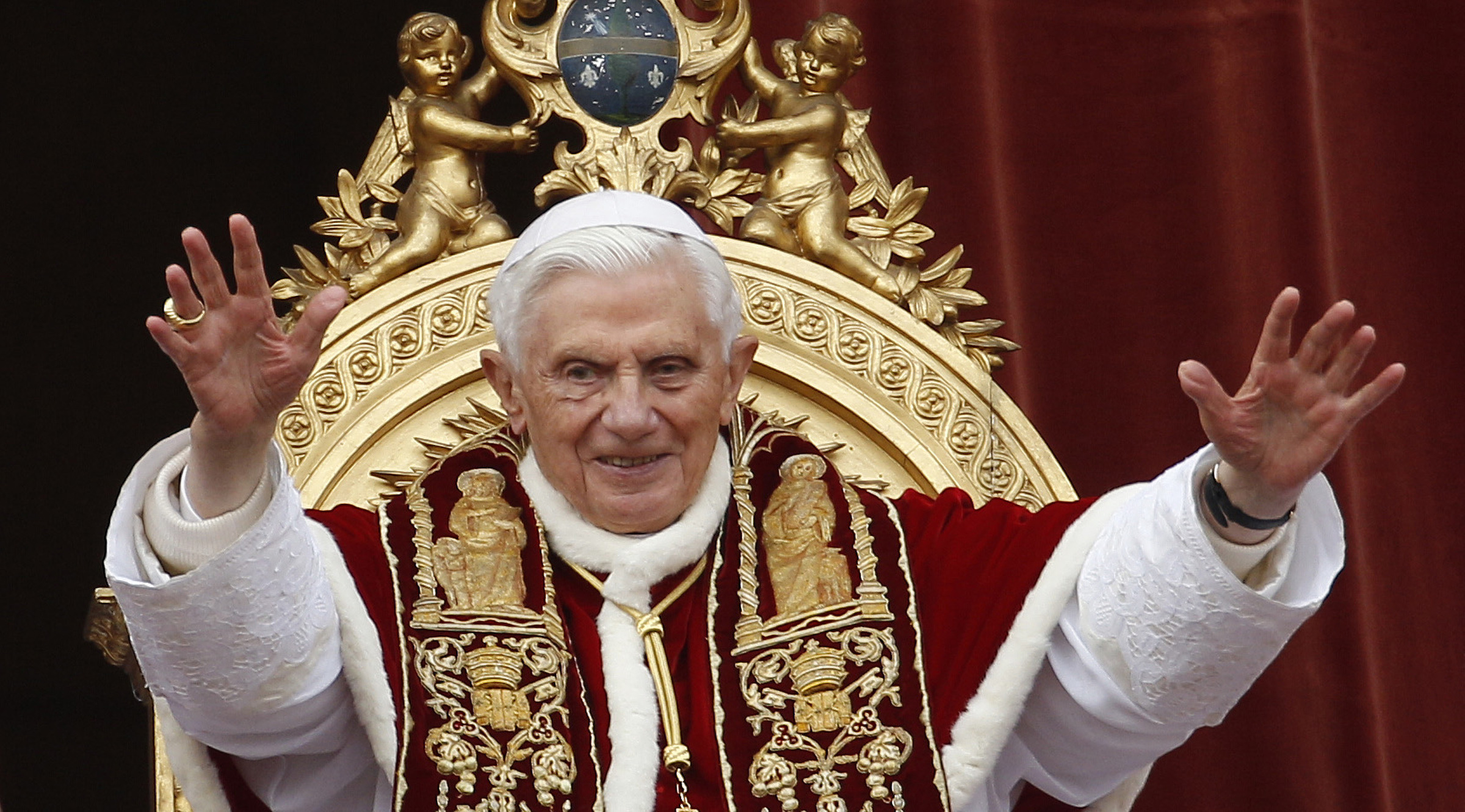
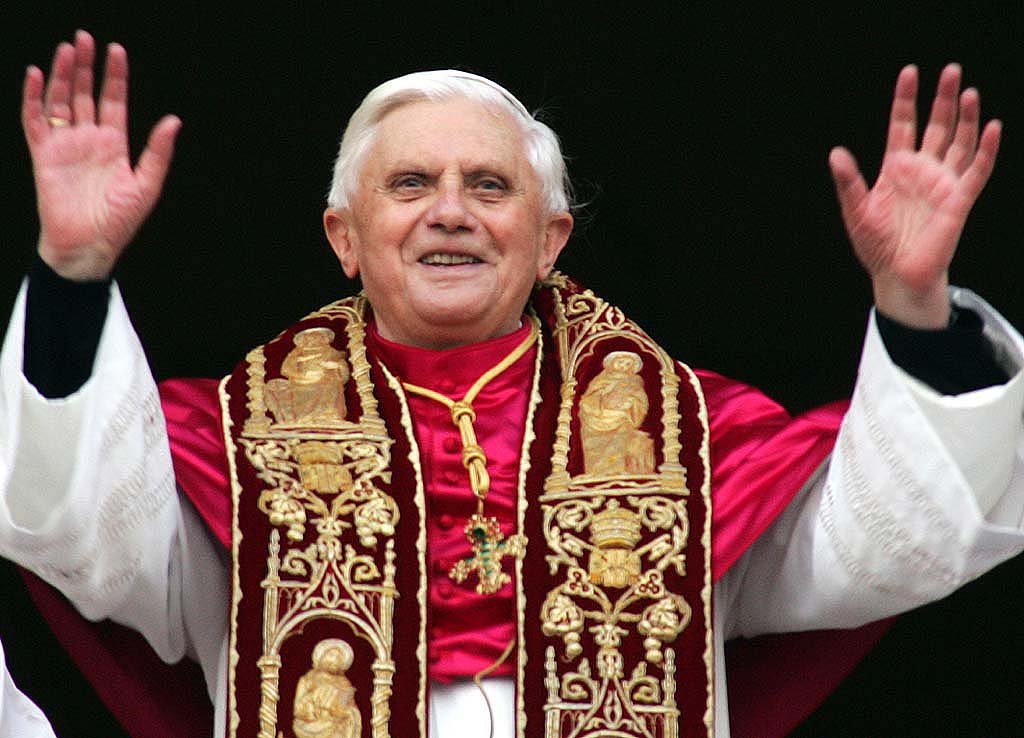
He may have retired, but he will always be our Pope, and so I find that it is still relevant and indeed recommended to celebrate this joyful occasion, that 8 years ago, on 19 April 2005, Cardinal Joseph Ratzinger was elected as Pope Benedict XVI, the 265th Pope. I can still clearly remember the Habemus Papam uttered by Cardinal Jorge Medina Estevez on that day.

Ad multos annos, Holy Father! Pray for us always! May you live long and see through your successors! Support them with your prayers.

Image

(Image : From the election of Pope Benedict XVI on 19 April 2005)