25,000 views. Another milestone had been passed on Holy Thursday. Praise to God and pray for me

My blog has received its 25,000th view on this past Holy Thursday. Since I had been very busy during the Easter Triduum, I had not been able to update this blog with this news earlier. Nevertheless, I thank God who has guided me all these while, and allowing me to persevere, and still be able to update my blog as best as I can, despite my busy Holy Week schedule.

Pray for me, dear brothers and sisters in Christ, and pray for our Holy Catholic Church!


Statistics (As of Sunday, 31 March 2013 at 4.32 pm Singapore time)

Total view : 27,170

Total visitors : 17,377

Days since beginning : 74


View Statistics by Country (Total listed : 26,697)

1. United States of America : 11,726

2. Singapore : 3,736

3. United Kingdom : 1,790

4. Canada : 1,357

5. Philippines : 1,271

6. Italy : 773

7. Australia : 543

8. Germany : 425

9. Poland : 307

10. Ireland : 295

11. France : 278

12. India : 253

13. Malaysia : 238

14. Netherlands : 231

15. Indonesia : 173

16. Belgium : 164

17. Hungary : 142

18. Brazil : 127

19. Austria : 119

20. Portugal : 115

21. Mexico : 115

22. Spain : 112

23. Switzerland : 108

24. Hong Kong : 100

25. New Zealand : 91

26. Sweden : 91

27. Croatia : 77

28. Finland : 76

29. South Africa : 73

30. Nigeria : 72

31. United Arab Emirates : 67

32. Slovakia : 65

33. Saudi Arabia : 65

34. Thailand : 64

35. Malta : 62

36. Japan : 61

37. Czech Republic : 61

38. Romania : 59

39. Norway : 57

40. Greece : 53

41. Russia : 51

42. Argentina : 47

43. Taiwan : 42

44. Vietnam : 41

45. Botswana : 38

46. Lithuania : 36

47. Puerto Rico : 36

48. Sri Lanka : 34

49. Colombia : 32

50. South Korea : 32

51. Lebanon : 27

52. Denmark : 27

53. Slovenia : 27

54. Trinidad and Tobago : 26

55. Israel : 25

56. Vatican City : 23

57. Ghana : 23

58. Mauritius : 21

59. Egypt : 19

60. Uganda : 19

61. Tanzania : 17

62. Costa Rica : 16

63. Bosnia and Herzegovina : 16

64. Kenya : 15

65. Latvia : 14

66. Senegal : 14

67. Cyprus : 13

68. Bulgaria : 12

69. Ukraine : 12

70. Guam (USA) : 12

71. Serbia : 12

72. Kuwait : 11

73. Dominican Republic : 11

74. Guatemala : 11

75. Luxembourg : 10

76. Brunei Darussalam : 10

77. Chile : 10

78. Cameroon : 10

79. Pakistan : 10

80. Panama : 10

81. Venezuela : 10

82. El Salvador : 9

83. Cambodia : 9

84. Jamaica : 9

85. Jordan : 9

86. Zimbabwe : 8

87. Belarus : 8

88. Qatar : 8

89. Turkey : 8

90. Rwanda : 8

91. Bolivia : 8

92. Bahamas : 8

93. Bangladesh : 7

94. Djibouti : 7

95. Namibia : 7

96. Gibraltar (UK) : 6

97. Nepal : 6

98. Moldova : 5

99. Peru : 5

100. Estonia : 5

101. Macau : 4

102. Northern Mariana Islands (USA) : 4

103. Nicaragua : 4

104. Albania : 3

105. Honduras : 3

106. Laos : 3

107. Ecuador : 3

108. Lesotho : 3

109. Ivory Coast : 3

110. Cayman Islands (UK) : 3

111. Haiti : 2

112. Fiji : 2

113. Mozambique : 2

114. Marshall Islands : 2

115. Sierra Leone : 2

116. Uruguay : 2

117. Bermuda (UK) : 2

118. Grenada : 2

119. Zambia : 2

120. Papua New Guinea : 2

121. Timor-Leste : 2

122. Martinique (France) : 2

123. Monaco : 2

124. Oman : 2

125. Turk and Caicos Islands (UK) : 2

126. Ethiopia : 2

127. Saint Lucia : 1

128. Guernsey (UK) : 1

129. Togo : 1

130. Iraq : 1

131. Belize : 1

132. Swaziland : 1

133. Iran : 1

134. Armenia : 1

135. French Polynesia (France) : 1

136. Dominica : 1

137. Greenland (Denmark) : 1

138. Macedonia : 1

139. Montenegro : 1

140. Saint Vincent and the Grenadines : 1

141. Libya : 1

142. Uzbekistan : 1

143. Isle of Man (UK) : 1

144. Paraguay : 1

Tuesday, 26 March 2013 : Tuesday of Holy Week (Scripture Reflection)

Jesus, the Christ, the Son of God who became Man, is the servant of God mentioned in the book of the prophet Isaiah in our first reading, as the messenger of God, and the labourer of God, who made Israel, scattered over all nations for their disobedience and sins, whole once again, and return them into the the Lord’s fold.

Yet, as the servant of God had mentioned, that He had laboured in vain, because indeed, many of the people in Israel remained deaf and blind to the works of God through Him. Many still rejected God’s servant, just as they had rejected many prophets that God had sent to them across time, since the beginning of Israel to the coming of Christ, God’s servant.

Christ is also to die, just as the people murdered God’s prophet, and so did Christ had to endure the same suffering and death.

However, Christ put His trust entirely in the Lord, God His Father, for He placed a complete trust in Him, as well as out of His great and undying love for all of us, He remained true and faithful to His mission, despite the weight of such a burden and responsibility, that He even wavered at times, greatly distressed in His Spirit.

This is how we can follow the example of Christ. That is to pray, whenever we are faced with great trouble and persecution. Christ prayed at the Garden of Gethsemane prior to His arrest by the temple guards and Judas’ betrayal, so that He would be strengthened for whatever things that are to come.

The lack of prayer and faith is what made Peter betrayed Jesus, just as Judas Iscariot had betrayed Christ for the thirty silver coins he received from the chief priests for his betrayal. Judas had failed his temptation by Satan and allowed Satan to enter into him, to betray the Lord, because he had let himself to falter in his faith, for in fact, he barely has faith for the Lord at all.

For already it was known that from yesterday’s readings, that he appropriated some of the common purse’s money for his own use. He didn’t follow the Lord out of true faith and dedication to God’s mission, but rather as an opportunist, and being a thief he was, he took advantage of the situation, and even betrayed his Master for the sake of money. When he regretted that, it was already too late for him to repent.

For Peter, and also the other disciples, they did have faith in the Lord, but that faith was yet strong enough to endure harsh moments and persecutions. For when the Lord was arrested, and He was brought to the chief priests for trial, the fear that came before all of them, including Peter, prevented their faith in Christ to come forth in them, and instead they cower behind their fears, and their own self-preservation instincts.

That was why Peter denied Jesus three times, all to protect himself, from facing the same fate as that of Christ. He denied Him three times despite having pledged his life to defend Christ just hours before that denial. But Christ saw the true faith that was in Peter, only that it was being shrouded in fear. Once that shroud of fear was removed, the true faith could shine brightly for all to see. That was why Christ forgave Peter through His three questions of love to Peter, and then commended to Him the people of God, to be his as the shepherd, representing Himself as the Chief Shepherd.

Therefore brothers and sisters in Christ, as we approach the Easter Triduum beginning this Thursday, let us pray, that our faith will be strengthened. That we will never again be afraid or be ashamed to stand up for Christ and for the teachings of God and His values. Let us strive to help one another, to strengthen one another in faith, and to bring all God’s people together in love. May God bless our Holy Week celebration, that we will have a fruitful and blessed time. Amen!

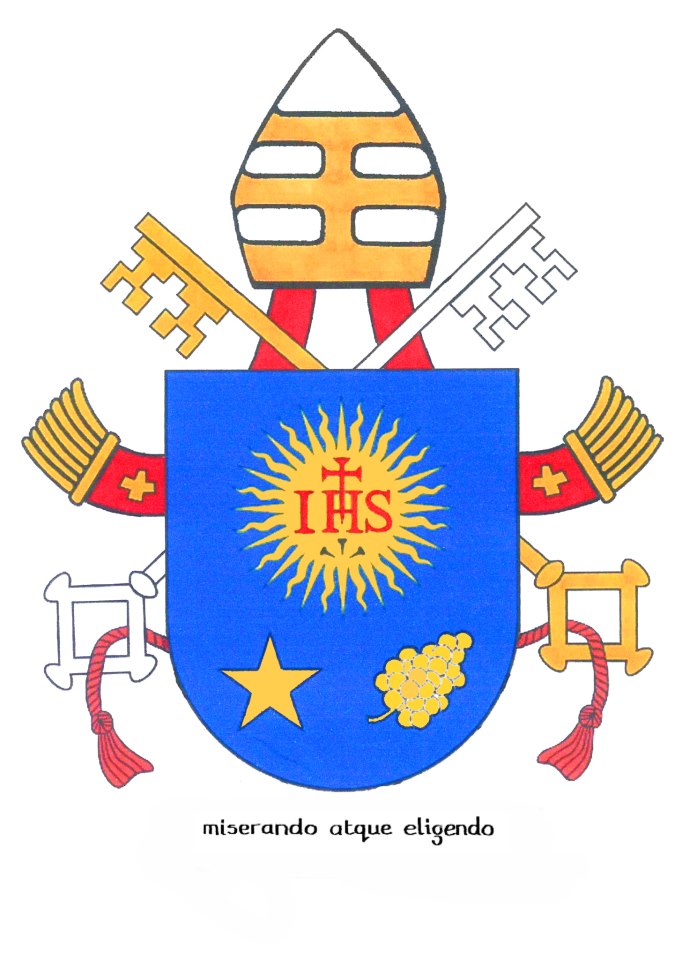
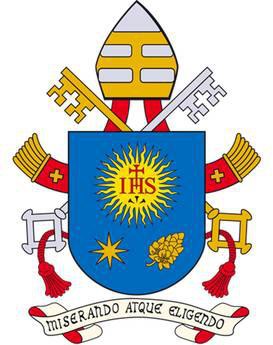
Final version of Pope Francis’ coat of arms

Image

The draft version of Pope Francis’ coat of arms had been finalised, with minor changes that improves greatly upon the draft version. The golden star is altered from a five-pointed star into an 8-pointed star representing the Blessed Virgin Mary, and with the spikenard flower, which is used in perfumes, being the symbol of St. Joseph, more accurately drawn. Finally, the motto “Miserando atque Eligendo” is encased in a scroll.

This should be the finalised official version of Pope Francis’ coat of arms, though variations may exist in different forms.

Details on the Papal Inauguration Mass and ceremony of Pope Francis, 266th Pope and Bishop of Rome

Mass appeal: some details of tomorrow’s papal inauguration—UPDATED

Today, Tuesday, 19 March 2013, our new Pope will be solemnly inaugurated to begin his Pontificate. He is already our Pope, ever since he accepted the rightful election in the Conclave, but the Inauguration ceremony affirms and completes that process, with the imposition of the symbols of the authority of the Pope, as the leader of the entire Universal Church.

There will be some changes to the liturgy this year, as the imposition of the Pallium and the Ring of the Fisherman will take place just before the Mass starts, instead of being within the Mass itself, as the impositions are seen as more of an extra-liturgical event.

The Pope will pray with the leaders of the Eastern Catholic Churches, the Patriarchs and Major Archbishops at the Tomb of St. Peter underneath the main altar of St. Peter’s Basilica, where the pallium and the ring had been placed since the night before.

The Pope will then proceed with all the other concelebrating Cardinals and prelates outside to the Altar at St. Peter’s Square, which in the meanwhile the Laudes Regia hymn or ‘Laud to the King (Christ)’, that is a glorious rendition of the Litany of the Saints, with the new innovation of the inclusion of part asking the past Popes who had been canonised as saints for the new Pope, their successor, beginning from Pope St. Linus to Pope St. Pius X.

Following after this is the imposition of the papal pallium, which is different from the pallium worn by the Metropolitan Archbishops. Pope Francis’ pallium will be the same in appearance with that of Pope Benedict XVI’s pallium, with red crosses instead of black ones, representing the wounds of Christ, with three gold pins on three of the crosses, representing the nails that bound both hands and the legs of Christ onto the cross. The pallium symbolises the authority the Pope has over the entire Universal Church. The pallium will be imposed by the senior Cardinal of the order of Priest in the Cardinal-electorate, Cardinal Godfried Danneels.

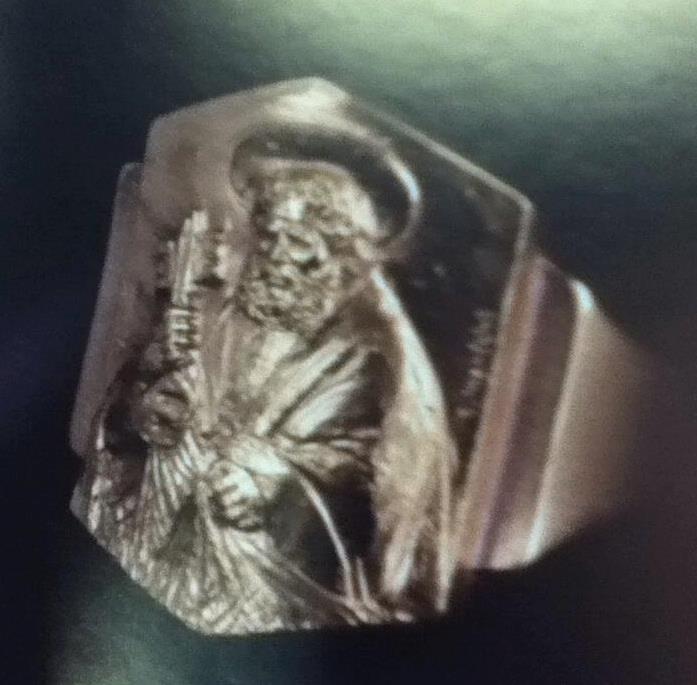
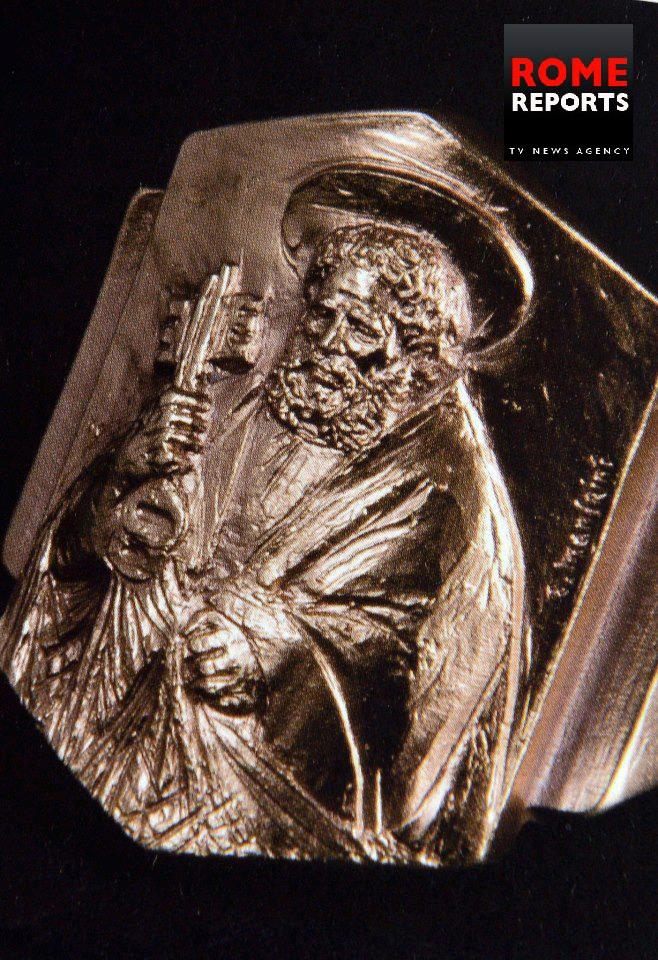
The Ring of the Fisherman will be given after this, which signifies the bond between the Pope and God’s Church, and as the image on the ring depicts, that of St. Peter holding the keys on a boat, while fishing, as a fisher of man, it symbolises the Pope’s role as the successor of St. Peter the Apostle, and also as the current holders of the keys of the kingdom of Heaven, entrusted by Christ to Peter. The ring will be presented to the Pope by the senior Cardinal Deacon, Cardinal Jean-Louis Tauran.

Six Cardinals representing the rest of the Cardinals will pay homage to the Pope, and will give their obedience to him, following the imposition of the pallium and the Ring of the Fisherman.

The Mass follows as usual, and the readings will be done in different languages, English, Spanish, and most notably the Gospel in Greek, to highlight the universal nature of the Church, encasing both the Western and Eastern tradition of Christendom. The whole liturgy of the Mass itself will be conducted in solemn Latin and beautiful Gregorian chants.

The booklet for the Mass is available at the link below, in English, Italian, and Latin :

Click to access 20130319_inizio-ministero-petrino.pdf

Ring of the Fisherman for Pope Francis, 266th Pope, Successor of St. Peter the Apostle, leader of the Universal Church

Image

Another image from Rome Reports

6719_10151417713052928_1657486910_n

Pope Francis’ Ring of the Fisherman, which is one of the symbol of the authority as the Pope, as both a bishop (episcopal ring) and the Successor of St. Peter the Apostle, leader of the entire Universal Church. It will be given to Pope Francis at the celebration of the Papal Inauguration Mass, on the Feast of St. Joseph, Tuesday, 19 March 2013, together with another symbol, that is the pallium.

The ring’s image closely follow that of Pope Benedict XVI’s Ring of the Fisherman, with slight difference in the shape of the ring, and the ring being made of gold-plated silver instead of gold. Depicted on the ring is the image of St. Peter holding onto the keys of the kingdom of heaven, and fishing, as he was a fisherman, but called by God to be a ‘fisher of man’.

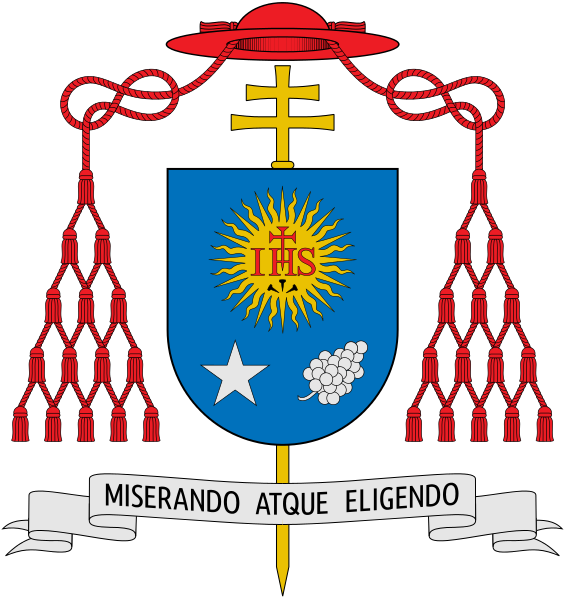
Official coat-of-arms of Pope Francis, the 266th Pope, Leader of the Universal Church

Image

The official coat-of-arms of Pope Francis, which followed closely the model established by Pope Benedict XVI, in placing the ‘three-tiered’ ‘papal mitre’ instead of the papal tiara, and following the same shield model as that of his Cardinalate and episcopal coat-of-arms, but with altered colours for the star and the grapes, from silver to gold.

Image

Pope Francis used his episcopal motto “Miserando atque Eligendo” which means “Lowly but chosen” in English, in line with his views and outlook on humility.

The Cardinal’s fifteen red tassels and the galero on top of it, is replaced by the papal arms standard including the three-tiered papal mitre and the crossed keys of the kingdom of heaven (silver and gold).

The symbols that appeared on the shield are first, the IHS symbol surrounded with a sun-like ray is the symbol of the Jesuit order (S.J.) of which Pope Francis is a member of, and the star on the bottom-left, in conjunction with the blue colouration of the shield represents the Virgin Mary, and the grape on the bottom right represents Jesus Christ, as the grower of the vineyard of the Lord.

Papal Inauguration Mass of the Pontificate of Pope Francis I, Bishop of Rome

http://www.romereports.com/palio/inauguration-mass-for-pope-francis-i-scheduled-for-feast-day-of-st-joseph-english-9411.html

The Papal Inauguration Mass of the Pontificate of Pope Francis I, Jorge Maria Bergoglio, who was the Metropolitan Archbishop of Buenos Aires, Argentina, and elected the 266th Pope on Wednesday, 13 March 2013, will be held on :


Feast of St. Joseph, Spouse of the Blessed Virgin Mary, Tuesday, 19 March 2013, at 9.30 am Rome time (CET/UTC+1)


The timing in other timezones are :

1. UTC : Tuesday, 19 March 2013 at 8.30 am

2. EDT : Tuesday, 19 March 2013 at 4.30 am

3. PDT : Tuesday, 19 March 2013 at 1.30 am

4. WIB / UTC+7 : Tuesday, 19 March 2013 at 3.30 pm

5. Singapore / UTC+8 : Tuesday, 19 March 2013 at 4.30 pm

Cardinal Angelo Scola, Archbishop of Milan, the Papabile

http://www.eitb.com/en/news/world/detail/1282802/candidates-new-pope–profile-cardinal-angelo-scola/

From the article (My commentary at the end) :


Election of new pope

Profile of Cardinal Angelo Scola, Archbishop of Milan

APTN

03/11/2013

A conservative, and theologically close to both Pope Benedict and his predecessor John Paul II, Cardinal Scola is regarded as one of the leading European candidates to become Pope.

Cardinal Angelo Scola, the archbishop of Milan.

Cardinal Angelo Scola, the archbishop of Milan, shot to the top of a list of possible successors to Pope Benedict XVI almost immediately the resignation was announced.

A conservative, and theologically close to both Pope Benedict and his predecessor John Paul II, Cardinal Scola is regarded as one of the leading European candidates to become Pope.

Some observers tipped him to succeed after the death of John Paul II in 2005, but the conclave instead chose Cardinal Joseph Ratzinger who became Benedict XVI, the 265th pope.

But if there was rivalry between the candidates in 2005, it had little effect on their close relationship, and Scola remained a favourite of Pope Benedict’s, who appointed the Cardinal archbishop of the Milan Diocese in June 2011.

In the small town of Malgrate on Lake Como in northern Italy, many of the 5,000 residents are backing their hometown boy to become Pope. Scola was born in Malgrate on 7 November 1941 to a truck driver and a homemaker.

He entered the priesthood in 1970, became a Cardinal in 2003, serving first as Patriarch of Milan until he was elevated to his current post of archbishop.

Scola’s cousin, Angelo Colombo, remembers that during World War II he would spend time at his cousin’s home because Scola’s father was a truck driver and could get access to flour and bread.

Colombo said he would go to Scola’s family home, and his aunt and the future Cardinal would always share their food. When he asked if he thought his cousin would make a good Pope, Colombo laughed and responded: “he was a tough boy”.

Scola spent the early years of his life in a small home on Malgrate’s Salita Sant’Antonio. Alfredo Cagliandi was a classmate of Cardinal Scola and lived in the apartment below him.

“We would invite Angelo to come and play and he would repeatedly respond ‘I am sorry, but I don’t have time.’  He was too busy because was already involved in something religious,” said Cagliandi, who still lives in Malgrate.

Scola spent the first two decades after his 1970 ordination in the lecture halls and libraries of renowned Catholic universities and theological training grounds, notably in Fribourg, Switzerland, and the Lateran Pontifical University in Rome.

While pursuing theological studies, Scola was involved in Communion and Liberation, a conservative Italian Catholic group which blends political activism with faith-based fervour as it seeks to make its weight felt in the country’s decision-making.

Back in Scola’s home town, the local priest Father Andrea Lotterio proudly showed off the baptismal font where he says the town’s babies are still baptised today, noting that Scola was baptised there in 1941.

Father Lotterio said Scola has pleased the residents of Malgrate by never losing his strong ties to his hometown. “He has maintained his relationships with many local citizens, with his friends, with his relatives,” Lotterio said. “So much so that in this town he is called Don Angelo, instead of Cardinal or Patriarch of Venice.”

Pope Benedict resigned as leader of the Catholic Church on Thursday, becoming the first pope in 600 years to resign. For the time being, the governance of the Catholic Church shifts to Cardinal Tarcisio Bertone, the camerlengo, or chamberlain. Bertone, along with the College of Cardinals will guide the church and make plans for the conclave to elect the 266th leader within the next few weeks.


Commentary and additions:

Indeed, Cardinal Angelo Scola has many strengths and characteristics that we need as the new Pope to lead the Roman Catholic Church, the one and Universal Church. He does have his weaknesses, but his strengths more than made up for him. After all, it is human to have weaknesses and to make mistakes.

Cardinal Scola is media-savvy, able to reach out into the hearts of many, including youths and those in the world, who are longing for the Lord to come to them. Being media-savvy, and also internet-savvy, Cardinal Scola is not shy of using modern media tools, such as the internet, twitter, YouTube, his own site, and many other means to evangelise to the world, and to reach out, especially to youths.

Cardinal Scola also has a positive outlook and optimism in the Church, and indeed, instead of being pessimistic on the Church, and instead of looking at a Church in trouble, he dismissed all this, and all the lies that the media had brought about the Church, that the Church instead of being in chaos and trouble, is in fact growing, and filled with vibrant and strong faith and love in God, and Cardinal Scola has the capacity to tap into all these energies.

Cardinal Scola also came from a poorer family background, and he understood the plight of the poor and the less fortunate. His hometown people has often remembered him as someone who not only did not forget about where he came from, and where he was born, but also someone who constantly gives them his care and his love, in imitation of Christ and His care for the poor.

Cardinal Scola speaks Italian, English, French, and Spanish, and although his English is not that good, but he has quite a strong command of these languages, which are essential in the Pope’s ministry as the leader of the Universal Church.

Cardinal Scola’s initiatives to reach out to the Christians in the Holy Land and in other areas where Christians are minorities, and his involvement in interreligious dialogue and cooperation, and even with atheists, had been fruitful and crucial in strengthening Christians in the areas where they had been persecuted, and where persecutions are ongoing.

His experience in the Archdiocese of Milan, Patriarchate of Venice, and Diocese of Grosseto clearly showed that he is a pastoral leader with a humble and yet intellectual mind, that matches that of our beloved Pope Emeritus Benedict XVI. Yet, his experiences in the Roman Curia too were many, with works as leader of Pontifical Institute of Marriage and the Family, which he also took a strong stand with the Church in the sanctity of both marriage and the family.

His intellect, knowledge, and publications especially in topics like bioethics, in the midst of the attacks against Church’s stand on bioethics, cloning, and contraceptions will be essential for the future leader of the Church, and his ability to connect and reach out to people, more than Pope Emeritus Benedict XVI, will be valuable asset to have in the new Pope.

Nevertheless, now that the Conclave will begin soon, we continue to pray that God will pour His Holy Spirit on all the Cardinal-electors, that they can make a wise and inspired decision, to elect someone whom the Lord has chosen, as the best possible person to succeed His Apostle, Peter, and lead the whole Universal Church, that God Himself built in this world, to be the manifestation of His love, justice, and presence.

(Special) Mass for the Election of the Roman Pontiff / Missa pro Eligendo Pontifice (Gospel Reading)

John 15 : 9-17

As the Father has loved Me, so I have loved you. Remain in My love! You will remain in My love if you keep My commandments, just as I have kept My Father’s commandments and remain in His love. I have told you all this, that My own joy may be in you, and your joy may be complete.

This is My commandment : Love one another as I have loved you! There is no greater love than this, to give one’s life for one’s friends; you are My friends, if you do what I commanded you. I shall not call you servants any more, because servants do not know what their master is about. Instead I have called you friends, since I have made known to you everything I learnt from My Father.

You did not choose Me; it was I who chose you and sent you to go and bear fruit, fruit that will last. And everything you ask the Father in My Name, He will give you. This is My command, that you love one another.

(Special) Mass for the Election of the Roman Pontiff / Missa pro Eligendo Pontifice (Second Reading)

Ephesians 4 : 11-16

As for God’s gifts, to some He gave to be apostles, to others prophets, or even evangelists, or pastors and teachers. So He prepared those who belong to Him for the ministry, in order to build up the Body of Christ, until we are all united in the same faith and knowledge of the Son of God. Thus, we shall become the perfect Man, upon reaching maturity and sharing the fullness of Christ.

Then no longer shall we be like children tossed about by any wave or wind of doctrine, and deceived by the cunning of people who drag them along into error. Rather, speaking the truth in love, we shall grow in every way towards Him who is the Head, Christ. From Him, comes the growth of the whole body to which a network of joints gives order and cohesion, taking into account and making use of the function of each one.

So the Body builds itself in love.