Saturday, 5 August 2023 : 17th Week of Ordinary Time, Memorial of the Dedication of the Basilica of St. Mary Major (Homily and Scripture Reflections)

Liturgical Colour : Green or White (Dedication of the Basilica of St. Mary Major)

Dear brothers and sisters in Christ, today the Church celebrates the feast of the Dedication of one of the four greatest churches in the whole Christendom, namely one of the four Papal Major Basilicas in Rome. This Basilica that we are celebrating today is the greatest of all the churches and edifices dedicated to the Blessed Mother of God, Mary most Holy. Hence, we celebrate today the Feast of the Dedication of the Basilica of St. Mary Major, also known as Basilica Santa Maria Maggiore. In that great Basilica was displayed the very popular Icon of the Blessed Mother of God, known as ‘Salus Populi Romani’, or the Protectress of the Roman People, which is a very old and ancient Byzantine icon dating to the early days of the Church, which became an important and integral part of the devotions in this great Basilica.

The story of how the Basilica of St. Mary Major was founded cannot be separated from the miraculous occasion of Our Lady of Snows, which was a miracle that happened when snow fell in Rome, at the exact site of the Basilica of St. Mary Major at Rome’s Esquiline Hill, during the Pontificate of Pope St. Celestine I, about a hundred years or so after the ending of official persecution of Christians in the Roman Empire by the Edict of Milan. At that time, it was told by Church traditions that an elderly and devout Christian couple prayed to the Lord and through His Mother, to show them how they ought to best give their whole assets and properties for the good of the Church and the faithful, and thereafter, as mentioned, miraculously snow appeared and fell upon the Esquiline Hill in Rome at the height of summer, on this date, the fifth day of the month of August, which was also the date when the Basilica dedicated to Our Lady of Snows, named such after the miracle, was dedicated to God and to His blessed Mother, as gifts from the aforementioned devout couple, who dedicated their wealth for the good of the Church and the faithful.

Ever since, this great Basilica had seen endless streams of the faithful, many pilgrims and others who sought for the help and intercession of the Blessed Mary, Mother of God. Countless Popes have also entrusted themselves, the Roman people and all Christians to the protection of the Blessed Mother of God, whose love for the Lord, her Son, our Saviour, is an inspiration for all of us, and is also the means by which all of us can love the Lord with ever greater commitment and devotion. Pope Francis, our current Pope and Vicar of Christ for example, has always visited this Basilica of St. Mary Major, to the blessed and miraculous Icon of Salus Populi Romani at every occasions before and after his Apostolic Journeys outside of Italy, entrusting to the Lord through Mary, His blessed Mother, the missions and works that would be carried out and accomplished in all those trips and journeys.

On this blessed day, when we mark the anniversary of the dedication of this great Basilica dedicated to the Mother of our Lord and God, we remind ourselves once again that as Christians, all of us should be exemplary in our way of life and in our faith in God, because we are all ourselves the Temples of the Lord’s Holy Presence, where the Lord Himself dwells, in our hearts and minds, in our whole bodies and in our whole beings. Just as the Basilica of St. Mary Major and other consecrated and dedicated churches and chapels are great Houses, consecrated and dedicated for the divine worship of God and God alone, thus, all of us who are the ‘Living Stones’ and the ‘Living Church’, the public manifestation of the Lord’s kingdom in His visible Church, all of us are the Holy Temples of the Lord’s Holy Presence, through His own Precious Body and Blood which He has given to us, and which we have partaken in, and also through the Holy Spirit that God has given to us and dwelled within us.

That is why, just as the great Basilica of St. Mary Major and other holy edifices and Houses of God had been set aside, purified and made worthy of the Lord, thus, it is very important that all of us realise just how much more precious it is for us all, as the Living Houses of God’s Holy Presence, to be truly worthy of Him and to consecrate ourselves to the Lord, to dedicate and commit ourselves to His cause and path. Each and every one of us are called to holiness and greatness, set aside and taken from the darkness of this world. The light and love of God, His truth and glory have been given to us, the seeds of faith and love, hope and truth have all been sown in us, awaiting for us to provide them the best and most appropriate conditions such that they may truly bear fruits of faith and love in us, and that our faith in God may be truly genuine and living, not just merely a formality or empty faith.

That is why, as we rejoice together in the memory of the dedication of this great House of God dedicated to His blessed Mother, all of us should remind ourselves to renew our own dedication to God, and to commit ourselves anew to the path that the Lord has shown us. And there is no better way to do this than to look upon the very examples and good model that Mary herself has shown us with her exemplary and most wonderful life. Mary, in her total commitment to the Lord, and in her wholehearted dedication to her Son, to all that she has been entrusted with, we may be inspired to follow her good examples and be strengthened with the same love and devotion to the Lord, in all the things that we say and do, in our every actions and works, in our every deeds and interactions at every moments, in our lives, in every opportunities and time provided to us.

Let us all be the shining and great examples of faith and dedication to all those around us, by our commitment to a life of virtue and faith, righteousness and justice so that in all the things we say, act and do, we will always ever be truly devoted to the Lord. Let us all distance ourselves from the darkness and wickedness of sins and evils all around us, and let us all turn towards the Lord with renewed conviction and desire to love the Lord our God with ever more zeal and faith, and to be the missionary and evangelising disciples that can be the means through which more and more people all around us may come to know of the Lord and His salvation and grace. Let us all be the great inspiration and examples to others, and help one another in the conduct of our faith so that hopefully in all and everything that we say and do, we will always be filled with heartfelt dedication to God.

May the Lord, our most loving God and Master, be with us always, and may His blessed Mother Mary, our patroness and protectress, our blessed mother and gentle guide, continue to help us and intercede for us sinners. May the Lord be with us all His Church and faithful ones, and may He bless our every good works, efforts and endeavours, now and always, forevermore. Amen.
Saturday, 5 August 2023 : 17th Week of Ordinary Time, Memorial of the Dedication of the Basilica of St. Mary Major (Gospel Reading)

Liturgical Colour : Green or White (Dedication of the Basilica of St. Mary Major)

Matthew 14 : 1-12

At that time, the reports about Jesus reached king Herod. And he said to his servants, “This Man is John the Baptist. John has risen from the dead, and that is why miraculous powers are at work in John.”

Herod had, in fact, ordered that John be arrested, bound in chains and put in prison, because of Herodias, the wife of his brother Philip. For John had said to Herod, “It is not right for you to have her as your wife.” Herod wanted to kill him but he did not dare, because he feared the people, who regarded John as a prophet.

On Herod’s birthday the daughter of Herodias danced among the guests; she so delighted Herod that he promised under oath to give her anything she asked for. The girl, following the advice of her mother, said, “Give me the head of John the Baptist, here, on a dish.”

The king was very displeased, but because he had made his promise under oath, in the presence of his guests, he ordered it to be given to her. So he had John beheaded in prison, and his head brought on a dish and given to the girl. The girl then took it to her mother.

Then John’s disciple came, took his body and buried it. Then they went and told Jesus.

Alternative reading (Mass for Dedication of the Basilica of St. Mary Major)

Luke 11 : 27-28

At that time, as Jesus was speaking, a woman spoke from the crowd and said to Him, “Blessed is the one who gave You birth and nursed You!”

Jesus replied, “Truly blessed are those who hear the word of God, and keep it as well.”

Saturday, 5 August 2023 : 17th Week of Ordinary Time, Memorial of the Dedication of the Basilica of St. Mary Major (Psalm)

Liturgical Colour : Green or White (Dedication of the Basilica of St. Mary Major)

Psalm 66 : 2-3, 5, 7-8

May God be gracious and bless us; may He let His face shine upon us; that Your way be known on earth and Your salvation, among the nations.

May the countries be glad and sing for joy, for You rule the peoples with justice; and guide the nations of the world.

The land has given its harvest; God, our God, has blessed us. May God bless us and be revered, to the very ends of the earth.

Alternative reading (Mass for Dedication of the Basilica of St. Mary Major)

Judith 13 : 18bcde, 19

My daughter, may the Most High God bless you more than all women on earth. And blessed be the Lord God, the Creator of heaven and earth, Who has led you to behead the leader of our enemies.

Never will people forget the confidence you have shown; they will always remember the power of God.

Saturday, 5 August 2023 : 17th Week of Ordinary Time, Memorial of the Dedication of the Basilica of St. Mary Major (First Reading)

Liturgical Colour : Green or White (Dedication of the Basilica of St. Mary Major)

Leviticus 25 : 1, 8-17

YHVH spoke to Moses on Mount Sinai : “When seven Sabbaths of years have passed, that is, seven times seven years, there shall be the time of the seven weeks of years, that is forty-nine years. Then on the tenth day of the seventh month sound the trumpet loudly. On this Day of Atonement sound the trumpet all through the land.”

“Keep holy the fiftieth year and proclaim freedom for all the inhabitants of the land. It shall be a jubilation year for you when each one shall recover his property and go back to his family. In this fiftieth year, your year of Jubilee, you shall neither sow nor reap the aftergrowth, nor gather the grapes from the uncultivated vines. This Jubilee year shall be holy for you, and you shall eat what the field yields of itself without cultivation.”

“In this year of Jubilee each of you shall recover his own property. When you sell something to your neighbour or buy something from him, do not wrong one another. According to the number of years after the Jubilee, you shall buy it from your neighbour and according to the number of years left for harvesting crops he shall sell to you.”

“When the years are many the price shall be greater and when the years are few the price shall be less, for it is the number of crops that he is selling to you. So you shall not wrong one another but you shall fear your God, for I am YHVH, your God.”

Alternative reading (Mass for Dedication of the Basilica of St. Mary Major)

Revelations 21 : 1-5a

Then, I saw a new heaven and a new earth. The first heaven and the first earth had passed away, and no longer was there any sea. I saw the new Jerusalem, the holy city, coming down from God, out of heaven, adorned as a bride prepared for her husband.

A loud voice came from the throne, “Here is the dwelling of God among mortals : He will pitch His tent among them, and they will be His people; He will be God-with-them. He will wipe every tear from their eyes. There shall be no more death or mourning, crying out or pain, for the world that was, has passed away.”

The One seated on the throne said, “See, I make all things new.”

Wednesday, 9 November 2016 : Feast of the Dedication of the Lateran Basilica, Major Papal and Roman Archbasilica of the Most Holy Saviour and Saints John the Baptist and the Evangelist in Lateran, Mother and Head of All Churches in Rome and in the World (Homily and Scripture Reflections)

Liturgical Colour : White
Dear brothers and sisters in Christ, today we celebrate with the entire Universal Church the great feast and solemnity in remembrance of the moment when the great Cathedral of Rome, the seat of the Bishop of Rome, of the Vicar of Christ, from St. Peter to his successors and to our current Pope, the Archbasilica of St. John Lateran, was consecrated and dedicated firstly to our Lord, the Most Holy Saviour of us all, and then to St. John the Baptist and St. John the Apostle and Evangelist.

Many of us would have thought that the Cathedra or the seat of the Pope is at the Vatican City, or at the St. Peter’s Basilica, which is truly the largest and most magnificent of all the churches and basilicas throughout the world, but in fact, due to the residence of the Pope in the Apostolic Palace in the Vatican City, the Basilica of St. Peter is where most of the Papal liturgical celebrations take place due to its position and convenience, but the Papal Cathedra is not at that basilica.

Even though the Papal Basilica of St. Peter is indeed special as that was where St. Peter, the first Vicar of Christ and the Bishop of Rome was martyred, and where subsequently he was entombed, but the Cathedral of Rome is indeed located in the Archbasilica of St. John Lateran in the middle of the city of Rome due to its historical reasons, as that basilica is the first of the churches to be built in Rome after the official persecutions of Christians were ended by the first Christian Roman Emperor, Constantine the Great.

Before that time, Christians were not be able to openly celebrate the Holy Mass and other celebrations of our faith in public, or else, the Roman authorities would seize them, arrest the faithful and destroy whatever they had, as the officials and the administration for most of the early Church were hostile and unfriendly towards the Church and the faithful. Unlike today, going to a Holy Mass at that time would actually mean choosing between life or death, and was a matter of chance whether one would be found out and arrested.

In fact, if we read through the history of the Church, the story of the holy martyrs and servants of God at that time, we would realise just how difficult it was to become a Christian, as they had to hide from place to place, and though sometimes under more tolerant Emperors and administrations they were able to have more leeway, but generally, most of the early Christians had to hide underground, and in fact, they celebrate the Holy Mass in the catacombs, on the tombs of the saints and martyrs.

Some of them had to struggle just to get to the Holy Mass, and while some servants of the Lord were risking their own safety and lives in order to minister to the people, including that of St. Tarcisius, who was a young man tasked to deliver the Eucharist, the Body of our Lord, to prisoners who were not able to gain access to the Mass, and when angry enemies of the Lord demanded that he had to hand to them the Eucharist, he chose to defend it to his death rather than to surrender the Lord.

Imagine how joyful the faithful people of God would have been when the persecutions against them by the authorities were rescinded by the order of the Roman Emperor, Constantine the Great, who extended a universal toleration of the Christian faith throughout the whole Empire in the Edict of Milan, after almost three whole centuries of sufferings of the early Church.

And the Emperor who was attracted to the teachings and the truth of Christianity would then donate funds for the building of churches and places of worship for Christians, the principal one of which was the one built atop the Lateran hill, which would become the Basilica and later, Archbasilica of St. John Lateran. It was there then that the Cathedral of the Bishop of Rome, the Pope was affixed and established.

And this very day, the ninth day of November, was supposed to be the day when the Archbasilica and Cathedral of Rome was consecrated to God and dedicated both to the Most Holy Saviour, as well as to the St. John the Baptist and St. John the Evangelist and Apostle. This is a very important event, as before a church is consecrated and dedicated, it cannot be used as a place to offer the Holy Sacrifice of the Mass. And as the Holy Mass is at the centre of our faith, therefore, the dedication of this great place of worship, this House of God is truly very significant for all the faithful.

And ever since, throughout its very long history, the Archbasilica of St. John Lateran has been at the heart of Christianity, the Christian faith and Christendom, the focal point of the faith, where the Popes resided for much of their subsequent dominion in Rome and over the whole world in the adjacent Lateran Palace for much of the next millennia and many centuries henceforth.

What is the significance of this great feast day for all of us, brethren? It is firstly that as this Archbasilica is the Cathedral of Rome, the Seat of the Papal authority, therefore, it is the Mother Church of all the other churches, parishes and cathedrals, basilicas and all other centres of the Christian faith throughout the world, as the Head of all the churches, all united under the authority of the Roman Pontiff, our Pope, the Vicar of Christ.

In each of our own Cathedrals in our respective dioceses, or Archdioceses, or other circumscriptions and territories of the Church, they are the respective Mother Churches and the focal points for all the believers in those local regions and divisions, but all are united to the whole entire Church in the authority of the Pope, as the leader of the entire Universal Church.

In the Scripture readings we heard today, we saw the vision of Ezekiel of the Temple and the Sanctuary of heaven, where he saw the Temple of the Lord, where the Lord Himself resides, and from it flowed out life-giving stream of water, which gave life to many things on wherever it flowed to. And this is the second point that we should take note in our celebrations today. That the Church of God, its edifices and buildings should be holy places worthy of the Lord, and out of which should come out life and goodness.

And yet, how many of us defile the sacredness and the holiness of the House of God? How many of us came to the Holy Mass with inappropriate attire, inappropriate gestures, and more important of all, with inappropriate state of heart and mind. We come to the Mass not because of the Lord, or because we want to visit Him and be with Him, but rather due to other reasons.

And what are these reasons, brethren? It is either that we feel the obligation to come to the church and the Mass because it is what the Church told us to do, or because we come to the Church to find our friends and to chit chat and talk with them, or because we do not know what we did so? All these are the common reasons why we have not been genuine with our devotion to God in the Holy Mass, coming to the churches for our own selfish desires and not for the sake of the Lord. We forget that when we come to the Mass, it is the Lord Who ought to be the centre of all of our attentions.

And the fact is that, as Jesus pointed out in the Gospel today, our bodies are the Temples of the Lord’s Most Holy Presence, much as the Temple of Jerusalem was the place where God dwelled among His people. Why is this so? That is because the Lord Himself has come to dwell among us, within us, inside us, deep inside our hearts, when we, His people, receive Him through the Sacrament of the Most Holy Eucharist.

Yes, we received the Lord through the Eucharist, His own Body and Blood, from the bread and wine offered to the Lord and by the power and the authority granted to our priests acting in persona Christi, or in the person of Christ, to transform them completely in matter and reality to that of our Lord’s very own Presence and Essence. And by coming down into us, we have made ourselves to become the Holy Tabernacle of our Lord, the Temple of the Lord’s Divine Presence.

And God Himself had sent us His own Holy Spirit, and by the life He had granted us, the life given to us by God the Creator, God is fully inside us, blessing us and providing us with sustenance and strength to carry on with our daily lives and more. And this is something which many of us might not have realised, as we tend to be too busy or too distracted by many things in this world, and indeed, if our behaviours and attitudes towards the Holy Mass, towards God’s Holy Temple had been indicative, how would then one be surprised at what we have done to our own bodies, which are also the Temples of the Lord?

St. Paul said in his Epistle to the Church and the faithful in Corinth, the first letter, verse three, where he spoke to them about us as in his own words, ‘Do you not know that you are God’s holy Temple and God’s Spirit dwells in your midst?’ And this precisely what I was just talking about, on all of us being the Vessels and the Temples of God, and therefore, just as much as our holy places, churches and all dedicated to God for holy purposes, then each and every one of us must also make sure that we are clean, pure and holy in all of our bodies, hearts and minds.

Those who have defiled the sanctity of that holy Temple of God will therefore receive the same treatment that Jesus did to all the merchants, money-changers and other crooks who corrupted and defiled the holy grounds of the Temple of God in Jerusalem. He fashioned a cord out of reeds and whipped all of them out, throwing away their money boxes and chasing out all of their merchandises, animals and all sorts, purifying the Temple and House of God from all of these.

In the same manner, therefore, if we have not been faithful to God, wicked in our ways and do not preserve the sanctity of our bodies, minds and hearts, then at the end of our earthly lives and on the day of judgment, God will reject us, cast us out and leave us to our fate of eternal suffering, separated for eternity from His love and grace, for indeed we have committed a great sin.

Instead, brothers and sisters in Christ, what should we do then in order to be faithful to the Lord? Returning back to what I have mentioned at the beginning of this homily, I mentioned how the faithful were oppressed and had great difficulties in the days of the early Church, where they were literally unable to practice their faith openly, lest they be arrested, put into prison and tortured because of their faith in God.

They had to celebrate the Mass in catacombs and graves of the saints, in hidden places underground, or in places without people, and the ministers of the Lord had to suffer a lot, as they had to move on from places to places, ministering to the people of God, and often times, they were discovered by the authorities. And in the end, they were liberated and free to practice their faith, as the Emperor accepted the truth of Christ and was converted to His cause, and the Lateran Archbasilica was built and consecrated.

Therefore, first of all, each and every one of us should be grateful and be thankful of all the graces that God had given to each and every one of us. We should be grateful if we had had a good life, and had no problem to practice our faith openly. We have to remember that in this world, there are many of our brethren in various areas who still have to practice their faith in secret, lest they might encounter persecution and even death, and thus, let us all pray and help these brethren of ours in whatever way we can.

And then, if we give our best to decorate the holy Tabernacles, as well as the holy churches, Cathedrals and Basilicas, consecrating them to the Lord, then we should do the same with our own selves, body, heart, mind and soul, for we are indeed also the Temple of God’s Holy Presence and where the Holy Spirit of God dwells. Thus, it is only logical that we should also honour Him by giving the best we can, devoting ourselves to make this Temple that is our being, worthy of the Lord.

Let us do this by exhibiting true Christian actions in our lives, that where we see hatred and divisions, we should bring love and unity; and where we see sorrow, sadness, lamentation and anguish, we should bring hope, kindness, tenderness and sympathy. And we can also begin by truly understanding the importance of the Holy Sacrifice of the Mass in our lives, spending precious and good time with the Lord, and truly give Him the adoration, worship and respect He deserves, by giving our best whenever we come to His House, to be truly there for Him and being with Him.

May the Lord help us and His Church, bringing all of His faithful ones closer to Him, that just as today we celebrate the memory of the dedication and consecration of the great Archbasilica of St. John Lateran, the Mother Church and Head of all the churches and parishes throughout the whole world, then we too will devote our own bodies, minds, hearts and souls, and devote them fully to the Lord our God. Amen.

Wednesday, 9 November 2016 : Feast of the Dedication of the Lateran Basilica, Major Papal and Roman Archbasilica of the Most Holy Saviour and Saints John the Baptist and the Evangelist in Lateran, Mother and Head of All Churches in Rome and in the World (Gospel Reading)

Liturgical Colour : White
John 2 : 13-22

At that time, as the Passover of the Jews was at hand, Jesus went up to Jerusalem. In the Temple court He found merchants selling oxen, sheep and doves, and money-changers seated at their tables. Making a whip of cords, He drove them all out of the Temple court, together with the oxen and sheep.

He knocked over the tables of the money-changers, scattering the coins, and ordered the people selling doves, “Take all this away, and stop turning My Father’s house into a marketplace!” His disciples recalled the words of Scripture : ‘Zeal for Your House devours Me like fire.’

The Jews then questioned Jesus, “Where are the miraculous signs which give You the right to do this?” And Jesus said, “Destroy this Temple and in three days I will raise it up.” The Jews then replied, “The building of this Temple has already taken forty-six years, and will You raise it up in three days?”

Actually Jesus was referring to the Temple of His Body. Only when He had risen from the dead did His disciples remember these words; then they believed both the Scripture and the words Jesus had spoken.

Wednesday, 9 November 2016 : Feast of the Dedication of the Lateran Basilica, Major Papal and Roman Archbasilica of the Most Holy Saviour and Saints John the Baptist and the Evangelist in Lateran, Mother and Head of All Churches in Rome and in the World (Psalm)

Liturgical Colour : White
Psalm 45 : 2-3, 5-6, 8-9

God is our strength and protection, an ever-present help in affliction. We will not fear, therefore, though the earth be shaken and the mountains plunge into the seas.

There is a river whose streams bring joy to the city of God, the holy place where the Most High dwells. God is within, the city cannot quake, for God’s help is upon it at the break of day.

For with us is the Lord of hosts, the God of Jacob, our refuge. Come, see the works of the Lord – the marvellous things He has done in the world.

Wednesday, 9 November 2016 : Feast of the Dedication of the Lateran Basilica, Major Papal and Roman Archbasilica of the Most Holy Saviour and Saints John the Baptist and the Evangelist in Lateran, Mother and Head of All Churches in Rome and in the World (First Reading)

Liturgical Colour : White
Ezekiel 47 : 1-2, 8-9, 12

The Man brought me back to the entrance of the Temple and I saw water coming out from the threshold of the Temple and flowing eastwards. The Temple faced the east and the water flowed from the south side of the Temple, from the south side of the Altar. He then brought me out through the north gate and led me around the outside to the outer gate facing the east and there I saw the stream coming from the south side.

He said to me, “This water goes to the east, down to the Arabah, and when it flows into the sea of foul-smelling water, the water will become wholesome. Wherever the river flows, swarms of creatures will live in it; fish will be plentiful and the sea water will become fresh. Wherever it flows, life will abound.

Near the river on both banks there will be all kinds of fruit trees with foliage that will not wither and fruit that will never fail; each month they will bear a fresh crop because the water comes from the Temple. The fruit will be good to eat and the leaves will be used for healing.

Alternative reading
1 Corinthians 3 : 9c-11, 16-17

But you are God’s field and building. I, as a good architect, according to the capacity given to me, I laid the foundation, and another is to build upon it. Each one must be careful how to build upon it. No one can lay a foundation other than the One which is already laid, which is Jesus Christ.

Do you not know that you are God’s Temple, and that God’s Spirit abides within you? If anyone destroys the Temple of God, God will destroy him. God’s Temple is holy, and you are this Temple.

Cardinals Update : Cardinal Giovanni Lajolo, President Emeritus of the Governatorate of the Vatican City State and the President Emeritus of the Pontifical Commission for the Vatican City State (Italy), turned 80, ceases to be a Cardinal-elector

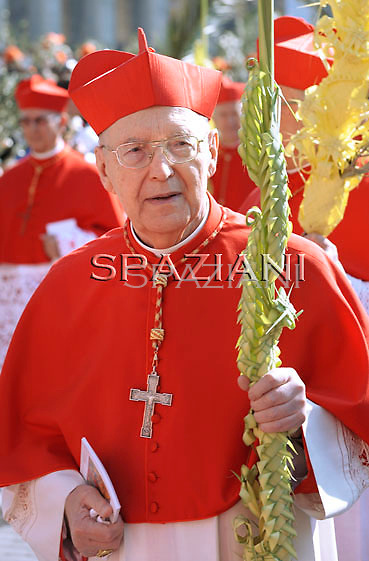
Cardinal Giovanni Lajolo,Pope Benedict XVI leads a solemn mass at St Peter's basilica to celebrate the feast of Saint Peter and Saint Paul

(Image of Cardinal Lajolo is courtesy of Spaziani)

On Saturday, 3 January 2015, Cardinal Giovanni Lajolo, Cardinal-Deacon of S. Maria Liberatrice a Monte Testaccio, President Emeritus of the Governatorate of the Vatican City State and the President Emeritus of the Pontifical Commission for the Vatican City State (Italy), turned 80, and therefore, according to the rules written in the Apostolic Constitution Universi Dominici Gregis, he lost his right to vote in any future conclave. Cardinal Darmaatmadja was born at Novara in Italy on 3 January 1935.

Cardinal Lajolo was made Cardinal-Deacon of S. Maria Liberatrice a Monte Testaccio by Pope Benedict XVI in the 2007 Consistory of Cardinals on 24 November 2007, the second Consistory of his pontificate. Cardinal Lajolo was made a Cardinal in honour of his position as the President of both the Governatorate of the Vatican City State and the Pontifical Commission for the Vatican City State. He was for a long time involved in the works of the Roman Curia and in the relations between the Church and the states.

lajolocardinale

http://www.gcatholic.org/hierarchy/data/cardB16-2.htm#664

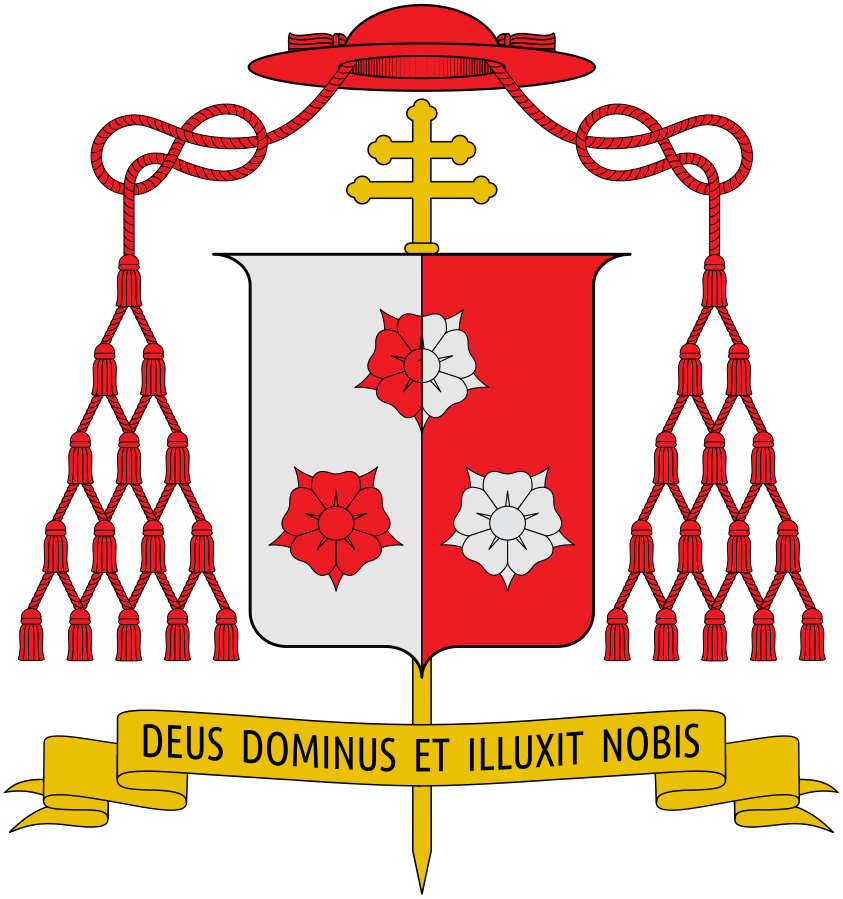
Coat_of_arms_of_Giovanni_Lajolo.svg


(Coat of arms of His Eminence Cardinal Giovanni Lajolo)

May God bless His Eminence Cardinal Lajolo with a blessed old age and health. May he remain strong in the faith and hopefully can perhaps still continue to work great graces and good works of love and peace just as he had once done in his long service to the Church, through his many contributions to the Church via the Roman Curia, helping to manage the extensive governance of the Church of God.

Giovanni_Cardinal_Lajolo

The College of Cardinals now stands at 208 members in total, with 110 Cardinal-electors and 98 Cardinal non-electors. There are now a vacancy of 10 Cardinal-electors as compared to the maximum number of electors allowed in the Conclave of 120.

Next Cardinal-elector to age out (80) will be Cardinal-Patriarch Antonios Naguib (Egypt), the Patriarch Emeritus of Alexandria of the Copts on 18 March 2015.

Changes in the College of Cardinals, Promotion pro hac vice Title and other promotions of the 2003 Consistory Cardinal Deacons

As of Thursday, 12 June 2014, the composition of the College of Cardinals has changed, with most of the Cardinal Deacons appointed in the 2003 Consistory by Pope St. John Paul II exercised their right to be promoted to Cardinal Priests, 5 with the same title (pro hac vice Title – meaning the Deaconries they are holding at the moment is considered to be a ‘Title’ that is corresponding to their Cardinal Priest status but only for the duration of their Cardinalate – they will revert to deaconries upon their deaths), 1 is given a new Cardinal church (S. Dorotea) and 1 remains for the moment as Cardinal Deacon (Cardinal Martino) who is now the new Protodeacon of the College of Cardinals.

There are now 213 Cardinals, which consists of 118 Cardinal-electors and 95 Cardinal non-electors (above age of 80).

There are now 9 Cardinal Bishops (including Eastern Catholic Cardinal-Patriarchs), 165 Cardinal Priests and 39 Cardinal Deacons in the College of Cardinals.

There are at the moment 0 vacant Suburbicarian See (Cardinal Bishoprics), 3 vacant Cardinal Titles (for Cardinal Priests, out of a total of 147), and 8 vacant Cardinal Deaconries (out of a total of 69).

Here are the summary of the changes :

cardinal-Tauran

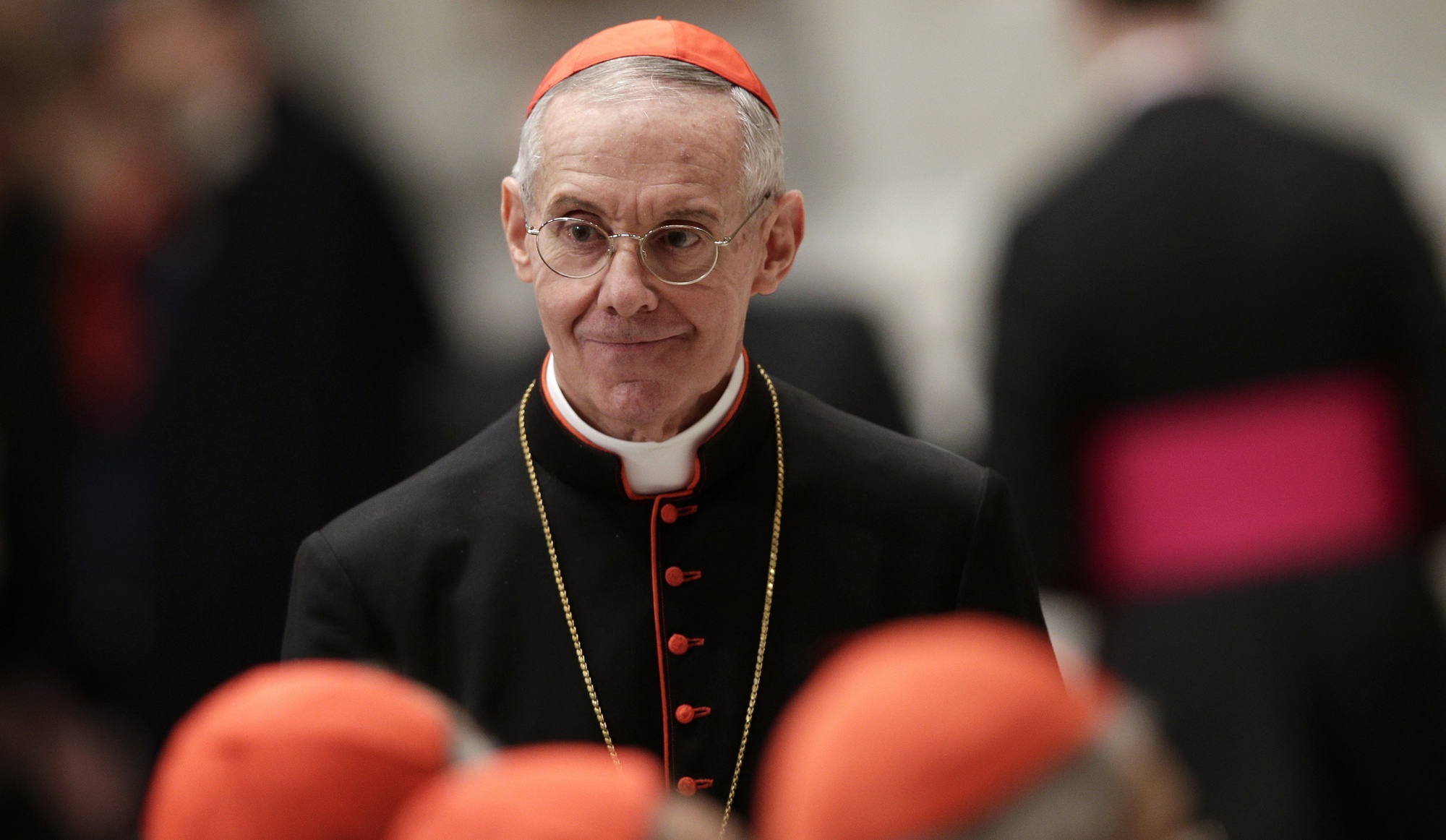
1. Cardinal Jean-Louis Tauran, Cardinal Deacon of S. Apollinare alle Terme Neroniane-Alessandrine, the former Protodeacon of the College of Cardinals is promoted to Cardinal Priest of S. Apollinare alle Terme Neroniane-Alessandrine pro hac vice Title.

56041_article-2289485-187F448C000005DC-316_634x449

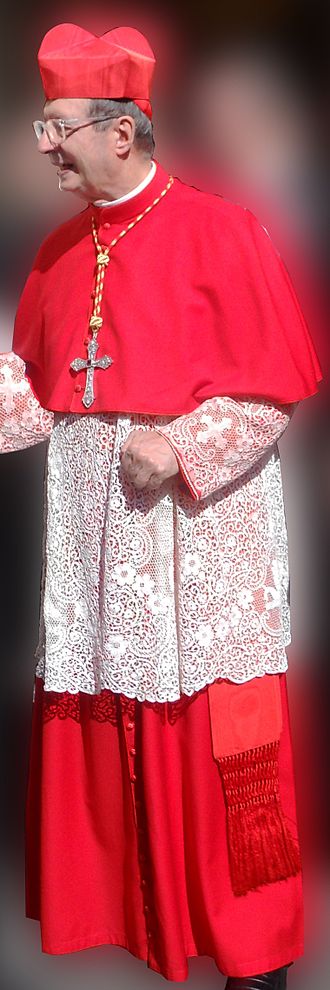
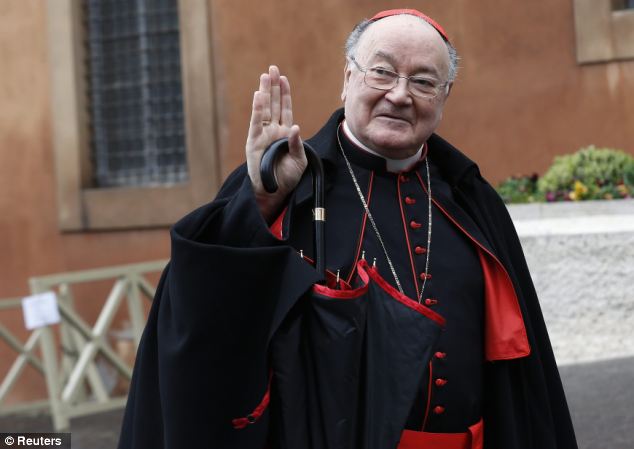
2. Cardinal Renato Raffaele Martino, Cardinal Deacon of S. Francesco di Paola ai Monti remains as such for the moment and is the new Protodeacon of the College of Cardinals, and the one to announce the name and title of the new Pope if one is elected during his time as Protodeacon.

Pope Benedict XVI leads the Palm Sunday mass in Saint Peter's Square at the Vatican.April 17 2011.

3. Cardinal Francesco Marchisano, Cardinal Deacon of S. Lucia del Gonfalone is promoted to Cardinal Priest of S. Lucia del Gonfalone pro hac vice Title.

julic3a1n_herranz_casado1

4. Cardinal Julian Herranz Casado, Cardinal Deacon of S. Eugenio is promoted to Cardinal Priest of S. Eugenio pro hac vice Title.

Javier Lozano Barragan

5. Cardinal Javier Lozano Barragan, Cardinal Deacon of S. Michele Arcangelo is promoted to Cardinal Priest of S. Dorotea (new titular church of the Diocese of Rome). Cardinal Deaconry church of S. Michele Arcangelo is now vacant.

112-06-07-011

6. Cardinal Attilio Nicora, Cardinal Deacon of S. Filippo Neri in Eurosia is promoted to Cardinal Priest of S. Filippo Neri in Eurosia pro hac vice Title.

Cardinal_Cottier

7. Cardinal Georges-Marie-Martin Cottier, O.P., Cardinal Deacon of Ss. Domenico e Sisto is promoted to Cardinal Priest of Ss. Domenico e Sisto pro hac vice Title.

Note : Cardinal Deacons are allowed to request promotion to Cardinal Priest rank after they have been in the position for at least 10 years from the date of their appointment (in this case – 21 October 2003)

Let us pray for them, and also for all the other Cardinals in their ministries and hard works of maintaining, expanding and steering the Church of God!