Friday, 29 August 2014 : 21st Week of Ordinary Time, Memorial of the Passion of St. John the Baptist (First Reading)

Liturgical Colour : Red

Jeremiah 1 : 17-19

But you, get ready for action; stand up and say to them all that I command you. Be not scared of them or I will scare you in their presence! See, I will make you a fortified city, a pillar of iron with walls of bronze, against all the nations, against the kings and princes of Judah, against the priests and the people of the land.

They will fight against you but shall not overcome you, for I am with you to rescue you – it is YHVH who speaks.

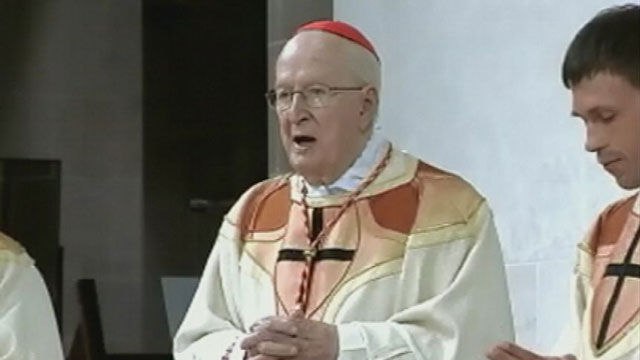
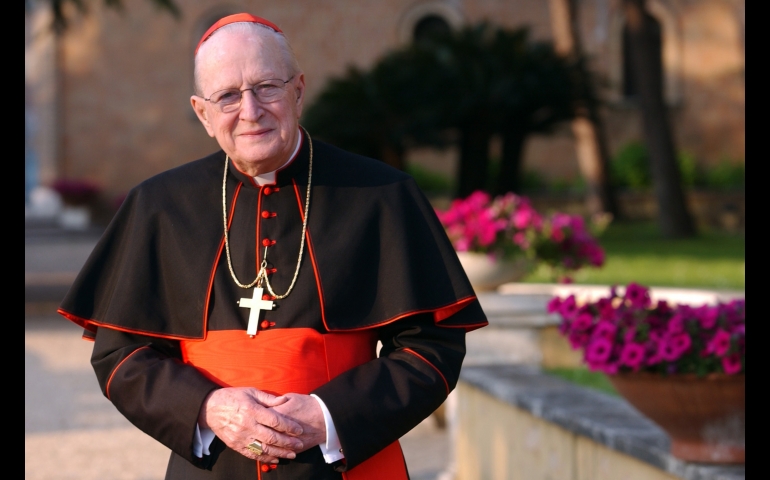
Cardinals Update: Passing of Cardinal Edmund Casimir Szoka, Metropolitan Archbishop Emeritus of Detroit (United States of America), at the age of 86

20140821cnsbr6177

Cardinal Edmund Casimir Szoka, Cardinal-Priest of Ss. Andrea e Gregorio al Monte Celio has passed away on last Wednesday, 20 August 2014 at the age of 86. He was the Metropolitan Archbishop of Detroit, one of the largest and most important Archdioceses in the United States of America, from 1981 to 1990. He was then appointed as the President of the Prefecture of the Economic Affairs of the Holy See, and the President of the Governatorate of the Vatican City State, a post which he held between 1997 to 2006, essentially the top prelate in charge of the day-to-day governance of the smallest country in the world, the Vatican City, where the heart of the Church is.

http://www.gcatholic.org/hierarchy/data/cardJP2-4.htm#169

4538927_G

Cardinal Szoka was created Cardinal in 1988 by Pope St. John Paul II in his fourth Cardinal creation consistory on 28 June 1988. His motto was “To live in faith”. This means an emphasis on truly living the faith in the life he led, and truly, he had been faithful and had already shown that faith through the actions he had done in his long and wonderful life filled with total dedication to the tasks given to him and to the people entrusted to his care.

Cardinal_Edmund_C_Szoka_Credit_Archdiocese_of_Detroit_CNA_8_21_14

We pray for Cardinal Szoka, that he will rest in peace, and God will reward him for all his hard and great work as the long time servant of God as the shepherd of the faithful in Detroit, as well as for all the ministries and good works he had done for the sake of God and His people in the entire Universal Church in his dedication and work in the Roman Curia. May the Lord welcome him into His embrace in heaven and give him eternal rest and happiness that he deserved.

With the passing of Cardinal Szoka, and the recent aging out of Cardinal Carlos Amigo Vallejo, the College of Cardinals now stands at 210 members, with 116 Cardinal-electors and 94 Cardinal non-electors. The number of Cardinal-electors now is 4 below the specified maximum limit of 120.

There are now 4 Cardinal-elector vacancy in the College of Cardinals, 0 vacant Cardinal Suburbicarian Sees (for Cardinal Bishops), 5 vacant Cardinal Titles (for Cardinal Priests) and 9 vacant Cardinal Deaconries (for Cardinal Deacons).

Dedication and Prayer for those who are suffering under persecution for the sake of their faith in God

St. Augustine of Hippo once said, “He who sings prays twice.” Thus, with the limitations and the resources I have, I would like to dedicate these in prayer for the sake of those who are currently suffering under great persecutions for the sake of their faith in God.

I would like in particular to commend those in Iraq, Syria and other places where the faithful are in a great and terrible danger and tribulation, on the run from those who seek for their lives, because they believed in the Lord.

May God hear our prayers and be with our brethren in their time of need, and that He may abide with them and be on their side, rescuing them from their enemies and those who seek their destruction. May He also bring those who persecute His faithful into His truth and light, that they may repent and turn towards Him.


Abide with me

Abide with me; fast falls the eventide;
The darkness deepens; Lord with me abide.
When other helpers fail and comforts flee,
Help of the helpless, O abide with me.

Swift to its close ebbs out life’s little day;
Earth’s joys grow dim; its glories pass away;
Change and decay in all around I see;
O Thou who changest not, abide with me.

Not a brief glance I beg, a passing word,
But as Thou dwell’st with Thy disciples, Lord,
Familiar, condescending, patient, free.
Come not to sojourn, but abide with me.

Come not in terrors, as the King of kings,
But kind and good, with healing in Thy wings;
Tears for all woes, a heart for every plea.
Come, Friend of sinners, thus abide with me.

Thou on my head in early youth didst smile,
And though rebellious and perverse meanwhile,
Thou hast not left me, oft as I left Thee.
On to the close, O Lord, abide with me.

I need Thy presence every passing hour.
What but Thy grace can foil the tempter’s power?
Who, like Thyself, my guide and stay can be?
Through cloud and sunshine, Lord, abide with me.

I fear no foe, with Thee at hand to bless;
Ills have no weight, and tears no bitterness.
Where is death’s sting? Where, grave, thy victory?
I triumph still, if Thou abide with me.

Hold Thou Thy cross before my closing eyes;
Shine through the gloom and point me to the skies.
Heaven’s morning breaks, and earth’s vain shadows flee;
In life, in death, O Lord, abide with me.

Thursday, 14 August 2014 : 19th Week of Ordinary Time, Memorial of St. Maximilian Kolbe, Priest and Martyr (Scripture Reflections)

Liturgical Colour : Red

Brothers and sisters in Christ, today we are taught on the value and importance of forgiveness in our lives by none other than our Lord Jesus Christ Himself, who mentioned that we have to forgive and forgive, again and again. When Peter asked if he should forgive his brethren seven times and Jesus replied that he should do it seventy-seven times should not be literally taken as a seventy-seven times of forgiveness, but rather that our acts in all things must be filled with mercy and forgiveness, one that is genuine from our hearts.

The Lord Himself is the embodiment of the perfect mercy and love, forgiving His people who are also His children from their trespasses and rebelliousness, while chastising them for the kind of sinful and rebellious behaviour they had shown. But of course there is a limit that God has set to His mercy and kindness, especially if those to whom He had shown this mercy consistently and persistently refused to listen and to change for the better, then they are truly digging their own graves and lead themselves to destruction.

That was why our Lord sent prophets after prophets to help His people, to remind them and guide them on the right path, and this includes Ezekiel, whom God sent to His people in exile in Babylon, warning and reminding them of their continued sins and rebelliousness against God which would bring them to greater disaster and destruction in the end. God wanted to forgive them, but forgiveness must also be accepted with sincerity, or otherwise it will not work as intended.

The whole of mankind is indeed in exile, and had been since the days when Adam and Eve our ancestors first disobeyed the Lord, and therefore lost the certainty of inheritance of the divine glory and riches which had been our share as of when God created us. But God gave us nothing lesser than Himself through His Son, Jesus Christ, as the concrete and ultimate symbol of forgiveness and hope for mankind, that through Him, all our wounds and our afflictions would be healed.

It is now up to us, whether we accept graciously the generous offer of mercy and repent, following the Lord once again into salvation and eternal glory in heaven. It is also our choice to stay apart from the Lord and His love, following our own human desires and fallibilities, and likely these will end us in destruction and endless cycles of hatred, violence and evil. It is up to us, for us to break free from this cycle and usher a new era of peace, love and harmony based on the Lord.

And today we celebrate the feast of a saint, whose life and examples would truly awaken us to this idea of mercy and forgiveness, as well as love for our fellow men, and this saint had just passed before us less than a century ago. He is St. Maximilian Kolbe, the saint of World War II and the saint of the Holocaust in NAZI Germany. He was one of the many martyrs of the faith, who together with others like St. Edith Stein or St. Teresa Benedicta of the Cross, died for her faith.

St. Maximilian Kolbe was a Polish priest who joined the religious life since his youth, and was particularly devoted to the Immaculate Virgin Mary, trying his best throughout his ministries to spread the devotion to the Immaculate Virgin Mary, even establishing newspapers and publication dedicated to the Blessed Virgin. St. Maximilian Kolbe took part in numerous missionary works, and particularly he visited Japan many times, spreading the seeds of faith among the people there.

But eventually what made St. Maximilian Kolbe truly known to the world was his actions during the Second World War in which he was arrested and interned, and when several prisoners were found to have attempted escape from the prison at the infamous Auschwitz extermination camp, they were immediately sentenced to death. However, when one of the prisoners cried out in agony and sorrow over his family, St. Maximilian Kolbe immediately offered himself in exchange for the life of the Polish inmate.

St. Maximilian Kolbe endured two whole weeks of dehydration, complete isolation and total denial of food. But he remained cheerful and in fact encouraged the others who were also condemned to die, celebrating the Mass with joy and persevering amidst the shadow of death. And when the Germans decided to clear the room, they found St. Maximilian Kolbe to be still alive and proceeded to execute him. He met death with joy and without fear, and into the hands of the Lord he gave up his soul.

Therefore, brothers and sisters in Christ, are we all able to follow the examples of St. Maximilian Kolbe? He forgave his executors, brought life and hope to another man, whose family received him in renewed joy. St. Maximilian Kolbe and his actions truly showed the embodiment of the love and mercy of God. Remember, that if St. Maximilian Kolbe gave up his life in exchange for the life of a man chained in prison, then our Lord Jesus Christ gave up His life and suffer on the cross in exchange for the life of all men, that is all of us, chained by the chains of sin.

Let us all break free of the cycle of hatred, violence, evil and death. Let us all work together to seek peace and harmony among all peoples. And may Almighty God bless our endeavours, and may His love and mercy together with the examples and the intercession of St. Maximilian Kolbe help us to be better children of God, and always think first of the Lord and His infinite mercy. Amen.

Thursday, 14 August 2014 : 19th Week of Ordinary Time, Memorial of St. Maximilian Kolbe, Priest and Martyr (Gospel Reading)

Liturgical Colour : Red

Matthew 18 : 21 – Matthew 19 : 1

Then Peter asked Jesus, “Lord, how many times must I forgive the offenses of my brother or sister? Seven times?”

Jesus answered, “No, not seven times, but seventy-seven times. This story throws a light on the Kingdom of Heaven : A king decided to settle the accounts of his servants. Among the first was one who owed him ten thousand pieces of gold. As the man could not repay the debt, the king commanded that he be sold as a slave with his wife, his children and all his goods, as repayment.”

“The servant threw himself at the feet of the king and said, ‘Give me time, and I will pay you back everything.’ The king took pity on him, and not only set him free, but even cancelled his debt.”

“When this servant left the king’s presence, he met one of his companions, who owed him a hundred pieces of silver. He grabbed him by the neck and almost choked him, shouting, ‘Pay me what you owe!'”

“His companion threw himself at his feet and begged him, ‘Give me time, and I will pay everything.’ The other did not agree, but sent him to prison until he had paid all his debt.”

“Now his fellow servants saw what had happened. They were extremely upset, and so they went and reported everything to their lord. Then the lord summoned his servant and said, ‘Wicked servant, I forgave you all that you owed when you begged me to do so. Were you not bound to have pity on your companion, as I had pity on you?'”

“The lord was now angry, so he handed his servant over to be punished, until he had paid his whole debt.”

Jesus added, “So will My heavenly Father do with you, unless you sincerely forgive your brothers and sisters.”

When Jesus had finished this teaching, He left Galilee and arrived at the border of Judea, on the other side of the Jordan River.

Thursday, 14 August 2014 : 19th Week of Ordinary Time, Memorial of St. Maximilian Kolbe, Priest and Martyr (Psalm)

Liturgical Colour : Red

Psalm 77 : 56-57, 58-59, 61-62

But they challenged and rebelled against God the Most High, and disobeyed His decrees. They were unfaithful like their ancestors, deceitful and crooked as a twisted bow.

They angered Him with their high places; they aroused His jealousy with their idols. Filled with wrath, God rejected Israel.

He lead His glory into captivity, His Ark into the hand of the enemy. He gave His people over to the sword, so furious was He at His inheritance.

Thursday, 14 August 2014 : 19th Week of Ordinary Time, Memorial of St. Maximilian Kolbe, Priest and Martyr (First Reading)

Liturgical Colour : Red

Ezekiel 12 : 1-12

This word of YHVH came to me, “Son of man, you live in the midst of a house of rebels : they have eyes for seeing but do not see; they have ears for hearing but do not hear, for they are a house of rebels. Because of this, son of man, prepare for yourself an exile’s baggage in their sight as an exile does; and go as an exile to another place in their sight. Would that they may understand, because they are a house of rebels.”

“You will gather your things, an exile’s baggage, by day to be seen by them, and you will leave in the evening as for a departure of deportees. While they look on, dig a hole in the wall and leave from there. As they look on, shoulder your baggage and leave in the dark. Veil your face and do not look at the land for I have made you a sign for Israel.”

I did as I was ordered, gathering my things by day, an exile’s baggage, and in the evening I made a hole in the wall with my hand. I left in the dark, in their presence, shouldering my baggage.

In the morning the word of YHVH came to me : “Son of man, did not the Israelites, these rebels, ask you, ‘What are you doing there?’ Answer them on behalf of YHVH : This oracle concerns the prince in Jerusalem and all the Israelites remaining in the city.”

“Say, ‘I am a sign for you,’ for what I have done will happen to them : They will be deported, exiled. The prince among them shall shoulder his baggage in the dark and depart. They will dig a hole in the wall to let him leave by it. He will cover his face because he must not see the land with his eyes.”

Wednesday, 13 August 2014 : 19th Week of Ordinary Time, Memorial of St. Pontian, Pope and Martyr, and St. Hippolytus, Priest and Martyr (Scripture Reflections)

Liturgical Colour : Green or Red (Martyrs)

Brothers and sisters in Christ, today we hear of the saving power of God, and what He intended to do with mankind, with those who follow Him and walk in His way, as well as with those who rejected Him and sought the comforts and lies of Satan rather than the truth and love of God. He wants mankind to be saved and to be reunited to Himself, and that was why He sent us Jesus to be the One who is our hope and our salvation.

But Jesus also wants to let us know that there are always the proper way of doing things, that we have to adhere closely to the teachings of the Church and avoid any forms of heresy and behaviours that are against the way of the Lord. And in this He made evident the authority of the Church, as the Body of the assembly of the faithful in keeping the faith and obedience to the true faith in God.

For the Church as we know it today is the exact same one as the one which Jesus had mentioned in the Gospel today. The Church refers not just to any buildings or hierarchy, but in fact the Church refers to all of us, who together we make the assembly of the faithful, as one united Body in Christ, that is the Church, and there will always be the Church.

It cannot be ignored, the fact that the Church had been the faithful custodians of the faith, keeping the flames of faith alive despite the various challenges and even persecutions that faced both the Church and the faithful. The Church kept the faith pure and true through various attempts by men to corrupt the purity of the faith, which resulted in many heresies and evils.

One thing we need to always remember is that, God knows those who are His own, and this is highlighted in the first reading today, when God mentioned to the prophet Ezekiel, how He instructed His angels to go through the Holy City and mark those faithful ones with the sign of the cross, that is the sign of our salvation and the sign of the promise of eternal and everlasting glory.

Our Church has had an effective way to deal with those who are not in line with the teachings of the faith. This is through constant and repeated help and assistance offered through the priests and the other servants of the Church, and if this is not successful, then the last resort was to cast the person out of the Church, on what is called excommunication, where the person was in a state of what is called anathema and in a state of sin.

This had been practiced by the Church since the beginning of times, and this was directly linked to what Jesus had said in today’s Gospel, that those who blatantly and constantly refused to listen to the Lord and to the words of His servants. Excommunication is truly a last resort measure, and truly it was not aimed to punish, but in fact more such that the one who erred may see the errors of his or her ways, and be repentant.

Today we celebrate the feast of two saints, namely that of Pope St. Pontian, successor of St. Peter as Bishop of Rome and head of the Church, and St. Hippolytus, a priest who once came into conflict with the leadership of the Church and was once elected to head a rival faction in the Church, as the first known antipope of the Church. One of the Popes whom St. Hippolytus had stood against was none other than Pope St. Pontian.

The rivalry between the Papal claimants and the attacks between both sides hurt the Church and the faithful much, dividing the faithful among the two camps. On top of all that, the persecutions against the faithful by the pagan Roman Empire and the Emperors continued unabated. Many died in martyrdom in the defense of their faith.

Both Pope St. Pontian and St. Hippolytus were faithful servants of the Lord, and before their conflict and squabble, they had worked hard for the good of the people of God, leading them in their struggle for the faith and against the persecution of the world. Their hard work earned much good for the Church, but their squabbles and infightings also led to much pain for the Church.

They excommunicated each other and attacked each other, but yet, the Lord worked in His mysterious ways. In the intensifying persecution against the faithful by the Emperor Alexander Severus of Rome, both of these future saints were arrested and eventually was exiled together to the area of Pontus in what is today northern Turkey or southern Ukraine.

Both of them were reconciled to each other before their death, and the division of the Church over, they together became the symbols of the faith, through their martyrdom, and hence through their deaths in the defense of their faith. Hence, the Lord achieved His aim of bringing the people together, through tireless and ceaseless works of the servants of God and through the prayers of the saints, bringing back wayward children of Go back into the fold of the Church.

Therefore, brothers and sisters in Christ, we all ought to do our best, to lead one another to the Lord, bringing the love and warmth of the Lord to our brethren, especially those who are in darkness, and those who rejected the Lord and rejected His Church, or even caused divisions among the faithful and brought more people into darkness like themselves.

We have to do our part to help these brethren of ours, that they may be together with us be brought together into the loving embrace of our Lord, as one body in the Lord in His Church. May Almighty God be with us all and guide us fogether on our way. Amen.

Wednesday, 13 August 2014 : 19th Week of Ordinary Time, Memorial of St. Pontian, Pope and Martyr, and St. Hippolytus, Priest and Martyr (Gospel Reading)

Liturgical Colour : Green or Red (Martyrs)

Matthew 18 : 15-20

If your brother has sinned against you, go and point out the fault, when the two of you are in private, and if he listens to you, you have won your brother. If he does not listen to you, take with you one or two others, so that the case may be decided by the evidence of two or three witnesses.

And if he refuses to listen to them, tell it to the assembled Church. But if he does not listen to the Church, then regard such a one as a pagan, or a publican.

I say to you : whatever you bind on earth, heaven will keep bound; and whatever you unbind on earth, heaven will keep unbound. In like manner, I say to you : if, on earth, two of you are united in asking for anything, it will be granted to you by My heavenly Father; for where two or three are gathered in My Name, I am there among them.

Wednesday, 13 August 2014 : 19th Week of Ordinary Time, Memorial of St. Pontian, Pope and Martyr, and St. Hippolytus, Priest and Martyr (Psalm)

Liturgical Colour : Green or Red (Martyrs)

Psalm 112 : 1-2, 3-4, 5-6

Alleluia! Praise, o servants of the Lord, praise the Name of the Lord! Blessed be the Name of the Lord now and forever!

From eastern lands to the western islands, may the Name of the Lord be praised! The Lord is exalted over the nations, His glory above the heavens.

Who is like the Lord our God, who sits enthroned on high, but also bends down to see on earth as in heaven?