Sunday, 4 August 2013 : 18th Sunday of Ordinary Time (First Reading)

Liturgical Colour : Green

Ecclesiastes 1 : 2 and Ecclesiastes 2 : 21-23

All is meaningless – says the Teacher – meaningless, meaningless!

For here was a man who toiled in all wisdom, knowledge, and skill and he must leave all to someone who has not worked for it. This is meaningless and a great misfortune. For what profit is there for a man in all his work and heartsearching under the sun? All his days bring sorrow, his work grief; he has not, moreover, peaceful rest at night : that too is meaningless.

The Role of Priests and the Laity

Image
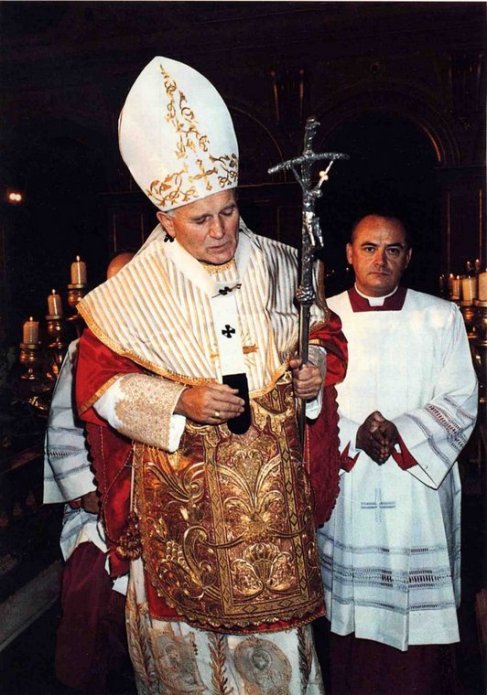
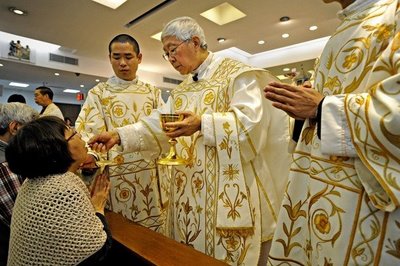
Priests and the laity have their own roles within the Church, and each have been given their missions for the glorification of God.

Priests must not be just men of service, as indeed service should be done by everyone, especially the laity! There are only so many priests, and so many more laypeople in the Church. There are in fact about 3,000 laypeople for each priest in the Church (There are only slightly more than 400,000 priests, diocesan and religious, as compared to almost 1.25 billion people i the total Catholic population)

As much as priests can do plenty of service, caring for the sick, etc, the laity cannot just depend on the priests to do all the work while they go on about their own business.

No, the primary function and duty of a priest, henceforth, is to lead the people in the worship of God, like the priests of Israel of old. This is a duty and a vocation that only them can do, and the laity cannot do. Reaching out to the poor must remain part of the mission of a priest, but it cannot be his main one, for it is the laity who must play their part to help the poor and the unloved ones.

Priests are not employed and many, if not most, are not rich, while many Catholic laypeople are in fact quite well-to-do, even having excessive wealth, that only if all of them would give a small portion of their wealth, the world can be so much better.

The key is not to strip the Church and all that has been in place, solely for the glorification of God, in the disguise of helping the poor and the unfortunate. The key is to encourage greater participation by the laity in the works of service and charity. Priests give example through their own service, but they cannot be expected to do all the work.

In fact, the laity should do at least 90% of the work, as priests are primarily, priests, and should be more focused on the worship aspect, which only they can do, and not the laity.

 
That is why, we need more holy and intellectual priests, not just priests who know how to serve others, but those who have good understanding of the faith and the liturgy of praise and worship to God in the Mass. Everyone can serve others, if they are called, including all the laypeople. But, if the priests themselves cannot be depended on in the matter of worship and the faith, who then should the laypeople turn to?

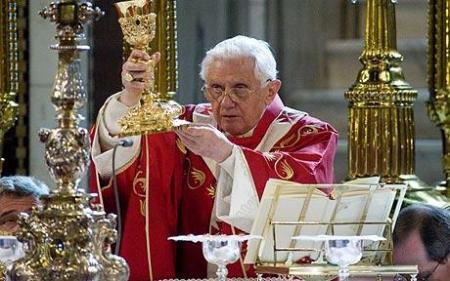
Pope Emeritus Benedict XVI will return to the Vatican on Wednesday, 1 May 2013

http://vaticaninsider.lastampa.it/vaticano/dettaglio-articolo/articolo/papa-el-papa-pope-bergoglio-ratzinger-24332/

Image

According to the original Italian language article of the Vatican Insider/La Stampa above, Pope Emeritus Benedict XVI will return to the Vatican from his stay in Castel Gandolfo, the Papal summer residence on Wednesday, 1 May 2013.

Pope Emeritus Benedict XVI had stayed at Castel Gandolfo since his retirement as reigning Pope of the Church on 28 February 2013, 2 months earlier. He will be staying in the former Mater Ecclesiae monastery which was originally a cloister for nuns, and now vacated to accomodate the Pope Emeritus and his assistants, which include the current Prefect of Papal Household, Archbishop Georg Ganswein, who is also Pope Emeritus Benedict XVI’s private secretary.

This will make the work better for Archbishop Ganswein as in his capacity as both the private secretary to the Pope Emeritus and the Prefect of Papal Household, he had to travel daily between the Vatican and Castel Gandolfo.

Image

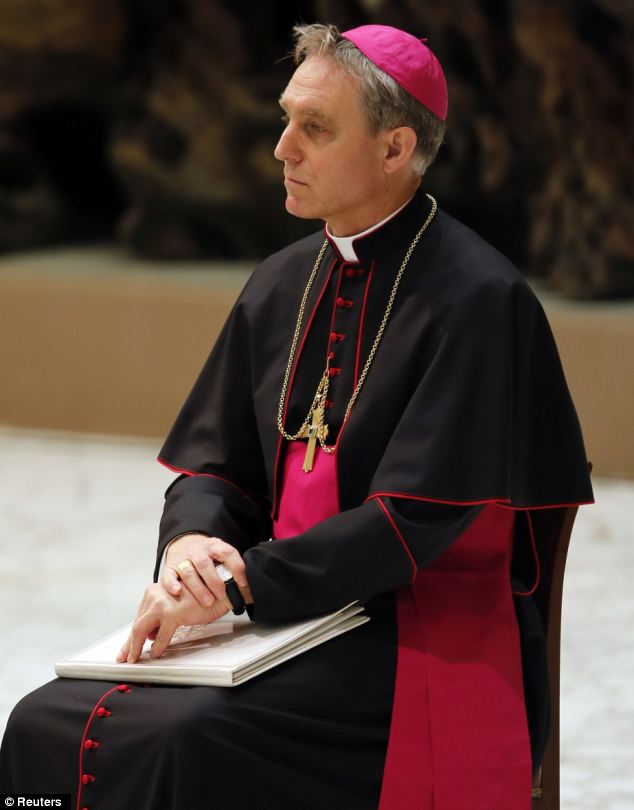
(Above : Archbishop Georg Ganswein, current Prefect of the Papal Household and private secretary to Pope Emeritus Benedict XVI)

May God bless our dear Pope Emeritus, bless him with good health, that he will continue to pray for our Church, and that the reforms that he had begun in the liturgy, worship, and new evangelisation can continue to flourish and grow.

The True Beauty of the Liturgy of the Mass

Image

tridentine_mass_elevation_2

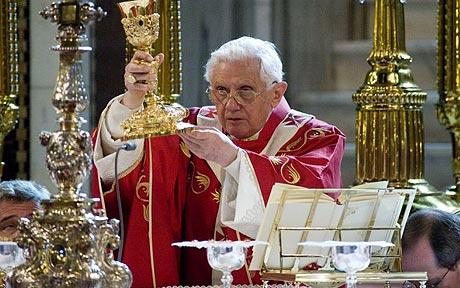
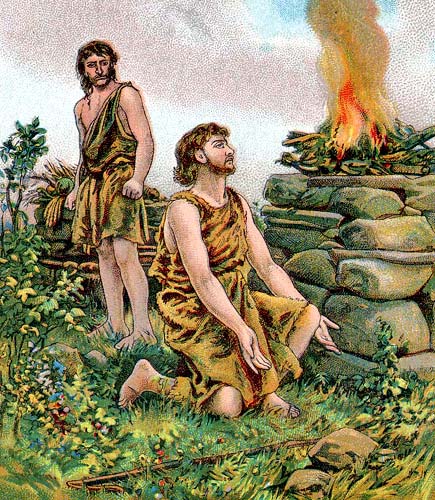
Would you rather give a half-hearted offering like that of Cain, offering what the Lord had not desired, or would you rather give it all to God like Abel, who offered the best to the Lord?

Image

Image

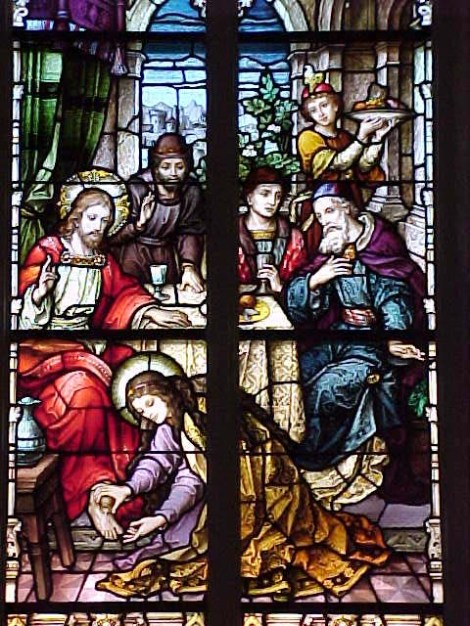
Would you rather be like Judas Iscariot, who scolded Mary for wasting money on perfume used to anoint the feet of Christ before His death? especially that was out of false concern of the poor given that he desired the money for himself? or would you be rather be Mary indeed, who anointed the feet of Christ for His burial, even with the expensive nard-flower perfume and therefore like Abel, gave her best offering to the Lord?

Image

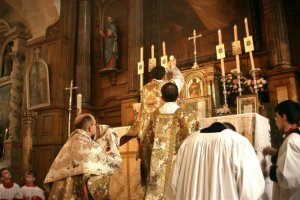
Such is therefore, what we should think of, when we think about the Mass and the liturgy that surrounds it. Many would be in danger of misunderstanding the entire purpose of having such liturgies and rites of worship, and dismissing them as backward, elitist, showy, and wasteful in nature – No, indeed, in fact, all these are for the glory of God alone, and we wouldn’t give half-hearted gifts and attempts to our Lord. Our worship in the Mass is to the Lord alone, and the glory that is in the Mass, is for the glory of God.
Image

Image

Image

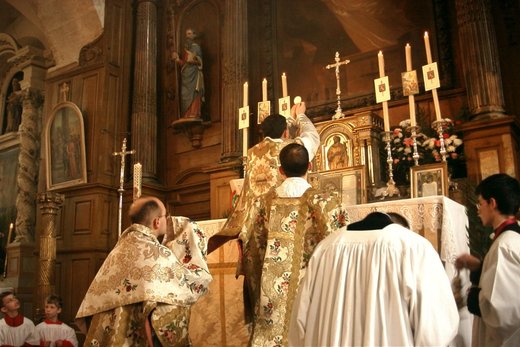
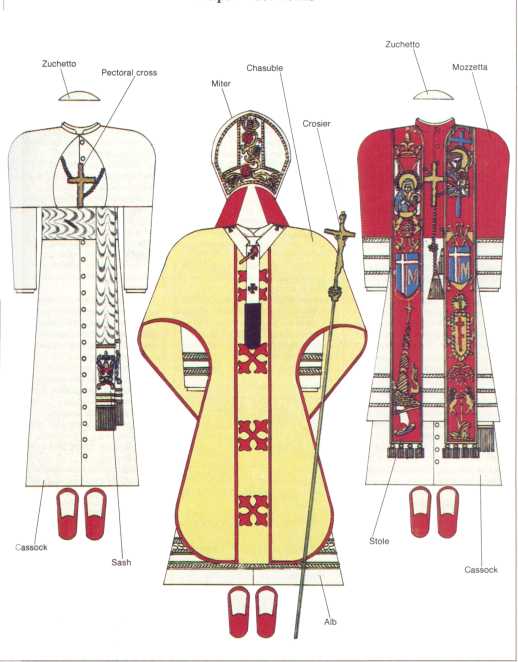
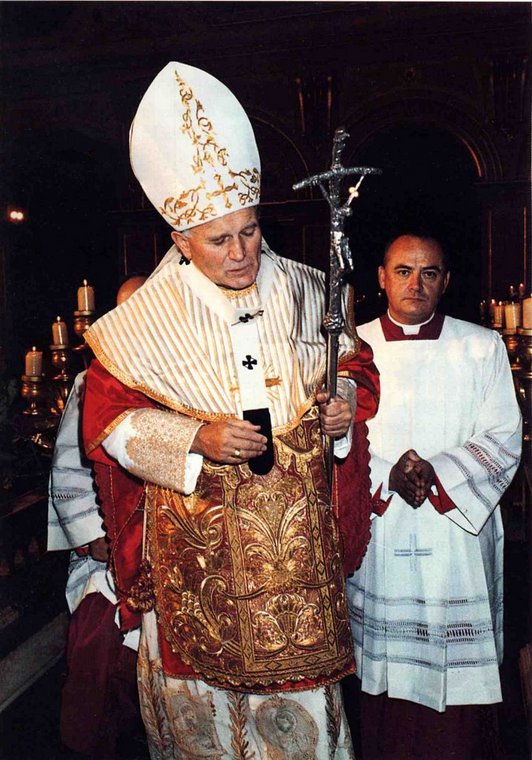
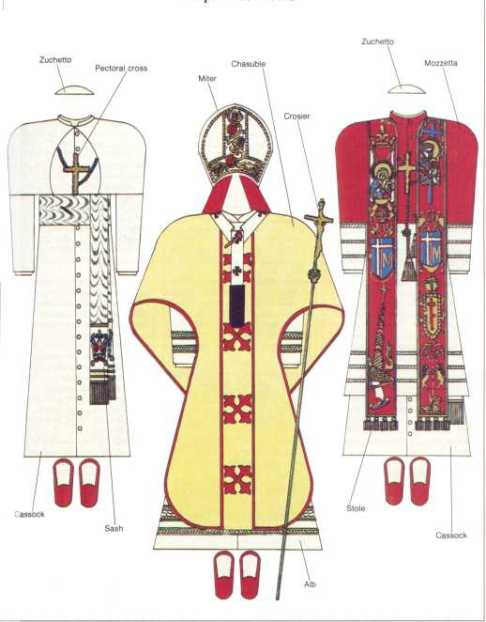
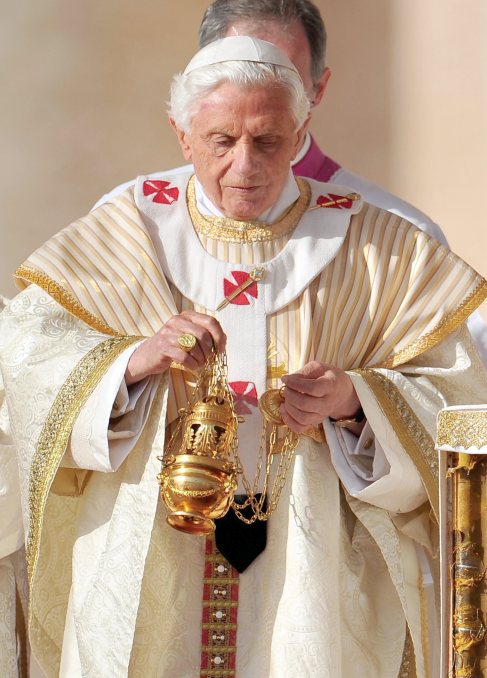
So why elaborate vestments, with colourful and vivid images, even with golden thread or velvet? Why elaborate and jewelled mitres? Why elaborate church buildings, the Altar decoration and everything else? That is because all these are for the glory of God, and for God alone, and not for the glory of men. And in this too, as I had often mentioned, many would be able to learn more about the faith, and at the same time, bring worship closer to what it should be, that is, to be a heaven on earth, especially with the angels and the saints, we worship God together.
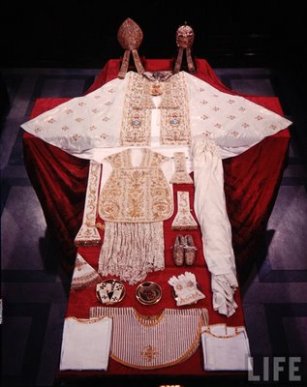
1451110-High_Altar_Antwerp

Image

Men are visual creatures, and we base ourselves and our perceptions closely with our visions and what we see in our surroundings. One very strong argument why so many people had left the faith and became lost in the past decades was because the disappearance of beauty in our worship, not the beauty of excessive displays of course, but the true beauty of worship in that every part of the Mass and its liturgy has its own particular importance and meaning, even all the gestures made in the Mass.
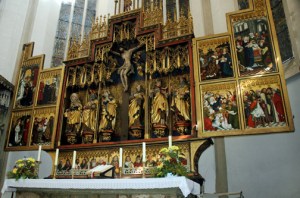
MainAltar01

Being visual creatures, men no longer see God as the divine He is, because especially like Science, which place accountability, reproducibility, etc. at the most important, especially visual proofs, men no longer see God because our worship had become so diluted, so abused by decades of excessive trials and innovations which ended up diluting this image of ‘heaven on earth’ in the Mass. The Mass becomes less a desire for all to come to other than just a ‘chore’ for many to come, and Sunday obligation becomes what it is, an obligation, rather than true desire to come and worship the Lord.
jesus_holding_earth_world

Therefore, it is important that in the coming future, our Church, while projecting itself ever more, as it had always done, in helping the needy and the unloved around the world, expanding its charitable acts which is already the world’s largest by significant margins, ever more, but most importantly also, at the same time, strengthening the anchor of faith, through the energetic and constant explanation of the faith and the Sacred Tradition, particularly on the Mass and its liturgy, especially to the youths and the newly baptised, that they will truly grasp what being a Catholic is about.

That being a Catholic entail not just being good person, helpful person, and caring person, but also someone who truly knows entirely what they are doing at Mass, at their worship of the Lord every Sunday, and who truly come for the Mass because they desire to seek the Lord, and understanding the beauty of the liturgy of the Mass, they become ever closer to God, and through this, be ever more blessed and loving, that they can bring forth this love in their service of others. Ora et Labora, a balance indeed required between prayer and worship, and the service facet of our faith.
throne5

In this manner, we must always remember this verse, which is also a very nice Psalm passage I had discovered, that in all things, we glorify God alone, particularly in the Mass, through all its beauty :

Non nobis, Domine, sed Nomini tuo da gloriam!
Not to us, o Lord, but to Your Name we give glory!

+Peter Canisius Michael David C. Kang
Ut Omnes Unum Sint, ad Maiorem Dei Gloriam
21 April 2013, Good Shepherd Sunday

On Liturgical Music and Proper Worship (Video by Cardinal Francis Arinze)

A very nice argument by Cardinal Arinze, who was the head of the Congregation for Divine Worship and the Discipline of the Sacraments. This is how and why music, liturgy and all parts of the Mass must be proper (to refute those who says that these are irrelevant), because exactly they help us to be closer to God, to make the worship at the Mass truly a worship, and not instead becoming a glorification of the priest, self, or anyone else besides God.

The parish priests, anywhere in the world, Singapore, Asia, Africa, Europe, and others must make sure that rock music, loud music, clapping in the Mass, even within song is not relevant and therefore must not be used. A hymn, a proper Catholic hymn sung with reverence is much more appropriate and should be promoted.

The way to evangelise to our Catholic youths and youths in general is not to include contemporary music into our worship that makes it less than appropriate, just so that we can attract them. Those music and clapping actions, are more suitable for rally sessions or praise and worship, but NOT for the Mass.

The best way? Introduce our youths to the proper and solemn music, many of which are beautiful and no longer heard today, sunk by all the ugly contemporary music the likes of those by Lady Gaga, Psy, and so many others, which are contemptuous twisting of the true beauty of music, which purpose, like what the angels are doing in heaven, is to praise the Lord in His glory. Gregorian chants in Latin and other chants and hymns in the vernacular languages are the way to go.

We are the Church, and we worship the Lord in the Mass. We are not going to a marketplace or attending music concert when we attend the Mass, instead in the Mass we are with the Lord and through our tongues we praise Him with glorious and beautiful hymns appropriate to worship Him!

Faith, prayer, and service (Fides, Ora, et Labora)

Image

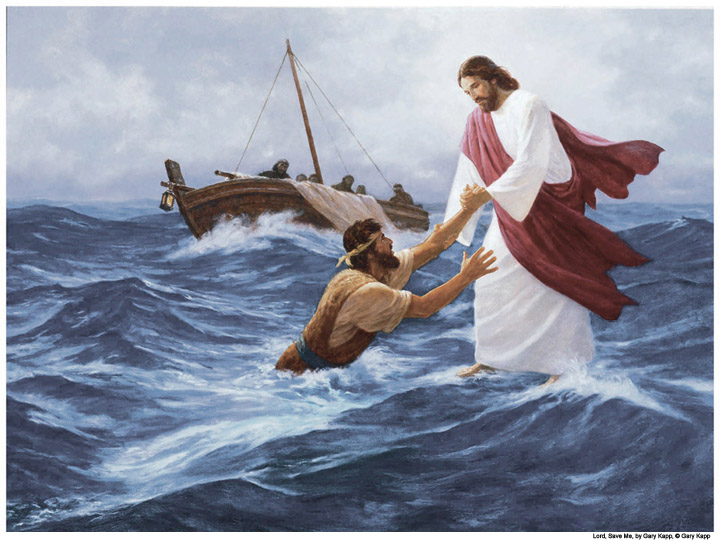
You man of little faith, why are you afraid? (Add : ‘That’s why you’re sinking!’), as Jesus said to Peter when He appeared to the disciples in the storm, as the disciples feared they would sink, and Peter sank while he attempted to reach to the Lord on the water.

That’s why, keep your faith strong! Prayers, service, and love for God and our fellow men, but most importantly, before we go out and serve others, make sure that our prayer life is good and strong. There is no Ora et Labora without the Ora, and without the Ora ‘prayer’, our service is meaningless, since we then tend to associate our actions with ourselves, becoming object of self glorification rather than give glory to God, even if we are doing good things to others.

Appreciate the beauty of prayer and worship, and seek out to learn more about our worship, our Mass, from your priests, or any qualified liturgists around, who can help all of us understand about how beauty of the liturgy of the Mass can bring heaven closer to earth, and bring God’s divine glory closer to us, unworthy men.

In our worship we bring glory to God, and we profess the glory of the Risen Lord, victorious and triumphant, and in service, we bring glory to God, the humble and suffering Lord, who through His death on the cross, brought the ultimate service and love to all.

Non nobis, Domine, sed Nomini tuo da gloriam – Not to us, o Lord, but to You, we give glory.

Yours in Christ,

Ut Omnes Unum Sint, ad Maiorem Dei Gloriam
(That they all may be One, for the greater glory of God)
+Peter Canisius Michael David C. Kang
Servus Servorum Dei

On the Altar Crucifix and the Benedictine Arrangement

Image

Priests and laity alike must always remember, that when we worship, all is to glorify God, and not ourselves.

That is why I also highly recommend Pope Benedict XVI’s recommendation on the Benedictine arrangement, that is when the priest celebrate the Mass ad populum (facing the people), there should be an altar crucifix on the altar itself, because that crucifix is for the priest to focus himself on the Lord, and not at all the people’s attention to him.

Facing the people means that priests are more prone to self-glorification and vanity, as now they are truly visually aware that all the attention in the church are on them. So, they need to make sure that their internal orientation towards the Lord is firm, and that is why the altar crucifix, to remind them at all times during the Mass.

The big crucifix behind the priest is for the people, the congregation to focus their attention to the Lord, but because of its location, it is not visible to the priest, hence, the presence of two altar crucifixes. They may be two in physical appearance, but one in spirit, and one in purpose and intention.

Then let me end with my favorite phrase from the Psalm (Psalm 115)

Non nobis, non nobis, Domine
Sed Nomini tuo da gloriam

Not to us, not to us, o Lord
But to Your Name we give glory

Details on the Papal Inauguration Mass and ceremony of Pope Francis, 266th Pope and Bishop of Rome

Mass appeal: some details of tomorrow’s papal inauguration—UPDATED

Today, Tuesday, 19 March 2013, our new Pope will be solemnly inaugurated to begin his Pontificate. He is already our Pope, ever since he accepted the rightful election in the Conclave, but the Inauguration ceremony affirms and completes that process, with the imposition of the symbols of the authority of the Pope, as the leader of the entire Universal Church.

There will be some changes to the liturgy this year, as the imposition of the Pallium and the Ring of the Fisherman will take place just before the Mass starts, instead of being within the Mass itself, as the impositions are seen as more of an extra-liturgical event.

The Pope will pray with the leaders of the Eastern Catholic Churches, the Patriarchs and Major Archbishops at the Tomb of St. Peter underneath the main altar of St. Peter’s Basilica, where the pallium and the ring had been placed since the night before.

The Pope will then proceed with all the other concelebrating Cardinals and prelates outside to the Altar at St. Peter’s Square, which in the meanwhile the Laudes Regia hymn or ‘Laud to the King (Christ)’, that is a glorious rendition of the Litany of the Saints, with the new innovation of the inclusion of part asking the past Popes who had been canonised as saints for the new Pope, their successor, beginning from Pope St. Linus to Pope St. Pius X.

Following after this is the imposition of the papal pallium, which is different from the pallium worn by the Metropolitan Archbishops. Pope Francis’ pallium will be the same in appearance with that of Pope Benedict XVI’s pallium, with red crosses instead of black ones, representing the wounds of Christ, with three gold pins on three of the crosses, representing the nails that bound both hands and the legs of Christ onto the cross. The pallium symbolises the authority the Pope has over the entire Universal Church. The pallium will be imposed by the senior Cardinal of the order of Priest in the Cardinal-electorate, Cardinal Godfried Danneels.

The Ring of the Fisherman will be given after this, which signifies the bond between the Pope and God’s Church, and as the image on the ring depicts, that of St. Peter holding the keys on a boat, while fishing, as a fisher of man, it symbolises the Pope’s role as the successor of St. Peter the Apostle, and also as the current holders of the keys of the kingdom of Heaven, entrusted by Christ to Peter. The ring will be presented to the Pope by the senior Cardinal Deacon, Cardinal Jean-Louis Tauran.

Six Cardinals representing the rest of the Cardinals will pay homage to the Pope, and will give their obedience to him, following the imposition of the pallium and the Ring of the Fisherman.

The Mass follows as usual, and the readings will be done in different languages, English, Spanish, and most notably the Gospel in Greek, to highlight the universal nature of the Church, encasing both the Western and Eastern tradition of Christendom. The whole liturgy of the Mass itself will be conducted in solemn Latin and beautiful Gregorian chants.

The booklet for the Mass is available at the link below, in English, Italian, and Latin :

Click to access 20130319_inizio-ministero-petrino.pdf

Saturday, 16 March 2013 : 4th Week of Lent (Scripture Reflection)

Dear brothers and sisters in Christ, in today’s readings we see how, the righteous ones and the ones sent by the Lord, the prophets, and even our Lord Jesus Christ Himself, received slander, persecution, and were actively rejected by many in the society, not least by those who indeed should have been closer to God than that of the rest of the society.

These people are the Pharisees, the priests and the experts in the Law of God, passed through Moses, they are also expert in the Torah and the writings of the words of the prophets, that it is why they could say that no prophet is ever said to come from Galilee, because basically they really know the prophets, their sayings, and the Law itself. But yet, they have failed to see God, and failed to see His works, when it was already in fact right in front of their eyes.

The reason for their failure to see the good works of the Lord is that they have been blinded, their eyes had been blocked by the very arrogance and pride that clouds their heart and hardened that heart against the love of God. Jealousy became the order of the day, as these priests, instead of being happy and supportive of Christ’s good works, they slandered Him, accused Him of using the devil to perform miracles, and plotted against Him to kill Him. They would eventually succeeded in capturing Him after the Lord’s Last Supper, put Him on trial, and brought Him to Pilate to be condemned to death, death on the cross.

We should not follow their examples, and we too should lower our pride and our selfishness before God. We must put the Lord ahead of men, and put our attention on the Lord ahead of any personal glorification through majesty, wealth, or even simplification, and publicity. Priests and leaders of the Church must strive to remain humble in their ministry.

But remember, very importantly, never dabble in the false sense of humility through excessive display of humility or simplification, especially and certainly, we must never let the Holy Mass be simplified to the point that it loses the sanctity and meaning, as the Holy Sacrifice where Jesus offers us His Most Precious Body and Blood.

Very often people has misunderstood the noble simplicity as mentioned in the Vatican II document, Sacrosanctum Concilium, focusing way too much on the simplicity, that it is no longer noble. There is a need for balance, that the liturgy does not become too flagrant a display of excessive wealth and worldliness, but at the same time also there should be proper decorum and avoidance of insertion of non-liturgical elements into the Mass, and also avoidance of stripping the Mass so much that it ceases to be solemn and devout.

Instead, the way is to live a life of prayer and dedication to God, and strive to put the Lord ahead of ourselves, and to make God the centre of our lives. Through the Mass, the centre of our faith, we can make the Lord indeed as the centre of our life, via the solemn and magnificent liturgy and execution of the Mass, that the Lord is glorified at the Mass.

Remember that the Mass is not about self, and it is not to be centred at the priest-celebrant, but to be centred to the Lord Himself. The vestments, the beautiful adornments, and the solemn atmosphere in the Mass is dedicated entirely to God, that we glorify the Lord, and through these external glorification, we bring mankind closer to God, simply by unearthly experience that all of us can experience in the Mass, through a solemn and devout liturgy of the Mass.

We humble ourselves before the Lord, and focus our attention on the glorious cross of Christ, both for us behind the altar, and for the priest, the altar cross, according to the Benedictine Altar arrangement, that all of us will put our full attention in Christ, and not on men. The cross must be the centre of our focus, our attention, and also be the focus of our hearts, that we continue to keep Christ in all things that we do, so that in whatever good that we do, God will be present, and will justify us.

Therefore, brothers and sisters in Christ, let us rediscover our faith, particularly in this Holy Year of Faith, that we can grow much deeper in our understanding of the Mass and its liturgical contents, and learn to place the Lord at the centre of our lives, and grow stronger in our faith and love of God day by day. May we follow in Christ’s footsteps and not be proud, neither be vain, by discarding the darkness and veil of pride that blocks our heart from truly receiving the love and grace of our God. Amen.

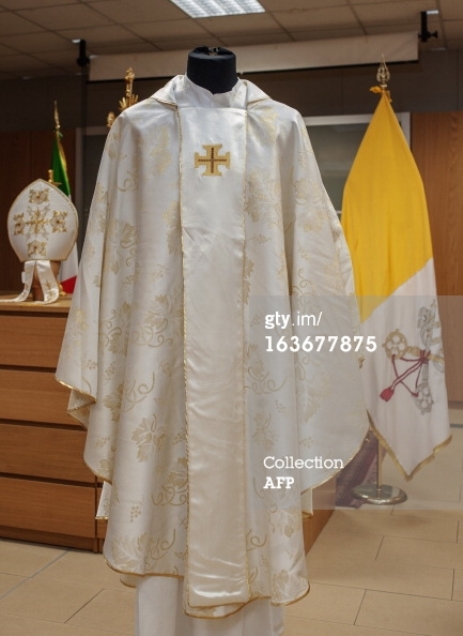
Papal vestment for the Papal Inauguration Mass of Pope Francis, Tuesday, 19 March 2013

Image

The vestments above is the vestment that Pope Francis will wear at the Papal Inauguration Mass in St. Peter’s Square, on the Feast of St. Joseph, Tuesday, 19 March 2013 at 9.30 am Rome time.

The vestments are decent and not over-simplistic, but neither overbearing, while maintaining the beauty of the vesture, which will make the liturgy of the Mass more beautiful and bring people closer to God.

(Update : It seems that Pope Francis chose to wear his personal mitre and the matching vestments that comes with his mitre (as bishop))