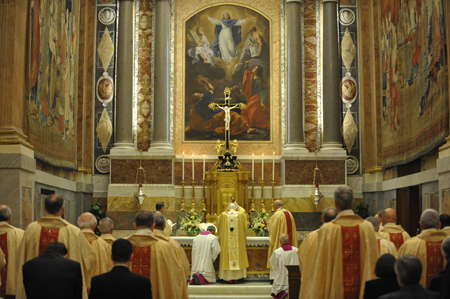
The need to return to ‘Ad Orientem’ celebration

00056_15042010

Let us return to the ad orientem celebration! That is facing the Lord TOGETHER with the people, instead of facing the people (ad populum).

The Mass is not a political gathering or a party where everyone faces each other and look at each other. The Mass is about the Holy Sacrifice of Jesus Christ, and we ALL ought to look at Him crucified. Therefore, everyone, including the priest, MUST face the Lord, and ad orientem is the best way.
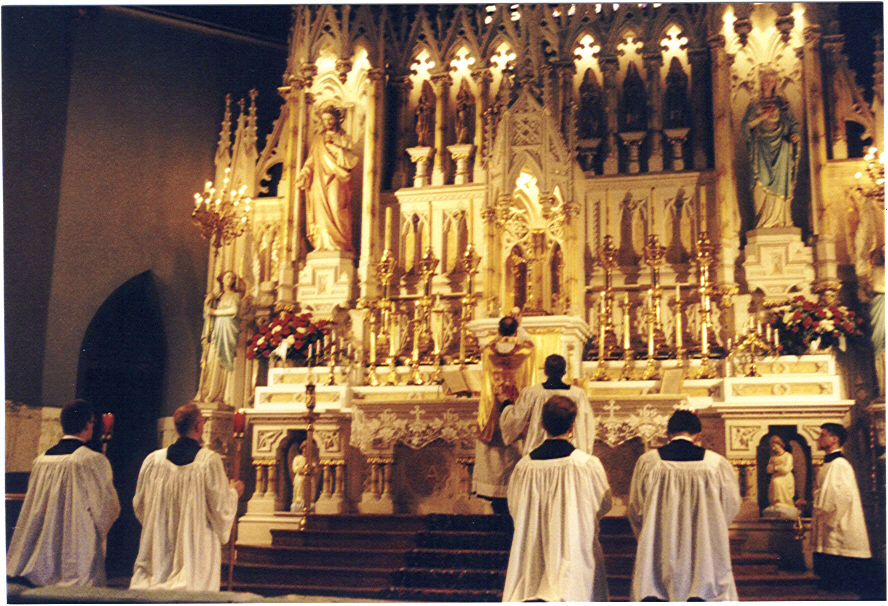
Elevation

The focus of the Mass is the Lord, not the priest as a person. The priest is Alter Christus, Christ personified in the priest, and when he lifts up that bread turned into the Most Precious Body, It is like Christ lifted up high between the heaven and the earth, offering Himself as a sacrificial victim, to absolve and save all the world from death and sin. When the priest lifts up that chalice with wine, transformed into the Most Precious Blood, it is the Blood of Christ, Jesus Christ Himself we are looking at, His Blood pouring down the cross to us, to wash us from our iniquities and our sins, making our garments white again in the Blood of the Lamb.

Monstrance Baroque

And even the ones who crucified Him, looked at Him “And they shall look at the One whom they pierced”. It is therefore imperative, that we keep our focus at the Lord, as One people, One Church, during and throughout the Mass. The focus is not in the dances and the upbeat songs now often used to arouse people’s attention and interest in the Mass, and neither is the focus on the priest dancing, singing, or the people’s performances, but the focus is Christ.

When the priest faces the people, this fact is quickly and easily lost in both the people, AND the priest. Eye contact is very important in relationships, and eye contact between the priest and the people while can be beneficial (during the homily) it can easily distract our attention from the Lord in the Eucharist, very easily.

In this way too, we take the best from both of the two Form of the Latin Rite we have in the Church, that is the Extraordinary Form (Tridentine) and the Ordinary Form (Novus Ordo), and end the numerous liturgical abuses that had arisen ever since ad populum celebration became commonplace, and many did them inappropriately and without due honour to our Lord Jesus Christ.
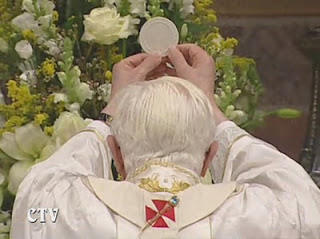
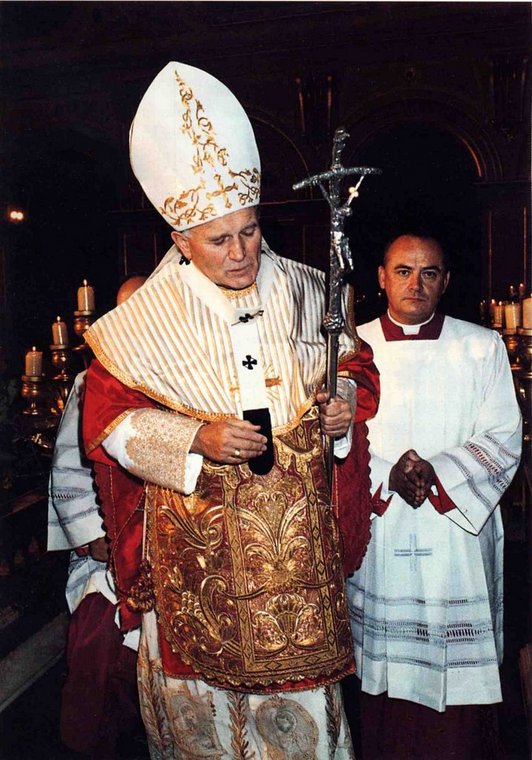
papal ad orientem 2010 4

And lastly, it is time to return the Tabernacle with the Most Holy Eucharist back to its place of primary honour behind the Altar, that is where all the people and the priests focus at during the Mass, and not relegated somewhere at the side or a less-than-honorary place in the church building. There can be another Tabernacle for use especially during the Transfer of the Eucharist on Holy Thursday, but the Tabernacle itself should and indeed, must be restored to its position of honour at the Altar!
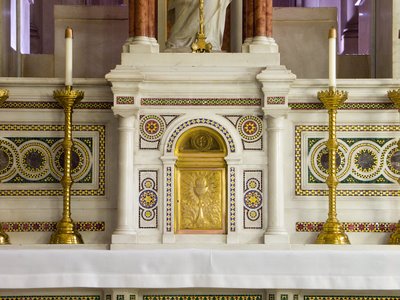
Cathedral Basilica of Saint Louis, in Saint Louis, Missouri - All Saints Chapel - tabernacle

Ad orientem celebration helps this, as the priest no longer need to show his back all the time to the Lord throughout the Mass if ad populum celebration is done.

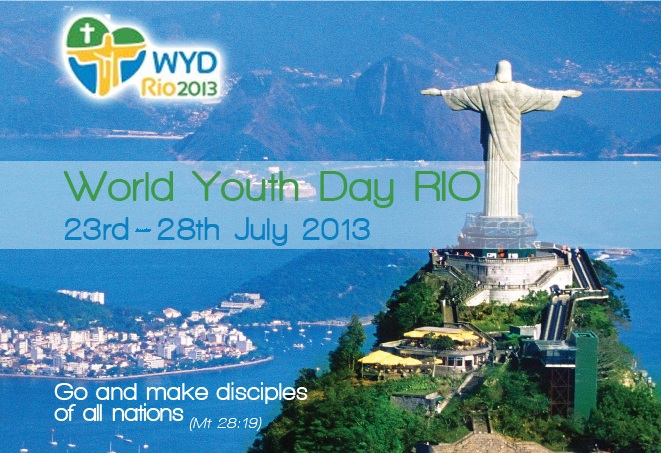
World Youth Day 2013 Rio de Janeiro in numbers (Official)

Official figures for World Youth Day 2013 in Rio de Janeiro, Brazil (WYD 2013)

3.7 million people attended the Closing Mass at Copacabana Beach
3.5 million people attended the Vigil with the Pope at Copacabana Beach
600, 000 people attended the opening Mass of the World Youth Day 2013 at Copacabana Beach
The total contribution by tourists and pilgrims during the event reached US$ 1.8 billion
1.2 million people attended the Welcoming Ceremony for the Pope at Copacabana Beach
2 million people attended the Via Crucis at Copacabana Beach (the Way of the Cross)
427,000 registered pilgrims
175 countries represented by the pilgrims from all over the world
356,400 pilgrims registered with accommodations
356 400 vacancies available for hosting family homes and institutions (vacant unregistered spaces)
72.7% of the visitors and pilgrims visited Brazil for the very first time
70,000 downloads on the official website of WYD Rio2013 (http://www.rio2013.com/en)
Over 200,000 hits on the site’s official WYD Rio2013 (http://www.rio2013.com/en)
More than 1.1 million Facebook likes on WYD Rio2013 site (http://www.rio2013.com/en)
10,000 downloads in the official WYD Rio2013 Flickr site
644 bishops registered (including 28 cardinals) for WYD 2013
7,814 priests registered for WYD 2013
632 deacons registered for WYD 2013
6400 journalists accredited to cover the WYD to 57 countries
264 places of catechesis, in 25 languages​​
60,000 volunteers helped out in WYD 2013 Rio de Janeiro
More than 800 participating artists from Central Acts
100 confessionals were exhibited at the Fair Vocational and Largo da Carioca
4 million Communion host produced for the whole WYD 2013 event – 800,000 for the Closing Mass alone (insufficient for the actual 3.7 million people attending)
345 tons of organic waste and 45 tons of recyclables during WYD Rio2013 (10% less than that recorded in the New Year celebration of Rio de Janeiro)
55% of the public enrolled at WYD are female
60% of the public enrolled at WYD are between 19 and 34 years (young adults and late teenagers)

Official Booklet for the World Youth Day 2013 in Rio de Janeiro, Brazil

Click to access LIVRO_LITURGICO_ENG_APP_19072013140954.pdf

WYD2013

Official booklet for the entire celebrations of World Youth Day 2013 (Mass, Vigil, prayers, etc.), currently ongoing in Rio de Janeiro, Brazil (23 – 28 July 2013) is available at the site above in PDF format. It is also downloadable as PDF file from the website above.

Pray for the success of the World Youth Day 2013. Go and make disciples of all the nations!

Yours in Christ

(Reminder) Official Schedule of Pope Francis in World Youth Day 2013 (23-28 July 2013) in Rio de Janeiro, Brazil

wyd-rio-2013


http://www.romereports.com/palio/popes-brazil-schedule-released-as-rio-gets-ready-for-world-youth-day-english-9964.html#.UYjtL8rTc78

http://attualita.vatican.va/sala-stampa/bollettino/2013/05/07/news/30948.html

Pope Francis’ complete schedule for the World Youth Day 2013 celebrations in Rio de Janeiro, Brazil had been released by the Vatican. As the schedule above is in Italian, I will translate it as best as I can into English here.

The Schedule (The times depicted are local time, Rome time = UTC+2 and Rio de Janeiro time = UTC-3) :


Monday, 22 July 2013

08.45 am (Rome Time) : Departure from Rome’s Ciampino Airport to Rio de Janeiro

04.00 pm (Rio Time) : Arrival at the Galeao International Airport in Rio de Janeiro

05.00 pm : Welcome ceremony for Pope Francis at the Guanabara Palace in Rio de Janeiro

05.40 pm : Visit by Pope Francis to the President of Brazil at the same Guanabara Palace


Pope Francis will then stay at a private residence in the Sumare region of Rio de Janeiro. No event scheduled for Tuesday, 23 July 2013


Wednesday, 24 July 2013 

08.15 am (Rio Time) : Pope Francis will depart his residence at Sumare by helicopter to visit the famous Basilica of the National Shrine of Our Lady of Aparecida

09.30 am : Pope Francis arrives at the Basilica of the National Shrine of Our Lady of Aparecida
10.00 am : Pope Francis will venerate an image of the Virgin Mary at the Basilica located in the Hall of the Sanctuary of the Twelve Apostles

10.30 am : Holy Mass led by Pope Francis at the Basilica of the National Shrine of Our Lady of Aparecida

01.00 pm : Pope Francis will have lunch with the Bishops of the Ecclesiastical Province of Aparecida and the seminarians of the Seminary of Aparecida

04.10 pm : Pope Francis will return to Rio de Janeiro from Aparecida by helicopter

05.25 pm : Pope Francis is scheduled to return to Rio de Janeiro by helicopter

06.30 pm : Pope Francis will visit the St. Francis Assisi Hospital in Rio de Janeiro


Thursday, 25 July 2013
07.30 am : Private Mass led by Pope Francis in his official WYD 2013 residence in Sumare, Rio de Janeiro

09.45 am : Pope Francis will receive the keys of the city of Rio de Janeiro and he will also bless the Olympic Flags of Rio de Janeiro (will be host for 2016 Olympics) at the city square of Rio de Janeiro

11.00 am : Pope Francis will visit the slum community of Varginha (Manguinhos)

06.00 pm : Pope Francis will receive youths attending the WYD 2013 at the Copacabana waterfront area, Rio de Janeiro


Friday, 26 July 2013

07.30 am : Private Mass led by Pope Francis in his official WYD 2013 residence in Sumare, Rio de Janeiro

10.00 am : Pope Francis will conduct confession sessions with youths attending WYD 2013 in the Quinta da Boa Vista Park of Rio de Janeiro

11.30 am : Pope Francis will meet some young prisoners at the Archbishop’s Palace at Rio de Janeiro

12.00 pm : Pope Francis will lead Angelus prayer from the balcony of the Archbishop’s Palace

12.15 pm : Pope Francis will greet the organising committee and benefactors of WYD 2013 in the Archbishop’s Palace, Rio de Janeiro

01.00 pm : Pope Francis will have lunch with youths at the Archbishop’s Palace

06.00 pm : Way of the Cross led by Pope Francis at the Copacabana waterfront, Rio de Janeiro


Saturday, 27 July 2013

09.00 am : Holy Mass with the bishops, priests, seminarians, and religious at the Cathedral of the Archdiocese of San Sebastian Rio de Janeiro (Cathedral of Rio de Janeiro)

11.30 am : Pope Francis will meet with the leaders of Brazil in the Municipal Theatre of Rio de Janeiro

01.00 pm : Pope Francis will have lunch with the Cardinals of Brazil, the President of the Episcopal Conference of Brazil, bishops of the Rio de Janeiro region, and the Papal entourage of WYD 2013 in the Sumare residence, Rio de Janeiro

07.30 pm : Pope Francis will lead the prayer vigil with the youths at Guaratiba, Rio de Janeiro


Sunday, 28 July 2013

10.00 am : Holy Mass of the Closing of WYD 2013 at Guaratiba, Rio de Janeiro.

12.00 am : Pope Francis will lead the recitation of the Angelus prayer at Guaratiba

02.00 pm : Pope Francis will have lunch with the Papal entourage of WYD 2013 in the Sumare residence, Rio de Janeiro

04.00 pm : Pope Francis will meet with the leaders of CELAM, the Latin American Episcopal Conference at Sumare, Rio de Janeiro

04.40 pm : Pope Francis leaves the Sumare residence

05.30 pm : Pope Francis will meet with the volunteers of the WYD 2013 at Hall 5 of Rio Centre, Rio de Janeiro

06.30 pm : Farewell ceremony at the Galeao International Airport of Rio de Janeiro

07.00 pm : Departure from the Galeao International Airport to return to Rome


Monday, 29 July 2013

11.30 am (Rome Time) : Arrival at the Ciampino Airport of Rome

On the Future Canonisation of Blessed Pope John XXIII and Blessed Pope John Paul II

Image

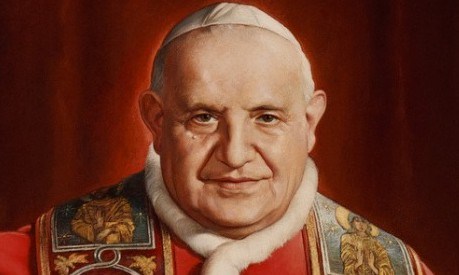
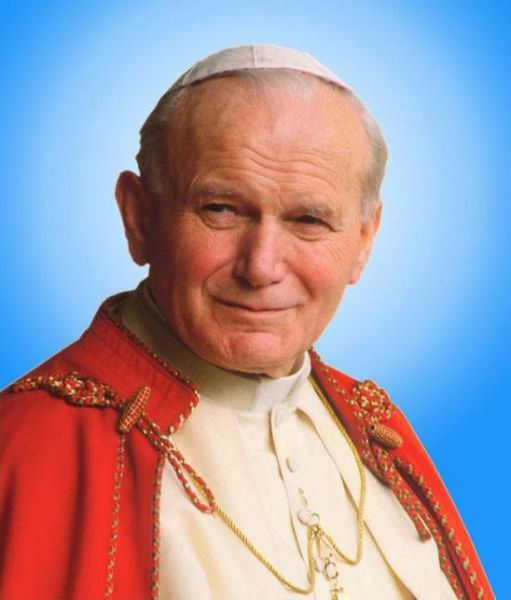
The two great Popes of the last century, both of whom had been recognised as Blessed, through the virtues of their life and miracles attributed to them, will be declared Saints, in a ceremony likely to be scheduled at the end of this year (2013).

Both Blessed Pope John XXIII and Blessed Pope John Paul II, who was made a Blessed just two years ago on 1 May 2011, had each left their incredible and remarkable footprint in the path of history, both in the history of the Church, and in the history of the world and mankind.

Image

Blessed Pope John XXIII was known to be a great man of peace, and above all things seek to embrace peace and cooperation, between mankind, and also begun the process of Ecumenism in order to reunite the divided fragments of God’s Church back into the One, Holy, Catholic, and Apostolic Church that is our Church.

He was also known for his Encyclical Pacem in Terris (Peace on earth), which was released just months after the world was almost engulfed in an all-out nuclear war between the two superpowers, the United States of America (USA) and the Soviet Union (USSR) during the height of the Cold War in the Cuban Missile Crisis. Blessed Pope John XXIII worked hard ceaselessly to promote peace between the parties in conflict, for the good of all mankind, all of whom are the children of the same one God.

Blessed Pope John XXIII also convoked the Second Vatican Council, which brought the Church in line with the developments in the world, and also to make the Church more relevant in the increasingly rapid new developments in our world, and the rise of apathy towards religion in general. He would pass away before the Council was completed, but his legacy continued on until today.

Image

Blessed Pope John Paul II ‘the Great’ was a well-known Pope, a Pope of youths, and a hardworking Pope, who travelled around the world to visit all the flocks of the Lord that had been entrusted to him as the Successor of St. Peter the Apostle, as the Vicar of Christ. He was instrumental in the end of Communism in Eastern Europe, ending persecutions against the people of the faith, and also open boundaries and barriers that had been long in place since the beginning of the Cold War.

Blessed Pope John Paul II has also renewed the zeal for the faith amongst many around the world, and especially in youths, to whom he dedicated a special event, the World Youth Day, in order to commemorate the faith, particularly amongst the youths of the faith, around the globe. He inspired many through his works, his Encyclicals, and especially his perseverance despite being troubled with a worsening Parkinson’s disease condition, that made him to labour until his passing on 2 April 2005.

Both Popes had been very influential, hardworking, and very holy leaders of the One Church of the Lord Jesus Christ, and they had done much to strengthen the faith and the Church, and bring God closer to many, bringing them closer to salvation.

I hope to soon be able to ask for the intercessions of Pope St. John XXIII and Pope St. John Paul II the Great, and I pray that they will intercede for us sinners around the world, and pray for us, till we are greeted by them at the doors of heaven when it is time for us to be with the Lord again. Now we wait for the official announcement on the date of the Canonisation.

Image

Blessed Pope John XXIII, pray for us!

Image

Blessed Pope John Paul II, pray for us!

Imposition of the pallium on the new Metropolitan Archbishops by Pope Francis

On the great Feast day and Solemnity of Saints Peter and Paul, Apostles, the feast day of the Church of Rome, on Saturday, 29 June 2013, 34 new Metropolitan Archbishops will receive the pallium, the symbol of their metropolitan office from Pope Francis, in a Mass at St. Peter’s Basilica.
Pallium (Pallium)
1_0_674753 (Papal Pallium)
Pallium is a woolen band, worn around the shoulders, as a symbol of office, representation of the Good Shepherd, with Jesus carrying the lamb on His shoulder, which is reminiscent of the authority entrusted upon the Metropolitan Archbishops over their flocks. Pallium therefore is a symbol of authority. It is about three fingers wide, and has six black crosses, out of which three are pierced with a golden pin, representing the wounds of Christ pierced by the holy nails on the cross.
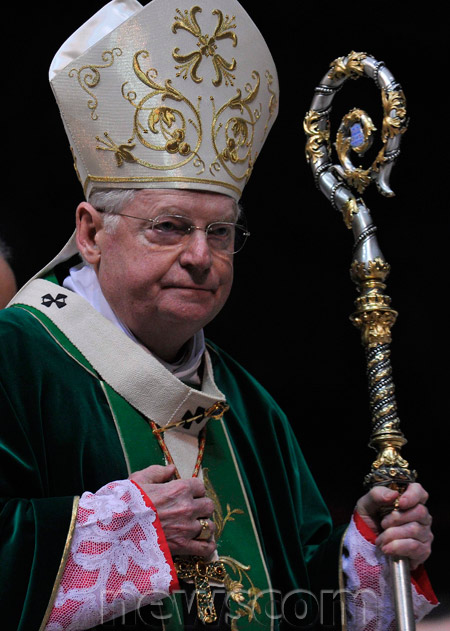
angelo-scola
(Above : image of Cardinal Angelo Scola, wearing the pallium, as the Metropolitan Archbishop of Milan, who received the pallium personally from Pope Benedict XVI in 2011)
Papal pallium from 2005 is different, in order to distinguish the nature of the Papal office, as the Pope is not just any bishop or Metropolitan Archbishop, but is Metropolitan over the entire world, the entire Church, as the Vicar of Christ.
Pope-Benedict-XVI
(Above : Pope Benedict XVI with the Papal pallium in 2012)

The list of the new Metropolitan Archbishops who will receive the pallium below.

1. Patriarch Manuel Jose Macario do Nascimento Clemente, Patriarch of Lisbon (Portugal)
2. Archbishop Dieudonne Nzapalainga, C.S.Sp., Metropolitan Archbishop of Bangui (Central African Republic)
3. Archbishop Carlo Roberto Maria Redaelli, Metropolitan Archbishop of Gorizia (Italy)
4. Archbishop Claudio Dalla Zuanna, S.C.I., Metropolitan Archbishop of Beira (Mozambique)
5. Archbishop Prakash Mallavarapu, Metropolitan Archbishop of Visakhapatnam (India)
6. Archbishop Antonio Carlos Altieri, S.D.B., Metropolitan Archbishop of Passo Fundo (Brazil)
7. Archbishop Marek Jedraszewski, Metropolitan Archbishop of Lodz (Poland)
8. Archbishop Philip Tartaglia, Metropolitan Archbishop of Glasgow (Great Britain)
9. Archbishop Salvatore Joseph Cordileone, Metropolitan Archbishop of San Francisco (USA)
10. Archbishop Rolando Joven Tria Tirona, O.C.D., Metropolitan Archbishop of Caceres (Philippines)
11. Archbishop Rogelio Cabrera Lopez, Metropolitan Archbishop of Monterrey (Mexico)
12. Archbishop Joseph William Tobin, C.Ss.R., Metropolitan Archbishop of Indianapolis (USA)
13. Archbishop Carlos Maria Franzini, Metropolitan Archbishop of Mendoza (Argentina)
14. Archbishop Lorenzo Ghizzoni, Metropolitan Archbishop of Ravenna-Cervia (Italy)
15. Archbishop George Antonysamy, Metropolitan Archbishop of Madras and Mylapore (India)
16. Archbishop Anil Joseph Thomas Couto, Metropolitan Archbishop of Delhi (India)
17. Archbishop John Wong Soo Kau, Metropolitan Archbishop of Kota Kinabalu (Malaysia)
18. Archbishop Murray Chatlain, Metropolitan Archbishop of Keewatin-Le Pas (Canada)
19. Archbishop Sérgio Eduardo Castriani, C.S.Sp., Metropolitan Archbishop of Manaus (Brazil)
20. Archbishop Peter Loy Chong, Metropolitan Archbishop of Suva, (Fiji)
21. Archbishop Alfonso Cortes Contreras, Metropolitan Archbishop of Leon (Mexico)
22. Archbishop Alexander King Sample, Metropolitan Archbishop of Portland in Oregon (USA)
23. Archbishop Joseph Effiong Ekuwem, Metropolitan Archbishop of Calabar (Nigeria)
24. Archbishop Jesus Juarez Parraga, S.D.B., Metropolitan Archbishop of Sucre (Bolivia)
25. Archbishop Fabio Martinez Castilla, Metropolitan Archbishop of Tuxtla Gutierrez (Mexico)
26. Archbishop Ramon Alfredo Dus, Metropolitan Archbishop of Resistencia (Argentina)
27. Archbishop Mario Aurelio Poli, Metropolitan Archbishop of Buenos Aires (Argentina)
28. Archbishop Gintaras Linas Grusas, Metropolitan Archbishop of Vilnius (Lithuania)
29. Archbishop Michael Owen Jackels, Metropolitan Archbishop of Dubuque (USA)
30. Archbishop Duro Hranic, Metropolitan Archbishop of Dakovo-Osijek (Croatia)
31. Archbishop Moacir Silva, Metropolitan Archbishop of Ribeirao Preto (Brazil)
32. Archbishop Jozef Piotr Kupny, Metropolitan Archbishop of Wroclaw (Poland)
33. Archbishop Sergio Alfredo Gualberti Calandrina, Metropolitan Archbishop of Santa Cruz de la Sierra (Bolivia)
34. Archbishop Giuseppe Petrocchi, Metropolitan Archbishop of L’Aquila (Italy)
In addition, the Metropolitan Archbishop of Hue, Archbishop Francois Xavier Le Van Hong, will not receive the pallium directly from the Pope in Rome, but in his home diocese of Hue, through the papal representative. Therefore, in addition to the 34 Metropolitan Archbishops mentioned above, 35 Metropolitan Archbishops will receive the pallium in this year.
35. Archbishop Francois Xavier Le Van Hong, Metropolitan Archbishop of Hue (Vietnam)

Metropolitan Archbishop differs from normal Archbishops in that, they have jurisdiction over other dioceses that are placed under their supervision, in a group called Ecclesiastical Province of the Church. Archbishops of Archdioceses without Metropolitan character has no jurisdiction over any dioceses under them, and they are usually directly subject to the Holy See.

The Role of Priests and the Laity

Image
Priests and the laity have their own roles within the Church, and each have been given their missions for the glorification of God.

Priests must not be just men of service, as indeed service should be done by everyone, especially the laity! There are only so many priests, and so many more laypeople in the Church. There are in fact about 3,000 laypeople for each priest in the Church (There are only slightly more than 400,000 priests, diocesan and religious, as compared to almost 1.25 billion people i the total Catholic population)

As much as priests can do plenty of service, caring for the sick, etc, the laity cannot just depend on the priests to do all the work while they go on about their own business.

No, the primary function and duty of a priest, henceforth, is to lead the people in the worship of God, like the priests of Israel of old. This is a duty and a vocation that only them can do, and the laity cannot do. Reaching out to the poor must remain part of the mission of a priest, but it cannot be his main one, for it is the laity who must play their part to help the poor and the unloved ones.

Priests are not employed and many, if not most, are not rich, while many Catholic laypeople are in fact quite well-to-do, even having excessive wealth, that only if all of them would give a small portion of their wealth, the world can be so much better.

The key is not to strip the Church and all that has been in place, solely for the glorification of God, in the disguise of helping the poor and the unfortunate. The key is to encourage greater participation by the laity in the works of service and charity. Priests give example through their own service, but they cannot be expected to do all the work.

In fact, the laity should do at least 90% of the work, as priests are primarily, priests, and should be more focused on the worship aspect, which only they can do, and not the laity.

 
That is why, we need more holy and intellectual priests, not just priests who know how to serve others, but those who have good understanding of the faith and the liturgy of praise and worship to God in the Mass. Everyone can serve others, if they are called, including all the laypeople. But, if the priests themselves cannot be depended on in the matter of worship and the faith, who then should the laypeople turn to?

Sunday, 2 June 2013 : Solemnity of the Most Holy Body and Blood of Christ, Corpus Christi (Second Reading)

1 Corinthians 11 : 23-26

This is the tradition of the Lord that I received and that in my turn I have handed on to you; the Lord Jesus, on the night that He was delivered up, took bread and, after giving thanks, broke it, saying, “This is My body which is broken for you; do this in memory of Me.”

In the same manner, taking the cup after the supper, He said, “This cup is the new Covenant in My blood. Whenever you drink it, do it in memory of Me.” So, then, whenever you eat of this bread and drink from this cup, you are proclaiming the death of the Lord until He comes.

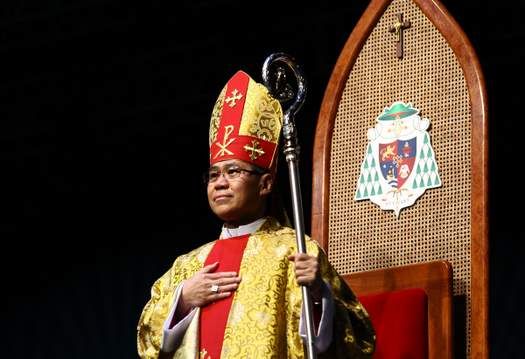
Full Video of the Inauguration and Installation Mass of the new Archbishop of Singapore, Archbishop William Goh

Image

This is the full video of the Installation and Inauguration Mass of the new Archbishop of Singapore, Archbishop William Goh Seng Chye, which was held on Saturday, 24 May 2013, in the Cathedral of the Archdiocese of Singapore, Cathedral of the Good Shepherd.

The video exists in seven parts (below)


Part I (Entrance) :


Part II (Archbishops’ Speech) :


Part III (Homily) :


Part IV (Executive Committee oath-taking) :


Part V (Liturgy of the Eucharist) :


Part VI (Communion) :


Part VII (Closing) :

Installation, Inauguration, and Thanksgiving Mass for Archbishop William Goh Seng Chye, the new Archbishop of Singapore

Image

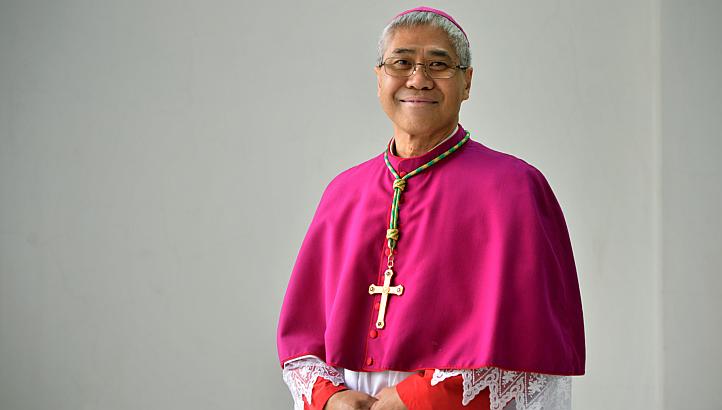
The new Archbishop of Singapore, Archbishop William Goh Seng Chye, having taken over officially on Saturday, 18 May 2013 after the Holy See accepted the resignation of the now Archbishop Emeritus Nicholas Chia Yeck Joo, will be installed at the cathedra of the Cathedral of the Good Shepherd, the mother church of the Church in Singapore.

Image

Archbishop William Goh was the Coadjutor Archbishop of Singapore and being a coadjutor, in conjunction with the Code of the Canon Law, has the right to immediately succeed the Archbishop upon his resignation being accepted by the Holy See.

This Installation Mass will also be an Inauguration Mass for the ministry of the new Archbishop and also a thanksgiving for both the new Archbishop and for the service of the now Archbishop Emeritus Nicholas Chia.


Details on the Mass :

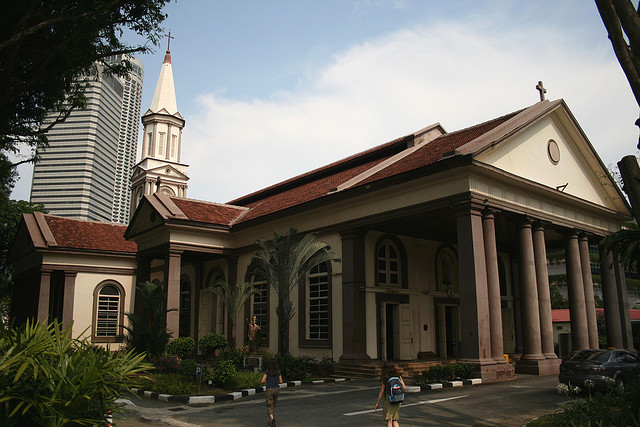
Location : Cathedral of the Good Shepherd, ‘A’ Queen Street, Singapore

Time : Friday, 24 May 2013 at 10.30 am (on Vesak Day – Public Holiday)


As Archbishop William Goh has officially taken over the duty as the Ordinary of the Archdiocese, he immediately resides in the official residence of the Archbishop in the Archbishop’s House, located within the Cathedral grounds.

Image

Meanwhile, Archbishop Emeritus Nicholas Chia will transfer his residence to the Catholic Spirituality Centre in Hougang, Singapore, where Archbishop William Goh had resided during his term as the Coadjutor Archbishop.


God bless our new Archbishop and we also pray for our Archbishop Emeritus, that in his retirement he will continue to do great works for the sake of the Lord.

Ad multos annos, His Excellency Archbishop William Goh!