Saturday, 11 October 2014 : 27th Week of Ordinary Time, Memorial of Pope St. John XXIII, Pope (Homily and Scripture Reflections)

Liturgical Colour : Green or White (Saturday Mass of our Lady and Popes)

Brothers and sisters in Christ, today we are presented with the message of the Lord, through the Holy Scriptures and the Gospels, on the nature of our faith and salvation, and how we can attain that salvation through what we are doing in this life, not just based on any race or other passive benefits or factors, but through the commitment of actions that make our faith truly alive in God.

In the first reading today, St. Paul in his letter to the faithful and the Church in Galatia showed how while in the past, God revealed His Law to His people to guide them and prevent them from going astray from the path towards salvation, but the coming of Christ, the Messiah and Saviour of all, gave mankind a new focus of their faith and devotion. For God Himself had come down upon us, in our humble form, to save us from our fate that was death and oblivion.

There was also to be no more division and prejudice, or any difference in treatment between those in the society, based on either race or birth, based no longer on either status or wealth or possessions. What matters is truly whether one believes in the Lord Jesus Christ, and if one believes, and lives according to that faith which they have, then they are guaranteed salvation in Jesus Christ our Lord.

That was because, the Jews, who were descendants of Abraham, the faithful servant of God, with whom He had made His covenant with, were proud and prejudiced against their neighbours, thinking that as the heirs and sons of Abraham, they alone deserved salvation, and the others, the Gentiles, namely the Greeks, the Samaritans, Romans, Arabs, Canaanites, and others whom they considered as pagans and barbarians deserved eternal damnation.

Yet, Jesus made it clear in the Gospel, that blessing is upon those who follow the will of God, who walk in His ways, and who practice their faith in the real life, showing that their faith is truly real, concrete and dynamic. Yes, not the dead and stagnant faith shown by lack of action, by mere lip service of faith, and not by prejudicing against others or condemning others or glorifying oneself thinking that one is worthy of salvation, while others do not.

Therefore, today we are all called to reflect on our own lives, whether in all things we do, we have been truly faithful to the Lord, not just by mere faith or words, but also through actions founded in faith, filled with hope, and blessed and graced by love. This is what is necessary for us to attain our salvation, and blessed we are indeed if we listen to Jesus and what He had said, instead of following our own desires and wants.

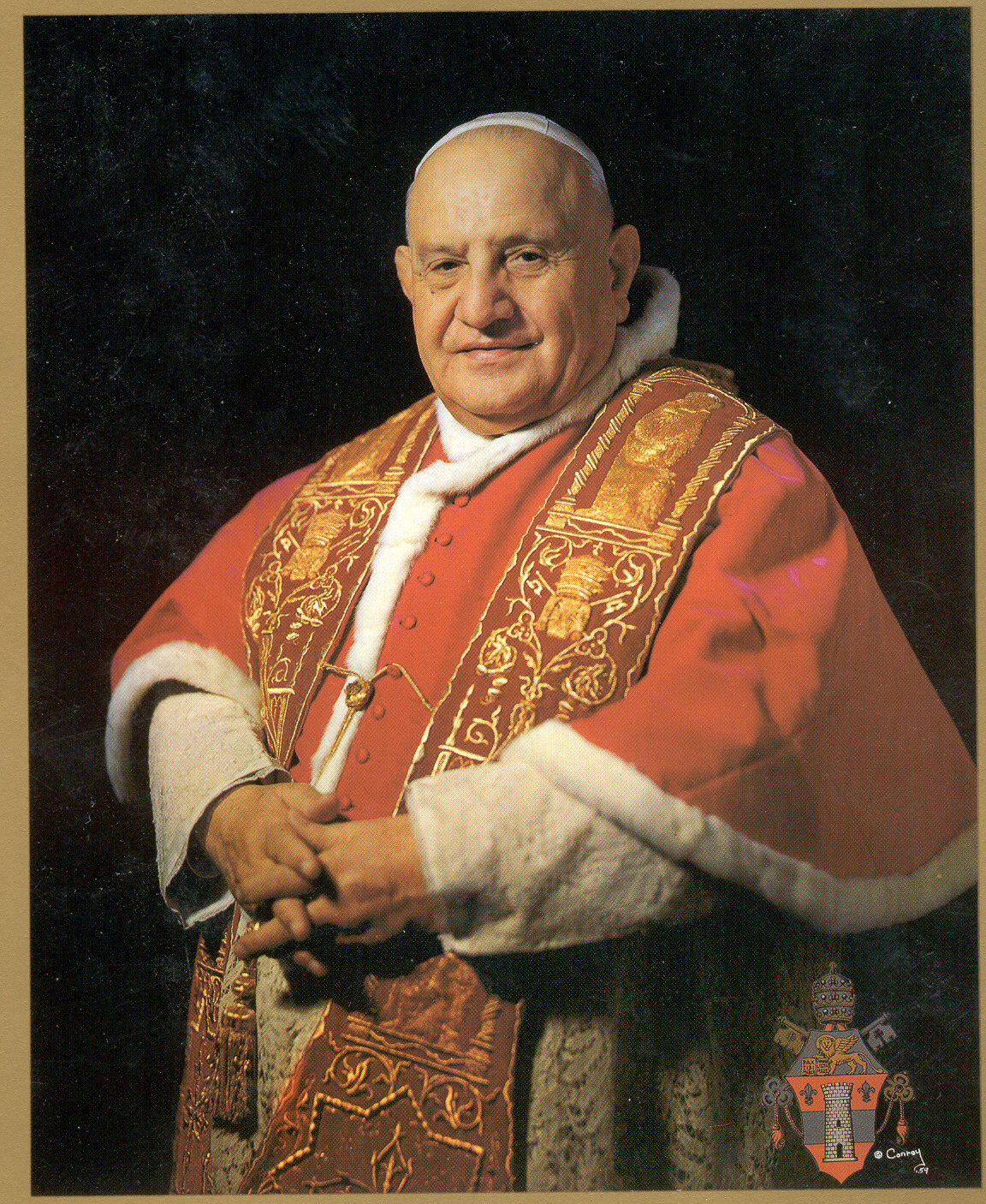
Today, we celebrate together with the whole Universal Church, the feast of Pope St. John XXIII, the successor of St. Peter the Apostle, and one of the great and holy Popes of the twentieth century after the birth of Christ. Pope St. John XXIII, who was also called the ‘Good Pope’, was chiefly remembered for his role in convoking and gathering the latest Ecumenical Council of the Holy Roman Church, that is the Second Vatican Council, which lasted from 1962 to 1965, but in fact, his holiness stemmed not just from that act, but also from the actions which he had taken for the entire course of his life.

The life and examples of Pope St. John XXIII, the Good Pope, il Papa Buono, can be an inspiration for us all, as ever since he was born of a poor peasant family in the village and commune of Sotto il Monte, in the province of Bergamo in northern Italy as Angelo Giuseppe Roncalli, he had led a very faithful and devoted life to God. He was poor, just as his family was poor, but together they as a family lovingly devoted themselves to God.

At a certain moment in his youth, the young Angelo encountered experience in faith, by those whom he met, including his uncle, which encouraged him to consider giving himself to the service of God. As his family was poor, and peasant youths were considered important assets to help out in work, his parents were reluctant to let him to go and join the seminary.

Nevertheless, in the end, God had His way, and Angelo managed to join the seminary, studying intently and eventually was ordained a priest of the Diocese of Bergamo. He eventually became the secretary of the local ordinary, Bishop Radini-Tedeschi, who was a relatively obscure individual compared to his later famous protege, but the one who had great influence on Angelo and his later great works.

Bishop Radini-Tedeschi encountered a great workers and union strike in accordance to the poor living conditions and treatment of workers by the government of that era, in the early twentieth century, and Bishop Radini-Tedeschi faithfully and tenderly exercised his works as the shepherd of his flock, calling for restraint and restoration of order while calling for reforms and great improvement in the treatment of workers. He even donated his own personal wealth to help the poor workers made their ends meet.

All these inspired the young Angelo Roncalli, the later Pope St. John XXIII, as he later was made Archbishop and appointed as the Apostolic Delegate to Bulgaria, and later to Greece and Turkey. During his diplomatic missions in the service of the Church, Archbishop Roncalli did many great works, establishing links and friendship with the separated brethren of faith in the Eastern Orthodox Church, and during his mission in Greece and Turkey, even saved many Jews from the actions of the German NAZI who was bent on annihilating them as a race in the holocaust.

In his later mission as the Apostolic Nuncio to France, Archbishop Roncalli continued to do many good works, establishing links and relationship with the French government, including dealing with the difficult leader of France, Charles de Gaulle, who wanted to reduce the influence of the Church of Rome in the affairs of the Church in France.

And eventually, as the Patriarch of Venice and a Cardinal of the Holy Roman Church, Cardinal Angelo Roncalli continued to exercise the good works which he had done earlier in his earlier posts and ministries, and which eventually he continued when he was elected Pope in 1958 to succeed the great Pope Pius XII, the Pastor Angelicus, or the Angelic Pope.

Pope St. John XXIII continued to lead the Church faithfully, and he was particularly concerned with the restoration of relations with the Eastern Church, as he had experienced earlier during his time in Bulgaria, Greece and Turkey, in the relationships he had made with the prelates and faithful of the Eastern Church at the time. And then he was also concerned about the state of the Church, and the need for a continuation of the unfinished works of the First Vatican Council, which was prematurely ended due to the events at that time.

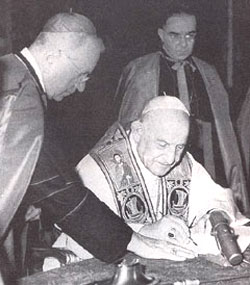
Thus, Pope St. John XXIII convoked the gathering of the Second Vatican Council, which commenced in 1962, and which sessions was started and opened by the Pope himself, which meeting was to continue until 1965, and concluded by Pope Paul VI, his successor as Pope St. John XXIII passed away in 1963, before the conclusion of the Ecumenical Council which he had initiated.

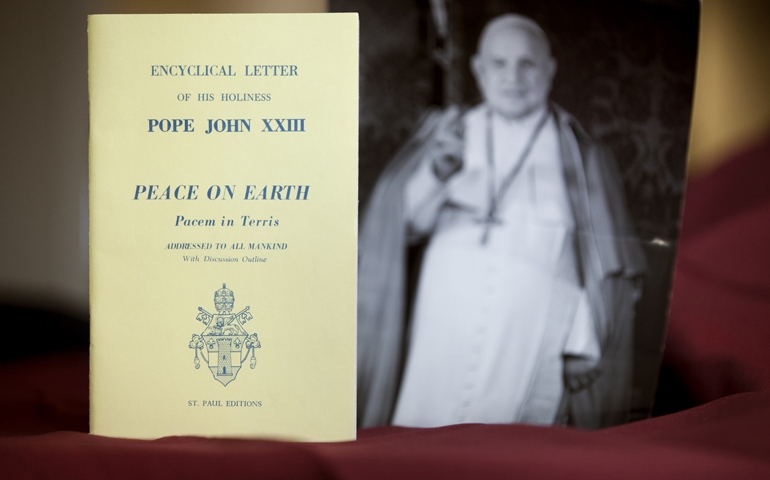
Pope St. John XXIII also was renowned for his role in helping to reduce tension between the superpowers, namely the United States of America and the Soviet Union, which almost ended up in a major war, during the Cuban Missile Crisis in 1962. One of the last major acts of Pope St. John XXIII was the peace which he helped broker between the two sides, and which was the major reason behind the Papal encyclical he released in 1963, the famous Pacem in Terris, or ‘Peace on earth’.

Brothers and sisters in Christ, as I have mentioned, that the actions of Pope St. John XXIII are examples to all of us, and through them, we should also be inspired to follow in his footsteps, that our faith may grow stronger and that in our devotion, we may be found justified in our faith by the Lord our God. Remember, brethren, that we have to have a living faith in us, so that our faith will not be just empty, but be real and concrete.

May Almighty God, who sees the faith and commitment which Pope St. John XXIII, also see the faith that is in us, and therefore may grant us the inheritance and reward which He promised us through Jesus Christ His Son. May we all come ever closer to His loving embrace, seeking His mercy and be made righteous once again. God bless us all. Amen.
Saturday, 11 October 2014 : 27th Week of Ordinary Time, Memorial of Pope St. John XXIII, Pope (Gospel Reading)

Liturgical Colour : Green or White (Saturday Mass of our Lady and Popes)

Luke 11 : 27-28

At that time, as Jesus was speaking, a woman spoke from the crowd and said to Him, “Blessed is the one who gave You birth and nursed You!”

Jesus replied, “Truly blessed are those who hear the word of God, and keep it as well.”

Saturday, 11 October 2014 : 27th Week of Ordinary Time, Memorial of Pope St. John XXIII, Pope (Psalm)

Liturgical Colour : Green or White (Saturday Mass of our Lady and Popes)

Psalm 104 : 2-3, 4-5, 6-7

Sing to the Lord, sing His praise, proclaim all His wondrous deeds. Glory in His Holy Name; let those who seek the Lord rejoice.

Look to the Lord and be strong; seek His face always. Remember His wonderful works, His miracles and His judgments.

You descendants of His servant Abraham, you sons of Jacob, His chosen ones! He is the Lord our God; His judgments reach the whole world.

Saturday, 11 October 2014 : 27th Week of Ordinary Time, Memorial of Pope St. John XXIII, Pope (First Reading)

Liturgical Colour : Green or White (Saturday Mass of our Lady and Popes)

Galatians 3 : 22-29

But the Scriptures have declared that we are all prisoners of sin, so the only way to receive God’s promise is to believe in Jesus Christ.

Before the time of faith had come, the Law confined us and kept us in custody until the time in which faith would show up. The Law then was serving as a slave to look after us until Christ came, so that we might be justified by faith. With the coming of faith, we are no longer submitted to this guidance.

Now, in Christ Jesus, all of you are sons and daughters of God through faith. All of you who were given to Christ through baptism, have put on Christ. Here there is no longer any difference between Jew or Greek, or between slave or freed, or between man and woman : but all of you are one in Christ Jesus.

And because you belong to Christ, you are of Abraham’s race and you are to inherit God’s promise.

Thursday, 21 August 2014 : 20th Week of Ordinary Time, Memorial of Pope St. Pius X, Pope (Scripture Reflections)

Liturgical Colour : White

Dear brothers and sisters in Christ, today we celebrate the feast of a great saint, the Pope of the Holy Eucharist as he is famously known, namely Pope St. Pius X, the first Pope to be elected in the twentieth century, and a great reformer of the faith who brought great rejuvenation both to the Church and to God’s people. Pope St. Pius X had done a great deal of goodness for the Lord and His people, and the effects of what He had done can still be clearly felt today.

Pope St. Pius X was the one who reformed much of the liturgy and the celebration of worship in the Church, and he made the Gregorian chant once again the predominant hymn and song used in the Holy Sacrifice of the Mass. Through his contributions, he made the liturgy of worship to God much richer and more beneficial for the growth of the faith and devotion among the faithful. Numerous other contributions he had made to the benefit of God’s people.

And his greatest contribution was the great improvement in the accessibility and focus on the Most Holy Eucharist, the very Precious Body and Blood of our Lord, Jesus Christ, who had given us these freely as He offered Himself humbly to the Lord as the sacrifice for the sake of our salvation, which we celebrate regularly in the Holy Mass. This is the centre of our faith, and the very foundation of what we believe in God.

In addition, if we today know the Holy Communion as something we always do every time we attend the Holy Mass, and if we can remember the time when we first received the Holy Communion in our early youth, then all of these could be attributed to the works of this holy Pope, Pope St. Pius X, and this is why he is also known famously as the Pope of the Eucharist. Why is this so? Let me elaborate further.

Pope St. Pius X encouraged frequent reception of the Holy Eucharist by the faithful, and he also lowered the minimum age required for the reception of the first Holy Communion, bringing the Lord closer to even young children. This reminds us clearly of what the Lord Jesus had said to His disciples and followers, that all of us ought to imitate the faith of children, and we should not prevent children from coming to the Lord.

With that consideration, what Pope St. Pius X had done was truly exemplary, allowing children, provided that they are at an age when they are already able to discern about the Lord, to receive the Lord in the Most Holy Eucharist, certainly at an age significantly younger than what was previously stipulated and practiced in the Church. This helps many of the youths and children to be close to the Lord for the important years when their faiths in God are developing and taking roots.

And ultimately, today we will focus on the role of this holy man and shepherd of the Church, in how he transformed and brought the Lord and His fullness of truth into the centre of the faithful’s attention, by emphasizing strongly on the importance of worship and the properness in worship of the Lord, in the Most Holy Sacrifice of the Mass, which we also celebrate today, but which in many places had notably dropped in terms of our ability to appreciate how important it is to properly worship the Lord.

This relates precisely to the reading of today, in which Jesus told His disciples a parable, which described the wedding feast organised by a king for his son, and how the guests whom the king had invited to the feast refused to come to the feast prepared for them. Those guests were given what they had deserved, and they were cast down.

And when the king invited new groups of people who were then invited to the wedding banquet, he found someone who was not wearing the garments appropriate for the wedding feast, and consequently he was thrown out of the banquet and cast into the darkness to suffer the penalty of his actions and his ignorance.

How is this relevant to us and our faith? Precisely because the Holy Mass is the wedding banquet of the Lord, when the Lord comes to be one with us and to dwell among us, none other than through His Most Holy Presence in the Eucharist, bread and wine transformed completely into the Most Precious Body and Blood of our Lord Jesus Christ.

And our focus should indeed be on the action of the guest who had come into the banquet not wearing the appropriate wedding garment. This in fact reflects on those among us, and many of us indeed, who did not take the celebration of the sacrifice of our Lord seriously. It reflects clearly on our part when we are not serious about our part in the celebration of the Holy Mass. And in particular, in the recent years, more and more abuses of worship and of the celebration has occurred.

How many of us would come to the Church properly dressed and with a proper heart and mind? That means, how many of us actually prepare ourselves thoroughly to attend the Holy Mass and participate with the fullness of our hearts? Many of us often did not do so, and conveniently ignored these, and ended up physically and spiritually unprepared to be with the Lord in the Mass. In this, we are no different from the person who attended the king’s banquet without a proper clothing.

The Mass is truly great and holy, because in it we celebrate the very sacrifice that our Lord had made that day on the hill of Calvary, when He was hung on the cross between the heavens and earth, and for what? For our sake, brethren, that is for our salvation. He died so that He may break us free from the bonds of death and destruction that await us and bring us into life. And in that, He offered Himself through the Body and Blood He gave us, which through His priests, who transformed the bread and wine into that of our Lord’s Body and Blood for us to receive and eat, and drink.

If it is the Lord Himself who is present in the Holy Mass, then why did we not worship Him? Why did we not respect Him? Why did we blaspheme against Him by our words and actions? And why did we ignore Him and attend to our own needs and to our own human arrogance? I am talking about how many people increasingly lost their focus, and especially in the Mass, and they end up not worshipping God and His love, but instead praising themselves.

This is evident from the rise of unorthodox and heretical practices in the Holy Mass, which in many places, particularly in the West, but also widespread in other places, of inappropriate actions by both the laity and the priests, who did not give glory to God through their actions, but instead glorify and praise themselves. The practices of ‘liturgical dance’, speaking in tongues, use of inappropriate music in the celebration of the Mass and many other liturgical abuses of the Mass, unlike the attitude of the man without a proper garment in the banquet.

Brothers and sisters in Christ, on this great occasion of the feast of Pope St. Pius X, let us ask for his kind intercession and help, so that the Lord may strengthen the faith in us, and hopefully we may learn to know how to properly prepare and place ourselves in the worship of our great Lord and God. Let us all redirect our attention away from ourselves back towards the Lord. Let us all restore the solemnity and holiness in the celebration of the Holy Mass. Let us all work together to make our celebration of the Mass be truly heaven on earth, and get rid of any forms of abuses that still mar our spirit of celebration of this great banquet of the Lord.

May Almighty God guide us on our efforts, strengthen our faith and renew in us the love that we have for Him. Let us strive to make our worship a true worship once again, gaining inspiration from what Pope St. Pius X had once done for the good of the souls of the faithful. God be with us all. Amen.

Thursday, 21 August 2014 : 20th Week of Ordinary Time, Memorial of Pope St. Pius X, Pope (Gospel Reading)

Liturgical Colour : White

Matthew 22 : 1-14

Jesus went on speaking to them in parables : “This story throws light on the kingdom of heaven : A king celebrated the wedding of his son. He sent his servants to call the invited guests to the wedding feast, but the guests refused to come.”

“Again he sent other servants, ordering them to say to the invited guests, ‘I have prepared a banquet, slaughtered my fattened calves and other animals, and now everything is ready. Come to the wedding!’ But they paid no attention and went away, some to their fields, and some to their work. Others seized the servants of the king, insulted them and killed them.”

“The king became angry. He sent his troops to destroy those murderers and burn their city. Then he said to his servants, ‘The wedding banquet is prepared, but the invited guests were not worthy. Go instead to the crossroads, and invite everyone you find to the wedding feast.'”

“The servants went out at once into the streets and gathered everyone they found, good and bad alike, so that the hall was filled with guests. The king came in to see those who were at table, and he noticed a man not wearing the festal garment.”

“So he said to him, ‘Friend, how did you get in without the wedding garment?’ But the man remained silent. So the king said to his servants, ‘Bind his hands and feet and throw him into the dark, where there is weeping and gnashing of teeth.'”

“Know that many are called, but few are chosen.”

Thursday, 21 August 2014 : 20th Week of Ordinary Time, Memorial of Pope St. Pius X, Pope (Psalm)

Liturgical Colour : White

Psalm 50 : 12-13, 14-15, 18-19

Create in me, o God, a pure heart, give me a new and steadfast spirit. Do not cast me out of Your presence nor take Your Holy Spirit from me.

Give me again the joy of Your salvation and sustain me with a willing spirit. Then I will show wrongdoers Your ways and sinners will return to You.

You take no pleasure in sacrifice; were I to give a burnt offering, You would not delight in it. O God, my sacrifice is a broken spirit; a contrite heart You will not despise.

Thursday, 21 August 2014 : 20th Week of Ordinary Time, Memorial of Pope St. Pius X, Pope (First Reading)

Liturgical Colour : White

Ezekiel 36 : 23-28

I will make known the holiness of My great Name, profaned among the nations because of you, and they will know that I am YHVH when I show them My holiness among you.

For I will gather you from all the nations and bring you back to your own land. Then I shall pour pure water over you and you shall be made clean – cleansed from the defilement of all your idols. I shall give you a new heart and put a new spirit within you.

I shall remove your heart of stone and give you a heart of flesh. I shall put My Spirit within you and move you to follow My decrees and keep My laws. You will live in the land I gave your ancestors; you shall be My people and I will be your God.

Passing of Cardinal Marco Ce, Cardinal-Patriarch Emeritus of Venice (Italy) at the age of 88

Ce, Cardinal photo

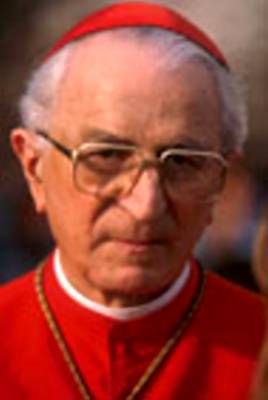
Cardinal Marco Ce, Cardinal-Priest of S. Marco has passed away on Monday, 12 April 2014 at the age of 88. He was the Patriarch of Venice, one of the most preeminent diocese in the world, from 1978 to 2002, and was succeeded in his position by Cardinal Angelo Scola, the likely future successor to the throne of St. Peter.

http://www.gcatholic.org/hierarchy/data/cardJP2-1.htm#31

Cardinal Ce was created Cardinal in 1979 by Pope St. John Paul II in his first Cardinal creation consistory on 30 June 1979. His motto was Christus Ipse Pax, which means “The peace of Christ”. This means an emphasis on proclaiming the peace of Christ, which He proclaimed Himself after His resurrection to be with us.

ce

We pray for Cardinal Ce, that he will rest in peace, and God will reward him for all his hard and great work as the long time servant of God as the shepherd of the faithful in Venice, for all the ministries and good works he had done there for the sake of God and His people. May the Lord welcome him into His embrace in heaven and give him eternal rest and happiness that he deserved.

With the passing of Cardinal Ce, the College of Cardinals now stands at 215 members, with 119 Cardinal-electors and 96 Cardinal non-electors. The number of Cardinal-electors now is just at the specified maximum limit.

There are now 0 Cardinal-elector vacancy in the College of Cardinals, 0 vacant Cardinal Suburbicarian Sees (for Cardinal Bishops), 2 vacant Cardinal Title (for Cardinal Priests) and 6 vacant Cardinal Deaconries (for Cardinal Deacons).

50th Anniversary of the passing of Blessed Pope John XXIII, the Good Pope (3 June 1963)

Image

Today, 3 June 2013, marks 50 years since the passing of a great Pope, Blessed Pope John XXIII, who died from stomach cancer he had suffered for years, on 3 June 1963.

Blessed Pope John XXIII was Cardinal Angelo Roncalli, the former Patriarch of Venice, who was elected to the Pontificate in 1958 succeeding Pope Pius XII. He was a poor farmer’s son, who joined the Vatican diplomatic career and eventually was made the Patriarch of Venice, before succeeding as Pope in the 1958 Conclave.

Image

Blessed Pope John XXIII was most well-known for his role in convoking and planning for the Second Vatican Council, which ultimately would take place between 1962 and 1965, with the Council works continued by his successor Pope Paul VI in 1963 upon his passing.

Image

But Blessed Pope John XXIII was also well-known for another work, that is peace, which is one of the hallmark of his pontificate. He managed to help arrange peace talks between the USA and the USSR, the Cold War superpowers, which due to the Cuban Missile Crisis in October 1962 and preceding conflicts, almost went into an all-out nuclear war at the time.

Image

Blessed Pope John XXIII published the well-known encyclical on peace, Pacem in Terris (Peace on Earth) just months before his death, but his works on peace help ensure that the destruction of mankind and God’s creation did not happen.

Image

Pray for us, o Blessed Pope John XXIII, that all of God’s children can truly become peacemakers on their own, and truly practice the love that God has planted in them, that love and peace will reign in this world, triumphant over evil, hatred, and violence.