
A Brief State of the Church in China – a Church in Trial and Persecution, a Church of Martyrs, a Church of Hope

The Church in China (1949) consisted of :

20 Archdioceses

85 Dioceses

39 Apostolic Prefectures

3,080 Missionaries

2,557 Chinese priests (Total : 5,637 priests)

4 million Catholics


The Church in China (2014) consists of :

20 Archdioceses

94 Dioceses

34 Apostolic Prefectures

1 Apostolic Exarchates

3,500 priests (approximate)

12 million Catholics (both open and underground)


Looking at the above comparisons, we can see a wary future for the Church in China, which had been in official and unofficial persecution for the past six and a half decades since 1949, the year when the Communist Party of China took over power in China. Since then, the Church in China, which was once among the most vibrant and fastest growing in the world, had been in great tribulation and period of persecution. Especially during the Cultural Revolution years in the 1960s, there were great attacks against the faithful and the faith throughout the country.

On one side, it seems that there had been a growth in the number of Catholics and in terms of the growth in the number of the dioceses. However, if we look deeper into the reality of the Church and the faith, there had been a great trouble that threatened many of the faithful, especially being divided between the ‘official’ government-sanctioned ‘church’ and the underground ‘loyal’ Church.

Many of the Archdioceses and dioceses are vacant, or that their bishops are not recognised as valid and legitimate, having often been government-picked, and more of a loyal men to the government rather than true and good shepherds for the faithful. Many of the bishops were picked by the government-sanctioned Chinese Patriotic Catholic Association or CPCA, whose leaders have often been noted to be not just laymen, but even non-baptised people.

There had been much grievances and controversies in the recent years in the illegitimate and illegal election and ordination of bishops by the CPCA and the Chinese government which were not approved by the Holy See. On some occasions, the bishops did receive blessing from both parties, but in many other cases, it was the contrary. This further deepened the division among the faithful in China.

Many of China’s priests and bishops are underground, that is they remain faithful and loyal to the completeness of the faith in the Church, and unaffected by the pressure from the government to obey them. There had been great persecution against them and the faithful under their care, such that imprisonments and forced labour are not uncommon.
Ma_Daqin_2_(600_x_450)

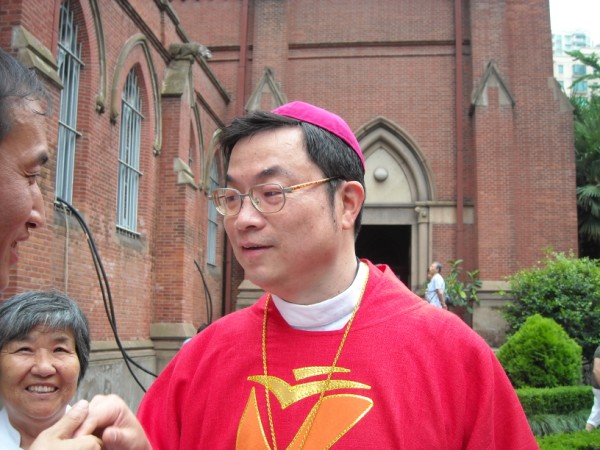
And recently, just almost two years ago, the then newly appointed Auxiliary Bishop of Shanghai, Bishop Thaddeus Ma Daqin bravely and courageously announced his resignation from the CPCA, the official ‘church’ of China at his own episcopal ordination, which was done with the blessing of the Holy See and the Pope. This resignation triggered a massive response from the government which resulted in his incarceration for the past two years, and he had greatly suffered for this. His episcopal motto is clear and indeed clearly highlighted his wish for the unity of the Church in China with the Universal Church, free from any external intervention. His motto is “Ut Sint Unum ad Maiorem Dei Gloriam” or “That they may be One, for the greater glory of God.”

The Church in China still grows, and more and more people hunger for the truth that Christ can offer them. There are many opportunities at evangelisation, and many brave and courageous ministers of the Lord’s Gospel went forth even against the challenges that await them. The recent attacks by the government on the Christian faith, as shown by the demolition of a church building in Wenzhou show how much the authoritarian government fears the power and influence that the Church and the faith may have in bringing about their downfall. The downfall of Communism and the authoritarian governments in Eastern Europe must still be fresh in the minds of the autocrats in Beijing, and they fear their own demise if they allow the faith to grow unchecked.

There is still great hope in the Church in China, and there is genuine faith in the people, who desire to be reunited completely with their brethren in faith, all of us, in the Universal Church, and be freed from any form of pressure or external domination, which are unjust and uncalled for. But they need our prayers, our support and our encouragement.
a2b631b0

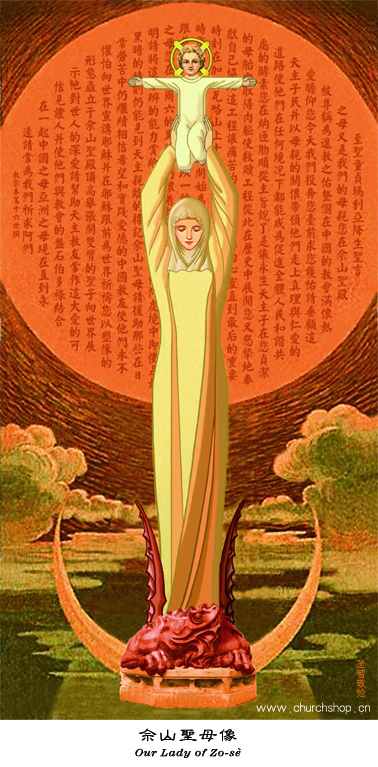
Let us ask for the intercession of the Blessed Mother of our Lord, Mary, the Help of Christians, who in the above picture is depicted as our Lady of Zose or Sheshan, from a famous pilgrimage site in Sheshan near Shanghai. Let us ask for her intercession for the Church in China and for the faithful there, our brethren in faith. Just as once the Lord had done His great works through Pope St. John Paul II, another great saint, to cast down the tyranny of atheism and unbelief in the states of Eastern Europe and Russia, may our Lady of Sheshan also intercede for the sake of our brethren in faith in China, a great nation and a great civilisation and yet is filled with worldly hatred of the devil who hates the Church and all its faithful.

We also pray that there will be a new spirit of dialogue and renewal, and that those entrusted with power at the top of the Chinese government hierarchy will finally realise the futility and the inhumane nature of their attempts to control the Church and the faithful. We hope that there will be an amicable and peaceful solution, that the Church in China may be completely reunited once again with the Universal Church, free from all the current issues and dilemmas, and free from any political arguments and intrusions by any external forces.

May the Lord be with His people always, protect them, bless them, and guide them to the light of Christ. May He give them rest and grace, after all the difficulties and challenges that they have faced, in the courageous and zealous defense of their faith in Him. Amen.

Monday, 14 October 2013 : 28th Week of Ordinary Time, Memorial of Pope St. Callistus I, Pope and Martyr (Scripture Reflections)

Liturgical Colour : Green or Red (Martyr)

Dear brothers and sisters in Christ, the Lord Jesus is our promised salvation, the One whom the prophets had been proclaiming about. He is the descendant of David, the One to inherit for eternity the kingdom that had been given to His forefather, to be the king of not just Israel, but over all the world, and indeed, as the Lord Creator of all, as the King of all creations.

He is also the descendant of Adam, the first man, and as a new Man, the Son of Man, becoming the new Adam, the first One to rise from the dead and into glory. Just as Adam had fallen into temptations of Satan, the evil one, with his wife, Eve, then Christ had broken hold of evil over mankind, the descendants of Adam, by being the faithful One, the One who held on true to His faith and love in God, even unto death.

Yes, for through Jesus, the new Adam, mankind had been liberated, ransomed with the price of the Blood of the Lamb, Jesus Himself. That is the price He had paid for the sake of our salvation and liberation from slavery of sin under Satan. That ultimate sacrifice He had done at Calvary, to die on the cross for the sake of all mankind, is the sign of Jonah that He had promised to show the people, who so stubbornly demanded Him to show a miraculous sign.

Yes, brethren, demanding Jesus to show them a sign, while what they have experienced while they were with Him, especially the Pharisees and the teachers of the Law, who had always tailed Jesus wherever He went, and tried Him with questions and traps they had laid for Him. They have seen what Jesus had done, and had heard His teachings, and yet they did not believe, or rather, refused to believe in Him or in what wonders He had done.

The sign of Jonah is the reinforcement of what had happened to Jonah, when he tried to escape from his prophetic responsibility, to bring the judgment of God to the city of Nineveh. His escape ship was struck with a vicious storm, and he had to throw himself into the sea so that the ship would not sink. God sent a big fish, a whale, to swallow and protect Jonah in its belly for three days. That is what had happened to Jonah, and precisely what Jesus had shown the people of God.

Jesus Christ Himself was taken away from the world, that after His death, He went down into hell, not as a condemned one, but instead as a triumphant and conquering One, as One who liberates those who had been imprisoned unjustly by the evil one, delivering them from the darkness of the hell and this world into the light of heavenly glory. For three days, He was hidden from the world, just like Jonah who was in the belly of the fish for three days.

And just as Jonah who had been freed from the belly of the fish and went on to continue his ministry to Nineveh and its people, and after realising the benevolence and merciful nature of God, understanding that the people of Nineveh was not punished because they were repentant and regretful of their past sinful ways, so did Jesus bring about salvation and forgiveness for all those who had shunned their sinfulness and embraced Him as their Lord and Saviour.

This is the fundamental core of our faith, one that we have to keep uphold strongly throughout our life. We must never forget that our Lord had died for us and given up His life so that we may live and not suffer death eternal in hell, for He had freed us from bondage to Satan and bring us into new life of holiness and true joy.

Today, brethren, we celebrate the feast of Pope St. Callistus I, also known as St. Callixtus I, one of the first Popes and therefore one of the early leaders of the Universal Church. Pope St. Callistus I faced many difficult experiences in his life, and even more so during his ministry as the successor of St. Peter, as the leader of the Universal Church. There were oppositions and persecutions from the pagan Romans and their Emperors, and life was truly difficult. There were also oppositions from within the Church, with rival factions and disagreements threatening to split the Church apart, especially over treatment of lapsed Christians and forgiveness given unto them when they decided to return to the Church.

Yet, Pope St. Callistus I persevered through these tribulations, and led the people of God through those difficult times, enduring oppositions after oppositions, and led the people of God back to God, reconciling themselves with one another. Pope St. Callistus dedicated himself to the cause of Christ even unto his death, his martyrdom in the defense of his faith. In that, he had upheld the faith that he had in Christ, in the One who had Himself persevered through numerous trials and oppositions, and death so that all of us may be saved.

Therefore, brothers and sisters in Christ, let us then commit ourselves ever more devotedly to the Lord our God who had given His all for our sake, that we will not abandon Him, and truly believe wholeheartedly in His Passion, in the suffering and death He had endured for the sake of us all. And may Pope St. Callistus I pray for us and intercede for our sake before the Lord Jesus, our loving God and Father of all. God bless us all. Amen.

Monday, 16 September 2013 : 24th Week of Ordinary Time, Memorial of St. Cornelius, Pope and Martyr, and St. Cyprian, Bishop and Martyr (Scripture Reflection)

Liturgical Colour : Red

Dear brothers and sisters in Christ, today we listen to the revelation of the great faith in the captain, who was likely a Roman soldier, and therefore not of the people of Israel. And we tie this revelation to the saying of St. Paul in his letter in our first reading today, that there exists only one way to salvation, that is through the great Mediator, Jesus Christ, Messiah of the world.

True faith in God lies not in the prayers after prayers that one utters. Yes, prayer is indeed important, brethren, but what is even more important is one’s own humility and awareness of themselves, and the complete surrender of oneself to the love of God, and in all these, the individual will then have a true, unshakeable faith in God.

It is that many people in Israel put themselves before God, and put their worldly desires before the Lord. That was also why the faith of the people in God, as was evident in how they looked at Jesus and His ministry, was truly shallow and weak faith, unlike that faith the captain of the army possessed for Christ and therefore for the Lord. That was also why, even though the people first proclaimed Jesus as a great Saviour, they were equally quick in condemning Him to death when He was convicted by false testimonies.

They loved not God and have faith not in Him, but on the wondrous things that He had done, and once those things were gone, or when challenges rose up to meet them, they quickly forgot about Him and rose up in rebellion. This was truly evident, when Israel walked through the desert into the Promised Land, that they rebelled and made complaints after complaints to the Lord for not caring for them enough in their journey, and even regretted having been brought out of Egypt.

The same also happened to Jesus, that people applauded Him for the miracles and powers He had shown, in healing the sick, opening the eyes of the blind, and loosening the tongues of the mute, and in raising the dead back into life. They followed Him and listened to His teachings, and yet, these did not take good roots in them, that they were easily shaken by fear and doubt.

On the other hand, the captain of the guards showed great faith in God, that He sent for Jesus to heal his sick servant and save him from death. Then, despite his relatively lofty and high position in the armed forces, and therefore in the society, he did not boast at all. He instead lowered himself before the Lord, as a sinner, who would not be worthy at all to receive the Lord who is good and perfect in his own residence.

One may interpret the way he said things to Jesus through his servant as being rude. After all, how can he say such things to Jesus who had spent so much of His time to come down to his place and heal his servant? Is he not being condescending and demanding of Christ the Lord?

No, brethren, in fact, in that sentence, and which was completely revealed in his last sentence, which we also utter during every Mass before the Lord’s Presence in the Holy Eucharist, showed perfectly the depth of his faith in the Lord and his humility, realising that he was truly nothing, despite his position of power, before the Lord Jesus our Saviour and God.

“Lord, I am not worthy that You should enter under my roof, but only say the word, and my soul shall be healed.” That is the precise words that we utter after the Agnus Dei, when the celebrant of the Mass show to us the Body of Christ crucified, through which He is willing to come upon us, in order to heal us from all our sins, iniquities, and unworthiness. We are unworthy of Him because of our sins, and yet He is willing to come to us, into us, so that He will be with us and stay with us, and we will also remain in Him, in His love.

It is precisely his understanding of his unworthiness before the Saviour of the world, before the Almighty God Himself, that he, the captain, though mighty in the eyes of men, but he is nothing compared to God and he is unworthy to stand before His presence, much less to invite Him to his humble and sinful abode. That is why, using his own experience as the captain of an army unit, he asked in his humility, for the Lord to give the orders, and he has complete faith that whatever the Lord commands, it will be fulfilled.

We too, brothers and sisters, should follow his example, and in saying the words that he had once uttered, every time in the Mass, let us say it with complete understanding and dedication to God, not because we are trained to say it without feelings, and not just because we memorised the phrase, and then utter them out of nothingness. Let us put ourselves into the shoes of the captain, understanding the love that God has for us, when He approaches us and offers Himself to us in His Body and Blood.

Today, brethren, we also celebrate the feast of two great saints of the early Church, namely that of Pope St. Cornelius and St. Cyprian, the great leaders of the Church and the staunch defenders of the faith. They lived at a difficult time for the Church, at the time when the pagan Roman Emperors, particularly Decius and Valerian persecuted Christians and slaughtered them mercilessly.

Pope St. Cornelius and St. Cyprian, his greatest supporter, as the Bishop of Carthage in Africa, also faced a great tribulation of the faith, with a heretical teaching by the priest Novatian, who also contested the Papacy as antipope to Pope St. Cornelius, causing a severe division of the faithful at the time when the enemies of the Church were persecuting strongly against her.

Pope St. Cornelius protected the important tenet of the faith, that is the Lord who is merciful, readily forgives those who had lapsed from the faith, as was often during his time as Pope. St. Cyprian was his strong supporter, against the heretic Novatian, who staunchly opposed to the forgiveness and redemption of those who had lapsed from the faith.

There were many Christians who lapsed from the faith due to various reasons, but many of which were linked with the temptations of the world and sin, especially because of the severe persecutions against the faithful at the time. According to Novatian heresy, these people were doomed, but Pope St. Cornelius and St. Cyprian begged to differ. As Christ had taught His disciples, that even the greatest of sinners can repent and many saints were also once great sinners.

They defended the true faith and maintained the integrity of the Church and the faithful. Through their hard work, many were prevented from falling into the heretical teachings. They died as defenders of the faith under persecution by the Roman authorities, and in their martyrdom, they provided the rich soil upon which the Church could grow further and carry out their work of salvation.

May the Lord opens our eyes and the doors of our hearts, and inspired by the examples and works of Pope St. Cornelius and St. Cyprian that we will be able to learn the unworthy state that we are in, because of our sins, that we, in deepest humility, following the footsteps of the captain, will humble ourselves before Christ, who is the great Mediator, the bridge between us and the Father, through whom, the only path to salvation and eternal life in glory is possible. Let us praise God and thank Him for having mercy and pity on us, coming to us to heal us, despite of our faults and unworthy behaviours. God be with us always and may He show His mercy and love upon us. Amen.

Tuesday, 9 July 2013 : 14th Week of Ordinary Time, Memorial of Saints Augustine Zhao Rong, Priest and Companions, Martyrs (Scripture Reflection)

Brothers and sisters in Christ, the Lord is driven to compassion for the sake of all of us, because of our poverty, the poverty of our souls, of our sinfulness, and our lack of leadership. That is because we are all like sheep without a shepherd, going in all directions and getting lost. Christ came into this world, and painstakingly taking all of us into His fold, as the Good Shepherd, seeking the lost ones one by one, until all of us are found once again and reunited.

The Lord our God does not wish us to be lost or forever separated from Him. He came down Himself and suffered for our sake, that eventually we can be reunited with Him for eternity. For there is no other option besides salvation, other than eternal damnation. That is why Christ came to us to offer us the other option that is salvation and eternal life. He became our shepherd, the Good Shepherd, so that we will no longer be lost. He became our guide, our leader, the light of our path, and our God.

Today we celebrate the memorial and feast of St. Augustine Zhao Rong and his companions, who are the Catholic martyrs from China, and many of them were martyred during the Boxer Rebellion at the turn of the twentieth century, when a severe persecution against Christians in China occurred. Many Christians, including St. Augustine Zhao Rong and his companions were murdered brutally for their faith, because they refused to renounce their faith and kept holding steadfastly to their faith.

St. Augustine Zhao Rong himself was a Chinese diocesan priest who served in several areas in China before he was arrested, tortured until his death in the defense of his Christian faith. He did not give up on the Lord and remained faithful. The same case had happened for many other martyrs of China, many of whom were repeatedly asked and offered to reject the Lord and reembrace pagan practices, but they refused and were received into heaven with a martyr’s glory.

These martyrs, the local Chinese and the Western missionaries, were joined in death for the sake of their faith in Christ, and they embody to us, the virtues of a faithful life dedicated to the Lord. A life lived with zeal and love for the Lord and His people, and with purpose. Opposition and persecution will naturally come, but they will be able to subvert the faith of the just ones.

Indeed, brothers and sisters in Christ, even today, the Church throughout the world, particularly in China, where St. Augustine Zhao Rong and companions met their martyrdom, where religious freedom, superficial as it is, is very limited and bordering on being non-existent. The Church was forced to serve the atheistic government, who views the Church as a hostile entity, and therefore they tried to destroy it. When the attempts to destroy the Church had not been successful, they resolve to weaken the Church by seizing it out of the Universal Church.

Many people there still suffer today, and Christians in the Church suffer an even greater suffering, being seen as ‘hostile’ by the government, and as a ‘threat’ that needs to be eliminated. Yet, as the saying goes, that the blood of martyrs is the seed of Christians, persecution and opposition brings fervour and zeal to the people of God, that they may not just persevere through the tough times, but indeed prosper and grow.

But seeds cannot grow without proper care and provision, as we need labourers to constantly care and give all their time into the effort. That is why the Lord said that though the harvest is plentiful, but the labourers are few. We need more labourers to harvest the field of the Lord, and these harvests are simply the people who come to know the Lord, and to be saved. The labourers are none other than our priests, supported by all of us, the laity.

All around the world, including in China, there are increasing shortage of priests to serve the people of God. The number of the people in the Church has grown significantly while the number of priests had been stagnating for quite a long time. This makes it increasingly difficult, especially in the areas where the Church is growing, to project itself through love and service, and also to conduct worship in the Mass, in which priests are badly needed.

It is more and more difficult to gain new priests nowadays, brethren, because the world increasingly shut the Lord out of the minds of the young people, many of whom are called by the Lord. Yes, many are called, but few responded, and among those who responded, even fewer followed his calling through to the end in service of the people of the Lord. It is important that we bring the zeal and devotion, and the love for God back to all of us, especially those whom the Lord had called and entrusted with His flock.

Even priests and religious brothers and sisters must also be growing in faith and love. All of us cannot be complacent otherwise we would be caught unprepared by the devil, whose works are many, and whose deceit and trickery threatened to corrupt many people and turn them away from the Lord their God.

Therefore, brothers and sisters, inspired by the devotion and zeal of St. Augustine Zhao Rong, his companions, the martyrs of China, let us persevere against the opposition and the persecution of the faith in any form that is there in this world, in our society, and even in our families. Let us foster a prayerful and loving atmosphere in our homes, in our communities, in our parishes, that we can allow the faith to grow strong in all of us, especially our youths, some of whom may be future priests and servants of God and His people.

Pray, brethren, and pray hard, for the sake of our Church, for God’s people, and especially a special intention for the Church in China, for our brethren in faith unjustly treated and persecuted for their faith and obedience to the Lord rather than to the secular and Godless authority. May the Lord strengthen them in faith, give them courage, and remain with them through their ordeal, and may He also be with us, at all times. Amen.