Bishop Mario Aurelio Poli, Bishop of Santa Rosa, appointed new Metropolitan Archbishop of Buenos Aires

Image

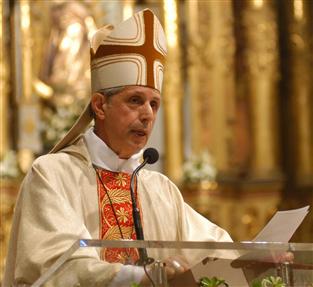
In his first appointment of bishop, Pope Francis appointed his successor as the Metropolitan Archbishop of Buenos Aires, which was Pope Francis’ former seat, as Cardinal Jorge Maria Bergoglio.

http://www.gcatholic.org/dioceses/diocese/buen0.htm#5560

Bishop of Santa Rosa and former Auxiliary Bishop of Buenos Aires, Mario Aurelio Poli, was appointed today as the new Metropolitan Archbishop of Buenos Aires, Argentina.

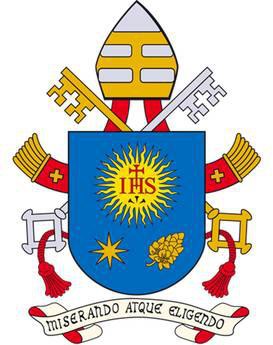
Final version of Pope Francis’ coat of arms

Image

The draft version of Pope Francis’ coat of arms had been finalised, with minor changes that improves greatly upon the draft version. The golden star is altered from a five-pointed star into an 8-pointed star representing the Blessed Virgin Mary, and with the spikenard flower, which is used in perfumes, being the symbol of St. Joseph, more accurately drawn. Finally, the motto “Miserando atque Eligendo” is encased in a scroll.

This should be the finalised official version of Pope Francis’ coat of arms, though variations may exist in different forms.

Details on the Papal Inauguration Mass and ceremony of Pope Francis, 266th Pope and Bishop of Rome

Mass appeal: some details of tomorrow’s papal inauguration—UPDATED

Today, Tuesday, 19 March 2013, our new Pope will be solemnly inaugurated to begin his Pontificate. He is already our Pope, ever since he accepted the rightful election in the Conclave, but the Inauguration ceremony affirms and completes that process, with the imposition of the symbols of the authority of the Pope, as the leader of the entire Universal Church.

There will be some changes to the liturgy this year, as the imposition of the Pallium and the Ring of the Fisherman will take place just before the Mass starts, instead of being within the Mass itself, as the impositions are seen as more of an extra-liturgical event.

The Pope will pray with the leaders of the Eastern Catholic Churches, the Patriarchs and Major Archbishops at the Tomb of St. Peter underneath the main altar of St. Peter’s Basilica, where the pallium and the ring had been placed since the night before.

The Pope will then proceed with all the other concelebrating Cardinals and prelates outside to the Altar at St. Peter’s Square, which in the meanwhile the Laudes Regia hymn or ‘Laud to the King (Christ)’, that is a glorious rendition of the Litany of the Saints, with the new innovation of the inclusion of part asking the past Popes who had been canonised as saints for the new Pope, their successor, beginning from Pope St. Linus to Pope St. Pius X.

Following after this is the imposition of the papal pallium, which is different from the pallium worn by the Metropolitan Archbishops. Pope Francis’ pallium will be the same in appearance with that of Pope Benedict XVI’s pallium, with red crosses instead of black ones, representing the wounds of Christ, with three gold pins on three of the crosses, representing the nails that bound both hands and the legs of Christ onto the cross. The pallium symbolises the authority the Pope has over the entire Universal Church. The pallium will be imposed by the senior Cardinal of the order of Priest in the Cardinal-electorate, Cardinal Godfried Danneels.

The Ring of the Fisherman will be given after this, which signifies the bond between the Pope and God’s Church, and as the image on the ring depicts, that of St. Peter holding the keys on a boat, while fishing, as a fisher of man, it symbolises the Pope’s role as the successor of St. Peter the Apostle, and also as the current holders of the keys of the kingdom of Heaven, entrusted by Christ to Peter. The ring will be presented to the Pope by the senior Cardinal Deacon, Cardinal Jean-Louis Tauran.

Six Cardinals representing the rest of the Cardinals will pay homage to the Pope, and will give their obedience to him, following the imposition of the pallium and the Ring of the Fisherman.

The Mass follows as usual, and the readings will be done in different languages, English, Spanish, and most notably the Gospel in Greek, to highlight the universal nature of the Church, encasing both the Western and Eastern tradition of Christendom. The whole liturgy of the Mass itself will be conducted in solemn Latin and beautiful Gregorian chants.

The booklet for the Mass is available at the link below, in English, Italian, and Latin :

Click to access 20130319_inizio-ministero-petrino.pdf

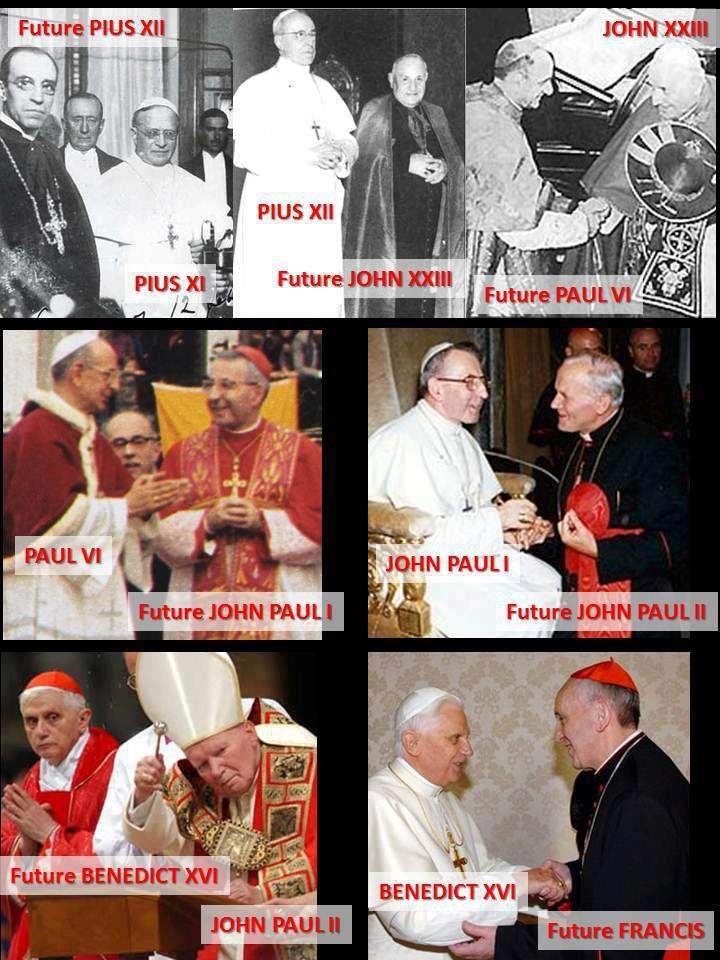
Pictures of Popes and their predecessors/successors

Image

(From UCatholic facebook page)

Depicted here are pictures of the Popes and their successors, or in the other way round, Popes and their predecessors. Most commonly between the reigning Pope and Cardinal who would be elected to succeed him.


List of Popes (and ‘future Popes’) in the depiction in chronological order :

1. Pius XI : 1922 – 1939

2. Pius XII : 1939 – 1958

3. John XXIII : 1958 – 1963

4. Paul VI : 1963 – 1978

5. John Paul I : 1978

6. John Paul II : 1978 – 2005

7. Benedict XVI : 2005 – 2013

8. Francis : 2013 – present (Will be known as Francis I if any of his future successors also pick the name Francis, who will then be Francis II)

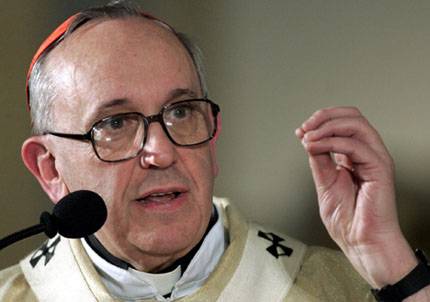
Habemus Papam! Our new Pope, Jorge Maria Cardinal Bergoglio as Pope Francis I

Habemus Papam! We have a Pope!

Bergoglio

Jorge Maria Cardinal Bergoglio, Metropolitan Archbishop of Buenos Aires, who is 76 years old, had been elected the 265th Successor of St. Peter the Apostle, the 266th Pope and Bishop of Rome, on March 2013.

He has taken the name of Francis, and shall henceforth reign as Pope Francis I. The first non-European and first South/Latin American Pope.

List of possible regnal names for the new Pope, from Benedict to Peter

These are the list of all the possible regnal names (may not be entirely complete, since I may miss some in the way), that the new Pope can and may take as his own regnal name. In parentheses are how the name will look like if the Pope takes the name.

The ones listed below are the names that Popes had been taking since 1775 till today (2013) :

1. Benedict (Benedict XVII) last Benedict still living as Pope Emeritus

2. John Paul (John Paul III) last John Paul died in 2005

3. Paul (Paul VII) last Paul died in 1978

4. John (John XXIV) last John died in 1963, no John before that since 1334

5. Pius (Pius XIII) last Pius died in 1958

6. Leo (Leo XIV) last Leo died in 1903

7. Gregory (Gregory XVII) last Gregory died in 1846


Below are the names that the Popes had taken before 1775, but this does not rule them out from being picked by the new Pope, but chances are remote, with the above 7 names in use for the past 238 years.

8. Clement (Clement XV) last Clement died in1775

9. Innocent (Innocent XIV) last Innocent died in 1724

10. Alexander (Alexander IX) last Alexander died in 1691

11. Urban (Urban IX) last Urban died in 1644

12. Sixtus (Sixtus VI) last Sixtus died in 1590

13. Marcellus (Marcellus III) last Marcellus died in 1555

14. Julius (Julius IV) last Julius died in 1555

15. Adrian (Adrian VII) last Adrian died in 1523, last non-Italian Pope before 1978

16. Callixtus (Callixtus IV) last Callixtus died in 1458

17. Nicholas (Nicholas VI) last Nicholas died in 1455

18. Eugene (Eugene V) last Eugene died in 1447

19. Martin (Martin VI) last Martin died in 1431

20. Boniface (Boniface X) last Boniface died in 1404

21. Celestine (Celestine VI) last Celestine died in 1294, also a Saint, the famous Pope who resigned

22. Honorius (Honorius V) last Honorius died in 1287

23. Lucius (Lucius IV) last Lucius died in 1185

24. Anastasius (Anastasius V) last Anastasius died in 1154

25. Eugene (Eugene IV) last Eugene died in 1153

26. Gelasius (Gelasius III) last Gelasius died in 1119

27. Paschal (Paschal III) last Paschal died in 1118

28. Victor (Victor IV) last Victor died in 1087

29. Stephen (Stephen X) last Stephen died in 1058

30. Damasus (Damasus III) last Damasus died in 1048

31. Sylvester (Sylvester IV) last Sylvester died in 1045

32. Sergius (Sergius V) last Sergius died in 1012

33. Agapetus (Agapetus III) last Agapetus died in 955

34. Marinus (Marinus III) last Marinus died in 946

35. Lando/Landus (Landus II) only used once, died in 914, last Pope whose name is only used once

36. Theodore (Theodore III) last Theodore died in 897

37. Romanus (Romanus II) only used once, died in 897

38. Formosus (Formosus II) only used once, died in 896

39. Valentine (Valentine II) only used once, died in 827

40. Zachary (Zachary II) only used once, died in 752

41. Constantine (Constantine II) only used once, died in 715

42. Sisinnius (Sisinnius II) only used once, died in 708

43. Conon (Conon II) only used once, died in 687

44. Agatho (Agatho II) only used once, last one is Saint, died in 681

45. Donus (Donus II) only used once, last one died in 678

46. Adeodatus (Adeodatus III) last Adeodatus died in 676

47. Vitalian (Vitalian II) only used once, died in 672

48. Severinus (Severinus II) only used once, died in 640

49. Sabinian (Sabinian II) only used once, died in 606

50. Pelagius (Pelagius III) last Pelagius died in 590

51. Vigilius (Vigilius II) only used once, died in 555

52. Silverius (Silverius II) only used once, last one is Saint, died in 537

53. Felix (Felix V) last Felix died in 530


All the names below have been used only once, ever. Most of them are the early Church Fathers and Saints, and therefore, it is rather extremely unlikely any of these names would be picked.

54. Hormisdas (Hormisdas II) only used once, died in 523

55. Symmachus (Symmachus II) only used once, last one is Saint, died in 514

56. Simplicius (Simplicius II) only used once, last one is Saint, died in 483

57. Hilarius (Hilarius II) only used once, last one is Saint, died in 468

58. Zosimus (Zosimus II) only used once, last one is Saint, died in 418

59. Siricius (Siricius II) only used once, last one is Saint, died in 399

60. Liberius (Liberius II) only used once, died in 366

61. Mark (Mark II) only used once, last one is Saint, died in 336

62. Miltiades (Miltiades II) only used once, last one is Saint, died in 314, First Pope after Edict of Milan

63. Eusebius (Eusebius II) only used once, last one is Saint, died in 310

64. Marcellinus (Marcellinus II) only used once, last one is Saint, died in 304

65. Caius (Caius II) only used once, last one is Saint, died in 296

66. Eutychian (Eutychian II) only used once, last one is Saint, died in 283

67. Dionysius (Dionysius II) only used once, last one is Saint, died in 268

68. Cornelius (Cornelius II) only used once, last one is Saint, died in 253

69. Fabian (Fabian II) only used once, last one is Saint, died in 250

70. Anterus (Anterus II) only used once, last one is Saint, died in 236

71. Pontian (Pontian II) only used once, last one is Saint, died in 235

72. Zephyrinus (Zephyrinus II) only used once, last one is Saint, died in 217

73. Eleuterus (Eleuterus II) only used once, last one is Saint, died in 189

74. Soter (Soter II) only used once, last one is Saint, died in 174 or 175

75. Anicetus (Anicetus II) only used once, last one is Saint, died in 166

76. Hyginus (Hyginus II) only used once, last one is Saint, died in 140 or 142

77. Telesphorus (Telesphorus II) only used once, last one is Saint, died in 136 or 138

78. Evaristus (Evaristus II) only used once, last one is Saint, died in 105 or 107

79. Anacletus (Anacletus II) only used once, last one is Saint, died in 88 or 92

80. Linus (Linus II) only used once, last one is Saint, died in 76 or 79

81. Peter (Peter II) only used once, and he is the founder of the Church, Apostle of Jesus Christ, and it is extremely unlikely any future Pope, or any Pope will ever adopt the name of the Prince of the Apostles.

10,000th View : Thanks be to God, and pray for me as always!

Tonight, as of midnight and the beginning of the Fourth Sunday of Lent, Laetare Sunday, 10 March 2013, my blog has been viewed 10,000 times. I thank all the visitors who had visited my humble blog, with all its imperfections and mistakes, and thank you for all your encouragement and prayers.

Do continue to pray for me, and pray too for the Cardinal-electors, who will soon go into the Sistine Chapel for the Conclave, and we hope that by next week, we will already have a new Pope, a new shepherd for our Church, that is God’s Church He built on Peter, the Rock, and the leader of the Apostles.


Statistics (as of the end of Sunday, 10 March 2013)

Total View : 10,526

Total Visitors : 6,895

Days since beginning : 53


Statistics by Country (Total tabulated : 10,341)

1. United States of America (USA) : 3,817

2. Singapore : 2,851

3. Philippines : 632

4. United Kingdom (UK) : 470

5. Canada : 411

6. Italy : 196

7. Australia : 195

8. Malaysia : 163

9. France : 114

10. Ireland : 103

11. Indonesia : 86

12. Germany : 84

13. India : 82

14. Poland : 77

15. Netherlands : 57

16. Brazil : 55

17. Belgium : 44

18. Hong Kong : 40

19. Sweden : 38

20. Mexico : 36

21. Botswana : 35

22. Switzerland : 32

23. Hungary : 32

24. Nigeria : 30

25. Portugal : 30

26. Finland : 29

27. Croatia : 28

28. New Zealand : 27

29. Austria : 24

30. Spain : 22

31. Taiwan : 22

32. Malta : 19

33. Slovakia : 18

34. South Africa : 17

35. United Arab Emirates : 17

36. Slovenia : 16

37. Vietnam : 16

38. Thailand : 15

39. South Korea : 15

40. Egypt : 14

41. Greece : 14

42. Czech Republic : 14

43. Sri Lanka : 14

44. Colombia : 13

45. Japan : 13

46. Trinidad and Tobago : 13

47. Argentina : 13

48. Saudi Arabia : 11

49. Kenya : 11

50. Norway : 10

51. Jordan : 8

52. Cambodia : 8

53. Puerto Rico (USA) : 8

54. Tanzania : 8

55. Romania : 7

56. Russia : 7

57. Bolivia : 6

58. Brunei Darussalam : 6

59. Uganda : 6

60. Lebanon : 6

61. Cameroon : 6

62. Ukraine : 6

63. Israel : 6

64. Vatican City : 6

65. Belarus : 6

66. Bulgaria : 5

67. Ghana : 5

68. Pakistan : 5

69. Cyprus : 5

70. Nepal : 5

71. Serbia : 5

72. Bahamas : 5

73. Namibia : 5

74. Guam (USA) : 4

75. Panama : 4

76. Chile : 4

77. Jamaica : 4

78. Macau : 3

79. Nicaragua : 3

80. Lesotho : 3

81. El Salvador : 3

82. Zimbabwe : 3

83. Venezuela : 3

84. Rwanda : 3

85. Laos : 3

86. Luxembourg : 3

87. Denmark : 3

88. Latvia : 2

89. Kuwait : 2

90. Qatar : 2

91. Bermuda (UK) : 2

92. Grenada : 2

93. Turkey : 2

94. Haiti : 2

95. Guatemala : 2

96. Lithuania : 2

97. Monaco : 2

98. Peru : 2

99. Albania : 2

100. Mozambique : 2

101. Ecuador : 1

102. Papua New Guinea : 1

103. Libya : 1

104. Bangladesh : 1

105. Gibraltar (UK) : 1

106. Bosnia-Herzegovina : 1

107. Timor-Leste : 1

108. Swaziland : 1

109. Togo : 1

110. Uruguay : 1

111. Costa Rica : 1

112. Estonia : 1

113. Honduras : 1

114. Oman : 1


The Church is truly universal, isn’t it?

+Ut Omnes Unum Sint, ad Maiorem Dei gloriam
(That they all may be One, for the greater glory of God)

My Guide to the Papal Conclave : Part III (From the election of the new Pope to the Urbi et Orbi blessing by the new Pope)

Part II here : https://petercanisiusmichaeldavidkang.com/2013/03/09/my-guide-to-the-papal-conclave-part-ii-from-the-beginning-to-the-election-of-the-new-pope/


1. After the new Pope had accepted his election as Pope and leader of the Roman Catholic Church, there are several scenarios :


a. If he is already a bishop : The new Pope will immediately be the Bishop of Rome and leader of the Universal Church, the Successor of St. Peter the Apostle. Then he will immediately accept the homage of the Cardinal-electors gathered in the Conclave, after he changes his cardinal’s robes for the new, white papal robes in the Room of Tears.

b. If he is not yet a bishop : The new Pope will need to be immediately ordained a bishop following the proper order of the Ordination of bishops, and the senior Cardinal Bishop by seniority in the Conclave should be the principal consecrator. The new Pope can only receive homage of the Cardinals after his ordination to the episcopate (after he had been ordained a bishop).


2. The new Pope then leaves the Sistine Chapel main hall where the voting took place, into the special ‘Room of Tears’, where three sets of differently-sized white papal robes had been prepared for him to adjust to his size. The new Pope changes from his cardinal’s red robes into the white papal robes and then return to the main hall of the Sistine Chapel.


3. The new Pope, after dressed in the white papal robes (with the red mozzetta and the large state stole) will then receive the homage of all the Cardinals gathered in the Sistine Chapel.


4. New addition in 2013 Conclave : After the homage, the new Pope will proceed with all the Cardinal-electors from the Sistine Chapel to the Pauline Chapel. The new Pope will enter the Pauline Chapel alone, and pray before the Blessed Sacrament in the Chapel.


5. In the meanwhile, the most senior Cardinal in the order of deacons, that is the Cardinal Protodeacon (Cardinal Jean-Louis Tauran for the 2013 conclave) will then appear at the Loggia or the balcony of St. Peter’s Basilica to deliver the announcement of the election of a new Pope.


The formula :

The Cardinal Protodeacon will first greet the assembled people in St. Peter’s Square and throughout the world (done in 2005 conclave in different languages) :

1. Italian : Fratelli e sorelle carissimi

2. Spanish : Queridísimos hermanos y hermanas

3. French : Bien chers frères et sœurs

4. German : Liebe Brüder und Schwestern

5. English : Dear brothers and sisters


Then he continues :

Annuntio vobis gaudium magnum

I announce to you a great joy


Habemus Papam!

We have a Pope!


Eminentissimum ac Reverendissimum Dominum

The most eminent and reverend Lord


Dominum (New Pope’s first name/baptismal name) Sanctae Romanae Ecclesiae Cardinalem (New Pope’s surname)

Lord (New Pope’s first name/baptismal name) Cardinal (New Pope’s surname) of the Holy Roman Church


Qui sibi nomen imposuit (New Pope’s chosen regnal name and number)

Who takes for himself the name of (New Pope’s chosen regnal name and number)


5. After this, after a moment, the new Pope, led by a processional crucifix, made his appearance at the same balcony of St. Peter’s Basilica. He then may deliver his first address as Pope to the people gathered at the Square, and to the world.


6. After the address, then the new Pope will give his Urbi et Orbi special blessing (For the city of Rome (Urbi) and the world (Orbi)), with which is attached plenary indulgence, that is the forgiveness of all temporal sins, providing the people participates in full faith and repentance.


The text of the Urbi et Orbi blessing (Latin):

Sancti Apostoli Petrus et Paulus: de quorum potestate et auctoritate confidimus ipsi intercedant pro nobis ad Dominum.

(Amen)

Precibus et meritis beatæ Mariae semper Virginis, beati Michaelis Archangeli, beati Ioannis Baptistæ, et sanctorum Apostolorum Petri et Pauli et omnium Sanctorum misereatur vestri omnipotens Deus; et dimissis omnibus peccatis vestris, perducat vos Iesus Christus ad vitam æternam.

(Amen)

Indulgentiam, absolutionem et remissionem omnium peccatorum vestrorum, spatium verae et fructuosae poenitentiæ, cor semper penitens, et emendationem vitae, gratiam et consolationem Sancti Spiritus; et finalem perseverantiam in bonis operibus tribuat vobis omnipotens et misericors Dominus.

(Amen)

Et benedictio Dei omnipotentis, Patris et Filii et Spiritus Sancti descendat super vos et maneat semper.

(Amen)


Text of Urbi et Orbi blessing (English)

May the Holy Apostles Peter and Paul, in whose power and authority we have confidence, intercede on our behalf to the Lord.

(Amen)

Through the prayers and merits of the Blessed Mary ever Virgin, of Blessed Michael the Archangel, of Blessed John the Baptist, and of the Holy Apostles Peter and Paul, and of all the saints, may Almighty God have mercy on you, and with your sins forgiven, may Jesus Christ lead you into everlasting life.

(Amen)

May the Almighty and merciful Lord grant you indulgence, absolution, and remission of all your sins, time for a true and fruitful penance, an always repentant heart and amendment of life, the grace and consolation of the Holy Spirit, and final perseverance in good works.

(Amen)

And may the blessing of Almighty God, the Father, the Son, and the Holy Spirit, descend on you and remain with you always.

(Amen)


7. Then the new Pope takes his leave of the people, and return inside St. Peter’s Basilica. The long process of electing a new Pope is over, and the new Pope is now in charge in leading God’s Church in his given mission as the Successor of St. Peter the Apostle.


8. The Papal Inauguration Mass will take place several days after the election (does not have to be on a Sunday), to allow for the foreign dignitaries invited to the event to be able to arrive, to attend the Papal Inauguration Mass. The new Pope will receive his signs of office in this Inauguration, namely, the pallium and the Ring of the Fisherman. The Papal Inauguration most likely will take place at St. Peter’s Square.


9. The new Pope will take possession of his Cathedral, in an enthronement ceremony at the Cathedral of the Diocese of Rome (The Pope is the Bishop of Rome, and contrary to popular perceptions, St. Peter’s Basilica is not a Cathedral). The Cathedral of Rome is the Archbasilica of St. John Lateran

Complete name (Latin) : Archibasilica Sanctissimi Salvatoris et Sanctorum Ioannes Baptista et Evangelista in Laterano, Omnium urbis et orbis Ecclesiarum Mater et Caput

Complete name (English) : Archbasilica of the Most Holy Saviour, Saint John the Baptist, and Saint John the Evangelist in Lateran, Head and Mother Church of All the City and the Whole World

Friday, 1 March 2013 : 2nd Week of Lent (Scripture Reflection)

We are urged today, not to have evil thoughts on our brothers and sisters today, as illustrated earlier in the story of Joseph in the first reading and the psalm, and how he was sold off in slavery to Egypt due to his brothers’ jealousy, which caused them to initially harbour evil thought of killing him. The same evil intent and plot also happened in the Gospel when the tenants disposed of the servants and the son of the landowner, in the intention of gaining the lands they have been lent with, and disobeying the owner’s wish.

We should not harbour such evil intent, but instead look upon our brothers and sisters with love. Especially, just as Christ has taught us, we should even also look upon our enemies and our persecutors with love! and pray for them too!

And then indeed, the story of the Gospel today, as many of you would know, is a parable on the life of Christ Himself, with the Pharisees and the chief priests being labeled as the evil tenants, as obviously stated in the Scripture. Jesus is the Son of the owner, who is God the Father, who sent Jesus to us, down to earth, just like the owner sent his son in the hope that he will be able to bring the tenants into line and pay up what they are supposed to pay.

But yet, the rejected ones, as we had seen, in both Jesus and Joseph, had become a great instrument of the Lord through their rejection by the people, represented by the brothers of Joseph and the tenants in the Gospel. For Joseph became the regent of Egypt through the gift of prophecy through dreams granted to him by God, which saved thousands if not many more souls from death, by the wise and ample preparation before famine ravaged Egypt for seven years. All these would not have happened without Joseph and his dreams.

Even greater is therefore the role of Christ, for in being rejected by the people, the ‘tenants’ particularly the chief priests, teachers of the Law, and the Pharisees, He has become the very instrument of salvation of all mankind. This rejection was represented by the arrest of Jesus, His trial by the Sanhedrin, leaders of the priests of Israel, and finally His condemnation to death, and His death on the cross. In this He, as the rejected stone by the builder, had become the cornerstone, the very vital part of God’s plan of salvation.

What is a cornerstone? While we do not often use the terms in daily life, architects and those dealing with infrastructure and buildings will know it very well. For cornerstone is named so, since, at the time of the Roman Empire, there is a passion for building commemorative and triumphal arches. Some of these arches can still be seen even today, and some remained in the city of Rome itself. Why are these arches so strong and so solid to be able to stand for centuries and even millenia? It is because of its structure, which is so wonderfully constructed even without modern technology to keep them intact, all just because of one single stone at the peak of the arch, which is called the cornerstone.

This cornerstone is the focal point and the most important point of the arch. For if the cornerstone is removed, the arch will immediately crumble. As long as the cornerstone remained in place, removing other stones from the arch would have minimum impact on the arch’s integrity. Similarly, cornerstone can also be found in other buildings, also known more as the foundation stone. This stone holds up the integrity of the whole building by just being there, and as long as the stone stands, the building will too.

Christ therefore, has become our cornerstone through His death and sacrifice on the cross, and later His glorious resurrection and triumph over death and evil. Why is He our cornerstone? That is because if we keep our anchor on Him, keeping faith in Him, and ensuring that our faith is anchored deeply and securely in Christ, no amount of worldly temptations, and no amount of attacks and persuasions by evil can sway us and make us to fall away from the grace of God.

Through Christ who is our cornerstone, we then can act out His love and compassion on all mankind, for only if we anchor ourselves in Christ, that we can act with love and kindness, out of our faith in God who also loves us dearly that He did not even hold back His Son to be given to us for sacrifice to liberate us from eternal damnation.

Then Christ too established His Church, our Church, as the living and concrete presence that represents Him and His mission in this world, and there was none other than Peter the Apostle, upon whom, as the Rock, Christ chose to build up His Church, making Peter the cornerstone of His Church, the Body of Christ, which is made up of all of us the faithful in Christ.

Now, that our Pope, Benedict XVI, who was the 264th successor of St. Peter, had stepped down from his position as our Pope effective today, our Church, God’s Church, has been left without that cornerstone of faith, which has been passed down since the day of Peter, the first cornerstone of the Universal Church. We still have Christ of course as our Cornerstone, on whom all hearts and minds must be directed to, but it is through the Apostle Peter and his successors, the Popes, that this is made manifest, by them being the cornerstone of God’s living presence in this world, that is the One, Holy, Catholic, and Apostolic Church.

Therefore, today, and through the sede vacante period, and beyond that, let us pray, brothers and sisters in Christ, that first, we all will remain ever faithful, and that our anchor of faith will ever be solidly planted in the cornerstone that is Christ our Lord, always remembering His rejection and sacrifice on the cross that made Him the cornerstone of our life, the cornerstone of salvation, that enabled mankind to return and be reunited with God.

And then, we also pray in particular for our Church, that God will guide the Cardinal-electors who will elect a new Pope to succeed our beloved Pope Benedict XVI, with the guidance of the Holy Spirit sent by God upon all of them. That the world will again have a tangible cornerstone that is the successor of St. Peter, who made the Cornerstone of Christ manifest and real in this world, as the cornerstone of God’s most Holy Church, and as the cornerstone and head of the Body of Christ, the Church, leading all the faithful in Christ in unity with Christ their Saviour.

In the end, the cornerstone, although important, still requires the presence of all of us, the stones surrounding the cornerstone, for the cornerstone by itself will not make a building. Therefore, brothers and sisters in Christ, let us support the new Pope, whoever he will be, as all the people who believe in Christ, that the new Pope, the future cornerstone of the Church, will together build up a solid and strong Church, that is able to project God’s love and work into this world, that more and more people will be saved.

May God bless all of us, bless His Church, bless our retired Pope Emeritus Benedict XVI, and his soon-to-be elected successor. Amen!

Pope Benedict XVI’s message at his last General Audience : St. Peter’s Square, Wednesday, 27 February 2013

“Like the Apostle Paul in the Biblical text that we have heard, I feel in my heart that I have to especially thank God who guides and builds up the Church, who plants His Word and thus nourishes the faith in His People. At this moment my heart expands and embraces the whole Church throughout the world and I thank God for the news that, in these years of my Petrine ministry, I have received about the faith in the Lord Jesus Christ and for the love that truly circulates in the Body of the Church, making it to live in the love and the hope that opens us to and guides us towards the fullness of life, towards our heavenly homeland.”

“I feel that I am carrying everyone with me in prayer in this God-given moment when I am collecting every meeting, every trip, every pastoral visit. I am gathering everyone and everything in prayer to entrust it to the Lord: so that we may be filled with the knowledge of His will through all spiritual wisdom and understanding in order to live in a manner worthy of the Lord and His love, bearing fruit in every good work.”

“At this moment I have great confidence because I know, we all know, that the Gospel’s Word of truth is the strength of the Church; it is her life. The Gospel purifies and renews, bearing fruit, wherever the community of believers hears it and welcomes God’s grace in truth and in love. This is my confidence, this is my joy.”

“When, on 19 April almost eight years ago I accepted to take on the Petrine ministry, I had the firm certainty that has always accompanied me: this certainty for the life of the Church from the Word of God. At that moment, as I have already expressed many times, the words that resounded in my heart were: Lord, what do You ask of me? It is a great weight that You are placing on my shoulders but, if You ask it of me, I will cast my nets at your command, confident that You will guide me, even with all my weaknesses. And eight years later I can say that the Lord has guided me. He has been close to me. I have felt His presence every day. It has been a stretch of the Church’s path that has had moments of joy and light, but also difficult moments. I felt like St. Peter and the Apostles in the boat on the Sea of Galilee.”

“The Lord has given us many days of sunshine and light breezes, days when the fishing was plentiful, but also times when the water was rough and the winds against us, just as throughout the whole history of the Church, when the Lord seemed to be sleeping. But I always knew that the Lord is in that boat and I always knew that the boat of the Church is not mine, not ours, but is His. And the Lord will not let it sink. He is the one who steers her, of course also through those He has chosen because that is how He wanted it. This was and is a certainty that nothing can tarnish. And that is why my heart today is filled with gratitude to God, because He never left—the whole Church or me—without His consolation, His light, or His love.”

“We are in the Year of Faith, which I desired precisely in order to strengthen our faith in God in a context that seems to relegate it more and more to the background. I would like to invite everyone to renew their firm trust in the Lord, to entrust ourselves like children to God’s arms, certain that those arms always hold us up and are what allow us to walk forward each day, even when it is a struggle. I would like everyone to feel beloved of that God who gave His Son for us and who has shown us His boundless love. I would like everyone to feel the joy of being Christian. In a beautiful prayer, which can be recited every morning, say: ‘I adore you, my God and I love you with all my heart. Thank you for having created me, for having made me Christian…’ Yes, we are happy for the gift of faith. It is the most precious thing, which no one can take from us! Let us thank the Lord for this every day, with prayer and with a coherent Christian life. God loves us, but awaits us to also love Him!”

“It is not only God who I wish to thank at this time. A pope is not alone in guiding Peter’s barque, even if it is his primary responsibility. I have never felt alone in bearing the joy and the weight of the Petrine ministry. The Lord has placed at my side so many people who, with generosity and love for God and the Church, have helped me and been close to me. First of all, you, dear Brother Cardinals: your wisdom, your advice, and your friendship have been precious to me. My collaborators, starting with my secretary of state who has accompanied me faithfully over the years; the Secretariat of State and the whole of the Roman Curia, as well as all those who, in their various areas, serve the Holy See. There are many faces that are never seen, remaining in obscurity, but precisely in their silence, in their daily dedication in a spirit of faith and humility, they were a sure and reliable support to me.”
 
“A special thought goes to the Church of Rome, my diocese! I cannot forget my Brothers in the episcopate and in the priesthood, consecrated persons, and the entire People of God. In my pastoral visits, meetings, audiences, and trips I always felt great care and deep affection, but I have also loved each and every one of you, without exception, with that pastoral love that is the heart of every pastor, especially the Bishop of Rome, the Successor of the Apostle Peter. Every day I held each of you in prayer, with a father’s heart.”

“I wish to send my greetings and my thanks to all: a pope’s heart extends to the whole world. And I would like to express my gratitude to the Diplomatic Corps accredited to the Holy See, which makes the great family of Nations present here. Here I am also thinking of all those who work for good communication and I thank them for their important service.”

“At this point I would also like to wholeheartedly thank all of the many people around the world who, in recent weeks, have sent me touching tokens of concern, friendship, and prayer. Yes, the Pope is never alone. I feel this again now in such a great way that it touches my heart. The Pope belongs to everyone and many people feel very close to him. It’s true that I receive letters from the world’s notables—from heads of states, from religious leaders, from representatives of the world of culture, etc.”

“But I also receive many letters from ordinary people who write to me simply from their hearts and make me feel their affection, which is born of our being together with Christ Jesus, in the Church. These people do not write to me the way one would write, for example, to a prince or a dignitary that they don’t know. They write to me as brothers and sisters or as sons and daughters, with the sense of a very affectionate family tie. In this you can touch what the Church is—not an organization, not an association for religious or humanitarian ends, but a living body, a communion of brothers and sisters in the Body of Jesus Christ who unites us all. Experiencing the Church in this way and being able to almost touch with our hands the strength of His truth and His love is a reason for joy at a time when many are speaking of its decline. See how the Church is alive today!”

“In these last months I have felt that my strength had diminished and I asked God earnestly in prayer to enlighten me with His light to make me make the right decision, not for my own good, but for the good of the Church. I have taken this step in full awareness of its seriousness and also its newness, but with a profound peace of mind. Loving the Church also means having the courage to make difficult, agonized choices, always keeping in mind the good of the Church, not of oneself.”

“Allow me here to return once again to 19 April, 2005. The gravity of the decision lay precisely in the fact that, from that moment on, I was always and for always engaged by the Lord. Always—whoever assumes the Petrine ministry no longer has any privacy. He belongs always and entirely to everyone, to the whole Church. His life, so to speak, is totally deprived of its private dimension. I experienced, and I am experiencing it precisely now, that one receives life precisely when they give it. Before I said that many people who love the Lord also love St. Peter’s Successor and are fond of him; that the Pope truly has brothers and sisters, sons and daughters all over the world and that he feels safe in the embrace of their communion; because he no longer belongs to himself but he belongs to all and all belong to him.”

“’Always’ is also ‘forever’–there is no return to private life. My decision to renounce the active exercise of the ministry does not revoke this. I am not returning to private life, to a life of trips, meetings, receptions, conferences, etc. I am not abandoning the cross, but am remaining beside the Crucified Lord in a new way. I no longer bear the power of the office for the governance of the Church, but I remain in the service of prayer, within St. Peter’s paddock, so to speak. St. Benedict, whose name I bear as Pope, will be a great example to me in this. He has shown us the way for a life that, active or passive, belongs wholly to God’s work.”

“I also thank each and every one of you for the respect and understanding with which you have received this important decision. I will continue to accompany the Church’s journey through prayer and reflection, with the dedication to the Lord and His Bride that I have tried to live every day up to now and that I want to always live. I ask you to remember me to God, and above all to pray for the Cardinals who are called to such an important task, and for the new Successor of the Apostle Peter. Many the Lord accompany him with the light and strength of His Spirit.”

“We call upon the maternal intercession of Mary, the Mother of God and of the Church, that she might accompany each of us and the entire ecclesial community. We entrust ourselves to her with deep confidence.”

“Dear friends! God guides His Church, always sustaining her even and especially in difficult times. Let us never lose this vision of faith, which is the only true vision of the path of the Church and of the world. In our hearts, in the heart of each one of you, may there always be the joyous certainty that the Lord is beside us, that He does not abandon us, that He is near and embraces us with His love. Thank you.”