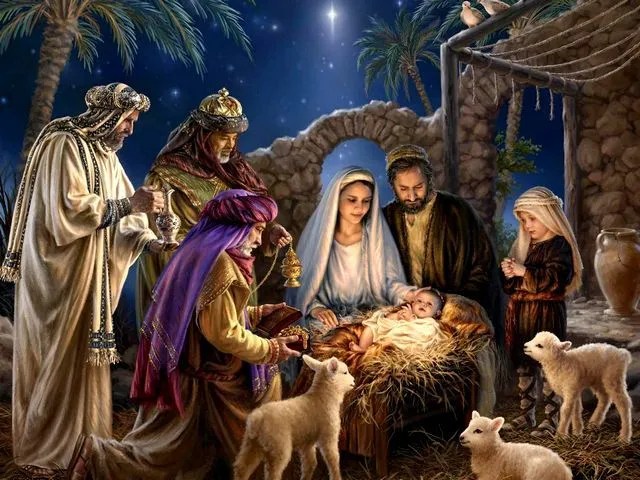
Sunday, 21 November 2021 : Solemnity of Our Lord Jesus Christ, King of the Universe, Thirty-Fourth Sunday of Ordinary Time (Homily and Scripture Reflections)

Liturgical Colour : White

Dear brothers and sisters in Christ, this Sunday is the last Sunday of the current liturgical year, as next Sunday will mark the beginning of the new liturgical year with the First Sunday of Advent and the beginning of the Advent season leading towards Christmas. This Sunday every year we mark the occasion of the great Solemnity of Our Lord Jesus Christ, King of the Universe, also known as the Solemnity of Christ the King. This great celebration marks the end of every liturgical years reminding us of Our one true Lord and King, Our Lord Jesus Christ, the King of Kings and of all Creation.

As we listened to the words of the Scriptures we are called to reflect on the Kingship of Our Lord Jesus Christ, for He is Our True King, the One Who lords over us all and the font and source of all authority in this world. He is the One to Whom we ultimately give our obedience and commitment to, even as we all obey the laws and the customs of the land, of our own respective states and countries. We reflect on the Lord our Saviour and King, Who willingly came down to dwell in our midst and to walk among us, taking up upon Himself our humble human forms, that He may share with us our humanity.

And by His sharing of our humanity, He became the One to lead us out of the darkness and into in the light. Through Him we have received the assurances of salvation and eternal life, as by His most loving sacrifice on the Cross, He gave us the perfect gift of His love and the gift of everlasting life through His sacrifice for our sake. In Him, Our Lord and King, enthroned upon His Cross, lifted up high between Heaven and earth, all of us have shared in His death, dying to our past wickedness, disobedience and sins, and sharing with Him the glorious Resurrection and new life through His own Resurrection on Easter.

Let us now spend some time to discern the readings of the Scripture we have just heard earlier on, beginning with our first reading taken from the Book of the prophet Daniel. In that passage we heard of the heavenly vision of the prophet Daniel, who received the vision of Heaven, seeing a Son of Man together with One of Great Age, which was in fact the manifestation of the Lord and His Holy Trinity, as the Son of Man was none other than Jesus, also the Son of God, while the One of Great Age referred to God the Father, the Creator of all.

In that vision, we were told that the One of Great Age, the Father, granted dominion, power and authority, of kingship over all creation and the whole universe to the Son of Man, which is symbolic of what we are celebrating on this day. In that action, the Lord revealed to Daniel and also to all of us that He is the One true Lord, Master and King of all, the One and only One Who has authority and power over all things, over all beings and over all creation. All kings, lords and rulers, all beings in Heaven, on earth and even in hell are all subjects of the Lord Jesus Christ, One God, One True King of all.

And as we heard in that passage from the prophet Daniel, he mentioned that the Kingship of Christ our Lord is clear and true, a true dominion that is for all time and for all things, unchanging and eternal. It is not merely just a symbolic kingship or rule that Our Lord’s Kingship us about, but a true Kingship, the King over all of us regardless of our national allegiance and regardless of our obedience to any worldly entities and states. The Lord’s kingship transcends the boundary of states and nations, and His kingship transcends any definition of race, or political affiliation and any other categories or groupings that we often divide ourselves into.

And in our Gospel passage today, we heard of the Lord Jesus speaking to Pontius Pilate, the Governor of Judea during the time of His Passion and suffering, when He was about to be condemned to death by the same Pontius Pilate. I am sure all of us are familiar with what happened at that time, as the Lord had been falsely charged and accused by the chief priests, the elders and the Pharisees of the attempt to rebel against the Emperor in Rome, while also charging Him of blasphemy against God.

In the claim that the enemies of the Lord made, they claimed that Jesus used the title of the ‘King of the Jews’ in referring to Himself and therefore, together with His large and popular following, He was a great threat to the Romans. To the Romans, who were overlords and masters of the land at the time, there was no greater crime than to rebel against the state and the Emperor, by claiming kingship or leading a rebellion for freedom against the Empire. Such a crime was punishable by death, and not just that, but those guilty were often punished by crucifixion, reserved for the worst of offenders.

Thus Pilate asked the Lord for clarification, whether He was truly the King of the Jews, and the Lord then asked him back where he had heard it from, which Pilate replied in amusement because it was those chief priests who had said so. When Pilate said that he had the power to release Him or to crucify Him, he was actually referring to the fact that if the Lord could prove that He was actually slandered by the chief priests and that they falsely accused Him, Pilate could very well have freed Him. But the Lord spoke the truth then when He did say that, yes, He is indeed a King, although His kingdom is not of this world.

The Lord Jesus did speak the truth, that His Kingdom is not of this world and is unlike anything that this world has ever seen. His kingdom was not built on earthly glory or material wealth, power or any other things that became the foundation of other kingdoms and dominions of the world. Instead, His Kingdom is built on His own authority, true authority and power that surpasses anything else. He did not depend on those things that sustained kings and lords, like money, wealth, power, fame amongst other things. He has no need for such things.

And unlike other kings and rulers who always tried to vindicate and prove themselves, and many of them seeking glory and greatness, with some even seeking to be regarded as divine and to be worshipped, where man wanted and aspired to become like God, to be gods and deities, in their hopeless and meaningless pursuits for these purposes, the Lord Jesus Christ was unique. How is that so? That is because He Who is the personification of all glory and power, full of power and full of glory, fully Divine and Almighty, has willingly laid down His glory and majesty, emptying Himself and taking up the condition of a criminal and a slave, exactly at the moment when He was crucified.

Yet, it was by humbling Himself so completely and perfectly, that Our Lord and King won His greatest victory, in delivering all of us, His beloved people from the clutches of sin and death. The Lord has triumphed and delivered us from the certainty of death and destruction, and fulfilled everything that He has promised to us and to our ancestors from the very beginning of time. The Lord our King has laid down His own life, like a Good Shepherd laying down his life for his sheep, all because He truly loves us and cares for each one of us. All of us are precious to Him and He knows all of us by our names.

And as we heard in the Book of Revelations in our second reading today, the Lord Jesus, our King will come again triumphant at the end of time, He Who has conquered evil, sin and death. He shall come again at the end of all things, to gather all of us, His beloved people and He will bring us into the kingdom prepared for all of us, the kingdom of everlasting life, filled with true joy, peace and love. The Lord, Our King and Saviour will bring us all together and deliver us the final triumph and victory.

Brothers and sisters in Christ, let us all spend some time to reflect on what we have just heard and discussed. Are we thankful that we have Jesus as Our Lord and King, not as a distant person or being, but as One Whom we can always depend on, One Who knows our sufferings and have gone through the same sufferings as we have endured, One Who loves us most deeply from His heart and had endured with that love despite of our infidelities and stubbornness in rejecting His love and betraying Him.

But if Christ is truly our King, then why is it that so many of us are still living our lives and acted in ways that are contrary to the teachings and the ways of the Lord? Why is it that so many of us disregarded Him, betrayed Him and preferred to walk in the path of sin rather than to follow Him wholeheartedly and obeying Him as we should as our Lord and King. These are important questions that we should ask ourselves as we ponder on our own lives and actions thus far in life.

Let us all as we rejoice in this great Solemnity of Our Lord Jesus Christ, King of the Universe, remember that Christ is our one and only true Lord, Master and King. And let this not be mere empty commitment and dedication, but one of true love for our King, of true and living dedication in each and every moments of our lives. Let us renew our commitment to Him, obey Him from now on in His Law, commandments and will. Let us follow Him wholeheartedly from now on and have no more doubts in our hearts.

May the Lord Jesus Christ, our Saviour and King continue to reign in our hearts, and let us always remember His love for us, as He gave His life and suffered for our sake. May He empower us all and strengthen us with the faith that we may glorify Him and proclaim Him courageously in our respective lives, to the best of our ability. May Christ, Our Lord and King reign forever and evermore, in our hearts and in the whole world. Amen.

Sunday, 14 November 2021 : Thirty-Third Sunday of Ordinary Time, Fifth World Day of the Poor (Homily and Scripture Reflections)

Liturgical Colour : Green

Dear brothers and sisters in Christ, as we are approaching the end of the current liturgical year, as usual, this Sunday’s readings are on the theme of the upcoming end of times, the Apocalypse and time of the Final Judgment of the whole creation. All of us heard of these reminders from the readings of today’s Scriptures so that we may discern carefully how we are to live our lives from now on and strive to be more faithful and genuine in following the Lord as Christians, those who believe in Him.

In our first reading today, all of us heard from the Book of the prophet Daniel the revelation of God to Daniel how the end of times will come, and St. Michael the Archangel, the great Prince of Heavenly Host and leader of the Angels of God was also mentioned. Echoing what would later on be revealed further in the Book of Revelations by St. John the Apostle, we heard how trials and tribulations will come for those who are faithful to God, and how they, all of us will suffer because of our faith and commitment to God.

Yet, at the same time, the Lord reassured all of us that He will not leave us all alone without any help or protection, for He will send unto us the great Heavenly Host, His Angels, led by St. Michael the Archangel himself, to guide and protect us. God will not abandon us to total destruction and annihilation, and while we may suffer persecution and oppression, enduring hardships and trials, but in the end, we will be triumphant together with God.

That is the sentiment presented to us by the Gospel passage today taken from the Gospel of St. Mark, as we heard how God will send His Angels to gather all His faithful ones from all over the world, and will provide for them on the end of days, when the Son of Man comes again in His glory, as He Himself has promised. Christ, the Son of Man, will come again at the end of time, the time of the Final Judgment, to destroy sin and evil, winning a final triumph against them while gathering all the faithful, the living and the dead into the eternal glory and joy of the kingdom of God.

All of these messages and reminders, as well as what we know from the Book of Revelations are evidence for us to follow the Lord wholeheartedly and not to be distracted by the temptations to sin and to follow the path of evil in this world. And we have also heard that the coming of this time of reckoning, of the Final Judgment and the end of times is something that will be most unpredictable and unknown to us, as no one but the Lord Himself knows the exact time of His second coming into this world.

This means that we must not be complacent in living our lives, thinking that we have the time to repent and change our ways. Certainly none of us want to be caught unprepared, when the time comes, and even more so, closer to us, we know that all of us will die one day, and do we want to wait until death claims us before we repent and change our sinful ways? Some are fortunate enough to have the opportunity and time for conversion and change, but many others did not and will not have that privilege.

As we listened to these words of the Scriptures presented to us at the end of each liturgical year cycle, we are all constantly being reminded of the fragile nature of our human existence and lives, and how close we can be to either Heaven or Hell, just by our choice of actions in life. And this month of November, as we dedicate it to the holy souls in Purgatory, we are constantly being reminded of what will happen to us after death. Those in Purgatory are still the lucky ones, as they will all eventually go to Heaven. However, what if we end up in Hell instead?

Then, we may be wondering based on what we heard in our second reading today from the Epistle to the Hebrews, in which the author highlighted in today’s segment in particular, of how the Lord Jesus Christ, frequently presented as the High Priest to all mankind in that Epistle, has already offered the perfect and everlasting sacrifice that surpassed any other sacrifices of animals of the old times. His own Sacrifice was His own Most Precious Body and Blood which He offered Himself from the Cross at Calvary.

Indeed, the Lord has already made that Sacrifice once and for all, which is the same Sacrifice that we celebrate at every Holy Sacrifice of the Mass, the same Sacrifice at Calvary. And every time we receive the Eucharist, we receive the very same Most Precious Body and Blood that the Lord has given us from the Cross, that He has willingly done for us, to provide for us and to free and redeem us from our innumerable sins, faults and trespasses. And we have received salvation through our faith in Him.

However, if that makes us think that we have been saved and then we can do whatever we want in our lives, in indulging ourselves in worldly desires and sinful things, then we will have no part in the Lord’s promise and inheritance. And that is because as St. James mentioned in his Epistle, that faith without good works is the same as dead. This is the opinion shared by the other Apostles and the Lord Himself, as faith alone without us living genuinely according to that faith we have in God is meaningless and empty.

That is why many of the Pharisees and the teachers of the Law were often criticised by the Lord for their lack of real and genuine faith, as they were outwardly faithful and pious, and yet they did not have true love for the Lord. Many of them showed their piety in action to gain more fame and prestige for themselves, and to satisfy their own ego and pride. As such, they had not been truly faithful to the Lord and ended up doing things that in fact brought about obstacles and challenges to the Lord and His mission.

In the same way therefore, all of us are called to follow the Lord faithfully not just in mere words and formality only, but also through genuine actions and deeds, through real and growing love that we have for Him, and not just that, but also for our fellow brothers and sisters whom the Lord also loves as much as He loves each and every one of us. And we must also distance ourselves from sin and wicked things in life, striving our best to turn away from those unworthy things that have often kept many away from the Lord and His salvation.

Today, we also celebrate the World Day of the Poor, in which all of us are reminded of the poor and all those who are suffering from neglect and lack of care in our various communities. The poor are all around us, and often we may not realise that there are poverty present in our midst, even ironically from those who are close to us. Why is that so? That is because we are often too self-centred and often think only about ourselves without much regards to others around us.

Then, we often hear this, that if God is so kind and loving, then why would He have allowed people to be poor and to suffer from poverty? Should He not have cared for everyone and all those people so that they would not have to suffer? This is where we must understand that poverty and suffering in this world happen because of the abuse of our free will and freedom of actions, in which we misused the opportunities and time given to us to advance our own selfish desires and ambitions, and as a result, caused suffering on others, whether directly or indirectly, and whether unintended or deliberate.

Poverty is often caused by the culture of exploitation and the unbridled desires of man who sought more of what they already had aplenty. And when man acted in this manner, that ended up causing those who already have plenty to amass even more of what they already had, while those who were poor became even poorer. Note however that I am not saying that God is against the rich and powerful or that those who are rich, powerful, famous and privileged are evil and wicked. That is not the case.

As a matter of fact, in many countries, there are many cases even of those who are poor who oppressed and made life difficult, exploiting those who are poorer, weaker and less capable than they are. Again, they did this for many reasons, but all these are reminders for all of us that all of us have to be grateful with the blessings that we have received and be generous if we have extra and are given the opportunity to help others who are not as fortunate as us. Let us remember that everything we have are gifts and blessings from God, and not something that we should hoard or boast about.

And let us also be reminded of the Beatitudes, or the Sermon on the Mount, in which the Lord Jesus spoke of those who are poor in spirit and how blessed they are. All of us are called to be poor in spirit, and that means for us to abandon our pride and arrogance, all of our stubbornness and greed, all the things that prevented us from seeking God’s mercy and forgiveness for our many sins. Let us all be humble before the Lord, allowing the Lord to guide us in our path through life, and let us allow the Lord to fill our hearts with love and generosity, so that we may be more generous in giving and loving others, especially those who are poorer and less fortunate than us.

Therefore, through our genuine deeds and actions, our generosity in love and care for our fellow brothers and sisters, let us all live our lives as Christians to the best of our abilities so that all of us may be worthy of the Lord and when He comes again at the end of time, all of us will not be found wanting and lacking in true faith. May God, our loving Lord and Master, continue to bless us and love us all, especially the poor in our midst, and may He help them through our generous hands and deeds. Amen.

Sunday, 7 November 2021 : Thirty-Second Sunday of Ordinary Time (Homily and Scripture Reflections)

Liturgical Colour : Green

Dear brothers and sisters in Christ, this Sunday as we all heard the words of the Lord in the Scriptures, each and every one of us are reminded of the love and dedication that each and every one of us should have for the Lord, the faith and trust that we must have in Him so that in everything we do, we always put Him first and foremost in our minds and hearts. As Christians, all of us have to be thoroughly committed to God and not just paying lip service or lacking in genuine devotion and love for Him. That is what all of us are challenged to do as Christians.

In our first reading today, taken from the First Book of Kings, we heard about the story of the prophet Elijah who went to Zarephath following the instruction of the Lord. Zarephath was a place in Sidon, in the region of the Phoenicians beyond the traditional boundary of the land of Israel, and this fact was mentioned in the Scriptures. The prophet Elijah back then had just delivered his warning against King Ahab of Israel and the people that their sins and wickedness would lead them to suffer a period of drought and famine for the next few years.

That drought and famine struck hard on the land of Israel and its neighbouring countries, including Zarephath where Elijah visited during his trip. The widow whom Elijah encountered had also suffered from the effects of the drought and famine, and at that time, she herself admitted that she was about to cook the last meal for herself and for her son, as they had nothing left, no more food to sustain themselves, just a little flour and oil enough for their last meal.

It was then that the prophet Elijah came by and asked for a little food for himself, and the widow told him about her own predicament, and how she could not spare anything for him, whom she recognised as a man of God. But the prophet Elijah reassured the widow of the Lord’s kindness and providence, and the widow, despite her hesitation and doubts, chose to make the food, making a bread for the prophet. She gave from her poverty, from the very little that she had, to the servant of God.

Elijah promised the widow that the Lord would provide for her, and that her containers of flour and jugs of oil would not run out while the period of hardships last, and everything did happen as Elijah had foretold, and the widow’s flour and oil remained, to feed her and her son, throughout the difficult times. The widow of Zarephath, although she was likely not even one of the Israelites, had faith in the Lord and chose to be generous even in her moment of suffering and misery, and gave from whatever little she had left. God provided for her and cared for her.

Then, in our Gospel passage today, we heard the story of yet another woman, a poor widow who came to the Temple and made her offering to the Temple treasury, a very small amount of two copper that when compared to the offerings made by some of the rich were totally insignificant. Yet, the poor widow truly gave from her heart, and from her poverty just like that of the widow of Zarephath. She gave those coins even when she had not enough for herself, and although those coins might have had a very small value, but they could have helped her, and yet, she still chose to offer it to the Lord.

And the Lord earlier on also highlighted to His disciples and the people the warning for them not to follow the examples of those who liked to flaunt their wealth, power, possessions and piety before others. It is not that wealth or worldly possessions and things themselves are bad, but it is our attachment to them and our desires to gain them, all of which end up leading us down the path of selfishness and self-indulgence, which then gradually can mislead us into the wrong path of sin and evil.

The Lord was also indirectly making comparison between the poor widow and those who made big donations and offerings, as well as with the attitudes of the self-righteous and pompous Pharisees and the teachers of the Law. It is not that it is bad to give large donations, but rather, we must understand that the context is easily lost when we read a story recorded in the Scriptures, as it was likely that at that time, linking to what the Lord just said earlier regarding those with long robes and those publicly flaunting their wealth and faith, those rich who gave the offerings made the offerings to be seen and praised by others.

Essentially, the important point that the Lord wants us to know is that we are all called to be generous in giving, in the giving of our blessings that we have received, and even more importantly in the giving of our love. No matter how great or significant the amount that we give, and no matter how large or small, in whatever form we give, as long as we give it with sincerity from the heart, out of love, then that is what matters in the end. On the contrary, if one were to give a large amount, but did so out of vanity and desire for his or her own selfish benefits, or worse still, desiring return for the investment, then it is not a sincere and true giving or generosity.

The widow of Zarephath gave generously to the servant of God, the prophet Elijah despite her earlier doubts, and that poor widow who gave the two copper coins at the Temple also gave generously from her heart. Both of them gave even from their poverty, and they did not seek acclaim, fame or expecting what they had given to be returned to them. As such, God blessed them and remembers their generosity. They may not receive any rewards in this world, but their rewards in Heaven shall be great, and that is what we can also be sure of if we are generous in the giving of ourselves.

The Lord Himself did so by His own example, in giving most generously and selflessly, as we heard in our second reading taken from the Epistle to the Hebrews. The author of that Epistle prominently represented the Lord Jesus Christ as the Saviour of all mankind, and also as a High Priest. And not just like any other High Priest appointed by God to lead the people of Israel in their offerings of sacrifices, for this High Priest is the One that is True and Eternal, and One Who offered, once and for all, the sacrifice worthy for all of us, for all mankind and our sins, by His most loving sacrifice on the Cross.

Brothers and sisters in Christ, in the Crucifixion, the Lord showed us what true generosity is all about. He gave us all everything when He had everything. He is the Lord, the Almighty, far and infinitely above all other things in this Universe, above all of us and everything is His. He is Divine, All-Powerful and All-Knowing, and yet, for our sake, out of His equally infinite love for each and every one of us, He emptied Himself, humbled Himself so low and so despicable, all so that by sharing in our Humanity and in His perfect obedience, He may save us all and reunite us with Himself.

He was willing to strip Himself of all power and dignity so that by His offering of His own life, His Most Precious Body and Blood, as the Paschal Lamb of sacrifice, He, the Eternal High Priest of all of us, representing every single one of us, may deliver us from our fated destruction because of our sins, caused by our disobedience to God. He selflessly took all of our sins and their consequences upon Himself, and generously gave us a new lease of life, one that promises upon us true happiness and glory for eternity.

Brothers and sisters in Christ, through what we have just discussed and heard from the Scriptures, as Christians we are therefore reminded to be generous in our love and giving, in reaching out to God, Who has loved us so much that He gave us His only Son, to suffer and die in our stead, so that we may live and have eternal life. And we also have to love our fellow brothers and sisters just as much as we love God and just as much as God loves all of us. How can we hate anyone if God Himself does not? God does not despise the sinners, but instead the sins that we committed before Him.

Let us all therefore carefully discern our path in life, our actions and way of life, so that we may learn to live our lives with genuine faith and with generosity of love, in loving God and dedicating ourselves and our time and effort to serve Him, and as well as in loving our fellow men, and not just those who have loved us, but even strangers and those who despise us. Let us learn to forgive and to love one another unconditionally, remembering how the Lord Himself had died for us sinners, with the perfect, most selfless, unconditional love.

May our ever loving God and Father continue to watch over us and strengthen us that we may walk ever more faithfully in His presence with faith, and that we may dedicate more and more of our time, effort and attention to be good and dedicated Christians, from now on and always. Amen.

Sunday, 31 October 2021 : Thirty-First Sunday of Ordinary Time (Homily and Scripture Reflections)

Liturgical Colour : Green

Dear brothers and sisters in Christ, this Sunday we are reminded through the readings of the Sacred Scriptures of the Law of God, the commandments and tenets that we have received from God Himself, Who passed down the Ten Commandments through Moses, His servant and then revealed in its fullness through Jesus Christ, the Son of God and Saviour of the world, Who brought the fullness of truth into our midst, completing and making perfect the Law and commandments of God. Today, we are called to reflect on our attitude towards the Law of God, and whether we have lived our lives faithfully in following God’s Law and commandments.

In our first reading today, taken from the Book of Deuteronomy, we heard the exhortation which Moses made to the people of Israel, as he presented before them God’s Law and commandments, how they, as the people with whom God had made His Covenant, were supposed to follow and obey, as part of this Covenant. Just as God is faithful to the Covenant and the promises that He had made to His people, thus the people also had to be faithful and committed to the same Covenant, and put their hearts and minds wholly focused and centred on God, and God alone, as Moses told them.

Contextually, what we heard in today’s readings must be understood in terms of how the Law of God and the Commandments, the Ten Commandments and the other rules and regulations were practiced and applied by the people of Israel and their descendants. The Law of God had been passed down from one generation to another, and went through various modifications and reinterpretations to adjust to the changing conditions of the time and also because there were many different people in charge of preserving the Law, and the fact that the Law and the commandments were not really written down until later in history.

Unfortunately, over time this led to the change in the meaning and the intention of the Law and the commandments. The Law became more and more divergent from its original intention, purpose and meaning, as after the destruction of Israel and Judah, and the return of the remnants of the Israelites from their exile in Babylon, the laws and regulations had been made much more strict and rigorous. Then, the people experienced the struggle against Hellenism during the years of their subjugation under the Seleucids, as we heard in the Book of Maccabeus, where the people under the Maccabees family rose up in revolt, and overthrew those who sought to destroy the Jewish traditions and culture.

After the Jews regained their independence, it is natural that they would become much more zealous and stricter in enforcing their traditions and way of life against those who sought to live in ways of the Gentiles or in any other ways incompatible with the Jewish traditions and customs. However, this led to the rise of the group known later as the Pharisees by the time of Jesus, over a century later, representing those who zealously guarded the laws and customs of the Jewish people, bloated and exaggerated they were by centuries of changes and in reaction to the sins and waywardness of the people.

However, what made it an issue for the Lord, which He often addressed before the people, was that the Law had not been used properly, and ended up becoming tool for those same Pharisees, members of the teachers of the Law and elders who subscribed to a very strict interpretation of the Law, burdening the people of God with very difficult expectations of the Law, and even more troublesome was their attitude with regards to the Law and their faith in God. Instead of having the Law to help them and others to place their focus on the Lord, they instead used the Law, either consciously or unconsciously, to advance their own status and influence in the community.

That was why the Lord often rebuked and criticised many of the Pharisees and the teachers of the Law for the manner that they had observed the Law, in their mistaken focus and intention, and in the way that they carried themselves, in how they pridefully paraded their piety and supposedly better observance of the Law as compared to the others, whom they then looked down on, and even despised, in the case of prostitutes, tax collectors and others whom they deemed to be sinners, unworthy of God and unredeemable, while ignoring their own sins and faults.

The Lord wanted everyone, including those Pharisees and the teachers of the Law that this is not what the Law is all about, and as we heard in our Gospel passage today, one of those teachers of the Law realised through his interaction with the Lord Jesus, what the Law is truly all about. The Law of God is ultimately all about love, the love that God first and foremost has for each and every one of us, and therefore, naturally, which we should also have for Him, and then, just as we love the Lord, then we should also love one another in the same way.

God revealed to us His Law not to oppress us, or to make it to become a tool of discrimination against one another, or as something to be prideful of in our way of observing it. Otherwise, like many of the Pharisees and the teachers of the Law, their focus were no longer on the Lord but on themselves, on the glory, fame and influence that they accrued from their way of living the Law, rather than using the Law for the benefit of all and for the conversion of all to the path of God. And by condemning others and looking down on those deemed unworthy, as well as by imposing the very strict observance of the Law, they had in fact prevented many from coming to the Lord and turned people away from Him.

In this manner therefore, they had failed in their duty as the custodians of the Law, in that they had not been dutiful in their efforts to lead others to righteousness in God. Instead, they sought self-righteousness and self-justification, and even condemning others who disagreed with them, or those whom they disliked and opposed, like that of the Lord Himself and His disciples, whom they feared as rivals and threats to their influence and position within the Jewish community and the people of God.

How are all these then relevant to us, brothers and sisters in Christ? All these serve as an important reminder to all of us in God’s Church, that we cannot follow the same misguided path as those who had misinterpreted, misunderstood and misused the Law for their own selfish benefits, or in justifying themselves over others. Instead, we have to follow the Lord’s own examples, as we all know, that the Lord Jesus Christ, as the Son of Man, joined to us in His humanity, just as He is fully Divine as the Son of God, loved His heavenly Father totally and completely, obeying His will perfectly.

And it is also by that act of supreme love, both of His Father and also for each and every one of us, His brothers and sisters, that He, as our True and Eternal High Priest, offered Himself as a loving and worthy Sacrifice, the Lamb of God, made to suffer and was slain for us on the Altar of the Cross, as mentioned in our second reading from the Epistle to the Hebrews. The author of that Epistle, aimed at the Jewish converts to Christianity and other Jewish people in general, wanted to remind all of them that the Law of God in its true essence, is what the Lord Himself had done, in His supreme act of love in His Passion, suffering and death for us.

Hence, all of us are all called to reflect on our own attitudes in life and our actions. Have we, as God’s faithful and Church, acted in ways that are uncharitable and lacking in love, being exclusivist and elitist in our attitude, thinking that we are better than others, and condemning others who do not share our opinion or whom we dislike or deem to be less holy and worthy than us? Have we made use of our own Church teachings and traditions as an excuse to attack others and to mislead others in justifying ourselves and trying to promote our own ideals and interpretations rather than understanding what our faith is truly about?

This is exactly what some segments in our Church today are doing, on both extremes of ideas and ideologies. On one side, you have those who were very adamant in living their faith in a most Pharisaical manner, rigidly attaching themselves to the traditions and teachings of the Church but not allowing the Holy Spirit to guide them in discerning the truth about God’s will and intentions, in their self-justification and self-righteous attitude, thinking that their version of the faith is better than others, and that those who do not subscribe to their way of living the Christian faith, are unworthy or even damnable.

On the other hand, on the other side of the spectrum, we also have those that sought to radically alter every teachings, traditions and all the ways of how our Christian faith are practised, to suit our own interpretation and agenda, and most importantly to suit our own selfish needs as well. These are those that the Popes past and present had warned against, especially that of Pope St. John Paul II as the relativistic attitudes of some Christians who sought to align Church teachings with worldly ways and to accept things that are not in accordance to the truth of God.

Brothers and sisters in Christ, these are the forces arrayed against the Church, and which sadly happened even from within the Church and in our own faithful communities, just as it happened two millennia ago in the Jewish community, and which also had happened throughout all of our Christian history, in the history of the Church and its past developments. However, this cannot be a reason for us to give up, as the devil is all the happier to try to divide us and to mislead us further by his temptations and lies, and instead of being angry against each other or being divided, let us return our focus to the Lord.

This Sunday, as we recall the Law of God, the Ten Commandments and are reminded of what God’s Law and His teachings are all about, let us all be willing to listen to God, and allow the Holy Spirit to guide us, to guide the Church and its leaders, that we may journey together with Him in faith, and not allow our own selfish desires and individual preferences, ideologies and prejudices to mislead us down the wrong path. And most importantly, let us stay united against the efforts of those who tried to divide the Church and our communities, so that, united as we are, we shall not fall and remain firm and resolute in our struggles against sin and evil.

Let us all discern carefully our path in life, as one people of God united in His one Church, the united Body of Christ. Let us all learn to love God with all of our hearts and with all of our strength and capacity, by deepening our relationship with Him and by spending more important and precious time with Him, and then, also learning to love one another, as our own fellow brothers and sisters, just as much as we ought to love the Lord and ourselves. Let us all learn to forgive one another’s wrongdoings and learn to live together with harmony and faith, and as one united people, let us all seek the Lord together and be saved in Him.

May God bless us all and may He remain with His Church, that no matter what challenges and trials we may encounter, the gates of hell will not prevail against God’s Church, against our faith, truly genuine and full of love, a love that we all profess and show in our every daily moments and interactions, as we grow together as a community of God’s faithful, ever directed and journeying towards God, always. Amen.

Sunday, 24 October 2021 : Thirtieth Sunday of Ordinary Time, World Mission Sunday (Homily and Scripture Reflections)

Liturgical Colour : Green

Dear brothers and sisters in Christ, this Sunday all of us mark the occasion of the World Mission Sunday, reminding all of us that all of us as Christians are called to be missionaries of our faith, of the truth and love of God. All of us through our baptism have received this mission from the Lord, the same mission that all of us share in our Christian faith, and we must never have the thinking that only those who are called as missionaries or those who are members of the ordained or the religious brothers and sisters who are called to a life of mission for God.

In our first reading today, we heard from the Book of the prophet Jeremiah, the words of the Lord proclaiming His care and love for His people, in gathering all of them, scattered from among the nations and lost, humiliated and without a leader, as He would become their Lord and guide once again, and reunite them into the land that He would lead them into. And this was the promise and reassurance that the Lord made to His people, who at that time were in the midst of the lowest points of their fortunes, surrounded and oppressed by their neighbouring nations.

At that time, the prophet Jeremiah ministered to the people of God in Judah, at the last years of its existence, after the northern kingdom of Israel had been destroyed by the Assyrians for over a century previously, and its people exiled and scattered among the nations. Judah would also follow suit shortly as it was attacked, its capital Jerusalem besieged and destroyed by the Babylonians, and most of the populations brought off into exile in Babylon and other placed, while some sought refuge in Egypt. All these happened during the lifetime and ministry of prophet Jeremiah.

Therefore, at that time, Jeremiah spoke the word of God in consoling and reassuring His people at the time of their great misfortune and misery. The Lord wanted all of them to know that He did not leave them alone, and He was always with them even through their darkest moments, and He sent to them Jeremiah to be the one to reveal to them His will, His intention and love. Yes, brothers and sisters in Christ, Jeremiah was sent as not just a prophet but also as a missionary to reveal God’s truth and love to His people.

Then, in our psalm today this is reiterated again, as the song of joy speaks of how God brought back the exiles and all those people that had been scattered, and how they went in sorrow and God reunited them and returned them to their homeland in great joy. God had done great things for His people, and He came to them, seeking them, sending prophets, messengers as missionaries to find them and to reach out to them, and to touch their hearts and minds, to put in them once again the love and faith for God.

In our second reading today, we heard of the passage from the Epistle to the Hebrews, in which, as repeatedly mentioned throughout that Epistle, the Lord Jesus Christ, Saviour of all mankind and the whole world was presented as the High Priest of all, in presenting His offering on behalf of all of us, which is worthy for the atonement of all of our innumerable sins. That is because Christ acted as the High Priest of all, by offering the perfect and worthy offering, of Himself as the Sacrifice, the Lamb of God, put to death and slain on the Cross, which is His Altar.

Through this Epistle, the author of the Epistle, which was directed to the Jewish converts and other Jews among the people, both in Judea and around the world, wanted to tell all of them the same message that God has given their ancestors through the prophet Jeremiah. God loved all of them and wanted to be reunited with them, and as all of us had been separated from Him through sin, He sent us all the deliverance through His Saviour, Who is none other than His own beloved Son, Jesus Christ, born into this world, the Divine Word Incarnate that became our Light and Salvation.

This is the same Christ Who in our Gospel passage today heard the cries of Bartimaeus, son of Timaeus, who was blind for a long time. He cried out for the Lord to have mercy on Him and to heal him from his affliction. And when the people around him scolded him and tried to silence him, he cried out all the louder, calling on the Lord, Who heard him perfectly and came to him. The Lord wanted to heal him and restore his sight, and asked the blind man if that was what he desired, and then healed his eyes, by the power of God.

Brothers and sisters in Christ, as I mentioned earlier at the start of today’s discourse, all of us are reminded through today’s Scripture passages of our mission as Christians, as those who have answered God’s call and received baptism to be members of His Church. All of us share this calling to be evangelistic and missionary in our lives, which is not just limited to those who have given themselves to the sacred orders or the consecrated life as religious brothers and sisters. The Lord calls on each and every one of us to play our part in the mission of the Church.

And how do we do that, brothers and sisters in Christ? That is why we have to recall what we have just heard in our Scripture passages today, as well as what we have just discussed and reflected just now. The Lord is calling us to do whatever we can, in our respective capacities and abilities, in whatever opportunities we have, in reaching out to our fellow brothers and sisters, to show them the truth and love of God and to be exemplary and as inspirations in how each one of us ought to live out our lives as good and dedicated Christians.

That is the essence of the Lord’s Great Commission to all of us, His Church, as He proclaimed to His disciples just before He was about to ascend to Heaven, that they all are to go forth to the peoples of all the nations, and to make disciples of them, and to baptise them all in the Name of the Father, the Son and the Holy Spirit. This is the mission which the Lord has entrusted to all of us, for us to be His missionaries in this world, through our everyday living and our actions that lead many others to God and His salvation.

That is why, brothers and sisters in Christ, as we celebrate this World Mission Sunday today, all of us must not be idle in living our Christian lives with true and genuine faith. We cannot be hypocrites who profess to believe in God and yet our actions show otherwise. Not only that it does not lead others towards God, but worse still, if our lives cause scandal to our faith, we can end up leading more people to leave the Church and to turn away from God’s truth and salvation. And with that, the responsibility for such event will hang heavily upon us.

We have to live our lives with faith, to reach out to the marginalised and those who are without hope and are downtrodden. Just like the Lord reassuring His people, gathering the lost and scattered ones back and calling on them to return to Him, and just as He has shown mercy and love on the blind man, healing Bartimaeus from his blindness, so all of us have also been called to follow Our Lord’s examples in love, in sharing this love He has for us, through us, with one another.

How do we do this? By genuinely loving our fellow brothers and sisters, and all those whom we encounter in life. We have to show our love for our loved ones, for our neighbours, friends and others, and even to acquaintances and strangers, and also, our enemies and those who hate us, that through our love and patience with them, we may even make them realise the errors of their ways, and be reconciled with them, just as the Lord had sought to be reconciled with us. It has to begin with us and our attitudes towards each other. As long as we are genuine in living our faith, then we are already good missionaries.

On this World Mission Sunday therefore, let us pray for one another, that we may be ever more effective and sincere missionaries of our Christian faith, that we may ever be more genuine in how we live up to our faith that we may always inspire more and more people to follow the Lord, and to touch the lives of more people, especially those who have not known or have distanced themselves from God. We should then also pray for those who have dedicated themselves especially to missionary work all over the world, all those who dedicated themselves to proclaim and teach the faith to diverse groups of peoples, both within and outside our Church communities.

May the Lord continue to be with us and guide us in our journey of faith and help us all to be good and dedicated missionaries that are committed to serve the Lord and His people daily, at all times. May God bless all of our good works, efforts and endeavours from now on, all for His greater glory, the holy mission of His Church for the salvation of souls. Amen.

Sunday, 17 October 2021 : Twenty-Ninth Sunday of Ordinary Time (Homily and Scripture Reflections)

Liturgical Colour : Green

Dear brothers and sisters in Christ, this Sunday as we listened to the words of the Sacred Scriptures we are all called to remember the salvation that God has revealed to us and which He has also fulfilled through His Son, Our Lord Jesus Christ. The Lord Jesus has brought the salvation to our midst by coming into this world and as we all know, He took upon Himself all of our sins and iniquities, bearing our heavy burdens on His Cross, and therefore, suffered and died for our sake on the across for the salvation of the whole world.

In our first reading today from the Book of the prophet Isaiah, we heard the words of the Lord spoken through Isaiah, detailing on a prophecy of the coming Messiah or Saviour from God. This prophecy of the Messiah, detailing about a Servant of God Who would be made to suffer for the sake of all the people must have sounded strange to the people, considering that at that time and afterwards, the people hoped and thought that the Messiah would be a great and mighty conquering King from the line and house of David who would unite the descendants of the Israelites.

Common understanding at that time was that the Messiah that God would send to His people would restore the greatness of the old united Kingdom of David and Solomon, when Israel was preeminent, mighty and powerful among the nations. At the time of the ministry and work of Isaiah, it was during the downfall of the northern kingdom of Israel while the southern kingdom of Judah also faced great troubles with the Assyrians almost conquering and besieging the city of Jerusalem itself, under King Sennacherib, and only God’s intervention stopped it from happening.

Thus, it was not surprising that as the people of God encountered calamities and humiliations one after another, and forced into exile in many parts of the world, so they hoped that the Lord would deliver them and return their inheritance and glory to them, through the Messiah that He has promised to them through His prophets. Isaiah in particular spoke a lot regarding the prophesied Messiah, and some of what he had revealed in his prophecy spoke of a suffering Messiah, Who would be crushed, broken and suffering for the sake of all of God’s people.

And Jesus was the One Who fulfilled all these prophecies, as He came into this world bringing God’s healing and salvation, healing the sick and casting out demons, making the blind to see once again, the deaf and mute to be able to hear and speak once again, and even raised the dead back to life. The Lord Jesus Himself proclaimed that His coming fulfilled the prophecy of Isaiah, and He would then predict His own end, how He would be rejected and condemned to die, made to bear the Cross and die on it in Calvary.

In our second reading today, the author of the Epistle to the Hebrews in explaining the role of Jesus, the Messiah or Saviour of the world to the Jewish converts to the Christian faith and also to other Jews, focused on the role that the Lord took on as the High Priest offering the sacrifice to God, on behalf of all the people of God. This is something that the Jewish people could well relate to, as they regularly took part in the sacrifices offered at the Temple for their sins to be forgiven by God, offered by the priests on behalf of the people.

However, what was unique in this one particular sacrifice, was that the High Priest Who offered it, was Himself the Offering and Sacrifice, as He offered His own Precious Body and Blood, the Lamb of God, sacrificed and slain on the Altar of the Cross, on the Altar of Calvary, that day two millennia ago, which we celebrate yearly on Good Friday. It was the moment of the revelation of God’s supreme act of love and ultimate selfless act in reaching out to us sinners, in order to offer us His most generous mercy and compassionate love.

But in doing so, Christ had to suffer a lot, enduring the burden of rejection, humiliation and the most painful sufferings that were caused by our many, innumerable sins. Yet, He bore them all patiently and faithfully, fully obedient to the will of His heavenly Father, enduring and drinking from the cup of suffering that He mentioned both in today’s Gospel passage and during the time of His great agony in the Gardens of Gethsemane just before He was about to begin the moments of His Passion and suffering.

He did all of these out of His enduring and infinite love for each and every one of us, out of the desire to be reconciled with us and not to allow us to be lost from Him, He Who is also our Good Shepherd, Who knew each and every one of us, and had done whatever He could, just as He shared the story of the Good Shepherd to His disciples, to reach out to us, His lost sheep, and to find us and gather us back into His presence, to be part of His flock in the Church of God. He showed us His love through real action and not just through words.

Then, in our Gospel passage today, we heard how two of the Lord’s disciples came to Him and asked Him for special favours to be given to them. These two were the sons of Zebedee, the brothers St. James the Apostle also known as St. James the Greater, as well as St. John the Apostle and Evangelist. Both of them were among the closest disciples of the Lord, and together with St. Peter the Apostle, who was the leader of the disciples, were often brought by the Lord to various events only exclusive to them, such as the Transfiguration, the moment when He raised the daughter of Jairus back to life, as well as the aforementioned Agony in the Gardens of Gethsemane itself.

As such, as it was probably common and expected at that time, as it is still today, they were tempted to seek for special favours and position as the closest confidants of the Lord, to gain power, prestige and influence, among other things. This is showing us in fact, as I mentioned earlier, the prevalent attitude and understanding of the people at that time, who viewed the Messiah as the One Who would conquer the enemies of the people of God, reunite the Israelites and all the descendants of Jacob, and restore the Kingdom of Israel as it was during David and Solomon’s time.

Therefore, when St. James and St. John together came to the Lord, it was made with this context in mind, in seeking the special favours for them, that when Christ restored Israel and rule as the new King of Israel, they would become His most trusted advisors and important persona in the new realm. However, this was a misunderstanding and failure to appreciate the true nature of Christ’s mission in this world. That was why the Lord told them and the other disciples gathered that in truth, to be His followers, they had to share in His sufferings, and that they indeed would suffer, as they all later on would suffer a martyr’s death, with the sole exception of St. John the Apostle himself, who nonetheless suffered for many years in prison and exile.

Brothers and sisters in Christ, where do all these then lead us? In truth, all of these things which we have just discussed and reflected on, are reminders for all of us to remember the love which God has constantly showed to us, and every time we look upon the Cross, with His Body laid suffering and dying on it, the Crucifix, we are reminded of this act of supreme love and ultimate selflessness, in Him giving us His life, so that by all of us sharing in His death on the Cross, we may receive new life and the Resurrection through Him.

And as Christians, we must always be ready to face suffering and persecution, rejection and challenges in life just as Our Lord Himself has suffered. This is because the world, its norms and ways that had rejected the Lord and His salvation, will also reject all of us who believe in the Lord and His truth, and suffering may come our way if we remain faithful to Him. Yet, we must never be disheartened or discouraged by these. Instead, we have to be ever more steady in following the Lord, wholeheartedly and with real and genuine love for Him.

What we heard today from the Scriptures, especially from the Gospel in particular is a reminder for us that being Christians is not about ourselves or our own search for personal glory or ambition, or personal satisfaction and happiness. Rather, it is to seek the Lord and to follow Him, picking up our crosses with Him, just as He has called us, and dedicate our entire lives in loving service to Him. This is the attitude that all of us must cultivate as Christians, to be genuine in faith and action, and to give our best to the Lord.

Let us all therefore strive to follow the Lord ever more faithfully, and to be more worthy in how we live our lives from now on. Let us all embrace God’s love and most generous mercy and compassion, resisting the temptations to sin and allowing God to lead us down the right path, so that by our own exemplary lives, we may inspire many others to follow us, just as we ourselves have been inspired by the many Apostles, saints and martyrs, our holy predecessors who have led most worthy lives before us. May God bless us always, in our every efforts and good works, now and forevermore. Amen.

Sunday, 10 October 2021 : Twenty-Eighth Sunday of Ordinary Time (Homily and Scripture Reflections)

Liturgical Colour : Green

Dear brothers and sisters in Christ, this Sunday as we listened to the words of the Sacred Scriptures, we are all presented with the words of God’s truth and wisdom, and to all of us God has presented a very important question for us to consider and think about, to ponder and to reflect as we live our lives in this world. This question is, ‘What is the most important thing in our lives?’ And also, ‘Is God important for us in our lives?’ These are the two simple questions that we should spend time pondering and reflecting on even as we discuss the meaning of today’s readings.

In our first reading today, taken from the Book of Wisdom, we heard the words of the author who spoke of his prayer and desire for Wisdom, the Wisdom, knowledge and understanding from God. The author of the Book of Wisdom told everyone that there is essentially nothing more valuable, worthy or great other than the truth of God, the gift of Wisdom that God has given to us all. The Wisdom of the Holy Spirit has been granted to us, and if only we appreciate this great gift in its fullness then we can understand just how precious this gift that we have received, but often overlooked, ignored and squandered.

In our second reading today, in the Epistle to the Hebrews, the author of this Epistle spoke about the Word of God that revealed all things in all mankind, Who pierced and penetrated deep into our hearts and minds, the Word of truth that illuminated all and knew all in us, and through which we have also received the same truth and the revelation from God. By welcoming the Word of God into our hearts, into our beings, we have opened ourselves to welcome the Wisdom of God and received the truth, and because of that, we should rejoice at what we have received.

Brothers and sisters in Christ, if you find the message of these readings to be rather cryptic and hard to comprehend, that is perhaps because we have not yet appreciated the truth of God that we have received through none other than Jesus Christ, Our Lord and Saviour. Why is that so? Then we should recall how the Lord has given us Himself so completely for our sake, in emptying and humbling Himself, from all glory and power, and carrying His Cross, He endured all the wounds, sufferings and pains for our sake, that is to deliver us all from the torments of our sins.

God has revealed His love for us through His Son, that we who have once been destined to doom and damnation because of our sins and wickedness, have received the assurance of salvation and eternal life because of the enduring love that He has for us. His love for us is so great that He was willing to endure the most bitter and terrible punishments and pain just so that we may be freed from our enslavement by sin. He has not only sent His servants and messengers to remind us to turn back to the true path, but even came Himself into our midst to bring the truth to light and reveal them to us.

In our Gospel passage today, we heard the Lord speaking to His disciples and followers regarding the matter of what it means to follow Him and to dedicate themselves to Him. At that time, a man who had been dedicated and wholesome in his obedience to the Law of God asked the Lord what was it that he still needed to do in order to attain the kingdom of God. The Lord then responded by saying that what he needed to do was to sell everything he had and give the proceeds to the poor, leaving everything behind and then follow Him as His disciple. The man left in great sorrow as for him it was impossible to part from his great wealth.

Actually, before we think that the Lord asked or even demanded us to surrender all of our wealth and worldly possessions, that was not what He intended and we should not interpret everything just based on literal understanding. Rather, what He wanted to emphasise to the man and also to all of His disciples and also therefore all of us is that, in order to follow Him wholeheartedly, we must put Him first and foremost above all and every other things. We cannot allow our many attachments or even preoccupations with worldly matters, for fame, glory, wealth and influence to keep us away from God and His salvation.

In truth, the Lord is telling us that if we depend on worldly wisdom and power, on our own might and strength, then we shall falter and fall. It is only by trusting in His providence and entrusting ourselves to Him and His guidance that we shall find our way to true glory and happiness, which we cannot find through other means. This truth has been given to us, and the Lord Himself has revealed to us through His Church, and the Holy Spirit has also been sent to our midst to be our Advocate, our Helper and our Guide. He has given us Wisdom, and yet, are we willing to accept His Wisdom into our hearts and minds?

In the same way, have we let the Word to enter into our hearts? The Word of God, Christ Himself, Incarnate in the flesh, Who has given Himself, His Most Precious Body and Blood to us in the Eucharist? We may have accepted and received Him, but have we truly believed and have that faith we ought to have in Him? Have we committed ourselves to the Lord above all else, and resist the many temptations of worldly pleasures and glory, of fame and influence among other things that kept us away from truly being able to follow the Lord?

This Sunday, let us all spent some time to discern carefully, and to pray for the gift of Wisdom and for God to strengthen us all through the Holy Spirit, Whom He has sent to us to be our Guide and Helper. Let us all grow ever more in faith, and allow God to lead us down the path of righteousness, and no longer seeking just the temporary and impermanent pleasures of this world. Rather, let us seek the Lord and our true inheritance and glory in Him. May the Lord continue to guide us and bless us in our every efforts and endeavours, now and always. Amen.

Sunday, 3 October 2021 : Twenty-Seventh Sunday of Ordinary Time (Homily and Scripture Reflections)

Liturgical Colour : Green

Dear brothers and sisters in Christ, this Sunday we are all presented through what we have heard in the readings from the Sacred Scriptures the very clear proclamation of the Lord to all of us regarding the matter of the sacred bond of marriage, as we heard how marriage is a sacred bond decreed by the Lord for those who have chosen to be one and united, as husband and wife, and blessed by God as an indissoluble union. This is a sacred union that should be held sacred by all, and should not be broken easily, by any circumstances or reasons.

This is why the Church has been very strict with the laws and rules regulating the possibility of divorce or annulment, as both involves breaking the destruction of this sacred bond of marriage, which is a Sacramental Union, the Sacrament of the Holy Matrimony and not just a mere ceremony as many in our world today tend to see it. The Church has very strict conditions regarding the matter of annulment, through which only the matrimonial bond can cease to exist, not because they had been broken, but rather because of the special considerations and conditions, the marriage was held to have never occurred in the first place.

On the contrary, consistent to what we have heard from the Sacred Scriptures today, from the Divine Law, that divorce, especially when contracted against the advice and the rules of the Church, and God’s Law, is considered as a grave sin. That is why those who have divorced and then remarried again had committed an even greater sin, that is the sin of adultery, because once the man and woman had been united in the sacred union blessed by God, as the Lord Himself said, no one could and should break that bond, and for man to go specifically against the will of God by remarrying after divorce, is to commit a great sin before God and mankind alike.

This is what the Lord had put before us through the Scriptures to remind us to value and to treat our marriage life, our institution of Holy Matrimony with great importance, as truly, the Holy Matrimony is the origin of the Christian family, and if the institution of sacred marriage falls apart or is considered easily expendable as what many people in this world thought, then the Christian families themselves will come under great threat and eventually this will harm not only those who were directly involved in the divorce or remarriage after divorce, but also the entire Church.

For it was from our Christian families that more good Christians would come to be, as good Christian parents who lived through their marriage commitments faithfully will inevitably also likely to raise good and faithful young Christians from their children. Should families be broken by divorce and remarriage, as evidences from the past few decades up to now have shown us, many of the children and the other family members ended up being lost, fell into sinful ways and falling out from the Church, amidst other troubles that they encountered through the experience.

And not only that, but faithful and fruitful Christian marriage is what often led to blossoming in vocations to the priesthood and also to religious and consecrated life. Take for example St. Therese of Lisieux, also known as St. Therese of the Child Jesus, whose feast we have just celebrated two days ago on the first day of October. This holy saint also had holy parents, namely St. Louis Martin and St. Marie-Azelie Guerin, who also were made saints because of their very devout and pious upbringing of their children in the faith, and as role model for other parents in their love for one another and their children. All their five surviving daughters, including St. Therese, all joined consecrated life as religious sisters.

In our Scripture readings today, the Lord therefore wanted to remind us all that marriage is a very fundamental and important part of our Church life and in our calling for many of us to build up good and faithful Christian families. From the first reading we heard from the Book of Genesis about the account of the creation of Man, of how God made us man and woman, as He made Adam the first man, and then made the first woman, Eve, bone from Adam’s bone, and flesh from Adam’s flesh. Through this, as the Lord Himself said, that man and woman have been made to be complementary to each other, distinct and yet complementing each other.

This is also a reminder that by God’s Law and natural law, mankind are meant to unite, man and woman, to be one body, but in a more perfect union than merely conjugal and sexual relationship, or reproductive relationship, God Himself declared that man and woman in their union are united by God, blessed by Him and no longer separate. This means that the union between man and woman are divine by nature, a union not just between man and woman, but a contract that is made between them and God. This is why marriage is sacred, and through marriage, those who have embraced married life are called to be responsible to each other and through their children to raise them to be faithful to God as they are.

In our Gospel passage today then we heard of the confrontation between the Lord and the teachers of the Law and the Pharisees who asked Him about the legality of divorces contracted through the laws and rules of Moses. The Mosaic law decreed that divorce could be done should the man and woman sought the authorities and made a certificate of dismissal. However, in its original intention, as the Lord mentioned, the Law of Moses was already modified as it was to accommodate the stubbornness of the people who continued to disobey God and sinned against Him.

And in its implementation and development over the centuries that passed since the Law was revealed, the practice and application of the Law had been further modified, eased and changed to suit the needs of man, such that by the time of the Lord Jesus, it was relatively easy for someone to divorce his spouse. It was even corrupted and wicked in nature considering that people could pay sums of money or make arrangements with the authorities to allow them to legally divorce their spouses and remarry again, essentially loosening the moral dimension and definition of marriage.

Essentially, what the Lord Jesus was against and which He spoke out fervently against, was not those marriages that were truly invalid and could be annulled legally and rightfully, but rather the practices of the people in treating the marriage as a commodity and as something that is not sacred and to be protected. He spoke out against those who treat the relationship between man and woman as merely a physical satisfaction of the flesh, and which can be easily undone once they no longer satisfied each other. This is unfortunately the same thing that is also happening in our world today.

Brothers and sisters in Christ, the world today is full of broken marriages and divorces, of broken families and even many more children who have been raised in families that were incomplete and bereft of true parental love. In the same manner, many people also treat marriage as no more than a convenience to suit themselves, to seek for wealth and pleasure, for physical appearances among other things. And once these no longer satisfied them, this is what resulted in infidelities in our married life, in adulterous relationships and improper moral behaviour amidst our communities.

This Sunday, as we listened to these words of the Scriptures, we are all called to reflect carefully on the matter of our Christian marriage, the Sacrament of Holy Matrimony, that is now constantly under attack from those who seek to destroy the Church, that is none other than Satan and his fellow forces of evil. They tempt us with the temptations of worldly desires and pleasures, distorting the true meaning and importance of marriage and leading to infidelities and adultery that lead to breakups in marriages and families.

Those of us who have been called to the vocation of married life, let us all rediscover the sanctity of our marriages and the need for all of us to centre our married life and families in our focus towards God. We have to resist the many temptations of the evil ones who are actively trying to lead us astray into the path of sin. We have to control ourselves and understand that love is something that is sacred and blessed by God, and not lust or the fulfilment of the desire of the flesh. We have to sanctify our marriage, and the best way to do it is by praying together, and celebrating our faith together, through the celebration of the Sacraments in the Holy Mass.

If God is at the centre of our families and is present in our marriage, then it will be difficult for anyone to break up our union, as we allow God to strengthen us and our unity, and as long as we place our foundation, our family’s bedrock on Him, and live faithfully in obedience to His Law and commandments, while we may encounter difficulties and challenges as a married couple and family, we will be far more likely to succeed in resisting the pressures and temptations that can break our families apart.

We should also spend quality time with each other in our families, for no families can stay together unless they grow in their relationships, which requires commitment of time and effort. This may be difficult to accomplish at times, due to our work commitments and other matters that often take up much of our time, but can we not at least put the effort to do this? Just as we need to spend some time with God to grow in our relationship with Him, the same applies to our families as well. A family whose members do not communicate with each other, or spend at least some time to do things together, will not end up well and may easily be broken apart, as many evidences all around us have shown.

And to all of us who are contemplating marriage, let us all carefully discern our path towards marriage, and realise that marriage is not something that is trivial, but rather one that requires proper discernment and careful considerations, as well as proper journey and development, so that we will not end up like the millions of broken marriages and families out there, many of which happened because of impulsive decisions that those involved would come to realise only much too late afterwards. We have to communicate and build dialogues, and allow relationships to develop carefully and properly, and not rush to decisions unlike what many have done out there and failed.

Let us all protect the sanctity of our marriage, our Sacrament of Holy Matrimony, and realise that as Christians, those of us who have responded to God’s call for us to build these sacred unions from which loving Christian families can be formed, we have the sacred duty to build up enduring, loving and faithful Christian families, in raising our children properly in the faith, and in living our faith together that we may inspire each other and also become inspirations to other families out there, on what our Christian marriages and families ought to be like.

Remember, brothers and sisters, that our families are the bedrock and pillars of the Church, as our community is based on our Christian families and their success. We have to resist the attacks of the evil ones who are trying to undermine the Church by attacking our family values and by striking at the sanctity and indissolubility of our sacred unions. Let us not be deceived and let us entrust our families and our marriages to God, and ask Him to strengthen each and every one of us so that we may ever persevere in faith, as loving Christian couples, as husbands and wives, as parents and as members of God’s Holy Church.

May God bless our families and our sacred bond of the Holy Matrimony, and may He guide us in our journey of love and faith, that each and every one of us, especially those who have married and built up families, may be role models to one another, in how we live our Christian lives with true and genuine faith, now and always. Amen.

Sunday, 26 September 2021 : Twenty-Sixth Sunday of Ordinary Time, World Day of Migrants and Refugees (Homily and Scripture Reflections)

Liturgical Colour : Green

Dear brothers and sisters in Christ, on this Sunday we are all called through what we have received in the Sacred Scriptures, to reflect on our every actions in our own respective lives, on whether we have been good and faithful in exercising the gifts that God has given us, the gifts of His Wisdom and the Holy Spirit that He has sent to us. We have to distance ourselves from sin and from all things that are wicked so that our lives may be inspiration and good models for our fellow brothers and sisters in the same Lord.

In our first reading today, we heard from the Book of Numbers about the time when the Lord sent His Spirit down to the seventy elders appointed to be the leaders of the people of Israel in their Exodus from Egypt. The Spirit of God that was upon Moses also came upon the seventy elders who began to prophesy in the Name of God, having received the gift of wisdom from the Lord. And it was then told that two men in the assembly who were not among the seventy elders, named Eldad and Medad also received the Spirit of God and began prophesying amongst the people.

When Moses then chided those who complained and tried to stop the two men’s actions, his words were truly prophetic at that time, as he wished that every single one of God’s children and people could also receive the same gift of the Spirit and has the same wisdom and ability to prophesise. And all these, brothers and sisters in Christ, have in fact came true during the Pentecost. For at Pentecost, God sent down His Holy Spirit on the disciples, which consists of the Twelve Apostles and Mary, but may also number seventy or seventy-two in total, symbolic of the seventy elders of the Israelites.

Then, these disciples of the Lord, having received the Holy Spirit, went forth from that day onwards and proclaimed the truth of God, His Good News and salvation without any more fear, but with great joy and conviction, with the strong desire for the salvation of many souls.

Many people came to believe in the Lord through them, through the efforts of the Apostles and the disciples, and they accepted baptism in the Name of the Father, the Son and the Holy Spirit and becoming the members of the Church of God. And in becoming Christians, they received through baptism the same Holy Spirit that God had sent to His disciples.

Brothers and sisters in Christ, we ourselves as Christians have also therefore received the same Spirit of God, the Holy Spirit having come down and dwelled within us through the gift of our baptism, and then affirmed for those of us who have also received the Sacrament of Confirmation. As we have been given the gift of the Holy Spirit, we too have been entrusted by the Lord with the wisdom and the responsibility to make good use of the various gifts and opportunities He has given us to do whatever we can to serve Him and to glorify His Name by our various deeds in life.

Yet, that is not what many of us had done, as St. James in his Epistle which we heard as our second reading today, spoke of the ways in which we have misused and abused the various gifts and talents that we had been given. He detailed how many among the rich and the powerful abused their wealth and power to exploit others and to enrich and make themselves more powerful over the suffering and hard labours of others. He mentioned how the poor and the weak were deceived and exploited by those who held sway and power over them, and implied that such an action was most unbecoming of Christians.

The Lord was not against the rich or the powerful. In fact, was it not by God’s grace and blessings that they had received their riches and opportunities in the first place? But they had chosen to use those for their own selfish purposes and even sought to get more of what they had already possessed a lot of. That is why they exploited others especially those who could not stand for themselves and are vulnerable to exploitation and extortion. This is also the reason for the many sufferings present in our world today, as we misuse the blessings and the opportunities that God had given to us.

In our Gospel passage today, we heard the Lord speaking to His disciples and to the people about doing the works for the glory of God, saying that they should not hinder anyone doing the good works of God even if those people did not belong to the same group as them. At that time, the disciples of the Lord saw some people who were doing works in the Name of the Lord, casting out demons and healing in His Name, wanting to stop them for doing so? Why were they doing this, brothers and sisters in Christ? That is because they felt that having received the gift of power and miracle from the Lord, they wanted to keep these exclusive to themselves.

Such was a selfish action showed by the disciples which the Lord then calmly rebuked by saying that they must not have such a mindset, and that all with the desire to do the work of God, regardless of their affiliations are part of the Lord’s greater work and plans. At the same time, it is also a reminder that we should not aim to use these gifts, talents, abilities and opportunities God has given us for our own selfish purposes, and worse still if we make use of them to exploit others and causing sufferings to those who are less fortunate than us.

As Christians, all of us are called to reflect on the Lord’s words to us in our Sacred Scriptures today. When the Lord told His disciples that if their eyes caused them to sin, and they ought to tear them out, or if their hands and feet had caused them to sin and make them to fall into wickedness that they ought to cut them off, He was in fact calling on all of us to turn away from sin and to resist the temptations to sin to the best of our abilities. He did not literally mean for us to tear out our eyes, or cut off our limbs if they had led us all into sin. Otherwise, everyone would have been without eyes and limbs as inevitably, these would have tempted us to sin.

Our body, our organs and senses are all gifts from God to us, and they can be used for good purposes just as they can also be used for wicked purposes. The matter lies with how we make use of these gifts and how we make use of the other talents and opportunities that God has given to us. We have been given various gifts that are distinct from one another, and yet, many of us are still ignorant of them, or we deliberately did nothing at all to make use of them for the good of all. This is where we need to reflect and see in what way we can do to contribute our efforts for the good of humanity, for all those whom we encounter in life.

That is why, as Christians, we are all called to make good use of our gifts and talents for the benefit of all, to reach out to others around us so that whenever we see someone who is need of help, or hear the pleas and cries of the suffering and sorrowful, we may reach out to them and in various ways offer our help or do something even in the smallest ways to lighten their load, or to cheer them up and support them. We may be surprised just how much this can help in making them feel better and just how much this can benefit them in ways that we ourselves may not realise at first.

This Sunday, we also mark the occasion of the World Day of Migrants and Refugees, paying particular attention on all those who have left their homeland or place of birth behind in search of a better life, or for a place of refuge especially for those who have been displaced by famine, by war or by persecution either because of their faith, their race or their background, as diverse as these reasons may be. We remember our fellow brothers and sisters out there who are still suffering daily and having no true place to be called home, especially the refugees.

Many of these unfortunate circumstances came to be because of our own human greed and pride, our egoistic behaviours and our desires, unchecked and unbridled which led to the exploitation of the weak and the poor, as well as the persecution of peoples based on their backgrounds, races and all things that led them to flee their homeland or for various other reasons that made them to wander around. For some who were lucky, they would end up finding a new home and integrate well, but many are still out there, some even after many generations, waiting to find a home that will welcome them and which they can call as home.

Sadly and unfortunately, quite a few among those who have caused these sufferings were those who call themselves as Christians. And not few among us are also biased against these migrants and refugees, and not few among us are also perpetuating these biases and prejudice against those unfortunate people. Let us not forget, brothers and sisters in Christ, that they too are our fellow brothers and sisters, the same children of God, having the same Father as us, Who loves them just as He loves all of us. If we shut the doors of our hearts to them, then how do you think God will react to His children being treated in this manner?

Therefore, brothers and sisters in Christ, this Sunday all of us are called and challenged to live our lives in a more Christian manner, to be more genuine in our Christian love and way of life, and not be hypocrites in faith. We are all called to embrace one another with love and in whatever we do, we have to show God’s love and truth to each other. Are we willing to do this, brethren? Are we willing to commit ourselves to the way of the Lord, and if we are given the opportunity to do more for the benefit of others around us, and more so if we have the chance to encounter migrants and refugees in our midst, to be welcoming towards them and to show them God’s generous love, that they may be strengthened and reminded that God never leaves them but remains with them with us, their own brothers and sisters.

Let us all do whatever we can to be less selfish and be more generous in giving to others, in touching the lives of others and in influencing one another to be more loving and caring especially to the weak and the oppressed, to those who are suffering and unloved, to those who need our care and attention. Let us all do our part, as members of the Church of God, having received the Lord’s Spirit and the commission to love, to be faithful to our calling and mission and to be good brothers and sisters to one another, at all times. May God bless us all, now and forevermore. Amen.

Sunday, 19 September 2021 : Twenty-Fifth Sunday of Ordinary Time (Homily and Scripture Reflections)

Liturgical Colour : Green

Dear brothers and sisters in Christ, as we listened and remembered the words of the Sacred Scripture passages on this Sunday, we are all called to reflect on what it means for us to be a Christian, as one who believe in the Lord and in His truth, and as one who are called to walk on the path that He has revealed and shown to us, following Christ’s example in obedience and love. As we remember those words of the Scripture, let us all ponder carefully how we should move forward in life and how we can better live our lives in the way according to the Lord and His will.

In our first reading today we heard from the Book of Wisdom the account of the words of the people who plotted against the faithful servants of God. The Book of Wisdom was often known as the Wisdom of Solomon, but was in fact written in Alexandria in Egypt during the period just around the time of Christ in the first century before or after His birth. Thus, as we heard from today’s passage, we heard how there were influences and information contained from the prophets, such as the prophet Isaiah, that detailed in one of his prophecies, the prophecy of the Suffering Messiah and servant of God.

This, coupled with the historical experience of how the prophets of God were treated during their years of ministry, rejected and ridiculed by the people they had been sent to minister to, makes understanding the context of our first reading today very important for us to appreciate just how much mankind had made it difficult for the Lord and all the messengers and servants He had sent to them. They were stubborn in their sinful ways and in refusing to listen to the truth or in embracing the forgiveness that God has offered freely to them.

In our Gospel passage today, which we listened from the Gospel of St. Mark, we heard of the time when the Lord was speaking to His disciples regarding His mission and also what it means for them to be His followers. The Lord spoke plainly before them that He, the Son of Man, would be delivered into the hands of men, to be persecuted and then killed. Then on the third day, He would rise again from the dead. This is a premonition that the Lord made on His eventual Passion, suffering and death on the Cross, and His eventual glorious Resurrection by which He would save all mankind.

Just as the prophets in the earlier times, the Lord Himself would not be spared the same fate of being made to suffer and to be rejected by the people. But why is that, brothers and sisters in Christ? The Lord has offered His people so many good things, blessed them and sent His messengers one after another to remind them of His love and patient mercy, and yet, why did they refuse to listen to Him and follow Him? Why did our ancestors persecute the prophets and messengers of God? And why did they persecute and crucify our Lord? That is because of our pride, our ego and desire, and our refusal to admit our sinfulness and our vulnerabilities.

Let us first look at what happened then in the Gospel passage, as the Lord spoke to His disciples regarding the debate that they, especially the Twelve, the Lord’s own inner circle just had before they had the conversation with the Lord. They were arguing among themselves who among them were the greatest among them, wondering who among them was the one whom the Lord cherished the most or who was the most favourite disciple among them. In another occasion in the Gospels, we even had two of the Twelve, St. James and St. John, the sons of Zebedee, who went along with their mother before the Lord asking for special favours and honoured positions from Him.

The Lord then made it very clear before all of them, and made His point by bringing a child before them, pointing out to them how if they want to be His true followers, then they had to welcome the child, and in saying this, He meant that they should learn to be small, insignificant and humble like that of a child. Adults often exclude children from their talks, debates and arguments, dismissing the latter as being immature, unknowledgeable and for other reasons. Yet, a young child is pure in his beliefs and ideals, not yet being tainted by the corruptions of worldly desires and evils.

The Lord also said to the Twelve that all those who sought to be first would be last, while those who were last would be first. This means that the more they argued among them who was the greatest, most superior and honoured among them, and the more they strived and attempted to be the first, in fact, the further away they would end up in the path towards the kingdom of God. As Christians, all of them are expected to be humble in all things, and to put God first and foremost in their lives, and not their personal desires and ambitions.

God has reminded them to do this and He also showed it by His own example. Referring to what He Himself would do for the salvation of mankind, even though He is the King of Kings, Lord of Lords and Master of the whole Universe, the Almighty God, but He willingly humbled Himself and emptied Himself of all glory, prestige, power and honour, by first assuming the humble appearance of a Man, born into this world not even of the powerful and mighty, but to a poor carpenter living in a small village on the periphery of the Jewish world back then.

He also humbled Himself and not wanting to make Himself prominent and known in the manner of how some others who claimed to be the Messiah at that time boasted of themselves as the Chosen One of God, only to falter and fail miserably because God was not with them. He has shown the perfect obedience to the will of His Father, to endure for our sake, the burdens of our sins, even though they must have been incredibly heavy, as the weight of the Cross bore down heavily on His shoulders. He obeyed and in His fervent prayers for our sake, He has been heard and through His sacrifice, we have received the assurance of salvation and eternal life.

St. James in his Epistle, part of which is our second reading today, reminded us the faithful of exactly the same thing, as he spoke of how those who follow the Lord ought to have God’s wisdom and truth in them, and that jealousy, discord and hatred all came ultimately from our own desires and wants, from the corrupt temptations of this world and others. And if we allow these things to affect and influence us, then we will end up being divided among ourselves and indulging in our desires, in maintaining our ego and pride, and in being stubborn in refusing to listen to God and to the words of His truth.

This was exactly why the people persecuted the prophets and the messengers of God in the times past, as they refused to admit that they could have been wrong or mistaken in their ways or in their thoughts. They would not admit that they were sinners and in need of help because their pride and ego would not let them to do that. They dwelled in their desires and pride, and they allowed those things to mislead them into the path of sin, in refusing the generous offer of God’s mercy and forgiveness.

Brothers and sisters in Christ, how about us then? Let us all reflect on our own lives and how we have lived them thus far. Let us remember each and every moments when we look down on others just because we feel that we are better than them, and at every moments when we refused to admit our faults and ended up in quarrelling and being divided against each other, in our own families and among our relatives and friends, in our schools and workplaces among others. How often has it been that we prioritise our own desires and wants, our ambitions and pride first over that of God and His truth?

We often seek the glory of the world, the pleasure and satisfaction of our bodies, the comfort that we can enjoy from all these temptations in life. The issue is not so much so on the things that tempt us but rather more of our unhealthy attachment to them, or unbridled desire in wanting to gain more and more of those things that ended up causing us to be more and more distant away from God. This is something that as Christians we must consider and discern very carefully, that we do not end up falling into those same temptations and into the wrong path.

Let us all turn ourselves to the Lord, brothers and sisters, with a new heart filled with genuine love for Him, committing ourselves to Him with ever greater devotion from now on. Let us cast out from ourselves the excesses of our human pride and worldly desires, the desire for wealth, fame, glory, power and any other things that are truly impermanent and do not give us true happiness and joy. Instead, let us all seek the true happiness and satisfaction that we can find in the Lord, our God alone.

May the Lord be with us always and may He continue to guide us in our journey of faith through life, so that we may find our way to Him and learn to commit ourselves more wholeheartedly from now on. Let us all devote more of our time and effort, our attention and focus on Him, and inspire one another to do the same as well. May God bless us in our every good efforts and endeavours, for the greater glory of His Name. Amen.