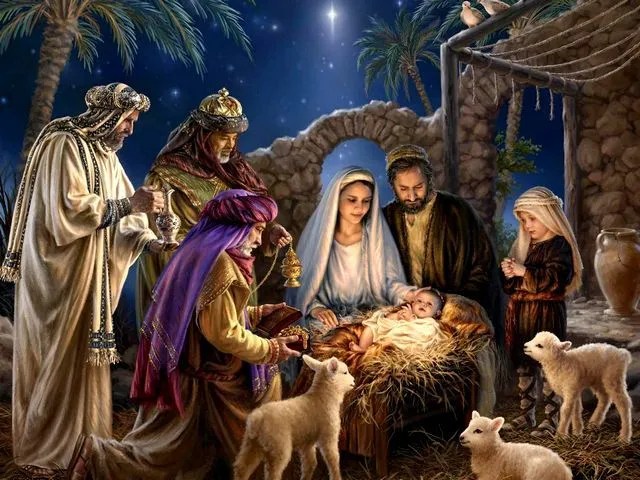
Friday, 25 December 2020 : Solemnity of the Nativity of the Lord (Homily and Scripture Reflections)

Liturgical Colour : White

Dear brothers and sisters in Christ, today we have come together to celebrate the great Solemnity of the Nativity of Our Lord Jesus Christ, which is better known as Christmas. Christmas is one of the two most important celebrations of our Christian faith together with Easter. After approximately four weeks of preparation throughout the season of Advent, we finally begin this most joyful season and celebration of Christmas beginning today.

As mentioned earlier, the celebration and season of Christmas are very important together with that of Easter, and the celebration of the birth of Our Lord and Saviour at Christmas cannot indeed be separated from the Passion, death and resurrection of the Lord at Holy Week and Easter. Without Christmas, there can be no Easter and without Easter, then Christmas would have been a meaningless celebration and event.

For without Christmas, then there can be no salvation for all of us mankind, as it was through Christmas that each and every one of us see the salvation of God in Jesus Christ, the salvation of God in the Baby born in Bethlehem in Judea two millennia ago, the Son of Mary born in the city of David. Through Him, God was no longer intangible and unreachable by mankind, for in Jesus, the Lord has bridged the gap between us and Him.

Through this very important event of the Nativity that is the birth of Our Lord into this world, the Lord Himself has chosen to adopt our humanity, and uniting our humanity to Himself, He became the personification of God’s love, the Divine Word Incarnate. The Word of God and only Begotten Son of God has assumed our human nature to become the Son of Man. In Jesus Christ therefore, we have the One God incarnate, two natures, divine and human, distinct but inseparably united in Him.

Then, when I said earlier that Christmas cannot be separated and meaningless without Easter, it means that if the One born at Christmas was just a mere man, the son of a woman and not of divine origin, then Christ could not have saved the world, for the suffering and the sacrifice He would undergo on the Cross at Calvary would have been meaningless, as the blood of a man would not have been sufficient to redeem us from our multitudes of sins.

On the contrary, if the One Who was at the Cross and died on the Cross at Good Friday was just a divine being that was not also a man, then first of all, it would have been impossible for God to die as a divine and immortal being, and then, secondly, without the significance of His incarnation, He could not have saved us, as it was by sharing in our humanity that He gathered us all and redeemed us, that we may share in His death and die to our sinful past selves, and be led into the new and eternal existence and life filled with grace through His Resurrection.

That is why, when we look at Christmas and rejoice today, ultimately it is because of the Resurrection of the Lord, for we know that this same Child born in Bethlehem celebrated today, is the same One Who was crucified for us, suffered and died for us, and Who eventually rose in glory and was triumphant against sin and death. Through Him, His Passion, suffering, death and Resurrection, we have received a new life and a new hope, and we can truly rejoice because once we have been lost in the darkness, doomed to destruction and annihilation, and now we are the beloved children of our Lord and King once again!

That is the true essence of Christmas that many of us have often forgotten, especially amidst the increasingly commercialised and materialistic nature of the secular Christmas celebrations and events. As many companies, parties and peoples wanted to make profit out of our celebrations and rejoicing, and adapting to the culture of joy of Christmas, they ended up in making us forget what Christmas truly is all about, and for all the excesses that we saw all around us, all these distract us from our true joy and what we should truly celebrate.

Instead of being preoccupied and being distracted by the many glamorous celebrations and events, the parties, revelries and merrymaking this Christmas day and the rest of the season of Christmas, we must look beyond the material and the surface appearances, and go deep into the true essence of Christmas. And this is why we should rediscover the true reason for our joy in Christmas, that is Christ. For if we sideline Christ or worse still, leaving Him out of Christmas entirely, then what is Christmas then?

There is truly great joy among all of us today, but we need to ask ourselves, are we celebrating Christmas in the right way? It is good to celebrate and to be happy, and we should rejoice and be merry, but are we too focused on the exterior celebrations and superficial appearances, materialistic considerations and the excess of secular Christmas culture? Shouldn’t we be more focused on that interior joy and true spiritual joy that we should have this Christmas?

Brothers and sisters in Christ, as I have mentioned earlier on, Christmas is about the joy that all of us experience thanks to the Lord Who has willingly embraced us and reached out to us, and Who has humbled Himself and lowered Himself to our state, the wretched state of humanity that He might share the burden with us and took up upon Himself all the struggles, pains and sufferings that we have suffered. He emptied Himself of His glory and divinity in His Passion, and lovingly embraced us through His Cross, by which our salvation has come to us.

Christmas is truly about the Lord Who has humbled Himself, made Himself small and lowered Himself that He may touch us and be with us, that He may reconcile us to Himself. It is about the hope that He has brought us through His salvation, the peace that He has restored to us through His coming, the joy that He has revealed to us and returned to us after all the darkness and sorrows we experienced, and ultimately, the true and genuine love that He has for each and every one of us, all manifested and shown to us through Christ, His Son, the Child born and celebrated this Christmas.

We can see just how throughout history, man had always aspired for greater things, and many had even wanted to be like God, to have power and dominion over others and all things. That was why our history had been filled with so many bitterness and struggles, with so many conflicts and destruction as we walked down the path of conflict and war due to the clashing of our ego and pride, our desires and greed.

Yet, here we see the Almighty and all glorious God, willingly embraced our humanity and humbled Himself, to be born as a Child in a stable barely fit for any humans, less still to be the palace of a King. This is our Lord and King, the One Whom we celebrate about this Christmas, not our pride and ego, our desire and all of worldly things, but rather, the joy we have because God is on our side, and has shown His love for us.

Brothers and sisters in Christ, this year has been an incredibly difficult one for so many of us. So many had perished from the pandemic and many others had died, suffered and are still suffering from many trials and challenges, directly or indirectly related to the pandemic, and other unrelated issues that had always bogged us down and troubled us all these while.

Indeed, it may seem to be an ill-time for us to celebrate during this Christmas, given the still terrible situation all over the whole world. However, this is exactly what we need to do, as we ought to reevaluate our Christmas celebration and joy. We are all called, as Christians, to be the bearers of God’s Hope and Light into the world, to be the faithful and genuine witnesses of His love and desire to be reconciled with us.

Therefore, brothers and sisters in Christ, let us all reflect and discern carefully on this most joyful occasion of Christmas, our way of celebrating it with true joy and with real purpose. Let us all realise that unless our Christmas is hope-giving, peace-giving, joy-giving, and most important of all love-giving and life-giving, then we have missed out the true essence and meaning of Christmas.

Instead of grumbling that we cannot have a ‘normal’ Christmas celebration this year due to various restrictions, let us all remember all those who had none to celebrate it with, all of our healthcare and frontline workers who had to work through even the Christmas season, risking their lives and pouring out their love for others. Let us all remember also all those who had not been able to celebrate Christmas due to various difficulties and challenges, and all those who have had to hide their Christmas joy and even their Christian faith.

Instead of worrying that we have received less Christmas gifts and lesser things in our parties and celebrations, lesser guests and lesser festivities, let us all think of how we can give from the bounty and blessings we have to all those who have not been fortunate and who has even less than what we have. If we are still able to worry about such things, then we must not forget about those who are struggling daily to make ends meet, and all those who have lost their jobs and their hopes especially during this dark year.

And last of all, instead of trying to pamper ourselves and love ourselves more, in this Christmas season we are called to imitate and follow the examples of Christ, Our Lord and Saviour. He selflessly reached out to us and showered us with love, and He came into this world and did all that He had done so that we may be saved and be released from all that we ought to have suffered.

Let us all be grateful this Christmas, for the gift of life, for all of God’s blessings, no matter how small they may be, that we may indeed find our true joy of Christmas, and celebrate together as a community, as a loving family centred on God and His love. Let us all truly rejoice as God’s beloved people, and share this joy that we have to the whole world, that even though this year may have been dark, but the Light of Christ in us will dispel even the greatest darkness, and in the end, He Who has conquered death, will lead us all into true joy and eternal glory, forevermore. Amen.

Sunday, 20 December 2020 : Fourth Sunday of Advent (Homily and Scripture Reflections)

Liturgical Colour : Purple/Violet

Dear brothers and sisters in Christ, this Sunday marks the Fourth and Last Sunday of Advent which means that we are about to come into the great celebration of Our Lord’s Nativity or birth in Christmas. And this Sunday we focus on the last of the four Advent themes, and this is the theme of ‘Love’. And it is fitting that we focus our attention on this theme of ‘Love’, because ultimately, that is what Christmas is truly all about, the genuine and pure, boundless and great love that God has for each and every one of us.

For we celebrate in Christmas, the birth of the Saviour of the world, the manifestation of God’s eternal and perfect love, in the Flesh, that the Lord willingly embraced and took upon our humanity, by the indwelling and incarnation of His divinity, the Son and Divine Word, as Man, through the power of the Holy Spirit, and thus, the Holy One of God was conceived in the womb of Mary, Son of God and Son of Man in One.

This is the culmination and fulfilment of all that God had long promised His people and all of His servants, just as we heard from the Scripture readings today. In our first reading today, we heard God speaking to king David of Israel through the prophet Nathan, when the king wanted to build a great House for God. That House would eventually be built by David’s son, king Solomon, as the famed Temple of Solomon, the place of the great worship of God.

God told David that it would be his own son that would build the House for His Name and dwelling, and while He has blessed David and made his reign and rule strong, he would also bless his son and descendants, and promised David that his house will last forever. While this was indeed a direct reference to how God would bless Solomon and his descendants, but in truth, it was also a hidden prefigurement of Christ and His coming.

King Solomon and the descendants of David did not remain completely faithful to God, and many among them led the people into sin and wickedness, and thus, the kingdom of Israel and Judah met its end at the hands of the Assyrians and the Babylonians respectively. It seemed that the promises of God had come to naught, but in truth, just as the Israelites believed it, the Lord would fulfil His promises yet, by sending them the Messiah Who was to be born of the House of David.

However, what they did not know was that, this Messiah is also none other than the Son of God just as much as He is the Son and Heir of David, the One Who would occupy the Throne of David and therefore, fulfil God’s promises. As the Eternal God Himself has now descended into this world and become King for His own people, His kingdom shall last forever, and all those who follow Him, will receive from Him the eternal life and glory promised to them.

This is what the Archangel Gabriel himself revealed to Mary as we listened to in our Gospel passage today, at the Annunciation, when the Lord through Gabriel finally announced the coming of His salvation, long awaited and expected by His people. This is the true proof and manifestation of God’s eternal love and His enduring compassionate care for each and every one of us, all children and descendants of Adam who had strayed from His path, that God has always loved us all and wanted us to return to Him and be reconciled with Him.

It is God’s pure love that we remember today, as we focus on the ‘Love’ as the most important aspect of our Advent preparation. Without Love, then Christmas would not have happened, and without Love, there would not have been salvation for all of us. God would not have forgiven and saved us, or spared us from the fate that awaits us due to our rebelliousness and sins. Through our disobedience and rebellion, we have fallen into sin, and because of our sins, we should have fallen into damnation and eternal suffering in hell.

But the Lord loves each one of us dearly, and He does not want us to suffer that fate. He could have easily destroyed us for our rebellion and disobedience, but He clearly did not do so. When He sent Adam and Eve away from the Gardens of Eden, He did so to let us all know that what we have done were not correct and right, and we have to suffer the consequences of our sins. Yet, as a loving Father, He did not leave us all alone. He still cared for us and wanted us all to be reconciled to Him.

It was this love that allowed Him to be so patient with us and to reach out to us with such great affection, despite the attitudes which many of us had shown Him, our ingratitude, our lack of faith and stubbornness, our constant embracing of sin and evil. He sent us His own Beloved Son, Who entered into the world and dwelled among us so that all of us may know of His love, that is not just something that is distant and imaginary, but as something that is real and genuine, and brings us hope and light even in the deepest of darkness, love that is sincere and selfless, perfect and compassionate.

I invite all of us now to reflect on the Lord our God and Saviour, Whose coming into this world we are going to celebrate in Christmas that is about to come. I want us all to reflect on the great love that God has shown us, the reason why He restored the joy and light to our lives. And we do not have to look far, brothers and sisters in Christ. Turn our gaze towards the crucifix, and we shall see there, the same Christ, the Baby born and celebrated at Christmas, hung on the Cross for the salvation of the world.

That is a further proof of God’s love, that not only just that He willingly took up our form, existence and humanity, born as a little Child in Bethlehem, but that same Jesus Christ, willingly took upon Himself our sins and the many punishments due to our sins and our rebellions, and bore all these upon His shoulders, bleeding and bruised for our many trespasses. But He bore all these willingly out of love for us, that we may not perish but live through Him.

By His suffering and death on the Cross, and by sharing in our humanity, Christ Our Lord has made us to share in His death, and then leading us through His Resurrection, He leads us into a new life and existence of grace, one that is not subject and bonded to sin and death, showing us the path forward to an eternity of true joy, happiness and glory with Him.

There is no question that God loves us all very much, that He has willingly done all of these for us, and in how He had been very patient with us and making His intention clear to us in wanting us to repent and turn away from our sins, and embrace His salvation. But the question now is, do we love Him then just as much as He has loved us?Have we ever appreciated just how beloved and fortunate we are because of God’s love?

As we are about to enter into the joyous celebrations of Christmas, those questions must be in our minds and hearts, that we may reflect on and reevaluate the way we perceive and look at Christmas. If Christmas is just another merry-making time and an occasion for us to celebrate with lavish parties and revelries, then we are not celebrating Christmas in the right way.

And if we are trying to outdo one another and are too focused on the material aspects of Christmas and its celebrations, then we are not celebrating Christmas in the right way either. Our celebration of Christmas must of course first and foremost be centred on Christ, on the love that God has shown to each and every one of us, even to the worst of sinners, that He clearly wants to embrace us and be reconciled with us, and love us fully as He has always intended.

This is what we really need to consider as we spend this Sunday focusing on this theme of ‘Love’. Not the love of ourselves but the love of God, and how much we love God and also our fellow neighbours, our brothers and sisters all around us. That is the true essence of Christmas, the fulfilment and manifestation of God’s love in Jesus Christ, Our Lord and Saviour. And we rejoice with Him because through Him we have been saved!

Now, what can we do then in order to make our Christmas celebrations more meaningful? We should share God’s love with one another, especially through this difficult year and through all that many had suffered earlier on this year, and many yet still suffer this very moment and will endure more hardships in the next few months to come. We must be the bearers of God’s hope and peace, His joy and love to one another, particularly those who have none or little of these.

That is how we should celebrate Christmas as Christians, that we rejoice not for ourselves, but for the whole community, together with God. In that way then we will fully be able to appreciate how important Christmas is to us, and how the love of God allowed us all to cheer up, be happy and hopeful once again, because we know that in Christ, and through Him, the Lord Who is always ever faithful has fulfilled His promises to us, and by His love, we shall enjoy forever His eternal glory.

Let us all renew our faith in the Lord and strengthen our love for Him. And if we have not done so, from now on, let us live our lives differently, by focusing on the Lord rather than on ourselves, and be filled with true Christian love, for each and every one of our fellow brethren. Let us all be faithful bearers of God’s love, and through that bring hope, peace and joy in our community, wherever we are. May God bless us all and guide us all to a most wonderful, blessed, fruitful and loving Christmas celebration to come. Amen.

Sunday, 13 December 2020 : Third Sunday of Advent, Gaudete Sunday (Homily and Scripture Reflections)

Liturgical Colour : Rose or Purple/Violet

Dear brothers and sisters in Christ, this Sunday marks the occasion of Gaudete Sunday, the Third Sunday of Advent. This Sunday is unique because it is a brief moment of elevated joy and rejoicing as compared to the usually more sombre and solemn Advent theme. This is because today we focus on the aspect of ‘Joy’ in Advent, continuing from the series of ‘Hope-Peace-Joy-Love’ during the Sundays of the season of Advent.

The word Gaudete Sunday came from the beginning of the Introit for this Sunday, which goes ‘Gaudete in Domino semper : iterum dico, gaudete’ which means, ‘Rejoice in the Lord always, again I say, rejoice.’ And this leads us to the focus of this Sunday of reminding us that while we have not celebrated fully in joy yet, as we preserve that for the upcoming Christmas, but Advent is a season of expectant joy, as we look forward to the joy of Christmas to come.

And therefore, as we are about halfway through this season of Advent, we need to ask ourselves, what is our joy in this life and what joy are we looking forward to in this season of Advent? What is the joy that we are looking towards in Christmas? Is it about the festivities, revelries and merry-making that we are surely familiar with during this period of time, when everyone are trying to outdo each other in their extravagance in celebrating Christmas?

We see how merchandises and Christmas paraphernalia are all around us, shopping malls and all sorts of places are filled to the brim with Christmas decorations. Christmas jingles and songs, promotions among many others, Santa Claus and all other familiar Christmas celebrations and perks are all around us, and we revel in all of these, often a bit too much, and we ended up focusing on the wrong joy in Christmas.

Brothers and sisters in Christ, it is indeed that we should rejoice in Christmas, and Christmas is all about happiness and being joyful, but not because all the gifts and parties that we are having, not because of all the celebratory moods and excessive commercialisation of Christmas that we have seen all around us. What we see are merely imitation of the true joy of Christmas, the attempt of the world to profit from the Christmas celebration for their own benefits.

That is why the secularisation and commercialisation of Christmas that we have seen all these while can prevent us from understanding the true significance, meaning and importance of Christmas to us, and prevent us from knowing the true joy of Christmas that we are looking forward to, especially in this Gaudete Sunday as we focus on the joyful aspect of our Advent waiting for Christmas.

In our first reading today from the Book of the prophet Isaiah, we heard of the hopeful and joyful prophecies of the prophet Isaiah speaking of the coming of the Lord’s salvation through His Messiah or Saviour, when the Lord will send forth His grace and love to the world, and touch the world and all of His people with His great compassion and tender loving care.

And that was indeed a very strong message of hope and joy, that came at the time when the people of God were having bleak outlook of their livelihood, having endured centuries of humiliation, suffering and decline after the glorious past of the mighty days of King David and Solomon. By the time of the prophet Isaiah’s ministry, whatever remained of the kingdom of Israel was just a mere shadow of its former greatness under the aforementioned kings.

The kingdom had been divided long ago into northern and southern halves, and the northern kingdom that was composed of ten out of twelve tribes of the Israelites had been destroyed just recently then, by the Assyrians who had conquered the lands, destroyed the cities and brought the people off into exile in faraway lands in Assyria and Mesopotamia, and putting foreigners in the lands that used to be dwelled by the sons and daughters of Israel.

The southern half, the kingdom of Judah itself did not fare much better, having continually been shrinking in terms of their power and glory, subjugated by neighbours and oppressed by its enemies, and the forces of the Assyrians themselves had came up to Judah, besieged its cities, looted its countryside, and even almost managed to conquer and destroy Jerusalem, if not for the Lord’s loving intervention that saw the Assyrian armies destroyed and their king fleeing in shame back to his homeland.

Amidst all of these, we can now see just how the message of the prophecy of Isaiah was indeed like a fresh breath of life and a glimmer of beautiful hope and light in the middle of the darkness and despair that were surrounding God’s people at the time. The prophet Isaiah was calling on the people to turn towards the Lord, their Saviour and their Hope, through Whom alone they could attain true joy and happiness.

All of these prophecies were to be fulfilled in Christ, through His coming into the world, which we celebrate as Christmas. In our Gospel passage today, we heard of the account of St. John the Baptist, who was asked by the priests and the Pharisees who doubted him and wanted to question him on the veracity and authority of his actions. St. John the Baptist could have said that he was the Messiah, and based on his many followers, he could very well had made that claim.

Yet, St. John the Baptist was sent into this world as the Herald to proclaim the coming of the Messiah, the Saviour of the world, and he boldly proclaim that truth before all, that he was not the One they were waiting for, but just the who was sent before the One, to clear His path and to prepare and make everything ready for His coming. St. John the Baptist pointed the people towards their true hope, and the source of their true joy, Christ, the Saviour of the world.

When later on the Lord has begun His ministry and gained more and more followers, and even more than what St. John the Baptist himself had, as some of his followers began to follow the Lord Jesus instead, he was happy when his discipled asked him, that the Lord became more important and prominent than himself, and he had true joy knowing that his mission had therefore been accomplished, to show the true joy of the world to God’s people.

And this is what we have also heard being echoed in our second reading today by St. Paul, in his Epistle to the Thessalonians, saying enthusiastically that we ought to rejoice, just as the words of the Introit that inspired the name of this Gaudete Sunday said, ‘Rejoice in the Lord always, and I said again rejoice!’. And St. Paul said that this is the vocation of all Christians, to be joyful and to rejoice.

But when we rejoice, it ought not to be caused by our own glory and power, our own achievements and happiness, but rather because we have found our true joy in Christ, Our Lord and Saviour, knowing that through Him we have the sure assurance of eternal life and glory, of eternal and true happiness with Him, and not the false and temporary, fleeting joy of this world.

That is the true joy of Christmas that we are looking forward to celebrate, and which we have to reflect at all times in our lives. We have to keep this joy in us, no matter how difficult and dark the situations may be. And we all know that during this year, things are very difficult and challenging for so many people, because of the pandemic that had claimed so many lives and destroyed so many livelihoods.

But we must not allow ourselves to be overcome by despair and darkness, brothers and sisters! This is exactly why we are looking forward to Christmas, because we know that, just like the people of Judah long ago, that God has always been with us, caring for us and loving us, journeying with us all these while even through our most difficult and darkest moments.

He sent us all our salvation, by sending to us His own Begotten Son, to be the Saviour of all. He is our true Joy, the Joy that we are looking forward to and are expecting in this Advent season, and we look forward to a renewed hope and joy through Him. And let us all be filled with this joy, and be generous in sharing them with one another, particularly those who have been sorrowful and downtrodden.

Let us all be genuine brothers and sisters to our fellow men and women, supporting each other through these difficult times, that no one should be left alone in sorrow and despair. Let us all look forward to a brighter future with hope, filled with peace and joy in our lives, and be full of love, both for God and for one another, at all times. May God bless us all and guide us through this journey, and may He bless our wonderful Advent observation. Amen.

Sunday, 6 December 2020 : Second Sunday of Advent (Homily and Scripture Reflections)

Liturgical Colour : Purple/Violet

Dear brothers and sisters in Christ, this Sunday we mark the Second Sunday of Advent, and therefore we continue to journey further and deeper through the mysteries of Advent, and our time of preparation and expectation for the joy of Christmas to come. On this Second Sunday of Advent, the theme that we focus on is ‘Peace’, out of the four themes that began with ‘Hope’ last week, and then to be followed with ‘Joy’ next Sunday and ‘Love’ on the last Sunday of Advent.

As we listened to the readings from the Scripture we are constantly being reminded of the Lord’s coming, of His coming as the Saviour to deliver all of His people from their troubles. That is why this season of Advent we are always reminded of the need to focus our attentions on the Lord and reorientate ourselves spiritually and mentally that the Lord will be the centre of our lives. Too many of us have been distracted from our mission and calling in life as Christians, tempted and steered away by our many concerns and desires in the world.

In our first reading from the Book of the prophet Isaiah, we heard again as we have been for the past few days since the first week of Advent, of the Lord’s faithful promises to His people which reminded all of them that God will triumph in the end, and He will lead all of His faithful people out of their suffering and wretched state. He promised them salvation and the coming of the Saviour that would herald the dawn of a new time and age, the glorious reign of God.

This prophecy was significant in meaning and importance because it was made at the time when the fortunes of the people of God was among its lowest, when they were beset by troubles and had been brought low by many sufferings and humiliations. The northern kingdom of Israel, constituting most of the ten tribes of Israel besides the tribes of Judah and Benjamin, has just been destroyed by the Assyrians, and then their populations brought into exile and the lands wasted and destroyed.

And the same Assyrians came to Judah and Jerusalem where Isaiah had prophesied and ministered in, in a mighty army led by their king Sennacherib with the intention of conquering and destroying the city and the kingdom as they had done with the northern kingdom. Indeed, if we read the Book of Kings and the Book of Chronicles, we can see just how the history of the people of God at that time was rife with conflicts, wars and much destruction all over.

Kingdoms fought against each other, kings struggled against other kings and their rivals, and it was often the people who suffered through all those strife, warfare and conflicts. When kings of Israel and Judah fought against each other for their territories and for prestige, it was the people who bore the brunt of the fighting and the loss, while the kings feasted in their luxurious life, often ignorant of the plight of those who were suffering and poor.

King Sennacherib of Assyria was no different, as he laid siege to Jerusalem and other cities in Judah, bringing plenty of destruction to the whole kingdom of Judah. He led the Assyrian armies in conquering many cities and countries, in causing lots of destruction and harm to people and properties, untold suffering to so many people. Why has king Sennacherib done so, brothers and sisters in Christ? That is because he sought power, glory and fame, wealth and worldly satisfaction that came from such actions.

And thus was how many wars and conflict had been fought, over the greed and desires of man for power, for wealth and worldly glory and fame. And as they did so, they had little regards for other people, but for themselves. Like king Sennacherib, he boasted that no king, ruler or kingdom as well as their gods were able to stand against his power and might, and he blasphemed against God by saying that he would bring the same ruin to the people of God and destroy the Temple of God.

The pride, arrogance, ego and greed of king Sennacherib led to his downfall, as God struck him and his army down. Through His Angels, God destroyed the armies of the Assyrians and drove them back to their homeland in utter and complete shame. Sennacherib himself was murdered by his own two sons who perhaps craved and desired power and other glories. It was indeed quite often that within the ruling families and those in power to struggle and end up in conflict among themselves.

And that was how things had gone in the past throughout the history of mankind, in all nations and peoples. Conflicts, wars and disagreements had often happened because of the conflicting interests, desires and ego of different parties involved. Through all of that, people suffer, especially those who are underprivileged, poor and weak, those who have been easily exploited and taken advantage of by the rich and the powerful.

But if we think that it is only the poor and the less privileged that suffer, then we are wrong. Do you realise that actually even the rich and powerful also suffer? Take for example the case of king Sennacherib mentioned earlier. He was murdered by his own sons likely because of conflict of power and their desires to carve up his kingdom for themselves.

As Sennacherib’s demise showed us, the rich and powerful are in fact even less secure and suffer more because they often fight among themselves and contend with each other for the power and glory, wealth and riches of the world. And the more that man has, the more we will be tempted to desire for even more of what we have already possessed and attained. That is why, those who have more often are also the least peaceful in mind.

Brothers and sisters in Christ, now having heard of all these, we are all reminded that in this world, we have often been deluded by our worldly desires and by the many temptations of false pleasures, glory and corruptions of the world. And because of these conflicting and unbridled desires and wants, we end up causing sufferings on each other, and making things difficult for one another.

How do we then find peace, brothers and sisters in Christ? This is where we ought to look towards Christ, the Prince of Peace. The One Whose coming we celebrate this Christmas and which we prepare for this season of Advent is the One Who will bring true peace and harmony into this world. And indeed, He came bearing His truth into the world, and He was preceded by none other than St. John the Baptist, who in our Gospel passage today spoke of the Lord’s coming.

And what St. John the Baptist said to the people as we heard it in our Gospel passage today is a call to repentance, a cry out for all the sinful people of God to seek God’s forgiveness, to change their hearts and their ways of life, and reorientate themselves and their lives back towards the Lord, with Him as the centre and focus of their whole attention. And this is what the Lord then revealed in full through His coming.

St. John the Baptist helped to straighten the path for the Lord, and the Lord then showed how through Him, by following Him, His teachings and His ways, He will free them from their slavery, their bondage to sin and to all the chains of worldliness and all the temptations that had hindered us all these while and caused so much suffering for so many among us, be it rich or poor, powerful, mighty or weak. As long as we continue to indulge in our selfish desires, we will continue to be swayed by the forces of sin and evil, and we can never find true peace.

Brothers and sisters in Christ, during this season of Advent let us all therefore seek the Lord with renewed faith and hope, the hope in the peace that the Lord alone can give us. The Lord has shown His love and mercy to us, and through His compassion, He has shown us the path to true peace, harmony and true joy that we can find in Him and through Him alone. Are we willing to follow this path, brothers and sisters in Christ? Are we willing to commit ourselves to serve the Lord faithfully?

Today, let us all commit ourselves to the path of peace, by reorientating our lives towards the Lord, and not towards our foolish and selfish desires, our worldly pursuits of power, glory and wealth among many others. Brothers and sisters, let us all reject these temptations and strive to do our best to be faithful, to be righteous and just in our every actions and deeds, and to seek peace over violence, to be loving to one another rather than to put our own self-interests first. Let us all reflect the Lord’s examples, His hope, His peace and His love in our own lives, and in our actions.

Throughout this season of Advent, let us all renew our relationship with God by deepening our spiritual life, by spending more time with God in prayer, and by rethinking how we have lived our lives and even also how we prepare for Christmas. Is Christmas really about all the glamour, parties and the celebrations? Or is it rather to celebrate together as a community the joy of expecting the coming of the Lord and the coming of His reign of peace?

Let us all discern carefully how we are going to continue living our lives from now on, with faith. Let us all renew our devotion to God and make best use of this blessed time and season of Advent. May the Lord be our Guide and may He strengthen us always in our faith, as well as in our desire to love and serve Him, at all times. May God bless us all, now and forevermore. Amen.

Sunday, 29 November 2020 : First Sunday of Advent (Homily and Scripture Reflections)

Liturgical Colour : Purple/Violet

Dear brothers and sisters in Christ, today this Sunday we mark the beginning of a new liturgical year as well as the season of Advent, the time of preparation and spiritual purification for us to prepare ourselves properly for the celebration of Christmas, the birth of Our Lord and Saviour Jesus Christ. Now is a time of reconciliation between us and God, and for us to reexamine our way of life thus far.

As we mark the beginning a new year cycle and this blessed season of preparation, we enter into a time of reconfiguration of our lives and when we also take stock of what we have done and what we are going to do from now on, as we are about to celebrate once again, the joyous celebrations of our Saviour’s birth into this world. Is it going to be just yet another Christmas and another celebration for us? Another season and time of merry-making and fun, but not accompanied by true and profound change of heart, brothers and sisters in Christ?

Many of us have been seeing Christmas and its celebration all around us especially from the lenses of secular and worldly celebrations, as I am very sure that the Christmas festivities have already been in full force by now. As early as October and early November shops, shopping malls and many other places have been decked with plenty of Christmas decorations, themes and various other activities that are meant to prepare everyone for the festivities of the Christmas season.

However, many have easily forgotten of the true meaning of Christmas, where Christmas becomes just another holiday and time of merry-making that is bereft of its true intention and purpose. To many of us, Christmas is about exchanges of gifts, great food and tantalising meals, celebrations and parties. And while of course it is perfectly well and fine to celebrate, but we have often forgotten why it is that we are celebrating in Christmas.

We all knew well that Christmas is celebrating the birth of Jesus Christ, Our Lord and Saviour, and Our God. But, how many of us actually internalise that fact and understand how it is so important and significant for us? Too many of us have treated Christmas, year after year, again and again, just as a season and time to be merry and happy, in tandem with what the world has done, in their secular celebrations.

Do we really appreciate just how important Christmas is to all of us? Christmas, along with Easter that is to come in a few months’ time, together celebrate the very important event in our history, that is the salvation of mankind and the fulfilment of God’s long-held promises for each and every one of us, through Christ, His beloved Son, sent into the world as the ultimate gift for all of us. Without Christmas, there will be no Easter and its significance, and at the same time, without Easter, Christmas itself would have been of little importance.

Why is that so? That is because through Christmas, the Son of God and Saviour of all entered into this world, incarnate into flesh, born as the Son of Man through His mother Mary. At Christmas, we celebrate this newborn Baby, born the Saviour of the world and King of kings, the Divine Word Incarnate, Who was to be the One to make a New Covenant between God and His people, through none other than His ultimate sacrifice on the Cross. Without Easter and the Passion that happened before it, then Christmas will be just another birthday of another man. It is Easter that gave Christmas its full meaning and significance.

That is because here we have the Son of God born and uniting Himself into the humanity He willingly took, that would eventually unite our sufferings and sins, and bearing all that burden together on His Cross that Christ became the source of all our salvation, our hope and the Light that dispels the darkness of this world surrounding us. Yes, and that is why, on this First Sunday of Advent, we focus on the theme of Hope, out of the four themes of Advent, ‘Hope’, ‘Peace’, ‘Joy’ and ‘Love’.

Our Christmas joy must always be accompanied by Hope, for Hope is what has been re-enkindled in our hearts following the birth of Christ, and in Him we see once again the Light of God’s hope, amidst our wretched conditions, the despair and darkness that are surrounding us. Once, by our sins we should have been destroyed and condemned to eternal suffering, but God showed that His love and compassion triumph even over all of these, and He has made His love manifested to us, through none other than His Son.

Do you all remember the most famous phrase from the Gospel of St. John, ‘That God so loved the world that He gave us all His only begotten Son, that whoever believes in Him shall not perish, but have eternal life?’. In these words spoken by the Lord Jesus Himself to Nicodemus the Pharisee, we heard of the proclamation of God’s love and His desire to see us freed and liberated from whatever chains and bondage that had been holding us back, that is the chains of sin and the bondage of death.

It is because of the Lord that we can hope once again, that beyond the sufferings due to sin and death, there is Light that dispels the falsehoods of evil and the despair and fear of darkness. There is Hope because God’s love has been made manifest in the flesh before us, that what was once intangible has become tangible, that God has truly loved us from the very beginning, and has always still loved us, always. And we also look forward to His Second Coming, when He shall return as promised to gather us all His faithful ones.

And now that we know all of these, how should we then proceed with our Christmas celebrations and festivities? It is not wrong to celebrate and be merry, as we should indeed and rightfully be joyful because of Christmas. However, we really need to ask ourselves, what our Christmas celebrations are all about. Is it about ourselves and our desires for good things, for expensive gifts and wonderful, tantalising meals and food, or is it about our joy because of the Hope that Our Lord Jesus Christ has brought us through His birth?

You see, brothers and sisters in Christ, that without the right mindset and focus, we can easily end up losing the entire meaning and purpose of our Christmas celebrations and joy. We can celebrate very well, but without appreciating the true and full meaning and importance of Christmas, then our celebrations are meaningless and empty. Christmas becomes mundane and ordinary just like how year after year people celebrate Christmas in a secular and worldly way, buying gifts and trying to outdo each other in decorating their houses and places.

As Christians, our Christmas celebration is especially important and meaningful because we celebrate this very crucial and pivotal moment in our salvation as mentioned and discussed just earlier. And consequently, our mindset and focus must properly reflect of this, or else we will end up falling into the same trap of commercialised and worldly Christmas celebrations, just as we have certainly been bombarded with all around us these past few weeks.

That is why, during this season of Advent that we begin today, we have to prepare ourselves, not just in material terms and physically like in preparing for all the parties and celebrations, but even more importantly, we have to spiritually prepare ourselves, for the Advent, or the coming of Our Lord. For it is this expectation of the coming of the Lord that gave this season its Name, from the term ‘Adventus’ which means ‘coming and appearing’. We have to focus on that Hope that Christ has brought us with His birth, and share that same Hope to one another, the Hope in the salvation of Our God.

How do we do this, brothers and sisters in Christ? It is by reaching out to one another and sharing the Hope that Christ has brought to us, be it to our fellow Christians or to any other out there, our friends and relatives, our acquaintances and even strangers and others we encounter in our daily lives. And this year in particular had been especially difficult and tough for so many people out there, enduring and suffering the extended effects of the pandemic, the economic troubles and other conflicts between nations that we are surely very familiar of all throughout this year.

Can we, as Christians, be bearers of Hope for the world, for our less fortunate brothers and sisters? If we ourselves have suffered and laboured in suffering this year, do not forget that there are definitely those others who have suffered even more and in even worse state than we are now. Let us restore the hope in others, by reaching out to them and helping one another in even small, little ways that we can do, to show the Hope of Christ through our actions.

Brothers and sisters in Christ, those are just some ways that we can begin our Advent preparations well, and there are many other ways that we can make our blessed season of Advent meaningful, as we prepare ourselves to celebrate Christmas together. And this year, being known for its limitations and restrictions due to the pandemic, is perhaps a good time for us to reflect on our usual Christmas practices and celebrations, to ask ourselves once again, the fundamental questions of, ‘Why do we celebrate this Christmas?’ and ‘What is the meaning of Christmas to me and my family?’

Let us all enter into this season of Advent with solemnity and internal reflection, and let us refocus our attention in life, that we turn our gaze and focus once again on the Lord and the hope that He has brought to us, that in Him alone lies our salvation, and through Him, we can overcome the darkness that are affecting us, and through Him, our sufferings and pains, our troubles and difficulties will eventually be gone, and in Him, we shall enjoy one day, the eternal glory and true happiness with Him, forevermore. May God bless us all and our Advent activities. Amen.

Sunday, 22 November 2020 : Last Sunday of Ordinary Time, Solemnity of Our Lord Jesus Christ, King of the Universe (Homily and Scripture Reflections)

Liturgical Colour : White

Dear brothers and sisters in Christ, this Sunday we mark the very last Sunday in our current liturgical year cycle, and therefore we celebrate together the Solemnity of Jesus Christ the King, the King of the Universe. Today we glorify our Lord and God, Who is the King of Kings and Lord of all. He alone is the Master of all creation and hence the entire Universe as its King.

At the end of this current liturgical year we are all reminded of the Kingship of our Lord and how each and every one of us are truly subject to His authority and power, for each and every one of us have been created by the Lord as His creatures. But many of us have not understood, appreciated or acknowledged Him as our King as well as the nature of His Kingship.

Yes, the Lord is King, but He is not like any kings of the world that we know of. He was not born into the world in riches and glory like the other kings and rulers of the world’s nations, in wealth and wonders, but in poverty and in the filthy stable of Bethlehem, not fit even for human habitation, and even less so for a king. He did not live in palaces and great houses, but in the wilderness as He Himself said that the Son of Man had no place to lay His head.

And before Pontius Pilate, during the moment of His Passion, when He was arrested and condemned to die by the Sanhedrin and brought before the Roman governor for final judgment, the Lord Jesus spoke of Himself as a King, and answering to Pilate’s questions of His kingship, He again said that He is truly a King, but His kingship is not of this world, referring to the fact that He is indeed unlike any other kings.

The Lord is the one and only true King, from Whom all authority, power and kingship came from. All the rulers and kings of this world gained their authority from the Lord, as the stewards entrusted with the care of God’s people, just in the same way that in spiritual matters, the Lord also entrusted the faithful to His Church, under the leadership of the Pope as the Vicar of Christ and the Successor of St. Peter the Apostle, and the bishops.

Yet, many of the rulers of this world abused their entrusted power and authority, and like the parables which the Lord had used to teach the people, particularly those regarding stewards who had been unfaithful and lazy in the dealings of their works, many of these kings and rulers of the world did not do as they had been called and entrusted to do by the Lord, but instead, sought to gain for themselves for wealth, power and glory.

This was why many ended up becoming corrupt and tyrannical in their actions, causing suffering and harm on many people to satisfy their own selfish and greedy desires. Many had gone to conflict and wars in order to satisfy these desires, their pride and ego, just as our past century’s many deadly wars can show us. The two World Wars that the world had bled from, all had stemmed from those leaders who abused the power and authority entrusted to them.

Against all these, the Lord showed us all true leadership and kingship, one not founded upon pride, ego, greed, desire, and ambition, but rather love, compassion, care, selflessness and righteousness. The Lord shows us all that He is a King Who is always loving and caring towards all of His people, likened to that of a shepherd who loves and cares for each and every one of his sheep.

Shepherds at that time, as it is still today, are those who spent a lot of time taking care of their herd of sheep and other animals, and they knew their sheep well. This is why the Scripture readings today touch on the Lord as the Good Shepherd, as the Shepherd of the faithful, as we are the flock led by our Lord, the one and true Shepherd of all. And as the Good Shepherd, He knows us all well in and out, by each of our names and He knows all about us.

The Lord is showing all of us what true Christian leadership is all about, that as Christians, especially those in the positions of leadership, they all have to look upon the Lord’s own examples, in how He wielded His power and authority with justice, with care and love, concern and compassion on all those who have been put under His power, while dealing justly with others who have misbehaved and did wrong.

And this brings us to our Gospel passage today in which we heard of the account of the Last Judgment as the Lord foretold it Himself. At the Last Judgment, when all of creation shall be judged by none other than the Lord Jesus Himself, as He returns into this world as a triumphant King, to finally claim all for Himself and to gather everything to Him, He shall be the Great Judge judging all of us mankind by our actions, deeds and by our faith.

The Lord said how the righteous will be separated from the wicked, and their deeds revealed before all. The righteous are those who have extended their love, care and affection for the needy, the poor and those who need for the attention and help from others, and the Lord shall bless and thank them for whatever they had done, saying that what they had done for those, they had done unto Himself.

In parallel, those who have been deemed as wicked and unjust had been judged because of their refusal to reach out and help, to show their love for those who need that love most, when they were perfectly in the position and were capable to do so. They were judged by their refusal to follow the example of the Lord in love, in care and in compassion towards one another. Instead, they have chosen to keep everything to themselves and in being selfish and greedy.

This is a warning and reminder that we should not forget that our Christian calling is to follow the Lord and His examples, and first and foremost, to obey the Lord’s commandments of love, that we are first and foremost to love the Lord, our God and King with all of our strength, and then to show the same love to one another, to our brethren, especially those who need that love, even more than we love ourselves. We should not allow our ego, desire and ambition to make us forget of our Christian calling and faith.

Today, as we all rejoice in our Lord, the King of Kings and King of the whole Universe and of all things, we are all called and indeed challenged, called to reflect on whether He is our King in all things, or whether our Christian faith is merely just a formality and the Lord is not truly the King of our hearts, minds, bodies and souls. If the Lord is truly our King, then all of us as His people, His beloved sheep and flock should all follow Him and His examples just as the sheep follow their shepherd faithfully.

Many of us have wandered off into the wrong paths like the lost sheep, and yet the Lord had patiently waited for us to return, and even went out all the way to look for us, wanting each and every one of us to be reconciled to Him. And therefore, let us all as Christians in our every deeds and actions, in everything we say and do, always be exemplary and good, always be just and righteous following the examples of our Lord and King.

Let us all be inspiration of faith for one another, and help each other to remain firm in our faith, and to keep steady in our path in our journey of faith. Let us all not be distracted or be dissuaded by false promises of desire, power, glory and all other things that can lead us astray. Let us put the Lord Jesus Christ, Our God and King at the centre of our hearts and whole existence, that in everything we do, we will always glorify Him and praise Him at all times.

Let us also pray for all of our leaders, all those in the Church and in the secular leadership positions, that they may imitate the examples of the Lord in His humility and genuine care for all those under His care, that they too may be responsible, just and ultimately good rulers and stewards, protecting and caring for all those who have been put under their care and that they may resist against whatever temptations that try to lead them down the path of selfishness, greed and tyranny.

May the Lord, our loving and most wonderful King continue to bless each and every one of us, and help us in our respective journey, that we may grow ever stronger in our love and devotion to Him, just as He Himself has loved us all first with such great intensity and sincerity despite our sins and rebelliousness. May God bless us all and be with us, now and always, forevermore. Amen.

Sunday, 15 November 2020 : Thirty-Third Sunday of Ordinary Time, Fourth World Day of the Poor (Homily and Scripture Reflections)

Liturgical Colour : Green

Dear brothers and sisters in Christ, this Sunday being the last of the Sundays before the Solemnity of Jesus Christ the King, the second last Sunday in our current liturgical year, we celebrate the occasion of the World Day of the Poor for the fourth time after it was instituted by our current Pope and Vicar of Christ, Pope Francis in the year of our Lord 2017.

On this Sunday therefore we are all reminded of the poor, those among us in our community who are often lacking basic needs and provisions, those who do not have enough to live comfortably without assistance from others. Poverty had been a great issue facing our community and the world since time immemorial, and as long as there are inequalities and injustices in our society, poverty will always be around, unless the whole community work together selflessly for the benefit of everyone.

We may be wondering then why there is so much poverty in the world today, just as it had been in the past, and just as how it will be in the future. That is because of our own selfishness and the abuse of the freedom that God had given to each and every one of us. We are all free to choose how we are to act in life, and how we interact with one another. Yet, we are often tempted by the many temptations of this world, the temptations of money and material possessions, the temptations of fame and glory among others.

And it does not help that we live in a world where we are accustomed and encouraged to satisfy our needs and wants first, to be selfish and individualistic and not be bothered by the plight and sufferings of others. In addition, in many occasions, we ended up being the sources of others’ sufferings and poverty, when people manipulated and exploited others who were less fortunate, weaker and poorer than they were.

As a result, many people who were poor remained poor. Many of them were unable to escape the vicious cycle of poverty and remain poor due to various circumstances. It is often the case that the rich gets richer while the poor gets poorer. This is unfortunately how things are in the world today, and on this Sunday, the World Day of the Poor, as Christians our attention is brought closely to this matter at hand.

In our first reading passage today taken from the Book of Proverbs we heard the author writing about an archetypal woman who was exemplary and good in all of her actions, worthy of praise and good in the sight of God and mankind alike. And we have to pay attention to the fact that this woman reached out to the helpless and cared for the poor. Through this particular passage to begin the series of this Sunday’s readings we are called to reflect on what it really means for us to be Christians.

It means that as Christians we should not be ignorant of the sufferings and plight of the poor in our community. We should not turn a deaf ear to their cries for help, and we should not be blind to their needs, especially when we are in the position to help and are able to alleviate their sufferings even in small, little ways. And this is summarised even better by the Lord Jesus Himself in our Gospel passage today in the parable of the silver talents.

In that parable, we heard of a master who entrusted his servants with different numbers of silver talents for them to make good use of during the time when he was away. A silver talent refers to a fixed mass of silver measured in ‘talent’ at the time, which was also a rather significant amount. Nonetheless we heard how two of the servants invested and made good use of the silver talents that by the time the master returned, the silver talents had earned double its original value.

And one of the servants instead chose to hide his talent of silver, and did not do anything to it at all, that when he returned the silver talent he had not earned anything at all. Why did this servant behave in this way, brothers and sisters? From his response and remark to his master upon returning the silver talent we can paint a good picture of his thoughts and ideas relating to this matter.

Brothers and sisters in Christ, that last servant refused to do anything with the silver talent and feared his master and even spoke of his exacting nature because he feared that he might be blamed for not gaining good returns or even if he made a loss instead. He did not want to be responsible over what he has been entrusted with by his master and thus he chose to hide the silver talent without doing anything at all.

How does this then relate to us and to our commemoration today of the World Day of the Poor? The master represents the Lord Himself while the servants represent all of us, each and every one of us as the followers of the Lord. And just as the master entrusted the silver talents to his servants, God has also entrusted to us the ‘talents’ that is the blessings, gifts, abilities and other things that had been with us.

Just as each servants received different amounts of the silver talents from the master thus the Lord has also blessed some of us with more while others have less. But we often forgot the fact that all these we have received is not for ours to keep and hide, but to be put into good use for the benefit of all. We should not be selfish and thinking of our own benefits, satisfaction and pleasure, because as Christians we must first think of the good of the whole community.

And just like the ones who received five talents and two talents of silver each invested their silver well, whether we have more or less, we should not compare or worse still complain, but we should dedicate ourselves to do what we can to help one another especially those who are the poorest and had nothing to keep them struggling on the many challenges of life. The Lord has taught us all these and showed us what it means for us to be genuine Christians especially in how we show our love towards one another particularly the poor and the underprivileged, those who are persecuted and suffering in any forms.

As Christians we have to reach out to one another, to be generous in giving and caring, not only in terms of material goods and money, but even more importantly in terms of how we genuinely love everyone without exception. It is indeed possible for someone to help the poor such as with generous donations but with ulterior motives such as for publicity and to gain benefits for oneself such as through fame and glory among other things. While this may not sound as bad as not giving anything at all, as Christians this is not our true calling.

Brothers and sisters in Christ, this Sunday let us carefully reflect on our calling and responsibilities as the children of the Light as St. Paul had spoken of in his Epistle to the Thessalonians in our second reading passage today. We have all been entrusted by God with different abilities and gifts, blessings and good things that we should make good use of for everyone’s benefit. And one common obstacle to this is that we often compare with one another.

We often ask why those who are richer or having more have not given to the poor or be generous in their giving. For our information, just because we have not seen the generous act in display does not mean that the person is not generous or selfish. Many people who gives, does not give because they want to be seen or acknowledged just as there are those who give for ulterior motives. Therefore, rather than comparing and complaining, we really should begin from ourselves, by being generous ourselves, to help whenever there is a need, to touch the lives of others positively whenever there is a chance to do so.

And we do not have to be afraid that our actions are small, insignificant or too little to make a difference. This is yet another obstacle preventing us from giving from our heart and helping others who are in need. We do not have to think about this, brethren, for no action done in good intention and for the benefit of others is ever too small. We must not forget that we are not doing this alone but together with everyone else. If everyone just do whatever they can, in their respective capabilities, certainly all the combined efforts will make a great difference.

Especially this year, with the still raging Covid-19 pandemic and all the many issues and uncertainties we have been facing, we heard more and more people facing financial difficulties and inabilities to make ends meet, even those who once had been able to do so comfortably and easily. Many had lost their jobs and sources of income, and many more were suffering from sickness, the pandemic or otherwise, and from other maladies and issues.

Therefore as Christians, we are all called today to reach out and touch the lives of others positively. In whatever way we can, in whatever we have been called to do, with our various and unique talents, abilities, gifts and blessings, much like those servants in the Gospel parable today, let us all dedicate ourselves to the Lord and to His people, doing our very best to make good use of what God has given to us and blessed us all with.

May the Lord awaken in us all a spirit of true charity and generosity, to be the examples of true love and goodness, compassion and care for one another especially for the poor and the underprivileged, for those who have been ostracised and lacking in love. Let us all bring happiness and joy to them, and share in their burden and help even in small ways, to alleviate their burdens and hardships as fellow brothers and sisters in the Lord. May God bless us all in our every generous efforts and works, now and always, and may He have mercy on those who are poor and suffering. Amen.

Sunday, 8 November 2020 : Thirty-Second Sunday of Ordinary Time (Homily and Scripture Reflections)

Liturgical Colour : Green

Dear brothers and sisters in Christ, on this Sunday all of us are brought to focus our attention on the wisdom which God has given to us, from His Divine Wisdom. God has given us His wisdom and the ability to discern in our hearts and minds, through the gift of baptism and the Holy Spirit that He has sent down unto us. And through the Holy Spirit, He has revealed His truth and the love that He has for each and every one of us.

And because we have been given wisdom and understanding, the revelation of the truth and the love of God, then naturally, we should seek the Lord and embrace Him. This is as we know that in the end, if we follow the Lord, in the end, there is the assurance of eternal life and glory, the assurance of everlasting happiness with God. Yet, the reality is sadly that many among us despite having all these given to us, we took it for granted and did not appreciate how fortunate we have been because of that.

This is what the Lord wants to remind us through our Gospel passage today as we listened to the parable of the five foolish bridesmaids and the five wise bridesmaids. Those five foolish bridesmaids were deemed foolish because they did not give everything proper thought and lacked preparation for what they were about to do. They were supposed to wait for the coming of the bridegroom as the servants of the bride, inviting and welcoming the bridegroom into the place.

At that time, wedding banquets were often held at night time because in that region during the day the weather might be too hot during certain months when weddings were usually conducted, especially in June, during the height of the summer just before the harvest and after the sowing season has been completed. But as mentioned, because the bridegroom delayed in coming to the wedding banquet, the bridesmaids who were supposed to wait for him, had to wait longer as a result.

Those five foolish bridesmaids were running out of oil for their lamps, as they were using the lamps to welcome the bridegroom, and it was inappropriate for them to have their lamps extinguished before the bridegroom. That would have been a great embarrassment for everyone, and especially so for the bridesmaids. That was why the five foolish bridesmaids tried asking the other five bridesmaids, who were wise, for oil to help them maintain their lamps.

Certainly, those other five bridesmaids, who were not just wise but also kind, wanted to help. However, it was impractical for them to share their oil with the five foolish bridesmaids, as there were limited space for the oil in the lamps, and although the wise bridesmaids must have brought extra oil as part of their preparations, but the fact that the bridegroom was coming very late to the banquet made it unlikely for them to have enough oil to share, despite the extra oil they must have prepared earlier.

That was why the five foolish bridesmaids had to go to buy the oil to top up their insufficient oil so that they could appropriately welcome the bridegroom. However, we know that it is a very late hour at night, and just as it is today, at that time, all shops and markets would have been closed at such an hour. Where could they have gone to find any oil? It would have been next to impossible to procure the oil easily. In the end, they did get the oils, but that must have been quite difficult for them to get.

And in that delay, the bridegroom came while those five foolish bridesmaids were away getting their oil. Those wise bridesmaids were ready and they rejoiced, welcoming the bridegroom as planned, and joined in the festivities together with the bride and the bridegroom. It was after that then the foolish bridesmaids came back to join the celebration. Yet, as was obvious they came too late to do what they were intended to do, and as the celebrations have already started, the door has been closed.

The bridegroom himself came out to open the door when they called for him, asking to be allowed inside. And in the end, the bridegroom said that he did not know them, and those unfortunate foolish bridesmaids had to endure the darkness, bereft of the celebrations and humiliated. And all of these are in fact a summary of how the Lord and His story of salvation for us. Through all of these, we heard how each and every one of us must make use of the wisdom that God has given us to discern carefully how we are to live our lives.

Those bridesmaids represent all of us, God’s people, all mankind living in this world. The bride is the Church of God, of which we are part of, just as the bridesmaids are part of the Church’s party. Meanwhile, as alluded in the Gospels and in the Book of Revelations of St. John, the bridegroom himself represents the Lord, Who is about to come again a second time into this world at the end of time, just as the bridegroom is coming to the wedding banquet with the bride and all those who are to celebrate together.

This is what we look forward to, brothers and sisters in Christ, the heavenly wedding banquet alluded to in the Book of Revelations, towards its end chapters, when the tribulations and trials on Earth has been concluded, the final Judgment has been made, and finally the Lamb, the Bridegroom, comes to be with His Bride, the Church of God. This marks the reunification and perfect reconciliation between mankind and God, their beloved Creator, their loving Father and their Bridegroom.

And since this has been revealed to us, the truth of what is to come, then we surely know what we are to expect. And the Lord Himself has repeatedly said in many occasions throughout the Gospels, a sentiment that is also repeated again and again by the Apostles, that the Lord is coming again as He has promised us. However, just as His coming is a certainty, the timing of His coming is most uncertain to us. None knows the exact timing of the Lord’s coming, and no one knows when the time is at hand.

So, what does this mean for us, brothers and sisters in Christ? It means that we should not be complacent and think that we should not do anything. On the contrary, like the five wise bridesmaids, we must always be prepared knowing of what is to come our way. We will not want to end up like the five foolish bridesmaids who were caught unprepared and not having enough oil in their lamps. As a result, they were left out of the celebrations and were humiliated and shamed. And this means an eternity of suffering in total regret in hell, for our refusal and rejection of God’s generous love and compassionate mercy.

To us, it means that we have to keep in mind of our actions in life, the choices we make and how we move forward day after day. As Christians, we have been called to action and to make a difference in this world and in our respective communities. We cannot stand idle and do nothing, or assume that just because of our Christian faith that we have been saved and there is nothing else to be done, and we just have to wait for the glory and blessings to come.

Instead, we have to stand vigil, awaiting the Lord’s coming, and in the meanwhile doing everything that He has asked us to do, and which He has showed and taught us to do. We have to be inspiration for one another with our lives, through our every words and actions. God gave us His wisdom through the infusion of the Holy Spirit and His gifts. And because of this, we have to carefully consider how we live our lives, and whether even our small, little actions bring forth God’s love to the fore.

Have we loved our brethren in need, all around us? We live in a difficult time when everyone is suffering from all sorts of troubles, and especially more so this year. God has blessed us with His graces and blessings, and we are all called to share this love and blessings with one another. Let us all not be selfish or consider just our own self-preservation and desires for pleasure. Instead, let us all follow the Lord’s own examples in love, in how He has reached out in love to those most wretched and wicked, and those who were in most need of healing and forgiveness.

Brothers and sisters in Christ, this is how we should move forward in life. Let us all be filled with the zeal and enthusiasm to be genuine Christians and sincere evangelisers of truth to our fellow brethren, not through just words but also through action, so that in doing what we can, in even the smallest ways, we may touch the lives of others positively and make things better for this world, so that when the Lord comes again as promised, we will be found worthy and not be judged against our wicked actions or lack of action.

May the Lord, our loving God and Father continue to be with us, guide us in our journey of faith in life. May He bless us all and help us in our every good endeavours, as His faithful servants and followers, each and every moments of our lives. May God, the Bridegroom of the Church, be glorified forever and ever! Amen.

Sunday, 1 November 2020 : Solemnity of All Saints (Homily and Scripture Reflections)

Liturgical Colour : White

Dear brothers and sisters in Christ, on this Sunday we celebrate the great Solemnity of All Saints, that coincides with a Sunday this year. On this day, which marks the celebration of the glory of all the saints, holy men and women of God. All the innumerable saints of God are an integral part of our Christian faith and the Church as well.

Yes, brothers and sisters in Christ, the saints are very much part of the Church, as the Church Triumphant, which are part of the Universal Church together with us, the Church Militant, those who are still in this world struggling daily in the spiritual struggles for our souls and enduring the lives in this world, and of course also the Church Suffering, made up of those souls of the faithful departed in purgatory, still waiting for their time to enter the glory of Heaven.

All these three groups are part of the whole Universal Church, and are united in our faith together in God. And today we focus our attentions on those who have been officially proclaimed by the Church to merit the official veneration as saints, through the process known as Canonisation. All the saints through their various virtues and through courageous witness of their faith have been declared as worthy of heavenly glory and veneration by all Christians.

There are those who misunderstood our veneration of saints, a practice that had originated from the very beginning of the Church itself, and which had roots even from before the time of Christ, as the people in Jesus’ time did believe that some of the holy people were in heaven, like that of Enoch who was taken up into heaven, as was the prophet Elijah and others like Abraham, alluded in the Lord’s parable when He spoke of the story of Lazarus and the rich man.

All of these pointed out to the universal belief of the Church and the faithful that there were those whom God had called and excelled such that they merited the glory of Heaven, and that they are our intercessors, namely those who pray for us before God. Those who misunderstood this veneration of saints drew their misunderstanding from the excesses and the lack of proper catechism for those who venerated the saints.

Yes, brothers and sisters in Christ, there are numerous devotions to the saints, chief and most popular of which is of course that of Mary, the Mother of God herself and the greatest among all the saints. Also we have St. Joseph, St. Peter and St. Paul, the other Apostles, particularly St. Jude, patron of hopeless and lost cases. In more recent saints we have devotion to St. Therese of Lisieux, St. Padre Pio of Pietrelcina, St. Teresa of Calcutta, Pope St. John Paul II among others.

But many of those who practiced the devotions and venerated these saints sadly did not fully understand what they were doing. They adored the saints as if they were like God and became superstitious in their practices, thinking that the saints could grant them whatever it is that they wanted. They thought of the saints as miracle and wonder worker for their own various desires, giving them the answer to what they wanted.

Brothers and sisters in Christ, this is we often get wrong about saints. Saints are not like gods and goddesses, deities like that of other beliefs and religions. On the contrary, saints exist and are declared as such by the Church to glorify God, and to elevate the glory of God even further by the examples and faith of the saints. And they also serve as inspirations and good examples for us to follow that we ourselves too can become holy as they are. Through their intercessions, they brought our petitions with them and presenting them before the Lord.

If someone were to ask why do we seek the intercession of the saints, then we can indeed explain it in this way, that we are asking these wonderful, pious and faithful predecessors of ours to pray for us, just like how we ask our friends and one another to pray for us and for them. If we can ask those who are still in this world to pray for us, then why can’t and shouldn’t we ask those whose lives have been deemed and considered holy and pious that they are now standing in the glorious presence of God?

As the saints are nearer to God than us, and especially more so that of Mary, the Lord’s own mother, then surely with more people praying for us, our prayers will be so much more powerful. Through our combined prayers, God will work wonders, and through the intercessions of the saints on our behalf, God will help and provide for us in our hour of need. Indeed, it is so wonderful to know that we are all not alone in this journey of faith, and besides all those whom we know to be journeying with us in this world, we have even those who have gone before us, and praying for us, journeying with us and showing us the way.

We have all been called to be holy like all of those saints, as in truth, all of us have the potential to be saints. Just less than a month ago, a young teenager who was a computer geek and a seemingly ordinary young man was just beatified, and is now known as Blessed Carlo Acutis. He had deep faith in God and devotion to the saints, especially that of Mary, the Mother of God of whom he documented the many Marian apparitions as well as the many Eucharistic miracles that more people might come to know of them, just before he passed away due to leukaemia.

We also have many examples of saints who were once wretched and sinful. For example, St. Mary Magdalene was once according to tradition, an adulterer and had committed terrible deeds and sins before God. Yet, she was completely remorseful and sought to be forgiven and reconciled with God. And indeed, the Lord welcomed her back with open hands, and she became one of His closest and most trusted followers, whose faith and conversion experience became inspiration for many from then on.

There were many other examples of sinners turned saints throughout the history of the Church, and all of them can teach and show us that, no one is beyond God’s redemption, forgiveness and mercy. As long as one is willing to turn away from their sins and embrace wholeheartedly the Lord’s path and willingly walk in His path, then the path of the glory of Heaven will be open to us. We are all called to be like the saints in their lives and actions, in their contributions and efforts as the members of the same Church of God.

Saints are often compared to the beautiful stained glasses in our churches, which also frequently used to depict the lives of those saints. Surely we have had the experience of seeing how those stained glasses were so beautiful and wonderful, and they made the whole church became even more conducive for worship and for us to recognise the presence of God within. That is exactly how saints are like, brothers and sisters in Christ, for they are the stained glasses that give out no light on their own, but with light passing through them, their beauty are revealed to all to see.

And all of us are also like those stained glasses, brothers and sisters in Christ! Our lives in this world, our every actions and interactions, all shall either show holiness and faith, or instead, wickedness and evil. Just as there are those saints whose lives bring inspiration and hope to others, and righteousness and justice, there are also those who scandalised the Church and the faith by their actions, and by their refusal to repent and change their ways. The Lord said, nothing that is secret will stay hidden, and the light will reveal everything. So, just as good deeds will be discovered, our wicked deeds, no matter how hidden, will eventually be revealed.

Which one do we want to be then, brothers and sisters in Christ? Do we want to be those whose lives bring sadness, sorrow and suffering for others, by our own selfish actions, by our lack of faith and irresponsible behaviour and attitudes that led to others to question their faith, scandalising this Christian faith we have? Or do we rather be like the saints, whose lives bring about hope, renewal of faith and courage for one to love God?

God has given us free will to choose which path we want to take, and we have so many good examples to choose from the saints. If we wonder why is it that so many people have passed through this world, and yet, out of them, even though we have had so many people recognised as saints and blesseds, but all of these are still minuscule compared to the whole of mankind, that is exactly because it is so difficult to become saints unless we consciously make the effort to resist the temptations of evil in our world today.

All of us must realise that each and every one of us have the potential to be saints, and indeed, we are all called to be saints, to share in the love and grace of God. God has given us His love and blessings, and His sanctifying grace through our baptism. Through His Holy Spirit that He has given to us, He has given us faith and wisdom, the wisdom to choose what is right from what is wrong. Now, what matters is whether our love for Him is greater than our attachments to sin and evil, and whether our faith is stronger than the temptations that face us constantly and daily, all around us.

Today, as we celebrate and rejoice in the memory of all the glorious saints of God, let us all ask them all for their intercessions, especially from our blessed Mother Mary, and our own respective patron saints. Let us all ask for their continued intercession that God may strengthen us all in our resolve to live faithfully and walk with ever greater commitment in the path that He has set before us. Let us all look ever more carefully on the examples of the saints, holy men and women who had gone before us, and gain inspirations from their good examples, that we may also do the same in our own lives.

Brothers and sisters in Christ, let us all be like the saints in all things, live as they had lived and model our own faith lives like their own. May the Lord, through the intercession of His many saints, help us and strengthen us all to be more courageous and committed to serve Him, and to love Him, becoming ourselves great examples of faith and inspirations to even more people. May God bless us all in all things and in all of our good endeavours and efforts. O Holy saints of God, our inspiration and source of hope, pray for us all, your brothers and sisters still struggling in this world, that we may one day join all of you in the glory of Heaven to praise God together. Amen.

Sunday, 25 October 2020 : Thirtieth Sunday of Ordinary Time (Homily and Scripture Reflections)

Liturgical Colour : Green

Dear brothers and sisters in Christ, on this Sunday all of us are reminded by God through the words of the Scripture of what it means for us to be Christians in loving and obeying God’s will and His laws and commandments. As we all have heard, primarily, the Law and commandments of God are about love, the love of God first and foremost before all else, and the love of our fellow neighbours, our fellow brothers and sisters in the same Lord.

This is why as Christians we cannot be ignorant of this Law and our need to obey the Lord with true and sincere devotion. We have to recognise that through the love of God each and every one of us have been immensely blessed, favoured and are truly fortunate. It was because of this love which God showed us that the whole world could have been saved. For it was our fate that we ought to have been condemned and destroyed for our sins, but God’s enduring love for us did not allow that to happen.

That was what the Lord Himself had mentioned in the Book of Exodus on the instructions He gave the people of Israel that He had led out of the land of Egypt regarding matters such as how they ought to treat one another, behave as His people and His followers. The Lord told them that they ought to do good to others, and not to oppress them, just as they themselves had been rescued from oppression and slavery in Egypt. They should take good care of those who were vulnerable like widows and orphans, and they were also not to take advantage and make profits over others.

Essentially, the Lord wants each and every one of us to follow His examples in love, to show genuine love and compassion to each other, and not hatred, anger, or to be jealous or egoistic in our actions and interactions with one another. The Lord wants us to be truly faithful to Him and obey His Law with understanding of His intentions of why He has given us His laws. And it is that He wants us to turn to Him and find our way to Him, to rediscover the love which we ought to have for Him, and centre our lives once again on Him.

Unfortunately, as the Lord gave His people the Law and made His Covenant with them, they refused to obey Him and often went against Him and betrayed Him for other gods and by their wicked deeds. As soon as God made a Covenant with them, and not long after He liberated them from Egypt and led them out of slavery, with mighty deeds and showing His love to them before their own eyes, they chose to erect for themselves a golden calf to be worshipped as a false god and idol.

And over many times throughout the Exodus and their journey to the Promised Land, the Israelites had repeatedly doubted the Lord, complained and groaned against Him, complaining that they did not have enough or they had it much better even in slavery in Egypt, when the Lord had obviously shown great care and love for them, giving them provisions of the heavenly bread manna each day, as well as flocks of birds in the evening and good water to drink throughout their long journey in the lifeless and empty desert.

That was why God gave Moses series of instructions and rules, which eventually became the Law of Moses as codified in the Torah. God wanted His people to follow those rules and obey them in the context of that time, when they were constantly disobeying Him and therefore were in great danger of falling into damnation and destruction. For those who continued to sin and refused to turn towards the Lord would be judged by their own sins, by their own conscious choice to refuse the love and mercy of God.

Therefore, even in all these, we can see what God’s true intention was when He gave His Law to His people. It was out of His love for them, His desire to be reconciled with them and to keep them away from destruction that would surely happen to them if they disobeyed Him and continued to live in sin. The Law was meant to be a guide and inspiration for them all to follow and obey that they might discipline themselves and keep their wicked desires and all the temptations of the world in check.

Unfortunately, all of these were misunderstood and the true meaning and purpose of the Law ended up being forgotten as time passed on. The people ended up seeing the Law as merely a formality and even for some, a burden to be fulfilled lest they incurred the wrath of God. The people misunderstood God’s intentions and became fearful of Him. And this became worse as over the centuries, modifications and extensions of the Law, its interpretation by the Pharisees and the teachers of the Law ended up misleading the faithful and the people.

The Pharisees and the teachers of the Law were very strict in their observance of the Law, and it was such that they caused great difficulty for the people in their enforcement of the standards of the rules and regulations, that many of the people were unable to keep up with its standards. Unfortunately, in truth, the Pharisees and the teachers of the Law themselves were unable to observe all of those laws according to their own standards.

That was likely why the Pharisees asked the Lord, what is the most important commandment in the Law, partly to test the Lord and also partly out of their own desire to know that out of all those rules, regulations and commandments, which one was the most important one. And out of all these, in their busy preoccupations and being distracted by their obsession in obeying the Law according to their own flawed and incomplete understanding and interpretation.

The Lord therefore wants us all to realise that first of all God loves each and every one of us without exception. And through the Law that God has granted and revealed to us, the Lord wanted to show us the path leading us to Himself, through love. As the Lord plainly and clearly explained to the Pharisees and the teachers of the Law, that the whole Law, in its entirety, can be summarised into two main laws, that is in itself is all about love.

Just as the Lord has loved us all so much, that He has cared for us and given us His Law to guide us down the right path, to prevent us from falling into sin, then each and every one of us should indeed love Him first and foremost, in the same manner as He has loved us from the very beginning. That is why our lives must be Christ-centric, revolving around God and His teachings and ways. We should focus our time, effort and attention on the Lord and do whatever we can to serve Him and glorify Him.

And in order to do so, we have to love our fellow brothers and sisters, our neighbours and fellow men too. We cannot truly love God if we have not loved our fellow brethren in the same way that we love ourselves. After all, if we truly love God, then shouldn’t we also love those whom God has loved? If God loves each and every one of us equally without any exception, and shows mercy and compassion even to the greatest of sinners, then why can’t we do the same as well?

Many of us may think that being faithful Christians just means for us to fulfil our obligations such as going to the Holy Mass on Sundays and other Holy Days of Obligations, fast and abstain during the times stipulated by the Church and others. But these laws and rules established by the Church ultimately came from the Law of God, as revealed and fleshed out by the Lord Himself through His Apostles. And we have clearly heard how the Lord intended for us to love Him. In the same way, all those laws of the Church are meant to lead us towards God.

That is why, we cannot be lukewarm in living our faith. Many of us grumbled and complained even in fulfilling the basic obligations of our faith, and were not fully attentive and participative at the Holy Mass. We cannot wait until we can resume our daily routines and other worldly things in our minds, and we even consider all of that a waste of our precious time. Aren’t we ashamed of our lack of faith and our inappropriate conduct, brothers and sisters in Christ?

We must not forget that the Holy Mass is a constant reminder of the loving sacrifice that the Lord Himself had done for our sake from the Cross. He willingly bore our sins and all of their consequences, all the punishments due for us, on His own shoulders, bearing the wounds and hurts, all the sufferings for our sake. He poured His own Precious Blood to mark and seal a new Covenant with each and every one of us, the New and Eternal Covenant of Love, as a tangible and true revelation and evidence of His enduring love.

The Lord Himself had shown the perfect example of love to each and every one of us, by loving all of us, His brothers and sisters, and also obeying His heavenly Father’s will, bringing the Law in its fullness and showing us that it is indeed possible to be truly obedient to the Law. What matters then is, are we willing to follow the Lord’s examples and love Him, and love one another just in the manner that He has shown us? Or are we too busy with ourselves, to selfish, too distracted by temptations and desires to be able to do this?

As Christians, let our actions be filled with love, and not just any kind of love, but selfless and genuine love, especially towards all those who need this love. We should reach out to those who are unloved, rejected by others, and as the Lord Himself said, that we should love even all of our enemies, all those who have hurt us, forgiving them and asking for forgiveness ourselves, for any of the faults and hurts that we may have intentionally or unintentionally inflicted on them.

In our world today, there has been a lot of hatred, anger, injustice and many other things caused by the selfishness of mankind. And because of this, our calling as Christians is to be the difference, to show love where there has been anger and hatred, to show forgiveness, compassion and mercy where there has been conflict, divisions and disputes, to show the selfless love of God when we are frequently tempted to put ourselves and our selfish desires above the needs of others.

That is why, brothers and sisters in Christ, to be true Christians in our daily living is not going to be easy. If we find it easy to be Christians, that is likely because we have not done what we should have done as Christians, as those whom the Lord had called and chosen to be His people. It is by our deeds and by our humble faith and obedience to God’s will that all will know of God’s love through us, and they will come to know that we truly are God’s people, and more and more will come to believe in Him as well.

Therefore, brothers and sisters in Christ, let us all strive to be more faithful from now on, in how we live our lives and in how we act in each and every moments of our lives, to be the bearers of God’s love, dedicating ourselves to love God and to love all of God’s people, reaching out to those who are unloved and less fortunate than us, and sharing whatever blessings God had given to us, that all of us may truly be blessed together in love. May the Lord, our loving God and Father, continue to love each and every one of us, bless us and take good care of us, as He has done all these while. Amen.