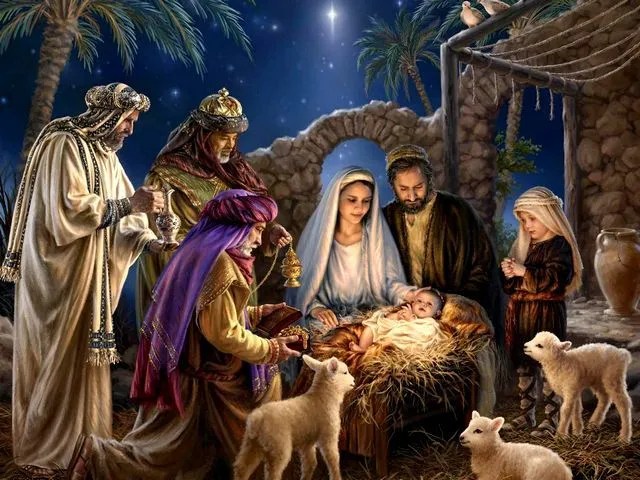
Sunday, 25 November 2018 : Solemnity of Our Lord Jesus Christ, King of the Universe, Thirty-Fourth Sunday of Ordinary Time (Homily and Scripture Reflections)

Liturgical Colour : White

Dear brothers and sisters in Christ, this Sunday we celebrate the last Sunday in our current liturgical year, and more importantly the great Solemnity of Jesus Christ the King, King and Master of all the Universe, Lord of all creation. Today we celebrate the divine and true kingship of Christ, which corresponds to the authority which Our Lord has over all things, and above all worldly and earthly authorities.

In the first reading today, taken from the Book of the prophet Daniel, we heard about the vision which Daniel received of the heavenly glory of God, in which He saw the revelation of the Holy Trinity, the One of Great Age Who is the Father, giving all power and authority over all things, over all of the world, all dominion and glory to the Son of Man, the Son, Jesus Christ, Who has been sent into the world to bring all things to Himself, Lord and King of all.

Through that vision, the fact of the kingship of Our Lord Jesus Christ is eternal and unrivalled, and that He is the One True King of all, from whom ultimately, all authority, power, and honour came from. God Who is the Creator of all things, naturally has the jurisdiction and authority over all creation. And thus, He is both our Creator and our King, the very centre and focus of our whole lives.

This is what the Lord Himself reiterated in the Gospel passage we heard today, of the account of the encounter between the Lord Jesus and Pontius Pilate, governor of Judea, just before the Lord was to be sentenced to die on the cross. When asked if He was the King of the Jews, not only that the Lord reaffirmed that He is the King, and not just any king, for His kingship transcends any earthly kingdoms and dominions.

And therefore, brothers and sisters in Christ, today, as we rejoice together as one universal Church, for our glorious and ever mighty King, let us all spend some time to reflect on our own lives and actions thus far. A king is not a king without a country and without its people, and in a kingdom, the people obey the laws and the regulations and rules as decided by the king and his advisors.

Therefore, if we are indeed God’s people, and if we acknowledge Him as our Lord and King, then naturally and rightfully, we must follow and obey God’s Law, as the Lord has commanded it and revealed it, through His Son, Jesus Christ, Our King Himself, and passed on to His Church through His Apostles and their successors, which constitute the Church of God, preserving the truth and the commandments of God down through the ages till this day.

Yet, unfortunately, in how we act and behave, many of us Christians have not been exemplary and good in how we lived our lives. We have not obeyed the Lord’s commandments and laws, and instead, lived our lives in accordance to how we liked to live them, especially following the ways of the world, the ways of pride, greed and human desires. We have chosen to side with the world and with the forces of the evil one, rather than with God, our true King.

Pope Pius XI through his Encyclical Quas Primas published in the year of Our Lord 1925 established this Feast and Solemnity of Jesus Christ Our Lord, the King of the Universe, just several years after the end of the Great War, later to be known as the First World War, at the time when the world was going through great upheavals and changes, where the authority of Christ as the true Lord and King of all mankind was being challenged, by all those who championed atheism such as the Communist states, and also from those who wished to secularise the society, by distancing God and the Church from the people’s daily living.

If we really consider God as our Lord and King, then naturally we should strive to do what the Lord has commanded us to do, and do our best to follow His ways. Unfortunately, this is not something that can easily be done, as temptations and challenges are plenty, and there are always pressures and forces that are trying to pull us away and to distract us from our focus on God.

This is why, it is important that we now make the conscious effort to focus our attention on God, and to resist those temptations, of power, of wealth, of pleasures of the world and other forms of worldly attachments and glories, which can become serious obstacles in the way of our faith and obedience to God. Satan knows very well what he needs to do in order to keep us away from attaining salvation in God.

Brothers and sisters in Christ, today we are called to reflect seriously on our lives and our actions, as we approach the end of the current liturgical cycle. Are we going to continue on living our lives in whatever way we see fit, succumbing to the temptations of the world, and therefore, treating not God but Satan as our king? Or are we willing to make the effort to turn once again towards God with a renewed faith and commitment to live our lives from now on, in accordance with God’s will?

If we truly consider God as King, then we must indeed allow Him to exercise His kingship over our lives, and over our every actions, that in all the things we do, we bring greater glory to God, and remain centred on Him in all that we think, say and do. We must keep Him at the centre of our existence, and carefully discern our way of life in accordance with what He has revealed to us and taught us, through His Church.

Therefore, today, let us all pray for one another, that each and every one of us may become ever closer and be ever more committed to God, and that God may be truly our King, not as a mere formality or in superficial terms only, but in our every actions and deeds, in every moment we live, and in our whole beings, that through us, not only that others may know that God is our King, but our lives also reflect the truth about Who our King is. After all, how can we call God our King if we do not act in the way as taught and shown by Him?

The Lord our God, our King, although He is a King, but He is also humble of heart, and is filled with love. Therefore, we should also fill ourselves with great humility and lots of love, in loving one another, and in ensuring that not our will be done, but God’s will instead. Let us all follow in the examples of Christ, Our Lord and King, in humble obedience to Him and in loving relationship with Him.

May the Lord Jesus Christ, Our Lord and King, be the King of our hearts, our minds, our bodies and over all of our beings, and may He continue to reign in our midst, His beloved people, that we may be ever faithful to Him, and grow ever closer in our faith and dedication to Him. May the Lord continue to be our guide and our strength, from now on, till forevermore. Amen.

Sunday, 18 November 2018 : Thirty-Third Sunday of Ordinary Time, Memorial of the Dedication of the Basilica of St. Peter and the Basilica of St. Paul Outside the Wall, World Day of the Poor (Homily and Scripture Reflections)

Liturgical Colour : Green

Dear brothers and sisters in Christ, on this Sunday we come closer to the end of our current liturgical year, and as a result, that is why the readings have that apocalyptic and premonition sense and tone. While the liturgical year itself is a cycle and will continue on to the next liturgical year, year after year, but at the same time, the end of the liturgical year is also symbolic of the coming of the end of time, as the Lord Himself had revealed.

The Lord revealed how the coming of the end of time will be swift and unpredictable, in the various occasions that He mentioned it throughout the Gospels, including what we have heard in today’s Gospel passage. No one knows the exact time when the Lord will come again, to enact the Last Judgment over all creation, over all of our souls, to determine our chosen fate, which we have chosen ourselves, out of free will. Whether we will join in God’s eternal glory in heaven, or whether we will be forever sundered from Him in the eternal damnation, all will be finalised at the Last Judgment.

In the Gospel passage today, the Lord mentioned that there would indeed be signs for the coming of the end times, as there would be increasing troubles and persecutions against those who are faithful to God. The account of the Book of Revelations according to St. John also confirmed this reality. And all agree that the Lord Jesus, the Son of Man, will come again at the end of time, and according to the Book of the prophet Daniel, His coming will also be heralded by St. Michael the Archangel, the Prince of the Heavenly Host.

The coming of that time will be joyful and bring probably indescribable happiness to all those who have kept their faith in God, for they have certainly suffered for many years and periods under the oppression and persecution by those who refused to believe in God. But for all those who have rejected God and refused to believe in Him and in all those who have spoken in His Name, there was only regret and eternal anguish, knowing that their fate had been decided by their own choice.

Brothers and sisters in Christ, what is important for each and every one of us to take note is the fact that we have been given the gift of free will by God, to choose whether we want to continue to disobey Him and listen to Satan’s sweet words of lie and distortion, which he had done with us ever since he corrupted Adam and Eve, our first parents, or we have the choice to repent our sins, and turn towards God with all of our hearts and minds.

And we have been given the wisdom to understand the ways of the Lord as well as the ways of the world. We have been given the ability to understand how we ought to act in the face of all that we have witnessed, heard and seen for ourselves. And yet, many of us still choose the wrong path to take, the one that leads into separation from God, and into the eternal damnation and suffering in hell.

Brothers and sisters in Christ, why is that so? That is because, we mankind are truly weak, vulnerable and at risk, from all the insidious and evil works of the devil and all of the forces in his disposal. He is full of things that he can use to tempt us and to make us fall into sin. And through disobedience and sin, we end up going further and further away from God, and eventually unless we make the effort to move away from this destination, we will end up where we deserve.

All of us have received the truth of God from the Church, from our priests and bishops, all those who have kept the truth of God alive throughout all these times. And yet, why is it that even many of us Christians are unable to keep up the same faith and the same commitment as those who have gone before us and led a life of holiness? That is because of the ever increasing and ever present pressures from the forces of the evil one.

We need to make a decision, right now, and think of what will be our lot, when the time comes for us to be judged based on what we have done, and what we have not done in our lives. We will be judged based on the good and wicked things we have done, and whatever good things we could have done, and yet, failed to do. And it is important that we know of the truth, that unless we do what is right, we will end up falling into eternal suffering.

Brothers and sisters in Christ, today we need to reexamine our lives, and realign ourselves to God, especially if we have fallen away and been stumbling in our path towards Him because of sin and the many temptations to sin. Let us all turn ourselves, and make the good efforts to make our lives to be in accordance to what the Lord has shown us and commanded us to do.

Let us not wait or tarry any longer, because just as we do not know of the time when the Lord will come again and therefore when the Last Judgment is, we also believe that the timing of death is something that we will never know for ourselves. Death is a certainty for all of us because of sin, and yet the timing of death ia an uncertainty to all of us. No one knows of the exact time when their earthly end will come, and when it comes, we will also go through a particular judgment for each one of us, determining our fate for eternity to come.

May the Lord therefore be our Guide and may He continue to strengthen us, and show us the way, that we will not be easily tempted to turn away from Him. Let us also make the conscious effort to resist the allures and the falsehoods of Satan, and to be righteous and just in all of our actions, to the best of our abilities, from now on. May God bless us always, and may He continue to be with us, now and forevermore. Amen.

Sunday, 11 November 2018 : Thirty-Second Sunday of Ordinary Time (Homily and Scripture Reflections)

Liturgical Colour : Green

Dear brothers and sisters in Christ, in this Sunday’s Scripture readings we are reminded that as Christians, in following God, we must always be generous in giving, and not to be stingy or greedy, in keeping all that we have to ourselves. This is shown through the reading taken from the story of the prophet Elijah and the widow of Zarephath, the passage from the Epistle of St. Paul to the Hebrews relating to us the loving sacrifice of Christ, and finally the story of the giving of the old woman who gave two copper coins to the Temple in our Gospel passage today.

First of all, the story of the prophet Elijah and the faithful widow of Zarephath happened at the time when the whole of Israel and the region was suffering from a great drought and famine, where rain did not fall for several years. Without rain the crops could not grow, and hence man and cattle alike suffered in great hunger. And this came about because of the great sins which the people of Israel and their king had committed before God.

The king of Israel at that time, king Ahab, was notorious among the many other kings of Israel, then ruling only the northern half of the divided kingdom of David and Solomon. Many of the kings of the northern kingdom were wicked in their actions and lives, and did not obey God as they should have done. As a result they led the people to sin, and king Ahab was noted as the one who was particularly wicked, especially due to the influence of his queen, Jezebel.

King Ahab further spread the worship of the pagan gods such as Baal, Asherah and many other Canaanite gods that the Israelites were exposed to from their neighbours. And the king also persecuted the faithful and those whom God sent to help save His people, that is the prophets. He also persecuted the prophet Elijah, who had to flee the persecution for the king and his forces were after his life.

As the sign of divine displeasure at the wickedness which all of Israel at that time, the prophet Elijah showed a sign, by which there was to be no rain throughout the land for three years, for the sins committed by Israel and its king. And it was in this state of the land in drought and famine that the interaction between the prophet Elijah and the widow of the city of Zarephath took place.

Zarephath itself was a small town in Sidon, in the land which was not considered as part of the land of Israel. It was the land of the Phoenicians, and likely that widow was not an Israelite. At that time, a non-Israelite person was usually considered as a pagan, as unbelievers who did not believe in God. They were often looked at with disdain and dismissed as unworthy by the Israelites who took pride in their status as the chosen race and people of God.

Interestingly, this is parallel to what we have heard in our Gospel passage today, regarding the moment when the Lord Jesus and His disciples were ar the Temple of God, and saw how an old woman placed a mere two pieces of copper coins, which had a very small value at that time, as compared to the rich people, who put in a lot of offerings and rich gifts to the Temple of God. And consequently, people must have paid attention to what those rich men had been doing, and ignored or even looked down on the old woman who gave so little in comparison.

And yet, we see in both circumstances, we see how those who were proud and filled with ego, faltered in the end, and compared to the ones who were looked down upon, ostracised, marginalised and discredited against, the latter ones were the ones who were in truth, truly faithful to the Lord. They put their faith and trust in the Lord and gave generously from whatever it was that they had, even those that they needed for themselves to survive on.

Surely as was in the case of the widow of Zarephath, she did have and show her reservations, and she was indeed afraid that she did not even have enough for herself and for her son to eat one last meal, when the prophet Elijah asked her for some flour and oil to make him a bread to eat. But in the end, she chose to trust in God and in the words of the prophet Elijah. She took the flour and oil and obeyed God even if that meant taking something from what she could have made for herself and her son one last meal.

Like the poor old woman in the Temple, the widow of Zarephath chose to trust in God wholeheartedly and gave even from her poverty. For the widow of Zarephath, she gave whatever food she could provide for the sustenance of God’s servant, Elijah, and for the old woman in the Temple, she gave everything that she could give, possibly most of her wage and possessions, for the Lord.

Brothers and sisters in Christ, have we been touched by the examples of these courageous women, who were counted among those who were always maltreated, ignored and ostracised from within our own communities? And ultimately, the best of all, as mentioned in the Epistle of St. Paul to the Hebrews, the Jewish Christians, that the Lord Himself has given everything, in ultimate obedience to His Father.

How is that so? Through the suffering that Our Lord Jesus Christ willingly endured for our salvation, He has placed Himself in complete trust to the will of His Father, despite the enormous and unimaginable sufferings and pains that He had to endure for our sake. Ultimately His even more unimaginably great love for each and every one of us is the reason why He was ready to take up the burden of the cross.

Brothers and sisters in Christ, let us all therefore do the same with ourselves, and learn to put our trust in God, by not fearing to give and share what we have for the greater glory of God, by sharing these blessings we have, in loving our fellow men and caring for those who are needy. If we do this, and if we have love for our fellow men, then we are doing what Christ Himself had done, and in doing so, we obey the Lord and love Him in the best way possible, remembering His own words, “that whatever you have done for the least among you, you have done it unto Me.”

Let us all therefore learn to love God with a new zeal and effort from now on. Let us turn to Him with our whole heart, imitating the great faith and dedication that the widow of Zarephath and the old woman in the Temple had shown us. Let us remember, that if we give it all to the Lord, and not worrying about the various concerns we may have over giving of ourselves to God, the Lord Himself will provide for us, as He did with the widow of Zarephath.

May the Lord bless us always, and may He continue to guide us in our path at all times. May He remain by our side, strengthening us and keeping us in His loving embrace, each and every moments of our lives. May God bless us all, now and forevermore. Amen.

Sunday, 4 November 2018 : Thirty-First Sunday of Ordinary Time (Homily and Scripture Reflections)

Liturgical Colour : Green

Dear brothers and sisters in Christ, on this Sunday, the readings from the Scriptures are about God’s Law, and the need for us all to listen to the Law of God, to accept them and to put them into practice in our own lives, but with good understanding and appreciation of what the Law is all about, and this is important because otherwise, we will end up falling into the same trap into which the Pharisees and the teachers of the Law had fallen into.

What does this mean, brothers and sisters in Christ? It means that we should not follow the hypocrisy of the Pharisees and the teachers of the Law who professed to believe in the Law and in fact, as the ones who regulated and enforced the Law, and yet, they did not know what is the true meaning and significance of the Law. Many of them observed the Law for the wrong reason and with the wrong intention.

The Pharisees and the teachers of the Law stressed a very strict application of the laws of Moses, which can be found in the book of Exodus and Leviticus in the Old Testament, as well as the traditions and practices which had been handed down the generations of the people of Israel. There were in total six hundred and thirteen set of laws, rules and regulations that the people of God had to obey and fulfil, down to the smallest details of how one should live their lives.

These laws had to be understood in the context of history and how the law came to be. The Law was given to the people of God, Israel, as part of the Covenant that God established with them, just right after He liberated them from their slavery at the land of Egypt. God gave them the Law through Moses, which showed them various aspects of how they ought to live and survive through the difficult and challenging times, at the time when Israel was still trying to find its identity and place among the nations.

For once, the Israelites were then a stubborn and obstinate bunch of people, who frequently and repeatedly rebelled against the Lord, as was evident from the accounts of the Exodus from Egypt. They had to endure a forty years detour and wait before they were allowed to enter the Promised Land of Canaan, after even though God had reassured them and showed them His providence and love throughout their journey, they chose willingly to abandon God and give in to their fears instead.

They failed to trust God, many times, as shown how just right after they were liberated from Egypt, they gave in to temptation, making a golden calf to be god for them, when Moses went up the mountain of Sinai to receive God’s commandments and Law. They grumbled and had many qualms, when the Lord had fed them daily with manna, the bread of Angels from heaven, and with large birds providing them with meat, and sweet, good tasting water from the rock.

Thus, in order to discipline a people that was so stubborn and obstinate, God gave them the Law in order to remind them to turn away from all their sins and wickedness, and for them to rediscover their love for God, by following the precepts and the rules of the Law. However, although the intention of the Law was good and the early application of the Law was meaningful, but in time, the elders, the priests and eventually the Pharisees and the teachers of the Law at the time of Jesus misunderstood and misinterpreted the Law, in its practice, meaning and intention.

They took the Law as a list of punitive regulations to be enforced among the people of Israel, and used them as benchmark of who was to be considered as faithful and who was to be considered as unfaithful. In time to come, this ended up creating divisions in the society, with the Pharisees, the teachers of the Law and the priests claiming themselves to be pious and good because of their observance of the Law, and looking down on the others, whom to them, were not as pious as they were.

Instead of bringing mankind closer to God as He intended, the Law was misused by those mentioned earlier, in keeping people away from God, by their judgmental attitude towards those whom they considered to be inferior to them in the matter of faith. They looked down on tax collectors, prostitutes and all others who suffered physical disabilities, such as blindness, paralysis and epilepsy.

To the Pharisees and the teachers of the Law, those sicknesses and professions are signs of them being cursed and unworthy of God’s love and grace. To them, they were the only ones who were worthy of God, and all others had to obey the way of the Law they prescribed to, or else, they too would be cast out from God’s grace. They espoused a very exclusivist attitude and perspective of the Law, one that is not focused on God, but on themselves, their ego, pride and desire.

Brothers and sisters in Christ, this is why, we need to appreciate and understand the true meaning and intention of God’s Law, which He has revealed unto us, through none other than His Son, Our Lord Jesus Christ, Who revealed the truth of God to all of us, His people. This is summarised succinctly in the Gospel passage we heard today, revealing to us the whole truth about what God intends to do with us through His Law.

And the heart and intention of the Law is love, and because of that, through the Law, God wants His people to rediscover the love which they ought to have for Him, and which they also ought to have for one another. The Lord came into this world, in order to dispel all the erroneous and false ways of the past elders and teachers of the Law, who had misinterpreted the Law of God and enforced an unjust and undue pressure on the people because of their misuse of the Law.

The Lord challenged all those who heard Him, to break free from that misunderstanding and the wrong ways in which they have done, in fulfilling the obligations of the Law. Instead of being self-centred and self-serving as the Pharisees and the teachers of the Law had been, we are called to refocus our attention to the Lord. The laws, rules and regulations that has been given to us, now renewed through the Church, must not be seen as burden or formalities that we need to fulfil in order to gain ourselves righteousness.

Otherwise, that is why, even within our Church today, there are many who did what the Church had commanded us to do, and yet, in their hearts and minds, God did not truly have a place in them. Indeed, it is possible for someone to act justly and piously in accordance with the Law and the Church rules and regulations, and yet, for the same person to have little or no love for God. That was how most of the Pharisees and the teachers of the Law acted, practicing the Law without understanding the spirit of the Law.

Brothers and sisters in Christ, that is why today, we are all called to turn ourselves wholeheartedly to the Lord once again, by rediscovering for ourselves what it truly means for us to be Christians. We must have love in us, and this is important as love is at the centre of our Christian faith and livelihood. Without love, for God and for others, then we will have no real and genuine faith in us.

The Lord Himself said that no matter how wonderful the things and the talents that we have, no matter what abilities we have, or even if we are able to speak in the tongue of Angels, but we have no love in us, then everything is meaningless. Without love, there can be no faith, for without love, how can we then believe in God Who is all about love? We call ourselves as Christians because we believe in Christ, Who is the personification of God’s ultimate love for us.

Let us all love one another just as the Lord Himself has loved us. Look at the example of Our Lord Jesus, Who gave Himself and His life for us, dying on the cross for our sake, willingly bearing the sins of ours because of His love for us, that He does not want us to be eternally separated from Him because of those sins. The Lord Jesus obeyed His Father’s will, and loved His Father, and because of that, He also loved us. In the perfect love which God has shown us, the perfect love between the Father, Son and the Holy Spirit, all of us are called to emulate this love in our own living.

Let us grow deeper in the understanding of our faith, the practices and customs of our faith, and all that the Church had given us through its teachings, the commandments of God and the laws of the Church. Let us appreciate better how we can grow ever more in our love for God through these, by meaningful and genuine participation in the life of the Church, from active participation in regular Holy Mass, and many other forms of our Christian worship.

May the Lord continue to guide each and every one of us, that through His Law of love, we may be able to find our way to Him, and be able to turn ourselves to Him, that we may love Him ever more wholeheartedly from now on. May God bless us all, now and forevermore. Amen.

Sunday, 28 October 2018 : Thirtieth Sunday of Ordinary Time, Feast of St. Simon and St. Jude, Apostles (Homily and Scripture Reflections)

Liturgical Colour : Green

Dear brothers and sisters in Christ, on this Sunday we listened to the words of the Lord in the Scripture passages, beginning with the promise of salvation which God would show His people, Israel, as He prophesied through His servant Jeremiah in the Old Testament, and then, what we heard from St. Paul in his Epistle to the Jewish Christians, about the coming of Christ, Who is the High Priest of all the faithful, in Whom is found the salvation of the world.

In the Scripture readings today therefore, we heard about the the love and mercy which God has shown to us all, to His beloved people, a reminder of the constant gift which the Lord has given us despite all of our disobedience, rebelliousness and the refusals we have made against Him. The prophecy made through the prophet Jeremiah had to be understood in the context of what happened at the time, when the people at the kingdom of Judah was suffering and was in the brink of annihilation, having been subjugated by their enemies, principally the Babylonians.

It was a time when everything seemed to be hopeless, and the enemies of Israel were mounting and plotting against them. Yet, the people of God still rebelled against Him and did what was wicked in the sight of men and God alike. They worshipped pagan idols, committing adulterous and wicked actions in life, and refused to listen to the words of the prophets sent to them to remind them of God’s love and mercy, including that of prophet Jeremiah.

The prophet had to suffer persecution from all those who resisted God’s will and those who turned a deaf ear to the word of God. The king and his nobles, the people and many of the members of the community continued to sin against God, and even considered Jeremiah as the bearer of bad and wicked news, when he continued to prophecy about the destruction of Judah and Jerusalem, as well as its Temple because of the sins of Israel. But Jeremiah through today’s passage, showed us that God, despite of His anger against the sins committed by His people, He still loved them and wanted them to be reconciled with Him.

The second reading today, as mentioned, is taken from the Epistle of St. Paul to the Hebrews. Again in that occasion, the Lord spoke to His people through St. Paul, His Apostle, reminding them of the great love and mercy which He showed them, by the perfect gift of Jesus Christ, His Son, Who was appointed the One and True High Priest of all, above all other High Priests of the people of God since the time of Aaron. Christ is the ultimate sign and symbol of God’s love.

How is that so? First of all, as mentioned by St. Paul, the High Priest appointed by God ever since the day of Moses and Aaron is supposed to be the one through whom God exercised His mercy and forgiveness of the sins of the people, by the means of offerings of sin offering and love offering on the Altar of God. The animal offering was meant to be atonement for the sins of the people, and since the High Priest himself was also a sinner, then he was also offering the sin offering for himself.

But the Lord Jesus, the One True High Priest is blameless and without sin, as He is both the Son of God and the Son of Man, having in Himself the perfection of divinity and the perfection of humanity, having two natures of divine and human united in His person. He also offered not the imperfect offering of lambs and goats, their blood and fats, which although according to the Law, only physically blameless and good quality animals should be chosen, but they paled in comparison to the offering that the Lord Jesus made.

For in the Lord Jesus, the Lord our God showed the perfection and the perfect manifestation of His love and compassion for us, His beloved people, whom He loved despite our sins and rebelliousness, as the example from the Old Testament had shown us earlier. God was patient and filled with love for us, His people, that despite the sins which Israel had done in the past, He forgave them and still brought them to the Land which He promised them and their ancestors.

And He forgave them many times, when He brought them back from exile in Babylon, and continued to take care of them, sending them prophets and messengers, one after another, to remind them of the promise of the salvation He has given to them, and calling on them to remain faithful and true to the Law and the teachings which He has revealed to them. And in Jesus, the Lord’s faithfulness and promises were fulfilled completely.

How is that so? The Lord Jesus came and showed the Lord’s mercy, when He healed the sick and the people who were dying, those who were ostracised and shunned by the society, and calling them back to the right path towards God, healing them both from their physical afflictions and spiritual sickness, caused by sin and disobedience. One example was what we have just heard in the Gospel today, as the Lord healed the blind man who called on Him for help and for healing.

But even more so, the Lord Jesus did not come just to heal and to perform all those miracles as He had done before the people, but He showed His love for us, so great and so amazing, in a way that He Himself had said to His disciples, that there is no greater love than for someone to lay down his life for his friend. He laid down His own life, by suffering on the Cross, that through that act, offering His own Flesh and Blood, to be the perfect offering for our sins.

Through that act of ultimate sacrifice and selfless love on the Cross, the Lord showed us all, that He is truly a loving and merciful God, Who was willing to endure such pain, such suffering, such tribulation and difficulty, just so that, by His death, we may be spared our fate of eternal death, because of our sins. Instead, by sharing in His death and united through His resurrection from the dead, we are freed from that terrible fate, and receive a new hope of a new life in God.

Today, all of us ought to spend some time to reflect on this reality, the love of God which He has shown so generously towards each and every one of us, that He willingly took up upon Himself our sins, and to bear them patiently, that as our True and Eternal High Priest, His prayers for our supplication and for the atonement of our sins are heard by God, His heavenly Father. Through the obedience of Christ, our High Priest and the New Adam, all of us who believe in Him are saved.

Brothers and sisters in Christ, today we also celebrate the feast of two of Christ’s Apostles, St. Simon and St. Jude, both of whom dedicated their lives after they accepted the calling to be an Apostle of the Lord, and they worked hard in evangelising and preaching in faraway lands, speaking the truth about God and His love, His sacrificial gift to all mankind, and the call to repentance, that all the children of God may be reconciled to their loving and merciful God.

St. Simon and St. Jude went to various places, spreading the word of God, suffering persecutions and troubles from those who refused to believe in the truth they brought with them. But they placed their trust in the Lord, and they were encouraged and empowered by the knowledge of the love which God had generously given to them and to all mankind. Truly, if God Himself had suffered for the sake of all men, then what was their suffering compared to God’s suffering?

Although St. Simon and St. Jude, Holy Apostles of Our Lord died in martyrdom against those who refused to believe in the Lord, but this inspired only even more people who wanted to follow the Lord through their courageous examples. Now, we are therefore also called to emulate their examples, and to live faithfully in accordance with the will of God. Are we able to devote ourselves in the same way as they have done?

Let us remember, brothers and sisters in Christ, that as Christians, we know how much God loves each and every one of us, and as a result, we should also love Him in the same manner. We can do so, by living a virtuous and courageous Christian life and distancing ourselves from sin. Let us all turn to God with a renewed faith and with a new love that comes from within us. May God be with us always, and may He continue to guide us in this journey of life. St. Simon and St. Jude, Holy Apostles of Our Lord, pray for us. Amen.

Sunday, 21 October 2018 : Twenty-Ninth Sunday of Ordinary Time (Homily and Scripture Reflections)

Liturgical Colour : Green

Dear brothers and sisters in Christ, on this Sunday we listened to the words of the Scripture with regards to our calling as Christians, through our belief in our Lord Jesus Christ. We are called to follow the examples shown by the Lord, and to listen to Him, in what He has revealed and taught to us. And the essence of Christian discipleship is that of humility and the total giving of oneself to the will of God, and not to give in to our selfish, human desires.

Today, in the first reading we heard from the passage taken from the Book of the prophet Isaiah, which spoke of the prophecy of the suffering Messiah, foretelling what would happen to the faithful and true servant of God, the Messiah, Whom the Lord has promised to send to His people as the source of their deliverance. But through that suffering and selfless offering of Himself, God has willed to save all of His people, that by His sacrifice, He justified many through His death.

This prophecy was fulfilled in the Lord Jesus Christ, Who came into the world, sent by the Father, to be the Saviour of the world. He is the Messiah long awaited by the people of Israel, and the One Whom all mankind had been waiting for, since the time of their downfall into the tyranny of sin. However, He was deeply misunderstood by His own people, many of them who refused to believe that He is the Messiah of God.

To the Jews, who were looking forward to salvation through the Messiah, many of them were expecting a mighty and powerful King to come and lead them against their oppressors and the Romans, who were the masters of most of the known world at the time. The Jewish people did not expect at all that their Messiah would be One Who was totally without worldly ambitions, or the One Who would bear suffering and humiliation to such an extent that He became even the lowliest and the most humiliated of all beings.

This is a reality which many of the Jews during the time of Jesus’ ministry failed to understand, as they had different expectation of what the Messiah would be like and what He would do for their sake. They were expecting an immediate liberation from all worldly woes, the restoration of the glorious and earthly kingdom of Israel as how it was during the time of King David and Solomon. But that was not how God had desired it, for His kingdom was truly one that surpasses this world.

The second reading today, taken from the Epistle of St. Paul to the Hebrews, is the revelation of the truth of God to the Jewish people, especially to those Jews who have willingly accepted the Lord Jesus as their Messiah. St. Paul reiterated in his Epistle that the Lord Jesus is the One and True Eternal High Priest of all mankind, by the virtue of His sacrificial and perfect selfless love offering on the Altar of the Cross.

St. Paul reiterated the truth about what the Messiah of God came into this world to do, dispelling the misconceptions that He would be a powerful and conquering King, and instead, He came as a King in all humility, to serve His people, and to show the Lord’s mercy to His people. And He did all of these through His perfect obedience to the will of His Father in heaven, offering Himself as the perfect and only offering that is worthy of the salvation of all mankind, and Him as the High Priest, offering His own Body and Blood as the means of the absolution of our sins.

In doing this, He fulfilled the prophecy which Isaiah spoke about, and which was our first reading today. The prophet Isaiah spoke of an obedient and suffering servant, and by Christ’s perfect obedience and love for His Father, He willingly gathered to Himself all of our sins and the bonds and chains of our disobedience, and suffering the effects of our punishment. He patiently bore His cross on the way to Calvary, and offered Himself thoroughly as the means by which we may be freed from our sins.

Today, we also listened to the reading from the Holy Gospel written by St. Mark, in which we heard of the moment when the two disciples, St. James and St. John, brothers and sons of Zebedee, came up to the Lord Jesus and made a special request before Him. In another Gospel account, their mother also went with them before the Lord, and made the same request, that each one of them would be able to sit on the left and on the right hand of the Lord when He enters to His kingdom.

The significance of this is that, it precisely highlighted the attitude of the Jewish people in how they viewed the Messiah. The disciples wanted to gain favour with the Lord, and to gain even advantage over one another, a position more favourable, more prestigious and better in the sight of others. That is unfortunately, the reality of how things worked initially among the Apostles and the disciples of the Lord. That was why the Lord in other occasions as written in the Gospels, had to rebuke them for their grumbling and disagreements over who was the most esteemed and best among them.

Many of the people who followed the Lord Jesus also followed Him because of what they have seen, in His miraculous deeds and healings, in His wonderful teachings and popularity, and they hoped to gain from all of these, to gain benefit for themselves and perhaps to satisfy their own desires for worldly power, for honour, for worldly glory and honour, and for position in God’s promised kingdom to come.

But they failed to understand that the Lord’s ways are not like man’s ways. They thought that by following the Lord, they would gain favour and advantage for themselves, but unfortunately, the truth and reality is that, as the Lord Himself revealed to His people, that following Him would mean that they must suffer just as He has suffered, and they will experience rejection, pain and discomfort, just as He Himself had endured all of those.

The Lord foretold to them in the same Gospel passage that He would suffer, by referring to the cup that He was to drink. This is the same cup that the Lord Jesus mentioned to His Father, at the time of His agony in the Garden of Gethsemane, asking Him if it is possible, to let this cup of suffering pass Him by. In that we can see just how painful, heavy and terrible the burdens which Our Lord had willingly taken up on Himself, that He agonised it so in His humanity.

But the Lord obeyed His Father’s will, and surrendered Himself so completely to His Father that He willingly bore down the weight and burden of the cross, despite its pains and sufferings. He completed the task which the Father entrusted Him, and because of that, all of us have a new hope, through the loving and selfless sacrifice that Our Lord made on the cross, as the High Priest Who offered Himself for our salvation.

And He mentioned how the world will also hate His disciples just as they had hated Him. This is because of their inability to comprehend this mission which the Lord revealed unto His people. In addition, the ways of the world are also corresponding to the ways of sin and disobedience against God, and therefore, the Lord and His truth bring about opposition, challenges and difficulties to those who believe in them, because the devil is indeed actively at work trying to subvert God’s effort to save us mankind.

The reality of such suffering and trials have been evident throughout the history of the Church, during the many persecutions and troubles that Christians have suffered from all these centuries. But we should also then look at the examples of those many good and devout Christians, our predecessors in faith, who have withstood all these challenges and defended their faith even amidst the most vicious and harshest persecutions.

Brothers and sisters in Christ, now, for all of us, what we need to take note of from today’s Scripture passages is that first of all, we must not let our desire and greed, our selfishness and the weaknesses of our body to be stumbling blocks in the way of our faith. In our various groups and ministries serving the Church and the faithful, we often have bickering and disagreements, and sometimes even infighting and anger, which resulted from our own clashing desires and our inability to resist the many temptations of life.

Brothers and sisters in Christ, today, we are challenged by the Lord Who calls each and every one of us to be His followers. And in order for us to be able to follow Him, then we must have love for God, and must centre ourselves upon Him and the truth which He has revealed and taught us. Only then that we will be able to become Christ’s true disciples. We must overcome our desires in life, and all sorts of obstacles that prevented us from carrying out what we are supposed to do as Christians.

That is why, brothers and sisters in Christ, it is important for us to follow Christ’s examples, His obedience to the will of His Father, and His love for each and every one of us, which allowed Him to bear His Cross of suffering for our sake. Had Christ not suffered or died for us, then there would have been no salvation, and all of us would still have existed under the tyranny and bondage of our sins.

Let us all be converted, and turn ourselves wholeheartedly to the Lord, by showing more love in our every moment’s actions and deeds, wherever we are, that we can be as selfless and as loving as Christ had been, in forgiving one another our sins and faults to each other, just as Christ has forgiven us from our sins, despite having to bear those sins and all of their punishments and consequences. Let us remember the great love which He has shown us from the cross, and show that same love in our every action from now on.

As Christians, let us be humble and not proud, be loving and not be filled with hatred, be gentle and not be easily provoked with anger, be filled with hope and not be despairing, be ready to serve others and to love them rather than to expect to be loved and served by others. Let us all be filled with Christ’s love in all things, so that in everything we say, act and do, we will always be loving just as our Lord is loving, and forgive just as we have been forgiven. This is our calling as Christians.

May the Lord be our guide, and may He continue to love us as He has always done, that each and every one of us may imitate the same love that He has shown us. Let us all live our lives from now on with a renewed faith and zeal, and do our best in order to love and serve the Lord, and love our fellow brothers and sisters, despite the persecutions, challenges and obstacles we may encounter on our journey. May God be with us always, now and forevermore. Amen.

Sunday, 14 October 2018 : Twenty-Eighth Sunday of Ordinary Time (Homily and Scripture Reflections)

Liturgical Colour : Green

Dear brothers and sisters in Christ, on this Sunday we are reminded of the Lord Who has given us His wisdom and His words of truth, as He revealed through His own Son, Our Lord Jesus Christ, Who came into this world bearing the revelation of the divine truth, and then later on, by the sending of the Holy Spirit into this world, to be with the Apostles and the disciples, and therefore, to be with His Church.

God’s wisdom and truth are indeed so wonderful, that He has desired to give us this wisdom and truth, because of the great love which He has for each and every one of us. Through His wisdom and truth, God revealed to us what it is that He desires from each one of us, and how we should live our lives, in accordance with His will, and with the way that He has shown us. And that is what He presented before us through our Gospel passage today.

In that Gospel passage, we heard of a young, rich man, who came to the Lord Jesus, with the desire to gain eternal life. The Lord then told the young man first, whether he has obeyed and fulfilled the commandments of the Law as revealed through Moses. The young man replied that he has fulfilled the many commandments and kept them closely throughout his life, having been an obedient member of the Jewish community.

But then, the Lord asked him to do something that he could not bear doing, that is, to sell away all of his riches and to give them all to the poor, leaving everything behind and follow Him as His disciple. The young man immediately went away in sorrow, not being able to do what the Lord had asked of him, because he had great amount of wealth with him. It is likely that he could not bear to be separated from all those worldly achievements that he had gained and possessed.

Brothers and sisters in Christ, what is then the significance of what we have just heard in the Scripture passages, particularly that of the Gospel? First of all, we must not interpret the meaning of the Scripture literally, thinking that we should equate following the Lord with the total abandonment and selling of all of our worldly possessions and goods, for this is called interpreting God’s words without understanding the context.

Yes, indeed, there are those among us who are called to do so as part of their vocation, as religious nuns and monks, who left behind everything to live a life of total commitment to God, but that does not mean for the rest of us, we should just follow what we heard to the letter without understanding its meaning. Instead, we are called to listen to the word of God, speaking in the depth of our hearts and minds, and discern carefully on what it is that He wants us to do in our lives.

The issue which the Lord brought up in our Gospel occasion today, is that we mankind, even though we may be able to fulfil our obligations and our duties in our faith in God, but we can precisely do such efforts even without truly appreciating the true purpose and intention of why we do what we are doing, as part of our faith. The young and rich man fulfilled all the obligations of the Law, but in truth, he was not able to dedicate himself fully to the Lord, as shown when he was called by the Lord to dedicate himself fully to Him.

He was not able to commit, and left in sorrow because ultimately, he loved his riches and goods more than that of the Lord, and given the choice between those things and God, ultimately, God was secondary in importance to him. Then, if we carefully scrutinise what the young man said, he asked the Lord Jesus, “Good Master, what must I do in order to gain eternal life?”, in this question lies a desire from the man to want something for his own satisfaction.

What do I mean by this? The man asked Jesus in that manner, out of desire to gain for himself eternal life, and probably not because he truly loves God. This is a reality that exists even within our Church, where there are many among us faithful who have our faith and practice things within our faith, the various devotions, prayers and actions, because we want something for ourselves, be it for personal glory and fame, or for personal salvation and benefit.

It is not wrong that we want to be saved, for indeed, if we want to be saved, then we must seek it and desire it, otherwise, how will we then attain salvation if we ourselves do not want it in the first place? But we must not let that desire to supersede first and foremost, our love for God. Ultimately, we want to be saved and gain eternal life, not because we are afraid of hell or punishment from God, but rather, because we want to be together again with God and be reconciled with Him.

Now, brothers and sisters in Christ, today we are called to rediscover this purpose of our faith and our lives. If we have been wayward all these while, failing to recognise these shortcomings of our lives, and if we have been disobedient and been unable to give our best in serving the Lord, putting Him in secondary and even worse places in our hearts and minds, then perhaps, we should really consider spending some time in prayer and in the quietness of our hearts, in order to find out what it is that we can do, in order to become closer to God.

The Lord reminds us through the same Gospel passage, that the path to enter the kingdom of heaven is narrow and difficult, but at the same time, also manageable and accessible, given that we put our trust not in the human wisdom, power and intellect, but instead, in the wisdom and the power of God. Many of us failed to make progress because we are not having the correct focus in life, and we are easily distracted, as we depend too much on our worldly possessions, power and other achievements, and we end up becoming too attached to all of them.

Let us look at these examples, brothers and sisters in Christ, beginning with those who think that just by doing what we are supposed to do for our faith, by coming to Mass every Sundays, and yet, we are not focused at all on the Lord and become easily distracted, because instead of focusing our attention on God, we cannot wait for the Mass to end so that we can go back to our various worldly commitments and activities.

And then, some of us profess to believe in God and followed all obligations of the Church, coming regularly for Mass and also become active part of various ministries in our parishes, but then, in how we behave towards one another, towards our fellow Christians, we scandalise our faith by our actions. Many of us brought slander and gossip into our interactions, even within the ministries and Church groups we are part of. We bicker and fight even over the smallest of matters and over trivial things.

That is exactly what happens when we allow our so called human wisdom, intellect, power and ability to take over and control us in what we say and do. The clashes and incompatibilities between our varying human desires and wants will end up tearing us apart and causing divisions among us. This is what we cannot and should not do with our lives. And as the example of the young and rich man in the Gospel passage today has shown us, we should strive to overcome our human desires and attachments to all sorts of temptations present in this world.

And this means that we must resist the temptation of worldly pleasures, power, prestige, honour, fame, glory, wealth and all sorts of things that can bring about unhealthy attachment and desire. It is not wrong for us to possess wealth or possessions, or to achieve something in our lives, but we cannot be overtaken and swallowed by our desires for those things.

Therefore, brothers and sisters in Christ, today, the Lord has called us all, each and every one of us, to be His true disciples. And that means, each and every one of us should respond with a thorough and genuine conversion of heart, changing our attitudes in life, from one that is world-centric and self-centric into one that is centred on God alone. Let us all turn towards God with a renewed faith, and with a renewed zeal, from now on. May the Lord be our guide in our journey towards Him and His everlasting life. Amen.

Sunday, 7 October 2018 : Twenty-Seventh Sunday of Ordinary Time, Memorial of Our Lady of the Rosary (Homily and Scripture Reflections)

Liturgical Colour : Green

Dear brothers and sisters in Christ, in today’s readings from the Scripture, we are reminded of the gift of blessings from God, in the form of holy matrimony, which God had decreed from the moment that He created us mankind, man and woman, to complement each other and to be united with one another in a holy union blessed by God. This union was mentioned in the first reading we have today, in the Book of Genesis.

The Lord created mankind first with a man, Adam, who was all alone among his race, while God created all creatures male and female, according to their natures. And that was why, God created a woman, Eve, who was taken from the man, in a very symbolic act of taking the bone and the flesh from Adam when he was in a deep sleep, and God made woman out of man. Regardless whether it was how God actually created us mankind, the truth and reality remains that God made us man and woman.

And the act of taking the bone and the flesh from Adam is in fact God’s reminder for us that we were created to be for one another, to share the love that God has given us, and to complement each other. And our relationship and union, in the sacred bond of matrimony, between a man and a woman, is in fact a reflection and imitation of God’s own perfect union of love, which is present in the Holy Trinity of God the Father, Son and the Holy Spirit.

Through the sacred bond of matrimony, God also blesses us with children, as His gifts of love for us, to be fruitful and bountiful just as He has commanded us man at the beginning of creation, and to multiply and to fill the earth with our kind. This was the foundation of families and the foundation of our human communities, and indeed, the foundation of our faith and our Church.

For all of us have been born into this world as a small, little baby, each one of us, growing up in a family, where God’s love was given to us through our fathers and our mothers. And it is in the family that all of us learn what it truly means to be human beings, to be those whom the Lord has given intellect, wisdom and the ability to survive in this world. Without our families, then our human society will eventually perish and be destroyed.

Similarly, the family is the foundation and the core part of our Church and faith, as it is through the family that the faith, which has been preserved by the Church, is imparted at the beginning to the small children, baptised and raised in good faith by their parents. If the children were not raised well by their parents, ultimately, not only that they will likely lose faith, but they will also grow to be people who are without love in their hearts, capable of committing all sorts of wickedness and atrocities.

Unfortunately, brothers and sisters in Christ, the reality is such that, the foundation of our family and marriage life has always been shaken very badly right from the beginning of time. Throughout the Bible, in the Old Testament and even in the New Testament, there had been cases when the people who have agreed to be joined in blessed union of matrimony, sought instead to break that bond for various reasons, that is divorce.

First of all, we must understand that the Church does allow for certain exceptional cases where the marriage was not consummated and with various other valid considerations and conditions where the Church decided that the couple can be granted an annulment. An annulment is different from the case of divorce, in that the marriage was considered to have never taken place at all in the eyes of God and the Church.

However, what the Lord Jesus was referring to, in our Gospel passage today, when the Pharisees looked for Him and tried to test Him on the matter of marriage and divorce, was that of validly contracted marriages and unions which were deliberately sought to be broken by the desires of man. And the Pharisees argued that they were allowed to divorce as according to the Law of Moses, as long as settlement has been made and documents have been signed and agreed on, the marriage can be dissolved easily.

But God made it very clear to the people, that the matter of marriage is in fact not just a formality, which can be easily overwritten and overridden by the statutes of human laws, customs and practices. Instead, as mentioned, the bond of marriage is a matter of divine law, a divine union blessed by none other than God, Who has decreed that a man and a woman are united in the same love that unites the Holy Trinity together, and what He has united, no man should divide.

This, in truth, is the foundation of our marriages and families, and why we should indeed put a lot of attention to them. The devil knows this as well, and that is why, he is always on the offensive, trying to strike at us, God’s children, in our marriage and family life, that by destroying this important unit and foundation of our Church and faith, he can lure more souls into the damnation in hell.

In many cases of divorce, it was caused by our human frailty and inability to resist the temptation of the pleasures of the flesh, as well as other desires. Many people fell into adultery because of their inability to resist the temptations of their flesh, which are constantly persuading them to turn away from the Lord’s path and into the path of debauchery and unfaithfulness. Many have not been faithful to their respective spouses, and this resulted in the breaking away of families.

And when we become divided, we end up losing our faith, and the children are also badly and negatively affected. The devil then has a great time trying to pull us into ever deeper trap of his temptations and false promises of pleasure, of glory, of material goods and other things that have become thorns in the body of our family and marriage. We find it hard to restrain the temptation to sexual pleasures, to materialism and many more things that made us to desire separation and ending of the sacred bond of matrimony.

Brothers and sisters in Christ, at the same time, we need to realise that there are just a lot of things that each one of us as Christians can contribute to help all those who are troubled in their family and marriage life. Even there may be those who are in our midst, and among those whom we know, that are currently suffering in their family and marriage. Are we then going to ignore them should they come to us seeking help, advice or assistance? Or are we going to lend them a listening ear and to extend our hands to help wherever possible?

Today, all of us also celebrate the feast of Our Lady of the Rosary, on the seventh day of October every year. This feast was once also known as the Feast of Our Lady of Victory, commemorated after the great victory of the Christian army and forces at the Battle of Lepanto against the enemies of Christ and His Church. At that time, the enemies of the Lord and His Church mustered a massive and overwhelmingly powerful forces, that threatened the very existence of Christendom, but through the intercession of the Blessed Virgin Mother of God, the Christian forces managed to obtain a decisive victory.

The significance of that event and this celebration then goes beyond just the historical importance of that victory to the survival of Christendom and the Christian faith as we know it. All of us must realise that we are in a constant battle, every single day and every single moments of our lives, against the devil and all of his evil forces seeking our downfall and damnation. He is the source of all of our troubles, including all the current forces and efforts aimed at the dismantling of our institution of sacred matrimony and the family.

That is why, at this moment, it is all the more important that we seek for necessary help in order to prevent us from falling into the temptations and into threat of eternal damnation. And the Lord has provided us a very good source of help, in His beloved mother, Mary, and through the rosary which she has introduced to us, through St. Dominic, and many other saints, through whom she revealed to us the rosary as a means by which we can come closer to God.

Why is that so? That is because the rosary is a series of prayers, which prominently involved the Hail Mary, a prayer invoking the prayers from Mary, the Blessed Mother of Our God, and also extolling the virtues of her life. Far from being a meaningless and repetitive prayer as many of its opponents and detractors often claimed, the rosary is a very effective weapon in our battle of life, against the forces of evil.

Many of us do not realise that we have often been lacking in our prayer life and in our spiritual development. And through the rosary, we are in fact reminded of the need to reorientate our lives to the Lord, by following the examples and the inspiration of Mary, the Mother of God, who is the perfect disciple and follower of God, in how she obeyed the Lord and put her trust in Him so completely, allowing God to do His wonderful works through her.

Therefore, brothers and sisters in Christ, let us all keep the sanctity of both our married life and family life, by putting God at the centre of our lives, by devoting ourselves more to His mother, Mary, that in this month of October, month of the Holy Rosary, we should spend time to pray together, as a family, together between husband and wife, and the children, asking for the intercession of Mary, that she will continue to pray for our sake and ask her Son to help us in our battle against evil.

Holy Mary, Mother of God, Our Lady of the Rosary, pray for us sinners and help us that we may imitate your examples in faith, in your obedience and devotion to your Son, Our Lord Jesus Christ. Amen.

Sunday, 30 September 2018 : Twenty-Sixth Sunday of Ordinary Time (Homily and Scripture Reflections)

Liturgical Colour : Green

Dear brothers and sisters in Christ, on this Sunday we listened to the word of God in the Scriptures speaking to us first about the calling which the Lord made to the seventy elders of Israel chosen from among the people during the time of the Exodus, in which He put in them their Holy Spirit, and they began to be inspired by the Spirit. But there were then two others who were also given the Spirit in the camp of the Israelites and were not among the seventy-two.

Joshua, the one who would eventually succeed Moses as the leader of Israel saw what happened to the two other people receiving the inspiration of the Holy Spirit, and he wanted to stop them. But Moses forbid him from doing so, and in fact he was pleased at the fact that God sent His Holy Spirit to even more people, and wished that He would send the Holy Spirit to all of His people, and not just the elders chosen from among them.

In the Gospel passage today, we also listened to something that is almost the same in occurrence, when the disciples of the Lord Jesus wanted to stop some others who were not with their group, and yet spoke about the Lord Jesus as the Messiah, and preached in His Name, using His Name to heal people and perform miracles. The disciples did not like this and wanted to stop the work of these people, only to be rebuked by the Lord, just as Moses rebuked Joshua.

Why did the disciples of the Lord did what they have done, and why did Joshua want to stop the two people from receiving God’s Holy Spirit? That was likely because of their inner pride and the desires within their hearts. Even though the disciples had followed the Lord and even though Joshua was likely quite a righteous man, considering that only he and another one of God’s follower survived the forty years of Exodus, but ultimately, all of them were still mortal human beings.

And that means, all of them are still subject to the same frailties and weaknesses that we encounter through our humanity. This is what the Lord said when He told His disciples who were sleeping when they were supposed to accompany Him and keep watch during His agony in the Garden of Gethsemane, ‘While the spirit is strong, but the flesh is weak.’ Temptations and allures of worldly pleasures are always by our side.

This is what St. James also wrote about in the second reading passage we have today, taken from his Epistle. He wrote about all those who have lived in riches and pleasures of life, and cheated others from their money, treated others badly and showing no regards for the needs of the hungry, the poor, the weak and the oppressed. This is truly mankind’s wicked side, which all of us unfortunately have. For even the poor and the hungry can oppress those who are even less fortunate from them, and not just the rich and the well-endowed.

In the Gospel passage today, the Lord also mentioned something that seemed to be quite radical. He mentioned that should a part of our body cause us to sin, for example, our hands, which caused us to steal things and therefore made us to sin, then we must chop whichever part that is off. He even mentioned how we should pluck our eyes off whenever we have our eyes to blame in causing us to sin, when we look upon someone and lusts over that person.

But is that what the Lord truly meant and is that what the Lord wants us to do with our own lives? This is where we cannot take the Scripture passage literally and at the surface level, but we must understand the key message, purpose and intention of the Lord, the context in which He made such a strong-worded remark and comment on the behaviour of the people. The key message is that, each and every one of us mankind must turn away from sin, and we must know the urgency for such an action, for otherwise, what awaits us, is nothing else but eternal suffering in hell.

We know just how much God loves us all, that He gave us none other than the perfect gift of His own Beloved Son, Our Lord Jesus Christ, through Whom we have received a new hope of salvation and liberation from our sins, and from all the things and obstacles that have prevented us from truly being able to find our way towards the Lord. And this is where we need to listen to Him with an open mind and with an attentive heart.

What the Lord meant with what He said, is that we need to firmly reject sin, in all of its forms, and even the desire and intention to sin, before we commit it in the first place. In another occasion, the Lord also said to His disciples, that even when someone is angry with his or her brother or sister, before he or she took any action to hurt or to strike at the brother or sister, he or she has already committed sin in the heart.

Likewise, should someone look upon another person with lust and desire, then the person had committed adultery and therefore sin in his or her heart, even before that person actually committing any form of real or bodily adulterous action with the person mentioned. Sin is indeed so dangerous that even its allures and temptations can bring us down to damnation, and unless we actively reject sin, before we even commit something sinful, we are in great danger of falling into deeper and deeper sin.

Yet at the same time, we also have to realise that while we are all sinners, but God has also given us the means and the ability to break free from those sins that have plagued and troubled us all these while. God does not actually ask us to do what He said to the people, cutting off our hands, legs, or plucking out our eyes, tongues and all that. The hands, the eyes, the tongue and all these by themselves are without blame.

For the hands, the eyes, the tongue, the legs, all of our limbs and organs cannot function by itself without the working of the brain, that is our mind, and the mind in truth cannot function without the command and the will that comes from the heart and the soul. But how can we take out our heart and soul and still live? Surely we cannot do so, for our heart and soul are integral parts of our life. Sin corrupts these very depths of our inner being, and that is why, when sin entered us, it corrupted us from the inside out.

The Lord spoke of this, when He criticised the Pharisees and the teachers of the Law for their obsession with the maintenance of a clean and pure exterior, and yet, failed to look and discern at the state of our interior cleanliness and purity. That is why, it is important that we understand what the Lord intended when He spoke of cutting off the hands, the eyes, the legs and all sorts of extreme and graphic language He was using. What He truly wanted to say is that, we must immediately and urgently cut off our ties to sin, starting from the depths of our hearts, minds and souls.

How do we do this, brothers and sisters in Christ? This is where the Lord has given us many opportunities and avenues to help ourselves in our journey towards His salvation and grace. First of all, we should repent from our sinful ways and recognise just how weak we are in our battle against sin, and we should make use of the Sacrament of Reconciliation available for us, by the means of frequent and genuine confessions, made regularly with the desire for us to change our lives.

And then, we should also deepen our spirituality and prayer life, by spending more quality time with Our God. Many of us did not spend good, quality time with God, and when we do so, we are often tempted and distracted by the many things and concerns we have in life. That shows clearly in our attitudes in the Mass, when many of us cannot wait but to end the Mass quickly and go back to our daily businesses and works.

That is why many of us have not spent time to be with God and to open ourselves to Him, heart to heart, that we may come to know what His will is truly for each and every one of us. Instead, we were so busy with ourselves, that we ended up getting more and more distant from Him, and we ended up falling deeper and deeper into the traps and temptations that the devil has placed before us.

Then lastly, our hands, our feet, our eyes, our tongue, and all of our limbs and organs have their particular purpose and uses. They can indeed be used for something vile and wicked, but at the same time, they can also be used for good things and for the good works of God. Now, we need to ask ourselves, if we have made good use of our body, our talents and gifts for the good of our fellow men, showing true Christian love and charity in all of our words, deeds and actions?

If we have not done all these or any of these, then perhaps it is now time for us to take action before it is too late for us. Remember, brothers and sisters in Christ, that all of us are mortal, and our existence and time in this world is truly limited. If we do not make good use of the time and opportunity given to us in this world, and instead continue to live in sin, then I am afraid that when the time comes for us to give an account before God, we will not be ready to defend ourselves.

Brothers and sisters in Christ, therefore, let us from now on turn towards the Lord with a renewed zeal and spirit, committing ourselves ever more to a life filled with prayer and devotion, with genuine love for God and with compassion towards our brothers and sisters, our neighbours and all those who are in need of our help. There are still many things that we can do in life, and let us all strive to make use of the gifts and blessings given to us, for the greater glory of God. Amen.

Sunday, 23 September 2018 : Twenty-Fifth Sunday of Ordinary Time (Homily and Scripture Reflections)

Liturgical Colour : Green

Dear brothers and sisters in Christ, on this Sunday all of us are presented with the sad reality of our world today, and especially within our Church itself. It was the sad reality of the conflict, infighting and divisions that often plague our human communities, the clashes between our human pride and ambitions, our desires for worldly glory, wealth, power, fame, influence, and all sorts of things that end up becoming stumbling blocks in our communities, including even within the Church itself.

In the Gospel passage today, we heard from the event during the Lord’s ministry, when even in that early stage of God’s work of salvation, there has been divisions and rivalries among the disciples, especially those who were the closest to the Lord. They were bickering, arguing and quarrelling among themselves, about who among them was the most preeminent, greatest and preferred by the Lord. Each of them wanted to be that special disciple whom the Lord treasured and praised to be His best.

This is also linked to what two of the disciples, St. James and St. John did together with their mother, in another occasion, when they came up to the Lord and asking for His personal and exceptional favour. They wanted Him to grant them the favour of being able to sit at the right and the left hand side of the Lord in His triumphant and kingly glory. At that time, as is often still today, to be able to sit beside a lord or a king is considered as a tremendous honour and privilege.

In what St. James himself mentioned in his own Epistle which is our second reading today, all of these reveal to us the ugly nature of human ambition, pride, desire and greed, for worldly power, for wealth, for privileges, for fame and glory, which end up in causing divisions and hatred, anger and jealousy, because of the clashes and frictions between each person’s different desires and ambitions.

This is the way of the world, the way of those who followed the desires and the paths of Satan and his evil allies. This is the way of those who succumbed to the temptations of their greed and their pride, which had indeed led many to fall into sin and disobedience against God. And it is the source of much pain, suffering and sorrow in the Church, and as well as in the human society in general.

There had been many occasions in this world, of how mankind have been greatly scandalised by the actions of some, who in the pursuit of worldly glory, power, wealth, recognition and fame, ended up causing others to suffer in order to satisfy their own selfish desires and greed. This is what happened when men tried to prop up their own ego and pride, and refused to look beyond their selfishness.

Many wars, conflicts and persecutions have occurred because of the desire which some of those in power had, for more power, for more honour, for more glory, for more riches, for more resources, for a place of honour in history, for glorification and worship and praise by the people, and many more. And millions and more had died in the process, and many more suffered and endured hunger, pain and loss, because of the actions of those who thought only of themselves and their own wants and desires.

In the first reading today, taken from the Book of Wisdom, we also heard another example from long ago in Biblical history, of the time when the people of God persecuted the prophets and messengers that were sent to them, in order to remind them to be faithful and to turn away from their sins. Instead, the people hardened their hearts and kept doing what were sinful in the sight of God. They plotted to silence the prophets and made them suffer for having rebuked them for their wicked ways.

Again, this is another example of how we mankind are often tempted by our own desires for worldly things and glory, and how easily we can slip into this wickedness if we are not careful or if we are not actively restraining the pull of temptation on us. And still, it is, as I mentioned earlier, very sad to see how all these things happened even within our Church, and how it had caused even people to lose their faith in God, and leave the Church.

How many of us have experienced being treated badly or unequally within our Church ministries, or when people gossiped behind our back or played for power and influence within the ministries and within the parishes? How many of us have seen people being discarded and rejected, from within Church groups and ministries just because they were deemed to be rivals and threats in the battle of influence within the groups and ministries?

All of these things are too real for us to ignore or to pretend that everything is good within the Church today. The Church has experienced many of these unfortunate occurrences throughout its history, when even the leaders and elders of the Church vied for power, glory, political and worldly influence, even for wealth and all other things that we think should not have happened to the Church, but they did.

There had been many occasions when the faithful, even within the priesthood, who were wounded, disheartened and even scandalised by what they have seen and experienced, the kind of treatment that they have received, and often when they were speaking the truth and the right thing. There had been many occasions when this led to unfortunate divisions and sufferings within the Church, and caused many to lose their faith in God and His Church.

But if we look carefully into this matter, and reflect again on the Scripture readings we have read today, we will see just how all these have been foretold to us, as I have mentioned on what was written in the Book of Wisdom. All of these bitterness and unbecoming attitudes of Christians ultimately came from our own frail humanity, where we have been often tempted and pressured to turn towards these ways of sin and disobedience against God.

Now, brothers and sisters in Christ, we have to realise that while the Church is indeed a divine institution established by none other than the Lord Himself, but it is also made up of human elements, all of the people that are part of the Church including each and every one of us as Christians. And as humans, it is part of our imperfect nature for us to be tempted and to be corrupted by these sinful ways.

However, it does not mean that we should allow these temptations of pride, of greed and of human and worldly desires to run rampant without control. We must instead do our best to get rid of all these wicked and sinful temptations, by turning ourselves wholeheartedly towards God, and by truly living our Christian faith with genuine dedication and devotion to God. The Lord Himself has shown us how we should do this.

He mentioned in the Gospel today, that if someone wants to be the first, he must be the last and the servant of all. And then, He also took a child and put the child in their midst, saying that, if they welcome the child, they are welcoming Him, and the One Who sent Him into the world. What does this mean? The Lord wants each and every one of His disciples to be true in their faith and in their dedication, like that of a child, pure and humble, innocent and genuine in all things they think and do.

Are we able to follow that teaching which the Lord had taught and shown us? He Himself showed the example, by how humble and dedicated He was to the mission entrusted to Him by His Father. He did not allow pride or greed to overcome Him, when Satan tempted Him with all sorts of worldly pleasures and glories. When the people wanted to make Him as their king, He walked away and secluded Himself in a secret, quiet place.

Are we able to follow Our Lord’s examples? And indeed, are we willing to do so? It will require our effort, willpower and the commitment which we need to give, if we decide to follow the Lord wholeheartedly. And we must realise that all the troubles and wicked things that happen around us will not disappear, but unless we begin from ourselves, and be role models for our fellow brothers and sisters in the faith, how can we encourage all Christians to abandon their sinful attitudes in life?

Let us all renew our efforts to live our lives with faith, and that is, with genuine faith and dedication. We must be filled with sincere and strong passion in our lives, to be ever more faithful and to be ever more humble, no matter what we have achieved in life, for in everything we do and say, we are in fact glorifying God, and for all of our successes and blessings, we owe it to God, the One Who made it all possible for us.

May the Lord continue to guide us on our way and in this journey of life. May He continue to provide for us and may He remain by our side as we continue to walk down this path of life, each and every one of us, that as members of the Church, we may overcome the sin of pride, the sin of greed and all sorts of wickedness that remain with us. May God bless us all and bless His Church, now and forevermore. Amen.