Tuesday, 11 February 2014 : 5th Week of Ordinary Time, Memorial of Our Lady of Lourdes, World Day of the Sick (Gospel Reading)

Liturgical Colour : Green or White (Marian feast)

Mark 7 : 1-13

One day the Pharisees gathered around Jesus, and with them were some teachers of the Law who had just come from Jerusalem. They noticed that some of His disciples were eating their meal with unclean hands, that is, without washing them.

Now the Pharisees, and in fact all the Jews, never eat without washing their hands, for they follow the tradition received from their ancestors. Nor do they eat anything, when they come from the market, without first washing themselves. And there are many other traditions they observe; for example, the ritual washing of cups, pots and plates.

So the Pharisees and the teachers of the Law asked Him, “Why do Your disciples not follow the tradition of the elders, but eat with unclean hands?” Jesus answered, “You shallow people! How well Isaiah prophesied of you when he wrote : ‘This people honours Me with their lips, but their heart is far from Me. The worship they offer Me is worthless, for what they teach are only human rules.'”

“You even put aside the commandment of God to hold fast to human tradition.” And Jesus commented, “You have a fine way of disregarding the commandments of God in order to enforce your own traditions! For example, Moses said : ‘Do your duty to your father and your mother,’ and : ‘Whoever curses his father or his mother is to be put to death.'”

“But according to you, someone could say to his father or mother, ‘I already declared Corban, which means ‘offered to God’ what you could have expected from me.’ In this case, you no longer require him to do anything for his father or mother, and so you nullify the word of God through the tradition you have handed on. And you do many other things like that.”

Alternative Reading (Mass of Our Lady of Lourdes)

John 2 : 1-11

Three days later there was a wedding at Cana in Galilee, and the mother of Jesus was there. Jesus was also invited to the wedding with His disciples. When all the wine provided for the celebration had been served, and they had run out of wine, the mother of Jesus said to Him, “They have no wine.”

Jesus replied, “Woman, what concern is that to you and Me? My hour has not yet come.” However his mother said to the servants, “Do whatever He tells you.” Nearby were six stone water jars, set there for ritual washing as practiced by the Jews; each jar could hold twenty or thirty gallons.

Jesus said to the servants, “Fill the jars with water.” And they filled them to the brim. Then Jesus said, “Now draw some out and take it to the steward.” So they did. The steward tasted the water that had become wine, without knowing from where it had come; for only the servants who had drawn the water knew.

So, he called the bridegroom to tell him, “Everyone serves the best wine first, and when people have drunk enough, he serves that which is ordinary. Instead you have kept the best wine until the end.”

This miraculous sign was the first, and Jesus performed it at Cana in Galilee. In this way He let His glory appear, and His disciples believed in Him.
Sunday, 2 June 2013 : Solemnity of the Most Holy Body and Blood of Christ, Corpus Christi (Second Reading)

1 Corinthians 11 : 23-26

This is the tradition of the Lord that I received and that in my turn I have handed on to you; the Lord Jesus, on the night that He was delivered up, took bread and, after giving thanks, broke it, saying, “This is My body which is broken for you; do this in memory of Me.”

In the same manner, taking the cup after the supper, He said, “This cup is the new Covenant in My blood. Whenever you drink it, do it in memory of Me.” So, then, whenever you eat of this bread and drink from this cup, you are proclaiming the death of the Lord until He comes.

Saturday, 18 May 2013 : 7th Week of Easter, Memorial of Pope St. John I, Pope and Martyr (First Reading)

Acts 28 : 16-20, 30-31

Upon our arrival in Rome, the captain turned the prisoners over to the military governor but permitted Paul to lodge in a private house with the soldier who guarded him. After three days, Paul called together the leaders of the Jews. When they had gathered, he said to them : “Brothers, though I have not done anything against our people or against the traditions of our fathers, I was arrested in Jerusalem and handed over to the Romans.”

“They examined me and wanted to set me free, for they saw nothing in my case that deserved death. But the Jews objected, so I was forced to appeal to Caesar without the least intention of bringing any case against my own people. Therefore, I have asked to see you and speak with you, since it is because of the hope of Israel that I bear these chains.”

Paul stayed for two whole years in a house he himself rented, where he received without any hindrance all those who came to see him. He proclaimed the kingdom of God and taught the truth about Jesus Christ, the Lord, quite openly and without any hindrance.

Thursday, 2 May 2013 : 5th Week of Easter, Memorial of St. Athanasius, Bishop and Doctor (First Reading)

Acts 15 : 7-21

As the discussions became heated, Peter stood up and said to them, “Brothers, you know that from the beginning God chose me among you so that non-Jews could hear the Good News from me and believe. God, who can read hearts, put Himself on their side by giving the Holy Spirit to them just as He did to us. He made no distinction between us and them and cleansed their hearts through faith.”

“So why do you want to put God to the test? Why do you lay on the disciples a burden that neither our ancestors nor we ourselves were able to carry? We believe, indeed, that we are saved through the grace of the Lord Jesus, just as they are.”

The whole assembly kept silent as they listened to Paul and Barnabas tell of all the miraculous signs and wonders that God had done through them among the non-Jews. After they had listened, James spoke up, “Listen to me, brothers. Symeon has just explained how God first showed His care by taking a people for Himself from non-Jewish nations.”

“And the words of the prophets agree with this, for Scripture says, ‘After this I will return and rebuild the booth of David which has fallen; I will rebuild its ruins and set it up again. Then the rest of humanity will look for the Lord, and all the nations will be consecrated to My Name. So says the Lord, who does today what He decided from the beginning.'”

“Because of this, I think that we should not make difficulties for those non-Jews who are turning to God. Let us just tell them not to eat food that is unclean from having been offered to idols; to keep themselves from prohibited marriages; and not to eat the flesh of animals that have been strangled, or any blood. For from the earliest of times Moses has been taught in every place, and every Sabbath his laws are recalled.”

The True Beauty of the Liturgy of the Mass

Image

tridentine_mass_elevation_2

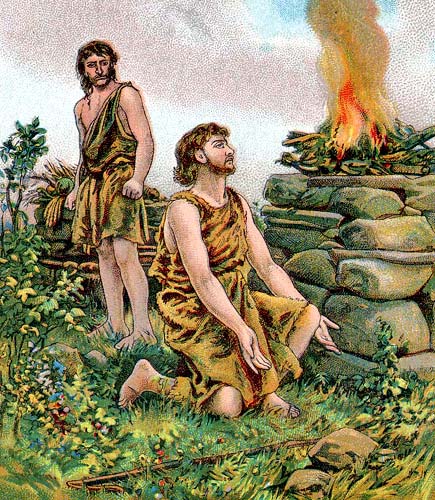
Would you rather give a half-hearted offering like that of Cain, offering what the Lord had not desired, or would you rather give it all to God like Abel, who offered the best to the Lord?

Image

Image

Would you rather be like Judas Iscariot, who scolded Mary for wasting money on perfume used to anoint the feet of Christ before His death? especially that was out of false concern of the poor given that he desired the money for himself? or would you be rather be Mary indeed, who anointed the feet of Christ for His burial, even with the expensive nard-flower perfume and therefore like Abel, gave her best offering to the Lord?

Image

Such is therefore, what we should think of, when we think about the Mass and the liturgy that surrounds it. Many would be in danger of misunderstanding the entire purpose of having such liturgies and rites of worship, and dismissing them as backward, elitist, showy, and wasteful in nature – No, indeed, in fact, all these are for the glory of God alone, and we wouldn’t give half-hearted gifts and attempts to our Lord. Our worship in the Mass is to the Lord alone, and the glory that is in the Mass, is for the glory of God.

Image

Image

Image

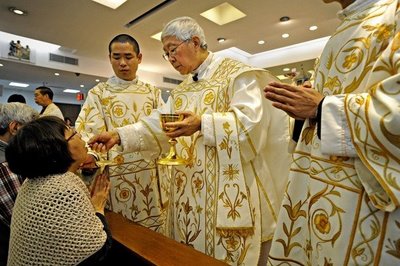
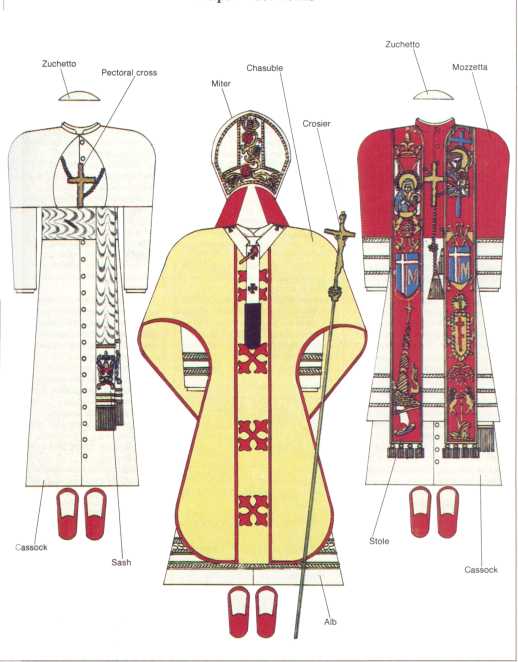
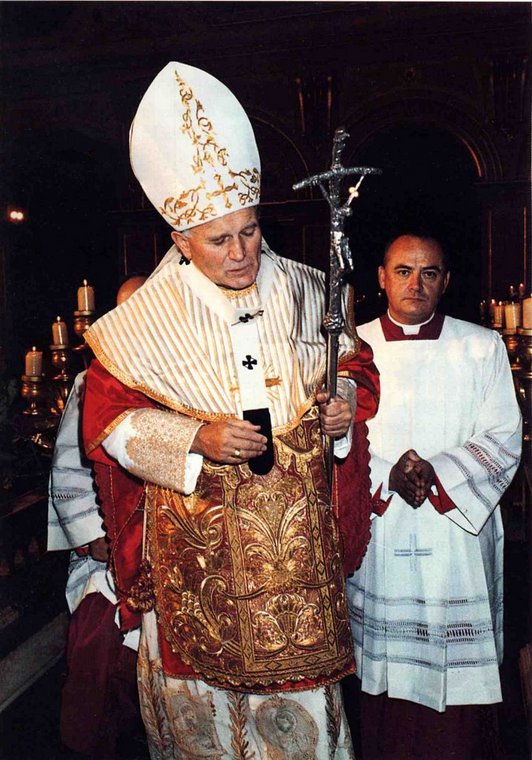
So why elaborate vestments, with colourful and vivid images, even with golden thread or velvet? Why elaborate and jewelled mitres? Why elaborate church buildings, the Altar decoration and everything else? That is because all these are for the glory of God, and for God alone, and not for the glory of men. And in this too, as I had often mentioned, many would be able to learn more about the faith, and at the same time, bring worship closer to what it should be, that is, to be a heaven on earth, especially with the angels and the saints, we worship God together.

1451110-High_Altar_Antwerp

Image

Men are visual creatures, and we base ourselves and our perceptions closely with our visions and what we see in our surroundings. One very strong argument why so many people had left the faith and became lost in the past decades was because the disappearance of beauty in our worship, not the beauty of excessive displays of course, but the true beauty of worship in that every part of the Mass and its liturgy has its own particular importance and meaning, even all the gestures made in the Mass.

MainAltar01

Being visual creatures, men no longer see God as the divine He is, because especially like Science, which place accountability, reproducibility, etc. at the most important, especially visual proofs, men no longer see God because our worship had become so diluted, so abused by decades of excessive trials and innovations which ended up diluting this image of ‘heaven on earth’ in the Mass. The Mass becomes less a desire for all to come to other than just a ‘chore’ for many to come, and Sunday obligation becomes what it is, an obligation, rather than true desire to come and worship the Lord.

jesus_holding_earth_world

Therefore, it is important that in the coming future, our Church, while projecting itself ever more, as it had always done, in helping the needy and the unloved around the world, expanding its charitable acts which is already the world’s largest by significant margins, ever more, but most importantly also, at the same time, strengthening the anchor of faith, through the energetic and constant explanation of the faith and the Sacred Tradition, particularly on the Mass and its liturgy, especially to the youths and the newly baptised, that they will truly grasp what being a Catholic is about.

That being a Catholic entail not just being good person, helpful person, and caring person, but also someone who truly knows entirely what they are doing at Mass, at their worship of the Lord every Sunday, and who truly come for the Mass because they desire to seek the Lord, and understanding the beauty of the liturgy of the Mass, they become ever closer to God, and through this, be ever more blessed and loving, that they can bring forth this love in their service of others. Ora et Labora, a balance indeed required between prayer and worship, and the service facet of our faith.

throne5

In this manner, we must always remember this verse, which is also a very nice Psalm passage I had discovered, that in all things, we glorify God alone, particularly in the Mass, through all its beauty :

Non nobis, Domine, sed Nomini tuo da gloriam!
Not to us, o Lord, but to Your Name we give glory!

+Peter Canisius Michael David C. Kang
Ut Omnes Unum Sint, ad Maiorem Dei Gloriam
21 April 2013, Good Shepherd Sunday

My personal thoughts on the election of Pope Francis I and the current state of the Church

I can only hope that Msgr. Guido Marini, the Master of Pontifical Liturgical Celebrations (Papal MC) can indeed stay where he is, as many uttered their concern whether he will still stay as papal MC given the apparent change in this new Pope.

As this is just the first day, I do not know much yet about the direction that our new Pope, Francis I, will bring us all, but I hope that he will not overemphasize inculturation and liberation for the sake of evangelisation, as what was once done under Archbishop Marini, the previous papal MC, but rather focus and renew the spirit of the liturgy as was done by Pope Emeritus Benedict XVI when he was Pope, with the help of Monsignor Marini as the chief liturgical reformer.

There is a need to balance between tradition and innovation, and not to tilt too far to the other side. Already these past few years we had seen a great rebound in the number of seminarians joining the seminary, and also the growing accustomisation among many people all over the world of the use of Latin in the Mass, despite of course emphasis remaining on the vernacular language.

Already, many apparently made comments (as I do) on his choice of not wearing the mozzetta and the stole upon making his first appearance, despite the proper winter papal mozzetta had been prepared for the new Pope. These are little things, but I hope this won’t be a precedent, which if not carefully handled, may undo many of the great things and reforms of the reform of Vatican II that had been painstakingly done in the past few years, and have begun to bear fruit in the Church today.

Balance is important. Already we have seen in many cases after Vatican II, churches and groups going too far towards innovation and liberal thoughts that ended up losing their very Catholic identity. What we need is to preserve our tradition, and yet remain open for innovations that can help new evangelisation, and evangelisation must also be carried in the spirit of the preservation of Apostolic teachings and traditions, and not conform to what the world think, that is relativism.

Social media like twitter, Facebook, blogs, and many others are these great innovations that can help spread the teachings of the Church, and yet let us not be like many Catholics, particularly in the USA, which had been commented as being ‘market Catholics’ where they pick and choose what they want to believe in, as long as it suits them, and reject those that they feel don’t fit with them. No, to be a Catholic means accepting the whole teaching as a whole, and not taking just those parts that you like, and discard the rest.

I need to add that going into extremes into the other direction is also abhorred, as what was made obvious by the SSPX Society, which continued to linger in their ultra-conservatism, and refused to take in several important modifications made by Vatican II.

Just some examples : We no longer blame Jews for the death of Christ, and instead they are our elder brothers in faith, having been chosen and called by God first among all nations.

Then, although indeed I firmly believe in salvation only through the One Church of Christ, but I also believe in the Universal Call to Holiness (by Blessed Pope John Paul II), and there are righteous people outside the Church, who do God’s will, but lacking only the necessary faith in Christ, but that doesn’t mean that they are immediately condemned to hell for that. It is our task to bring the Good News and salvation to them, which can be done through new evangelisation, rooted firmly in tradition and prayer.

However, one wish that I want to make is that, I hope Pope Francis I can thoroughly reform the Roman Curia, to purge from it all ties to corruptions and evil, and to purify our Holy Church that it will once again be immaculate and pure as it should always be, as the One, and only Church God had established in this world, through Peter the Apostle.

And I am touched by his selection of name, Francis, which honoured both St. Francis of Assisi, whom I held in high regard, and St. Francis Xavier, the great missionary and co-founder of the Jesuits (with St. Ignatius Loyola) whom Pope Francis I is a member of. St. Francis Xavier is close to my heart as he is also the patron saint of my early education, and which helped me to learn about the faith, and eventually welcomed into the Church.

I am also deeply touched by his humility, especially when he asked that the people pray for him, and even bowed down to show his humility, which does remind me to another Pope, John Paul I, whose motto is Humilitas, but as history went, he did not have the time to accomplish much. Therefore I hope, the legacy of Pope John Paul I can be continued in Pope Francis I, who had the same quality and personality as Pope John Paul I.

However, humility and simplicity must not lead to the simplification of our faith, but rather let these be tools to further deepen our ties to our faith, and understand more about it.

I noted that Pope Francis I is deeply devoted to the Virgin Mary, whose name is part of his personal name, Jorge Maria Bergoglio. He will be another Marian Pope in the likelihood of Blessed Pope John Paul II. It is important for us to have a strong devotion to the Virgin Mary, as she is the best helper that we can have, in guiding our way towards the Lord, and ensuring that we do not go astray from our path.

May God bless our new Pope Francis I, and at this important juncture at the beginning of the new Pontificate, I hope that the Holy Spirit that has elected him to carry this task, will also guide him, that he will make correct choices that will continue the good works that began with Blessed Pope John Paul II, and was accelerated by Pope Benedict XVI, now Pope Emeritus.

12 reasons why Cardinal Angelo Scola may be the next Pope : My chosen Papabile

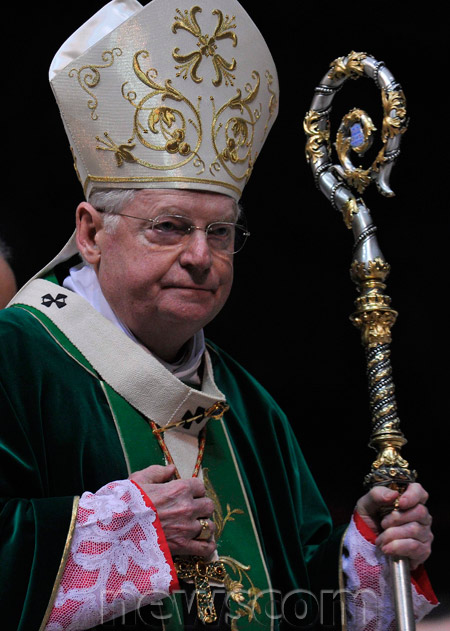
Cardinal Angelo Scola attends a mass in Duomo Cathedral in Milan

Cardinal Angelo Scola (12 reasons why I think he is the best of all the other Candidates, a frontrunner, and should be elected Pope) :

1. Strong in faith and theology : Yes, an intellectual disciple of Pope Benedict XVI, and is as strong as our Pope Emeritus on theology and his deep knowledge of the faith and the Church

2. Close and capable to work with youths : Yes, will be Pope for the youths indeed, and have been working closely with youths in many occasions, especially in his pastoral ministry in Venice and now Milan.

3. Twitter : Already had, and had actively tweeted in the past! Will be no problem to continue to @Pontifex!

4. Italian and other languages : Yes, and Bishop of Rome definitely must speak fluent Italian! Also fluent in several other languages, including English.

5. Interreligious dialogue : Yes, and knowledgeable about Islam in particular, and have been active in reaching out to Christian minorities in the Middle East and the Muslim world.

6. Tradition : Strong in liturgy and tradition, a tradition-based Pope just like Pope Benedict XVI, we need a strong anchor of faith! A close and personal understanding of the liturgy through its beauty can only serve to strengthen the faith of the faithful and the Church.

angelo-scola
7. Charisma : Yes, strong charisma and outreach, and also has a global persona and able to connect with youths and other sections of the society.

8. Poverty and charity of the Church : Being born into low-middle income family, made him to have a close connection and personal connection to the poor and the less fortunate in the Church and the world.

9. Age : At 71, is at the prime age for Pope. Not too old (Pope Benedict XVI was elected at 78 and yet managed to lead an almost 8 year Pontificate), and therefore he will be expected to lead for 15-20 years, and relatively healthy, which is what the Cardinals seek. Not too young, and very experienced.

10. Experience (Curia) : Significant term as the Rector Magnificus of Pontifical University, and then as the President of the Pontifical Institute of John Paul II for Studies of Marriage and Family.

11. Experience (Pastoral) : Experience as Bishop of Grosetto, and long experience as the Patriarch of Venice, and also a great job as the Archbishop of Milan. Hence, being accorded the extremely rare honour of having headed to of Italy’s and the world’s most influential dioceses.

12. Bioethics and Family : Knowledgeable and had published books in bioethics (and also many other topics, totalling more than 120 volumes in total), and very supportive of marriage and family, and definitely strong in the matter, being the former President in the Pontifical Institute on the Family (see number 10). It is necessary to have a strong leader in the issue at the time when the institution of marriage and the family is under constant and increasingly serious attacks.

Tuesday, 12 February 2013 : 5th Week of Ordinary Time (Scripture Reflection)

Christ reminds us today that what justifies us is not the externals, or rather I would say, not just the externals, but even more important is the internal. If our soul is not clean, and we do not keep ourselves pure in heart and filled with the love of God, we will not be able to justify ourselves before God, even if we do all the rites correctly and follow all the traditions. Christ today is not about abolishing all traditions and rites, as arguably many who misunderstood and misinterpreted these words of the Lord as the abhorrence against all sorts of tradition, including the Apostolic Tradition of our own Holy Roman Catholic Church, would believe, and therefore would even attack the Church Christ has established, just because we keep the Tradition and follow closely the teachings passed down to us from the Apostles.

What Christ meant was that, we should not and indeed must not follow traditions blindly. Tradition is good, and indeed it is necessary, but to follow the tradition just because for the sake of following it or just because it is there is ultimately empty. What Christ wants is that we understand the Traditions, and follow the Tradition with the correct heart and alignment of our being towards God through these traditions. For these Traditions, unlike those of the extreme Laws made by the Jewish leaders at that time, should serve to make one closer to God, by the correct orientation of our hearts towards Him, through greater understanding of our faith, through the Tradition!

The Jews has a total of 613 laws that was crafted from the laws given by God to Moses in the Mountain of the Lord, Mount Horeb. These laws govern many things in the Jewish community, from etiquette, marriage, and even to simple matters like the washing of hands and eating utensils as mentioned in today’s Gospel passage. However, strict adherence to these laws, including that of the Sabbath often mentioned, has made man actually subservient to these laws, being no more than just slaves to the Tradition these elders created from the laws of God given to Moses.

These laws, while they were good, they were there because of the rebellious nature of the people of Israel against God at that time. Remember that while Moses was up on the mountain, the people of Israel revolted and forced Aaron to build for them a golden calf for them to worship as their god. This and many other instances of disobedience has caused the Lord to be tough against the people of Israel, all out of His love for them, desiring their salvation, and did not wish them to falter again and fall into hell due to them worshipping pagan gods instead of the One, True God.

However, Christ had come, not to abolish all the laws and Tradition, but rather to perfect them. He was there to make the understanding of these Tradition and laws much clearer to us. For in Christ, the greatest thing is love, and nothing is greater than love, either one’s love for God, or one’s love for his or her brethren. It is in the love of God that we have to base our Tradition, and He was set to make all the rules and Laws truly pure again, that is to have these laws solely for the purpose of glorifying God and to make all of us closer to God, and not instead make us slaves to these laws and be suppressed by them.

For God, who had created the world, the entire universe, had created mankind, in His image, to be the greatest and the most beloved of all His creations. To us, He has given authority over all creation, and over the world. These laws are there, because as administrators of this world, we must be responsible administrators, and use the resources given to us wisely. Otherwise, being weak as we are, we would readily succumb to greed and wanting for more and more. Ever since Adam and Eve fell into sin at the Garden of Eden, mankind had been subject to the sin of greed and avarice, to desire more and more from what is given to them by God, even to the extent of causing suffering and death to their fellow men. This is what the Lord does not want from us, as He wants us to rule over creation, but rule responsibly and wisely.

Therefore, brothers and sisters in Christ, we who have received the Good News of the Lord, and who through the Apostolic Tradition and teachings passed down to us from the Apostles through our bishops and priests, should strive to follow and understand the Sacred Tradition and the faith that we have, utilising both in our race and journey towards the Lord. For faith without nurturing will not grow, and through the beauty of the Tradition, manifested in the Liturgy of the Church, we can grow deeper in faith, if we open ourselves to understanding more on the Liturgy and the Tradition we have.

This is why, brothers and sisters in Christ, it is important for us to appreciate the Liturgy, to seek to fully understand every rites and parts of our Liturgy in the Mass and other celebrations, and to fully participate through our greater understanding, that whenever we attend the Mass, as frequently as we can do so, we will grow ever greater in our faith and love of the Lord, so much that not only that we are brought closer to the Lord who created us, and who loves us so much to send His Son, Jesus Christ to explain to us about the Traditions, and to shed more light to us so that we can understand our faith in Him better through these Sacred Traditions and rites; but also to be good and responsible stewards of this world and its resources, as given by God to be our right, but also to be our responsibility to take care of.

Let us therefore pray that all of us will be able to grow deeper in our understanding of the Liturgy of the Church, and through it the Sacred Tradition and teachings given to us through the Apostles, and finally to grow ever deeper in our love and passion for the Lord. May God always bless all of us, all the days of our life. Amen!

On China, the Faith, and the Catholic Church

http://www.firstthings.com/article/2009/05/chinas-catholic-moment-1243211148

A very well written article, summarising the condition of the faith in China and the developments (up to 2009 – sadly to say in the next few years after that until today, relations had gone from bad to worse).

A good quote from the article (2 paragraphs near the end) :

“Beijing always has such priorities as the economy, unemployment, ties with Taiwan, and relations with the United States—all good reasons to put the Catholic issue on the back burner. But Catholics could become a major issue for Beijing if radicals get the upper hand. The Chinese leadership has trouble understanding what the power of the Catholic Church is and to what extent it might represent a benefit or a danger.”

“The trouble is that Beijing thinks of the Vatican in purely political terms and cannot quite grasp that the mission of the Church is spiritual rather than temporal. China’s leaders simply do not have the historical and cultural references to understand the Church after the Second Vatican Council. Beijing wants to offer Rome a minimum presence on a trial basis, waiting to see the result. In turn, Rome is wary that the Chinese Communist party will exploit ties with Rome without making the substantial concessions required for effective communication between the Vatican and Chinese Catholics.”

China is the world’s fastest growing Christian nation, but as outlined in this article, most Chinese Christians learn about the faith from ambiguous and untrained sources, self-learning the faith rather than properly, and many of these ‘preachers’ are not even mainstream Christians at best, reason why I noticed more than half of Chinese Christian immigrants in Italy who are Jehovah’s Witness and other non-Christian entities claiming to be Christian (a data from a region in Italy mentioned about 92% non-Christians, 8% Christians, with Catholics numbering only 3.5% of the 8%, Jehovah’s Witness made the bulk of the non-Catholic Christians). This is the danger when one simply take the faith upon him/herself, and not being in communion with the whole Universal Church, where we can learn and understand the faith more and appropriately, through the teachings and traditions handed down to us from the Apostles.

Let us pray and work indeed that, all Christians in China (and beyond) will return to the One and only Church, established by Christ. China indeed is the future of the Church, and there is more than a billion potential new Catholics (and Christians) out there in that country. The faith is not necessarily against the rich Chinese tradition and culture, and in fact, the faith only serve to enrich that great culture even more. Remember yesterday’s Gospel reading, that no matter how much prosperity and affluence you have, if you have no love, you are nothing.

Faith adds this love, as the core of every being, to anchor the person firmly in God, and make them from nothing, to the greatest of all.

+Ut Omnes Unum Sint, ad Maiorem Dei Gloriam

(That they all may be One, for the greater glory of God)