
Tuesday, 12 November 2013 : 32nd Week of Ordinary Time, Memorial of St. Josaphat, Bishop and Martyr (Scripture Reflections)

Liturgical Colour : White

Dear brothers and sisters in Christ, we are all servants of the Lord Most High, our God. We are the ones subservient to that great Lord the Creator of all of us, and all the universe. Yet, at the same time, He calls us sons and daughters, and brothers and sisters, as the ones whom He loved so dearly, that He gave us Himself through Jesus His Son, so that we can be saved, and be lifted up from our fate that is death, into a new life with Him, eternal in heaven.

For we were created by the Lord not to suffer nor to experience death and eternal suffering that is our fate. This is in fact because of the fall of our ancestors, who disobeyed God, that we too are made susceptible to the power of death. They obeyed their own desires and wishes instead of the will of God, and fell they did, succumbing to the allures and lies of the evil one, Satan the deceiver.

Satan was once Lucifer, the greatest and the mightiest one among all the angels of God. Beautiful and radiant, he was the most brilliant of all creations, and yet, he sowed evil in his hearts. He became proud and arrogant of his own beauty, might, and power. In the perfection and beauty he had been created, he craved greater power, that is to set his place above that of God Himself. Thus he rebelled against heaven and against God, and was felled and thrown down away from the glories he had once commanded.

Satan was certainly displeased at this, and therefore he seduced our ancestors, leading them away from God with false and empty promises of greatness, that they were cast out of heaven and the eternal glory set out for us. That is how we deserve death and destruction, because we have been tainted by sin and by rebelliousness. But God did not let us to just perish and be destroyed, because in  Jesus, He gave us a new hope.

Mankind cried out aloud to the Lord for the sufferings and injustice they had suffered, for we all, and our ancestors all had suffered greatly under the yoke of evil, that is sin. For sin, even though outwardly often look good and enticing, but in reality, it distorts us and bring pain to us, that is the pain and suffering of severance from the love of God and from God’s grace.

For although the Lord loves us and cares for us very much, but He is at the same time also a just and a righteous God, who cannot stand the presence of sin and disobedience against Him and His laws. Those who had committed sin, had rebelled and been disobedient against Him. And the punishment for such disobedience and rebelliousness is none other than death. And death that leads to hell, that is the total separation from God.

It is for this fate that we cry out to God, for mercy and for forgiveness, that we do not have to suffer this grievous fate. And out of His love, God sent us Jesus, to be our Redeemer, to make righteous again the whole assembly of the people of God, that everyone may not suffer death and eternal suffering, but be raised in glory with Christ, to reclaim the glories in life that we had lost in our rebelliousness.

Today, brethren, we celebrate the feast of St. Josaphat, also known as St. Josaphat Kuntsevych, a monk and later a great bishop of the Eastern Catholics. St. Josaphat lived a few hundred years ago, in what is now northern part of Ukraine. He lived at a time of great upheavals of the faith, which cost the faithful dearly and brought about many bitter emotions and feelings even to now, the present day.

Ever since the Universal Church’s unity was undermined by the series of heresies and breakups, there rose splinter groups claiming to hold the true faith in God. Many of these divisions eventually disappeared and the unity of the Universal Church was restored. But when the Eastern churches broke away from Rome over political and other petty issues over a thousand years ago, a great wound was created in the universal Church.

This is the reality of what faced St. Josaphat Kuntsevych, who grew up in an area of clashing ideologies. In the area where he lived, the population  was divided between the believers of the true Apostolic faith, and those who follow the churches that broke away from the Apostolic authority of the Church. St. Josaphat, upon his ministry and later on as a bishop of the Eastern Catholic community, had hard work laid out in front of him.

The people had mixed opinions about the faith in the Church, as they were in a way forced to comply with the decision of the state. Many of them belong to the Eastern Orthodox churches that broke away from the Universal Church over petty political and personal squabbles. The Union of Brest declared the reunion of all Christians in the Polish-Lithuanian Commonwealth into the Universal Church of God. Thus the task of St. Josaphat was made very difficult, with the people even openly rebelling against the religious authorities.

St. Josaphat persevered through all of those tribulations and faithfully served the people entrusted to him, even though they were openly against him and his obedience to the Apostolic See, to the Church of God, one and true. He served faithfully and dutifully even unto his death at the hands of the people of whom he was the shepherd. St. Josaphat was murdered by an angry mob just outside of a church and his body was thrown into the river.

In sweet and holy martyrdom therefore, St. Josaphat was welcomed into the glory of heaven. Following the footsteps of Jesus who died for His people, St. Josaphat too chose to die to himself and bring glory to God, that salvation may draw closer to His people. We too can do the same. Let us all draw closer to the Lord our Master and the source of our salvation. May He forgive us from our sins and welcome us back into His loving embrace. God bless us all. Amen.
Tuesday, 12 November 2013 : 32nd Week of Ordinary Time, Memorial of St. Josaphat, Bishop and Martyr (Gospel Reading)

Liturgical Colour : White

Luke 17 : 7-10

Who among you would say to your servant, coming in from the fields after plowing or tending sheep, ‘Go ahead and have your dinner?’ No, you tell him, ‘Prepare my dinner. Put on your apron, and wait on me while I eat and drink. You can eat and drink afterwards.’

Do you thank this servant for doing what you told him to do? I do not think so. And therefore, when you have done all that you have been told to do, you should say, ‘We are no more than servants; We have only done our duty.’

Tuesday, 12 November 2013 : 32nd Week of Ordinary Time, Memorial of St. Josaphat, Bishop and Martyr (Psalm)

Liturgical Colour : White

Psalm 33 : 2-3, 16-17, 18-19

I will bless the Lord all my days; His praise will be ever on my lips. My soul makes its boast in the Lord; let the lowly hear and rejoice.

The eyes of the Lord are fixed on the righteous; His ears are inclined to their cries. But His face is set against the wicked to destroy their memory from the earth.

The Lord hears the cry of the righteous and rescues them from all their troubles. The Lord is close to the brokenhearted and saves the distraught.

Tuesday, 12 November 2013 : 32nd Week of Ordinary Time, Memorial of St. Josaphat, Bishop and Martyr (First Reading)

Liturgical Colour : White

Wisdom 2 : 23 – Wisdom 3 : 9

Indeed God created man to be immortal in the likeness of His own nature, but the envy of the devil brought death to the world, and those who take his side shall experience death.

The souls of the just are in the hands of God and no torment shall touch them. In the eyes of the unwise they appear to be dead. Their going is held as a disaster; it seems that they lose everything by departing from us, but they are in peace.

Though seemingly they have been punished, immortality was the soul of their hope. After slight affliction will come great blessings, for God has tried them and found them worthy to be with Him; after testing them as gold in the furnace, He has accepted them as a holocaust.

At the time of His coming they will shine like sparks that run in the stubble. They will govern nations and rule over peoples, and the Lord will be their king forever. Those who trust in Him will penetrate the truth, those who are faithful will live with Him in love, for His grace and mercy are for His chosen ones.

Passing of Cardinal Domenico Bartolucci of Italy, at the age of 96

Bartolucci

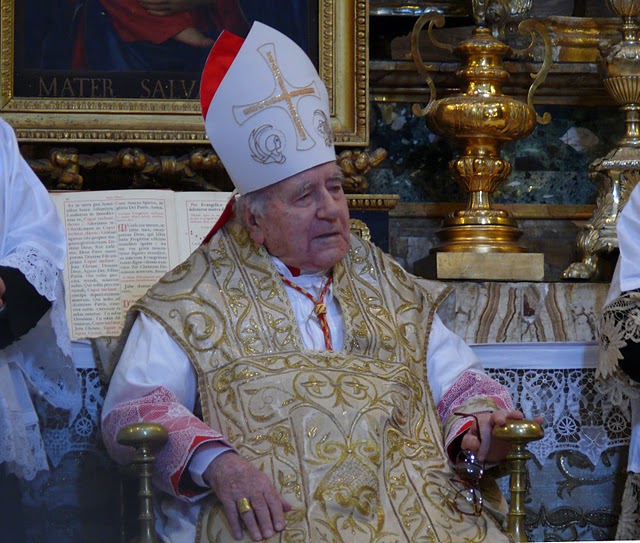
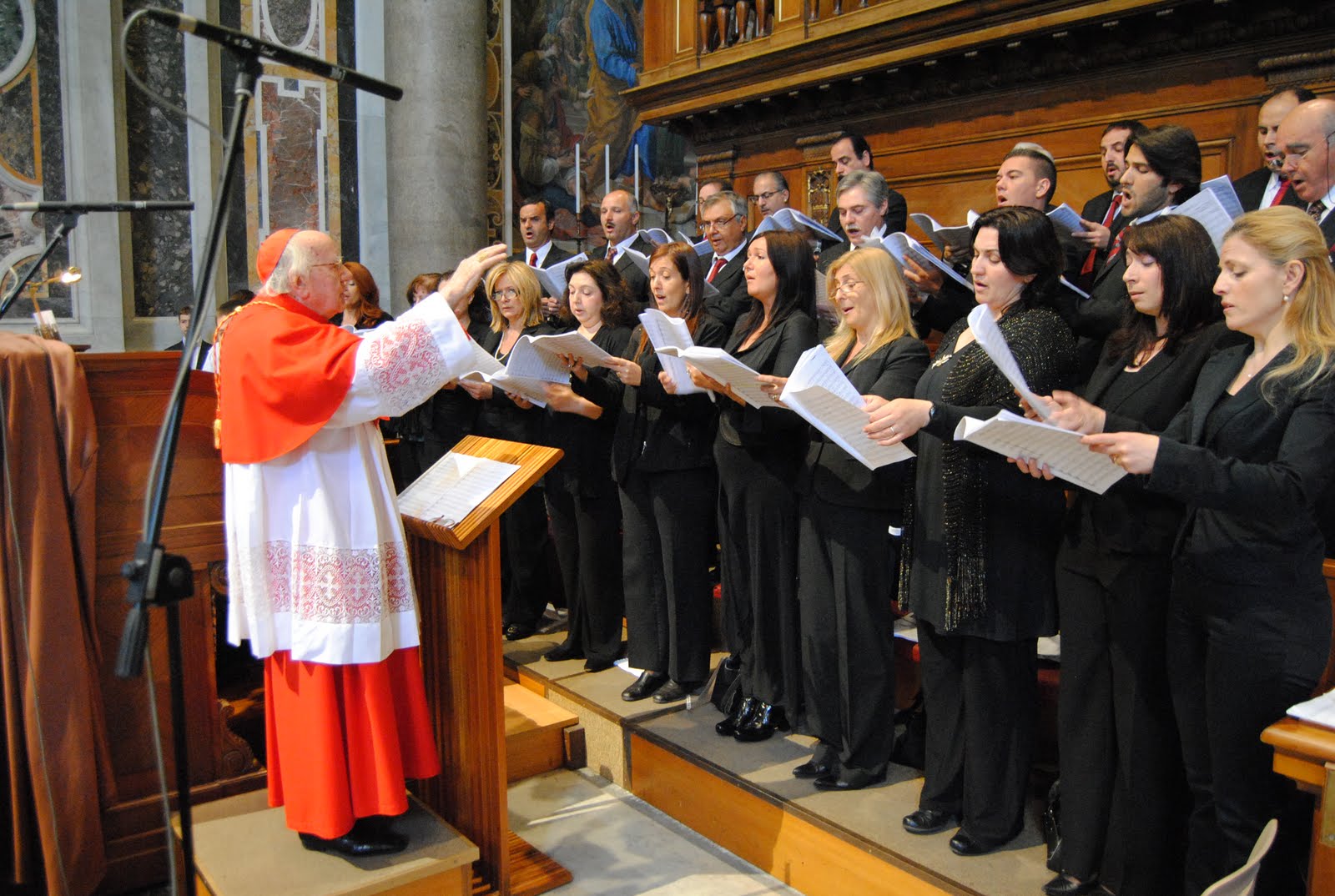
Cardinal Domenico Bartolucci, Cardinal Deacon of SS. Nomi di Gesu e Maria in Via Lata has passed away on Monday, 11 November 2013 at the age of 96. He was the Director of the Sistine Chapel Choir (1956-1997), better known as his title of the Director Master of the Pontifical Musical Chorus of the Sistine Chapel.

http://www.gcatholic.org/hierarchy/data/cardB16-3.htm#45954

Jan2011Nov2010BartolucciReuters

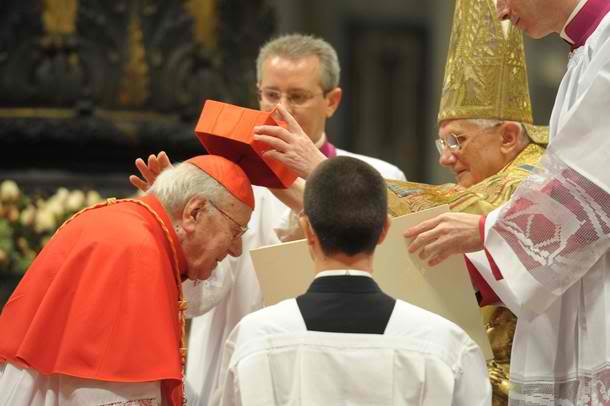
Cardinal Bartolucci was created Cardinal in 2010 by Pope Benedict XVI in his third Cardinal creation consistory and he was a longtime Director of the Sistine Chapel choir, a great conductor and composer of sacred and liturgical music, for over 41 years from 1956 to 1997. Cardinal Bartolucci retired in 1997, but even then, he still conducted his beloved choir and created more beautiful music for worship after he retired. He was honoured by Pope Benedict XVI for his longtime service to the Church by the bestowal of the red hat of a Cardinal in 2010, when he was 93.

brandmuller xvi

We pray for Cardinal Bartolucci, that he will rest in peace, and God will reward him for all his hard and great work as the long time servant of God through music as the conductor, director, and composer of the Papal liturgical music and sacred music through the Sistine Chapel choir  and his numerous other contributions to the Universal Church and for the Lord’s sake. May the Lord welcome him into His embrace in heaven and give him eternal rest and happiness that he deserved.

With the passing of Cardinal Bartolucci, the College of Cardinals now stands at 200 members, with 109 Cardinal-electors and 91 Cardinal non-electors.

There are now 11 Cardinal-elector vacancies in the College of Cardinals, 12 vacant Cardinal Titles (for Cardinal Priests) and 9 vacant Cardinal Deaconries (for Cardinal Deacons)

Monday, 11 November 2013 : 32nd Week of Ordinary Time, Memorial of St. Martin of Tours, Bishop (Scripture Reflections)

Liturgical Colour : White

Brothers and sisters, today it is revealed and explained to us all, the nature and the power of faith, that is the faith that we have in God. Faith is truly powerful, and it is also revealed what we ought to do as the children of God, that is to reflect God’s love in all of our actions, and in all that we do. We cannot be truly faithful to God, if we do not do what He asks us to do, and if we do not listen to His words or obey His will.

In the Lord lies all wisdom, knowledge, power, and authority, because He is the Lord and Creator of all things and all in this universe. That is why, we who are mere humans ought to look at Him, believe in Him, His words and His love for us. Unfortunately, many of us took great pride in our own wisdom and intelligence. Not that this is bad, but the way we often do this is by excluding God from our lives and indulging in self-glorification, the glorification of our deeds and achievements and we do not give glory to God.

Through Jesus His Son, our Lord made it clear to us, that we need to know how to love one another, to show love to one another, and to let love govern all our words, actions, and deeds. We cannot belong to God and be faithful to God, if our actions contradict what we believe in. We must walk the talk and not just believe in rhetorics, because such is the faith of the Pharisees, the hypocrites.

Brethren, we are role models for one another, shepherds to one another, and as such, we have to help make sure that each of us, all of us are truly faithful to the Lord our God. We cannot lead our brethren into damnation instead. As the Lord Himself mentioned in today’s Gospel, that great is the sin of those who had misled others, especially so for those who misled the innocent ones. The greater is our sins then, if we do so, and the greater is the punishment due for us.

Today, brethren, we celebrate the feast of St. Martin of Tours, one of the greatest saints and builders of the early Church. St. Martin of Tours lived during the waning years of the Roman Empire in the West, and he was once a Roman soldier turned into a general. Yet, he remained faithful in God and was truly exemplary in his practice of the faith.

St. Martin of Tours was truly a role model for the other Christians of his time. He was loving, just, and charitable, renowned especially for his care and love for the poor and unloved ones in the society. St. Martin of Tours devotedly give his life in dedication to the Lord, even as he continued his career as a Roman soldier. He did not have an empty faith, or faith based on mere words. His faith is truly a living one, and one that is based on love, for God and for his fellow men.

In one instance, it was told that St. Martin of Tours was passing by a road, when he saw a poor man suffering from cold, without any clothing to cover and protect him from the cold. St. Martin was moved by the sight, and true to his faith in God, he cut off a part of his soldier’s cape, and gave it to the poor man as a cloak. Later that night, St. Martin saw an apparition of our Lord Jesus, who showed to him that the old man he helped was none other than Jesus Himself!

Truly, at this juncture we ought to remember what Jesus Himself has told us, that whatever we do for our brethren, to the least of them, the poorest, the least loved, and those whose sufferings are the greatest, we do it for God Himself. That was the true virtues and righteousness of St. Martin, which we all can follow too.

St. Martin was chosen later in his life to be the Bishop of Tours, and he carried on his duties faithfully, as the shepherd of God’s people, till the end of his life, well-known by many in Christendom as a holy, humble, and faithful servant of God. We too can follow in his footsteps, if we choose to do so, and take concrete steps in following after his examples. Nothing is impossible for God, and therefore nothing too should be impossible for us.

Therefore, brethren, from now on, let us be conscious to our own sins, to our own weaknesses and vulnerabilities to sin, and let sin not hinder us on our way towards the Lord. Let us be a reflection of our Lord and His love, in our own actions and deeds, through forgiving and loving one another, committing ourselves in love to our brethren in need, just as St. Martin of Tours himself had once done.

May the Lord guide us and continue to watch over us, as we grow in faith and love, that we will always ever draw closer to His presence and to His loving embrace. God bless us all. Amen.
Monday, 11 November 2013 : 32nd Week of Ordinary Time, Memorial of St. Martin of Tours, Bishop (Gospel Reading)

Liturgical Colour : White

Luke 17 : 1-6

Jesus said to His disciples, “Scandals will necessarily come and cause people to fall; but woe to the one who brings them about. It would be better for him to be thrown into the sea with a millstone around his neck. Truly, this would be better for that person, than to cause one of these little ones to fall.”

“Listen carefully : If your brother offends you, tell him, and if he is sorry, forgive him. And if he offends you seven times in one day, but seven times he says to you, ‘I am sorry.’ Forgive him.”

The apostles said to the Lord, “Increase our faith.” And the Lord said, “If you have faith, even the size of a mustard seed, you may say to this tree, ‘Be uprooted, and plant yourself in the sea!’ And it will obey you.”

Monday, 11 November 2013 : 32nd Week of Ordinary Time, Memorial of St. Martin of Tours, Bishop (Psalm)

Liturgical Colour : White

Psalm 138 : 1-3, 4-6, 7-8, 9-10

O Lord, You know me : You have scrutinised me. You know when I sit and when I rise; beforehand You discern my thoughts. You observe my activities and times of rest; You are familiar with all my ways.

Before a word is formed in my mouth, You know what it is all about, o Lord. From front to back You hedge me round, shielding me with Your protecting hand. Your knowledge leaves me astounded, it is too high for me to reach.

Where else could I go from Your Spirit? Where could I flee from Your presence? You are there if I ascend the heavens; You are there if I descend to the depths.

If I ride on the wings of the dawn and settle on the far side of the sea, even there Your hand shall guide me and Your right hand shall hold me safely.

Monday, 11 November 2013 : 32nd Week of Ordinary Time, Memorial of St. Martin of Tours, Bishop (First Reading)

Liturgical Colour : White

Wisdom 1 : 1-7

Love justice, you who rule over the world. Think rightly of God, seek Him with simplicity of heart, for He reveals Himself to those who do not challenge Him and is found by those who do not distrust Him.

Crooked thinking distances you from God, and His Omnipotence, put to the test, confounds the foolish. Wisdom does not enter the wicked nor remain in a body that is enslaved to sin. The Holy Spirit who instructs us shuns deceit; It keeps aloof from foolishness and is ill at ease when injustice is done.

Wisdom is a spirit, a friend to man, and will not leave the blasphemous unpunished, because God knows His innermost feelings, truly sees His thoughts and hears what He says. For God’s Spirit has filled the whole world and He who holds together all things, knows each word that is spoken.

Sunday, 10 November 2013 : 32nd Sunday of Ordinary Time (Scripture Reflections)

Liturgical Colour : Green

Brethren in Christ! Today we revisit and reiterate again a centre component of our faith, that is the faith in the resurrection of our Lord and God, Jesus Christ, who died for our sake and rose up on the third day after His death. This concept of thr resurrection is so crucial and central for all of us, firstly because without the resurrection of Christ, we have no hope for salvation, and death will claim us all, as our eternal fate and punishment.

Then, secondly, without resurrection, we will also have no hope. Why so? This is because, to all of us, Christ has promised all who believe in Him, and those who accept Him as their Lord and Saviour and profess His death and resurrection from the dead. This is why the belief and faith in the resurrection is essential to all of us, for if we do not believe in it, we can never have a part in God and in His salvation.

The Sadducees in today’s Gospel reading was a group of highly educated people in the Jewish society, who were adamantly against any notion or idea of resurrection. They believed that resurrection is a myth, and resurrection is impossible, in their highly ‘educated’ and logical mind. That was why they, besides the Pharisees, were one of the two major opponents against Jesus.

The Sadducees used the example of seven brothers to highlight the issue of resurrection, and how for them it does not make sense, and even linked it to the Law of God itself, given through Moses. They did not believe in anything spiritual and otherworldly, and they prefer to believe what they can see and what they can reason or use their logic in. They did not believe in angels, spirits, and the resurrection itself. It was a very nihilistic viewpoint and a belief where human existence is nothingness.

The Lord rebuked them hard, by pointing to them the nature of salvation and the promised eternal life He had promised to all those who believe in Him. The world of the afterlife is not a world of pleasure and worldly desires. We will receive and experience eternal joy and happiness in heaven, but this joy is not expressed in the physical terms, and neither will we have joy as in our human and worldly understanding.

In the afterlife, in our eternal bliss and happiness, we are happy and we rejoice because the Lord is with us, and we are with the Lord. The barrier that once had separated us from His love and presence had been completely removed. Upon our resurrection, we are reunited with God in perfection. No more shall sin have any power over us. The Lord is in us and we are in God.

Nowadays, we too see the same phenomenon happening around us. How our society has gradually been transformed, from one that is truly faithful and devoted in God, into one that is increasingly skeptical and unbelieving in God. Mankind prefer to trust what they see and observe more than the faith that is in their hearts. And over time, they grow to even doubt the existence of God Himself, who has loved us all these while.

Many people would like to try to contradict the faith in God and things like science and knowledge, making it as if faith in God is exclusive of wisdom, knowledge, and science itself. They try to make it as if, if you are to believe in God, that you are backwards, that you are against the betterment of mankind through science, and so on and so forth.

Yet, they got it all wrong, just as the Sadducees had in the past, during the time of Jesus. They who preferred reason and sense over faith failed to realise that their very wisdom, their very ability to deduce and sense things around them, came from God Himself, as gifts to all of us. It is the Lord who is the font of all wisdom and truth, and by believing in Him, we are taken away from all falsehoods and remain in the truth.

There are things in this world that is beyond, and indeed far beyond our comprehension, and our ability to understand them. That is why we need faith in us. We cannot always depend on our thinking ability to deduce things around us. Our human ability is limited, and we cannot always think that we are always right, if we think that something is so and so. Worse still is that many of us, just because we lack faith, and we based our judgments on flawed human observations, dismiss the greatness of our God wholesale, refusing to believe in our Lord, much like the Sadducees of old.

Dear brothers and sisters in Christ, our Lord has chosen to come down to us in human form, in Jesus Christ. He did that so that through His own death and resurrection, He can bring mankind out of the chasm they have led themselves into. It is because of sin that mankind has fallen and were distanced from eternal glory and the life destined for us.

Resurrection, my dear friends, is a powerful statement against sin and death. Just as Adam’s sin had brought mankind from eternity into a life conquered by death, and where the devil and sin had authority over us once, with the coming, the death, and the resurrection of Christ as the new Adam, He showed all creation that death does not have the final say. Definitely not the final say over us.

If we do not believe in the resurrection, then what is our life about? We have no hope beyond death, since to us, death is the end to all things. That is why, many of us today fear death so much, and tried our best to avoid it, through various means, seeking to avoid death as best as possible. We fear death, but in the end the irony is that for those who fear death, death will claim them ever more.

We should not fear death, because death is not the end of all things. Many of us fear death, because we are too happy with what we have in this world now, in our material possessions and our exposure to worldly pleasures. We do not realise that true joy and happiness can only lie in the glory of the resurrection, and the promised new and eternal life with God.

This is what the seven brothers martyred for their faith, in the Book of the Maccabees fought for. They sought not the glory of this world, which they could have easily gained from the king if they abandoned their faith. Instead, they persevered and suffered, and fought for the everlasting gift of heaven.

Hence, brothers and sisters in Christ, let us all not be doubtful as the Sadducees and many of us today had done. Let us deepen our faith in God and do not fear to proclaim Him as our Lord and rejoice in His resurrection, just as we are made worthy and promised resurrection for ourselves. God be with us all, watch over us, till the day when He calls us back to Him, raising us up from this world, body and soul, in glorious resurrection. Amen.