Wednesday, 5 June 2013 : 9th Week of Ordinary Time, Memorial of St. Boniface, Bishop and Martyr (Gospel Reading)

Mark 12 : 18-27

The Sadducees also came to Jesus. Since they claim that there is no resurrection, they questioned Him in this way, “Master, in the Scriptures Moses gave us this law : ‘If anyone dies and leaves a wife but no children, his brother must take the woman, and with her have a baby, who will be considered the child of his deceased brother.”

“Now, there were seven brothers. The first married a wife, but he died without leaving any children. The second took the wife, and he also died leaving no children. The same thing happened to the third. In fact, all seven brothers died, leaving no children. Last of all the woman died. Now, in the resurrection, to which of them will she be wife? For all seven brothers had her as wife.”

Jesus replied, “Is this not the reason you are mistaken, that you do not understand the Scriptures or the power of God? When they rise from the dead, men and women do not marry, but are like the angels in heaven. Now, about the resurrection of the dead, have you never had thoughts about the burning bush in the book of Moses?”

“God said to Moses : ‘I am the God of Abraham, the God of Isaac, and the God of Jacob.’ He is the God not of the dead but of the living. You are totally wrong.”

Wednesday, 5 June 2013 : 9th Week of Ordinary Time, Memorial of St. Boniface, Bishop and Martyr (Psalm)

Psalm 24 : 2-4a, 4b-5ab, 6-7bc, 8-9

In You my God I trust; let me not be put to shame, let not my enemies exult over me. Those who hope in You will never be humbled; those who turn away from You will suffer disgrace! Teach me Your ways, o Lord.

Make known to me Your paths. Guide me in Your truth and instruct me, for You are my God, my Saviour.

Remember Your compassion, o Lord, Your unfailing love from of old. Remember not the sins of my youth, but in Your love remember me.

Good and upright, the Lord teaches sinners His way. He teaches the humble of heart and guides them in what is right.

Wednesday, 5 June 2013 : 9th Week of Ordinary Time, Memorial of St. Boniface, Bishop and Martyr (First Reading)

Tobit 3 : 1-11a, 16-17a

Distressed, I wept and prayed and expressing my sorrow, I said, “You are just, o Lord; all Your actions and all Your ways are merciful and just; Your judgments are always true and just. Remember me, Lord, and look on me. Do not punish me for my sins nor the wrongs I have committed through ignorance.”

“Pardon the sins which my fathers have committed in Your sight, for they disobeyed Your commandments. You have allowed us to be mocked by all the pagan nations among whom we have been dispersed. Ah well! All Your judgments are just when You choose to punish me for my sins and those of my fathers, because we have not accomplished Your will, nor have we sincerely obeyed Your commands. We have not walked before You in truth.”

“Do with me as You will. Order my life taken from me, and turn me into dust, because I prefer death to life. In this way free me and let me return to dust. It is better for me to die than to live, because these unjust reproaches have caused me great distress. Command that I be now released from trials, and let me enter my eternal dwelling place. Do not turn Your face away from me.”

That same day, at Ecbatana in Media, Sara, the daughter of Ragouel, was insulted in a similar way by her father’s young maidservants. Sara had had seven husbands, but the demon Asmodeus had killed each one of them before the marriage had been consummated.

The maidservants said, “It was you who killed your husbands. You have had seven husbands and you have not enjoyed marital relationship with any of them. Why do you punish us? Since they are dead, go and join them. May we never see a son or daughter of yours!”

That same day Sara was so distressed in mind that she went to the upper room in her father’s house. She wished to hang herself. But she thought better of it and said : “If people ever reproached my father and said to him : ‘You had an only daughter whom you cherished and she hanged herself because she was unhappy,’ I would cause my father in his old age to die of grief.”

“It is better for me not to hang myself but to ask the Lord that I may die and not live to hear any more insults.” At that moment she stretched forth her hands towards the window and prayed. The Lord in His glory heard the prayer of Tobit and of Sara and He sent Raphael to heal them both – to give back his sight to Tobit and to give Sara the daughter of Ragouel, to Tobit’s son Tobias, as his wife. Also, Raphael would enchain the wicked demon Asmodeus so that Sara would be the wife of Tobias.

Sunday, 2 June 2013 : Solemnity of the Most Holy Body and Blood of Christ, Corpus Christi (Scripture Reflection)

Brothers and sisters in Christ! Today we celebrate a great mystery of our faith, that is the Most Holy Body and Blood of Christ, or Corpus Christi, in which God gave His own flesh and blood for us to consume, that He may live in us, and we in Him, that we can gain eternal life through Him. He gave up Himself that we may live, that we have a share in His death and His glorious resurrection.

The Most Holy Body and Blood of Christ in the Eucharist is the centre to our faith, and the Real Presence of Christ our Lord in the consecrated bread and wine is what makes our faith truly Catholic. That is because we believe that in the Holy Mass, whenever the priest offers the bread and wine and consecrate it before the Lord, in the same words that Christ had used on the Last Supper, the bread and the wine truly become the Real Body and Blood of our Lord, and not just a purely symbolic or memorial reenactment of the Last Supper, but a real transformation of the material of the bread and wine, into the Body of Christ.

Therefore, brothers and sisters in Christ, what we receive in the Eucharist is the real Body of our Lord Jesus Christ, who gave us His Body to eat and His Blood to drink, and therefore, as the Eucharist is divine, being the essence of God Himself, we must treat it with the greatest deference and respect. For this is the God who came down to us as man like us, and died for us, by shedding His blood, the Blood of the Lamb of God, that all mankind may be saved.

The Lamb of God had been slaughtered, and He did not resist, nor did He protest against His unjust sentence of death, even though He is without sin, because without His death, without His sacrifice, as the only completely perfect sacrificial lamb, there is nothing that can match the severity of all the sins of all mankind combined together. Only Christ, God incarnate as man, has this power and authority over sin, and by His sacrifice, we are made pure again, white as snow.

But Christ did not give us His Body and His Blood in the Eucharist without reason, ever since He gave His disciples the first Eucharist in the Last Supper, and as He had always mentioned, that those who eat that Bread, the Bread of Life, and drink from the cup of salvation, will gain eternal life, because Christ Himself would dwell within all of us, and we would then have a share in His glorious resurrection, and therefore eligible for salvation. Only if we accept Christ, live according to His commandments, and receive Him in the Eucharist, then we gain the fullness of salvation.

As Christ would dwell within all of us who receive Him in the Holy Eucharist, our bodies must be worthy of Christ, of God who is good and perfect. We may be lowly and weak mortals, but as long as we keep our faith in God and strive to do only what is good in the eyes of the Lord, we are worthy of Him. Remember the saying, that our body is the Temple of the Holy Spirit? That is because the Lord Himself through His Real Presence in the Eucharist has been willing to come to us, through the bread and wine transformed that we consume, that He would then dwell in us forever more.

That is why, we must not defile our bodies and minds with sin and corruption of evil, because our very body itself has become the very Temple of God, where the Lord resides, just very much like the Temple of Jerusalem, at the time of King Solomon, when God was willing to come down and reside in the Temple built by Solomon, and His presence overwhelmed all the people who witnessed it, so great is His majesty and power.

The Lord had decreed that no filth of evil and sin should enter the Temple, and there were large dedicated places where the people can wash and purify themselves prior to entering the Holy Temple, so that they would not defile the place physically and spiritually with the filth of their sin. It is kind of parallel to how we purify ourselves with the holy water as we enter the church building at the holy water font, and seal ourselves in purity, with the Name of the Holy Trinity and the sign of the victorious cross, in which we rebuke evil and reject Satan, and therefore, would then enter the holy place of God and preventing us from defiling that Holy Temple.

The same therefore, should apply to all of us. Ever since the Lord is willing to dwell within all of us, through His Real Presence in His Most Holy Body and Blood, we have become the new Tabernacle, the new Temple of the Lord, each one of us, who had been baptised, and who had received the Eucharist in good standing in the faith through the Church. We must therefore respect the same with regards to ensuring the purity of our own beings, that we, as the Temple of God, the Temple of the Holy Spirit, will not be defiled by our human weaknesses and sin.

St. Paul, in the same book as our second reading today, in his first letter to the people of Corinth, confirm this, that our bodies are indeed the Temple of the Holy Spirit, as the Holy Spirit also dwell within all of us who have received the Spirit, ever since the Holy Spirit came down upon the Apostles in Pentecost. Thus, our bodies became ever greater in terms of the need to maintain its purity, against the evils of the world, and against the temptations of the evil one through worldly pleasures and desires, that corrupts and bring darkness to our otherwise pure and holy Temple, where God resides.

Yes, brothers and sisters in Christ, our God has indeed dwelled within each one of us, and this is symbolised by yet another great event in the history of salvation, when Christ gave up His Spirit and died on Calvary, when He finally shed His own life and blood, for the redemption of all mankind. At that moment, the veil that separated the Holy of Holies, where the Ark of the Covenant and the Lord Himself supposedly reside, from the rest of the Temple in Jerusalem, tore in two pieces from top to bottom, at the moment when Christ died on the cross.

That moment, when the veil was torn, was a defining moment. It symbolises that the Lord is no longer limited to just that holy space within the Temple in Jerusalem, as He had been, ever since He chose to dwell at the Temple, since the time of the King Solomon of Israel. Through the tearing of that veil, God made His new covenant, which He proclaimed in the Last Supper, complete, with all mankind.

That new covenant is the redemption offered by the death of Christ on the cross, through which we receive His Body and His Blood, given freely to all of us. So that, ever since, Christ, who is God, dwells within all of us who receive Him in the Eucharist, ever since the time of the Apostles, who was commanded by Christ Himself to continue the celebration of the Eucharist, in memorial of His Sacrifice on Calvary.

But beware, brothers and sisters in Christ, this is where exists a danger in misunderstanding the meaning of Christ, when He said about the Eucharist as a memorial. Many wrongly interpreted it as the sign that the celebration of the Eucharist is nothing more than a memorial, a symbolic celebration and imitation of the real sacrifice on Calvary. That the bread and wine that we consume are mere bread and wine, and not the Body and Blood of Christ.

Beware, brethren, that we do not fall into confusion and falsehoods spread by the evil one. For within that Eucharist, within the bread and the wine, Christ is present, really present, in His complete being, and that is what we call and know as the Real Presence of God in the Eucharist. We believe that our priests, with the same authority that Christ had given to the Apostles, in the consecration of the offerings of bread and wine, bring about the complete transformation of that bread and that wine, to become the Most Precious Body and the Most Precious Blood of our Lord Jesus Christ.

Yes, some of us may ask, why then the bread still look like bread, and the wine still look like wine? And there seems to be no change in the physical appearance or substance of the bread and wine? That is exactly the wonder of the mystery of our faith in Christ. Because, yes, the bread and wine’s outside appearance remains that of physical bread and wine in shape, but it has in fact been completely transformed into the Body and Blood of our Lord Jesus Christ, in what we call as transubstantiation, because there is a real change or ‘trans’ in the substance of the bread and the wine, into the flesh and blood of our Lord.

Remember! That Christ Himself often repeated that those who did not partake in His flesh and His blood, those who did not receive His body and blood, will have no part in Him, and will not have eternal life. Only those who willingly, and in worthy state receive the Lord into themselves, through the Eucharist, will gain the eternal rewards from Christ, that is eternal life and glory with Him in heaven. That is why, brothers and sisters in Christ, it is very important that we take the Eucharist seriously, that from now on, we begin to participate more in the Mass and in the celebration of the Holy Eucharist, that we truly understand our faith, and why we have to regularly receive our Lord in the Eucharist.

The Body and the Blood of Christ, each is Christ complete in themselves, that means, if we only receive the Body, that is the ‘bread’ or the Blood, that is the ‘wine’ we do not receive half of Christ, but in fact, we have received the fullness of Christ in each of them. When we receive either the Body of Christ or His Blood, we receive Christ in His fullness, in His glorious majesty and power, into ourselves. That is why, brethren, we must be worthy! We must be worthy to have the Lord dwell within us, as His Temple!

Remember that if we willingly and knowingly receive the Lord when we are in the state of mortal sin, we will be damned instead of being saved, because we did not keep our house in order, and did not receive the Lord properly and worthily. That is why, brothers and sisters in Christ, keep our bodies, our Temple of the Holy Spirit, away from fornication and corruption of sin. Keep ourselves pure, as best as we are able to, and welcome Christ every time we receive Him in the Eucharist, that He will see that our ‘house’ that is our heart, in good order, and therefore reward us with His grace and blessings.

If we had sinned and in the state of mortal sin, which prevents us from truly accepting the Lord into ourselves, into our defiled Temple, that is our being, we must first abstain from receiving the Eucharist, from receiving our Lord. What we must do is indeed, first to ask the Lord for His mercy and forgiveness, and seek a priest to be forgiven from our sins. Remember that to our priests, God has given the authority to absolve sins, if only we ourselves are humble and willing enough, to admit our own sinful nature, and seek to return once again to God’s love and embrace. Only once we have been absolved, then we can receive the Lord again, and He will once again dwell within us, transforming us from inside with His love.

Let us reflect on the mystery of our faith, that is the Most Holy Body and Blood of Christ on this sacred occasion, that from now on, we will increase our dedication for our Lord, really present in the Blessed Sacrament, in the form of His Body and His Blood, which He had given freely, so that we may live, and we may share in Him, the fruits of eternal life and salvation. God bless us all, now and forever more. Amen!

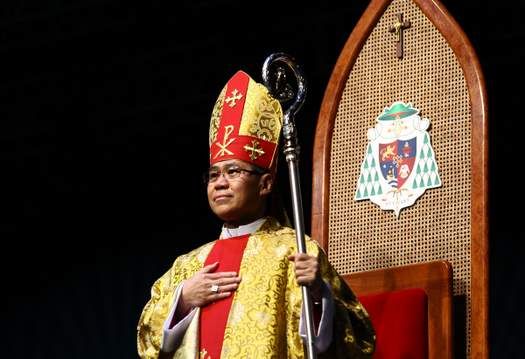
Full Video of the Inauguration and Installation Mass of the new Archbishop of Singapore, Archbishop William Goh

Image

This is the full video of the Installation and Inauguration Mass of the new Archbishop of Singapore, Archbishop William Goh Seng Chye, which was held on Saturday, 24 May 2013, in the Cathedral of the Archdiocese of Singapore, Cathedral of the Good Shepherd.

The video exists in seven parts (below)


Part I (Entrance) :


Part II (Archbishops’ Speech) :


Part III (Homily) :


Part IV (Executive Committee oath-taking) :


Part V (Liturgy of the Eucharist) :


Part VI (Communion) :


Part VII (Closing) :

Sunday, 19 May 2013 : Solemnity of the Pentecost, Pentecost Sunday (First Reading)

Acts 2 : 1-11

When the day of Pentecost came, they were all together in one place. And suddenly out of the sky came a sound like a strong rushing wind and it filled the whole house where they were sitting. There appeared tongues as if of fire which parted and came to rest upon each one of them. All were filled with Holy Spirit and began to speak other languages, as the Spirit enabled them to speak.

Staying in Jerusalem were religious Jews from every nation under heaven. When they heard this sound, a crowd gathered, all excited because each heard them speaking in his own language. Full of amazement and wonder, they asked, “Are not all these who are speaking Galileans? How is it that we hear them in our own native language?”

“Here are Parthians, Medes, and Elamites, and residents of Mesopotamia, Judea and Cappadocia, Pontus and Asia, Phrygia, Pamphylia, Egypt, and the parts of Libya belonging to Cyrene, and visitors from Rome, both Jews and foreigners who accept Jewish beliefs, Cretians and Arabians; and all of us hear them proclaiming in our own language what God, the Saviour, does.”

Tuesday, 14 May 2013 : 7th Week of Easter, Feast of St. Matthias, Apostle (Scripture Reflection)

Dear brothers and sisters in Christ, in less than a week’s time, Easter season will be drawing to a close with the feast of the Pentecost, when we celebrate the birthday of the Church, that is when the Holy Spirit came down on the Apostles and marked the official ‘beginning’ of their ministry in spreading the Good News to all over the world, to all nations and to all mankind.

But Easter does not end here and at that time, my dear brothers and sisters, for indeed, the mission Christ had entrusted to the Apostles still continues today, that is to baptise all the nations in the name of the Holy Trinity and to make disciples of all the nations. That is the charge placed by God upon us, and we should then do something in order to fulfill this mission.

Remember that we too are disciples and apostles of the Lord, apostles and witnesses of Christ in our own times and in our own places, bearing witness for the Lord in our own societies and in our own neighbourhoods, among our own friends, our own family, and our own surroundings. We reflect Christ through our own words, our thoughts, our actions, and how we interact with others, especially whether we have reflected the love of God in all that we do.

Today, we celebrate the feast day of St. Matthias, one of the Twelve Apostles. But, St. Matthias was in fact not in the original Twelve, which include Judas Iscariot, the betrayer of Jesus in their number. After Judas had betrayed Jesus, he was filled with the sense of regret for having sold his Master for a mere thirty pieces of silver and that he had betrayed innocent blood. Alas, it was way too late for him. He was condemned and his place was taken by another.

Yes, that was because he was unworthy of being one of God’s disciples, and therefore was cast off and replaced with someone who was more worthy of that honour, and St. Matthias was chosen by God to fill up that role. St. Matthias was also one of the longest followers of Jesus but was not included in the Twelve until after the Lord’s death, resurrection, and ascension into heaven. Yet he is equally as good as any of the remaining Eleven Apostles of the events surrounding the salvific mission of our Lord Jesus Christ.

That clearly shows that the work of evangelisation and conversion of the world to the cause of Christ is not yet done, and will always continue, that is until the second coming of our Lord into this world. This world is still bathed in darkness, and much of mankind with it, without seeing the light of Christ. We, the disciples of the Lord, who have received the faith from the teachings of the Church and thus the Apostles, therefore have the duty to continue the mission that has been entrusted to us.

St. Matthias carried out his task with fervour and strong love for God, evangelising the faith to the people in the distant regions of Asia and met martyrdom in the region now known as Georgia. He was martyred while in the midst of working in the fields of God, spreading the seeds of faith on the soil of mankind. Many did heed his call and became believers, but there are many too who rejected the faith and also caused St. Matthias’ own martyrdom.

In our world today, there are many who had drifted away from the light of Christ. Many of them were even former believers in Christ, but drifted away due to various reasons, many of which involve the worldly temptations and developments that took them further from the words of God. The loud noises made by the world has shut the Lord’s voice from them, that they can no longer listen to Him in their hearts and minds.

It is therefore up to us, brothers and sisters, to bring the words of the Lord back to them, to show them once again the true path to salvation that Christ had revealed to all of us. Let us follow in the example of St. Matthias and the Apostles in evangelisation, in order to bring the Good News of the Lord to the ends of the earth, and to all mankind, that they all may live. Amen.

Installation, Inauguration, and Thanksgiving Mass for Archbishop William Goh Seng Chye, the new Archbishop of Singapore

Image

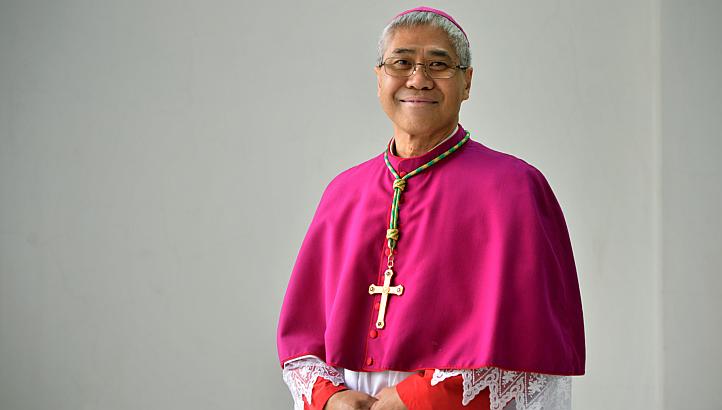
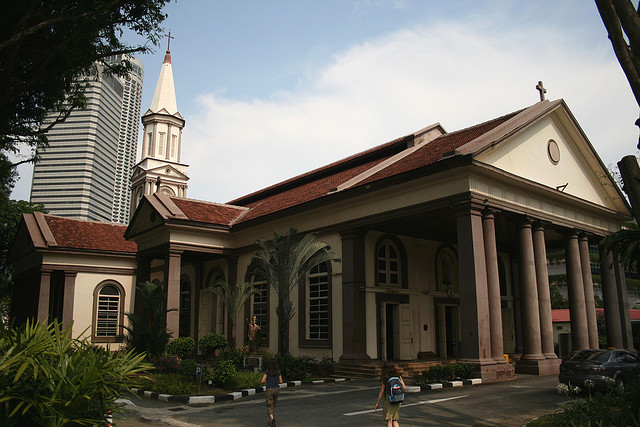
The new Archbishop of Singapore, Archbishop William Goh Seng Chye, having taken over officially on Saturday, 18 May 2013 after the Holy See accepted the resignation of the now Archbishop Emeritus Nicholas Chia Yeck Joo, will be installed at the cathedra of the Cathedral of the Good Shepherd, the mother church of the Church in Singapore.

Image

Archbishop William Goh was the Coadjutor Archbishop of Singapore and being a coadjutor, in conjunction with the Code of the Canon Law, has the right to immediately succeed the Archbishop upon his resignation being accepted by the Holy See.

This Installation Mass will also be an Inauguration Mass for the ministry of the new Archbishop and also a thanksgiving for both the new Archbishop and for the service of the now Archbishop Emeritus Nicholas Chia.


Details on the Mass :

Location : Cathedral of the Good Shepherd, ‘A’ Queen Street, Singapore

Time : Friday, 24 May 2013 at 10.30 am (on Vesak Day – Public Holiday)


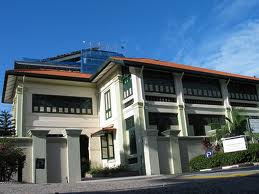
As Archbishop William Goh has officially taken over the duty as the Ordinary of the Archdiocese, he immediately resides in the official residence of the Archbishop in the Archbishop’s House, located within the Cathedral grounds.

Image

Meanwhile, Archbishop Emeritus Nicholas Chia will transfer his residence to the Catholic Spirituality Centre in Hougang, Singapore, where Archbishop William Goh had resided during his term as the Coadjutor Archbishop.


God bless our new Archbishop and we also pray for our Archbishop Emeritus, that in his retirement he will continue to do great works for the sake of the Lord.

Ad multos annos, His Excellency Archbishop William Goh!

Tuesday, 14 May 2013 : 7th Week of Easter, Feast of St. Matthias, Apostle (Gospel Reading)

John 15 : 9-17

As the Father has loved Me, so I have loved you. Remain in My love! You will remain in My love if you keep My commandments, just as I have kept My Father’s commandments and remain in His love.

I have told you all this, that My own joy may be in you, and your joy may be complete. This is My commandment : Love one another as I have loved you! There is no greater love than this, to give one’s life for one’s friends; and you are My friends, if you do what I command you.

I shall not call you servants anymore, because servants do not know what their master is about. Instead I have called you friends, since I have made known to you everything I learnt from My Father.

You did not choose Me; it was I who chose you and sent you to go and bear fruit, fruit that will last. And everything you ask the Father in My Name, He will give you. This is My command, that you love one another.

Tuesday, 14 May 2013 : 7th Week of Easter, Feast of St. Matthias, Apostle (Psalm)

Psalm 112 : 1-2, 3-4, 5-6, 7-8

Alleluia! Praise, o servants of the Lord, praise the Name of the Lord! Blessed be the Name of the lord, now and forever!

From eastern lands to the western islands, may the Name of the Lord be praised! The Lord is exalted over the nations, His glory above the heavens.

Who is like the Lord our God, who sits enthroned on high, but also bends down to see on earth as in heaven?

He lifts up the poor from the dust and the needy from the ash heap. He makes them sit with princes, with rulers of His people.