Sunday, 22 February 2015 : First Sunday of Lent, Feast of the Chair of St. Peter the Apostle (Second Reading)

Liturgical Colour : Purple/Violet

1 Peter 3 : 18-22

Remember how Christ died, once and for all, for our sins, He, the Just One, died for the unjust in order to lead us to God. In the body He was put to death, in the Spirit He was raised to life, and it was then that He went to preach to the imprisoned spirits.

They were the generation who did not believe when God, in His great patience, delayed punishing the world while Noah was building the ark in which a small group of eight persons escaped through water. That was a type of the baptism that now saves you; this baptism is not a matter of physical cleansing but of asking God to reconcile us through the resurrection of Christ Jesus.

He has ascended to heaven and is at the right hand of God, having subjected the angels, Dominations and Powers.

Homily and Reflection :
https://petercanisiusmichaeldavidkang.com/2015/02/20/sunday-22-february-2015-first-sunday-of-lent-feast-of-the-chair-of-st-peter-the-apostle-homily-and-scripture-reflections/

Sunday, 22 February 2015 : First Sunday of Lent, Feast of the Chair of St. Peter the Apostle (Psalm)

Liturgical Colour : Purple/Violet

Psalm 24 : 4-5ab, 6 and 7bc, 8-9

Teach me Your ways, o Lord; make known to me Your paths. Guide me in Your truth and instruct me, for You are my God, my Saviour.

Remember Your compassion, o Lord, Your unfailing love from of old. Remember not the sins of my youth, but in Your love remember me.

Good and upright, the Lord teaches sinners His way. He teaches the humble of heart and guides them in what is right.

Homily and Reflection :
https://petercanisiusmichaeldavidkang.com/2015/02/20/sunday-22-february-2015-first-sunday-of-lent-feast-of-the-chair-of-st-peter-the-apostle-homily-and-scripture-reflections/

Sunday, 22 February 2015 : First Sunday of Lent, Feast of the Chair of St. Peter the Apostle (First Reading)

Liturgical Colour : Purple/Violet

Genesis 9 : 8-15

God spoke to Noah and his son, “See, I am making a covenant with you and with your descendants after you; also with every living animal with you : birds, cattle, that is, with every living creature of the earth that came out of the ark. I establish My covenant with you. Never again will all life be cut off by the waters of a flood, and never again will there be a flood to destroy the earth.”

God said, “This is the sign of the covenant I make between Me and you, and every animal living with you for all future generations. I set My bow in the clouds and it will be a sign of the covenant between Me and the earth. When I bring clouds over the earth and the rainbow appears in the clouds, I will remember the covenant between Me and you and every kind of living creature, so that never again will floodwaters destroy all flesh.”

Homily and Reflection :
https://petercanisiusmichaeldavidkang.com/2015/02/20/sunday-22-february-2015-first-sunday-of-lent-feast-of-the-chair-of-st-peter-the-apostle-homily-and-scripture-reflections/

19 Cardinals to be created at the Consistory of 22 February 2014

On Sunday, 12 January 2014, at the Angelus of the Feast of the Baptism of the Lord, Pope Francis announced that 19 new Cardinals will be created at the consistory planned to be held on the Feast of the Chair of St. Peter, 22 February 2014.


Here are the names of the new Cardinals or Cardinal-elects, and some short explanation on them :

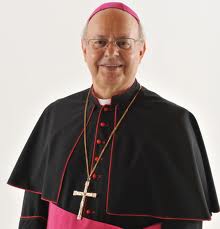
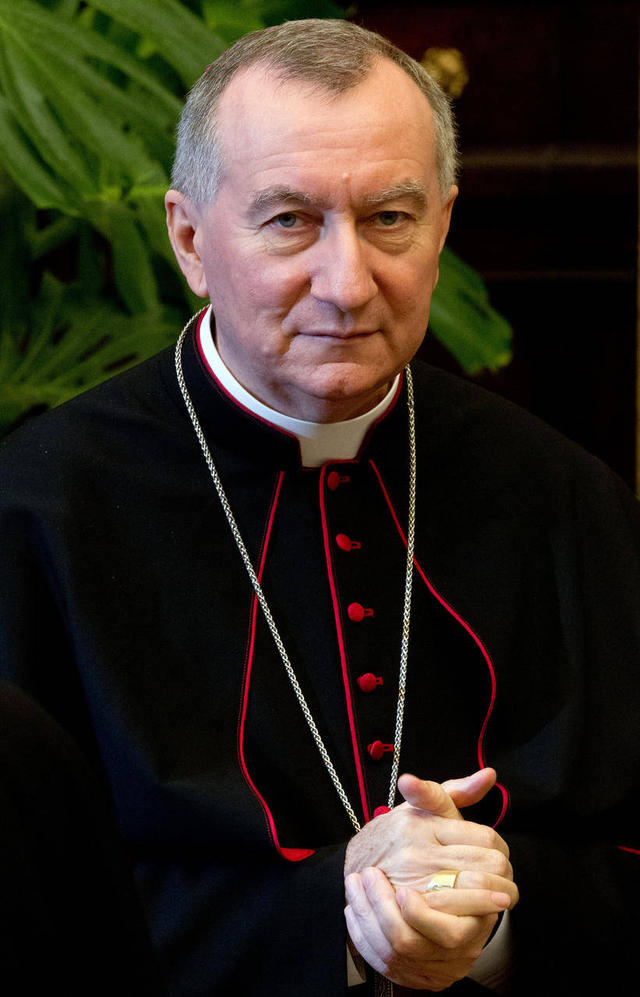
1. Archbishop Pietro Parolin, Secretary of the Secretariat of State – 58 (Age)
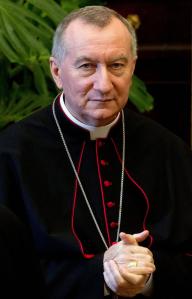
1272287

Being the highest position in the Church just below that of the Pope himself, Archbishop Parolin as the Secretariat of State is a certain candidate for the Cardinalate to be made at this consistory, and the position itself is explicitly stated to have to be held by a Cardinal (As Cardinal Secretary of State)


2. Archbishop Lorenzo Baldisseri, Secretary General of the Synod of Bishops – 73

images

Archbishop Lorenzo Baldisseri is also the Secretary of the College of Cardinals and therefore was the Secretary of the Conclave that elected Pope Francis on 13 March 2013.

It was reported and confirmed by sighting that the Pope had placed his own red zucchetto (skullcap) on the head of Archbishop Baldisseri, which by ancient custom (last used by Blessed Pope John XXIII on the Secretary of that time, Monsignor Alberto di Jorio in 1958) mark that the new Pope wants to bestow the red hat on the prelate. Hence, the elevation of Archbishop Baldisseri is pretty much certain.


3. Archbishop Gerhard Ludwig Muller, Prefect of the Congregation for the Doctrine of the Faith – 66
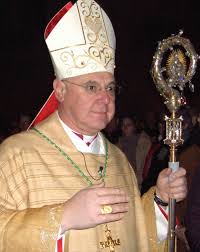
Muller

As the Prefect of a Congregation, and one as important as the Congregation for the Doctrine of the Faith once held by Cardinal Joseph Ratzinger before he was elected Pope Benedict XVI in 2005, Archbishop Gerhard Ludwig Muller is a certain candidate for the Cardinalate, and sure enough, he is one of the 19 appointed.


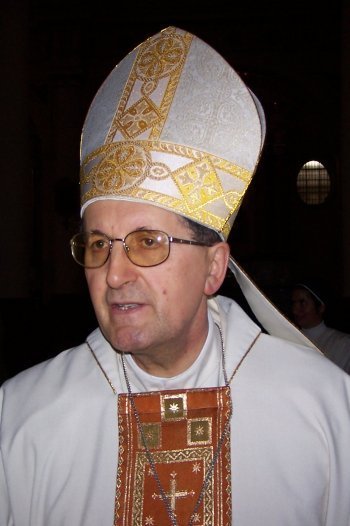
4. Archbishop Beniamino Stella, Prefect of the Congregation for Clergy – 72

Stella

Similar with Archbishop Muller, as the Prefect of an important Roman Curia Congregation, Archbishop Stella is a certain candidate for the Cardinalate, and as a recent appointee by Pope Francis, this made his elevation very certain indeed.


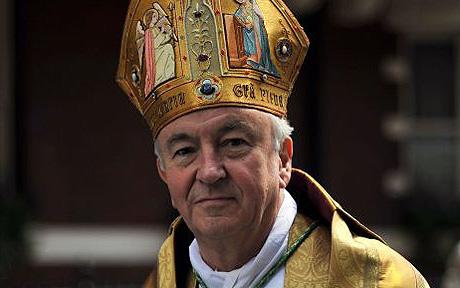
5. Archbishop Vincent Nichols, Metropolitan Archbishop of Westminster (United Kingdom) – 68
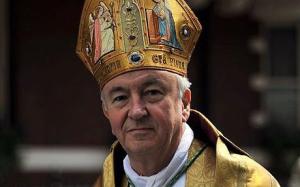
BRITAIN-RELIGION-ARCHISHOP-WESTMINSTER

With the problems that affected Cardinal Keith O’Brien early of last year and his retirement, the United Kingdom has no leading figure, which Archbishop Vincent Nichols, as the Archbishop of Westminster, the Primatial See of the United Kingdom as the obvious choice for the Cardinalate.


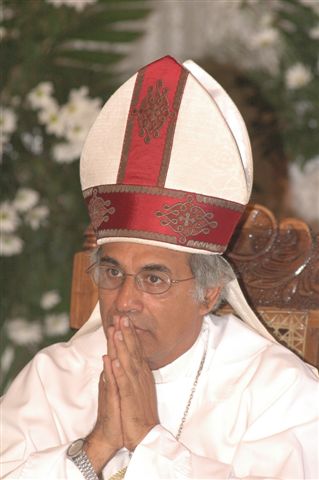
6. Archbishop Leopoldo Jose Brenes Solorzano, Metropolitan Archbishop of Managua (Nicaragua) – 64
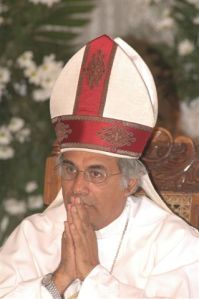
Solorzano

As his predecessor was made Cardinal in 1985, and had been 7 years as a non-elector, it was natural that Archbishop Solorzano is made a Cardinal, representing the Central American region.


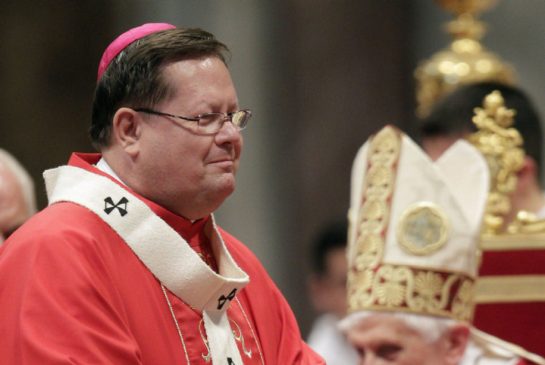
7. Archbishop Gerald Cyprien Lacroix, I.S.P.X., Metropolitan Archbishop of Quebec (Canada) – 56
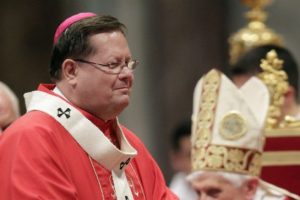
gerald_cyprien_lacroix.jpg.size.xxlarge.promo

The second youngest of the newly appointed Cardinals, as the Primate of Canada by virtue of being the Prelate of Quebec, it is natural for Archbishop Lacroix to be appointed Cardinal. His predecessor, Cardinal Marc Ouellet, is the current Prefect of the Congregation for Bishops and was a leading papabili of the 2013 Papal Conclave.


8. Archbishop Jean-Pierre Kutwa, Metropolitan Archbishop of Abidjan (Cote d’Ivoire / Ivory Coast) – 68
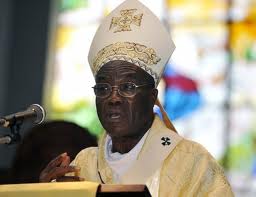
Jean-Pierre Kutwa

With two of his immediate predecessors made Cardinals in 1983 and 2001 respectively, Archbishop Kutwa had a high chance of being appointed Cardinal. His appointment is a nod to the Church in Africa, a growing community of the faithful, one with the Universal Church.


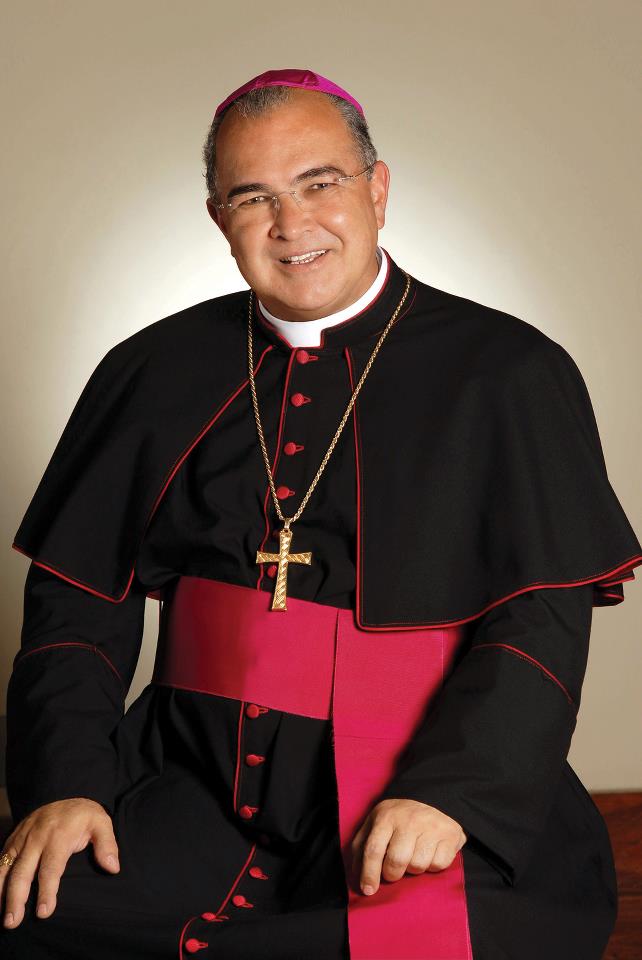
9. Archbishop Orani Joao Tempesta, O. Cist., Metropolitan Archbishop of Sao Sebastiao do Rio de Janeiro (Brazil) – 63
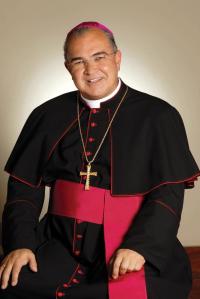
Dom Orani João Tempesta

As the head of a Cardinalatial see, with all five of his immediate predecessors made Cardinals, and with the limelight gained from the 2013 World Youth Day in Rio de Janeiro, Archbishop Tempesta is a certain candidate for the Cardinalate.


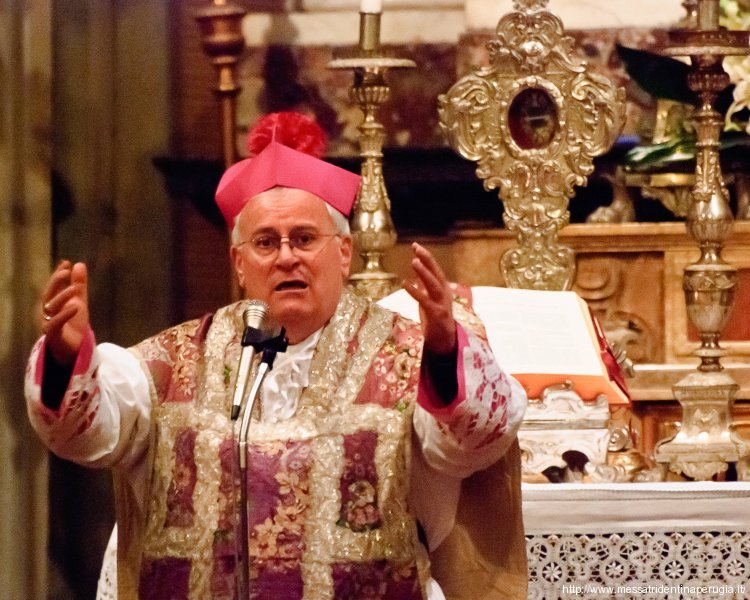
10. Archbishop Gualtiero Bassetti, Metropolitan Archbishop of Perugia-Citta della Pieve (Italy) – 71
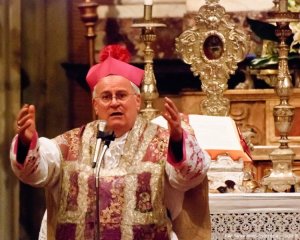
Bassetti

His long ago predecessor, Cardinal Vincenzo Gioacchino Pecci was elected Pope Leo XIII in 1878. Since then Perugia had had no Cardinal. This elevation of Archbishop Bassetti to the Cardinalate would honour the memory of Pope Leo XIII and give chance to other Italian Archdioceses to get the red hat besides the major, Cardinalate ones. Archbishop Bassetti is also known for his pastoral nature and hard work for his Archdiocese.


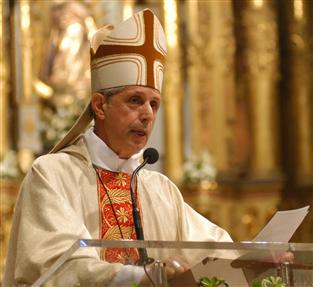
11. Archbishop Mario Aurelio Poli, Metropolitan Archbishop of Buenos Aires (Argentina) – 66
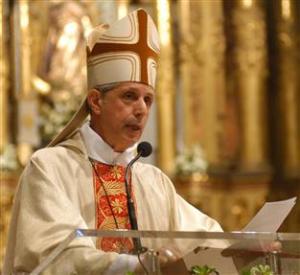
20130327134808

As the successor of Pope Francis as the Metropolitan Archbishop of Buenos Aires, Archbishop Poli is a natural and certain choice for the Cardinalate.


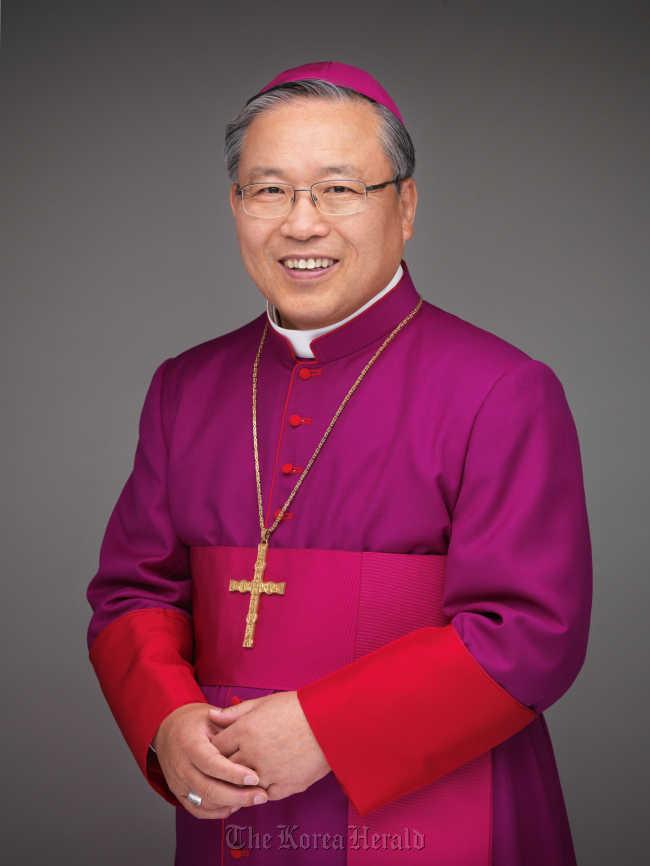
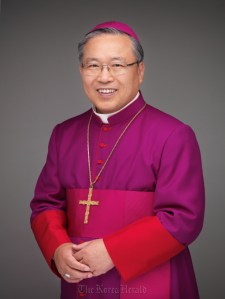
12. Archbishop Andrew Yeom Soo-jung, Metropolitan Archbishop of Seoul (South Korea) – 70
20120625000388_0

Among the three great Asian nations known for their Cardinals, namely Hong Kong (China), South Korea, and the Philippines, only South Korea at the moment has no Cardinal-elector. Hence, Archbishop Andrew Yeom is an almost confirmed choice for the Cardinalate, and indeed, he was chosen.


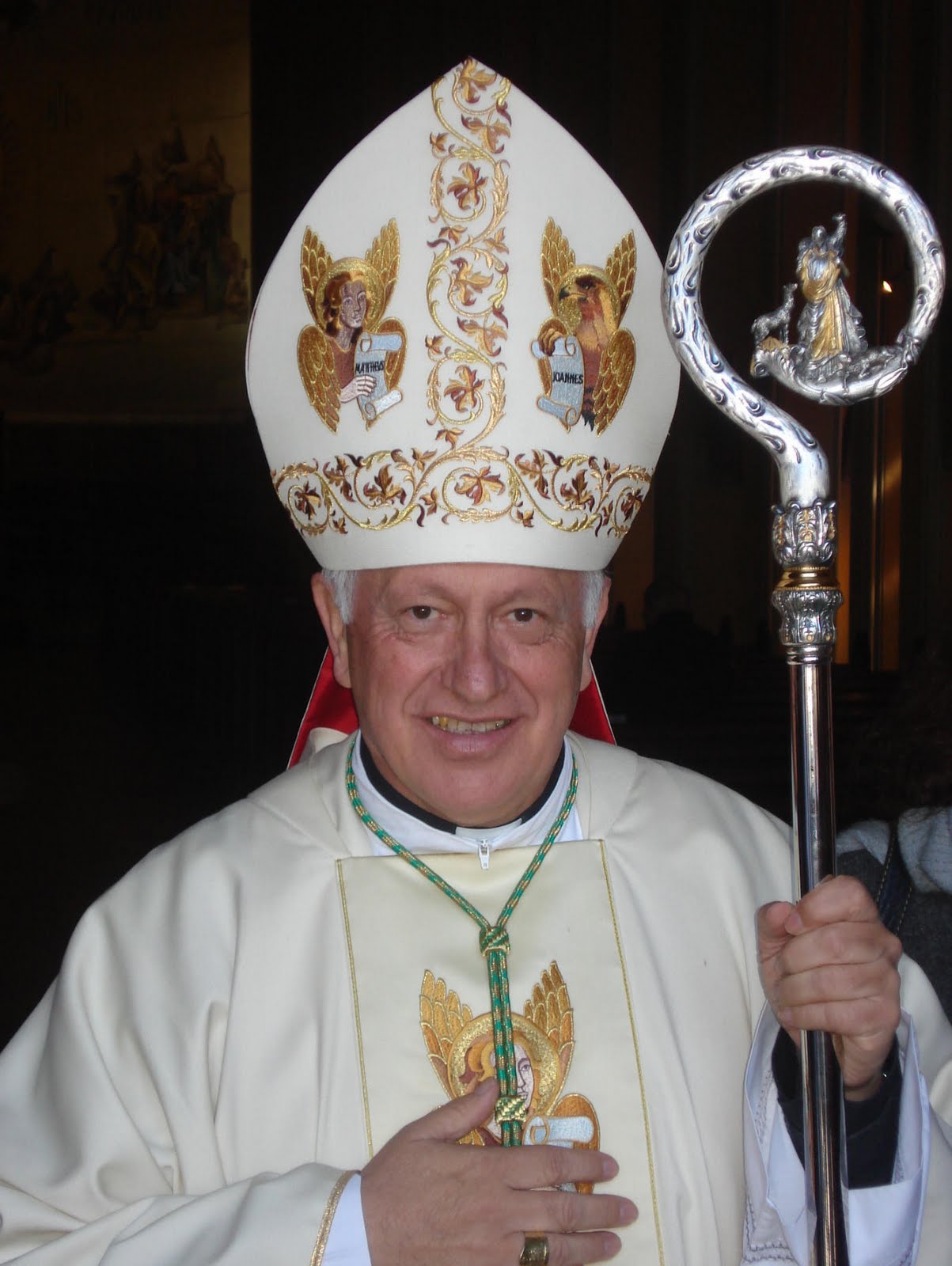
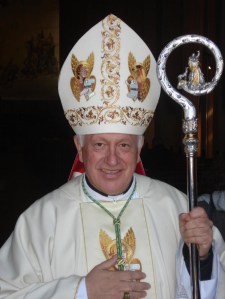
13. Archbishop Ricardo Ezzati Andrello, S.D.B., Metropolitan Archbishop of Santiago (Chile) – 72
02

Another Cardinalatial see in the Latin Americas, and therefore, Archbishop Ezzati Andrello is one of the few possible choices for the Cardinalate. Another Cardinal to increase the proportion of Latin America in the Sacred College of Cardinals.


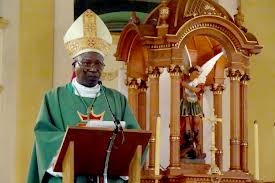
14. Archbishop Philippe Nakellentuba Ouedraogo, Metropolitan Archbishop of Ouagadougou (Burkina Faso) – 68
Oua

One of his predecessor was made Cardinal by Pope Paul VI in 1965, and therefore Archbishop Ouedraogo was a potential candidate for the Cardinalate for Africa region.


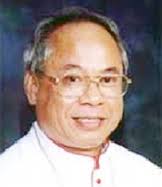
15. Archbishop Orlando Beltran Quevedo, O.M.I., Metropolitan Archbishop of Cotabato (Philippines) – 74
Quevedo

A rather suprising choice because Archbishop Quevedo is already 74 and therefore is just one year from the mandatory retirement age, although this may be extended towards 80, as was quite common in recent years among Asian Cardinals.

Geographically the choice made sense because the Philippines does deserve more Cardinals, and so far the Cardinalatial sees only cover the north (Manila) and central (Cebu) portions of the country. A Cardinal from the southern island of Mindanao is a good sign indeed.


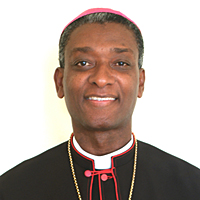
16. Bishop Chibly Langlois, Bishop of Les Cayes (Haiti) – 55
chibly_langlois

The youngest of the newly appointed Cardinals, from a relatively less important diocese in the Caribbean region. This choice is a nod both to the plight of the people of Haiti after the earthquake that happened a few years earlier, as well as the rising importance of the region to the Universal Church.


There are three Cardinal non-electors (over the age of 80) appointed in this Consistory, usually for their great and long contribution and dedication to the Church :


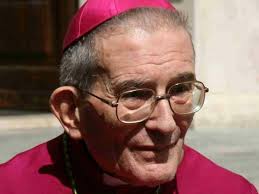
17. Archbishop Loris Francesco Capovilla, Archbishop-Prelate Emeritus of Loreto (Italy) – 98
Capovilla

The oldest of the newly appointed Cardinals at 98, likely the oldest person ever appointed a Cardinal. Archbishop Capovilla was renowned for being the long-time private secretary to Blessed Pope John XXIII.

As the aforementioned Pope will be canonised this coming April, it is an obvious nod to his memory that Archbishop Capovilla, coupled with his long and dedicated service, that he is made a Cardinal.


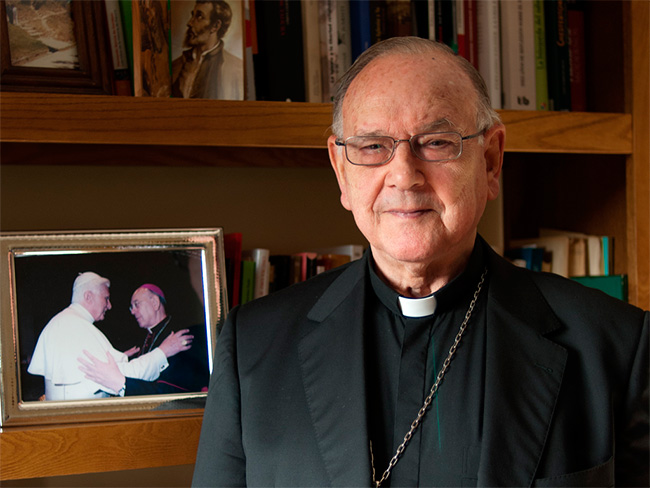
18. Archbishop Fernando Sebastian Aguilar, C.M.F., Metropolitan Archbishop Emeritus of Pamplona y Tudela (Spain) – 84

fernando-sebastian


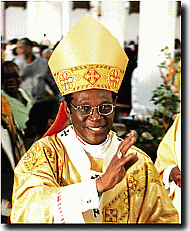
19. Archbishop Kelvin Edward Felix, Metropolitan Archbishop Emeritus of Castries (Saint Lucia) – 80
rev_felix

Another appointee for the Caribbean region, even though being over 80, it was rather honorary in nature, but nevertheless it was to highlight the importance of the New World in the Universal Church.

Cardinabili List for the Cardinal Consistory of 22 February 2014

Here is my own list of the potential candidates for the Cardinalate, to receive the red biretta in the Consistory next month.

The final list is not yet known, and while some in this list may not be chosen, it is possible all of them are chosen, and there may be even names outside this list I have compiled too. Pray for them!


Cardinal Consistory of 22 February 2014 (Feast of the Chair of St. Peter)


Almost Certain


Curia

1. Archbishop Pietro Parolin, Secretary of the Secretariat of State

2. Archbishop Beniamino Stella, Prefect of the Congregation for Clergy

3. Archbishop Gerhard Ludwig Muller, Prefect of the Congregation for the Doctrine of the Faith

4. Archbishop Lorenzo Baldisseri, Secretary General of the Synod of Bishops


Residential

5. Patriarch Francesco Moraglia, Patriarch of Venice (Italy)

6. Archbishop Mario Aurelio Poli, Metropolitan Archbishop of Buenos Aires (Argentina)


Very likely


Residential

6. Patriarch Manuel Jose Macario do Nascimento Clemente, Patriarch of Lisbon (Portugal)

7. Archbishop Vincent Nichols, Metropolitan Archbishop of Westminster (United Kingdom)

8. Archbishop Andre-Joseph Leonard, Metropolitan Archbishop of Mechelen-Brussels (Belgium)

9. Major Archbishop Sviatoslav Shevchuk, Major Archbishop of Kyiv-Halyc (Head of the Ukrainian Greek Catholic Church)

10. Archbishop Jose Serafio Palma, Metropolitan Archbishop of Cebu (Philippines)

11. Archbishop Andrew Yeom Soo-jung, Metropolitan Archbishop of Seoul (South Korea)

12. Archbishop Cyprian Kizito Lwanga, Metropolitan Archbishop of Kampala (Uganda)

13. Archbishop Odon Razanakolona, Metropolitan Archbishop of Antananarivo (Madagascar)

14. Archbishop Orani Joao Tempesta, Metropolitan Archbishop of Rio de Janeiro (Brazil)

15. Archbishop Ricardo Ezzati Andrello, S.D.B., Metropolitan Archbishop of Santiago (Chile)


Possible


Curial

16. Archbishop Jean-Louis Brugues, O.P., Head of the Vatican Secret Archives and the Vatican Apostolic Library

17. Archbishop Salvatore Fisichella, President of the Pontifical Council for the Promotion of the New Evangelisation

18. Archbishop Vincenzo Paglia, President of the Pontifical Council for the Family


Residential

19. Archbishop Charles Joseph Chaput, O.F.M. Cap., Metropolitan Archbishop of Philadelphia (USA)

20. Archbishop Rogelio Cabrera Lopez, Metropolitan Archbishop of Monterrey (Mexico)

21. Archbishop Peter Takeo Okada, Metropolitan Archbishop of Tokyo (Japan)

22. Archbishop Ignatius Suharyo Hardjoatmodjo, Metropolitan Archbishop of Jakarta (Indonesia)

23. Patriarch Ibrahim Isaac Sidrak, Patriarch of Alexandria (Head of the Coptic Catholic Church)

24. Archbishop Francis Xavier Kriengsak Kovithavanij, Metropolitan Archbishop of Bangkok (Thailand)

25. Archbishop Eustaqio Pastor Cuquejo Verga, Metropolitan Archbishop of Asuncion (Paraguay)

26. Archbishop Cesare Nosiglia, Metropolitan Archbishop of Turin (Italy)

Friday, 22 February 2013 : Feast of Chair of St. Peter the Apostle (Scripture Reflection)

Today, one might ask, why do we celebrate the feast of a chair? Why the chair of St. Peter? As we all should know, that all dioceses in the world has Cathedrals, one in each diocese, and in the Cathedral, there is a special ‘chair’ that only the ordinary or the bishop of the diocese can sit on. This is because that chair is the Cathedra, the bishop’s throne or seat, which represents his authority, which is given from the Lord Himself.

Where does this authority come from? Right, you all should know indeed, that it came eventually, down the centuries and millenia from the early leaders of the Church, who themselves receievd that power and authority from the Apostles, whose leader is Peter, who was then known as Simon, son of Jonah, or Simon Bar-Jona, the fisherman.

Simon answered out of great courage and speak out the truth sincerely about Christ, who is indeed the Messiah and the Son of the living God, who has come to save the world, although maybe none at that time has yet to understand that He has to do this through His suffering and ultimately death on the cross. But indeed, for the great act of faith that Simon showed, Christ entrusted him with His authority and power, as His vicar on earth, simply through the words that He mentioned, that He will give Simon the keys of the kingdom of heaven, and He will build His Church, that is all the faithful in Him, united as one Body, on him as the foundation.

Hence, that is why Christ renamed Simon as Peter, whose Aramaic (the language spoken at the time of Jesus) origin was Kephas/Kepha, which means rock, that was then translated to Greek as Petros, and then to Latin as Petrus, which all means rock. The Gospel indeed has some pun to the word as Christ did say, “You are Peter and on this Rock…”, which one may interpret as the play on the word Petros/Petrus/Kepha, and there are those, who said that the rock does not refer to Peter at all.

No, this cannot be, since that Rock does refer to Peter, and why? It is because of his great faith in Christ, that is like a great rock, will become the most suitable foundation of His Church on this world, for Peter himself later on, as the leader of the Church, rooted himself firmly in Christ, even to his death in Rome.

It does not mean that Peter did not falter in his faith and dedication to the Lord. As everyone should know, that Peter was well-known for his betrayal of the Lord, even after he said during the Last Supper that he would never leave or abandon the Lord, but when Jesus was tried and mocked, and someone suspected Peter of being Christ’s accomplice, he denied Christ three times, out of fear and uncertainty, seeing that the Lord he has always believed in, has now been judged and soon to be sentenced to death.

Nevertheless, it is not Peter’s failures that we should focus on, but rather, what happens after, as he should indeed be a role model to all of us, that after whenever we fall, we must rise up again and rise up ever stronger than before, even stronger than before we fall. It was Peter who led the Apostles in the days after the Crucifixion and the Resurrection of Christ, and it was to him that Christ asked, “Peter, do you love Me.”, also three times.

Just as we often heard indeed in the Bible that God is merciful and willing to forgive all who had erred but yet willing to fully turn themselves back towards Him again, the same thing was what Christ did to Peter. Peter knew that he had been forgiven, and he gave Christ the promise of undying and eternal love, and that he will never fail Him again as before. Christ then entrusted the care of all His sheep in this world, all those who believe in Him, in Peter, whom He then affirm as the leader of all the faithful, and His representative in this world.

It is at that point that Christ entrusted the keys of the kingdom of heaven, and built His Church, which began on Pentecost, with the coming of the Holy Spirit on the Apostles. It was Peter who defended Christ and gave a fiery speech, asking the people to believe in Christ, and caused many to convert to the cause of God, and therefore, marked the very beginning of the Church.

Through Peter, we have many of his successors, who are the Bishops of Rome. Why the Bishop of Rome? This is because, in the established tradition and the letters following the events of the New Testament, Peter would travel to Rome eventually and settled there, before being martyred by the Emperor Nero of the Roman Empire sometime in 67 AD, not long after the other great Apostle Paul, the Apostle of the Gentiles, who is also associated together with the Bishop of Rome.

St. Peter in his great humility, when he was about to be crucified, through which he will face his martyrdom, refused to be crucified in the same way as the Lord did, and thus chose to be crucified upside down. This is what we know now as the ‘upside-down’ cross, or the cross of St. Peter.

Many had misunderstood this ‘upside-down’ as the symbol of the Antichrist, when the Pope, for example Blessed Pope John Paul II utilised it on his chair during his visit to the Holy Land, which in fact is the symbol of his own authority as the successor of St. Peter, and the symbol of Peter’s humility in being crucified upside-down that he would not die the same way as Christ, as he felt unworthy to do so. Now that all of you know about this, tell those who has yet to know about this, that they too may know and not linger in falsehood, but remain in the truth.

The chair of St. Peter can be seen at the back of the High Altar below the famous Holy Spirit stained glass on the walls of St. Peter’s Basilica in the Vatican, which was built on the spot where St. Peter was buried after his martyrdom. This chair, which is armless, and made of wood and inlaid with precious metals, contains the materials from the original chair that was known to have been used by St. Peter himself when he was in Rome. In a sense, this was St. Peter’s cathedra, and thus, the very first seat of authority that was present in this world.

Many of the Bishops of Rome who succeeded Peter had been great Popes, and many too had been saints and great saints, contributing greatly to the growth of the Church of Christ to whom they are entrusted to, through Peter. Of course there are also some Popes who had been bad Popes, and were great sinners. We condemn what they did, which in one way or another have done bad to the Church of Christ and to the faithful, due to their failure to faithfully carry out the mission that has been entrusted by Christ to them through Peter.

The Popes, who are the Bishops of Rome, are human too, as St. Peter was, and therefore was also prone to sins and errors as other mankind are, but we had indeed gone a long way since St. Peter was entrusted with the keys of kingdom of heaven. After the Council of Trent, and the succeeding councils, the Church has rediscovered itself, and led by the Pope, who is the leader of all the faithful in Christ, we continue in our mission that Christ had given us, that is to spread the Gospel, the Good News to all, and to baptise everyone in the name of the Father, the Son, and the Holy Spirit.

Let us pray for our Pope, the successor of St. Peter the Apostle, that he will continue to carry out his mission entrusted to Him by Christ, and use the authority he was given to unite all the faithful in Christ. Now that our Pope, our beloved Pope Benedict XVI has decided to step down due to ill health, we pray for him that God will continue to watch over him in his retirement, and we pray for whoever his successor as the Bishop of Rome, St. Peter’s successor, will be. It is out  of the same humility that our Pope has decided to step aside, because he felt that someone else can better fulfill the roles and mission entrusted to the Popes since St. Peter, just like Peter himself humbly asked to be crucified upside-down to not die the way Christ died for the salvation of the world.

St. Peter the Apostle, you to whom Christ entrusted the keys of the kingdom of heaven, and upon whom He built His Church, pray for us, pray for our Pope Benedict XVI, your successor, and his successors, and pray for the new Coadjutor Archbishop of Singapore, Msgr. William Goh Seng Chye, who will be ordained today, and who will receive the authority given to him through the endless succession that came from you, and from Christ, who gave you the authority over the Church and the world. Pray for us, St. Peter. Amen.

Friday, 22 February 2013 : Feast of Chair of St. Peter, the Apostle (Gospel Reading)

Matthew 16 : 13-19

After that, Jesus came to Caesarea Philippi. He asked His disciples, “Who do people say the Son of Man is?” They said, “For some of them You are John the Baptist, for others Elijah, or Jeremiah, or one of the prophets.”

Jesus asked them, “But you, who do you say I am?” Peter answered, “You are the Messiah, the Son of the living God.”

Jesus replied, “It is well for you, Simon Bar-Jona, for it is not flesh or blood that has revealed this to you, but My Father in heaven. And now I say to you : You are Peter, and on this rock I will build My Church; and never will the powers of death overcome it. I will give you the keys of the kingdom of heaven : whatever you bind on earth shall be bound in heaven, and whatever you unbind on earth shall be unbound in heaven.”

Friday, 22 February 2013 : Feast of Chair of Saint Peter, the Apostle (Psalm)

Psalm 22 : 1-3a, 3b-4, 5, 6

The Lord is my shepherd, I shall not want. He makes me lie down in green pastures. He leads me beside the still waters. He restores my soul.

He guides me through the right paths for His Name’s sake. Although I walk through the valley of the shadow of death, I fear no evil, for You are beside me : Your rod and Your staff comfort me.

You spread a table before me in the presence of my foes. You anoint my head with oil; my cup is overflowing.

Goodness and kindness will follow me all the days of my life. I shall dwell in the house of the Lord as long as I live.

Friday, 22 February 2013 : Feast of Chair of Saint Peter, the Apostle (First Reading)

1 Peter 5 : 1-4

I now address myself to those elders among you; I too, am an elder and a witness to the sufferings of Christ, hoping to share the Glory that is to be revealed. Shepherd the flock which God has entrusted to you, guarding it not out of obligation but willingly for God’s sake; not as one looking for a reward but with a generous heart; do not lord it over those in your care, rather be an example to your flock.

Then, when the Chief Shepherd appears, you will be given a crown of unfading glory.