Saturday, 28 June 2014 : Vigil Mass of the Solemnity of St. Peter and St. Paul, Apostles (Gospel Reading)

Liturgical Colour : Red

John 21 : 15-19

After they had finished breakfast, Jesus said to Simon Peter, “Simon, son of John, do you love Me more than these?” He answered, “Yes, Lord, You know that I love You.” And Jesus said, “Feed My lambs.”

A second time Jesus said to him, “Simon, son of John, do you love Me?” And Peter answered, “Yes, Lord, You know that I love You.” Jesus said to him, “Look after My sheep.” And a third time He said to him, “Simon, son of John, do you love Me?”

Peter was saddened because Jesus asked him a third time, “Do you love Me?” and he said, “Lord, You know everything; You know that I love You.”

Jesus then said, “Feed My sheep! Truly, I say to you, when you were young, you put on your belt and walked where you liked. But when you grow old, you will stretch out your hands, and another will put a belt around you, and lead you where you do not wish to go.”

Jesus said this to make known the kind of death by which Peter was to glorify God. And He added, “Follow Me.”

Friday, 13 June 2014 : 10th Week of Ordinary Time, Memorial of St. Anthony of Padua, Priest and Doctor of the Church (Scripture Reflections)

Liturgical Colour : White

Brothers and sisters in Christ, today is a direct continuation of the discourse and catechesis of yesterday’s Scripture readings, and we continue on the matter of understanding the Law and the true intention of the Lord as He revealed to mankind. We need to know that the Law of the Lord should not be taken at plain literal meaning, nor should we be proud of ourselves and assume that we know it all about God and His desire, and therefore be judgmental on others.

We need to understand the greater purpose of the Law and the rules of our faith. We cannot be blindly oblige to the rules without first understanding them, and yet we can neither fail to oblige with the excuse that we do not understand them or worse if we decide to ignore them. We must therefore make the conscious effort to understand the Lord and His Law. How do we do so, brothers and sisters?

By obeying the teachings and tenets of the Church, and the regulations established by the Church, and maintaining a good and healthy relationship with our shepherds, that is our priests and bishops. It is because these people are the ones who had been entrusted with our care by the Lord, and they have also been granted teaching authority by Christ Himself, empowered by the Holy Spirit, that they teach the faith and the Law of God in its purest form and in its true meaning.

Today we celebrate the feast day of one of the greatest teachers of the faith, that is St. Anthony of Padua, a very renowned Franciscan friar who was legendary and amazing in his homilies and discourses, so much so that even the Pope at that time employed him as the one to deliver the homilies at his court. St. Anthony of Padua also preached in many places across Europe, and from his teachings, he brought many people closer to God by awakening in them the proper understanding of His laws and purpose.

St. Anthony of Padua was well educated since his youth, and at the same time he was also very dedicated to the Lord, having been educated in the seminary since his youth, and eventually decided to join a sacred religious life. He learnt much about the faith and how to teach it well to the people of God, and through his vast experiences in many situations and stints in various religious orders, he gained great knowledge and ability to teach the faith to the faithful.

St. Anthony of Padua was a great orator and preacher of the faith, and yet he remained truly humble despite his renown and his abilities. In fact, the very first time when St. Anthony of Padua’s preaching abilities was identified, he was reluctant and afraid when he was pointed out to be the one to give a sermon to a group of gathered religious congregations. Yet, despite his reluctance and initial refusal, he made such an eloquent and impressive sermon, that the people who heard him were completely astonished.

St. Anthony of Padua continued to preach from then on, and demands for his sermons are always high, and the Pope even kept a record of his sermons, which was truly valuable for us, for there is truly much wisdom that we can learn from St. Anthony of Padua and his discourses. Through him the word of God and the intentions of the Lord were made clear to many people, who then grew on deeper in their faith because of that.

Therefore, brothers and sisters in Christ, we have to keep faithful and true to the deposit of faith that is in the Church. Yes, we have to keep the complete entirety of the deposit of faith, which is the accumulated wisdom, teachings, and revelations that we have received through the holy men and women, who dedicated themselves like St. Anthony of Padua had done. Through them, we gain this precious knowledge and understanding, and therefore, in our lives, we have to continue safeguarding this deposit of the faith and teach it to others.

It is not difficult to do so, and we do not have to be like St. Anthony of Padua, or be as wise and eloquent as him in order to do so. What we need to do is in fact, to practice what we believe in our own lives, that in all our words, deeds and actions we will always reflect who we are, the children and followers of our Lord and God. If we practice genuinely what we believe in, then those who see us and who are still unbelievers, will certainly be touched by the light of Christ and believe in God, and come to believe and be saved.

May the Lord bring about His good works and graces through us, that He may make manifest His truth and love to the world, just as He had once made Himself known through St. Anthony of Padua. God bless us always and strengthen us at all times. Amen.

Thursday, 12 June 2014 : 10th Week of Ordinary Time (Scripture Reflections)

Liturgical Colour : Green

Brothers and sisters in Christ, today it is revealed to us that in our obedience to God, we cannot be blindly obedient and obeying Him for the sake of obedience, or because we fear the wrath of God and His punishments. That is because any faith based on such reasons is likely to be weak and unstable, easily manipulated and shaken when we are in our most vulnerable moments.

Our faith must in fact be based on genuine love and devotion for God. And how do we devote ourselves to God, brothers and sisters in Christ? It is by finding out the true meaning of God’s love for us and His Laws, that we obey Him and follow Him not for the sake of obedience or merely for the fulfillment of our obligations to God, but because we truly understand that our obedience is because we realise our frailty and our need for the Lord to be our guide and help.

What the Lord told the disciples today is that, there is reason behind every single tenets and parts of the Law which God has given His people to follow, and that reason is all based on nothing else but love. Yes, the love of God for mankind, and the love which we ought to show and emulate among ourselves, to each other. And love is the heart of the Law, which we all need to remember always, and yet often forgets.

People like the Pharisees and the scribes like to dwell in very detailed scrutinies of the Law and certain rules, which inadvertantly diverted their attention from the true focus, that is love. Their preoccupation with otherwise minor details on the Law of God prevented them from showing acts of love and acts of mercy when they were expected to do so.

In fact, not only just that, but they even often misused their power and abused it for their own purposes, that is to secure their own positions, their own power and to preserve the dominion and authority which they felt was rightfully theirs as the leaders of the people. They would do things in direct contravention with the true meaning of the Law of God, if those things would help them to preserve themselves.

For example, the case of the woman caught in adulterous behaviour and brought to Jesus was a clear example of this abuse. The Pharisees and the elders of Israel brought her to Jesus not because they were concerned a single bit about her, whether for her redemption or condemnation, but they did so in order to discredit Jesus and trap Him in His own words, and thus constituted a vile attempt to mock the love of God and the Law itself.

Therefore, brothers and sisters in Christ, today we are urged to build our relationships with God anew, that is to reaffirm our complete and total devotion to His love, and vow to carry on that love with us as we live our lives and as we interact with one another in this world, so that God’s love may ever be more ubiquitous and evident in our world which is increasingly lacking in love.

We are called to reflect on our own actions, on whether we have truly been faithful disciples of the Lord, that is truly taking into account how each and every one of our actions stand with reference to the Lord and His love. Have we attain a high standard of love in our actions? And have we truly been obedient to the will of God? Or are we only concerned about our own fates and well-being, often to the disadvantage of others around us?

Let us use this opportunity to reflect, and from then on, to take concrete actions, which will benefit all of us, and further spread the love of God for His people throughout the world, and make it a much better place. Remember, obey the Lord and all His ways, with all of our hearts and minds. God preserve us. Amen.

Wednesday, 11 June 2014 : 10th Week of Ordinary Time, Memorial of St. Barnabas, Apostle (Scripture Reflections)

Liturgical Colour : Red

Dear brothers and sisters in Christ, today we celebrate the feast of St. Barnabas, one of the Apostles of Christ, and an important messenger of the Lord, although he was not among the Twelve Apostles. St. Barnabas was renowned especially for his works and his mission activities together with St. Paul the Apostle, the other great Apostle who was known for his extensive works to bring the Good News to the Gentiles and pagans.

St. Barnabas was one of the first teachers of the faith, and he preached the Good News to many people since the beginning of the Church, travelling to many places with St. Paul and the other Apostles to bring the teachings of Christ to many people. St. Barnabas was one of the principal workers of the evangelisation, and through him, the early Christian communities were strengthened and empowered.

He went on from place to place, and having been set aside by the Lord, as we witnessed in the first reading today, he brought the message of salvation just as we heard it in the Gospel today. To the people who still live in darkness and the ignorance of the world at that time, the words and preachings of St. Barnabas must have been a refreshing stream of water which enlightens the eyes and minds of the people, and bring them to realisation of the truths in Christ.

He went around many cities, towns and places throughout the Roman Empire, many of the journeys together with St. Paul, and in many places he was welcomed cordially, and the people eagerly welcomed his teachings, and listened to them. There were many who became believers of Christ after they heard the testimony of St. Barnabas and St. Paul, the pair who became the greatest tool of evangelisation of the early Church.

However, as many as there were those who accepted and welcomed St. Barnabas, there were also equally many those who rejected his preachings and his testimonies, if not even more than those who accepted him and St. Paul. And if we read the entirety of the Acts of the Apostles, we can see how difficult it was for these two Apostles, and the other Apostles in general, in carrying out their missions.

There were always those who stubbornly refused to listen to reason, and refused to listen to the word of truth, as spoken by the Apostles, and many of these people were the fanatical Jews and Pharisees who were spread widely in the Jewish Diaspora in the Greek cities, where they often fiercely contested the teachings of the Apostles in the synagogues and among the people, inciting the people to rise up against them.

And eventually, St. Barnabas also met his end in violent death through martyrdom, in the defense of his faith while ministering to the people of God and preaching the faith, commonly agreed to have happened in the island of Cyprus, where his tomb can now be found at. This faithful man of God had dedicated much of his life to the faith and to God, and even though he met his end, but through his works, he brought many people to salvation in God.

Dear brothers and sisters in Christ, therefore we are once again presented with the life of this dedicated saint, who worked hard for the sake of the Lord and His people without fear and full of courage, despite all of the oppositions against him and all the persecutions that he had to endure. St. Barnabas showed us all how to be zealous and faithful servants of the Lord, and his example can indeed help us to find our own purpose in life, as children of God and members of His Church.

Let us ask for the intercession and prayer from St. Barnabas, that he will constantly pray for us, that we may find our way and purpose in this life, and that we may serve the Lord in the way that St. Barnabas himself had done in the past, to proclaim the Lord and His truth to others without fear, and filled with zeal and encouragement of the Holy Spirit.

May God guide our path at all times, and help us to carry out the mission that He has entrusted to all of us, that is to become the modern day Apostles and disciples, to bring the light of God to all peoples of all nations. God bless us all. Amen.

Tuesday, 3 June 2014 : 7th Week of Easter, Memorial of St. Charles Lwanga and Companions, Martyrs (First Reading)

Liturgical Colour : Red (Martyrs)

Acts 20 : 17-27

From Miletus Paul sent word to Ephesus, summoning the elders of the Church. When they came to Him, he addressed them, “You know how I lived among you from the first day I set foot in the province of Asia, how I served the Lord in humility through the sorrows and trials that the Jews caused me.”

“You know that I never held back from doing anything that could be useful for you; I spoke publicly and in your homes and I urged Jews and non-Jews alike to turn to God and believe in our Lord Jesus.”

“But now I am going to Jerusalem, chained by the Spirit, without knowing what will happen to me there. Yet in every city the Holy Spirit warns me that imprisonment and troubles await me. Indeed I put no value on my life, if only I can finish my race and complete the service to which I have been assigned by the Lord Jesus, to announce the Good News of God’s grace.”

“I now feel sure that none of you among whom I have gone about proclaiming the kingdom of God will ever see me again. Therefore I declare to you this day that my conscience is clear with regard to all of you. For I have spared no effort in fully declaring to you God’s will.”

Monday, 26 May 2014 : 6th Week of Easter, Memorial of St. Philip Neri, Priest (Scripture Reflections)

Liturgical Colour : White

Dear brothers and sisters in Christ, following the Lord means to have a profound and complete conversion of ourselves, in particular that of our hearts and minds, so that we reflect the will of God and be true children and servants of our God. The God-fearing woman from the first reading, who listened to the word of God through the Apostles and chose to give her all to God and commit herself to Him, is an example for all of us.

Through baptism she had been saved and granted great grace from God, and so we too have been saved through our baptism, and our faith. But this must be living, a living faith, as I have often mentioned. Yes, in continuation of yesterday’h catechesis, this faith must be a growing faith and inspired by the Holy Spirit. We must be fruitful, bearing the fruits of the Holy Spirit with all of our actions.

Today we honour and celebrate a saint, whose life can be a great inspiration to all of us in following the Lord and in committing our lives in the service of God and our fellow men. St. Phillip Neri is this saint, a holy man and a dedicated servant of God who lived in Italy a few centuries ago, during the era of the Renaissance. St. Philip Neri took part in the great campaign and push to rediscover the passion and energy in the faith, and establish stronger faith in the people of God through his works.

St. Philip Neri worked hard for the sake of the faithful and the people of God, giving himself to a life of service, and he helped to build up a congregation of the faithful and secular peoples, to serve the Lord better, as well as to reform the Church which at that time was notorious for its worldly corruptions and wicked ways. St. Philip Neri was essential for the rejuvenation of the faith following the horrendous and disastrous so-called Protestant Reformation, which is a terrible heresy of the faith.

St. Philip Neri was utterly dedicated to his cause, and he tirelessly worked to refocus the people’s attention towards Christ, and to throw away the excesses of life which had characterised the faithful, the Church, and the society in general at that time, when material wealth and possessions became a symbol of status, privilege and discrimination between peoples, which should not have happened as we are all truly equal before the Lord.

We too have to follow in his footsteps, in keeping pure our hearts and minds, away from the corruptions of this world, that we would not walk in error or in the darkness, and risk falling into the trap the devil had set on our path. We always have to be ready and vigilant that we keep ourselves aware and alert against all these lies of the devil. Let us remain faithful to God.

Since our baptism, we have been marked and sealed with the Most Holy Name of the Holy Trinity, and we have been made children of God, and cleansed of our past injustices and past unworthiness, being made into children of the light. Our spirit therefore, had been strengthened, and is strong. But remember what Christ said at the Garden in Gethsemane just before, that the spirit is willing, but the flesh is weak? Yes, our flesh is weak, and our bodies and physical self are always tempted on daily basis by the devil, and we must be ever ready.

Let us all be profoundly changed in our ways of life, that in all things we may now be affirmed in the Lord and in His grace, that we may always be blessed and worthy, and when He comes again at the end of time, He may see us and find us truly worthy children of His, and reunite us with Himself. God bless us all, and be with us always. Amen.

A Brief State of the Church in China – a Church in Trial and Persecution, a Church of Martyrs, a Church of Hope

The Church in China (1949) consisted of :

20 Archdioceses

85 Dioceses

39 Apostolic Prefectures

3,080 Missionaries

2,557 Chinese priests (Total : 5,637 priests)

4 million Catholics


The Church in China (2014) consists of :

20 Archdioceses

94 Dioceses

34 Apostolic Prefectures

1 Apostolic Exarchates

3,500 priests (approximate)

12 million Catholics (both open and underground)


Looking at the above comparisons, we can see a wary future for the Church in China, which had been in official and unofficial persecution for the past six and a half decades since 1949, the year when the Communist Party of China took over power in China. Since then, the Church in China, which was once among the most vibrant and fastest growing in the world, had been in great tribulation and period of persecution. Especially during the Cultural Revolution years in the 1960s, there were great attacks against the faithful and the faith throughout the country.

On one side, it seems that there had been a growth in the number of Catholics and in terms of the growth in the number of the dioceses. However, if we look deeper into the reality of the Church and the faith, there had been a great trouble that threatened many of the faithful, especially being divided between the ‘official’ government-sanctioned ‘church’ and the underground ‘loyal’ Church.

Many of the Archdioceses and dioceses are vacant, or that their bishops are not recognised as valid and legitimate, having often been government-picked, and more of a loyal men to the government rather than true and good shepherds for the faithful. Many of the bishops were picked by the government-sanctioned Chinese Patriotic Catholic Association or CPCA, whose leaders have often been noted to be not just laymen, but even non-baptised people.

There had been much grievances and controversies in the recent years in the illegitimate and illegal election and ordination of bishops by the CPCA and the Chinese government which were not approved by the Holy See. On some occasions, the bishops did receive blessing from both parties, but in many other cases, it was the contrary. This further deepened the division among the faithful in China.

Many of China’s priests and bishops are underground, that is they remain faithful and loyal to the completeness of the faith in the Church, and unaffected by the pressure from the government to obey them. There had been great persecution against them and the faithful under their care, such that imprisonments and forced labour are not uncommon.

Ma_Daqin_2_(600_x_450)

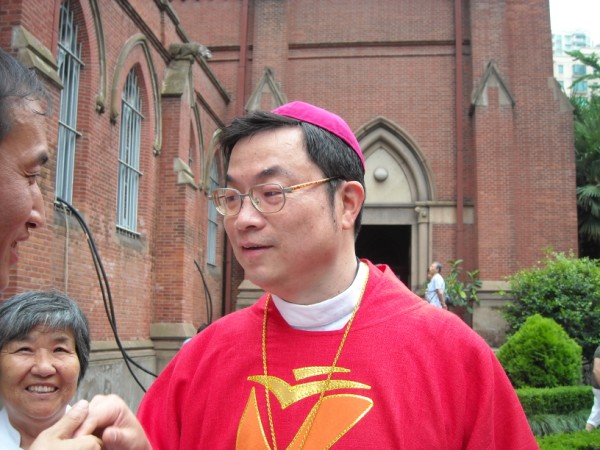
And recently, just almost two years ago, the then newly appointed Auxiliary Bishop of Shanghai, Bishop Thaddeus Ma Daqin bravely and courageously announced his resignation from the CPCA, the official ‘church’ of China at his own episcopal ordination, which was done with the blessing of the Holy See and the Pope. This resignation triggered a massive response from the government which resulted in his incarceration for the past two years, and he had greatly suffered for this. His episcopal motto is clear and indeed clearly highlighted his wish for the unity of the Church in China with the Universal Church, free from any external intervention. His motto is “Ut Sint Unum ad Maiorem Dei Gloriam” or “That they may be One, for the greater glory of God.”

The Church in China still grows, and more and more people hunger for the truth that Christ can offer them. There are many opportunities at evangelisation, and many brave and courageous ministers of the Lord’s Gospel went forth even against the challenges that await them. The recent attacks by the government on the Christian faith, as shown by the demolition of a church building in Wenzhou show how much the authoritarian government fears the power and influence that the Church and the faith may have in bringing about their downfall. The downfall of Communism and the authoritarian governments in Eastern Europe must still be fresh in the minds of the autocrats in Beijing, and they fear their own demise if they allow the faith to grow unchecked.

There is still great hope in the Church in China, and there is genuine faith in the people, who desire to be reunited completely with their brethren in faith, all of us, in the Universal Church, and be freed from any form of pressure or external domination, which are unjust and uncalled for. But they need our prayers, our support and our encouragement.

a2b631b0

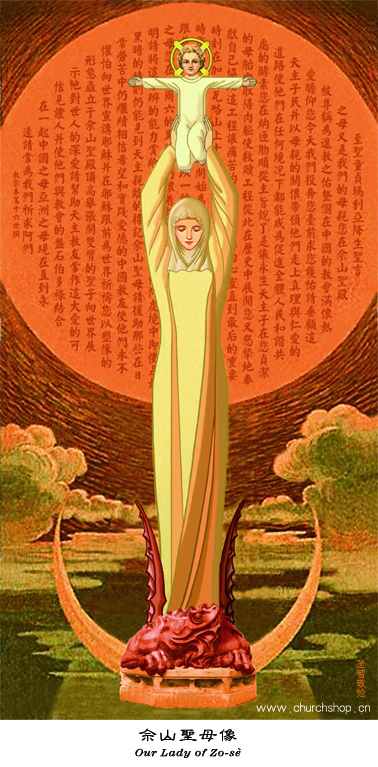
Let us ask for the intercession of the Blessed Mother of our Lord, Mary, the Help of Christians, who in the above picture is depicted as our Lady of Zose or Sheshan, from a famous pilgrimage site in Sheshan near Shanghai. Let us ask for her intercession for the Church in China and for the faithful there, our brethren in faith. Just as once the Lord had done His great works through Pope St. John Paul II, another great saint, to cast down the tyranny of atheism and unbelief in the states of Eastern Europe and Russia, may our Lady of Sheshan also intercede for the sake of our brethren in faith in China, a great nation and a great civilisation and yet is filled with worldly hatred of the devil who hates the Church and all its faithful.

We also pray that there will be a new spirit of dialogue and renewal, and that those entrusted with power at the top of the Chinese government hierarchy will finally realise the futility and the inhumane nature of their attempts to control the Church and the faithful. We hope that there will be an amicable and peaceful solution, that the Church in China may be completely reunited once again with the Universal Church, free from all the current issues and dilemmas, and free from any political arguments and intrusions by any external forces.

May the Lord be with His people always, protect them, bless them, and guide them to the light of Christ. May He give them rest and grace, after all the difficulties and challenges that they have faced, in the courageous and zealous defense of their faith in Him. Amen.

Sunday, 25 May 2014 : Sixth Sunday of Easter (Scripture Reflections)

Liturgical Colour : White

Dear brothers and sisters in Christ, God loves all of us, and He had shown that repeatedly, again and again, in many occasions, including all that we heard in the readings of the Scriptures today. He cares for us, and genuinely He does so, without concern even for Himself. What else can we expect from the Lord and God who gave even His own life for us, in exchange for our eternal bliss and happiness?

But we have to play our parts as well, brethren, for God gives of Himself freely for all, but only for those who accept those gifts that the Lord will exercise His grace and blessings. And therefore, only those who accept Christ as their Lord and Saviour, through the waters of baptism, believe in His words and His teachings as taught to us by the Apostles and which we received through the Church, and finally carry out those will and commandments of God faithfully, will receive the grace everlasting that God had promised all of us.

We are still in the midst of the holy Easter season, a season of the celebration of life, that is the new life in Christ, and we are fast approaching its end, when we will celebrate the solemnity of the Pentecost, the birthday of the Church, and more precisely, as we all know, the descent and the gift of the Holy Spirit to the Apostles and the disciples of Christ as He Himself had promised.

The Lord precisely meant this when He said that He will be with them, and that He will not abandon them as orphans. He cared for them so greatly that even after Jesus had left for His heavenly glory and throne in the Ascension, which we will also celebrate soon, He sent His people the Holy Spirit, which enlightens and bring truth to all those with the ears, hearts and minds to listen to the word and the will of God.

We too have received this faith in its great purity and enlightened nature through the Church, and through the many priests and bishops who had carried forward the truth and the faith which they received from the Apostles. And we too are therefore charged with keeping this faith alive and strong, that many others may also hear and know of the Lord’s saving passion and love.

This will not be easy, because the world itself is part of the dominion of the evil one, and the devil is definitely opposed to any goodness that we do in the Name of the Lord. He will use everything in all of his power to prevent and delay his eventual downfall, as he know it, and in the process bringing down as many souls of mankind with him into hell to suffer and perish with him for eternity.

Thus, that is why it is important for us to keep the faith within us strong and alive, and endowed by the Holy Spirit, and not just leave it at that, but also allow the Spirit to bear His fruits within us. We all know the fruits of the Holy Spirit, with faith, hope and love being the principal ones that we need to have and bear fruits of. We who have been baptised either at birth, or when we made that conscious effort and choice to accept the Lord in our adult years, have received a great grace from the Lord, who washed away our sins and planted His Spirit in us.

And those of us who had received the Sacrament of Confirmation has been affirmed even more strongly by the gift of the Holy Spirit, similar to what the Apostles had received on the day of Pentecost. But all this will go to naught if we do not use whatever things and graces that God had granted us through His Spirit and let it go to waste or worse, by committing things evil and wicked in His eyes.

We have to be faithful servants of the Lord, and loving children of His, who are committed to fulfill His laws and commandments every days of our lives. That is living faith, the kind of faith that God needs from us, the love that we show for Him, and the dedication that we have for Him. He desired from us this, and that we show in our words, deeds and actions the love God had shown for us, so that many more will come to believe in God and be saved like us.

Let us all today come together with a spirit, and the courage and strength to evangelise, to spread the love of God to all the peoples of all nations. Let us all bring the light of God to our brethren, and share the joy of Easter with them, not just by mere words or preaching, but also through our own actions and deeds, that in all the things we do and say, we proclaim the Lord who is Risen and who loves us all so much that He gave Himself for our salvation.

May the Lord continue to foster and strengthen the faith in us all, and strengthen and empower us with His Holy Spirit, that we may bear the wonderful fruits of the Holy Spirit, for our own good, and the good of our fellow brethren around us. May God be with us all, bless us and enlighten our path, always and forever. Amen.

Wednesday, 21 May 2014 : 5th Week of Easter, Memorial of St. Christopher Magallanes, Priest and Companions, Martyrs (Scripture Reflections)

Liturgical Colour : White or Red (Martyrs)

Brothers and sisters in Christ, today’s readings emphasizes on unity, that is the unity of our faith with the Lord, and in keeping a true, orthodox and living faith. Jesus our Lord symbolised this with the likeness and parallel of the vine and its branches. Jesus spoke in this way so that His message can get through to the people, who were mostly farmers and shepherds in that time.

Jesus liked to speak in parables because He used them to help bring across His teachings, and yet some people still did not get it. Jesus as the vine is the source of all life and all things, and we are the branches. All the creations of God are the branches. If we imagine the relationship as that of a plant, God is the Creator of all, and He is like the root.

Yes, God is the root of all things, and just as a plant cannot live and survive without their roots, we cannot survive without God either, for He is the source of our lives. Remember that we were made from dust, from the earth. God breathed life into us, and His Spirit came into us and we received life and therefore we are now counted among the living.

God did these things together as One, the Holy Trinity. The Father created and willed all things into creation, and the Holy Spirit is the source of all life. But without the Son, who is the Word of God, creation would not have taken place. If we remember in the Book of Genesis, God spoke His words and things came to be. As such, it is through the Son, who is Word, that is Christ, that we were all created by the Lord.

Therefore, Christ is the vine through which the Father channels His works, power and authority to us. In this also we can see an important tenet of our faith. We believe that the Father sent the Holy Spirit through His Son, Jesus Christ, just as He said that the Father will send, through Him, the Helper or the Advocate, who is the Holy Spirit to His disciples and therefore to all mankind.

Without this connection to the vine, that is Christ, we are not connected to the Father and therefore do not receive the power and grace of the Holy Spirit. If we are separated from the Lord, we will not be able to survive, and we will eventually perish. He is the One from whom all blessings and graces flow from. We have to keep this connection to the Lord at all times.

Brothers and sisters in Christ, we have to make sure that we keep the unity in the Church, both in love and purpose. All that we do should ultimately be aligned with that of the Lord and His precepts. We should see the example shown in the first reading to be our guide in all things. The disciples in Antioch argued on the need to follow and adhere to the complex set of laws instituted by Moses and which was greatly expanded on by the elders of Israel over many generations.

The Jews who believed in Christ, or the Jewish Christians kept all the observations of the Law as they had done before they believed in Christ. They added to their faith, the belief in Christ as the Lord and Saviour, and therefore, in a way it can be understood why they link salvation of mankind with the Law and precepts of Moses that they had kept and observed so well.

But among the Christians, in the growing faith, there are increasingly more and more those who were not of Jewish origins who followed the Lord and changed their ways to that of the Way of God. There are those who were of Greek and Roman origins, or the Gentiles, according to the Jews, who became the believers of Christ. They genuinely sought the Lord and sought to listen to God’s will, which He had revealed through Jesus, and from Him, to them through the Apostles.

The Jewish laws, if you are not familiar with it, consists of numerous rules and regulations, that apparently total about six hundred and thirteen commandments and rules, which covered very meticulously many aspects of Jewish culture and way of life. These were very distinct and different from the cultures and the habits possessed by the Romans and the Greeks.

As such, if they were to be asked to follow the way of the Jews, it would indeed bring them great troubles and difficulties, having to adjust to the incredibly different way of life, and not to point out that some of the Jewish customs were abhorred and looked down upon by the Greek-Roman civilisation at that time, especially regarding circumcision.

Hence, brothers and sisters in Christ, that is why the Apostles took the fateful decision that is both wise and prudent, that what is important, as Jesus had often mentioned, is not the purity of the exterior, which most of the Jewish laws are dealing on, but instead on the purity of our interior, that is our heart and soul, which is the essence and the heart of the Law, often forgotten by those who were so set on fulfilling the laws and the rigorous enforcement of its regulations, that they forgot the true meaning of the Law.

Today we celebrate the feast of St. Christopher Magallanes and his companions, who were martyrs of the faith. He was a priest in Mexico, who was very involved in missionary and evangelising work among the people, and working hard to minister to the people of God and evangelise the Good News to many native and indigenous populations, in many areas of the country. He was also a holy and dedicated parish priest.

St. Christopher Magallanes preached against rebellion and armed insurgency against the military government and dictatorship at the time, as Mexico in the early years of the twentieth century was in great turmoil and conflict between the government and its people, resulting in numerous rebellions and uprisings. However, the government mistakenly accused St. Christopher Magallanes and some other priests and people of God of inciting and supporting the rebellion.

As a result, St. Christopher Magallanes was martyred with his companions, and they together represented the beginning of difficult times for the Church in Mexico, as anti-clergy and anti-Church opinions and attitudes in the government expanded to reach a boiling point. They were raised to the altar and now venerated as saints for their preaching of the truth of God and dedication to that truth.

Brothers and sisters in Christ, we all have to follow in their examples, as they put their trust in God and draw their strength from Him, just like branches that are attached firmly to the stem and to the roots. They also did not discriminate between peoples, and as St. Christopher Magallanes had done, he persevered to bring the Good News and the word of God to the indigenous peoples of Mexico yet untouched by the light of Christ.

Therefore, let us all pray, that we may ever be strong in faith and never be separated from Christ, and may our actions, words and deeds are all according to the Lord and His way, and let us never divide or judge, but instead helping each other to reach closer to God, supporting one another as equal children of God, same before the eyes of the Lord. Amen.

Tuesday, 20 May 2014 : 5th Week of Easter, Memorial of St. Bernardine of Siena, Priest (Gospel Reading)

Liturgical Colour : White

John 14 : 27-31a

Peace be with you! I give you My peace; not as the world gives peace do I give it to you. Do not be troubled; do not be afraid. You heard Me say, “I am going away, but I am coming to you.” If you loved Me, you would be glad that I go to the Father, for the Father is greater than I.

I have told you this now before it takes place, so that when it does happen you may believe. It is very little what I may still tell you, for the prince of this world is at hand, although there is nothing in Me that he can claim. But see, the world must know that I love the Father.