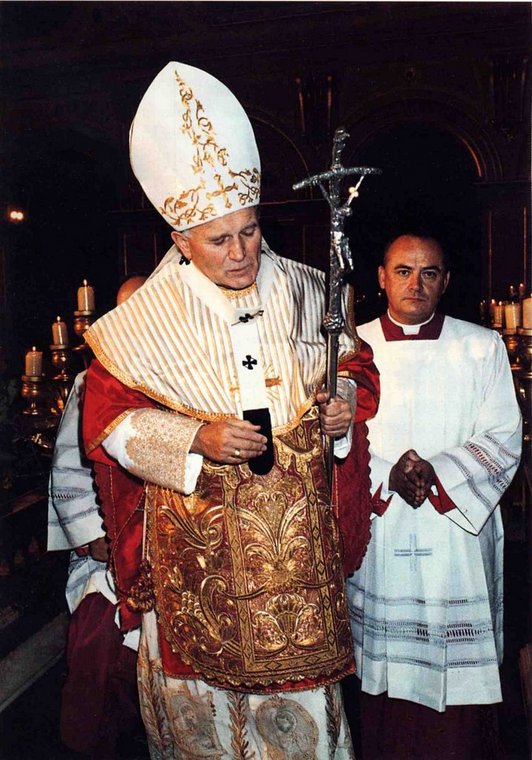
Monday, 3 September 2018 : 22nd Week of Ordinary Time, Memorial of Pope St. Gregory the Great, Pope and Doctor of the Church (Homily and Scripture Reflections)

Liturgical Colour : White

Dear brothers and sisters in Christ, in today’s Scripture passages we listened to the words of the Lord, speaking to us about the matter of the revelation of His truth, which He revealed to us through first, the prophets and messengers, and later on, in its fullness of truth, through the Lord Jesus, Our Lord and God. He came to us with the Good News of His salvation, that we may come to know of His love and saving grace.

However, in the Gospel passage today, we heard of the unfortunate moment when the Lord Jesus went back to His hometown village of Nazareth, where He encountered opposition and rejection from none other than His own fellow countrymen and even perhaps close friends and relatives, all those who have known Him since His youth and lived around Him for many years.

And the Lord Jesus also made the point through His discourse, how prophets and messengers were not welcome in their own lands and homes, and were rejected by those who knew them well. Ironically, it was those who did not know the prophets and the messengers of God, including the example of the Lord Jesus Himself, that were willing to listen to God’s truth.

Now, we must truly wonder, why was it that the prophets and the messengers, including the Lord Jesus Himself were rejected by the people whom they knew well? In order to understand this, then we must understand how human relationships and thinking work. In our own relationships with others, we always want to find out about others, and when we do so, we make ideas, prejudices and bias in our minds, subconsciously.

What does it mean? It means that just as the saying goes, ‘First impression lasts’, we mankind are very easily impressionable by what we see and by what we hear and sense, and therefore, forming an opinion on something or someone almost as immediately as we witness that something or someone. This is what we have done to everyone and everything we encounter in life, as how we judge them by our human intelligence and wisdom.

But what is flawed is that, we often make assumptions and presumptions based on our own limited understanding and limited awareness of what is actually happening. That is what happened to those who rejected the prophets and messengers, just because they thought that they knew those whom God had called to be His servants. They must have argued that just because they knew those who were to be prophet and messengers, then they could not believe the authenticity of what the prophets have taught and declared.

Brothers and sisters in Christ, that is what happened to the Lord in Nazareth as well. He was, in the eyes of the people of Nazareth, a mere Son of the village carpenter, St. Joseph. And a carpenter was a very often overlooked profession, paid lowly and considered as a menial and tough job that no one wanted to do as a profession in their lives, unless they had no choice to do so.

By the standard of that time, carpenters and their families were usually very poor, and because of their poverty, they typically were uneducated. Hence, the people of Nazareth took offence at the Lord Jesus, just simply by the fact that His wisdom, the way He preached and taught to them, and how He had worked His miracles and showed His powers, which words would have reached their ears, could be something that was a reality.

They could not reconcile the fact that all those miracles and wonders, all the wisdom they heard being taught and the truth revealed to them about the fulfilment of the prophecy of the prophets, came about through the mere Son of a carpenter Whom they have seen growing up in their midst. To them, it was an affront and insulting that such things have happened, and they blamed the Lord for that.

In reality, it was their human wisdom and limited understanding, their pride in them that caused them to reject the Lord. They could not stand of being outshone by someone Whom they had known for so many years, Who suddenly revealed Himself as the Messiah of God right in their midst. Thus, they hardened their hearts and shut their ears off, refusing to listen to and accept the truth.

Brothers and sisters in Christ, it is often that we are also to blame for the same kind of attitude in our own respective lives. Too often it has been that we mankind are not receptive to suggestions and to the truth of God, just because we think that we know everything or that we cannot be wrong. This attitude caused us to shut ourselves off even from the Lord Who is trying to show us the way to the truth.

Today, we celebrate the feast of the great Pope, Pope St. Gregory the Great, who was remembered for his great piety and dedication to the growth and reform of the Church and the faith. Pope St. Gregory was remembered for his long years of dedication and service to God, as a monk and later on as the Papal ambassador to the Emperor’s court in Constantinople. He was remembered for being a strict yet dedicated and faithful person.

Pope St. Gregory the Great was in truth a very humble person. When he was elected to the office of the Bishop of Rome, the Pope, as the successor of the Apostle St. Peter, leader of the entire Universal Church, he disavowed publicly any form of worldly ambitions and desires, stating clearly that he would devote his whole life to the service of God alone, and nothing else.

And he was remembered for his great commitment to the fulfilment of God’s works in the Church, in his reform of the Christian worship and liturgy and his great charitable efforts to the poor and to the needy, his fervent and strong opposition against all those who espoused heretical thinkings and teachings. His contributions to the Church were immense and yet, he remained after all, humble and focused towards God.

Brothers and sisters in Christ, let us all learn from the good examples shown by Pope St. Gregory the Great, that we may also learn to be humble and to be committed in living our lives with faith and with humility, that we may open our hearts and minds fully to the Lord, Who wants to show us the truth about Himself and yet, many of us have not allowed Him to speak in our hearts and minds because of our pride and stubbornness.

May the Lord be with us always and may He continue to bless us with His truth, that we may come to learn more and more about His love, and therefore, come to love Him even deeper in our own lives. May the Lord be our guide through our lives and show us the way to Himself. Pope St. Gregory the Great, holy servant of God, pray for us. Amen.

Monday, 3 September 2018 : 22nd Week of Ordinary Time, Memorial of Pope St. Gregory the Great, Pope and Doctor of the Church (Gospel Reading)

Liturgical Colour : White

Luke 4 : 16-30

At that time, when Jesus came to Nazareth, where He had been brought up, He entered the synagogue on the Sabbath, as He usually did. He stood up to read, and they handed Him the book of the prophet Isaiah.

Jesus then unrolled the scroll and found the place where it is written : “The Spirit of the Lord is upon Me. He has anointed Me, to bring good news to the poor; to proclaim liberty to captives; and new sight to the blind; to free the oppressed; and to announce the Lord’s year of mercy.”

Jesus then rolled up the scroll, gave it to the attendant and sat down; and the eyes of all in the synagogue were fixed on Him. Then He said to them, “Today, these prophetic words come true, even as you listen.” All agreed with Him, and were lost in wonder, while He spoke of the grace of God. Nevertheless they asked, “Who is this but Joseph’s Son?”

So He said, “Doubtless you will quote Me the saying : Doctor, heal yourself! Do here, in Your town, what they say You did in Capernaum.” Jesus added, “No prophet is honoured in his own country.” Truly, I say to you, there were many widows in Israel in the days of Elijah, when the heavens withheld rain for three years and six months and a great famine came over the whole land.”

“Yet, Elijah was not sent to any of them, but to a widow of Zarephath, in the country of Sidon. There were also many lepers in Israel in the time of Elisha, the prophet; and no one was healed except Naaman, the Syrian.”

On hearing these words, the whole assembly became indignant. They rose up and brought Him out of the town, to the edge of the hill on which Nazareth is built, intending to throw Him down the cliff. But He passed through their midst and went His way.

Monday, 3 September 2018 : 22nd Week of Ordinary Time, Memorial of Pope St. Gregory the Great, Pope and Doctor of the Church (Psalm)

Liturgical Colour : White

Psalm 118 : 97, 98, 99, 100, 101, 102

How I love Your law, meditating on it all day!

Your command – mine – forever – has made me wiser than my enemy.

I have more insight than my teachers, for I meditate on Your decrees,

I have more understanding than the elders, for I abide by Your precepts.

I turn my feet from evil paths, that I may keep step with Your word.

I have not departed from Your decrees, for You, Yourself, have instructed me.

Monday, 3 September 2018 : 22nd Week of Ordinary Time, Memorial of Pope St. Gregory the Great, Pope and Doctor of the Church (First Reading)

Liturgical Colour : White

1 Corinthians 2 : 1-5

When I came to reveal to you the mystery of God’s plan I did not count on eloquence or on a show of learning. I was determined not to know anything among you but Jesus, the Messiah, and a crucified Messiah. I myself came weak, fearful and trembling; my words and preaching were not brilliant or clever to win listeners.

It was, rather, a demonstration of spirit and power, so that your faith might be a matter not of human wisdom, but of God’s power.

Monday, 10 November 2014 : 32nd Week of Ordinary Time, Memorial of Pope St. Leo the Great, Pope and Doctor of the Church (Homily and Scripture Reflections)

Liturgical Colour : White

Dear brothers and sisters in Christ, today it is mentioned to us in the readings from the Holy Scriptures, of a very important role and position in the hierarchy of the Church, which all of us indeed have to be aware of, and have to adhere to. St. Paul in his letter to Titus, his friend and fellow servant of God, while he was in captivity in Rome, mentioned of the criteria which should be strictly observed when the overseers of God’s faithful ones are chosen.

And in the Gospel reading, Jesus warned His disciples against creating scandals in the faith, and as such, they should avoid creating scandal among the faithful and in the Church. Such scandals are harmful when it causes damage both physical and spiritual to the faithful and to the Church as a whole, and Jesus condemned those who have brought others into damnation because of their actions that brought about scandal and therefore not in accordance to what Jesus had taught His disciples.

How are the readings today link to each other? The bishops are very important building blocks of the Church, as the key figures that link the laity and the priests, to the Vicar of Christ, the Pope, who leads all the faithful, in union with the love of God, the true Head of the Church. The bishops, from the Latin term of their title, episcopus which means literally overseers, are truly the overseers of the faithful in their faith.

It is important that the candidates of bishops are first scrutinised thoroughly before one of them, who is found worthy and good, is selected as the bishop of a diocese. That is because the growth of the spiritual life and the well-being of the faithful ones of the Lord, depend on the state of the spiritual life of the shepherd of the flock, that is the bishop, who is the shepherd entrusted with the care of the people of God, the flock of Christ, in his diocese to be under his protection and care.

Jesus often mentioned in His teachings that we should not be hypocrites who merely show an external aspect of our faith and devotion to God, for others to see us, or even worse, for them to praise us because of what we have done. If our faith is like this, and if we pretend to be faithful for such purposes, then we may be held accountable for these actions.

It is precisely like the actions of the Pharisees, as well as the teachers of the Law, who proudly present the way they lived their faith to the people, and basked in their praise. In turn, they also misled the people by not practicing the Law with the whole of their hearts, and instead they served their own glory and purposes rather than serving the greater purpose of God.

They were bad shepherds, whose actions in opposing the Lord Jesus at every turn and opportunity were truly scandal in the faith. Their way of living and their way of seeing the world around them were also scandals of the faith, such that they were truly worthy of being rebuked endlessly by the Lord, who revealed the truth about their wickedness to the people of God, so that they may be wary of them and therefore also do their best to avoid doing the same as those wicked elders had done.

It was in particular mentioned that those who misled the little children of God are in particular to be blamed for their wickedness and evil. And indeed, those children are truly born pure and blameless, a blank and clean slate upon which, true and genuine teaching of the faith would have brought much goodness. A proper upbringing in faith for these, through proper catechism and role modelling in the faith.

If someone is to corrupt the faith by not doing what he is supposed to do, and worse still, if this person is the appointed shepherd of the people, as bishop and overseer, then it will bring much damnation to those sheep that had been entrusted to the aforementioned bishop. And in the end, the entire Church and the body of the faithful suffer, because of the wickedness and corruption this improperly elected bishop had done for his flock.

Therefore, this is why in our present time today, as it had been for quite a long time, bishops are carefully selected from among the priests, through a careful and extensive process of selection, from a shortlist produced by the diocese, to list down at first, the most worthy, holy, devoted and dedicated among the priests, to be made the bishop.

The final decision is to be done by the Vicar of Christ, the Pope, who through his representatives to the dioceses, the Apostolic nuncios and the delegates, keep in close contact with the various dioceses. Thus, it is why the responsibility and the role of the Pope is so important, as he is the Head of the entire Universal Church, and the ultimate and greatest guardian of the true and orthodox Faith.

That means, the Pope is charged with the final decision on who is truly worthy and who is truly best for the position and role of bishop for the dioceses. It is so that the Church may avoid scandal or any risk of problems that may likely arise if an unworthy individual became who they should not have become. If this happens, then the risk to the faithful sheep of the Lord is truly very, very great.

Thus, in consideration of the roles of the bishops and the Pope, even the position of the Pope, who is also the Bishop of Rome, is very, very carefully chosen, through the conclave, where the Cardinals, carefully selected members of the Church who then elect the most worthy amongst them to be the Supreme Pontiff and leader of the Universal Church.

And today, we celebrate the memory of a great Pope, whose feast we celebrate today, the very first Pope to be accorded with the title of ‘the Great’, in recognition of his great role and fundamental role in the development of the Faith and the Church. He is Pope St. Leo the Great, who lived and reigned during the waning years of the Roman Empire in the West.

Pope St. Leo the Great led the Church at the time when the civil authority and order of the Roman Empire is crumbling, especially in its western regions, including the city of Rome, and the society as it was known then, was under great threat from barbarian attacks. It was for this that Pope St. Leo the Great was mostly known for, that is in his role in stopping the great conqueror, Attila the Hun, from ransacking the Eternal City, or Rome, the Holy City of the Apostles.

When the great conqueror came, and when everyone else, including the Roman Emperor and the civil authorities all hid in fear, this holy servant of God, and the shepherd of the flocks of Christ went forth without fear and with zeal, to meet with the Hunnic king, and by the grace of God, persuaded him to retreat. Such was the courage and faith of this great Pope, that he managed to protect and prevent his flock from suffering.

However, what was less well known is the role which Pope St. Leo the Great played in the Church, and in the combatting of heresies and wickedness among the members of the Church at the time. Ever since the beginnings of the Church, there had been some among the faithful who did not remain true to the teachings of the true Faith, as they syncretised their faith, and they followed their own fancy and heretical ways of the Faith.

Therefore, many Ecumenical Councils were held in the early Church to standardise the true and orthodox teachings of the faith, and to condemn and anathemise all heresies and falsehoods in the teachings of the faith, including the errant and unfaithful bishops who misled many of their faithful, the precise scandal of the Faith mentioned earlier.

Pope St. Leo the Great was instrumental in his role in guiding the Church to keep the orthodox faith against those forces of men, who tried to subvert the teachings of the Faith to suit their own desires, their own purposes and their own wickedness. The teachings of Pope St. Leo the Great, his writings and works remain until even today, a very defining standard of the faith, which even this generation today look up to, in order to maintain the orthodox and true faith.

Therefore, on this special and sacred occasion, let us all come together and pray, pray for our bishops, our priests, and also our Pope, so that all of them will keep strongly the faith entrusted to them. So that they will keep without reservation the sound doctrine of the faith, without bending to the demands and temptations of the flesh and the world.

May Almighty God bless our Church, that day by day, our faith may grow stronger and stronger. That our Church may grow ever more faithful in the Lord. May the bishops, the shepherds of faith remain strong in their faith so that they will lead the faithful, following the examples of Pope St. Leo the Great, and abandoning all forms of fornications and evils, so that no scandal may arise, and the faithful may all benefit greatly from their care and love. God bless us all. Amen.


First Reading :

https://petercanisiusmichaeldavidkang.com/2014/11/09/monday-10-november-2014-32nd-week-of-ordinary-time-memorial-of-pope-st-leo-the-great-pope-and-doctor-of-the-church-first-reading/

Psalm :

https://petercanisiusmichaeldavidkang.com/2014/11/09/monday-10-november-2014-32nd-week-of-ordinary-time-memorial-of-pope-st-leo-the-great-pope-and-doctor-of-the-church-psalm/

Gospel Reading :

https://petercanisiusmichaeldavidkang.com/2014/11/09/monday-10-november-2014-32nd-week-of-ordinary-time-memorial-of-pope-st-leo-the-great-pope-and-doctor-of-the-church-gospel-reading/

Monday, 10 November 2014 : 32nd Week of Ordinary Time, Memorial of Pope St. Leo the Great, Pope and Doctor of the Church (Gospel Reading)

Liturgical Colour : White

Luke 17 : 1-6

At that time, Jesus said to His disciples, “Scandals will necessarily come and cause people to fall; but woe to the one who brings them about. It would be better for him to be thrown into the sea with a millstone around his neck. Truly, this would be better for that person, than to cause one of these little ones to fall.”

“Listen carefully : if your brother offends you, tell him, and if he is sorry, forgive him. And if he offends you seven times in one day, but seven times he says to you, ‘I am sorry’, forgive him.”

The Apostles said to the Lord, “Increase our faith.” And the Lord said, “If you have faith, even the size of a mustard seed, you may say to this tree, ‘Be uprooted, and plant yourself in the sea!’ and it will obey you.”


Homily and Reflection :

https://petercanisiusmichaeldavidkang.com/2014/11/09/monday-10-november-2014-32nd-week-of-ordinary-time-memorial-of-pope-st-leo-the-great-pope-and-doctor-of-the-church-homily-and-scripture-reflections/

Monday, 10 November 2014 : 32nd Week of Ordinary Time, Memorial of Pope St. Leo the Great, Pope and Doctor of the Church (Psalm)

Liturgical Colour : White

Psalm 23 : 1-2, 3-4ab, 5-6

The earth and its fullness belong to the Lord, the world and all that dwell in it. He has founded it upon the ocean and set it firmly upon the waters.

Who will ascend to the mountain of the Lord? Who will stand in His holy place? Those with clean hands and pure heart, who desire not what is vain.

They will receive blessings from the Lord, a reward from God, their Saviour. Such are the people who seek Him, who seek the face of Jacob’s God.


Homily and Reflection :

https://petercanisiusmichaeldavidkang.com/2014/11/09/monday-10-november-2014-32nd-week-of-ordinary-time-memorial-of-pope-st-leo-the-great-pope-and-doctor-of-the-church-homily-and-scripture-reflections/

Monday, 10 November 2014 : 32nd Week of Ordinary Time, Memorial of Pope St. Leo the Great, Pope and Doctor of the Church (First Reading)

Liturgical Colour : White

Titus 1 : 1-9

From Paul, servant of God, Apostle of Christ Jesus, at the service of God’s chosen people, so that they may believe and reach the knowledge of truth and godliness. The eternal life we are waiting for was promised from the very beginning by God who never lies, and as the appointed time had come, He made it known through the message entrusted to me by a command of God, our Saviour.

Greetings to you, Titus, my true son in the faith we share. May grace and peace be with you from God the Father and Christ Jesus our Lord. I left you on Crete because I wanted you to put right what was defective and appoint elders in every town, following my instructions.

They must be blameless, married only once, whose children are believers and not open to the charge of being immoral and rebellious. Since the overseer (or bishop) is the steward of God’s house, he must be beyond reproach : not proud, hot-headed, over-fond of wine, quarrelsome or greedy for gain.

On the contrary, he must be hospitable, a lover of what is good, wise, upright, devout and self-controlled. He must hold to the message of faith just as it was taught, so that, in his turn, he may teach sound doctrine and refute those who oppose it.


Homily and Reflection :

https://petercanisiusmichaeldavidkang.com/2014/11/09/monday-10-november-2014-32nd-week-of-ordinary-time-memorial-of-pope-st-leo-the-great-pope-and-doctor-of-the-church-homily-and-scripture-reflections/

On the Future Canonisation of Blessed Pope John XXIII and Blessed Pope John Paul II

Image

The two great Popes of the last century, both of whom had been recognised as Blessed, through the virtues of their life and miracles attributed to them, will be declared Saints, in a ceremony likely to be scheduled at the end of this year (2013).

Both Blessed Pope John XXIII and Blessed Pope John Paul II, who was made a Blessed just two years ago on 1 May 2011, had each left their incredible and remarkable footprint in the path of history, both in the history of the Church, and in the history of the world and mankind.

Image

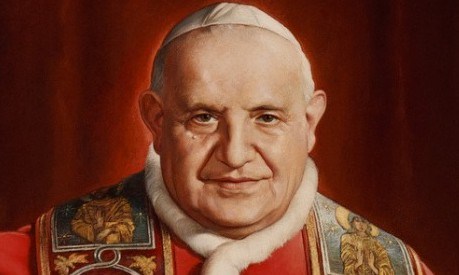
Blessed Pope John XXIII was known to be a great man of peace, and above all things seek to embrace peace and cooperation, between mankind, and also begun the process of Ecumenism in order to reunite the divided fragments of God’s Church back into the One, Holy, Catholic, and Apostolic Church that is our Church.

He was also known for his Encyclical Pacem in Terris (Peace on earth), which was released just months after the world was almost engulfed in an all-out nuclear war between the two superpowers, the United States of America (USA) and the Soviet Union (USSR) during the height of the Cold War in the Cuban Missile Crisis. Blessed Pope John XXIII worked hard ceaselessly to promote peace between the parties in conflict, for the good of all mankind, all of whom are the children of the same one God.

Blessed Pope John XXIII also convoked the Second Vatican Council, which brought the Church in line with the developments in the world, and also to make the Church more relevant in the increasingly rapid new developments in our world, and the rise of apathy towards religion in general. He would pass away before the Council was completed, but his legacy continued on until today.

Image

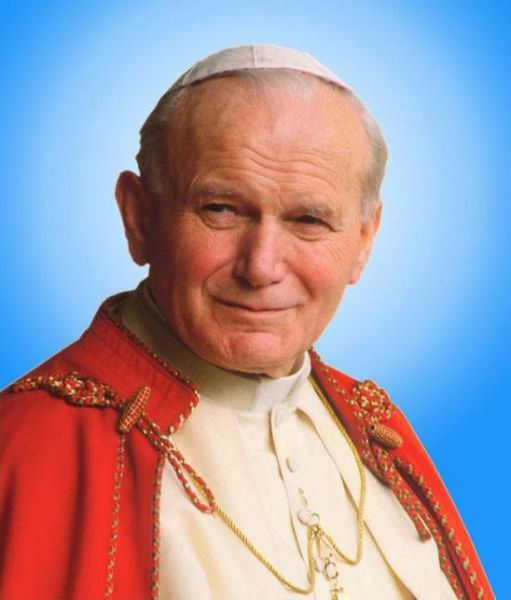
Blessed Pope John Paul II ‘the Great’ was a well-known Pope, a Pope of youths, and a hardworking Pope, who travelled around the world to visit all the flocks of the Lord that had been entrusted to him as the Successor of St. Peter the Apostle, as the Vicar of Christ. He was instrumental in the end of Communism in Eastern Europe, ending persecutions against the people of the faith, and also open boundaries and barriers that had been long in place since the beginning of the Cold War.

Blessed Pope John Paul II has also renewed the zeal for the faith amongst many around the world, and especially in youths, to whom he dedicated a special event, the World Youth Day, in order to commemorate the faith, particularly amongst the youths of the faith, around the globe. He inspired many through his works, his Encyclicals, and especially his perseverance despite being troubled with a worsening Parkinson’s disease condition, that made him to labour until his passing on 2 April 2005.

Both Popes had been very influential, hardworking, and very holy leaders of the One Church of the Lord Jesus Christ, and they had done much to strengthen the faith and the Church, and bring God closer to many, bringing them closer to salvation.

I hope to soon be able to ask for the intercessions of Pope St. John XXIII and Pope St. John Paul II the Great, and I pray that they will intercede for us sinners around the world, and pray for us, till we are greeted by them at the doors of heaven when it is time for us to be with the Lord again. Now we wait for the official announcement on the date of the Canonisation.

Image

Blessed Pope John XXIII, pray for us!

Image

Blessed Pope John Paul II, pray for us!