
Monday, 4 November 2013 : 31st Week of Ordinary Time, Memorial of St. Charles Borromeo, Bishop (Scripture Reflections)

Liturgical Colour : White (Bishops)

Dear brothers and sisters in Christ, today we come together to celebrate the feast of a great and yet humble saint, that is St. Charles Borromeo, or San Carlo Borromeo as he is known in his native Italy. He was the Archbishop of Milan, the most influential and largest of the dioceses in the world today, and even then during the lifetime of St. Charles Borromeo. He was also a Cardinal of the Roman Church based on his position as Archbishop of Milan. Truly he was a very influential prelate during his time.

Yet, despite all that, St. Charles Borromeo remained, above all else, a humble, devout, and loving person, and a dedicated servant of God Most High, putting God always before himself in all things. He committed himself to the service of those who had been entrusted to him, like that of a shepherd caring for his sheep with all of his might and attention, as well as love.

St. Charles Borromeo was born from a rich family, and yet he rejected the culture of waste and excessive glamour that characterised the nobles and the wealthy during that period. He was completely dedicated and devoted to the poor, and he took his duties as Archbishop of Milan seriously, working hard for his people, and in humility, he often walked in the streets barefooted and with a cord around his neck, to symbolise the burdens he carried as the shepherd of God’s people.

St. Charles Borromeo, made a cardinal in his youth, showed great zeal as well in the affairs of the Universal Church, giving great contributions towards the effort to stem the tide of the heretical Protestantism, and spearheading, together with many other contemporary saints, the Counter-Reformation, particularly through the Council of Trent. St. Charles Borromeo ensured that the Church was thoroughly reformed and cleansed of any corruptions that had permeated the Church of God in the past centuries.

St. Charles Borromeo, despite his zeal, great dedication, and commitment to the good of the Church and God’s people, faced much opposition and resistance. Despite all those oppositions, though, he persevered, and his hard works gave a solid foundation for the Church, from which the Church and Christendom may heal from the terrible heresy of Protestantism and other heresies running rampant at that time.

Brothers and sisters in Christ, St. Charles Borromeo truly embodied what the Lord said in our Gospel reading today. That we have to love and care for the poor, and dare to step out from our comfort zone. We should not just enclose ourselves in our comfort zone, but we must take action, just as St. Charles Borromeo had done, that we love our brethren, especially the poorest, the last, the lost, the least, and the unloved, namely those rejected by society.

Being wealthy and having many possessions is God’s grace, brothers and sisters. It is a sign of God’s blessing and favour upon us. But He did not intend for us to keep all of these blessings and graces for ourselves. We ought to share those blessings with one another, and enjoy these blessings together. We should not rejoice over the suffering of others, especially not those who have nothing or little.

The Lord urged us to show love, care, and compassion to these brothers and sisters of ours. Everyone ought to have enough and sufficient for themselves, and nobody should be lacking and suffer from that. Following the examples set by St. Charles Borromeo and other saints, we should open up ourselves and not withdraw into ourselves. We cannot become mere closet Christians, but rather we must go out and be courageous to proclaim God and His love to all, especially through our own words, deeds, and actions.

Dear brothers and sisters in Christ, to us who have been given much, let us share with one another the joy He had given us, that our less fortunate brethren may also have the taste of this joy, and rejoice together with us as one people in God, all of whom are His children. And to those of us who have less, we too can share our joy with one another. It does not mean that because we have less then we cannot be joyful or rejoice. Be happy and glad, and celebrate life with one another, sharing the joy.

Yes, brethren, share the joy and blessings we have, that all of us, rich or poor, powerful or weak, can together praise and glorify the Lord as one people, without discriminating against each other or rejoicing over another’s suffering. May the Lord who loves us all, continues to watch over us, bless us, and embrace us with His love. God be with us, always and forever. Amen.
Monday, 4 November 2013 : 31st Week of Ordinary Time, Memorial of St. Charles Borromeo, Bishop (Gospel Reading)

Liturgical Colour : White (Bishops)

Luke 14 : 12-14

Jesus also addressed the man who had invited Him, and said, “When you give a lunch or a dinner, do not invite your friends, or your brothers and relatives, or your wealthy neighbours. For surely they will also invite you in return, and you will be repaid.

When you give a feast, invite instead the poor, the crippled, the lame, and the blind. Fortunate are you then, because they cannot repay you; you will be repaid at the resurrection of the upright.

Monday, 4 November 2013 : 31st Week of Ordinary Time, Memorial of St. Charles Borromeo, Bishop (Psalm)

Liturgical Colour : White (Bishops)

Psalm 68 : 30-31, 33-34, 36-37

But I myself am humbled and wounded; Your salvation, o God, will lift me up. I will praise the Name of God in song; I will glorify Him with thanksgiving.

Let the lowly witness this and be glad. You who seek God, may your hearts be revived. For the Lord hears the needy and does not despise those in captivity.

For God will save Zion and rebuild the cities of Judah. His people shall dwell in the land and possess it; the children of His servants shall inherit it, and those who love His Name will dwell in it.

Monday, 4 November 2013 : 31st Week of Ordinary Time, Memorial of St. Charles Borromeo, Bishop (First Reading)

Liturgical Colour : White (Bishops)

Romans 11 : 29-36

Because the call of God and His gifts cannot be nullified. Through the disobedience of the Jews the mercy of God came to you who did not obey God. They in turn will receive mercy in due time after this disobedience that brought God’s mercy to you. So God has submitted all to disobedience, in order to show His mercy to all.

How deep are the riches, the wisdom, and knowledge of God! His decisions cannot be explained, nor His ways understood! Who has ever known God’s thoughts? Who has ever been His adviser? Who has given Him something first, so that God had to repay Him?

For everything comes from Him, has been made by Him and has to return to Him. To Him be the glory forever! Amen.

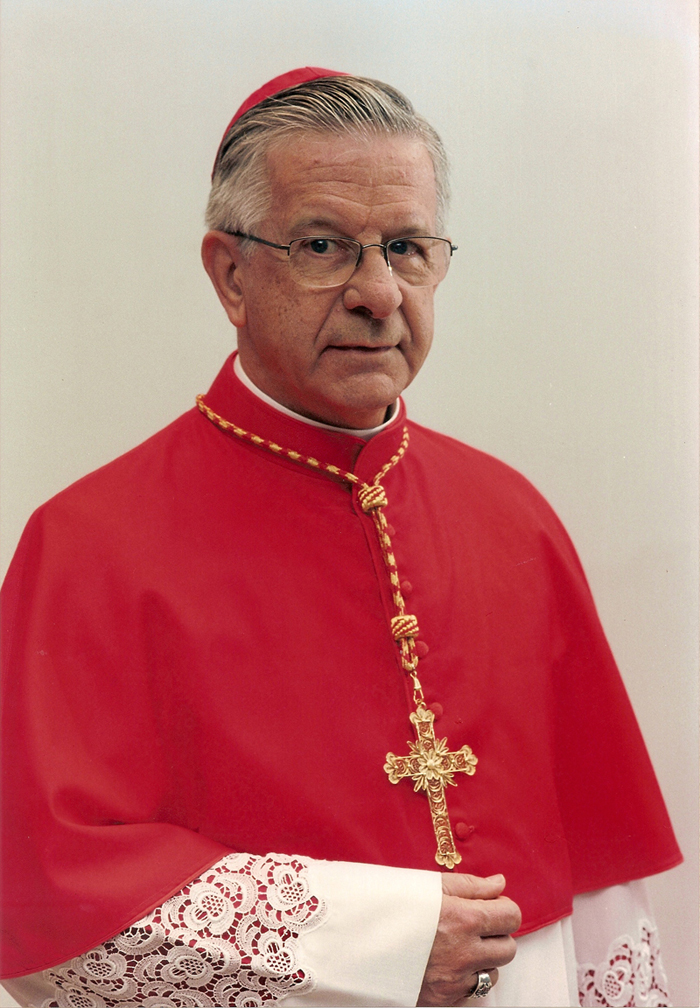
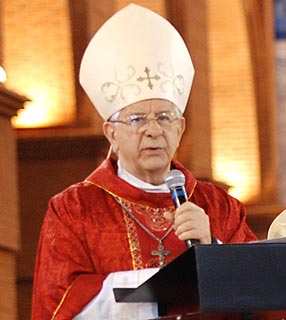
Cardinal Geraldo Majella Agnelo, Metropolitan Archbishop Emeritus of Sao Salvador da Bahia (Brazil) turns 80, ceases to be a Cardinal-elector

y3323912291618536_1

Today, Saturday, 19 October 2013, Cardinal Geraldo Majella Agnelo, Cardinal-Priest of S. Gregorio Magno alla Magliana Nuova, the Metropolitan Archbishop Emeritus of Sao Salvador da Bahia, of Brazil, turns 80, and therefore, according to the rules written in the Apostolic Constitution Universi Dominici Gregis, he loses his right to vote in any future conclave.

Cardinal Geraldo Majella Agnelo was made Cardinal-Priest of S. Gregorio Magno alla Magliana Nuova by Pope John Paul II in the 2001 Consistory of Cardinals on 21 February 2001, the eighth of his pontificate. He was also the once the Secretary of Congregation for Divine Worship and the Discipline of the Sacraments from 1991, prior to his appointment as Metropolitan Archbishop of Sao Salvador da Bahia in 1999. He retired in 2011.

dom-geraldo-maljella

http://www.gcatholic.org/hierarchy/data/cardJP2-8.htm#1

May God bless His Eminence Cardinal Agnelo, with a blessed old age and health. May he remain strong in the faith and hopefully can perhaps still carry out the mission God had given him in an active retirement and old age.

The College of Cardinals now stands at 201 members in total, with 109 Cardinal-electors and 92 Cardinal non-electors. There are now vacancy of 11 Cardinal-electors as compared to the maximum number of electors allowed in the Conclave of 120, although Popes John Paul II and Benedict XVI had sometimes surpassed this limit.

Next Cardinal-elector to age out (80) will be Cardinal Joachim Meisner, the current Metropolitan Archbishop of Koln (Germany),  on 25 December 2013.

Wednesday, 9 October 2013 : 27th Week of Ordinary Time, Memorial of St. Denis, Bishop and Companions, Martyrs, and St. John Leonardi, Priest (Scripture Reflection)

Liturgical Colour : Green or Red (Martyrs) or White (Priest)

Forgive and you shall be forgiven. Have mercy and mercy will be shown to you. Show love and love will be shown to you. Dear brothers and sisters in Christ, as we heed the readings today, this is the common theme that we all can and should certainly be able to pick up and identify, as a common virtue of our faith in Christ. Christ in today’s Gospel taught His disciples how to pray to God, and that prayer, as we are all familiar with, is the Lord’s Prayer, Pater Noster, or our Father.

That prayer is a simple and yet perfect prayer, and indeed how all prayers should be. Prayers is less about glorifying ourselves before God, and even less still a litany of wishes and desires that we often request or even demand from God. How many of us have been angry at God for not fulfilling our wishes, which we constantly include in our prayers?

Prayer is truly about opening oneself to God and to His eternal love, that is to let Him embrace us with the warmth of His love, that we are made perfect once again in love. That is the essence of prayer and the essence of our loving dedication to God who is our Father. Prayer is a line of communication between Him and us, as a medium through which we do not just speak, but also listen, to the words of the Lord being spoken within our hearts.

Too often the noise of this world prevents us from being able to listen to the word of God, and we become preoccupied in our own worldly dealings, in our own emotions and prejudices, in that we end up trusting our own judgments more than we trust or believe in the wise judgments of the Lord. That is also the essence of today’s readings, in that, we need to be able to overcome those personal prejudices and ill emotions within our hearts, that we will be able to make a reasonable judgment.

Indeed, remember that in fact we are not in a proper place to judge, not even ourselves, since as many sins as we can see in others around us, there are often in fact even more sins within us that we cannot see. To judge others for their sins and to condemn them for those sins is not right, for if we judge them for those, surely we will be judged too, for our own, equally if not more numerous sins.

That is why the Lord reminded Jonah of this fact, of the need for one to be merciful and forgiving, for the virtue of mercy and forgiveness is abundant, and out of them, love will be born. Love cannot exist if we do not first show mercy and forgiveness, especially to those who had wronged us, and to those who had caused us pain and suffering.

It is important that we as the followers and children of the Lord, to be chain-breakers. Why so? Which chains are we talking about? It is the chain that binds our heart and shut it tight, hardening it against the love of God and preventing us from sharing our love with our brethren around us. These chains are sin and worldly temptations that bind us to themselves and to hell, preventing us from being saved.

Indeed, we need to be loving and forgiving at the same time in our lives in this world, in our calling as the disciples of Christ, the One who is Love. We cannot remain bound to those chains we had talked about, and rather, we must break free, both from our own chains of sin, or break free the chains that bound others, that all of us will be loved by God for eternity.

Today we commemorate the feast of St. Denis, the bishop of Paris in the Roman province of Gaul, at where is now known as France. He was a zealous servant of God who lived upright and just life, during the time of great persecutions against the Church and the faithful. The Emperor Decius reigned at the time St. Denis was martyred for his faith. Decius was known to be strongly opposed to the Church and to the faith in God, and ordered one of the most vicious and brutal of all the persecutions of Christians by the state.

St. Denis and some people who were condemned to die with him were beheaded on a hill in what is today Paris, and yet, a miracle happened. It was told that St. Denis did not die even though his head had been cut off from his body. St. Denis picked up his head and walked for several miles, preaching and testifying the greatness of the Lord, made evident in the miraculous occasion of St. Denis himself. He only died when he reached a spot where he was then buried, and where now stands a basilica erected in the honour of his name, that is the Basilica Cathedral of St. Denis in Paris.

Today we also honour St. John Leonardi, an Italian priest living during a time of trouble for the Church and for Christendom, at a time when the Reformation rebels were spreading wildly their heresies and teachings across Europe and gained sizable following. St. John Leonardi was devoted to the people of God, especially the weak and the poor, and did many charitable acts to help and love them.

He also spread the devotion to the Blessed Virgin Mary and promoted the observation of the Liturgy of the Hours, a dedication of one’s prayer in daily basis, as well as the Adoration of the Most Holy Eucharist. Not limited to that, St. John Leonardi also established the religious order of the Clerks, who took part in and contributed to the effort in stemming the Protestant heresies.

Both these saints and their companions had been devoted to their cause, their calling, and committed themselves fully to both the Lord and His beloved people. Therefore, should we then not do the same? Our calling in life is to love, that is to love both the Lord and to love one another, that in love, we truly become worthy of being called the children of God, who is Love. If we instill love in one another, that love will grow to encompass us, and we will grow to love even more, and then, we will truly be worthy to be called God’s children, of God who is love.

May the Lord continue to bless us and strengthen us with His love, caring for us and providing for us, that we will always ever be covered by His grace and blessings. God bless us all. Amen.

Wednesday, 9 October 2013 : 27th Week of Ordinary Time, Memorial of St. Denis, Bishop and Companions, Martyrs, and St. John Leonardi, Priest (Gospel Reading)

Liturgical Colour : Green or Red (Martyrs) or White (Priest)

Luke 11 : 1-4

One day Jesus was praying in a certain place, and when He had finished, one of His disciples said to Him, “Lord, teach us to pray, as John also taught his disciples.”

And Jesus said to them, “When you pray, say this :

Father, may Your Name be held holy, may Your kingdom come; give us each day the kind of bread we need, and forgive us our sins, for we also forgive all who do us wrong; and do not bring us to the test.”

Wednesday, 9 October 2013 : 27th Week of Ordinary Time, Memorial of St. Denis, Bishop and Companions, Martyrs, and St. John Leonardi, Priest (Psalm)

Liturgical Colour : Green or Red (Martyrs) or White (Priest)

Psalm 85 : 3-4, 5-6, 9-10

Have mercy on me, o Lord, for I cry to You all day. Bring joy to the soul of Your servant, for You, o Lord, I lift up my soul.

You are good and forgiving, o Lord, caring for those who call on You. Listen, o Lord, to my prayer, hear the voice of my pleading.

All the nations You have made will come; they will worship before You, o Lord, and bring glory to Your Name. For You are great, and wonderful are Your deeds; You alone are God.

Wednesday, 9 October 2013 : 27th Week of Ordinary Time, Memorial of St. Denis, Bishop and Companions, Martyrs, and St. John Leonardi, Priest (First Reading)

Liturgical Colour : Green or Red (Martyrs) or White (Priest)

Jonah 4 : 1-11

But Jonah was greatly displeased at this, and he was indignant. He prayed to YHVH and said, “O YHVH, is this not what I said when I was yet in my own country? This is why I fled to Tarshish. I knew that You are a gracious and merciful God, slow to anger and full of love, and You relent from imposing terrible punishment.”

“I beseech You now, YHVH, to take my life, for now it is better for me to die than to live.” But YHVH replied, “What right have you to be angry?”

Jonah then left the city. He went to a place east of it, built himself a shelter and sat under its shade to wait and see what would happen to Nineveh. Then YHVH God provided a castor-oil plant and made it grow up over Jonah to give shade over his head and to ease his discomfort. Jonah was very happy about the plant.

But the next day, at dawn, God sent a worm which attacked the plant and made it wither. When the sun rose, God sent a scorching east wind; the sun blazed down upon Jonah’s head, and he grew faint. His death wish returned and he said, “It is better for me to die than to live.”

Then God asked Jonah, “Do you have a right to be angry about the castor-oil plant?” Jonah answered, “I am right to be angry enough to wish to die.”

YHVH said, “You are concerned about a plant which cost you no labour to make it grow. Overnight it sprang up, and overnight it perished. But Nineveh has more than a hundred and twenty thousand people who cannot distinguish right from left and they have many cattle as well. Should I not be concerned for such a great city?”

Friday, 4 October 2013 : 26th Week of Ordinary Time, Memorial of St. Francis of Assisi (Scripture Reflections)

Liturgical Colour : White

Dear brothers and sisters in Christ, today we celebrate the feast of St. Francis of Assisi, one of the greatest saints of the Church and one of the most well-known saints that we have. He was the founder of the Franciscan religious order, distinguished by their brown habits and simple lifestyle dedicated to the Lord, and his was also the name taken through inspiration, by our current Pope and Vicar of Christ on earth, Pope Francis.

St. Francis of Assisi is well known for his love and devotion to God, and through his numerous good works and contributions for the sake of the Church of God and His people. He was known to be a miracle worker as well, healing many through his ministry, both physically and spiritually. He was honoured with the presence of the stigmata, or the wounds of Christ, on his hands and his feet.

St. Francis of Assisi was born of a rich silk and textile merchant, and lived a life of privilege in wealth and complete sufficiency, with no reason to be worried about his life in this world, having all his needs fulfilled. His father wanted him to continue his business as his heir, but the Lord had a different plan for St. Francis.

One day, when St. Francis was praying in a somewhat dilapidated Church, the Lord appeared to him and said, “Rebuild My Church”. St. Francis misunderstood this as rebuilding the dilapidated church building he was praying in, with leaking roofs and dilapidated walls. Therefore, he went and sold some of his father’s expensive silk clothes and fabrics, and used the money to rebuild that church where God had spoken to him.

His father knew about the incident and he was angry at St. Francis for his actions. St. Francis sought the local bishop for protection and counsel, and when his father complained to the bishop regarding St. Francis’ behaviour, St. Francis chose to leave everything he had ever received from his father, including his clothings. He removed all that and were naked before everyone, and before his father and the bishop. St. Francis gave the clothings and the other of his former possessions to his father.

The bishop, visibly touched by what he saw, covered St. Francis’ naked body with his vestment, and since that day onward, St. Francis abandoned all the former privileges he had in his former lifestyle as the son of a rich silk merchant, and become truly a servant of God and a disciple of Christ. One day, when he prayed, he received a vision of Christ crucified, and miraculously, he received the holy wounds of Jesus on himself, as the first known stigmatist.

As we all know, St. Francis went on to be the founder of the Franciscan order, whose members vow themselves to live in complete simplicity and humility, donning brown robes and sandals to show their commitment both to the Lord and to the poor. St. Francis was well-known for his dedication and service to the least in the society, the poor and the ostracised, the sick and the unloved, following the example of Christ Himself who gave Himself to these people whom many in the society looked upon in disgust and rejection.

St. Francis also championed evangelisation of the Gospel of Christ, and worked hard on his own part, to bring the Gospel to those who have yet to hear it or those who still lived in the darkness. He laboured hard for the sake of God and His people. St. Francis was also well known for his ability to speak to animals, and such is his love for God’s creations, that he also preached to those animals.

In today’s readings, we are urged to realise and know the love that God has for us, and the need for us to be proactive in love, both in loving God and in loving our fellow brothers and sisters. And the need for faith and obedience in God. We cannot be creatures of apathy and evil, but we must be full of love, sympathy, compassion, and faith, both in God, and in one another. That is what the Lord wants from us, and that is what He hopes that we will do, that we, as His children, truly are beings of love, as St. Francis of Assisi himself had done, in his love to all, men, animals, and all creations of God alike.

Therefore, brethren, let us reflect on our own lives, on our own actions and dealings with others, on every word that came out from our mouths and uttered by our tongues, whether they are filled with love, care, and compassion, or whether filled with darkness, viciousness, hatred, apathy, and evil. We are often at unawares that our actions do not reflect love, for either God or for our fellow brethren. We often indulge ourselves with our own selves and immerse ourselves in the depth of our pride and even arrogance, that we neglect others and the Lord, to fulfill our own selfish desires.

We need to open our hearts to love, and following the example of St. Francis of Assisi, to throw aside our sense of vanity and selfishness, to be loving servants of the Lord, to show love in everything we say, in everything we do, and in all our dealings with others and in our dedication to God our Father. Let us take this opportunity to make living the faith we have in God, that we do not end up being just empty in our faith and dedication, but instead having a living and dynamic faith, one that is anchored and strengthened by love.

May the Lord who is love and compassion inspire us to be loving and compassionate as St. Francis of Assisi has done himself, that is to love all men unconditionally, especially those who are poor, rejected, and reviled by the society. We ought to follow his examples and listen to the Lord who heeds us to love, and to follow his commandments, that itself is love. May we remain faithful and loving despite all the oppositions in this world, and despite all the evils and temptations presented to us, to be selfish and to be unloving. God be with us all, always, and may St. Francis of Assisi continue to intercede for us sinners’ sake. Amen.