These are the official pictures of the Fisherman’s Ring and Papal Pallium that will be given to Pope Leo XIV at the Papal Inauguration Mass on Sunday, 18 May 2025 at St. Peter’s Square, Vatican City.
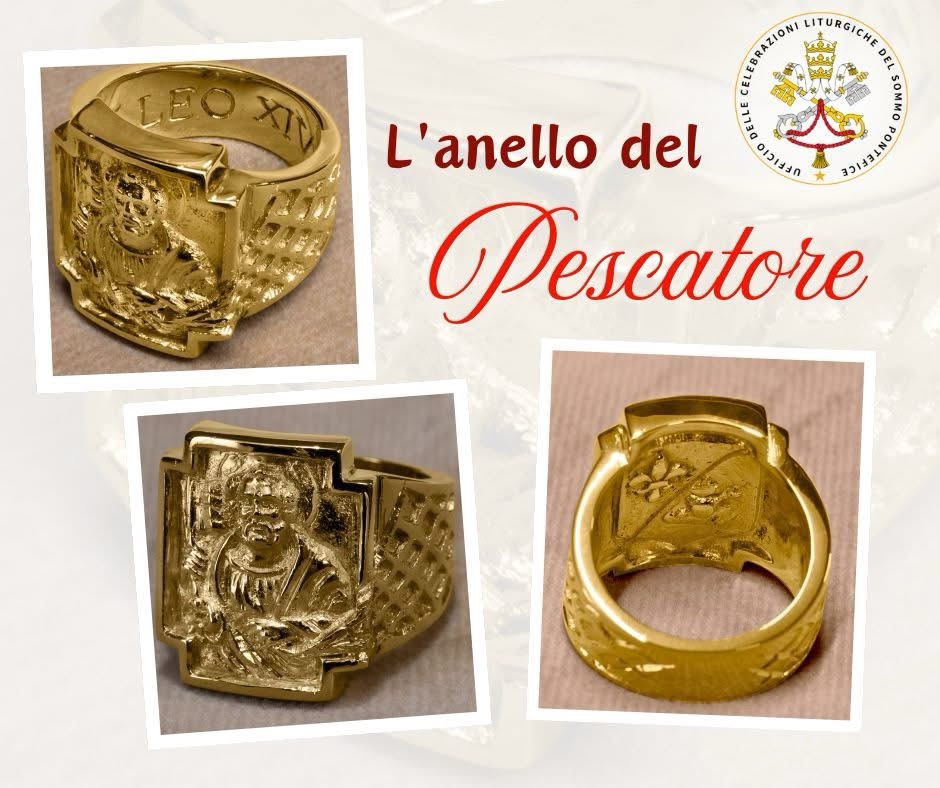
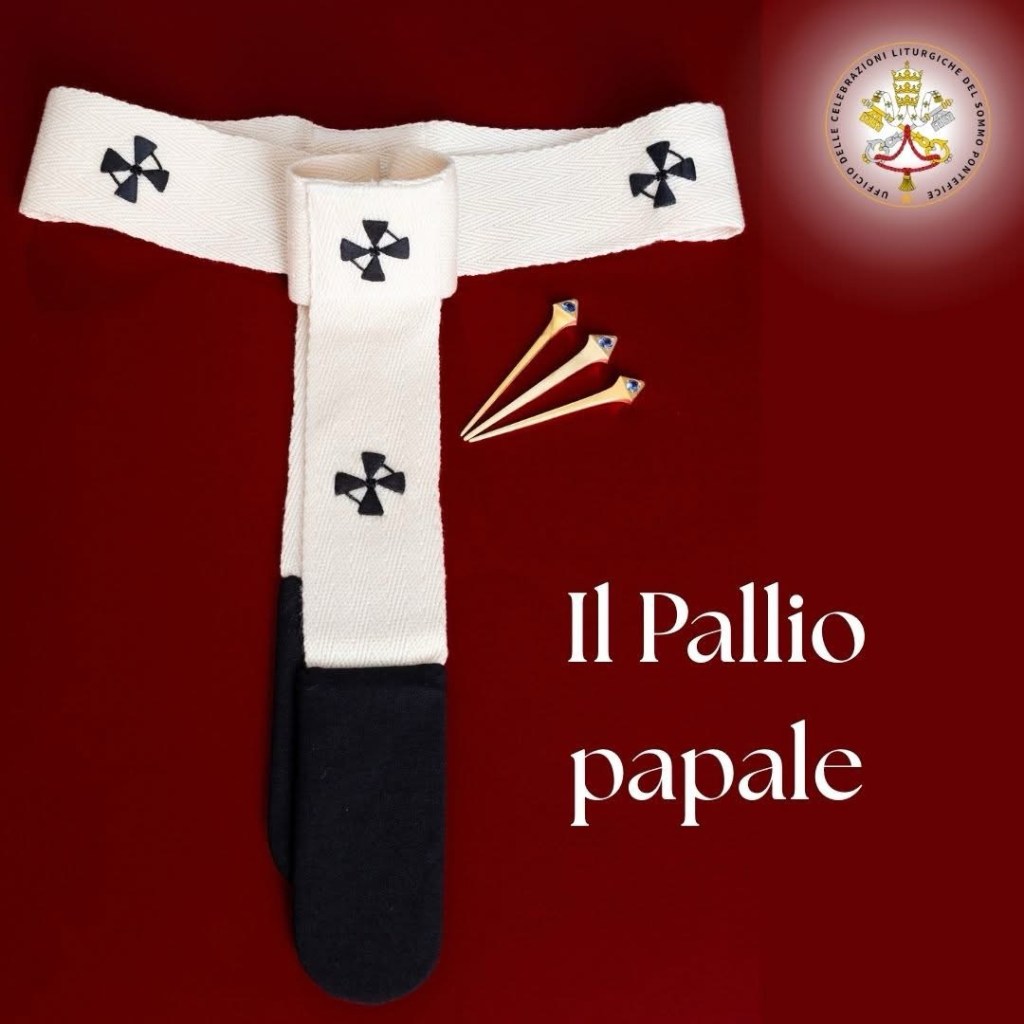

These are the official pictures of the Fisherman’s Ring and Papal Pallium that will be given to Pope Leo XIV at the Papal Inauguration Mass on Sunday, 18 May 2025 at St. Peter’s Square, Vatican City.
Liturgical Colour : Red (Martyrs)
Today, brothers and sisters in Christ, we heard how God made a wonderful choice in the one whom He has blessing for, in the one whom the Lord is Himself pleased with, that is David, to be His vicar in the world, to govern His people as their king and ruler, and therefore lead them in the worship of Himself.
David was chosen, not because of his strength, abilities, or wonderful appearance. As the Lord made it clear to Samuel, that He did not see just with the eyes, but He sees also the hearts inside mankind. He chose David because He saw in him the true heart of devotion, which had great love for God and His ways.
As we all should well know, that good appearance does not equate good hearts inside. Appearance can often be deceiving, and it is important for us to be able to see what is inside and what truly makes up a person. And therefore, we should also not be quick to judge on others, especially if they do not behave in the same way as we do things, as the Pharisees had done.
Continuing from my theme on the true meaning of the Law of God from yesterday’s Scripture readings, it is important for us to note that superficial obedience of the law is no good, compared to the true understanding of the purpose of God’s laws that is to bring mankind closer to God, instead of giving them a great burden.
God wished that through His laws, mankind can be turned, and changed, and transformed to be more like Him. Yes, for all mankind to follow God’s laws in good faith and understanding means to be profoundly changed in our way of life and behaviour, that we become truly children of God. God wants from us our love, and sincere dedication, as well as full attention. He does not want from us blind obedience or self-praise.
God sees the heart and He knows everything, just as He saw into the hearts of the people of Israel and the sons of Jesse, discovering David, in whom He found true faith and dedication, one worthy to be the shepherd of His people. Therefore God also sees into our hearts, inside each one of us, that He sees whether we are truly faithful to Him or just paying lip service to Him, or worse, to self-glorify oneself that their ‘piety’ may be praised by those who see them.
The Sabbath is the holy day in the faith of the Israelites, according to the laws of Moses, where God ordered the people to keep the day holy, and to honour Him on that day. Yet, over time, until the time of Jesus, the true meaning of the Sabbath had been subverted by the people, and in the Pharisees, the Sabbath become a dreadful day, where nobody may work or do anything, violation of which was condemned by the rabbis of Israel.
But Jesus made it clear to them, as well as to His disciples and to the people of God, what the purpose of the law, that it was made to serve mankind, that is to help them on their way to reach the Lord. Yes, it is to help and serve them, rather than to punish them or burden them unnecessarily. The sabbath is made for mankind and not mankind for the Sabbath. To do otherwise would mean the idolisation of the sabbath, which was meant for mankind to spend precious time with their beloved God.
The purpose of the Sabbath was so that, mankind, ever vulnerable to the temptations of evil and the corruptions of the world, would find time to spend with their God. A day of rest indeed, dedicated to prayers and communications between oneself and their Lord, not unlike what we have today with Sundays, on which day we go for Mass, and celebrate the Holy Sacrifice of the Mass.
On the holy day, we spend our time with God, and we listen to Him. We should not rush it to return to our worldly dealings and businesses, but instead patiently and lovingly spend that time with God, that He may speak to us in the silence of our hearts, and we may get to learn what is His will for us, a way for us to follow. On that day, we do things for the Lord and dedicate ourselves to Him.
And in order to do this, it does not always mean through prayer and inaction. Doing good and doing things in accordance with the Lord’s will is also something that should be done on that day. Remember that Christ stressed the importance of doing good for our brethren and loving them. He stressed that doing good things is not forbidden on Sabbath, because doing good is tantamount to serving the Lord and glorifying Him, which is precisely what the Lord wants from each of His beloved people.
The Lord sees the truth in the hearts of all mankind. Again, blind obedience and lip-service does not do one good, and instead they bring mankind to condemnation. The Pharisees purposely tried during many Sabbath days to trap Jesus in His works, and did everything in their power to protest, complain, and resist the good works of Jesus, which was done for the greater glory of God. Their sins were truly great and numerous, despite their outward piety and actions, which supposedly done to draw praise and glorification from mankind.
Will we follow their path? Or will we do as Jesus had done? Jesus taught us that what the Lord wants from us is our love, and to show that love in our words, actions, and deeds. God has given us much love, and indeed had given us great capacity to love. It is now our chance to prove our love and dedication to Him, by showing it in what we do everyday. Let us no longer just see our faith, particularly that of the Mass, as something empty, and that we should also no longer just go for Mass because we are obliged to do so.
Brothers and sisters in Christ, today we celebrate the feast of St. Agnes, a well known virgin and martyr who lived at the time of the Roman Empire. She came from Rome, the heart of the Empire and therefore was also known as St. Agnes of Rome. St. Agnes was a secret Christian who was hiding from the persecutions of the pagan Roman Empire.
She was courted by a pagan centurion who tried many times without success to get her, and there were also many other suitors who did not succeed to get her attention. St. Agnes had devoted her life to a life of virginity and total devotion to the Lord. Thus, she refused to give in to the temptations of the centurion, who then reported her Christianity to the authorities, and had her imprisoned because of that. She was tortured and asked to renounce her faith by her prison masters.
St. Agnes suffered tremendously in prison, and reputedly she was even tortured greatly by the painful torture she had to go through, and even was dragged across the street naked without any clothing. She was then martyred for her faith, but unto the end, she would not recant her faith in God, and she remained faithful to the end.
Brothers and sisters in Christ, St. Agnes showed us a way to follow the Lord, that is through total dedication and devotion of oneself. She loved God so much, that she did not hesitate to give up even her life to maintain her purity and faith in God. Some followed her way, and they became as we know, our priests, brothers and sisters, the nuns and monks, the friars, those who dedicated their lives wholly to God. Nevertheless, that does not mean that we cannot do the same too.
St. Agnes showed us that our faith cannot be an empty or dead one, or one of mere lip-service. Such faith would waver at times of great persecutions, one which our Faith is increasingly facing these days. We have to show our faith through concrete action, but one based on love. We do not have to go through martyrdom as St. Agnes had, but we certainly have to be ready to defend our faith, not by violence, but through love.
Yes, love one another, our brethren, and even those who hate and persecute us for our faith. Let us show the love of God to everyone, and may God who sees our love then love us back with His infinite love, and grant us peace, grace, and rich blessings! God bless us all. Amen.
Liturgical Colour : Red (Martyrs)
Mark 2 : 23-28
One Sabbath Jesus was walking through grainfields. As His disciples walked along with Him, they began to pick on the heads of grain and crush them in their hands. Then the Pharisees said to Jesus, “Look! They are doing what is forbidden on the Sabbath!”
And He said to them, “Have you never read what David did in his time of need, when he and his men were very hungry? He went into the house of God, when Abiathar was High Priest, and ate the bread of offering, which only the priests were allowed to eat, and he also gave some to the men who were with him.”
Then Jesus said to them, “The sabbath was made for man, not man for the Sabbath. So the Son of Man is Master even of the Sabbath.”
Liturgical Colour : Red (Martyrs)
Psalm 88 : 20, 21-22, 27-28
In the past You spoke in a vision; You said of Your faithful servant : “I have set the crown upon a mighty one; on one chosen from the people.”
“I have found David My servant, and with My holy oil I have anointed him. My hand will be ever with him and My arm will sustain him.”
“He will call on Me, ‘You are my Father, my God, my Rock, my Saviour.’ I will make him the firstborn, the highest of the kings of the earth.”
Liturgical Colour : Red (Martyrs)
1 Samuel 16 : 1-13
YHVH asked Samuel, “How long will you be grieving over Saul whom I have rejected as king of Israel? Fill your horn with oil and be on your way to Jesse the Bethlehemite for I have chosen My king from among his sons.”
Samuel asked, “How can I go? If Saul hears of this, he will kill me!” YHVH replied, “Take a heifer with you and say, ‘I have come to sacrifice to YHVH.’ Invite Jesse to the sacrifice and I will let you know what to do next. You shall anoint for Me the one I point out to you.”
Samuel did what YHVH commanded and left for Bethlehem. When he appeared, the elders of the city came to him asking, fearfully, “Do you bring us peace?” Samuel replied, “I come in peace; I am here to sacrifice to YHVH. Cleanse yourselves and join me in the sacrifice.” He also had Jesse and his sons cleansed and invited them to the sacrifice.
As they came, Samuel looked at Eliab the older and thought, “This must be YHVH’s anointed.” But YHVH told Samuel, “Do not judge by his looks or his stature for I have rejected him. YHVH does not judge as man judges; humans see with the eyes; YHVH sees the heart.”
Jesse called his son Abinadab and presented him to Samuel who said, “YHVH has not chosen this one either.”
Jesse presented Shammah and Samuel said, “Nor has YHVH chosen this one.”
Jesse presented seven of his sons to Samuel who said, “YHVH has chosen none of them. But are all your sons here?”
Jesse replied, “There is still the youngest, tending the flock just now.” Samuel said to him, “Send for him and bring him to me; we shall not sit down to eat until he arrives.”
So Jesse sent for his youngest son and brought him to Samuel. He was a handsome lad with ruddy complexion and beautiful eyes. And YHVH spoke, “Go, anoint him for he is the one.”
Samuel then took the horn of oil and anointed him in his brother’s presence. From that day onwards, YHVH’s Spirit took hold of David. Then Samuel left for Ramah.
Liturgical Colour : Green and Red (Martyrs)
Dear brothers and sisters in Christ, our Lord needs something from all of us, from each and every one of us. And what He needs is precisely our love, devotion, and wholehearted dedication, more than anything else. Yes, that is the offering of our hearts to Him, that we open our hearts to Him, our Lord, and show Him the sincere love we have for Him and for His precepts.
God gave His people Israel a long list of laws and regulations, as written in the Torah, in the Book of Leviticus, the Books of Exodus, Numbers, and Deuteronomy. These were not meant to put a heavy burden on the people, or to unnecessarily strangle them with the obligations to these laws. Instead, they were meant to provide a comprehensive guideline to them, that they can follow them and remain in God’s favour and love.
In these laws and regulations were written in detail, and the rituals and proceedings related to the offerings of burnt animals, their meat, fats, and blood were very elaborate indeed. There were details of each type of offerings, as well as details governing the daily life of the people of Israel, which were meticulously followed, and in the time of Jesus, was zealously followed by the Pharisees, who disdained anything other than perfect adherence to that extensive set of laws.
On top of the laws and rules stipulated and written in the Scriptures, over time, the religious authorities and leaders added more strict rules and regulations, adapting from the laws applicable to the society of the time. This covered everything from bathing, washing of hands before meals, the rituals related to what one should do in response to various things.
These laws, rules, and regulations were no different from the laws that exists in other various cultures and societies, particularly those of the eastern cultures, for example in China, Japan, and many others. They govern how the society should behave, and how people should do things in the correct and acceptable way. This was meant to prevent the people from doing things their own way, which may contradict the way things should be done in the society.
That is what the Lord meant for His people, when He presented them with these laws through Moses His servant. Even with these laws in place, the people of Israel, renowned for their constant whining, complaints and rebellions against the Lord during and after their journey to the Promised Land, continued to disobey the Lord and often refused to follow His laws. How would it have been therefore, had the Lord not given the laws to them to follow?
But there is one danger in strict adherence to the laws, such as those practiced and enforced by the Pharisees and the teachers of the law at the time of Jesus. That is because the way they practiced the law of Moses was that it became a kind of blind obedience to the law instead of practicing the law for its true purpose. That is why Jesus was often so much against the Pharisees and their way of observing the law.
What is therefore, the true purpose of the law of God? The law is truly about obeying the Lord and all that is about the Lord. And the Lord is actually quite simple in a way, because He is Love. Yes, love, and He is love personified, the perfect form of love. He loves us very, very much, and there can be no love greater than the love He has for all of us, for each one of us. So much so, that He was willing to come down unto this world and gave Himself for us so that we may live with Him once again.
The laws of the Lord was meant to bring His people to the greater understanding of God’s love for them, and then, bring them to love Him just as He has loved them. Yes! That is the purpose of God’s law! That is to make God’s people love Him, and that was why Jesus came to the world, to make clear that point to the people. And yet, many of the people refused to believe the truth.
God does not want to burden us unnecessarily, and neither does He want to punish us or make our lives difficult. What He wants from us is also not the sacrifices as written in the law of Moses, as what He truly asked is that the people offer Him their love, obedience, and devotion. In the quest to follow strictly the law, the Pharisees and the teachers of the law had missed entirely the meaning of the law. That was why Jesus rebuked them by saying that despite their pious external appearance, inside they were truly empty. Yes, there was no love of God in them, but only love for themselves.
Dear brothers and sisters in Christ, the same the Lord expects from each one of us His faithful ones. The Church of which we are part of had also a set of rules and regulations to how we should live our faith. However, these rules are not used in the same way as the Pharisees had used the laws of the Lord. They were genuinely meant for helping all of us to find our way towards the Lord.
The question that is asked of us now is that, have we truly loved God? Or do we just offer lip service and empty gestures of faith to God? A simple example will make this point clear. The point on the obligation for all the faithful to go to Mass on every Sunday had been either ignored or followed. However, among those who did attend weekly Mass on Sundays, can we truly say that they, and indeed all of us here, can we say that we have done this out of true faith and devotion, or whether we did it out of obligation and coercion?
Brothers and sisters in Christ, therefore use this opportunity to reaffirm the love and devotion that we have for our Lord. Do not be hesitant to offer the Lord our love, brethren! For indeed the Lord desires our love, and the genuine offering of our hearts! He wants us to be with Him and reunited with Him, and even though we have sinned and did things wicked in His eyes, what He wants is for us to come back to Him in total repentance.
Do not fear the Lord and open our hearts to Him. Yes, open wide the doors of our hearts to Him, that we may come to Him and He may also come to us. Offer the gifts of our hearts to Him, the ultimate gifts, and the gifts that the Lord really wants from us. And we can do this by following the teachings, the guidelines and the rules established by the Church, to be our guide on the way to God.
Yet, we have to do them with understanding. Blind or coerced obedience is not the way, brethren. In that way our faith will not be true. It will be artificial and dead. Let what had happened to the Pharisees and their way of interpreting the faith be kept to them only, and let us not follow in their footsteps. Love the Lord, and love Him genuinely, as well as our fellow men. That is the true desire of the Lord.
Today, brethren, we celebrate the feast of two great saints, the first of which is Pope St. Fabian, one of the early Bishops of Rome, and St. Sebastian, both of whom were martyrs of the faith, at the time of the Roman Empire. Pope St. Fabian was elected the leader of the Universal Church in a strange event, when a dove came down upon his head, and thus marking him as the chosen one of God, and he was then elected the Bishop of Rome.
Pope St. Fabian worked hard to strengthen the Church amidst various persecutions against the faithful by the pagan Roman Emperors, who were hostile against the Christians. Pope St. Fabian helped organise the Church and did many good and charitable works. And when a new Roman Emperor, who was particularly hostile against the faithful came to power, Pope St. Fabian adamantly refused to bow to the Imperial pressure to worship pagan gods and to give offering to the Emperor.
He was therefore one of the first martyrs of the faith under that Emperor, Decius, who was well known for his Decian persecutions of the Christians in the Empire. Despite that, all of the hard works of Pope St. Fabian in strengthening the Church at Rome and throughout the Empire helped it to persevere through the harsh persecutions and even thrived.
St. Sebastian, meanwhile, was a soldier of high rank, possibly a captain or centurion in the Roman Army, who lived just after the life of Pope St. Fabian. He lived through the period of the last and the greatest persecution against Christians by the Roman Emperor Diocletian. The Emperor asked the centurion St. Sebastian to force some Christians who refused to offer worship to the pagan idols to renounce their faith.
Instead, St. Sebastian, being a secret Christian at that time, managed to convert the parents of the Christians as well as many others, including the prison master who guarded the Christian prisoners at the time. For this act of defiance and disobedience against the Emperor and his authority, St. Sebastian was punished to death, and was shot with arrows just as he was tied to a tree, but miraculously he did not die.
Only after the Emperor himself acted to put him to death, did St. Sebastian die. Just like Pope St. Fabian before him, St. Sebastian did what is right to obey the Lord, even if it was to mean their death because they had disobeyed laws and authorities of the land. Although the context was different, but they did provide us with the example to follow, that is to follow the Lord and obey only His will, not by blind obedience, but through concrete action, based on faith and love.
May the Lord our God, who loves us very much, continue to grace us with His infinite love and blessing, that we may live in happiness with Him, and that our faith in Him will continue to grow ever stronger, and become ever more genuine, that it comes not just from our mouths, but also from our hearts! God bless us all. Amen.
Liturgical Colour : Green and Red (Martyrs)
Mark 2 : 18-22
One day, when the Pharisees and the disciples of John the Baptist were fasting, some people asked Jesus, “Why is it that both the Pharisees and the disciples of John fast, but Yours do not?”
Jesus answered, “How can the wedding guests fast while the bridegroom is with them? As long as they have the bridegroom with them, they cannot fast. But the day will come when the bridegroom will be taken from them, and on that day they will fast.”
“No one sews a piece of new cloth on an old coat, because the new patch will shrink and tear away from the old cloth, making a worse tear. And no one puts new wine into old wineskins, for the wine would burst the skins, and then both the wine and the skins would be lost. But new wine, new skins!”
Liturgical Colour : Green and Red (Martyrs)
Psalm 49 : 8-9, 16bc-17, 21 and 23
Not for your sacrifices do I reprove you, for your burnt offerings are ever before Me. I need no bull from your stalls, nor he-goat from your pens.
What right have you to mouth My laws, or to talk about My covenant? You hate My commands and cast My words behind you.
Because I was silent while you did these things, you thought I was like you. But now I rebuke you and make this charge against you. Those who give with thanks offerings honour Me, but the one who walks blamelessly, I will show him the salvation of God.
Liturgical Colour : Green and Red (Martyrs)
1 Samuel 15 : 16-23
Samuel then told Saul, “Enough! Let me tell you what YHVH said to me last night.” Saul replied, “Please tell me.” So Samuel went on and said, “Though you had no confidence in yourself, you became chief of the tribes of Israel, for YHVH wanted to anoint you king over Israel.”
“Then He sent you with this command, ‘Go. Completely crush the Amalekite offenders, engaging them in battle until they are destroyed.’ Why then did you not obey the voice of YHVH but instead swooped down on the spoil, doing what was evil in His sight?”
To this, Saul replied, “I have obeyed the voice of YHVH and have carried out the mission for which He sent me. I have captured Agag, king of Amalek and completely destroyed the Amalekites. If my men spared the best sheep and oxen from among those to be destroyed, it was in order to sacrifice them to YHVH, your God, in Gilgal.”
Samuel then said, “Does YHVH take as much delight in burnt offerings and sacrifices, as in obedience to His command? Obedience is better than sacrifice, and submission better than the fat of rams. Rebellion is like the sin of divination, and stubbornness like holding onto idols. Since you have rejected the word of YHVH, He too has rejected you as king.”
 (Pallium)
 (Papal Pallium)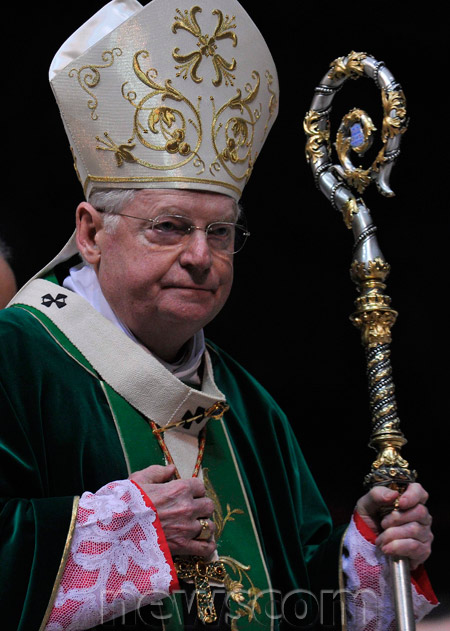

The list of the new Metropolitan Archbishops who will receive the pallium below.
Metropolitan Archbishop differs from normal Archbishops in that, they have jurisdiction over other dioceses that are placed under their supervision, in a group called Ecclesiastical Province of the Church. Archbishops of Archdioceses without Metropolitan character has no jurisdiction over any dioceses under them, and they are usually directly subject to the Holy See.
 petercanisiusmichaeldavidkang